If your dentist has recommended a dental implant procedure, you may wonder what will happen, how long it takes, and whether it will hurt. The good news is that the process follows a series of planned steps, from checking your jawbone to placing the final crown. Knowing what to expect can help you feel prepared before treatment begins.
Not every implant follows the exact same timeline. Some people need a bone graft or tooth extraction before the implant can be placed, while others can move directly to surgery. Healing also happens in stages because the implant must join with your jawbone before it can safely support a replacement tooth.
Each step has a specific purpose, and understanding the process makes it easier to know what happens before, during, and after surgery. You’ll also learn how long recovery usually takes, what risks to watch for, and how to care for your implant for the best long-term results.
What Is a Dental Implant Procedure?
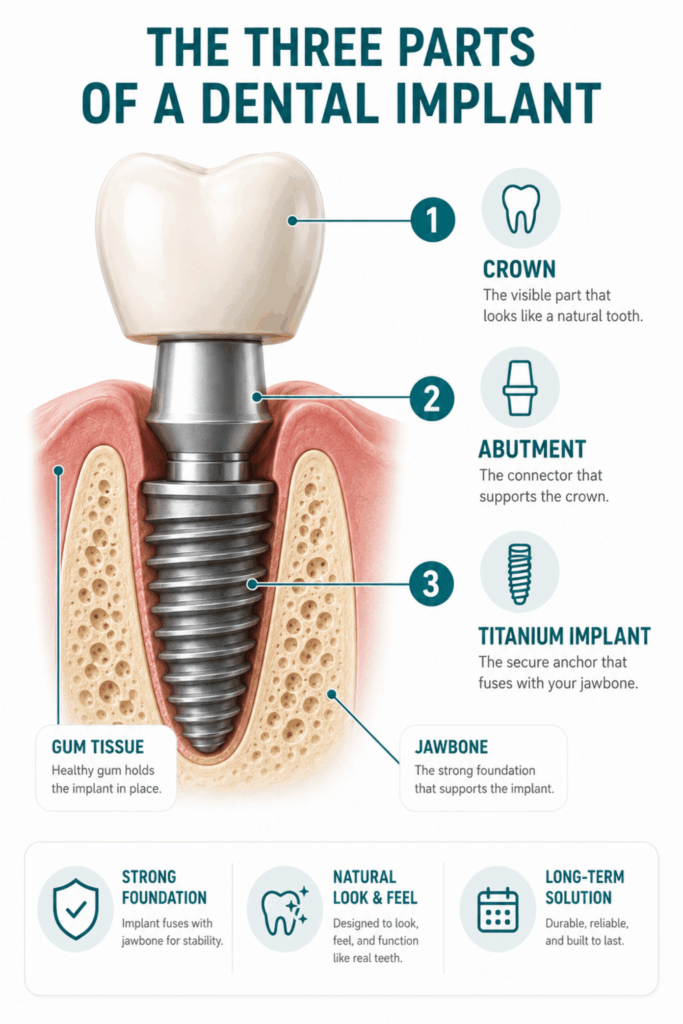
A dental implant procedure is a step-by-step treatment that replaces a missing tooth from the root to the visible chewing surface. Instead of resting on the gums like a removable denture, a dental implant is surgically placed inside the jawbone, where it works much like a natural tooth root. Over time, the bone bonds with the implant to create a stable foundation for your new tooth.
Every dental implant has three main parts that work together. The implant post is a titanium screw placed inside the bone, the abutment is the connector that attaches to the implant, and the custom dental crown is the new artificial tooth that looks and functions like a natural tooth. Together, these parts restore your smile, improve chewing, and help preserve the bone around the implant.
Who Is a Good Candidate for a Dental Implant Procedure?
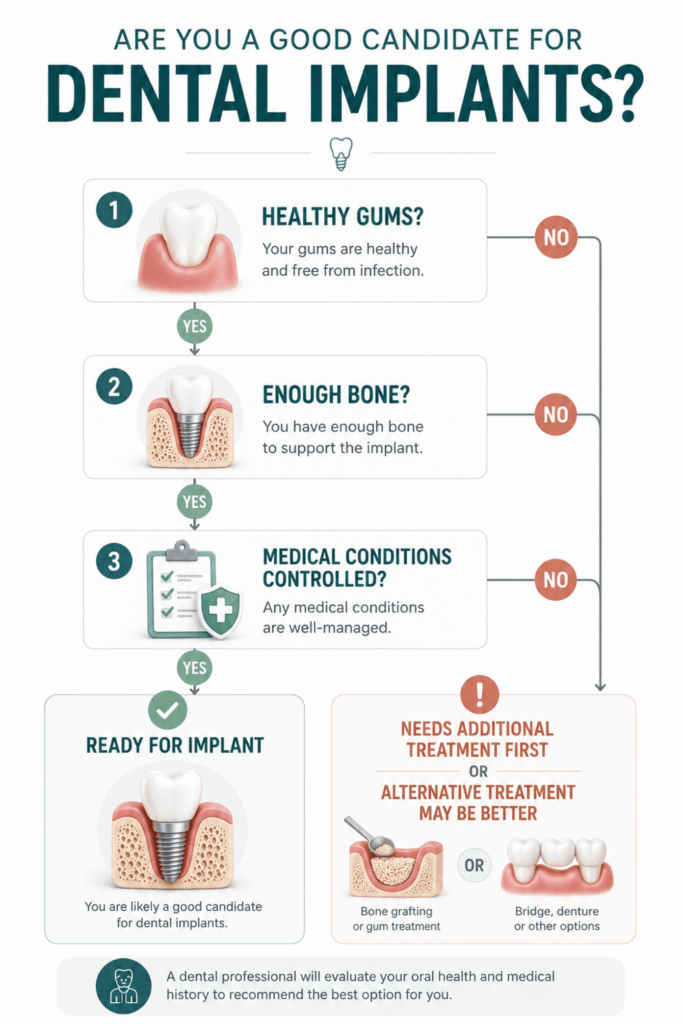
Not everyone receives dental implants immediately. Before recommending a dental implant procedure, your dentist carefully evaluates your oral health, jawbone, and medical history to determine whether you’re a good candidate for dental implants. Even if you are not ready today, many conditions can be treated first, making implant placement possible later.
- Healthy Gum Tissue: Healthy gums provide the support needed around the implant and reduce the risk of infection during healing. Gum disease should be treated before implant surgery whenever possible.
- Enough Jawbone: Your jawbone must have enough height and thickness to support the implant securely. If significant bone loss is present, your dentist may recommend bone grafting before implant placement.
- Good Overall Health: Conditions such as uncontrolled diabetes or certain immune disorders can slow healing. Your dentist will review your medical history to make sure the procedure can be performed safely.
- Commitment to Good Oral Hygiene: Dental implants require daily brushing, flossing, and regular professional cleanings. Good oral hygiene greatly improves long-term success.
- Non-Smoker or Willing to Quit: Smoking reduces blood flow to the gums and bone, increasing the risk of implant failure and delayed healing. Quitting before and after surgery improves the outcome.
- Fully Developed Jawbone: Dental implants are usually recommended only after jaw growth is complete, making them most suitable for adults.
- Healthy Neighboring Teeth: The surrounding teeth and gums should also be healthy because they help maintain overall oral health and support the long-term stability of the implant.
- Willingness to Complete the Entire Process: The dental implant process may take several months. Following instructions and attending follow-up visits are essential for successful healing.
Some patients may first need treatments such as tooth extraction, periodontal therapy, treatment of oral infections, sinus augmentation, or bone grafting. These additional procedures often improve the chances of a successful implant rather than preventing one.
How to Prepare for a Dental Implant Procedure
Preparation is one of the most important parts of a successful dental implant procedure. Before implant surgery, your dentist carefully plans every detail to choose the safest implant position, evaluate the jawbone, and reduce the risk of complications. This planning stage helps ensure the implant functions properly for many years.
- Complete Dental Examination: Your dentist examines your teeth, gums, bite, and overall oral health to determine whether implants are the best tooth replacement option.
- Dental X-Rays and 3D Imaging: Dental X-rays and 3D scans show the amount of bone available, identify important nerves and sinuses, and help guide precise implant placement.
- Medical History Review: Your dentist reviews your medications, allergies, previous surgeries, and medical conditions that may affect healing or anesthesia.
- Personalized Treatment Planning: Every case is unique. Your treatment plan may include tooth extraction, bone grafting, one implant, or multiple implants depending on your needs.
- Discussion of Sedation Options: Most patients receive local anesthesia, but some choose sedation for additional comfort, especially during longer procedures.
- Medication Instructions: Your dentist may prescribe antibiotics or recommend specific medications before surgery. Never stop or change medications without professional guidance.
- Smoking Cessation: If you smoke, you may be asked to stop several weeks before and after surgery because smoking slows bone healing.
- Eating Instructions: If you will receive sedation, you may need to avoid eating or drinking for several hours before your appointment.
- Arrange Transportation: Patients receiving IV sedation or oral sedation should have someone drive them home after the procedure.
- Prepare Soft Foods at Home: Stock foods such as yogurt, mashed potatoes, smoothies, eggs, and soup so eating is easier during the first few days of recovery.
Dental Implant Procedure: Step by Step
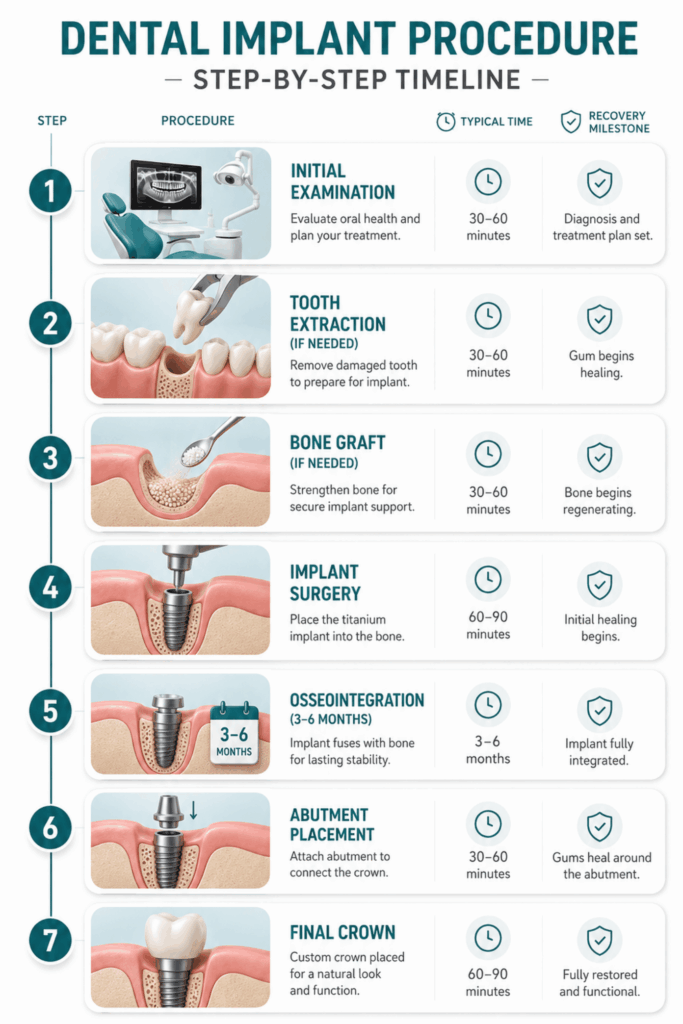
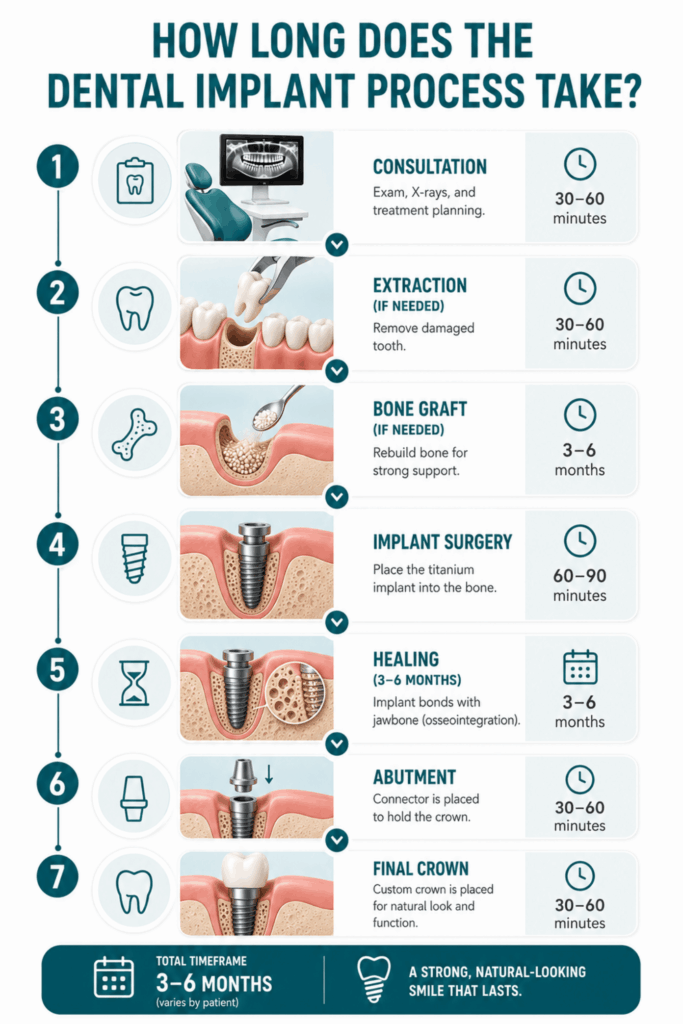
A dental implant procedure happens in several carefully planned stages rather than a single appointment. Depending on your oral health, treatment may include tooth extraction, bone grafting, implant placement, healing, abutment placement, and the final crown. Understanding the complete journey helps you know what to expect and why each stage is important for long-term success.
Initial Examination and Treatment Planning
The first step is a comprehensive examination. Your dentist or oral surgeon evaluates your teeth and jaw, reviews your medical history, and takes dental X-rays or 3D scans to assess bone quality and identify important anatomical structures. These images help determine the ideal implant size, angle, and location while avoiding nearby nerves and sinuses. Careful planning reduces surgical risks and improves the long-term stability of the implant.
Tooth Extraction (If Needed)
If the damaged or missing tooth is still present and cannot be saved, it must be removed before implant placement. In some cases, the implant can be placed immediately after extraction if there is enough healthy bone and no active infection. In other situations, your dentist may recommend allowing the extraction site to heal for several weeks or months before continuing with the dental implant procedure.
Bone Grafting (When Necessary)
Some patients lose jawbone after a tooth has been missing for a long time or because of advanced gum disease. If the bone is too thin or weak to support the implant, your dentist may recommend a bone graft before implant surgery.
During bone grafting, natural or synthetic grafting material is placed where additional bone is needed. Over the following months, your body gradually replaces this material with new bone, creating a stronger foundation for implant placement. Although this adds time to the overall treatment, it significantly improves the chances of long-term implant success.
Implant Placement Surgery
On the day of dental implant surgery, your dentist numbs the area with local anesthesia, so you should not feel pain during the procedure. If needed, sedation can also be used to help you relax. After the area is numb, the dentist makes a small incision in the gum tissue to expose the bone. A series of specialized instruments prepares the implant site before the titanium implant post is carefully placed inside the jawbone. The gum is then closed with stitches, or in some cases, a healing cap is placed so part of the implant remains visible during recovery.
Most implant surgeries are performed as outpatient procedures and typically take about 30 to 90 minutes per implant, depending on the complexity of the case. You may feel pressure or vibration during surgery, but sharp pain is uncommon because the area remains numb. After the anesthesia wears off, mild discomfort, swelling, and soreness are normal and usually improve over the next few days.
Healing and Osseointegration
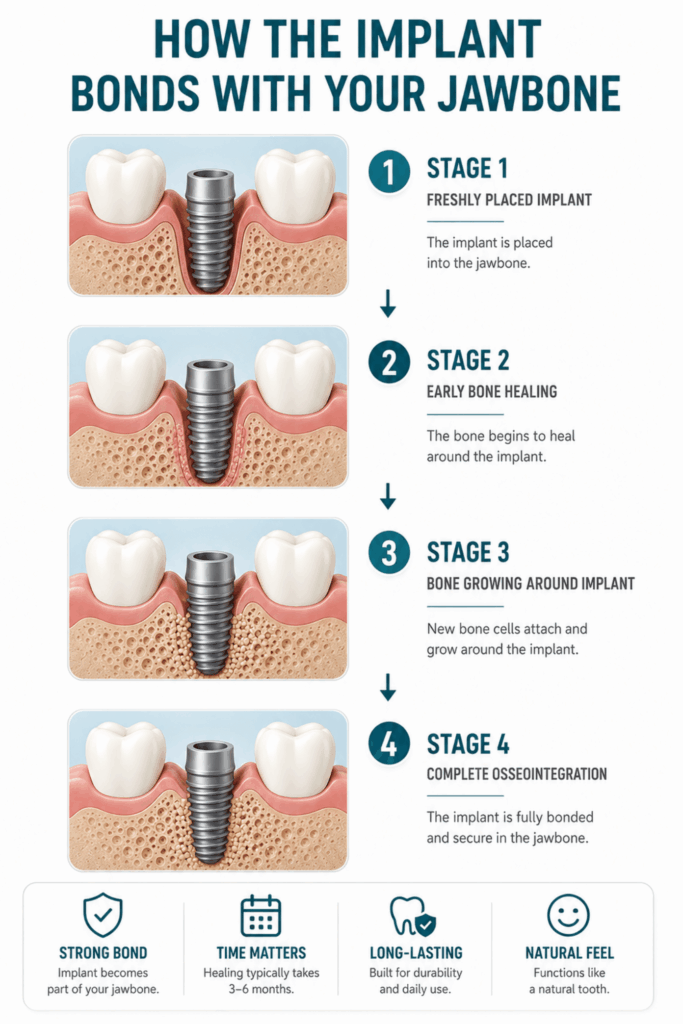
Once the implant has been placed, your body begins one of the most important stages of the dental implant process: osseointegration. During this natural healing process, the jawbone grows around the titanium implant and bonds tightly to its surface. This creates a stable foundation that supports the new artificial tooth much like a natural tooth root.
For most patients, osseointegration takes about three to six months, although healing may be shorter or longer depending on bone quality, overall health, smoking, and whether bone grafting was performed. While the implant heals beneath the gums, your dentist may provide a temporary tooth so you can continue smiling and speaking comfortably.
Abutment Placement
After osseointegration is complete, your dentist attaches the implant abutment, a small connector that joins the implant to the final crown. In some cases, the abutment is placed during the original implant surgery, while in others, it requires a brief second procedure. The surrounding gum tissue usually heals within one to two weeks, creating a natural-looking contour before the permanent crown is attached.
Placing the Dental Crown
The final step is attaching the custom-made dental crown. Your dentist takes impressions or digital scans of your mouth so the new tooth matches the size, shape, and color of your natural teeth. Once the crown is ready, it is securely attached to the abutment, and your dentist carefully checks your bite to ensure comfortable chewing and proper alignment. At this point, the dental implant procedure is complete, and your replacement tooth should look, feel, and function much like a natural tooth.
How Long Does a Dental Implant Procedure Take?
The length of a dental implant procedure depends on whether you are referring to a single appointment or the entire treatment process. The surgical appointment for implant placement typically takes 30 to 90 minutes per implant. However, the complete journey—from your initial consultation to receiving the final crown—may take anywhere from three to nine months. If you need tooth extraction, bone grafting, or additional healing time, the process can take several months longer. Your dentist will explain your personalized timeline based on your oral health and treatment plan.
- Initial Consultation: Usually takes 30 to 60 minutes and includes the examination, medical history review, and treatment planning.
- Tooth Extraction (If Needed): Typically takes 20 to 60 minutes. Some patients can receive an implant on the same day, while others need several weeks or months of healing first.
- Bone Grafting (If Needed): The procedure often takes 30 to 90 minutes, followed by a healing period of approximately three to six months before implant placement.
- Implant Placement Surgery: Usually takes 30 to 90 minutes for one implant during an outpatient visit.
- Osseointegration: Bone healing generally takes three to six months while the implant bonds securely with the jawbone.
- Abutment Placement: This short procedure often takes about 15 to 30 minutes, followed by one to two weeks of gum healing.
- Final Crown Placement: Usually takes 30 to 60 minutes after the custom crown has been fabricated by the dental laboratory.
Does a Dental Implant Procedure Hurt?
One of the biggest concerns patients have is whether a dental implant procedure is painful. During implant surgery, local anesthesia numbs the treatment area, so you should not feel pain while the implant is being placed. If you are anxious, your dentist may also offer sedation to help you stay relaxed throughout the procedure.
After the anesthesia wears off, it is normal to experience mild soreness, swelling, bruising, or tenderness around the implant site for a few days. Most patients describe the discomfort as similar to or less than a tooth extraction. Your dentist may recommend over-the-counter pain relievers, prescribe medication if needed, and advise you to eat soft foods while the area heals.
What to Expect After a Dental Implant Procedure
Recovery after a dental implant procedure is usually straightforward when you follow your dentist’s instructions. The first few days are focused on protecting the surgical site while your body begins the healing process. Although mild discomfort is expected, most patients gradually return to their normal routine within a day or two, while the bone continues healing beneath the gums for several months.
- Mild Swelling: Swelling around the gums, cheek, or jaw is common during the first two to three days and gradually improves.
- Minor Bleeding: Slight bleeding or blood-tinged saliva during the first 24 hours is usually normal. Biting gently on gauze often helps control it.
- Soft Food Diet: Choose foods such as yogurt, soup, mashed potatoes, scrambled eggs, smoothies, and oatmeal to avoid putting pressure on the implant site.
- Careful Oral Hygiene: Brush your other teeth normally, but clean around the surgical area gently according to your dentist’s instructions to reduce the risk of infection.
- Avoid Smoking: Smoking slows healing and increases the chance of implant failure, especially during the first few weeks after surgery.
- Limit Physical Activity: Avoid strenuous exercise for the first 24 to 48 hours because it may increase bleeding or swelling.
- Take Medications as Directed: Complete any prescribed antibiotics and use pain medication exactly as instructed.
- Attend Follow-Up Visits: Regular checkups allow your dentist to monitor healing and confirm that the implant is integrating properly with the jawbone.
- Watch for Healing Progress: As the days pass, swelling decreases, discomfort becomes milder, and the gums gradually heal around the implant.
Risks and Possible Complications of a Dental Implant Procedure
Dental implants have an excellent safety record, and serious complications are uncommon when treatment is carefully planned and performed by an experienced dentist. Even so, every surgical procedure carries some risk. Understanding possible complications helps you recognize problems early and seek care promptly if needed.
- Persistent Pain: Mild soreness is expected, but severe or worsening pain after the first few days should be evaluated.
- Increasing Swelling: Swelling should gradually improve. Swelling that becomes worse after several days may indicate infection.
- Heavy Bleeding: Continuous bleeding that does not slow after applying pressure requires prompt dental attention.
- Signs of Infection: Fever, pus, foul-tasting drainage, or increasing redness around the implant should be reported immediately.
- Implant Mobility: An implant should not feel loose once healing begins. Movement may indicate implant failure.
- Numbness or Tingling: Ongoing numbness of the lips, chin, tongue, or surrounding tissues may suggest nerve irritation and should be assessed quickly.
- Sinus Symptoms: For implants placed in the upper jaw, ongoing sinus pressure, congestion, or fluid passing between the mouth and nose should be evaluated.
- Delayed Healing: Slow healing is more common in smokers and patients with certain medical conditions, making regular follow-up visits especially important.
How to Care for Your Dental Implant
A dental implant can last for many years, but its long-term success depends on how well you care for it. Although the implant itself cannot develop a cavity, the surrounding gums and bone can still become infected if plaque builds up. Consistent home care and regular dental visits help protect both the implant and your overall oral health.
- Brush Twice Daily: Use a soft-bristled toothbrush to remove plaque from the implant, nearby teeth, and gumline.
- Clean Between Teeth Every Day: Floss or use interdental brushes designed for implants to clean areas your toothbrush cannot reach.
- Use Recommended Mouthwash: If your dentist advises it, an antimicrobial mouthwash may help reduce bacteria around the implant.
- Avoid Smoking: Tobacco use increases the risk of bone loss around the implant and lowers long-term success.
- Protect Against Teeth Grinding: If you grind or clench your teeth, wearing a custom night guard can reduce excessive pressure on the implant.
- Eat a Balanced Diet: Good nutrition supports healthy gums and bone while helping maintain long-term oral health.
- Schedule Regular Dental Checkups: Professional examinations and cleanings allow your dentist to detect early problems before they become serious.
- Report Changes Promptly: Contact your dentist if you notice pain, swelling, bleeding, or a loose crown instead of waiting for your next appointment.
How Successful Is a Dental Implant Procedure?
Dental implants are one of the most successful treatments in modern dentistry. Studies consistently show success rates of about 95% to 98% for healthy patients who receive proper treatment and follow recommended aftercare. Because the implant becomes firmly anchored within the jawbone, it provides a stable, long-lasting replacement for missing teeth.
Long-term success depends on several factors, including good oral hygiene, healthy gums, adequate bone support, avoiding smoking, controlling medical conditions such as diabetes, and attending regular dental checkups. With proper care, many dental implants continue functioning successfully for decades, making them one of the most reliable tooth replacement options available.
Dental Implant Procedure vs Other Tooth Replacement Options
| Feature | Dental Implant | Dental Bridge | Removable Denture |
|---|---|---|---|
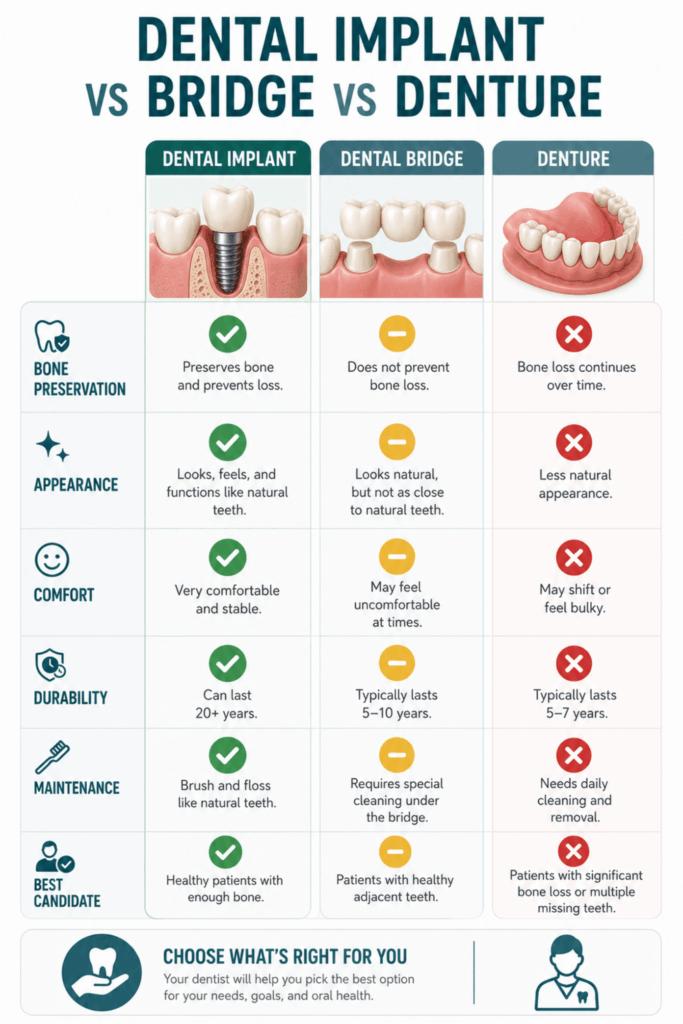
| Supports Jawbone | Yes. The implant stimulates the jawbone and helps reduce bone loss. | No. Bone beneath the missing tooth continues to shrink over time. | No. Dentures do not stimulate the jawbone, so bone loss continues. |
| Appearance | Looks and feels very similar to a natural tooth. | Natural-looking, but relies on neighboring teeth for support. | Can look natural, but may appear less lifelike over time as the jaw changes. |
| Comfort | Feels stable because it is anchored inside the bone. | Comfortable once adjusted, but requires reshaping adjacent teeth. | May move or slip while eating or speaking, especially if it becomes loose. |
| Durability | Can last for decades with proper care. | Often lasts 10 to 15 years before replacement may be needed. | Typically needs periodic adjustment, relining, or replacement as the jaw changes. |
| Maintenance | Brush, floss, and attend regular dental checkups. | Requires careful cleaning around the bridge and supporting teeth. | Must be removed daily for cleaning and proper overnight storage. |
| Best For | Patients with enough healthy bone who want the most stable, long-term tooth replacement. | Patients who prefer a fixed option or are not candidates for implants. | Patients missing several or all teeth or those seeking a more affordable removable option. |
Each tooth replacement option has advantages and limitations. Dental implants are often considered the gold standard because they replace the missing tooth from root to crown, preserve the jawbone, and function much like natural teeth. However, bridges and removable dentures remain excellent choices for some patients based on their oral health, budget, medical history, and personal preferences. Your dentist can help you choose the option that best fits your needs.
When Should You Call Your Dentist After Implant Surgery?
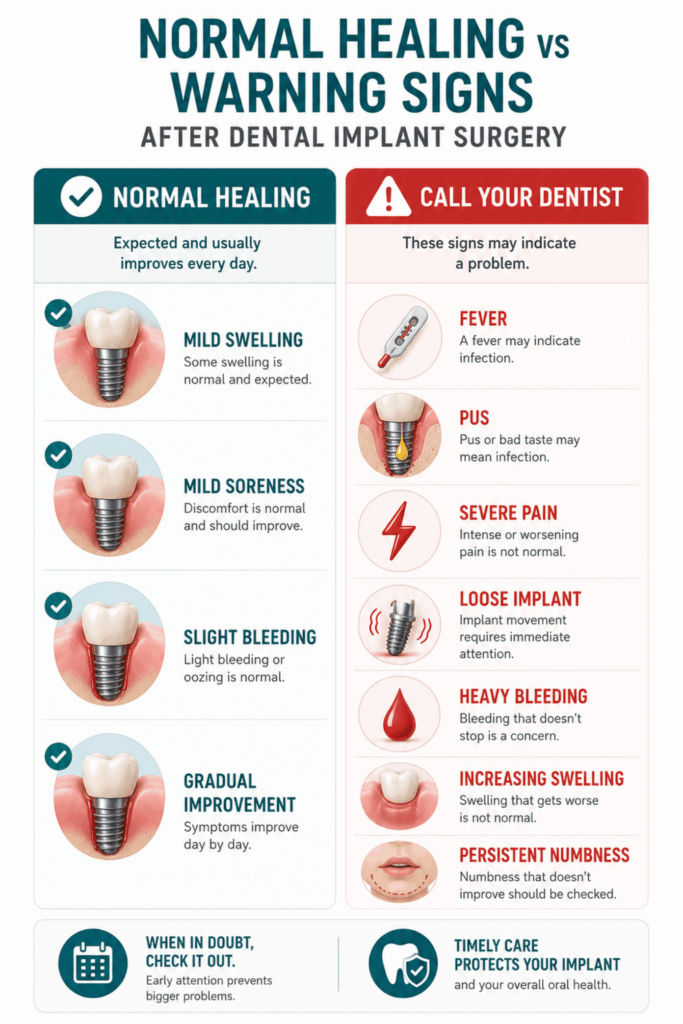
Most patients experience mild discomfort, swelling, and slight bleeding after implant surgery, and these symptoms usually improve over the first few days. However, some symptoms should never be ignored because they may indicate infection, implant failure, or another complication. If something doesn’t seem to be improving or suddenly becomes worse, it is always safer to contact your dentist for advice rather than waiting.
- Severe Pain: Call your dentist if pain becomes intense or continues to worsen several days after surgery instead of gradually improving.
- Heavy or Ongoing Bleeding: Persistent bleeding that does not stop after applying gentle pressure requires prompt evaluation.
- Fever or Chills: A fever may be a sign of infection and should be reported as soon as possible.
- Increasing Swelling: Swelling should begin improving after the first few days. New or worsening swelling may indicate a problem.
- Pus or Bad-Tasting Drainage: Drainage from the surgical site can be a sign of infection and needs immediate attention.
- A Loose Implant: The implant should remain stable during healing. Any movement should be evaluated right away.
- Persistent Numbness: Ongoing numbness or tingling in the lips, chin, tongue, or face should be assessed promptly.
- Difficulty Swallowing or Breathing: Although rare, these symptoms require immediate emergency medical care.
Frequently Asked Questions
Can I Have a Dental Implant if I Have Diabetes?
Yes. Many people with well-controlled diabetes are good candidates for dental implants. Keeping your blood sugar under control before and after surgery helps improve healing and lowers the risk of complications.
Do I Need to Stop Taking Blood Thinners Before a Dental Implant Procedure?
Do not stop taking blood thinners unless your physician and dentist specifically instruct you to do so. Your dental team will decide the safest approach based on your medical history and the planned procedure.
Can I Get an MRI After Receiving a Dental Implant?
Yes. Most modern dental implants are made from titanium, which is generally considered safe for MRI scans. Always let the imaging staff know that you have a dental implant before the scan.
Is It Normal to Feel the Implant With My Tongue?
Yes. During the early healing period, it is common to notice the implant or healing cap with your tongue. As the gums heal, it usually feels much more natural. Avoid repeatedly touching it because this may irritate the area.
What Happens if I Accidentally Bump or Chew on the Implant Too Soon?
A minor bump is not always harmful, but chewing hard foods on a healing implant can interfere with recovery. If you develop pain, swelling, or notice movement afterward, contact your dentist for an examination.
Can I Wear My Denture While My Dental Implant Heals?
Sometimes. Your dentist may adjust your denture so it does not place pressure on the healing implant. Follow your dentist’s instructions carefully because wearing an unmodified denture too soon can slow healing.
Will Airport Security or Metal Detectors Detect a Dental Implant?
No. Dental implants are very small and are not known to trigger airport security systems or standard metal detectors.
Can I Get a Dental Implant Years After Losing a Tooth?
Yes. Many patients successfully receive dental implants years after tooth loss. However, long-term bone loss may require a bone graft before implant placement, so an examination and imaging are necessary to determine the best treatment plan.
Final Thoughts
A dental implant procedure is a carefully planned process that replaces a missing tooth with a strong, natural-looking alternative. From the initial examination and treatment planning to implant placement, bone healing, abutment placement, and the final crown, each step plays an important role in creating a stable and long-lasting result. Although treatment often takes several months, the outcome is designed to restore your smile, chewing ability, and confidence for many years.
Every patient’s situation is different, and your treatment timeline may vary depending on your oral health, jawbone condition, and whether additional procedures such as tooth extraction or bone grafting are needed. If you are considering dental implants, speak with your dentist about your questions and concerns. Understanding each step of the process will help you make an informed decision and know what to expect before treatment begins.
