Our front teeth not only contribute to a beautiful smile, but they also play a crucial role in chewing and digestion. Cavities in front teeth, often characterized by white to brownish-dark spots on tooth surfaces, are permanent tooth damage that occurs as a result of dental plaque bacteria. If left untreated, cavities can lead to the development of a dental abscess, tooth loss, and other health issues. Front teeth cavities can also decrease your self-esteem and make you embarrassed when you smile, talk, or eat. In this blog post, we’ll explore the causes of cavities in front teeth, their symptoms, and the role of dental fillings in restoring your oral health and beautiful smile.
What are Cavities?
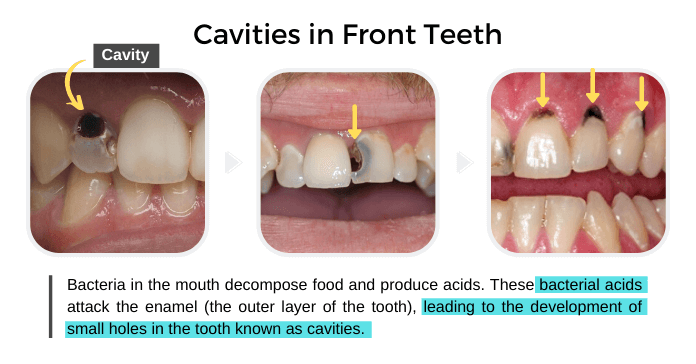
Cavities are permanent damage to the tooth that occurs as a result of a bacterial acid attack. They look like holes or tiny openings in the tooth. Cavities are common in children and teenagers. However, anyone can get cavities (infants, children, teenagers, and adults).
Bacteria in the mouth decompose food and produce acids. These acids attack the tooth enamel (the outer tooth layer), leading to the development of small holes in the tooth known as cavities. If these cavities are not treated, they gradually become bigger, extending from the outer enamel to the tooth pulp, which contains nerves and blood vessels, causing tooth pain and the development of a dental abscess.
Risk Factors
Several factors increase the risk of tooth decay and cavities in front teeth:
- Improper oral hygiene: Dental plaque is a sticky film of bacteria that adheres to teeth surfaces. It contains bacteria and food debris. The bacteria in plaque can decompose foods and produce acids that attack the tooth enamel. So, you should remove the dental plaque regularly (twice daily) by proper brushing and flossing. The accumulation of plaque can lead to tooth decay.
- Dry Mouth: Saliva plays an important role in the prevention of tooth decay. It washes away food and plaque from tooth surfaces. Also, saliva neutralizes bacterial acid and helps reverse the early stage of tooth decay (Remineralization). Dry mouth (reduced or lack of saliva flow) increases the risk of tooth decay and cavities. Causes of dry mouth include mouth breathing, smoking, certain medical conditions, and some medications.
- Sugary foods and drinks: Frequent and prolonged exposure to sugary foods and drinks, and acidic foods can cause a tooth cavity. Also, the food that clings to your teeth for a long time can cause cavities in front teeth such as cookies and dried fruits.
- Eating Disorders: In bulimia, the stomach acids in vomit wear away the tooth enamel. So, teeth become more susceptible to tooth decay as a result of acid reflux.
- Broken tooth fillings and braces: They cause the accumulation of food debris and plaque more rapidly.
- Not getting enough fluoride: Fluoride prevents tooth decay and can reverse its early stage (demineralization). Lack of fluoride in your dental hygiene routine can increase the risk of cavities in front teeth and compromise oral health.
The tooth cavity develops more often in the back teeth. However, they can occur in the front teeth, especially if you breathe through your mouth instead of your nose or have a dry mouth condition.
Symptoms of Cavities in Front Teeth
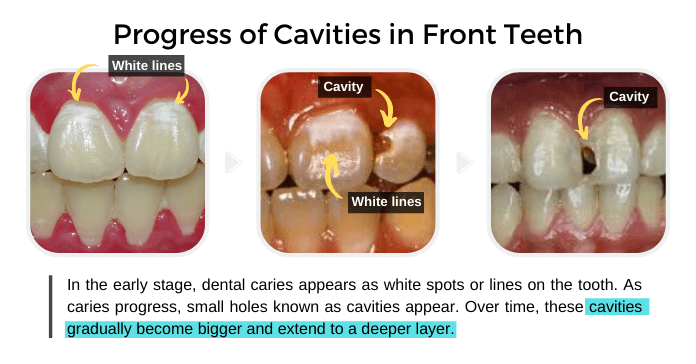
The signs and symptoms depend on the extent of the tooth cavity. In the early stage, you may not feel tooth pain or sensitivity at all. As cavities in front teeth advance, the holes gradually become bigger and extend to a deeper layer (dentin). Also, they may reach the tooth pulp, which contains nerves and blood vessels. The signs and symptoms of cavities in front teeth include:
- White, brown, or black spots on the teeth before the formation of cavities
- Gray tooth color
- Visible holes or openings in the front teeth
- Sensitive teeth
- Bad breath
- Sharp, spontaneous tooth pain without any apparent cause
- Pain with biting
- Pain associated with sweet, hot, or cold foods and drinks
- Pus discharge and bad taste
- Facial swelling
- Fever
How Dentists Diagnose Front Teeth Cavities?
Your dentist can early detect cavities in front teeth during routine dental check-ups. In the early stage, tooth decay appears as white spots or lines on the front teeth. These white spots occur due to the demineralization of the tooth enamel. The demineralization is the loss of tooth minerals such as calcium due to bacterial acid attacks. In this stage, tooth decay can be reversed by fluoride treatment (remineralization).
If these white spots are left untreated, tooth decay will progress and lead to the formation of cavities in front teeth (can’t be reversed). These front teeth cavities are permanent tooth damage and look like brown or black holes.
Your dentist can diagnose cavities in front teeth by:
- Oral examination: The dentist will use a mirror and probe to examine the oral cavity. Sometimes, caries occur in the back of the front teeth and are not visible to the patient. During the dental exam, your dentist can detect these cavities with a probe and mirror.
- X-ray: The dentist will take an x-ray to detect cavities in the front teeth and check the extent of the damage. If cavities reach the tooth pulp, they may cause inflammation of the pulp, tooth pain, and formation of dental abscesses.
- Percussion test: The dentist will use the end of the mirror handle to tap on the front teeth. Inflamed or infected teeth are sensitive to pressure or tapping.

Front Teeth Cavities in Children
Cavities in front teeth are common in children. Cavities in baby teeth occur due to the accumulation of foods containing carbohydrates on children’s baby teeth, for example, candy, cake, soda, milk, raisins, and fruit juice. Bacteria in the mouth decompose these carbohydrates and produce acids, which destroy the tooth enamel, causing childhood caries, also known as baby bottle tooth decay.
Front teeth cavities are permanent tooth damage that appears as brown or black spots or holes. The following factors increase the risk of cavities in front teeth:
- Inadequate oral hygiene practices.
- Consumption of a diet rich in sugar and starch.
- Dry mouth conditions.
- Bedtime infant feeding.
- The child goes to bed with a bottle of milk.
- Prolonged use of sippy cups, especially when they contain sugary drinks.
Preventing cavities in toddlers involves limiting their consumption of sugary foods and drinks, ensuring they brush their teeth regularly with fluoride toothpaste, and scheduling regular dental check-ups.
Complications
In the early stage, tooth decay appears as white, brown, or black spots on the tooth. If these spots are left untreated, they will progress, causing cavities and other dental issues. Cavities look like holes or tiny openings. The complications of cavities in front teeth include:
- Continuous pain and swelling.
- Tooth discoloration and aesthetic problems.
- A dental abscess, which if left untreated, will lead to life-threatening complications such as sepsis.
- Tooth fracture.
- Tooth mobility and tooth loss.
Treatment Options for Cavities in Front Teeth
The treatment options for cavities in front teeth depend on their size, extent, and location. Prompt treatment is crucial to prevent complications and preserve the affected tooth structure. Dental treatment for cavities may include options such as:
- Professional fluoride treatments: Your dentist may use a fluoride gel or varnish to reverse the early stage of tooth decay and promote oral health. This process is known as remineralization. However, when the damage occurs, it can’t be reversed.
- Tooth-colored fillings: Tooth-colored fillings, also known as composite resin fillings, are aesthetic fillings used to restore the tooth’s shape and function, and natural tooth color. First, the dentist will remove caries under local anesthesia. Then, they will place and shape the tooth-colored fillings to restore the natural appearance of teeth. Tooth-colored composite fillings can be used in the back and front teeth. Silver-colored amalgam fillings (metal fillings) can’t be used for the treatment of front teeth cavities because they are unaesthetic (silver-colored).
- Root canal therapy: Your dentist may recommend a root canal therapy for tooth abscess treatment. When bacteria reach the tooth pulp, the dentist will remove the infected or inflamed pulp and fill the root canal. Then, they will restore the tooth shape and function with a tooth-colored filling or dental crown.
- Pulpotomy and Pulpectomy: It is the partial or complete removal of the primary teeth pulp.
- Dental crowns: if the front teeth are damaged and can’t be restored by tooth-colored fillings, your dentist may recommend dental crowns to cover the entire tooth.
- Tooth extraction: if the tooth is severely damaged, your dentist will recommend a tooth extraction. Then, you may need a dental bridge or implant to restore the shape and function of your teeth.

Prevention of Cavities in Front Teeth
With proper dental care, you can prevent cavities in front teeth and promote oral health. Follow the following preventive measures for a healthy smile:
- Maintain good oral hygiene by daily brushing your teeth with a soft-bristled toothbrush and fluoride toothpaste in circular motions.
- Incorporating fluoride into your oral health care routine is essential for maintaining a healthy mouth and preventing cavities
- Use dental floss to remove dental plaque and food particles between your teeth. Incorporating a regular flossing routine into your daily oral care routine is crucial for maintaining your mouth healthy and preventing cavities between teeth.
- Rinsing with an antibacterial mouthwash can help reduce bacteria in your mouth
- Eat a balanced diet, including fruits, vegetables, lean proteins, and whole grains to provide essential nutrients for strong teeth and healthy gums.
- Limit sugary drinks and foods such as sweets, candy, cake, cookies, fruit juice, and high-sugar soft drinks. Also, limit snacking between meals.
- Breathe from your nose instead of your mouth. If you can’t breathe from your nose, visit an ENT doctor.
- Quit smoking because it contributes to tooth decay.
- Regular dental visits are essential for professional cleaning and regular dental check-ups, ensuring that any issues such as cavities in front teeth are detected early and treated effectively.
Conclusion
In conclusion, cavities in front teeth are not only a cosmetic issue but also a significant oral health concern that requires prompt treatment. The development of a dental cavity often starts with poor oral hygiene and the consumption of sugary foods and sugar-sweetened drinks, which contribute to the accumulation of dental plaque on tooth surfaces.
This plaque contains bacteria that produce acid, gradually wearing away the tooth enamel and leading to the formation of cavities. If left untreated, these cavities can progress and cause pain, sensitivity, and even tooth loss.
The good news is that cavities in front teeth can be treated with dental fillings, such as tooth-colored composite fillings, which mimic the natural tooth color. Root canal treatment and dental crowns are also options for more severe cases.
The key to prevention is maintaining a good oral hygiene routine. Regular brushing and interdental cleaning are essential practices in maintaining a healthy mouth. Besides, regular visits to the dentist for professional cleaning and dental check-ups help in the early detection and management of dental issues.
