Dental braces are a great way to achieve the perfect smile. It is a reliable and proven treatment that can help align teeth and make them look their best. Many people who want to improve their smile ask if it is possible to get braces while there are crowns on their teeth. In this blog post, we will answer this question and mention other orthodontic treatments that can be used to align teeth with dental restorations.
Can You Get Braces with Crowns on Teeth?
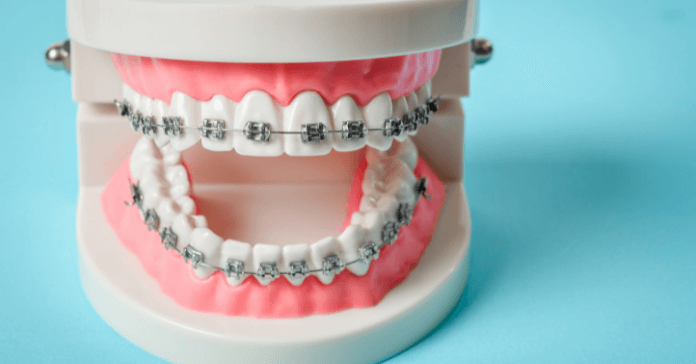
Yes, it is possible to get braces if your teeth have dental crowns. Dental braces consist of brackets bonded to the surface of your teeth and connected with an archwire. The orthodontist tightens the wire periodically, creating tension on the misaligned teeth and guiding them into alignment. To secure the braces’ brackets to crowns, the orthodontist will use a special type of adhesive. This ensures that the brackets stay in place throughout the treatment.
Patients with crowns and bridges may wonder if braces are an option. The answer is yes. You can wear braces even if you have previous dental work like crowns, bridges, or veneers.
How Do Braces Work with Crowns on Teeth?
When considering braces with dental crowns, the first step is to assess your existing dental work. This includes evaluating crowns, bridges, root canals, fillings, and any other dental restorations you may have. Your orthodontist will carefully examine each tooth to determine how the braces can be applied. They will check if the crowns or veneers are in good condition and ensure they can support the brackets and wires used in braces treatment.
Mechanics of Braces with Dental Crowns
Braces with dental crowns work by applying metal brackets to the crowns using a special adhesive. This adhesive is designed to bond securely without damaging the crown. Different types of braces, such as metal and ceramic braces, can be used on teeth with crowns. The metal brackets are attached to the teeth, and an archwire connects them, creating tension that gradually moves the teeth. Removable braces, like Invisalign, are another option. Invisalign is a plastic aligner that can be taken out for eating and cleaning, which helps in maintaining oral hygiene.
Impact of Existing Crowns on Orthodontic Treatment
Existing dental restorations like crowns, bridges, root canals, and fillings can impact orthodontic treatment. Crowns or root canals on certain teeth may require special care to avoid damage. If you have a crown or bridge, the orthodontist may need to adjust the braces to fit around these restorations. Bridges are another dental appliance that helps fill gaps left by missing teeth, and they can be integrated into the braces treatment plan or removed. It’s essential to ensure that the force exerted by braces does not damage the crown or bridge.
Considerations for Patients with Dental Implants
Patients with dental implants need special consideration. Implants cannot be moved like natural teeth since they are fixed in the jawbone. However, braces can still be used to move the surrounding teeth. If you get a crown on an implant, the orthodontist will plan the treatment to accommodate the fixed position of the implant. The orthodontist may need to make a temporary crown if adjustments are required during the braces treatment. This careful planning ensures that the best possible treatment options are provided based on your individual needs.
Complications of Getting Braces on Teeth with Crowns
Although it is possible to have braces with crowns on your teeth, some potential complications should be considered. These include:
- Brackets detachment: Brackets adhere more firmly to natural tooth enamel than crowns. This makes them more likely to become detached from the crown. Brackets bonded to the porcelain crowns can come loose, leading to treatment delays, and may require additional office visits to be reattached.
- Dental crown damage: Braces can put extra pressure on the ceramic crowns, causing them to become damaged over time. The tension exerted by the braces may affect the integrity of the crown, requiring it to be repaired or replaced.
- Visible edges of crowns: With the movement of the teeth, the edges of porcelain-fused-to-metal crowns can become visible. This may cause black lines at the gum line and sensitivity due to the exposure of the underlying vital tooth. You may need to get new crowns after the treatment is completed to ensure a seamless appearance.
Discussing these and any other potential complications with your orthodontist is essential before opting for braces. They can provide detailed information and help you understand the best way to proceed with braces if you have crowns. Although fitting braces onto teeth with crowns may present challenges, with proper orthodontic care, you can still achieve straight teeth.
Invisalign: An Alternative to Traditional Braces
While braces can align teeth with crowns, other orthodontic treatments are also available. Clear aligners, like Invisalign, are a popular alternative. Invisalign consists of custom-made, virtually invisible, removable trays designed specifically for each patient. These trays are gradually moving teeth into alignment without the need for metal wires. Typically, it takes 12 to 24 months for clear aligners to correct teeth overcrowding, depending on the severity of the case.
Clear aligners are more discreet and comfortable than traditional braces. They do not require adhesives and are removable, making them more convenient for brushing and flossing. Also, you can remove them for eating. However, clear aligners might not be suitable for individuals with severely misaligned teeth or complicated cases. In these situations, traditional braces may be a better option.
Orthodontic patients with dental crowns can consider both traditional metal braces and Invisalign. Traditional metal braces are durable but can be more challenging to fit onto a tooth with a crown. Removable clear aligners are less likely to damage crowns but might not be suitable for all orthodontic cases. Your orthodontist will help you find the best way to straighten your teeth based on your needs.

Orthodontic Care Tips
- Proper cleaning techniques: Use a soft-bristle toothbrush and fluoride toothpaste to clean around the brackets and wires. Consider using interdental brushes or water flossers to reach difficult areas and ensure thorough cleaning.
- Avoiding damage: Be cautious with hard or sticky foods that can damage both the braces and restorations. Foods like nuts, popcorn, and caramel can cause brackets to loosen and porcelain restorations to chip or crack. Your orthodontist will provide a list of foods to avoid.
- Orthodontic follow-ups: Schedule regular orthodontic follow-ups during your treatment with braces or Invisalign. These appointments allow your orthodontist to adjust the braces, ensuring they work effectively to move your teeth. If you have any dental issues, such as a loose bracket, tooth decay, or discomfort, your orthodontist can address them promptly.
- Dental cleanings: Continue to visit your dentist for professional teeth cleanings every six months. These cleanings help remove plaque and tartar that can build up around the brackets and wires.
- Retainers: Once your braces are removed, wearing a retainer helps maintain the results of your orthodontic treatment. Retainers prevent your teeth from shifting back to their original positions. Your orthodontist will guide you on how often to wear your retainer to keep your smile straight.
- Addressing new issues: If you still get a filling or require a new crown after your braces are removed, inform your orthodontist. They will ensure that any new dental work does not interfere with your orthodontic results. Crowns can be made to match your newly aligned teeth, preserving your straight smile.
- Healthy habits: Adopting healthy dental habits is key to maintaining your straightened teeth. Brush twice a day, floss daily, and use mouthwash to keep your teeth and gums healthy. A healthy oral routine will protect your teeth and any dental restorations you have, ensuring long-lasting results.
Maintaining good orthodontic care, especially when you have dental restorations like crowns, involves diligent home care and regular professional check-ups. By following these tips, you can ensure your teeth stay straight and your restorations remain in excellent condition.
Conclusion
You can get braces if you have crowns on your teeth, but be aware of the possible complications. Brackets can become loose because they adhere more firmly to natural tooth enamel than crowns. This could lead to treatment delays and additional office visits for reattachment.
Clear aligners, like Invisalign, may be a suitable option for individuals who prefer not to use traditional braces. These plastic aligners are less likely to damage crowns and are removable, making them a convenient alternative.
It is important to talk to an orthodontist who can assess your individual needs and determine the best treatment option for you. Orthodontic treatment may be more complex for those with existing dental restorations, but many adults have successfully undergone such procedures.
Your orthodontist will evaluate your specific situation to ensure that your dental treatment is tailored to avoid damaging a crown and to address any issues with your dental restorations. They will also consider factors like the fillings, veneers, or bridges you may have, ensuring there is enough space for a bracket.
Ultimately, whether you choose braces or a plastic aligner such as Invisalign, working closely with your orthodontist will help you achieve the best possible outcome for straightening your teeth while maintaining the integrity of your dental restorations.
