Smiling, speaking, and eating; these everyday actions can become difficult when you’re missing bottom front teeth. Whether the tooth loss is due to injury, gum disease, congenital absence, or decay, even one missing front tooth can affect your confidence and disrupt your dental health. Bottom front teeth play a crucial role in your appearance and maintaining the proper alignment and function of your entire lower jaw.
The good news? Modern dentistry offers many options for replacing missing teeth, from dental implants and bridges to partial dentures, each designed to restore function and a natural-looking smile. In this blog post, we will explore what happens when you lose your bottom front teeth, the importance of acting early, and the best replacement options available to help restore your smile and protect your teeth and gums.
Effects of Tooth Loss on Your Oral Health
When missing bottom front teeth are left untreated, the impact goes beyond just how your smile looks. Losing even one front tooth can change how your mouth works and how you feel about yourself. Here’s how:
- Shifting of Nearby Teeth: Your adjacent teeth naturally start to move into the empty space. This misalignment can affect your bite and lead to uneven wear or discomfort.
- Bone Loss in the Jaw: Without the pressure and stimulation from a natural tooth, the jawbone under the missing area begins to shrink over time. This can change your facial shape and weaken support for other remaining teeth.
- Gum Problems and Tooth Decay: Gaps left by missing one or more teeth are harder to clean. Food and bacteria easily get trapped, raising the risk of gum disease and tooth decay in existing teeth.
- Difficulty Speaking and Chewing: The bottom front teeth help you pronounce certain sounds and bite into food. Their absence can lead to unclear speech and trouble with some foods.
- Extra Stress on Remaining Teeth: When you don’t replace a missing tooth, the teeth to support chewing take on more pressure, wearing them down faster and increasing the chance of more tooth loss in the future.
- Lower Self-Confidence: Many people feel self-conscious about missing front teeth, especially when smiling or talking. This can affect personal relationships and social confidence.
Replacing missing teeth isn’t just cosmetic, it’s essential for long-term oral health and your overall well-being.
Treatment Options for Replacing Missing Front Bottom Teeth
If you’re dealing with missing bottom front teeth, there are several effective tooth replacement options to restore your smile and oral function. The most common choices include dental implants, fixed bridges, and partial dentures. Each solution offers unique benefits depending on your needs, the number of teeth missing, and the condition of your surrounding teeth and gums.
While implants provide a long-lasting and natural-looking option, bridges offer a stable fix using neighboring teeth for support, and dentures are often more affordable and suitable for replacing multiple teeth at once. In the next sections, we’ll explore these dental options in more detail to help you find the best solution for missing front teeth.
Fixed Dental Bridges for Missing Bottom Front Teeth
One of the most common solutions for missing bottom front teeth is a fixed dental bridge. A bridge is a permanent restoration that fills the space left by one or more missing teeth. It works by anchoring an artificial tooth (called a pontic) between two healthy natural teeth or dental implants. These anchor teeth, known as abutments, provide the support needed to keep the bridge stable.
A bottom teeth bridge not only restores your ability to bite and speak properly but also prevents surrounding teeth from shifting into the empty space. It’s a strong and natural-looking option to replace one or more missing front teeth. Types of dental bridges include:
- Traditional Bridge: A false tooth is held in place by crowns on both sides, attached to natural teeth. This is the most common type and is often used when there are healthy teeth on both sides of the gap.
- Cantilever Bridge: The bridge is supported by only one natural tooth next to the gap. It’s less common and used when only one adjacent tooth is available.
- Maryland Bridge: A more conservative option that uses metal or porcelain “wings” bonded to the backs of the neighboring teeth, instead of full crowns. Best suited for front teeth with minimal biting pressure.
- Implant-Supported Bridge: Used when multiple teeth are missing and implants are placed to hold the bridge instead of relying on natural teeth. This provides excellent strength and stability.

Benefits of Fixed Bridges to Replace Missing Front Teeth
- Quick and Simple Procedure: Bridges usually require only two dental visits. There’s no surgery involved, unlike implants, which makes the process faster and less invasive.
- Cost-Effective: Compared to implants, bridges are often more affordable.
- Natural Appearance: A well-designed bridge blends in with your real teeth, restoring a complete, confident smile.
- Improved Function: Bridges restore your ability to chew and speak clearly, especially when multiple front teeth affect your confidence or daily function.
- Prevents Shifting of Other Teeth: Filling the missing space helps keep the rest of your teeth aligned and reduces the risk of future complications.
Drawbacks of Fixed Bridges
- Requires Altering Healthy Teeth: The teeth next to the gap (abutment teeth) need to be filed down, which may weaken them in the long run.
- Not Ideal for Bone Health: Unlike implants, bridges do not stimulate the jawbone. This means bone loss may still occur under the bridge over time.
- Limited Lifespan: With good dental care, bridges can last 10–15 years, but they generally don’t last as long as dental implants.
- Harder to Clean: Food can get trapped under the bridge, and cleaning requires special flossing tools to maintain hygiene under the pontic.
- Less Stability for Larger Gaps: Bridges may not be the best choice for replacing more than two or three missing bottom front teeth, especially if the surrounding teeth are not strong enough to support them.
Partial Dentures for Missing Bottom Front Teeth
Partial dentures are a common and affordable solution for replacing missing bottom front teeth, especially when multiple teeth are lost, but some natural teeth remain. A partial denture is a removable appliance made of a gum-colored base that holds one or a set of teeth in place. It’s designed to fit around your existing teeth and restore the look and function of your smile.
Whether you’ve lost a single front tooth or multiple missing teeth, partial dentures help fill the gap, improve chewing and aesthetics, and prevent nearby teeth from shifting out of place.
Benefits of Partial Dentures
- Affordable Solution: Partial dentures are often less expensive than dental implants or bridges, making them a practical choice for many patients.
- Non-Surgical and Removable: Unlike implants, no surgery is needed. You can also remove them easily for cleaning or sleeping.
- Can Replace Multiple Teeth at Once: Whether you have a single missing tooth or need to replace multiple missing teeth, partials can be designed to suit your needs.
- Preserve Natural Teeth: Partial dentures don’t require altering your remaining permanent teeth, unlike bridges that rely on crowns.
- Quick to Make: In most cases, a partial denture can be made and fitted in just a few dental visits, restoring function fast.
Drawbacks of Partial Dentures
- Less Stable Than Fixed Options: Because they’re removable, partials can sometimes shift during eating or speaking, especially if not well-fitted.
- May Feel Bulky or Unnatural at First: Some patients need time to get used to the feel of partials in the mouth.
- More Maintenance Required: You need to remove and clean partial dentures daily, which requires a consistent hygiene routine.
- Can Put Pressure on Surrounding Teeth: The clasps used to hold the denture in place may cause wear or irritation on surrounding teeth and gums over time.
- Shorter Lifespan: Compared to implants, partials typically need to be replaced or adjusted every few years as the mouth changes.
- Usually Temporary for a Single Missing Tooth: A single tooth partial denture is often used as a short-term solution. It helps maintain space and appearance while you prepare for a more permanent treatment, like a dental implant or bridge.
Dental Implants to Replace Missing Teeth
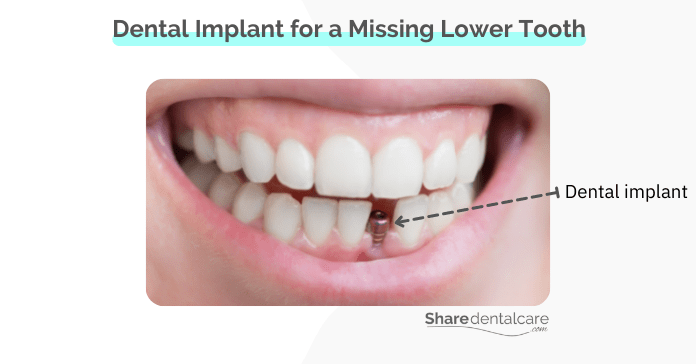
Dental implants are one of the most advanced and long-lasting solutions for missing bottom front teeth. A dental implant is a small titanium post that acts like a natural tooth root. It’s placed into the jawbone and allowed to fuse with the bone over time. Once healed, a fake tooth, usually a crown, is attached to the implant, creating a strong, permanent, and natural-looking restoration.
Implants help prevent bone loss, preserve the shape of your face, and support nearby teeth. They also look and feel like real teeth, making them an ideal choice for function and appearance. Types of dental implants:
- Single Tooth Implants: Best for replacing one lost front tooth without affecting nearby teeth. A crown is attached to one implant post.
- Implant-Supported Bridges: Used to replace multiple missing teeth. Instead of a bridge being anchored to natural teeth, it’s supported by two or more implants.
- Implant-Supported Dentures: These are removable dentures that snap onto dental implants for improved stability. They offer better comfort and chewing ability compared to regular dentures.
- All-on-4 Implants: A full set of artificial teeth is supported by just four implants. This is an alternative to a full denture, ideal for those missing all teeth in the lower jaw.
The Dental Implant Procedure
The dental implant procedure is a step-by-step process designed to replace missing bottom front teeth safely and permanently. It starts with a consultation, where your dentist examines your mouth, takes X-rays, and creates a custom treatment plan. Next, the implant, made of titanium or zirconia, is placed into the jawbone where the tooth or teeth are missing. This implant acts as a new root and needs time to heal and fuse with the bone, a process called osseointegration that usually takes a few months.
After healing, an abutment is attached, which connects the implant to the final crown or dental restoration. Then, a dental impression of your teeth and abutment is taken and sent to the dental lab. Once the final artificial tooth is placed, it looks, feels, and functions like a natural tooth. Each stage is carefully done to ensure the implant supports surrounding teeth, preserves bone, and provides a long-lasting solution for missing front teeth.
Benefits of Dental Implants for Missing Front Teeth
- Long-Lasting and Durable: With proper care, dental implants can last decades, making them a cost-effective option in the long run.
- Preserve Jawbone and Facial Structure: Implants stimulate the bone like natural teeth, helping to prevent bone loss and collapse of facial features, unlike bridges or dentures.
- Protect Surrounding Teeth: Unlike traditional bridges, implants don’t require grinding down surrounding teeth for support.
- Natural Look and Feel: Implants closely mimic the appearance and function of real teeth, making them nearly indistinguishable from your natural smile.
- Versatile Treatment Option: Implants can support crowns, bridges, or even full-arch dentures, offering flexibility when replacing one or more missing front teeth.
Drawbacks of Dental Implants
- Higher Upfront Cost: Implants tend to be more expensive than other options available for replacing teeth, and not all costs are covered by dental insurance.
- Longer Treatment Time: Healing after implant placement takes several months. In some cases, bone grafting for dental implants is required first, which adds time and cost.
- Surgical Procedure Required: Placing an implant involves minor surgery, which may not be suitable for all patients, especially those with health issues or low bone density.
- Not Ideal for Everyone: People with uncontrolled diabetes, heavy smoking habits, or certain bone conditions may not be good candidates for implants.
- Possible Complications: Like any surgery, there’s a small risk of infection, implant failure, or nerve damage, though these are rare when done by an experienced professional.
Choosing the Right Replacement Option to Restore Your Smile
Finding the best way to replace missing bottom front teeth depends on several personal and clinical factors. What works for one person may not be the ideal choice for another. Understanding your needs, goals, and overall oral health will help you and your dentist choose the best tooth replacement for long-term success.
- Number of Teeth Missing: If you’ve lost a single front tooth, an implant or a single tooth partial may be ideal. For multiple missing teeth, a bridge or partial denture might work better.
- Health of Surrounding Teeth and Gums: Strong surrounding teeth are essential to support a bridge. If they’re weak or damaged, an implant could be a better option.
- Bone Density in the Jaw: Dental implants require enough healthy bone. If there’s bone loss, bone grafting may be needed first. Dentures, on the other hand, don’t rely on the jawbone in the same way.
- Budget and Insurance Coverage: Implants tend to cost more up front and may not be fully covered by dental insurance. Dentures and bridges are usually more affordable.
- Timeframe for Treatment: Dental bridges and dentures can be made faster. Implants take more time but offer a longer-term fix.
- Age and Overall Health: Younger and healthier patients typically have better outcomes with dental implants. However, certain medical conditions, like uncontrolled diabetes, or medications that affect bone healing, may reduce implant success and make other options more suitable.
- Desired Aesthetics and Comfort: If a natural look and feel are important to you, dental implants look and function more like real teeth compared to other options.
Don’t let missing front teeth affect your confidence or oral health. Talk to your dentist about the best option that fits your lifestyle, budget, and long-term goals.
Conclusion
Losing your bottom front teeth, whether from injury, decay, or congenital reasons, can affect far more than your appearance. From shifting teeth and bone loss to reduced confidence and difficulty speaking, the effects of missing teeth touch nearly every part of your oral health. Fortunately, modern dentistry offers several options for restoring your smile, function, and confidence.
Whether you’re considering a fixed bridge, partial denture, or dental implant, each option comes with its own set of benefits and limitations. The best solution for missing one or more front teeth depends on your oral health, budget, bone density, and long-term goals. While implants offer a long-lasting and natural-looking result, bridges and dentures may be better suited to your needs if you’re looking for something faster, less invasive, or more affordable.
A personalized treatment plan, developed in collaboration with your dentist, will help you address missing teeth in a way that supports your surrounding teeth, protects your teeth in the future, and restores your full smile.
Don’t let missing teeth hold you back. If you’ve lost a front tooth or are born missing one, speak to your dentist about the best way to replace a missing tooth and regain a healthy, functional bite. Acting early can prevent further issues and protect your dental health for years to come.
