Many people learn they need bone grafting for dental implants after being told they do not have enough jawbone to support an implant. This often happens after tooth loss, gum disease, injury, or long-term denture use. Bone grafting helps rebuild lost bone, creating a stronger foundation so a dental implant can stay stable and last for many years.
Hearing that you need an extra procedure before getting implants can raise questions about cost, healing time, and success rates. The amount of bone loss, the type of graft used, and the location of the missing tooth all play a role. Some patients need a small graft, while others require more extensive bone rebuilding before implant placement.
Understanding why bone loss happens, how bone grafting works, and what to expect during recovery can make the treatment process easier to follow. The first step is understanding the connection between jawbone health and successful dental implants.
What Is Bone Grafting for Dental Implants?
Bone grafting for dental implants is a procedure that rebuilds areas of the jawbone that have lost volume, density, or strength. During a dental bone graft procedure, a graft material is placed into the area where bone is missing. This graft helps stimulate bone growth and encourages the formation of new bone over time. The goal is to restore enough bone in your jaw to support a dental implant securely.
A healthy jaw provides the foundation that implants need to function like natural tooth roots. When bone loss associated with missing teeth, gum disease, or injury leaves insufficient bone behind, a dental specialist may recommend bone grafting for dental implants before implant placement. By rebuilding the condition of your jawbone, the procedure creates a stronger and more predictable environment for long-term implant success.
Why Bone Is Important for Dental Implant Success
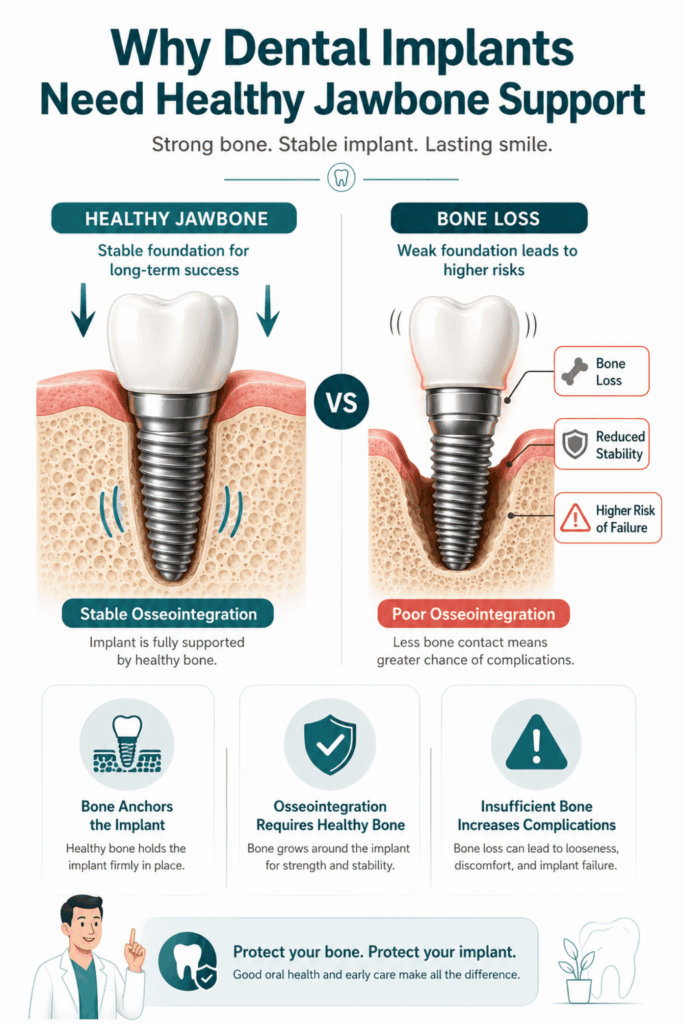
Dental implants rely on healthy bone tissue for support. Unlike dentures or bridges that rest on the gums or neighboring teeth, implants are placed directly into the jaw. The implant acts like an artificial tooth root, transferring chewing forces into the surrounding bone. Without enough bone, the implant may not achieve the stability needed for long-term function.
After implant placement, the surrounding bone gradually fuses to the implant surface through a process called osseointegration. This bone fusion creates a strong connection between the implant and the jaw. If bone volume or quality is inadequate, the risk of implant movement, delayed healing, or implant failure increases. This is why restoring sufficient bone is often a critical step before dental implant surgery.
Why You May Need Bone Grafting Before Dental Implants
Many people assume they can receive dental implants immediately after losing a tooth. However, the amount and quality of bone in your jaw play a major role in determining implant eligibility. Several conditions can reduce bone volume and create the need for a dental bone graft before treatment.
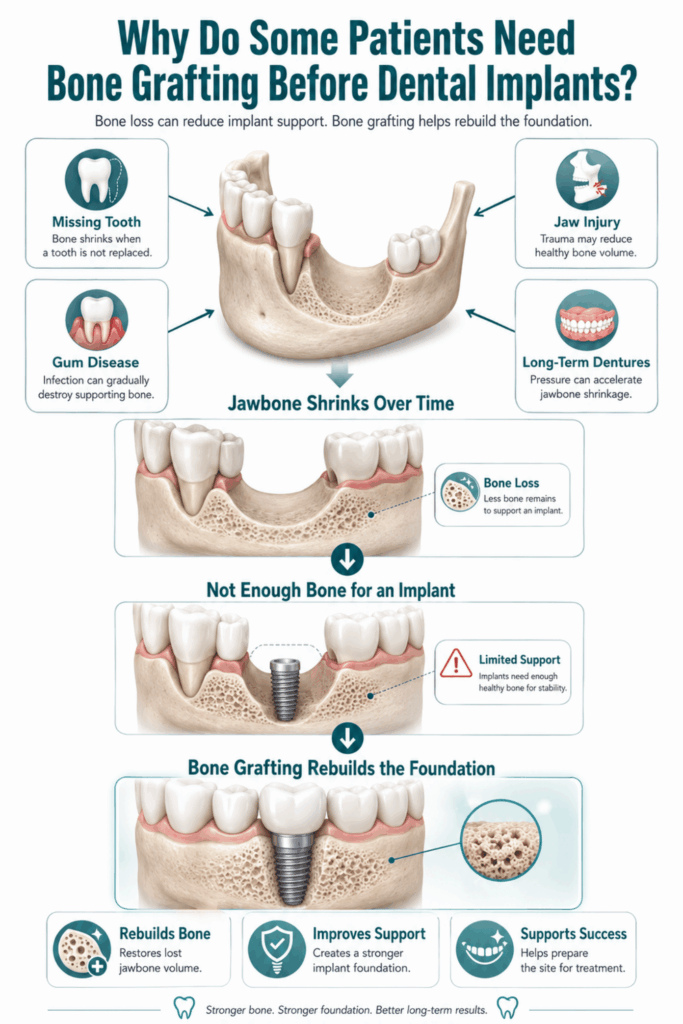
- Tooth Loss: Missing teeth no longer stimulate the jaw bone through normal chewing forces, which can lead to gradual bone resorption.
- Periodontal Disease: Advanced gum disease can destroy the alveolar bone that supports natural teeth.
- Jaw Injuries: Trauma may damage bone tissue and reduce the amount of healthy bone available for implant placement.
- Long-Term Denture Wear: Dentures replace teeth but do not replace tooth roots, allowing bone loss to continue over time.
- Developmental Conditions: Some patients naturally have thinner bone in certain areas of the jaw, particularly in the upper jaw near the sinus cavities.
- Previous Infections: Severe dental infections can damage surrounding bone and leave defects after extraction.
Bone Loss After Tooth Extraction
After a tooth is removed, the surrounding bone in your jaw begins to shrink because it no longer receives stimulation from the tooth root. Most bone loss occurs during the first year after extraction, but the process can continue for years. The longer treatment is delayed, the more likely a patient will need bone grafting for dental implants to rebuild the lost bone volume.
Advanced Gum Disease
Periodontal disease damages the tissues that support teeth, including the alveolar bone. As the infection progresses, the body can lose significant amounts of bone around affected teeth. Even after the infection is treated, the remaining bone may not provide enough support for a dental implant, making grafting necessary before implant placement.
Injury or Trauma to the Jaw
Accidents, sports injuries, and facial trauma can cause fractures or damage to the jaw bone. In some cases, bone tissue is lost directly from the injury. In others, the damage affects blood supply and healing. Bone grafting may be needed to restore the implant site and create a stable foundation for future treatment.
Long-Term Denture Use
Dentures restore appearance and chewing function, but they do not stimulate the jaw the way natural teeth do. Over time, the bone beneath dentures gradually shrinks. This process can become significant after many years of denture wear, leaving insufficient bone for implants without grafting.
How Dentists Determine Whether You Need a Bone Graft
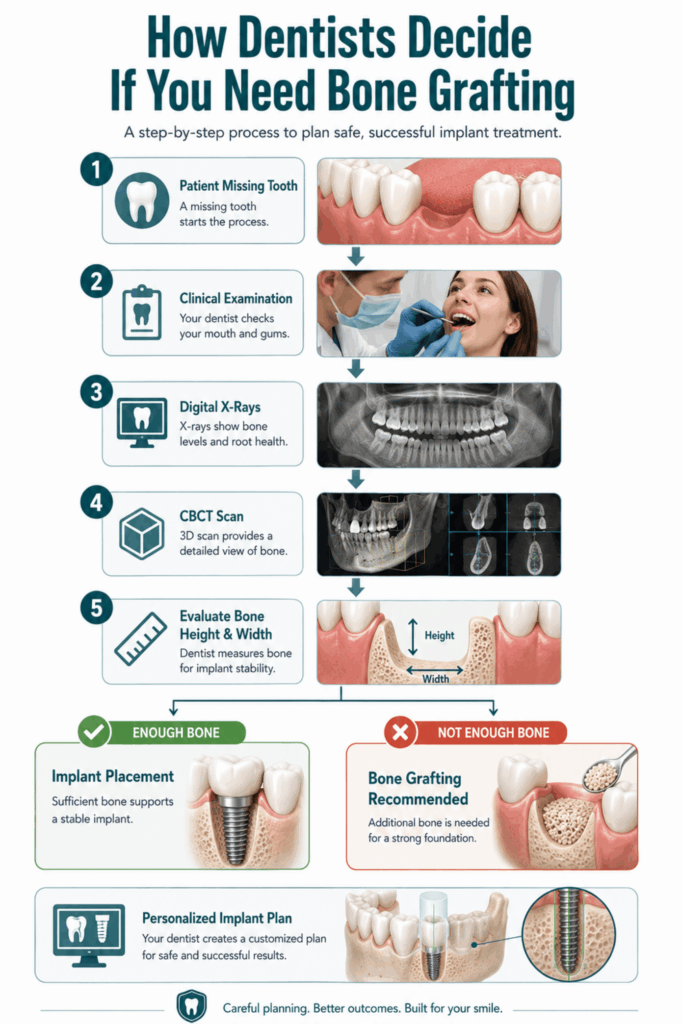
Before recommending treatment, a dentist or oral surgeon carefully evaluates the amount of available bone and the condition of the surrounding tissues. This assessment helps determine whether an implant can be placed immediately or if bone reconstruction is needed first.
- Clinical Examination: The dentist evaluates gum tissue health, missing teeth, bite alignment, and overall oral health.
- Digital X-Rays: Imaging helps identify bone levels and detect hidden problems below the gums.
- CBCT Scans: Three-dimensional scans provide detailed measurements of bone height, width, and density.
- Bone Quality Assessment: The density and strength of the bone are evaluated to determine implant stability.
- Sinus Evaluation: In the upper jaw, the position of the sinus cavities is assessed to determine whether a sinus lift is necessary.
- Medical History Review: Medical conditions, medications, and healing factors are reviewed before treatment planning.
Types of Bone Grafts Used for Dental Implants
Several types of bone grafts are available for implant dentistry. Each graft material serves the same basic purpose: supporting new bone growth and creating enough bone for implant placement. The best option depends on the amount of bone loss, treatment goals, and patient-specific factors.
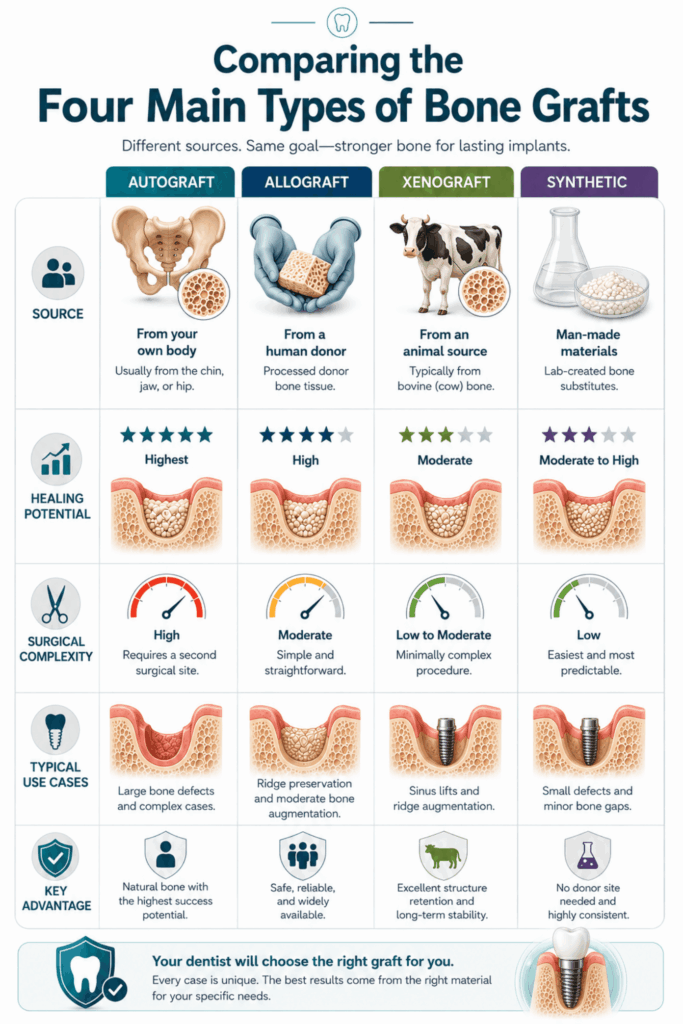
| Type | Source | Advantages | Common Uses |
|---|---|---|---|
| Autograft | Patient’s own bone | Excellent healing potential and compatibility | Larger defects and complex cases |
| Allograft | Human donor bone | No second surgical site required | Common implant grafting procedures |
| Xenograft | Animal-derived bone | Maintains volume well over time | Socket preservation and ridge augmentation |
| Synthetic Graft | Artificial bone materials | No donor source required | Minor to moderate grafting procedures |
Autograft Bone Grafts
Autogenous bone grafts use bone taken from another area of the patient’s body. Common donor sites may include the chin, jaw, or other areas depending on the amount needed. Because the graft contains living bone cells and natural growth factors, it often supports excellent bone healing and new bone formation. However, it requires an additional surgical site, which may increase treatment complexity.
Allograft Bone Grafts
Allografts use donor bone that has been carefully processed and sterilized for medical use. These grafts eliminate the need for a second surgical procedure to harvest bone from the patient. Allografts are among the most commonly used materials in implant dentistry because they provide a reliable scaffold that supports growth of new bone while reducing surgical time.
Xenograft Bone Grafts
Xenografts are derived from animal sources, most commonly bovine bone. The material is processed extensively so that only the mineral structure remains. This framework helps maintain bone volume and supports gradual integration with natural bone tissue. Xenografts are frequently used when preserving ridge shape is important.
Synthetic Bone Graft Materials
Synthetic bone graft materials are manufactured using biocompatible compounds, often containing naturally occurring minerals similar to those found in human bone. These materials can stimulate bone growth and serve as an alternative when patients prefer not to use donor-derived grafts. They are commonly used for minor bone defects and certain implant procedures.
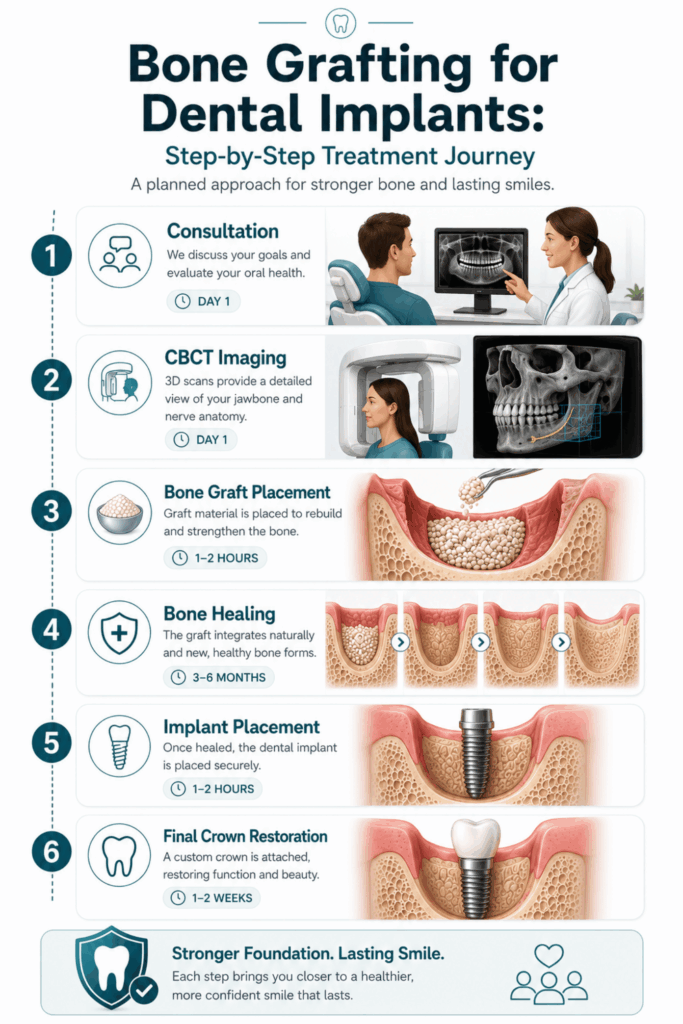
Step-by-Step Bone Grafting for Dental Implants
Bone grafting for dental implants is usually completed in several stages. While every case is different, understanding the process can help patients feel more confident about treatment and recovery.
- Consultation and Evaluation: The dentist assesses the amount of bone loss and develops a customized treatment plan.
- Treatment Planning: Imaging determines the type of graft material and amount of grafting required.
- Graft Placement: The graft is placed into the deficient area of the jaw during a surgical procedure.
- Healing Phase: New bone develops gradually around the graft site over several months.
- Implant Placement: Once enough healthy bone forms, dental implant surgery can proceed.
- Final Restoration: Artificial teeth are attached after successful implant integration.
Initial Examination and Treatment Planning
The planning stage begins with a comprehensive examination and detailed imaging. These scans help the dentist measure bone dimensions and identify anatomical structures such as nerves and sinus cavities. Based on these findings, the appropriate graft material and surgical approach are selected.
Bone Graft Placement Procedure
During the grafting procedure, local anesthesia is typically used to keep patients comfortable. Sedation may also be offered for more extensive cases. The dentist or oral surgeon makes a small incision in the gum tissue, places the bone graft material into the area of deficiency, and closes the surgical site with sutures to protect healing.
Healing and Bone Regeneration
After placement, the body begins integrating the transplanted bone or graft material. Blood vessels grow into the area, and new bone tissue gradually develops around the graft. Over time, the graft becomes incorporated into the surrounding jaw bone and helps restore strength and volume.
Dental Implant Placement
Implants may be placed once sufficient bone healing has occurred. The timing depends on the amount of grafting performed, the type of graft material used, and the rate of new bone growth. In some situations, implants can be placed at the same time as the graft, while other cases require a separate healing period.
Can Bone Grafting and Dental Implant Placement Be Done at the Same Time?
In some cases, bone grafting and dental implant placement can be completed during the same appointment. This approach is most common when only minor bone deficiencies are present and the implant can achieve adequate initial stability. Simultaneous treatment may reduce overall treatment time and decrease the number of surgical visits.
However, staged treatment is often safer when significant bone loss has occurred. If the implant lacks enough support during placement, the risk of complications increases. The decision depends on bone quality, graft size, implant location, and overall treatment goals. Your dentist or oral surgeon will determine which approach offers the highest chance of success.
How Long Does Bone Grafting Take to Heal Before Dental Implants?
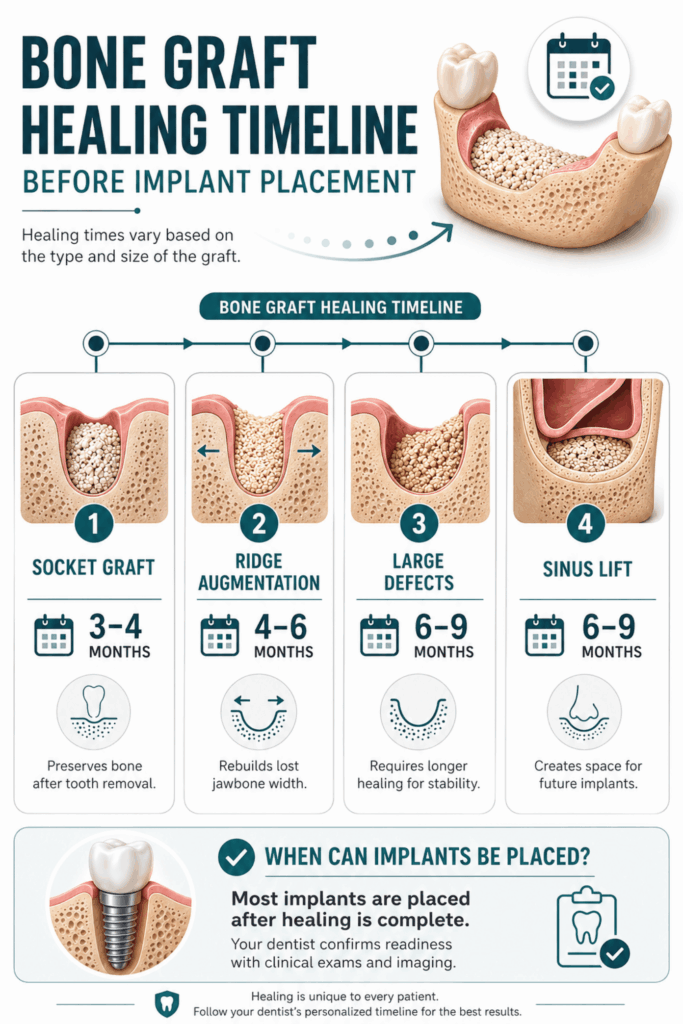
Healing times vary depending on the graft type, the size of the graft, the patient’s overall health, and the location of the surgical site. While some minor grafts heal relatively quickly, larger reconstruction procedures require additional time to allow complete bone regeneration.
- Minor Socket Grafts: Often heal within 3 to 4 months.
- Moderate Ridge Augmentation: Typically requires 4 to 6 months.
- Large Bone Defects: May need 6 to 9 months of healing.
- Sinus Lift Procedures: Commonly require 6 to 9 months before implant placement.
- Healthy Non-Smokers: Often experience faster bone healing.
- Medical Conditions: Diabetes, smoking, and certain medications may slow recovery.
Recovery After Bone Grafting for Dental Implants
Most patients recover well after a dental bone graft procedure. Mild discomfort, swelling, and bruising are common during the first few days. Understanding what is normal can help reduce anxiety and make recovery easier.
- Swelling: Mild to moderate swelling often peaks within 48 to 72 hours.
- Bruising: Some facial bruising may occur and usually resolves within one to two weeks.
- Minor Bleeding: Light bleeding or oozing is normal during the first day.
- Tenderness: The graft site may feel sore for several days.
- Medication Use: Your dentist may prescribe antibiotics and pain medication to manage any discomfort.
- Gradual Improvement: Symptoms should steadily improve as healing progresses.
- Follow-Up Visits: Regular appointments help ensure successful bone healing.
Foods to Eat After a Dental Bone Graft
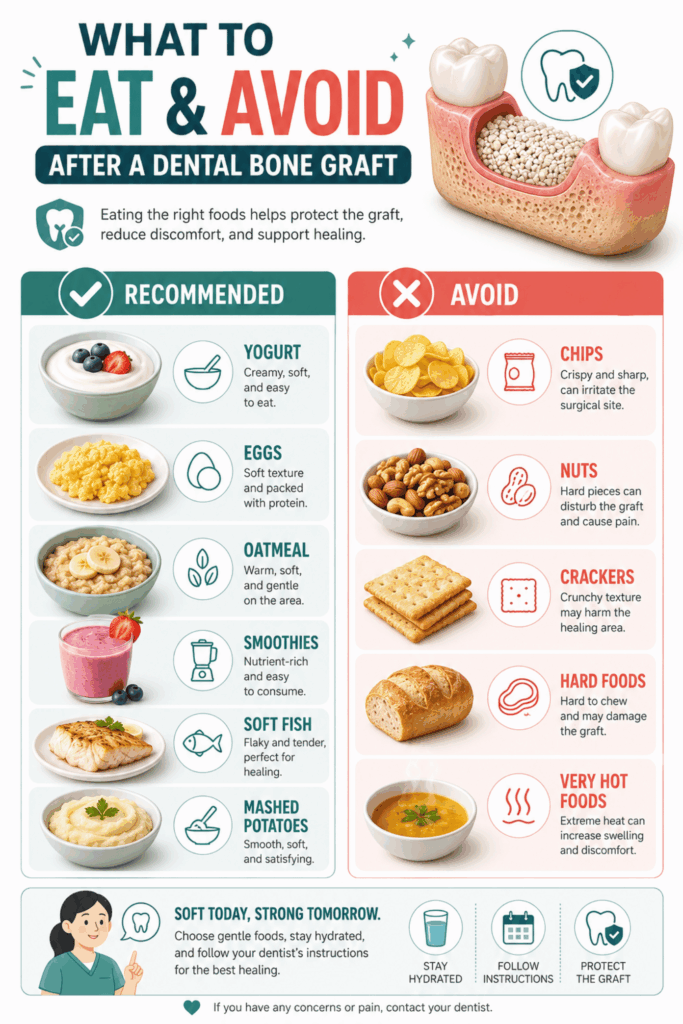
Your diet plays an important role in protecting the graft site and supporting recovery. Soft foods reduce pressure on the surgical area while providing nutrients needed for healing.
- Yogurt and Cottage Cheese: Easy to eat and rich in protein.
- Scrambled Eggs: Provide protein and important nutrients for tissue repair.
- Mashed Potatoes: Soft and comfortable during early healing.
- Smooth Soups: Warm, not hot, soups can be soothing and nutritious.
- Oatmeal: Soft texture makes it easy to consume after surgery.
- Smoothies: Offer vitamins and minerals without excessive chewing.
- Soft Fish: Provides protein while remaining gentle on healing tissues.
- Avoid Crunchy Foods: Chips, nuts, and crackers can disturb the graft site.
- Avoid Hard Foods: Hard foods may place pressure on healing bone.
- Avoid Very Hot Foods: Excessive heat can irritate the surgical area.
Risks and Complications of Bone Grafting for Dental Implants
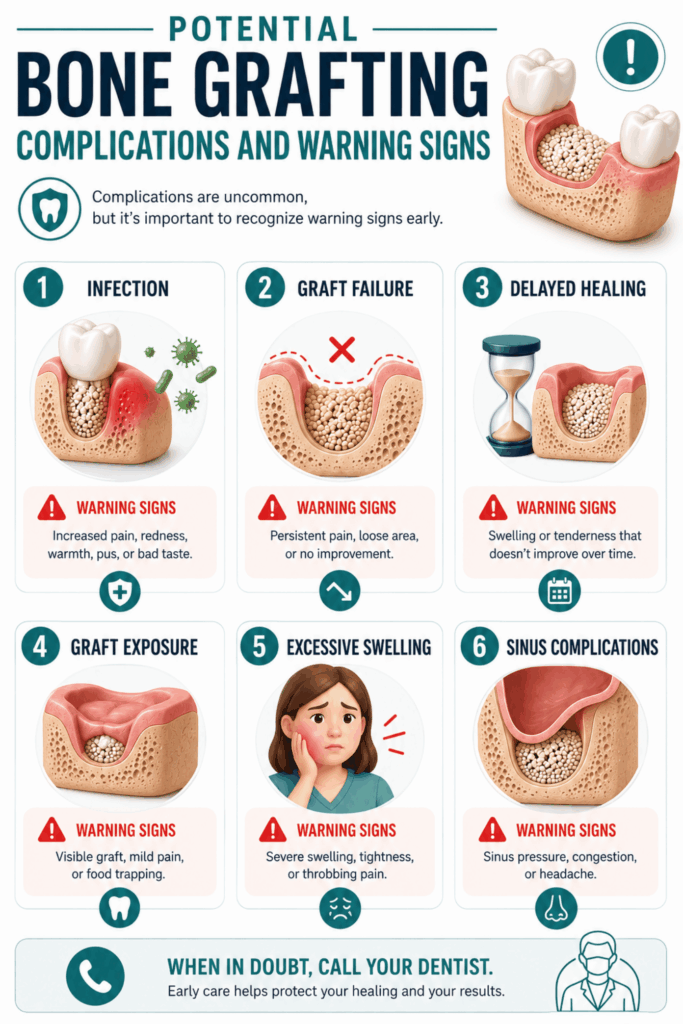
Bone grafting is generally a safe and predictable procedure. Serious complications are uncommon, especially when treatment is carefully planned and patients follow post-operative instructions. Still, it is important to understand potential risks.
- Infection: Persistent swelling, pain, or drainage may indicate infection.
- Graft Failure: Rarely, the graft does not integrate properly with surrounding bone.
- Delayed Healing: Some patients heal more slowly due to medical conditions or smoking.
- Graft Exposure: A small portion of graft material may become visible through the gums.
- Excessive Swelling: Significant swelling beyond expected recovery should be evaluated.
- Sinus Complications: Upper jaw procedures may occasionally affect nearby sinus structures.
- Persistent Pain: Ongoing discomfort should be assessed by a dental specialist.
How Successful Is Bone Grafting for Dental Implants?
Bone grafting for dental implants has a high success rate when performed by experienced oral surgeons, periodontists, or other qualified dental specialists. Advances in graft materials, imaging technology, and surgical techniques have made treatment more predictable than ever.
Several factors influence successful bone regeneration, including overall health, smoking status, oral hygiene, graft size, and adherence to post-operative instructions. When properly planned and executed, bone grafting often creates the stable foundation needed for long-term implant success.
How Much Bone Grafting Is Needed for Dental Implants?
The amount of grafting required depends on the extent of bone loss and the size of the implant being placed. Some patients need only a minor bone graft to fill a small defect after tooth extraction, while others require more extensive reconstruction to rebuild significant portions of the jaw.
In severe cases, procedures such as ridge augmentation or a sinus lift may be necessary to create enough bone for implant placement. Detailed imaging allows the dentist to determine exactly how much graft material is needed before treatment begins.
Does Bone Grafting Increase the Cost of Dental Implants?
Bone grafting adds an additional step to treatment, which can increase the overall cost of dental implants. However, the procedure often makes implant placement possible and improves the likelihood of long-term success.
- Amount of Bone Loss: Larger grafts generally require more materials and treatment time.
- Type of Graft Material: Different graft sources vary in cost.
- Treatment Complexity: Extensive reconstruction typically costs more than minor grafting.
- Number of Implant Sites: Multiple grafted areas increase treatment expenses.
- Need for Additional Procedures: Sinus lift procedures may add to overall costs.
- Geographic Location: Treatment fees vary by region and provider experience.
- Specialist Care: Oral surgeons and periodontists may have different fee structures.
How to Protect Your Bone Graft During Healing
Successful healing depends on both the procedure itself and the care you provide afterward. Following instructions carefully helps reduce complications and supports strong bone regeneration.
- Take Medications as Directed: Complete prescribed antibiotics and use pain medication appropriately.
- Eat Soft Foods: Avoid placing pressure on the graft site during early healing.
- Avoid Smoking: Smoking significantly increases the risk of graft failure.
- Maintain Gentle Oral Hygiene: Keep the mouth clean without disturbing the surgical area.
- Avoid Vigorous Rinsing: Excessive rinsing can disrupt early healing.
- Attend Follow-Up Visits: Monitoring allows problems to be identified early.
- Follow Activity Restrictions: Avoid strenuous exercise during the initial recovery period.
- Report Unusual Symptoms: Contact your dentist if pain, swelling, or bleeding worsens unexpectedly.
Bone Grafting for Dental Implants: Key Facts to Remember
Bone grafting for dental implants helps rebuild areas of the jaw that no longer contain enough healthy bone to support an implant. Whether bone loss results from tooth extraction, periodontal disease, trauma, or long-term denture use, grafting can restore the foundation needed for successful treatment. Modern graft materials and techniques make the procedure highly predictable for many patients.
If you have been told you lack enough bone for dental implants, it does not automatically mean implants are impossible. A thorough evaluation by a dentist, periodontist, or oral surgeon can determine whether bone grafting is the right solution. By restoring bone volume and supporting new bone growth, this procedure often opens the door to a stronger, more stable, and longer-lasting implant result.
