Have you noticed a hard, rough layer near your gumline that will not brush away? It may be tartar on your teeth, also called dental calculus. Tartar is plaque that has hardened after mixing with minerals in saliva. Once it forms, a toothbrush and floss cannot remove it; a dentist or dental hygienist must clean it off safely.
Tartar often looks yellow or brown, although older deposits may appear darker. It commonly collects around the gumline and behind the lower front teeth. The buildup is not usually an emergency, but its rough surface can hold more plaque and may occur with swollen or bleeding gums and bad breath. Do not try to scrape it off with sharp tools.
Seeing tartar does not tell you how healthy your gums are or which type of cleaning you need. A dental exam can show whether deposits sit above the gumline or extend below it. First, it helps to understand how tartar differs from soft plaque, why it forms, and which signs mean it is time to arrange professional care.
What Is Tartar on Teeth?
Tartar on teeth, also known as dental calculus, is dental plaque that has absorbed minerals from saliva and hardened. It attaches firmly to the tooth surface and may develop above or below the gum line. The NIDCR’s oral-hygiene guidance explains that brushing and flossing can remove plaque but cannot remove tartar once it forms.
Tartar is not simply a stain or trapped food. Its hard, rough surface can retain more plaque next to the teeth and gums. Finding tartar does not prove that you have gum disease, but it does mean that professional dental cleaning is needed.
How Soft Plaque Hardens Into Tartar
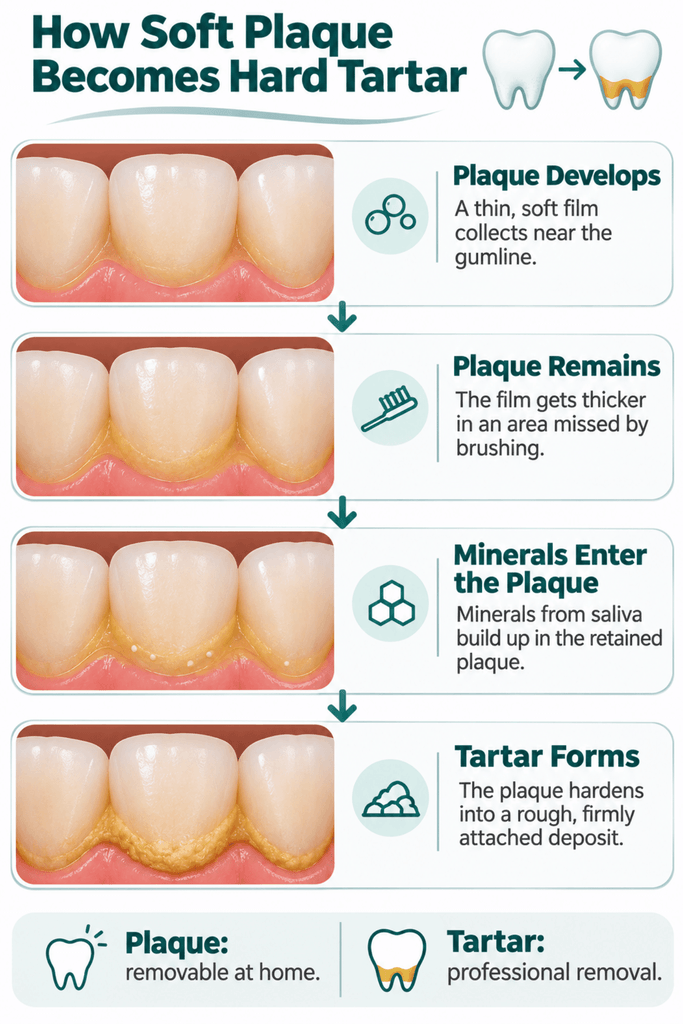
Plaque forms on your teeth every day. Hardening into tartar happens through a gradual process:
- Plaque Develops: Bacteria, saliva, and food particles form a soft, sticky film that coats your teeth.
- Plaque Remains Undisturbed: Missed areas near the gum line or between teeth allow the film to stay attached.
- Salivary Minerals Enter the Plaque: Calcium and other minerals from saliva collect within the plaque and begin to harden it.
- Tartar Attaches to the Tooth: The mineralized deposit becomes rough and firmly attached, so normal brushing and flossing can no longer lift it away.
The speed of this process differs from one person and one area of the mouth to another. The NIDCR’s explanation of plaque mineralization notes that calculus can begin forming soon after plaque develops, but the timing varies between patients.
Plaque vs. Tartar
Plaque and tartar buildup are related, but they are not the same problem.
| Feature | Plaque | Tartar |
|---|---|---|
| Texture | Soft, sticky, or fuzzy | Hard, rough, or crust-like |
| Appearance | Often clear, white, or pale yellow | Commonly yellow or brown but may become darker |
| Attachment | Loosely coats tooth surfaces | Bonds firmly to teeth |
| Location | Can form on any tooth surface | Often collects near the gum line and between teeth |
| Home removal | Brushing and interdental cleaning can remove it | Cannot be removed safely at home |
| Treatment | Daily oral hygiene | Professional tartar removal |
The main difference between plaque and tartar is whether the deposit has mineralized. You can remove plaque through effective home care, but tartar must be removed by a dentist or dental hygienist.
What Does Tartar on Teeth Look and Feel Like?
Tartar often appears as a raised deposit that looks different from the smooth enamel around it. Its appearance varies with its location, age, and exposure to staining foods, drinks, or tobacco.
- Hard Texture: Tartar feels firmly attached and does not wipe or brush away.
- Rough Surface: Your tongue may notice a gritty or crust-like patch near the gum line.
- Yellow or Brown Color: Deposits above the gums often have a cream, yellow, or brown appearance.
- Dark Deposits: Older tartar or deposits below the gums may look dark brown or black.
- Nearby Gum Changes: The gums may look red, swollen, or prone to bleeding when plaque remains around the deposit.
Color and texture cannot confirm the cause with certainty. A dark or rough area could also be a stain, filling, cavity, or damaged tooth.
Where Tartar Commonly Builds Up
Tartar can form anywhere plaque remains, but some surfaces are easier to miss during daily dental care.
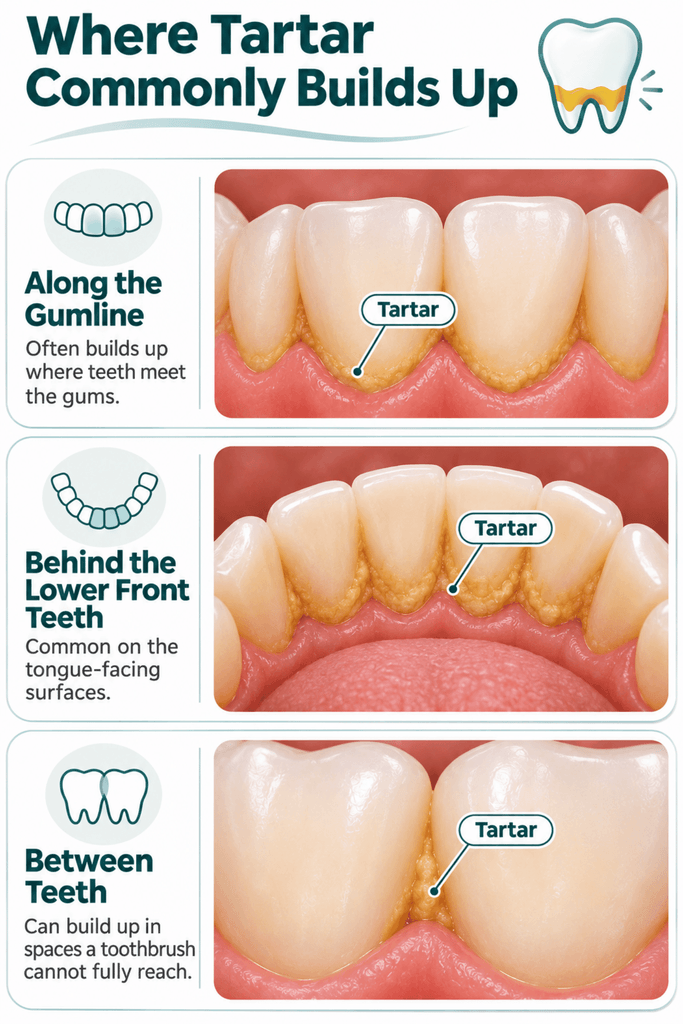
- Along the Gum Line: Plaque often remains where the teeth and gums meet.
- Behind the Lower Front Teeth: This area is close to salivary-duct openings and receives frequent exposure to minerals in saliva.
- Between Teeth: A toothbrush cannot fully clean these narrow spaces.
- Around Crowded Teeth: Overlapping or rotated teeth create areas that are harder to reach.
- Around Braces and Retainers: Wires, brackets, and fixed retainers can trap plaque.
- Near Dental Restorations: Plaque may collect around the edges of crowns, bridges, implants, and fillings.
Tartar, Stain, Food, or Tooth Damage?
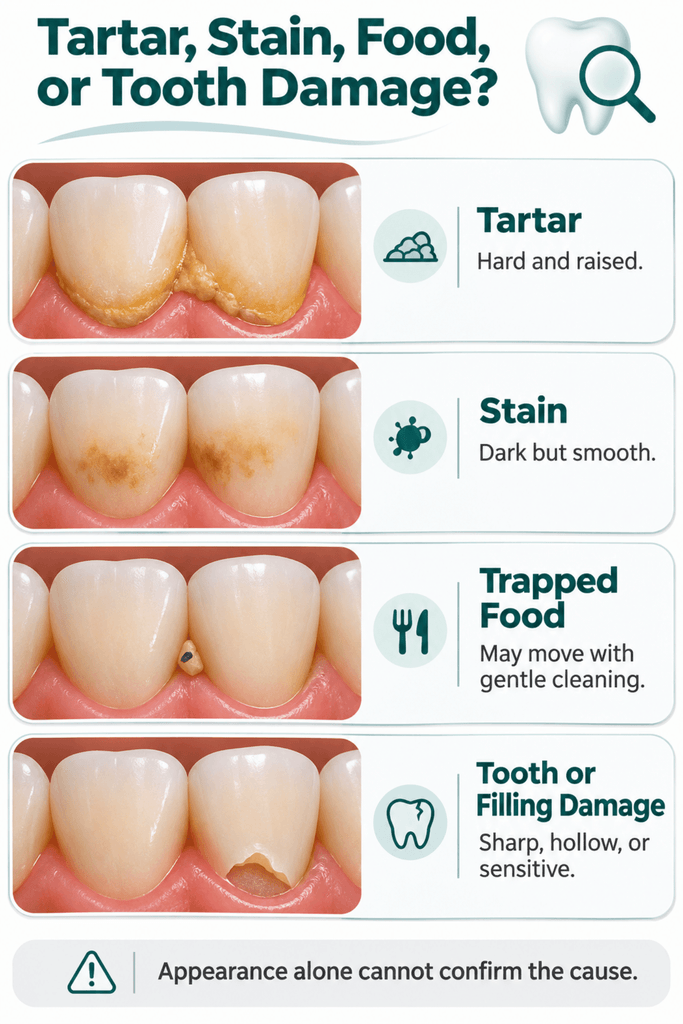
A few simple clues can help you describe what you see, but they cannot replace a dental examination.
- Possible Tartar: The area feels hard, raised, and firmly attached after gentle brushing and cleaning between the teeth.
- Possible Stain: The tooth looks darker, but the surface remains smooth and does not feel thicker.
- Possible Trapped Food: The material moves or disappears with gentle brushing, floss, or an interdental brush.
- Possible Tooth Damage: The area feels sharp, chipped, hollow, or newly sensitive. A broken filling may also leave an unfamiliar rough edge.
Do not test the area with a pin, metal scaler, or another sharp object. Arrange a dental examination if a rough or dark patch remains.
Why Tartar Builds Up Even When You Brush
Developing tartar does not always mean that you neglect your oral health. You may brush your teeth every day yet leave small amounts of dental plaque in places your toothbrush cannot reach.
- Missed Gum-Line Plaque: Moving the brush only across the center of each tooth can leave plaque along the edges of the gums.
- Short or Rushed Brushing: Brushing for less than two minutes may leave several surfaces untouched.
- Limited Interdental Cleaning: Plaque between teeth remains even when the visible surfaces look clean.
- Crowding or Dental Appliances: Overlapping teeth, braces, bridges, and fixed retainers require more detailed cleaning.
- Dry Mouth: Reduced saliva flow can change the mouth’s natural cleaning process and increase plaque-related dental issues.
- Tobacco Use: Smoking can increase staining and is an important risk factor for gum disease.
- Frequent Sugary and Starchy Foods: These foods provide fuel for plaque bacteria, especially when eaten often between meals.
- Individual Differences: Saliva composition, tooth position, dexterity, and plaque buildup rate vary between people.
An electric toothbrush may help some people remove plaque more effectively, especially if it has a timer or pressure sensor. However, neither an electric nor a manual toothbrush can remove tartar that has already hardened.
Can Tartar on Teeth Cause Problems?
Tartar provides a rough surface where plaque bacteria can remain close to the gums. The bacteria in plaque drive inflammation; tartar supports the problem by making those bacteria harder to remove.
Ongoing inflammation may begin as gingivitis, which can cause red, swollen, or bleeding gums. If inflammation extends into the tissues supporting your teeth, it may develop into periodontitis. The CDC’s overview of periodontal disease and its warning signs explains how plaque and tartar buildup can contribute to gum inflammation and damage below the gum line.
Common Findings Around Tartar Buildup
The following findings can occur around tartar, but they do not confirm a specific diagnosis:
- Hard Deposits: Rough material remains attached after normal brushing.
- Gum Redness: The gum edge may look redder than nearby tissue.
- Bleeding During Cleaning: Inflamed gums may bleed when you brush or clean between your teeth.
- Swelling or Tenderness: The gums may feel puffy or uncomfortable.
- Persistent Bad Breath: Plaque bacteria and trapped debris may contribute to an unpleasant odor or taste.
These changes are reasons to arrange a dental check, particularly when they continue despite improved oral hygiene.
Warning Signs That Need More Attention
Contact a dental professional if tartar buildup occurs with any of the following:
- Persistent Bleeding: Bleeding continues regularly instead of improving with gentle, thorough plaque removal.
- Gum Recession: The gums pull away, making the teeth look longer or exposing sensitive roots.
- Pus or a Bad Taste: Drainage near the gum line may indicate an infection.
- Increasing Pain or Swelling: Worsening symptoms need assessment rather than stronger home cleaning.
- Loose or Shifting Teeth: Mobility can be a sign that the supporting tissues have been damaged.
- A Changing Bite: Teeth no longer meet in the same way when you close your mouth.
These signs do not automatically mean advanced gum disease, but they should not be managed through home tartar removal.
Why Home Care Cannot Remove Hardened Tartar
Brushing, flossing, and mouthwash can help control soft plaque. They cannot detach mineralized tartar because the deposit is firmly bonded to the tooth surface.
A tartar-control toothpaste may slow the formation of new deposits, but it does not dissolve existing calculus. Products advertised to remove tartar from teeth at home should not replace professional dental care.
Why You Should Not Scrape Tartar Yourself
Dental professionals use instruments with controlled pressure, proper visibility, and knowledge of tooth and root anatomy. Scraping your own teeth can cut the gums, scratch exposed root surfaces, or push material below the gum line.
Avoid the following methods:
- Metal Scraping Tools: Household tools and online dental scalers can injure teeth and gums when used without training.
- Forceful Brushing: Hard pressure will not remove tartar and may irritate the gums or wear exposed root surfaces.
- Vinegar or Lemon Juice: These acids do not safely detach calculus, and repeated exposure can damage enamel.
- Abrasive Powders: Aggressive rubbing with rough products may irritate oral tissues without removing the attached deposit.
- Pulling Loose Pieces: A hard fragment may be tartar, a filling, or part of a tooth. Leave the area alone until a dentist checks it.
What Home Care Can Still Accomplish
Home care cannot remove existing tartar, but it can remove plaque and slow new buildup after a dental cleaning.
- Brush Twice Daily: Use fluoride toothpaste and clean every tooth surface for at least two minutes.
- Clean Between Teeth: Floss or use another suitable interdental cleaner each day.
- Clean Around Appliances: Use tools designed for braces, bridges, implants, or fixed retainers.
- Use Mouthwash as an Addition: A dentist-recommended rinse may support plaque control, but it does not replace mechanical cleaning.
- Check Your Technique: Ask your dentist or hygienist to identify the areas you commonly miss.
How Dentists Remove Tartar Safely
A dentist or hygienist first examines the teeth and gums to locate the buildup and look for signs of inflammation. The type of cleaning depends on whether deposits are mainly above the gum line or extend into periodontal pockets.
A typical removal process may include:
- Oral Examination: The clinician checks the teeth, gums, restorations, and areas of visible buildup.
- Gum Assessment: Pocket measurements and bleeding points may be recorded when gum disease is suspected.
- Ultrasonic Scaling: A vibrating instrument with a water spray breaks apart larger deposits and washes away debris.
- Hand Scaling: Fine instruments remove smaller deposits from specific tooth surfaces.
- Polishing When Appropriate: Polishing can smooth away some surface stains after plaque and tartar have been removed.
- Personalized Home-Care Advice: The clinician shows you which areas need more attention and which cleaning tools fit your needs.
Routine Dental Cleaning
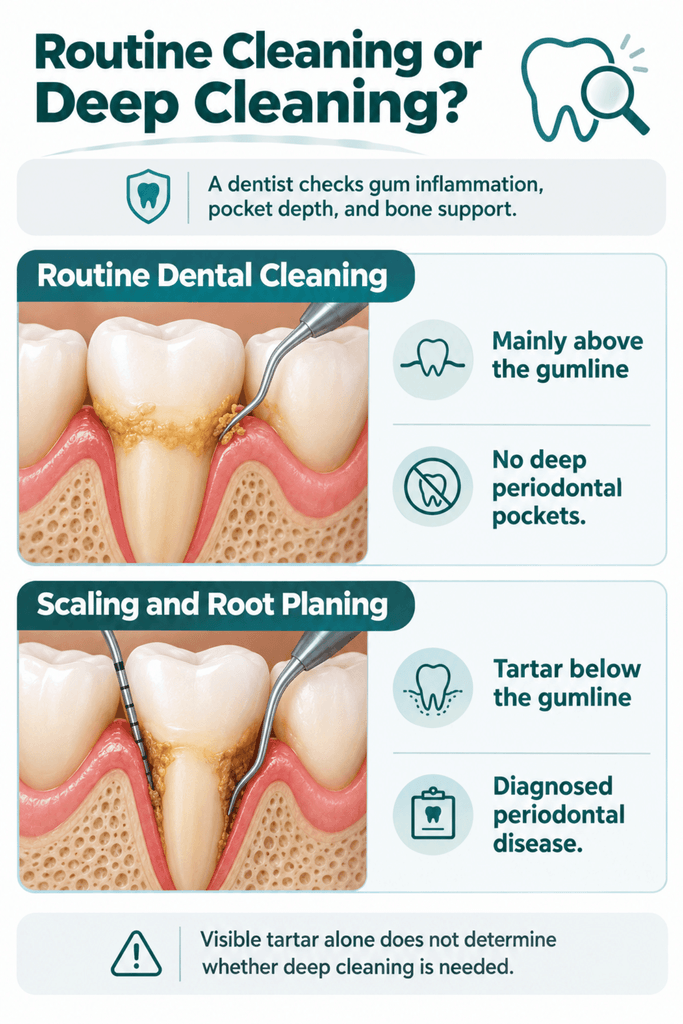
A routine dental cleaning removes plaque and tartar from accessible tooth surfaces, especially above and around the gum line. The dentist or hygienist may combine ultrasonic and hand instruments depending on the deposit’s thickness and location.
Polishing may follow scaling when it adds value, but it is not the part that removes tartar. The exact procedure varies according to your teeth, restorations, sensitivity, and oral health.
When Scaling and Root Planing May Be Needed
Scaling and root planing is a deeper treatment used for diagnosed periodontal disease. It removes plaque and tartar below the gum line and smooths contaminated root surfaces so the gums can heal more effectively.
Visible tartar alone does not prove that you need deep cleaning. The decision is based on findings such as periodontal pockets, bleeding, deposits below the gums, attachment loss, and bone changes. The American Dental Association’s explanation of scaling and root planing describes why this treatment is used when gum disease extends beneath the gum line.
Factors that may support this treatment include:
- Deep Periodontal Pockets: Spaces between the gums and teeth hold bacteria that a toothbrush cannot reach.
- Subgingival Tartar: Calculus is present below the gum line.
- Attachment or Bone Loss: The supporting tissues around a tooth have been damaged.
- Ongoing Gum Inflammation: Bleeding and swelling continue alongside other signs of periodontal disease.
What to Expect After Tartar Removal
Many people notice that their teeth feel much smoother after tartar removal. If heavy deposits had filled spaces or covered part of the tooth surface, the teeth may also look more separated or longer afterward. The cleaning did not create those spaces; it exposed areas that the buildup had hidden.
Common short-term findings may include:
- Mild Sensitivity: Teeth may react more to cold drinks or air for a short time.
- Gum Tenderness: Inflamed gums can feel sore after deposits are removed.
- Minor Bleeding: The gums may bleed during or shortly after cleaning, especially when they were already inflamed.
- A Different Tooth Shape: Your tongue may notice the natural contours that had been covered by tartar.
Continue gentle brushing with fluoride toothpaste and follow any instructions from your dental office. Contact the office if pain, swelling, bleeding, or sensitivity becomes more severe instead of settling.
When Should You See a Dentist for Tartar Buildup?
Arrange a routine dental visit if a hard deposit remains after gentle brushing and cleaning between your teeth. Tartar does not need emergency treatment in most cases, but delaying removal allows more plaque to collect around it.
Use these categories to decide what to do:
- Arrange a Routine Visit: You notice hard yellow or brown buildup without pain or swelling.
- Book an Earlier Assessment: Your gums bleed often, look swollen, have receded, or remain tender.
- Contact the Dental Office Promptly: You notice pus, worsening pain, a persistent bad taste, or a tooth becoming loose.
- Seek Urgent Care: Facial swelling, fever with dental swelling, or difficulty swallowing or breathing requires urgent medical or dental assessment.
A dentist can determine whether you need a routine cleaning, periodontal treatment, or care for another dental problem that resembles tartar.
How to Prevent Tartar on Teeth From Returning
The most effective way to prevent tartar is to remove plaque before it mineralizes. This requires consistent brushing, interdental cleaning, and professional dental care suited to your risk.
The American Dental Association’s evidence-based home-care recommendations support twice-daily brushing with fluoride toothpaste, two minutes of brushing, daily cleaning between teeth, and personalized preventive advice.
- Brush Morning and Night: Clean for at least two minutes and reach the outer, inner, and chewing surfaces.
- Clean Between Teeth Daily: Remove plaque from spaces the toothbrush cannot reach.
- Use Fluoride Toothpaste: Fluoride helps prevent tooth decay, even though it does not remove hardened tartar.
- Clean Dental Appliances Carefully: Pay extra attention around braces, retainers, bridges, crowns, and implants.
- Avoid Tobacco: Tobacco raises the risk of periodontal disease and can darken existing deposits.
- Manage Dry Mouth: Ask a dentist or physician for help if medications or a health condition reduce your saliva flow.
- Attend Recommended Cleanings: Professional care removes deposits that home cleaning cannot reach.
Improve Brushing at the Gumline
Use a soft-bristled brush that fits comfortably in your mouth.
- Aim at the Gum Edge: Place the bristles where the teeth meet the gums rather than brushing only the center of each tooth.
- Use Gentle Pressure: Let the bristles do the cleaning. Scrubbing harder does not remove tartar.
- Clean Every Surface: Brush the outer, inner, and chewing surfaces of every tooth.
- Turn the Brush Vertically: This position can help clean the tongue-facing surfaces of the lower front teeth.
- Brush for Two Minutes: A timer can reduce the chance of rushing.
- Choose a Brush You Can Use Well: Both manual and electric toothbrushes can remove plaque when used correctly.
Clean Between Teeth Every Day
Interdental cleaning helps remove food particles and plaque from surfaces a toothbrush cannot reach. The best tool depends on the size of the spaces, your dental work, and how easily you can handle it.
- Dental Floss: Often suits tight contacts between natural teeth.
- Interdental Brushes: May work better in wider spaces, around braces, or where gums have receded.
- Floss Threaders: Help guide floss beneath bridges and fixed orthodontic wires.
- Water Flossers: Can be useful for people who struggle with string floss or have dental appliances.
- Implant-Safe Tools: Coated interdental brushes and other suitable products help reduce the risk of scratching implant surfaces.
Ask a dental professional to demonstrate the tool. Technique matters as much as the product you choose.
Choose a Cleaning Schedule Based on Your Risk
A visit every six months may suit many people, but it is not the correct schedule for everyone. There is no single cleaning interval that fits every patient.
Your dentist may recommend more frequent cleanings if you develop tartar quickly, smoke, have diabetes or dry mouth, struggle to clean around dental appliances, or have a history of periodontitis. People with stable oral health and effective plaque control may need a different interval. Seeing your dentist at the recommended times helps prevent small dental issues from becoming harder to manage.
Frequently Asked Questions About Tartar on Teeth
What Should I Do If Tartar Breaks Off My Teeth?
Do not pull or scrape away more material. Rinse your mouth, avoid picking at the area, and check whether it feels sharp or looks damaged. A loose fragment may be tartar, but it could also be enamel or part of a filling. Arrange a dental check if you are unsure, or if the tooth becomes painful.
Does Professional Tartar Removal Damage Enamel?
Professional scaling is designed to separate deposits from the tooth while preserving healthy enamel. Temporary sensitivity after cleaning does not necessarily mean that enamel was damaged. Risk is greater when someone uses sharp tools at home without proper visibility, training, or control.
Does Tartar Cause Cavities?
Plaque bacteria cause tooth decay by producing acids that attack enamel. Tartar is not the direct cause, but its rough surface can retain plaque and make cleaning harder. Removing tartar and controlling plaque both support better dental health and help prevent cavities.
Why Do My Teeth Feel Loose After Tartar Removal?
Cleaning does not normally loosen healthy teeth. Heavy tartar may have hidden mobility that was already present because gum disease had damaged the supporting bone. If a tooth feels loose after tartar removal, contact your dentist so they can assess the gums, bite, and bone support.
Should Tartar Be Removed Before Teeth Whitening?
A dentist may recommend a dental cleaning and gum assessment before teeth whitening. Whitening products change tooth color but do not remove plaque or tartar. Cleaning first can expose the true tooth surface, reduce gum irritation, and help the final color look more even.
Can Tartar Build Up on Crowns, Implants, or Dentures?
Yes. Plaque can form on natural teeth and dental prosthetics, then mineralize into tartar. Crowns, implants, and dentures need cleaning methods suited to their materials because unsuitable metal or abrasive tools may scratch them. A dental professional can remove deposits without treating every surface in the same way.
Can Children Develop Tartar on Their Teeth?
Children can develop tartar, especially around crowded teeth, braces, or areas they regularly miss. A dentist should assess and remove any hard deposit rather than a caregiver scraping it at home. The American Academy of Pediatric Dentistry’s recommendations for age- and risk-based dental care support preventive visits based on each child’s needs.
Bottom Line: Tartar on Teeth Needs Professional Removal
Tartar is hardened plaque that brushing, flossing, and mouthwash cannot remove. It can retain plaque close to the gums, so safe tartar removal requires professional dental instruments.
Arrange a dental examination if hard buildup remains after normal cleaning, especially when you also notice bleeding, swelling, recession, pain, or loose teeth. After the deposits are removed, consistent plaque control can help prevent tartar from returning.
