Do your teeth feel fuzzy or look coated even after you brush? If you are wondering how to remove plaque from teeth, the answer is brushing twice a day plus cleaning between every tooth once a day. Use fluoride toothpaste, a soft-bristled brush, and floss or another interdental cleaner. These steps break up soft plaque before it can harm your teeth and gums.
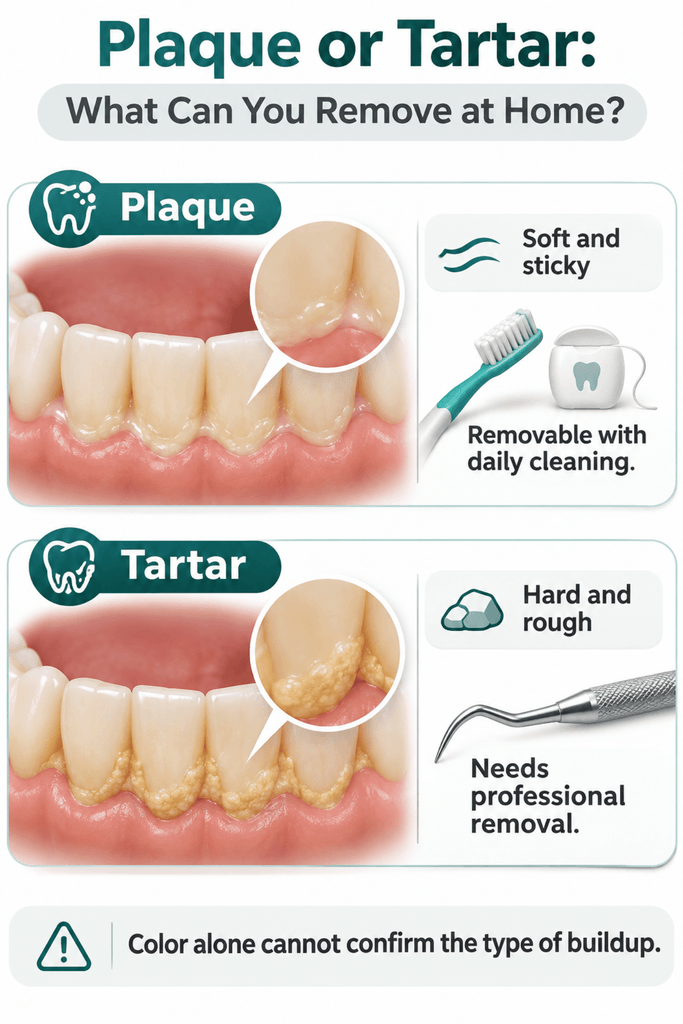
The key is knowing what you are trying to remove. Plaque is a soft, sticky film that forms every day. Tartar is plaque that has hardened and bonded to the tooth. You can remove soft plaque at home, but brushing harder will not remove tartar. A dentist or dental hygienist must clean it away safely.
Good plaque control depends more on technique and consistency than on expensive products. The gumline, spaces between teeth, back molars, and inner surfaces of the lower front teeth are easy to miss. Once you know where plaque collects and which tools fit each area, you can clean more effectively and recognize when home care is no longer enough.
Can You Remove Plaque From Teeth at Home?
Yes. If you want to know how to remove plaque from teeth at home, focus on gentle brushing and daily cleaning between the teeth. These actions disturb soft, sticky plaque before it causes cavities, bad breath, or gum inflammation. NIDCR oral-hygiene guidance recommends fluoride toothpaste, thorough brushing, and interdental cleaning as the foundation of daily plaque control.
However, you cannot remove tartar from your teeth with a toothbrush or floss. Tartar is hardened plaque that has bonded to the tooth surface. Scrubbing harder will not loosen it and may irritate your gums or wear exposed root surfaces. A dentist or dental hygienist must remove tartar with professional instruments.
Plaque vs. Tartar: How to Tell the Difference
| Feature | Plaque | Tartar |
|---|---|---|
| Texture | Soft, sticky, or fuzzy | Hard, rough, or crust-like |
| Appearance | Often colorless or pale but may hold food particles and stains | May look yellow or brown, although color varies |
| Common Locations | On any tooth surface, especially near the gumline and between teeth | Often near the gumline, behind the lower front teeth, and around upper back teeth |
| After Brushing and Flossing | Can usually be disrupted and removed | Remains firmly attached |
| Care Needed | Daily home care | Professional dental cleaning |
Color alone cannot confirm whether a deposit is plaque or tartar. Food stains, tooth-colored tartar, fillings, and natural enamel features can look similar. If a hard or rough area remains after careful cleaning, let a dental professional examine it rather than trying to scrape it away.
How to Remove Plaque From Teeth Step by Step
The best way to remove plaque from teeth is to follow the same complete routine every day. Expensive products cannot make up for areas that the toothbrush or floss keeps missing.
- Brush Twice Daily: Brush your teeth twice a day for about two minutes each time, including before bed.
- Use Fluoride Toothpaste: Fluoride helps strengthen enamel and protect against cavities while brushing removes plaque.
- Clean Every Surface: Cover the outer, inner, and chewing surfaces, paying close attention to the gumline and back teeth.
- Clean Between Teeth Daily: Floss once a day or use another suitable interdental cleaner.
- Clean Dental Appliances: Brush retainers and clean carefully around braces, bridges, and other dental work.
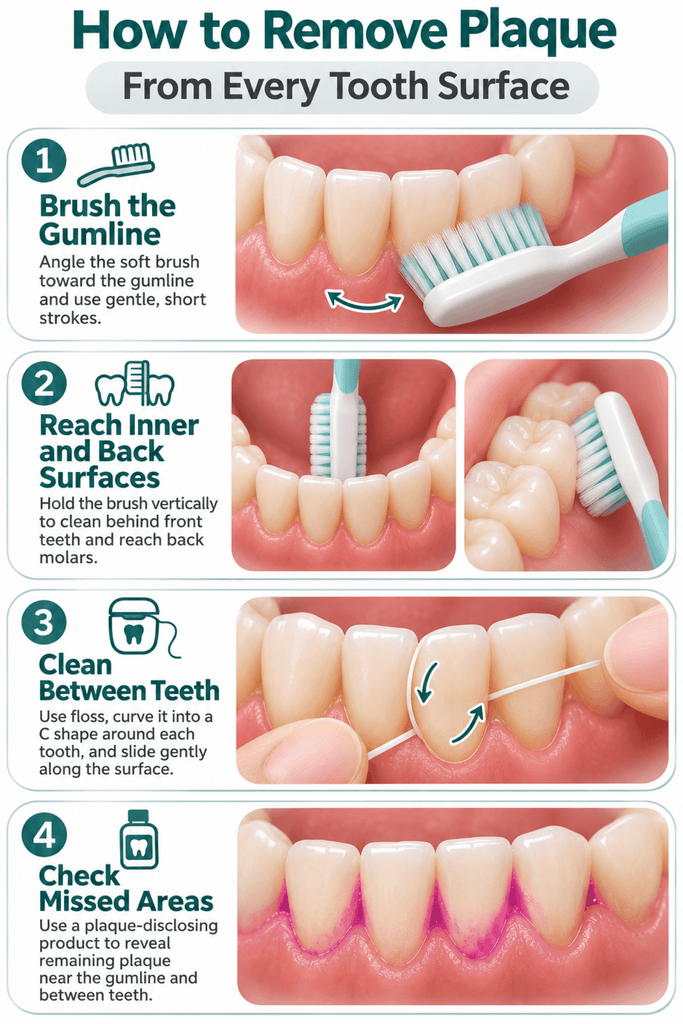
- Check the Result: Run your tongue along your teeth or use a plaque-disclosing product occasionally to find missed areas.
Gentle contact and complete coverage matter more than force. If your bristles bend against the teeth or your gums hurt after brushing, you may be pressing too hard.
Brush Every Tooth Surface Thoroughly
A soft-bristled manual or powered toothbrush can remove plaque when you use it correctly. Fluoride toothpaste does not replace the brushing motion; its main role is to make teeth more resistant to acid attacks from bacteria in your mouth.
- Start at the Gumline: Angle the bristles toward the area where each tooth meets the gum. Use small, gentle movements rather than forceful horizontal scrubbing.
- Clean the Outer Surfaces: Move in a steady order around the mouth so you do not skip teeth.
- Reach the Inner Surfaces: Pay special attention to the tongue-side surfaces of the lower teeth and the palate-side surfaces of the upper teeth.
- Turn the Brush Vertically: Use short up-and-down strokes behind the front teeth, where a full brush head may not fit well.
- Clean the Chewing Surfaces: Brush the grooves of the back teeth, where plaque and food particles may collect.
- Take the Full Two Minutes: Dividing the mouth into four sections can help you give each area enough time.
- Use Light Pressure: Hard bristles and aggressive brushing do not remove tartar buildup. They may irritate gums and contribute to wear on exposed root surfaces.
Clean Between Your Teeth Once a Day
A toothbrush cannot fully reach the contact areas between neighboring teeth. Plaque left there can contribute to cavities, gum disease, and persistent bad breath even when the visible surfaces look clean.
String floss works well in many tight spaces. Floss holders may help people with limited hand movement, while interdental brushes can suit larger spaces or areas around some bridges and orthodontic appliances. Water flossers may be useful for braces, dental work, or people who struggle with other methods. The best option depends on your tooth spacing and needs, as explained in the ADA’s guidance on floss and interdental cleaners.
To use string floss:
- Guide It Gently: Slide the floss between two teeth without snapping it into the gums.
- Form a C Shape: Curve the floss around the side of one tooth.
- Clean the Tooth Surface: Move the floss gently up and down, reaching slightly beneath the gum edge without forcing it.
- Clean the Neighboring Tooth: Curve the floss in the opposite direction and repeat.
- Use a Clean Section: Move to fresh floss before cleaning the next space.
If floss repeatedly shreds or catches in one place, do not force it. A rough filling, tartar deposit, tight contact, or damaged restoration may need to be checked.
Check for Areas You Keep Missing
Plaque-disclosing tablets or solutions temporarily color plaque that remains after cleaning. They can help you improve your technique, but they do not remove plaque by themselves.
- Follow the Product Directions: Some products are chewed, while others are painted or rinsed around the teeth.
- Use Them After Cleaning: This shows where your usual routine leaves plaque behind.
- Look for Patterns: Common missed areas include the gumline, back molars, and spaces between teeth.
- Clean the Stained Areas Again: Use gentle brushing or the correct interdental tool instead of adding pressure.
- Expect Temporary Color: The dye may briefly stain the tongue, lips, or plaque deposits, so avoid using it just before an event.
Which Tools Help Remove Plaque From Teeth?
Choose tools that fit your mouth and that you can use consistently. A complicated routine that you rarely complete will not control plaque as well as a simple routine performed carefully every day.
- Manual Toothbrush: A soft-bristled brush can clean effectively when it reaches every surface for long enough.
- Powered Toothbrush: The moving head and built-in timer may help people who brush too quickly or find the correct motion difficult. A Cochrane review comparing powered and manual toothbrushes found better average plaque and gingivitis reduction with powered brushes, although the long-term clinical importance was less certain.
- Fluoride Toothpaste: Fluoride helps keep teeth strong and supports the repair of early enamel mineral loss. Choose a nonabrasive toothpaste appropriate for your age and dental needs.
- String Floss: Floss can hug the sides of teeth and pass through tight contacts when used with a gentle C-shaped motion.
- Floss Holder: A holder may make cleaning easier if reaching the back teeth or controlling string floss is difficult.
- Interdental Brush: These small brushes can clean open spaces, areas around braces, and some spaces beneath bridges. The brush should fit without being forced.
- Water Flosser: A water flosser can help clean around orthodontic appliances and may be easier for people with limited hand movement. Ask your dentist whether it should replace or support another interdental method in your situation.
- Mouthwash: Some therapeutic rinses can help control plaque bacteria, gingivitis, bad breath, or cavity risk. Mouthwash is an addition to oral hygiene, not a replacement for brushing and cleaning between teeth.
Where Plaque Hides on Teeth and How to Remove It
Plaque on teeth is often difficult to see. Checking the same high-risk locations each day can make your routine more complete.
- Along the Gumline: Aim soft bristles toward the point where the teeth and gums meet. Do not scrub directly into the gums.
- Between Teeth: Use floss or another interdental cleaner because ordinary toothbrush bristles cannot fully enter these spaces.
- Behind the Lower Front Teeth: Saliva enters the mouth near this area, so mineral deposits commonly develop there. Turn the toothbrush vertically and clean each surface.
- Around Back Molars: Use a small brush head and close your mouth slightly to relax the cheek and improve access.
- Around Crowded Teeth: Change the brush angle to reach overlapping surfaces. A single-tufted brush may help in spaces a full brush head misses.
- Around Braces: Clean above and below each bracket, around wires, and between teeth. An orthodontic brush or suitable interdental brush may improve access.
- Under Bridges: Use a floss threader, bridge floss, or another tool recommended by your dental team to clean beneath the replacement tooth.
- Around Crowns and Implants: Plaque can collect where the restoration meets the gum. Clean gently and follow any tool recommendations given for the specific restoration.
- On Retainers: Clean removable retainers as directed and brush the teeth before replacing them. A dirty appliance can return bacteria and debris to freshly cleaned teeth.
What Not to Use for Plaque Removal
Methods that appear to scrape or dissolve buildup quickly may damage your teeth or gums. They also cannot safely remove deposits below the gumline.
- Home Dental Scalers: Do not use dental scalers, metal picks, sewing needles, or similar tools to scrape tartar at home. Slipping can cut the gums or damage the tooth or restoration.
- Fingernails: Picking at hardened plaque can injure the gumline and will not provide complete tartar removal.
- Hard Bristles: A hard toothbrush does not clean more deeply than a soft one. Excess pressure can irritate gums and wear exposed root surfaces.
- Acidic Mixtures: Repeatedly applying lemon juice, vinegar, or other acids can soften and erode enamel. A cleaner-looking surface is not worth permanent mineral loss.
- Abrasive DIY Pastes: Coarse salt, charcoal, and uncontrolled baking-soda mixtures may increase surface wear, and homemade pastes usually do not provide dependable fluoride protection.
- Oil Pulling as a Substitute: Swishing oil does not replace brushing with fluoride toothpaste or cleaning between teeth. The ADA’s evidence review of oil pulling notes that reliable evidence does not support it as a dental hygiene practice.
If you can feel a hard deposit but cannot remove it with normal brushing and flossing, stop trying to scrape it. Professional tartar removal is safer and more complete.
How to Keep Plaque From Building Up Again
Plaque is a sticky film of bacteria that reforms throughout the day. You cannot remove it permanently, but a repeatable oral hygiene routine can keep it under control and help prevent tartar, cavities, and gum inflammation.
Daily habits:
- Brush Your Teeth Twice: Brush for about two minutes with fluoride toothpaste, including once before bed.
- Floss Once a Day: Clean every interdental space with floss or another tool suited to your mouth.
- Clean Appliances: Remove plaque and food debris from retainers, aligners, dentures, and other removable appliances as directed.
- Watch Snack Frequency: Frequent sugary or starchy foods give plaque bacteria more chances to produce acids. Keep these foods with meals when possible and choose water between meals.
- Pay Attention to Dryness: Sip water if your mouth feels dry and discuss ongoing dryness with a dentist or doctor. Saliva helps wash away food particles and protect teeth.
Ongoing habits:
- Replace Worn Brushes: Replace a manual brush or powered brush head when the bristles become frayed or about every three to four months.
- Check Your Technique: Use a disclosing product occasionally or ask a dental hygienist to show you the areas you miss.
- Attend Personalized Dental Visits: Regular dental visits allow your dentist to check for plaque-related disease and remove tartar. Dental cleanings every six months are common, but the correct interval depends on your oral health and risk rather than one schedule for everyone.
- Act on Changes Early: Do not wait for significant pain. Repeated bleeding, rough deposits, sensitivity, or persistent bad breath may deserve an examination.
When Plaque Needs Professional Dental Care
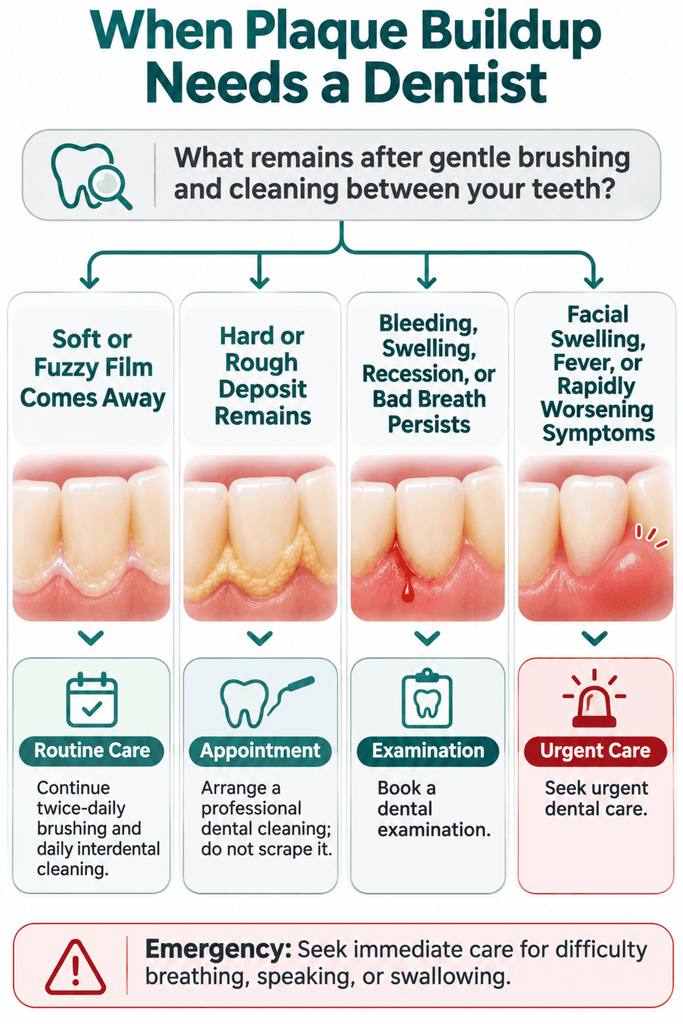
Home care is no longer enough when plaque has hardened into tartar or when the gums and teeth show signs of disease. A dental professional can determine whether an area is soft plaque, calculus, stain, decay, or part of a restoration.
Arrange a dental visit when:
- Hard Deposits Remain: The buildup stays attached after careful brushing and interdental cleaning.
- Bleeding Keeps Returning: The gums bleed repeatedly rather than only during an isolated episode.
- The Gums Look Inflamed: Redness, swelling, tenderness, or recession persists.
- Breath Odor Continues: Persistent bad breath remains despite thorough oral hygiene.
- A Tooth Feels Different: You notice pain, sensitivity, movement, a rough restoration, or a change in your bite.
- You Cannot Reach an Area: Braces, crowded teeth, limited movement, or dental work prevents effective cleaning.
A professional dental cleaning removes tartar and external stains with instruments designed for those surfaces. It also gives the dentist or hygienist a chance to check whether gum disease, a cavity, or another problem needs treatment.
Signs the Buildup May Be Tartar
Tartar is a hardened deposit that stays firmly attached to the tooth. It may appear yellow or brown, but it can also be pale or dark, so appearance alone is unreliable.
- It Feels Hard: The deposit feels crusted or rough rather than soft or sticky.
- It Does Not Brush Away: Careful brushing and flossing do not change it.
- It Sits Near the Gumline: Tartar commonly forms where plaque remains undisturbed.
- It Collects Behind Lower Front Teeth: This area is exposed to minerals in saliva and often develops tartar buildup.
- It Returns Frequently: Some people form tartar more quickly because of saliva, tooth position, oral hygiene challenges, or other individual factors.
Only a dental professional should use tools to remove tartar from teeth. A hard deposit may also extend below the gumline, where you cannot see or safely reach it.
Gum Changes That Need a Dental Check
A small amount of bleeding may occur when you restart cleaning a neglected interdental area. Continue gently rather than avoiding the area, but arrange an examination if bleeding is frequent, heavy, or does not settle with improved plaque control.
Book a dental appointment for:
- Persistent Bleeding: Gums bleed repeatedly during brushing, flossing, or eating.
- Red or Swollen Gums: The tissue remains puffy, tender, or darker than usual.
- Receding Gums: More of the tooth or root becomes visible.
- Persistent Bad Breath: Odor or a bad taste continues despite cleaning.
- Pain or Pus: The gums hurt, drain fluid, or develop a localized swelling.
- Loose or Shifting Teeth: Movement or a changing bite requires professional assessment.
These changes may have several causes, but they are recognized warning signs of periodontal problems in NIDCR guidance on gum disease.
Facial swelling, fever with dental pain or swelling, or rapidly worsening symptoms need urgent dental assessment. Seek emergency medical help if swelling makes it difficult to breathe, speak, or swallow.
Frequently Asked Questions About Plaque Removal
Should You Floss Before or After Brushing to Remove Plaque From Teeth?
Either order is acceptable if you clean thoroughly. A small number of studies have produced mixed findings, and a systematic review found no significant plaque difference between flossing before or after brushing. Choose the order you can follow every day. Flossing first may help you avoid forgetting it once brushing is finished.
How Quickly Does Plaque Turn Into Tartar?
Plaque can begin to mineralize when it remains undisturbed, but there is no single deadline that applies to everyone. The rate varies with saliva, deposit location, oral hygiene, tooth position, and individual tendency to form calculus. Remove plaque daily instead of waiting until it looks or feels hard.
Can Plaque Cause Bad Breath Even If You Brush Twice a Day?
Yes. Brushing twice a day may still leave plaque between teeth, beneath bridgework, around the gumline, or behind back teeth. Bacteria in these areas can contribute to odor. Clean between your teeth daily, and see your dentist if persistent bad breath continues despite thorough cleaning because other oral or medical causes are possible.
How Can You Remove Plaque With Sensitive Teeth or Receding Gums?
Use a soft-bristled brush, light pressure, and toothpaste made for sensitive teeth while continuing to clean the gumline gently. Do not avoid a sensitive area, because plaque buildup may worsen inflammation. Ask your dentist to check lasting sensitivity and recommend an interdental tool that fits without cutting or forcing the gums.
Is Plaque Removal Different for Children?
Children need the same basic steps, but the toothpaste amount and level of help depend on age. Use a smear of fluoride toothpaste for children younger than 3 and a pea-sized amount from ages 3 to 6. An adult should dispense the toothpaste and supervise or assist until the child can clean thoroughly, following AAPD fluoride guidance for children.
Can Dry Mouth Make Plaque Buildup Worse?
Yes. Saliva washes away food particles, limits harmful germs, and supplies minerals that help protect enamel. With less saliva, debris may remain longer and cavity risk rises. Common signs include a sticky mouth, thick saliva, trouble swallowing dry food, or frequent thirst. Persistent dry mouth needs dental or medical evaluation.
Why Do My Teeth Still Feel Rough After a Professional Cleaning?
A rough spot after cleaning may be natural tooth anatomy, an uneven filling or crown, stain, or a deposit that needs reassessment. Do not test it with a metal tool or try to scrape it yourself. Contact the dental office if the area is new, sharp, uncomfortable, or still rough after a few days.
Bottom Line: How to Remove Plaque From Teeth Safely
The most reliable way to remove soft plaque is to brush gently with fluoride toothpaste twice a day and clean between every tooth once a day. Pay close attention to the gumline, back teeth, crowded areas, and dental work where plaque often remains.
Hard deposits that do not come away with normal cleaning are likely to need professional care. See your dentist when buildup persists, or your gums keep bleeding, swelling, receding, or hurting. Consistent technique protects your oral health better than harsh products or attempts to remove tartar at home.
