Sore gums can make brushing, eating, or even touching your mouth uncomfortable. The soreness may come from plaque buildup, brushing too hard, food caught near a tooth, a mouth sore, or recent dental work. It can also be an early sign of gingivitis, especially when the gums look red, swollen, or bleed easily.
Most mild irritation improves after the trigger is removed and gentle oral care continues. Still, pain that does not settle, keeps returning, or occurs with swelling, pus, fever, a bad taste, or a loose tooth needs a dental check. Severe facial swelling or trouble breathing or swallowing requires urgent medical help.
The location and timing of the pain can offer useful clues. Soreness in one spot may point to trapped food or a local infection, while tenderness throughout the mouth may be linked to inflammation, hormones, medicine, or an illness. Understanding these patterns helps you choose sensible home care and know when a dentist should examine your gums.
What Sore Gums May Mean
Sore gums are a symptom, not a diagnosis. Mild gum soreness may come from temporary irritation, but pain with redness, swelling, or bleeding can point to inflammation. Pain in one area may also come from a mouth sore, an infected tooth, or a gum infection. A dentist can identify the cause when symptoms persist, worsen, or return.
Common Causes of Sore Gums
The possible causes of sore gums range from plaque buildup to local injury, dry mouth, and dental infection. More than one factor may be involved. For example, plaque-related inflammation can make gum tissue easier to injure during brushing or flossing.
Plaque Buildup and Gingivitis
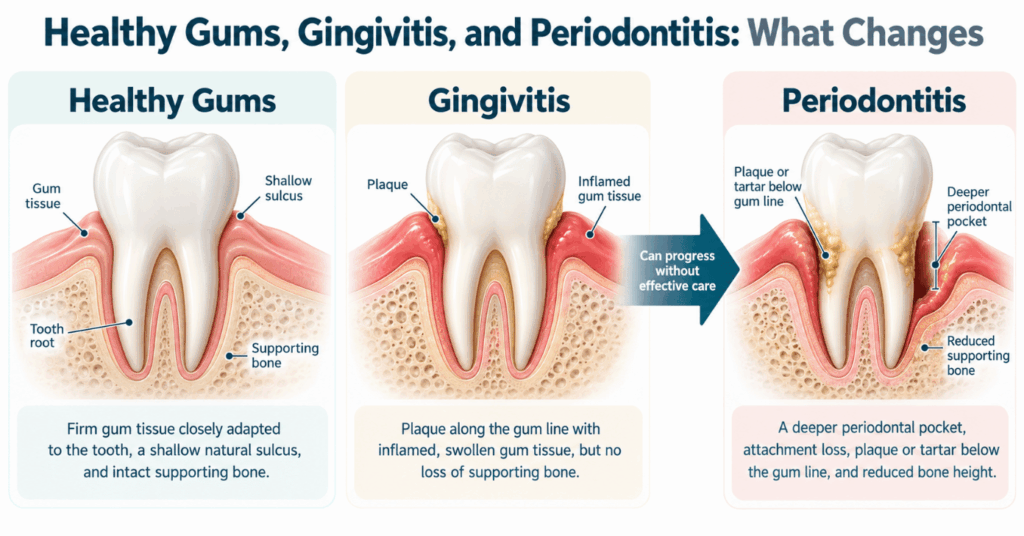
Plaque is a sticky film of bacteria that builds up on the teeth. When plaque remains along the gum line, it can cause swollen gums that feel red, tender, or likely to bleed during brushing and flossing.
This early form of gum disease is called gingivitis. It does not involve loss of the bone supporting the teeth and can often be reversed with effective plaque removal and professional dental care. If gingivitis is left untreated, it can progress to periodontitis, a more serious form of gum disease that damages the tissues and bone around the teeth. The National Institute of Dental and Craniofacial Research’s guidance on periodontal disease explains its symptoms, diagnosis, and treatment.
Brushing, Flossing, and Other Local Irritation
Healthy gums should tolerate gentle daily cleaning. However, too much pressure or repeated contact with an irritating object can damage the surface of the gum tissue. Think about whether the soreness began after changing your toothbrush, toothpaste, flossing technique, diet, or tobacco habits.
- Hard Toothbrush Bristles: Firm bristles and heavy pressure can scrape the gums, especially around exposed roots or receding gums.
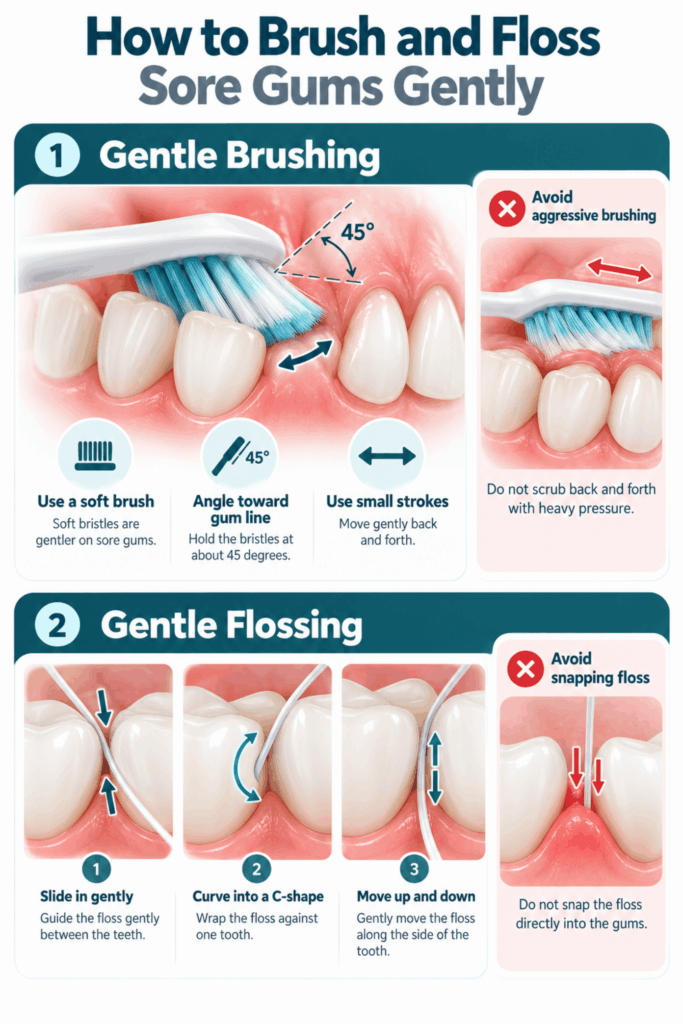
- Forceful Brushing: Scrubbing from side to side may injure the gum line without cleaning plaque more effectively.
- Incorrect Flossing: Snapping floss into the gums can cause a small cut, tenderness, or bleeding.
- Sharp or Hot Foods: Chips, crusty bread, fish bones, and very hot food can cut or burn the gums.
- Tobacco Products: Smoking, chewing tobacco, and nicotine products can irritate the mouth and increase the risk of gum disease. Smoking may also reduce visible bleeding, which can make gum disease harder to notice.
- Irritating Oral Products: Whitening products, strong mouthwashes, and some flavoring or foaming ingredients may cause burning or soreness in sensitive people.
Trapped Food, Mouth Sores, and Dental Appliances
Food can become tightly wedged between two teeth and press against the gum. Popcorn hulls, seeds, and fibrous meat are common examples. Gentle flossing may remove the object, but digging with a fingernail, pin, or toothpick can push it deeper or injure the gum.
A canker sore on the gum can cause a sharp or burning pain, especially when touched by food or a toothbrush. Braces, aligners, retainers, and dentures may also rub the tissue. Soreness should begin to improve after the source of friction is corrected. Continued pain may mean the appliance needs adjustment or that another problem is present.
Tooth and Gum Infections
An infection may begin inside a damaged tooth, in a deep gum pocket, or beneath the gum around a partly erupted wisdom tooth. Because the teeth and gums are close together, it may be difficult to tell whether the pain started in the tooth or the surrounding tissue.
Possible signs of an infection include:
- Throbbing Pain: The discomfort may become stronger when biting, chewing, or lying down.
- Localized Swelling: A raised, tender area may appear beside a tooth or along the gum line.
- Pus or Drainage: A small bump may release fluid and leave a foul or salty taste.
- Temperature Sensitivity: The nearby tooth may react strongly to hot or cold foods and drinks.
- Fever or Illness: Fever, fatigue, or swollen lymph nodes may suggest that the infection is affecting more than one small area.
- Difficulty Opening the Mouth: This can occur with a spreading infection or inflammation around a wisdom tooth.
Do not squeeze or puncture a swollen area. Even if it drains and the pain decreases, the source of the infection may remain and require dental treatment.
Hormones, Medicines, Dry Mouth, and Health Conditions
Hormonal changes during puberty, pregnancy, and other stages of life can increase the gums’ response to plaque. This does not mean hormones replace plaque as a cause. Instead, a small amount of plaque may produce more noticeable redness, swelling, or bleeding.
Dry mouth can also affect gum and tooth health because saliva washes away food, helps control germs, and protects the teeth. Hundreds of medicines can reduce saliva, including some medicines used for high blood pressure, depression, allergies, and bladder problems. The NIDCR’s information on dry mouth and its causes explains why persistent dryness should be evaluated rather than accepted as a normal part of aging.
Other contributing factors may include:
- Diabetes: Poorly controlled blood sugar can increase the risk and severity of gum disease.
- Immune Conditions: Conditions or treatments that weaken immune defenses may make oral infections more likely.
- Medication-Related Gum Changes: Some seizure medicines, blood pressure medicines, and immune-suppressing drugs can cause the gums to enlarge.
- Nutritional Deficiency: Severe deficiencies, particularly vitamin C deficiency, can affect gum tissue. Plaque-related inflammation is far more common, so soreness alone does not prove a deficiency.
- Cancer Treatment: Chemotherapy and head or neck radiation may cause dry mouth, mouth sores, or changes in oral tissue.
Do not stop a prescribed medicine because your gums feel sore. A dentist, physician, or pharmacist can review possible side effects and decide whether an adjustment is appropriate.
What the Pattern of Gum Soreness May Tell You
The location, timing, and other symptoms can offer useful clues. They cannot confirm the cause, but they can help you decide whether gentle home care is reasonable or a dental examination is needed.
Soreness in One Spot
Localized gum pain usually points to a problem near the painful area rather than a condition affecting the whole mouth. Look gently with clean hands and good lighting, but do not probe beneath the gum.
- Trapped Food: Food packed between two teeth may cause pressure, tenderness, or pain during chewing.
- Mouth Ulcer: A small white or yellow sore with a red edge may sting when touched.
- Minor Injury: A scratch, burn, or cut may follow sharp food, vigorous brushing, or forceful flossing.
- Infected Tooth: Decay, a crack, or a damaged filling can allow infection to develop near the tooth root.
- Gum Abscess: A painful swelling or pimple-like bump may form when infection collects in a gum pocket.
- Dental Appliance: A denture edge, brace wire, retainer, or aligner may repeatedly rub one area.
Never try to puncture or drain a lump yourself. Doing so can injure the tissue and does not remove the source of an infection.
Soreness Throughout the Mouth
Widespread soreness is more likely to involve a factor affecting many areas. Plaque-related gingivitis is a common cause, particularly when the gums are also red, swollen, or bleeding. Brushing too hard across the whole mouth can create a similar pattern of tenderness.
Dry mouth, hormonal changes, a new medicine, or an irritating toothpaste or mouthwash may also affect several areas. Contact a dentist or physician if widespread soreness continues, becomes severe, or occurs with mouth ulcers, fever, unusual bruising, significant dryness, or other changes in your health.
Soreness After Brushing, Flossing, or Dental Work
Pain after brushing or flossing often results from too much pressure or a sudden change in technique. New flossers, interdental brushes, or powered toothbrushes can irritate the gums when used incorrectly. Daily cleaning should feel gentle; more force does not produce a better result.
Temporary tenderness may also follow a professional cleaning, filling, crown, injection, or other dental treatment. The area should show a general pattern of improvement. Contact the dental office if the pain worsens, the bite feels uneven, an appliance rubs the gum, or swelling and other new symptoms develop.
How to Care for Sore Gums at Home
Home care may help when soreness comes from mild irritation or plaque buildup. It cannot remove tartar below the gum line, drain an abscess, or treat an infected tooth. Continue cleaning gently unless your dentist gave you different instructions after a procedure.
Clean Your Teeth and Gums Gently
Brush your teeth twice a day with fluoride toothpaste and a soft-bristled toothbrush. The American Dental Association’s home oral-care recommendations support brushing twice daily and cleaning between the teeth once a day with floss or another interdental cleaner.
- Choose a Soft Brush: Replace a hard or worn toothbrush with one that has soft, rounded bristles.
- Use Light Pressure: Angle the bristles toward the gum line and make small, controlled movements. Avoid aggressive side-to-side scrubbing.
- Brush Every Surface: Clean the outer, inner, and chewing surfaces of each tooth for about two minutes in total.
- Clean Between the Teeth: Guide floss gently through each contact, curve it around the side of the tooth, and move it up and down. Do not snap it into the gum.
- Remove Trapped Food Carefully: Use floss or an appropriately sized interdental cleaner. Never use a pin, needle, or other sharp object.
- Rinse the Brush: Keep the toothbrush clean and allow it to air-dry between uses.
A dental hygienist can demonstrate a technique suited to crowded teeth, braces, implants, bridges, or areas of gum recession.
Reduce Irritation While the Gums Settle
Choose measures that protect the tissue rather than burning, scraping, or numbing it repeatedly.
- Choose Softer Foods: Yogurt, eggs, soup that is not hot, and other soft foods may be more comfortable during a short period of soreness.
- Drink Water: Regular sips can reduce dryness and help clear food from the mouth.
- Avoid Tobacco: Smoking and chewing tobacco can irritate oral tissue and interfere with healing.
- Limit Foods That Sting: Spicy, acidic, very salty, sharp, or extremely hot foods may make damaged tissue more painful.
- Try a Gentle Saltwater Rinse: A warm saltwater rinse may temporarily soothe minor irritation. Spit it out, and remember that it cannot cure gum disease or an abscess.
- Use a Cold Compress Externally: A wrapped cold pack held against the outside of the cheek may reduce discomfort from mild swelling. Do not place ice directly against the gums.
Avoid Remedies That Can Damage the Gums
- Do Not Place Aspirin on the Gum: Aspirin can burn oral tissue when held directly against it.
- Do Not Use Harsh Chemicals: Bleach, household disinfectants, undiluted essential oils, and other caustic products can cause serious injury.
- Do Not Overuse Peroxide: Repeated use of concentrated hydrogen peroxide may irritate or burn the mouth.
- Do Not Drain a Lump: Puncturing a swollen area can spread bacteria, cause bleeding, and delay proper care.
- Do Not Use Leftover Antibiotics: The medicine may be unnecessary, unsuitable, or unable to treat the source of the problem.
- Do Not Stop Prescribed Medicine Independently: Ask the prescribing clinician whether a medicine could be contributing to dry mouth, irritation, or gum enlargement.
When Sore Gums Need Professional Care
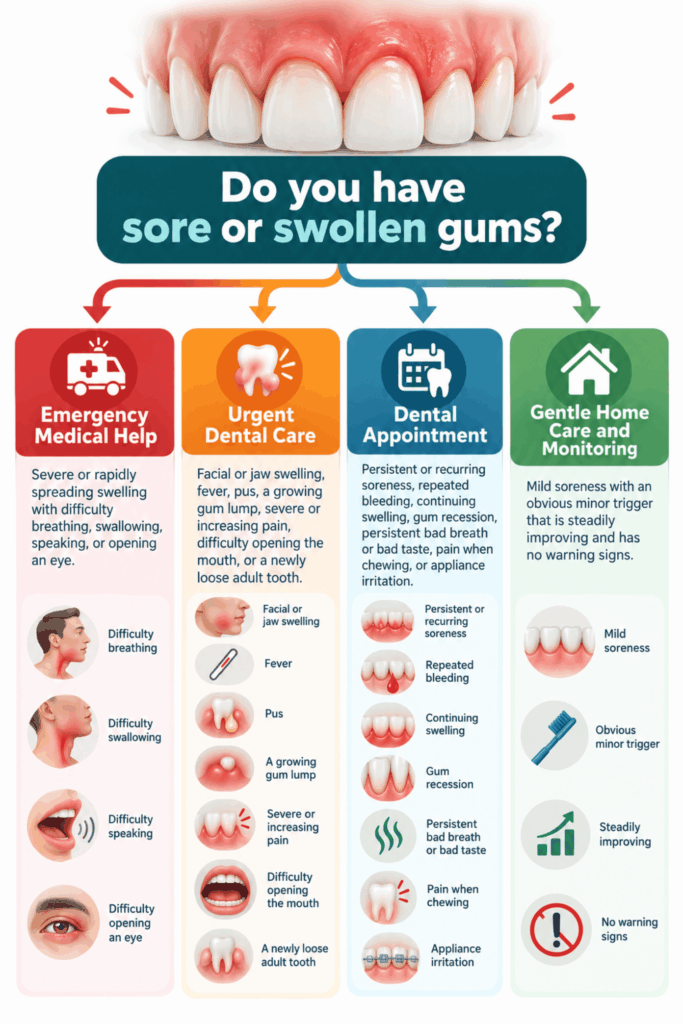
Some mild irritation improves with gentle care, but persistent or worsening symptoms should not be managed at home indefinitely. The level of care depends on the severity of the pain, the amount of swelling, and whether the symptoms are affecting breathing, swallowing, or general health.
Arrange a Dental Appointment
Contact a dentist when you notice:
- Persistent Soreness: The discomfort does not begin to improve or keeps returning.
- Repeated Bleeding: The gums bleed regularly during gentle brushing or cleaning between the teeth.
- Ongoing Swelling: The tissue remains puffy, red, or tender.
- Gum Recession: The gum line appears to move away from the teeth, making the teeth look longer.
- Persistent Bad Breath: Odor or a bad taste continues despite regular cleaning.
- Pain When Chewing: Biting pressure makes a tooth or nearby gum hurt.
- Changes Around an Appliance: A denture, retainer, aligner, or brace continues to rub or create an ulcer.
- A Possible Medicine Reaction: Soreness began after a new medicine or dose change, especially with dry mouth or gum enlargement.
Seek Urgent Dental Care
Arrange urgent dental care for:
- Severe or Increasing Pain: Pain interferes with sleep, eating, or normal activities.
- A Growing Gum Lump: A painful bump may represent an abscess.
- Pus or Drainage: Fluid, a bad taste, or foul odor may indicate infection.
- Fever With Dental Symptoms: Fever may mean the infection is spreading beyond a small local area.
- Facial or Jaw Swelling: Swelling outside the mouth needs prompt assessment.
- A Loose Adult Tooth: New tooth movement may be related to injury, infection, or advanced gum disease.
- Difficulty Opening the Mouth: Limited opening can occur with inflammation or a spreading infection.
These findings do not identify the exact diagnosis, but you should not wait for a routine checkup several weeks away.
Get Emergency Medical Help
Go to an emergency department or contact local emergency services if swelling of the mouth, lips, face, throat, or neck is severe or spreading and you have difficulty breathing, swallowing, speaking, or opening an eye. The NHS guidance on emergency and urgent dental care makes this distinction between problems needing urgent dental treatment and severe swelling needing emergency medical assessment.
How a Dentist Finds the Cause
A dentist combines your history, symptoms, and examination findings to determine why your gums hurt. Do not worry if you cannot tell whether the pain comes from a tooth or the gum; separating those sources is part of the examination.
- Discuss the Symptoms: The dentist will ask where the pain occurs, when it began, what makes it worse, and whether you have noticed bleeding, swelling, drainage, or sensitivity.
- Review Relevant History: Mention recent dental treatments, new oral-care products, medicines, pregnancy, tobacco use, dry mouth, and health conditions such as diabetes.
- Examine the Mouth: The dentist will inspect the gum tissue, teeth, fillings, appliances, tongue, cheeks, and other oral tissues.
- Measure the Gums: A small periodontal probe may be used to measure the spaces around the teeth and check for bleeding. Deep gum pockets can suggest loss of attachment around a tooth.
- Test the Teeth: The dentist may tap a tooth, test the bite, or check its response to temperature or other stimuli.
- Take Dental X-Rays When Needed: X-rays may reveal bone loss, decay, an infection near a root, an impacted tooth, or another problem not visible during the examination.
- Arrange Further Care: A general dentist may refer you to a periodontist for advanced gum disease, an endodontist for an infected tooth, or a physician when a medical condition may be contributing.
How Sore Gums Are Treated
Treatment should address the cause rather than only reducing gum pain. The right approach may be as simple as adjusting a brushing technique or may require professional treatment for gum disease or infection.
Treatment for Irritation and Minor Injury
Treatment begins by removing or correcting the source of irritation. This may mean switching to a soft toothbrush, using less pressure, smoothing a rough filling, trimming an orthodontic wire, or adjusting a denture. A dentist can also remove trapped material that cannot be reached safely at home.
The tissue should then show steady improvement. Continued soreness may mean that the irritant remains, the injury is deeper than it appears, or a different condition is present.
Treatment for Gingivitis and Periodontitis
Gingivitis is treated by removing plaque and tartar and improving daily brushing and interdental cleaning. A professional dental cleaning is often needed because hardened tartar cannot be removed with a toothbrush or floss. A dentist or dental hygienist may also show you how to clean difficult areas more effectively.
Periodontitis requires more involved care because it affects the supporting tissues around the teeth. Scaling and root planing removes deposits from below the gum line and smooths contaminated root surfaces. Depending on the severity, treatment may also involve local medicines, periodontal surgery, management of risk factors, and ongoing maintenance visits. Lost bone does not simply grow back when the gums stop bleeding, so long-term monitoring matters.
Treatment for an Abscess or Tooth Infection
A dental abscess requires treatment of its source. Depending on where the infection began, a dentist may drain the area, clean a deep gum pocket, perform root canal treatment, or remove a tooth that cannot be restored.
Antibiotics are not a substitute for dental treatment. The American Dental Association’s guideline on antibiotics for dental pain and swelling recommends prioritizing definitive dental care for most pulpal and root-area conditions, with antibiotics reserved for specific situations such as systemic involvement. A dentist must consider the diagnosis, spread of infection, general health, allergies, and other medicines before prescribing them.
Treatment for Other Contributing Factors
- Mouth Sores: Treatment may focus on avoiding irritation, protecting the ulcer, and managing pain while it heals. Recurrent, large, or persistent sores need evaluation.
- Dry Mouth: Management may include more water, saliva-supporting products, prescription changes made by the prescriber, or treatment of an underlying condition.
- Medication Effects: A physician may adjust a medicine or dose when an appropriate alternative exists. Dental care may still be needed to control plaque or enlarged gum tissue.
- Nutritional Deficiency: A clinician may review diet and order tests when the history or other symptoms suggest a deficiency. Supplements should address a confirmed or likely need rather than gum soreness alone.
- Hormonal Changes: Care usually centers on careful plaque removal and professional cleaning when needed. Pregnancy is not a reason to postpone necessary dental care.
- Medical Conditions: Better management of conditions such as diabetes may support gum health, while the gums still require appropriate dental treatment.
How Long Sore Gums May Last
There is no single recovery time because gum soreness has many possible causes. A small injury may improve after the irritant is removed, while plaque-related inflammation continues until plaque and tartar are controlled. An infected tooth or abscess is unlikely to resolve reliably without professional treatment.
Look for a steady trend toward less pain, swelling, redness, and bleeding. Arrange a dental assessment if the soreness does not begin to improve, returns repeatedly, or develops new warning signs. A persistent mouth ulcer or unexplained tissue change also deserves examination even when the pain is mild.
How to Help Prevent Gum Soreness
Preventing gum soreness starts with consistent plaque control and early attention to changes. These habits also help prevent tooth decay, gingivitis, periodontitis, and tooth loss.
- Brush Twice Daily: Use fluoride toothpaste, a soft-bristled brush, and light pressure around the gum line.
- Clean Between Teeth Daily: Use floss, interdental brushes, or another device recommended for the spaces between your teeth.
- Replace Worn Brushes: Bent or frayed bristles clean less effectively and may feel rough against the gums.
- Clean Dental Appliances: Follow the instructions for dentures, retainers, aligners, braces, bridges, or implants.
- Attend Dental Visits: Professional examinations can detect gum pockets, tartar, decay, and other problems that may not hurt at first.
- Manage Dry Mouth: Drink water and discuss persistent dryness with a dentist or physician.
- Avoid Tobacco: Tobacco raises the risk of gum disease and can interfere with healing.
- Manage Health Conditions: Work with your health care team to control conditions that affect oral health, including diabetes.
- Respond to Early Changes: Do not treat repeated bleeding, swelling, or gum sensitivity as normal.
Common Questions About Sore Gums
Can Your Gums Be Sore Without Bleeding?
Yes. Gum irritation, a mouth ulcer, food trapped near a tooth, early inflammation, or a tooth-related problem can cause soreness without visible bleeding. Gum disease can also develop with few obvious symptoms. Have persistent or worsening tenderness checked even when the gums do not bleed.
Are Sore Gums Contagious?
Gum soreness itself is not contagious. Gingivitis and periodontitis are not usually described as conditions you “catch” through ordinary contact, although bacteria can pass through saliva. Some causes of oral discomfort, such as cold sores or certain viral infections, can spread to other people; canker sores are not contagious.
Can Stress Make Your Gums Hurt?
Stress may contribute indirectly. It can lead to jaw clenching, teeth grinding, dry mouth, tobacco use, missed oral care, or changes in eating habits. Stress may also trigger mouth sores in some people. Persistent gum pain still needs a dental explanation rather than being blamed on stress alone.
Can Toothpaste or Mouthwash Cause Sore Gums?
Yes, some products can irritate sensitive oral tissue. Strong flavoring, whitening agents, detergents, alcohol, or frequent use of peroxide products may cause burning, peeling, or soreness. If symptoms began after starting a product, stop using it and choose a mild fluoride toothpaste. Seek advice if the irritation continues.
Can a Vitamin Deficiency Cause Sore Gums?
Severe vitamin C deficiency can cause swollen or bleeding gums, but it is much less common than gingivitis or local irritation. Other symptoms and dietary history matter. Do not assume gum soreness means you need supplements, because excessive doses can cause harm or interact with medicines. A clinician can assess whether testing is appropriate.
Can a Sinus Infection Feel Like Sore Gums?
Sinus pressure can create an aching sensation around the upper back teeth because their roots sit close to the maxillary sinuses. This discomfort may feel as though it comes from the nearby gums. A painful gum lump, bleeding, pus, or swelling centered around one tooth is more likely to need dental assessment.
Can Sore Gums Be a Sign of Oral Cancer?
Sore gums alone are not specific to oral cancer, and common causes such as irritation and inflammation are more likely. However, the NIDCR’s guidance on oral cancer warning signs advises evaluation of a sore, lump, thickened area, red or white patch, unexplained bleeding, or numbness that lasts more than two weeks.
The Bottom Line
Sore gums may result from plaque buildup, gingivitis, trapped food, brushing injury, a mouth sore, dry mouth, or an infection. Continue gentle brushing and cleaning between the teeth, remove obvious irritants safely, and avoid harsh or unproven remedies.
See a dentist when gum soreness persists, worsens, or occurs with repeated bleeding, swelling, pus, fever, a bad taste, pain when chewing, or a loose tooth. Severe spreading swelling or difficulty breathing or swallowing requires emergency medical care.
