Tartar is the hard, yellow or brown buildup that sticks to teeth when plaque stays too long. Many people search for how to remove tartar at home because they notice rough spots on their teeth, dark lines near the gum, or changes in their breath. They want to know what they can handle on their own and what really needs a dental visit. The short answer is that some care steps at home can help control plaque and slow tartar buildup, but hardened tartar cannot fully come off without professional tools.
Tartar forms when soft plaque mixes with saliva minerals and hardens on teeth and along the gumline. Once it sets, brushing alone cannot break it off. This is why some home remedies seem to help at first but stop working after a while. Understanding the difference between plaque and tartar helps explain why certain methods work and why others can damage teeth and gums if used the wrong way.
What Is Tartar and How Does It Form on Teeth?
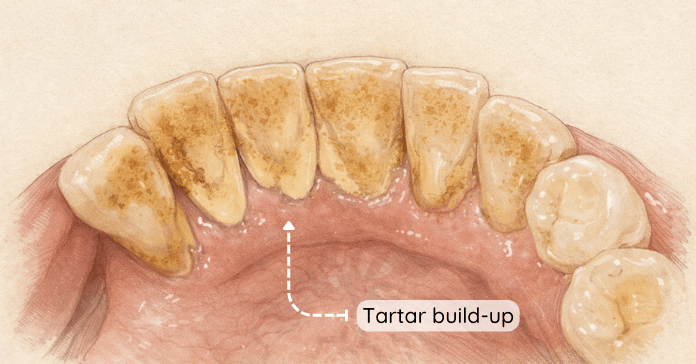
Tartar is hardened dental plaque that forms when a sticky film of bacteria stays on teeth too long. Plaque comes from bacteria in your mouth mixing with food particles and saliva, and it builds up on your teeth every day. If you do not remove plaque by brushing and flossing, it absorbs minerals from saliva and hardens into tartar, also known as dental calculus. Once plaque hardens into tartar, it sticks tightly to teeth and along the gumline. This buildup on your teeth feels rough and cannot be brushed away with normal home care.
Why Tartar Buildup Is a Problem for Oral Health
Tartar buildup creates a rough surface that traps more bacteria, making oral health problems more likely. As tartar forms on your teeth, it irritates the gums and can lead to redness, swelling, and bleeding. Bacteria trapped in plaque and tartar buildup also produce acids that increase the risk of tooth decay and yellow teeth.
Heavy calculus build-up on teeth raises the chance of gum disease and tooth sensitivity over time. Leaving tartar untreated often leads to more serious dental issues that require professional dental care.
How to Remove Tartar at Home: What People Hope to Do
Many people search for how to remove tartar at home because they want clean teeth without a visit to the dentist. They hope home care will help remove tartar from teeth without professional tools. In reality, home care can remove plaque and help prevent tartar formation, but it cannot remove hardened tartar from your teeth. If plaque hardens into tartar, brushing alone cannot break it off. Understanding this limit helps protect teeth and gums from damage caused by unsafe methods.
What You Can Do at Home to Control Plaque and Tartar
Daily dental hygiene plays a major role in slowing tartar buildup and keeping teeth clean between dental cleanings.
- Brush Your Teeth Twice a Day: Brushing teeth twice a day helps remove plaque before it hardens into tartar and supports healthy teeth and gums.
- Brush and Floss Daily: Using dental floss removes plaque from between teeth and along the gumline where a toothbrush cannot reach.
- Use Proper Brushing Technique: Brushing at the gumline helps remove plaque buildup before tartar formation begins.
- Maintain Consistent Dental Care: Daily teeth care reduces the risk of developing tartar and supports long-term oral health.
- Rinse After Meals: Rinsing your mouth helps remove food particles that feed bacteria in your mouth.
Home Remedies for Tartar Removal: What Helps and What Doesn’t
Many home remedies for tartar removal claim to dissolve tartar or soften tartar, but most only affect plaque.
- Plaque Control Only: Home remedies may help remove plaque buildup, but cannot remove hardened dental plaque that forms tartar.
- Temporary Surface Cleaning: Some remedies make teeth feel cleaner, but do not remove tartar from your teeth without professional tools.
- Risk of Enamel Damage: Aggressive methods raise the risk of scratching enamel and harming teeth and gums.
- False Sense of Removal: Tartar may appear lighter, but buildup on your teeth remains attached.
Baking Soda and Other Popular Remedies
Baking soda is often used because it can help remove plaque due to its mild abrasive effect. It does not dissolve tartar or remove tartar buildup once plaque hardens into tartar. Salt, vinegar, and similar remedies may change surface stains but cannot remove tartar from teeth without damage. Using these methods too often can irritate gums and weaken enamel. Home remedies should focus on plaque control, not tartar removal.
How to Remove Tartar at Home Without Harming Teeth and Gums
Safe at-home care means knowing what you cannot remove on your own. Scraping teeth with sharp objects or tools can damage enamel and injure gum tissue. If you force tartar off, you increase the risk of infection and tooth sensitivity. Home care should aim to keep tartar from getting worse, not to remove hardened buildup. Protecting healthy teeth and gums always comes before trying unsafe methods.
Ways People Try to Remove Tartar from Teeth Without a Dentist
Some people try to remove tartar from teeth without a dentist by using metal tools, pins, or household items. These methods often scratch teeth and create grooves where bacteria collect faster. Tartar can break unevenly, leaving sharp edges that irritate gums. Teeth without a dental approach often lead to more dental issues instead of clean teeth. Risky removal methods usually result in a future visit to the dental office for repairs.
When Tartar Removal Requires a Dentist or Dental Professional
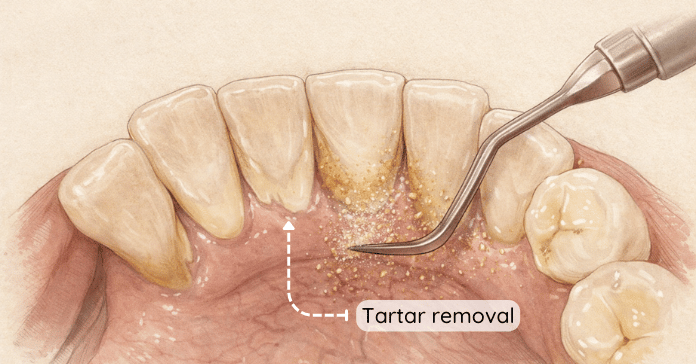
Once tartar forms, a dentist or dental hygienist is needed to remove it safely. Professional dental tartar removal uses special instruments to break and lift tartar from teeth and below the gumline. A dental professional can effectively remove hardened tartar without harming enamel or gums. If tartar buildup on your teeth causes bleeding, pain, or gum recession, then visiting the dentist is the next step. Following the advice of your dentist helps prevent long-term damage.
What to Expect from Professional Tartar Removal
During a dental cleaning, the dental hygienist removes tartar using scaling tools and sometimes ultrasonic devices. This process removes plaque and tartar buildup from teeth and gum pockets. After scaling, the teeth are polished to smooth the surface and reduce future buildup. Professional dental cleaning leaves teeth clean and helps protect healthy teeth and gums. Dental cleanings are a key part of family dental care.
How to Prevent Tartar Buildup After Cleaning
Preventing tartar buildup after professional removal depends on daily habits and regular care.
- Brush Teeth Twice a Day: Brushing teeth twice a day removes plaque before it turns into tartar.
- Use Dental Floss Daily: Dental floss removes plaque between teeth and prevents buildup in tight spaces.
- Follow Dental Hygiene Routines: Consistent dental hygiene lowers the risk of plaque and tartar buildup.
- Schedule Regular Dental Cleanings: Visiting your dentist or dental hygienist keeps tartar from returning.
- Ask Your Dentist for Guidance: Personalized advice helps you keep your teeth clean and healthy long term.
Best Way to Remove Tartar and Keep Teeth Healthy Long-Term
The best way to remove tartar is professional dental cleaning combined with strong daily dental care. Home routines help remove plaque and slow tartar formation, but they cannot remove hardened tartar. Going to the dentist ensures tartar removal is safe and complete. Keeping clean teeth requires brushing, flossing, and regular dental visits. This balanced approach supports healthy teeth and gums over time.
Final Thoughts on Tartar Build-Up and Safe Removal
Tartar build-up starts when plaque stays on teeth too long and hardens. Brushing and flossing every day can remove plaque and slow the process, but once tartar appears, home care cannot fully remove it. Many home remedies may make teeth feel cleaner, but they do not break off hardened tartar and may harm enamel or gums if used the wrong way. The safest approach is knowing what you can manage at home and when professional dental cleaning is needed.
If your goal is to stop tartar before it gets worse, daily habits matter most. Brushing twice a day, flossing, and keeping regular dental visits help prevent new buildup and protect your gums. When tartar does appear, seeing a dental professional allows it to be removed safely and completely. The best results come from combining smart home care with professional help, so you keep your teeth healthy and avoid bigger dental problems later on.
