If you just had your wisdom teeth removed, you may be wondering whether the pain, swelling, or open-looking socket is normal. A typical wisdom teeth healing timeline takes about one to two weeks for the main recovery, although the gum and bone keep healing after you feel better. Many people return to routine activities within a few days, but each extraction is different.
During the first few days, soreness and swelling may increase before they begin to settle. Eating, opening your mouth, and brushing near the area can still feel awkward. Your progress may be slower if the tooth was deeply impacted, several teeth were removed, or the surgery involved more bone.
What matters most is the overall direction of recovery. Discomfort should gradually ease rather than suddenly become much worse. Your dentist’s instructions always come first because they reflect your surgery and health. The stages below show what commonly happens from surgery day through later socket healing, along with safe milestones and signs that deserve a dental call.
Wisdom Teeth Healing Timeline at a Glance
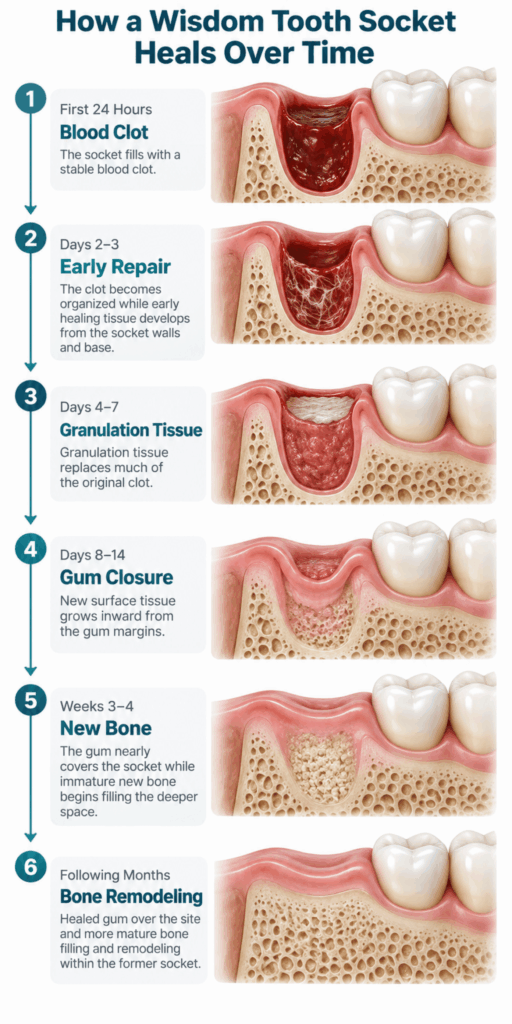
A typical wisdom teeth healing timeline has several overlapping stages. Pain and swelling usually improve before the extraction site closes, and the jawbone continues repairing after your mouth feels normal. The NHS guidance on recovery after wisdom tooth removal notes that discomfort, swelling, bruising, and jaw stiffness may last up to two weeks, although they should begin improving much earlier.
- First 24 Hours: A blood clot forms in each extraction site. Mild bleeding, numbness, soreness, and swelling are expected.
- Days 2–3: Pain, facial swelling, bruising, and jaw stiffness may reach their highest level before settling.
- Days 4–7: Most patients notice steady improvement. Eating, talking, and opening the mouth usually become easier.
- Days 8–14: Many patients feel close to normal and return to most routine activities, but the sockets remain delicate.
- Weeks 3–4: Gum tissue continues growing over the extraction sites. Small holes may still be visible, especially after lower wisdom teeth removal.
- Following Months: New bone gradually develops and remodels inside the sockets, even though you can no longer feel the healing process.
These milestones show a general timeline for wisdom teeth healing, not fixed deadlines. Recovery may take longer after a difficult wisdom teeth extraction, removal of several teeth, or surgery involving deeply impacted wisdom teeth.
The First 24 Hours: Protecting the Blood Clot
The first day of the wisdom teeth healing timeline centers on controlling bleeding and protecting the blood clot. This clot covers the bone and nerves inside the extraction site and provides the foundation for early healing. Light oozing can mix with saliva and look like more blood than it truly is.
Your mouth may remain numb for several hours after anesthesia. Pain and swelling often become more noticeable as the numbness fades. Rest, drink water carefully, and eat soft foods that require little chewing.
- Use Gauze as Directed: Bite with steady pressure over the surgical site. Replace the gauze according to your dentist’s instructions rather than checking the socket every few minutes.
- Keep Your Head Elevated: Rest with your head supported above your chest. This may help limit throbbing and swelling.
- Choose Cool, Soft Foods: Yogurt, applesauce, pudding, mashed potatoes, and cooled soup are usually easier to manage. Avoid hot foods while your mouth is numb because you could burn yourself without noticing.
- Do Not Rinse or Spit Forcefully: Strong movement inside the mouth may disturb the new clot. Let saliva leave your mouth gently if needed.
- Avoid Straws: Suction can pull on the clot. The American Dental Association’s tooth-extraction aftercare advice recommends avoiding a straw during early recovery.
- Avoid Smoking and Vaping: Smoke, heat, chemicals, and suction can interfere with healing and increase the risk of complications.
- Do Not Probe the Socket: Avoid touching it with your tongue, fingers, toothbrush, or any object.
Call your dentist if firm gauze pressure does not slow active bleeding. A small amount of blood-stained saliva is different from continuous bleeding that fills the mouth.
Days 2–3: Swelling and Soreness May Peak
Pain and swelling may increase during the first two or three days. Your cheeks can look fuller, your jaw may feel tight, and bruising may start to appear. This pattern does not automatically mean that you have an infection.
The amount of discomfort differs from person to person. Someone who had one fully erupted upper tooth removed may recover differently from someone who had four impacted wisdom teeth taken out during oral surgery. Focus on whether your symptoms begin leveling off rather than comparing your recovery with another person’s experience.
- Pain and Tenderness: Discomfort may remain moderate during this stage but should respond to the pain-management plan provided by your dentist or oral surgeon.
- Facial Swelling: Swelling often becomes more noticeable before it starts to decrease. Use an ice pack only as directed, with a cloth between the pack and your skin.
- Jaw Stiffness: The jaw muscles can become sore from holding the mouth open during surgery. Do not force the mouth open.
- Bruising: Yellow, purple, or blue discoloration may develop on the cheek or jaw, especially after lower wisdom tooth removal.
- Eating Difficulty: Continue to eat soft foods and chew away from the extraction sites. Avoid hard, crunchy, spicy, or very hot foods.
- Light Oozing: Slight blood staining may still appear, but fresh bleeding should be decreasing.
Symptoms that become suddenly severe or continue getting worse beyond the expected early peak deserve a dental check.
Days 4–7: Symptoms Should Begin to Ease
By days four through seven, pain and swelling should generally be moving in the right direction. You may open your mouth more comfortably, rely less on pain medication, and feel ready for light daily activities. Bruising can remain visible even as the tissues improve underneath.
The extraction site will not look fully healed. Dissolving stitches may loosen, and a hole may remain where each tooth was removed. Tenderness while chewing is also common, so add firmer foods only when they feel comfortable and do not break into sharp pieces.
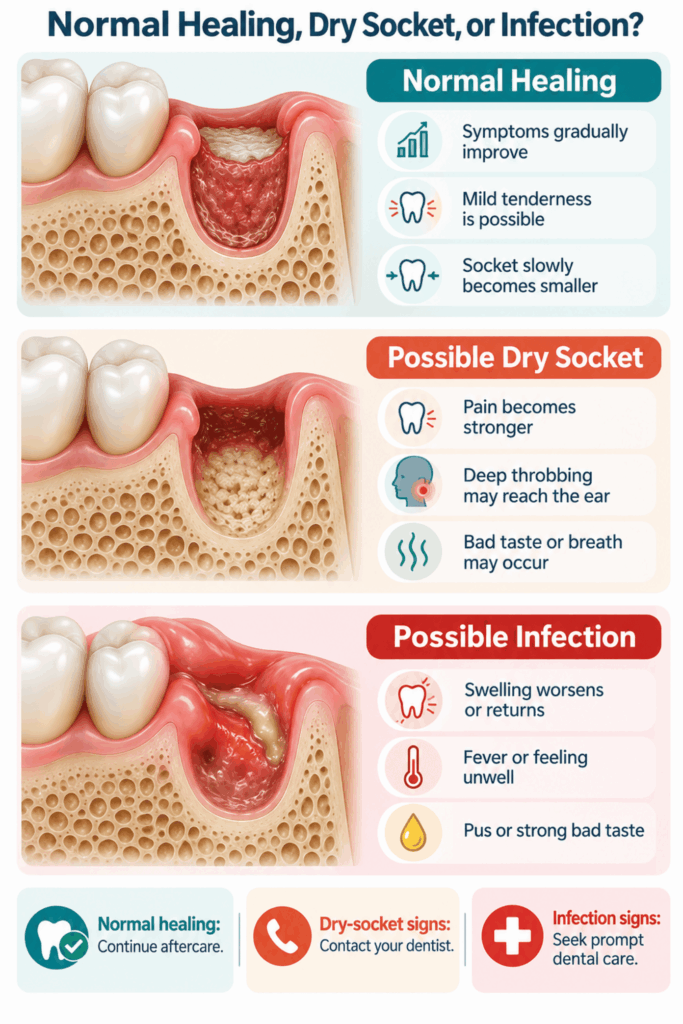
This stage is also when an abnormal change may become more obvious. Pain that becomes stronger after first improving, especially deep, throbbing pain that travels toward the ear, can occur with dry socket. Contact your dentist rather than trying to pack or treat the socket yourself.
Days 8–14: Returning Toward Your Normal Routine
During the second week, most patients have much less pain, swelling, bruising, and jaw stiffness. You may feel ready for normal work, school, and social activities. However, healing gums can still become irritated by hard food, aggressive brushing, or debris trapped in the socket.
Use these signs to judge your progress:
- Pain Is Mild or Gone: The area may remain tender when touched or while chewing, but it should not be becoming more painful.
- Swelling Has Clearly Decreased: Your face should be returning toward its usual shape rather than becoming more swollen.
- Jaw Movement Is Improving: Talking, yawning, and eating should feel easier, even if the muscles remain mildly stiff.
- Food Choices Are Expanding: You may tolerate more solid foods, but sharp, hard, or crunchy foods can still irritate the sockets.
- Stitches Are Loosening or Dissolving: Dissolvable stitches may soften, break, or fall away. The timing varies with the material used.
- The Extraction Holes Remain Visible: An open-looking socket does not mean healing has stopped. Gum closure takes longer than symptom relief.
Contact the dental office if pain, swelling, bleeding, or a bad taste is worsening instead of improving.
Weeks 3 and Beyond: Gum, Socket, and Bone Healing
By the third or fourth week, many people can eat and function normally. New gum tissue gradually grows over the extraction site, although a shallow depression or small opening may remain. Lower wisdom tooth sockets often stay noticeable longer because these teeth have larger roots and sit in denser bone.
Healing also continues below the gum. Early tissue inside the socket is gradually replaced by new bone, followed by longer-term remodeling of the jawbone. This deeper process takes much longer than the recovery period you can feel.
- Weeks 3–4: Gum tissue continues covering and narrowing the socket.
- Following Weeks: The socket fills with developing tissue and new bone.
- Following Months: The jawbone continues remodeling beneath the healed gum.
During the healing timeline, wisdom teeth sockets do not need to look identical to the surrounding gum before you can feel recovered. Avoid repeatedly pulling the cheek aside or probing the area to check it.
What a Healing Wisdom Tooth Socket May Look Like
A healing extraction site changes color and shape as the clot becomes organized and new tissue develops. Its appearance depends on the tooth’s position, the size of the socket, whether stitches were used, and how difficult the removal was. Appearance alone cannot confirm a normal recovery or diagnose an infection.
Normal Changes in the Extraction Site
The socket may look dark at first because of the blood clot. It can later develop a cream, white, or pale yellow surface as fibrin and new healing tissue cover the area. This layer is not automatically food or pus.
Common changes include:
- A Dark Red Clot: This may be visible during the early healing stage. Do not try to remove or test it.
- A Pale Surface Layer: Whitish or yellowish healing tissue can form over the socket. Color alone does not prove infection.
- Mild Redness: The gum edges may remain red or tender while new tissue forms.
- Visible Stitches: Sutures may appear loose as swelling decreases and the wound begins to close.
- A Gradually Shrinking Hole: The socket may remain visible for several weeks, particularly in the lower jaw.
- Minor Food Debris: Small particles can collect near an open socket. Follow the cleaning instructions from your dental team rather than digging them out.
Lighting, saliva, and phone-camera settings can change how the area looks. Symptoms and the overall direction of healing provide more useful information than a photograph alone.
Changes That Deserve a Dental Check
Contact your dentist or oral surgeon if the socket’s appearance changes along with increasing pain, swelling, fever, pus, or feeling unwell.
Check for:
- Pus or Thick Discharge: This is different from a thin white or cream healing layer.
- Swelling That Starts or Worsens Later: New or increasing swelling after initial improvement can suggest infection.
- Pain That Becomes Stronger: Severe throbbing pain several days after tooth extraction may occur with dry socket.
- A Persistent Foul Taste or Smell: Mild changes can occur during healing, but a strong bad taste with worsening symptoms needs assessment.
- Wound Opening With Bleeding: A small gap may heal normally, but active bleeding or exposed tissue should be checked.
Do not scrape away white or yellow material. A dentist can examine the area safely and decide whether treatment is needed.
Normal Healing vs Possible Complications
Expected symptoms should gradually improve as wisdom teeth extraction sites move through the healing timeline. Complications are more likely when discomfort becomes severe, returns after improving, or appears with fever, pus, uncontrolled bleeding, or increasing swelling. The Guy’s and St Thomas’ guidance on dental surgery recovery explains that dry socket commonly causes increasing pain, bad breath, and an unpleasant taste several days after extraction.
| Recovery Finding | More Consistent With Normal Healing | Reason to Contact Your Dentist |
|---|---|---|
| Bleeding | Light oozing or blood-stained saliva that decreases | Active bleeding that does not slow with firm gauze pressure |
| Pain | Soreness that peaks early and then improves | Severe, throbbing, or increasing pain after initial improvement |
| Swelling | Swelling that develops early and then begins to settle | Swelling that keeps increasing or returns later |
| Bruising | Skin discoloration that slowly changes color and fades | Bruising with rapidly increasing swelling or uncontrolled bleeding |
| Jaw Stiffness | Mild difficulty opening that gradually improves | Increasing stiffness, severe pain, or difficulty swallowing |
| Socket Appearance | Dark clot, pale healing layer, stitches, or a shrinking hole | Pus, significant wound opening, or exposed tissue with severe pain |
| Taste or Breath | Temporary mild change that improves with careful hygiene | Strong foul taste or odor with worsening pain, fever, or discharge |
| General Health | Tiredness that improves with rest and hydration | Fever, chills, weakness, dehydration, or feeling increasingly unwell |
Dry socket and infection are different problems. Dry socket involves loss or breakdown of the protective clot and usually causes intense pain. Infection is more likely to cause worsening swelling, pus, fever, or a general feeling of illness. A clinical examination is the safest way to tell them apart.
When Can You Eat Normally Again?
As wisdom teeth extraction sites move through the healing timeline, return to normal eating based on comfort rather than a fixed day. Move through food textures gradually, and step back to softer choices if chewing causes pain or bleeding.
- First Day: Choose cool or lukewarm liquids and very soft foods. Examples include yogurt, applesauce, pudding, smooth mashed potatoes, and blended soup that is not hot.
- Days 2–3: Add soft foods such as scrambled eggs, oatmeal, soft pasta, hummus, cottage cheese, or tender fish. Take small bites and chew away from the extraction sites.
- Days 4–7: Try softer solid foods when chewing feels comfortable. Avoid anything sharp, sticky, hard, or likely to crumble into the sockets.
- Second Week: Many patients can return toward their regular diet. Continue using care around tender areas and avoid foods that cause discomfort.
- Later Recovery: Resume crunchy or chewy foods only when the gums feel comfortable, and your dentist has not given you longer restrictions.
Avoid nuts, seeds, popcorn, chips, hard crusts, and small grains during early recovery because they can irritate the wound or become trapped. Do not use a straw to drink smoothies. A spoon or open cup avoids suction around the extraction site.
When Can You Brush and Rinse Normally?
You should keep the rest of your mouth clean while avoiding direct injury to the surgical sites. Your dentist’s aftercare instructions take priority because recommendations may differ based on stitches, grafting, bleeding risk, or surgical complexity.
- On the Day of Surgery: Brush areas away from the extraction sites only if your dental team permits it. Do not rinse, swish, or spit forcefully.
- After the First Day: Resume gentle brushing of the other teeth. Keep the toothbrush away from the clot and stitches.
- Begin Gentle Rinsing as Directed: Your dentist may recommend warm salt water or a prescribed mouth rinse. Move your head gently rather than swishing hard.
- Let the Liquid Leave Gently: Lean over the sink and allow the rinse to fall out. Avoid forceful spitting during early healing.
- Clean Closer as the Tissue Heals: Gradually brush nearer the area without pushing bristles into the socket.
- Use an Irrigation Syringe Only if Instructed: The timing varies. Using one too early or with too much pressure can disturb healing tissue.
Good oral hygiene helps control plaque and food debris, but aggressive cleaning can cause unnecessary pain. If food remains trapped and gentle rinsing does not remove it, ask the dental office what to do.
When Can You Return to Work, School, and Exercise?
Your return depends on how you feel, the number of teeth removed, the complexity of the extraction, and the type of anesthesia used. A quiet desk job requires less recovery than work involving lifting, bending, heat, or constant speaking.
Returning to Work or School
Some patients return after one or two days, while others need several days. More time may be necessary after general anesthesia, removal of four teeth, or difficult impacted wisdom tooth surgery.
You may be ready when:
- Bleeding Has Stopped: You no longer need gauze for active bleeding.
- Pain Is Controlled: You can concentrate and function without medication that causes drowsiness.
- Swelling Is Manageable: Facial swelling is stable or improving.
- You Can Eat and Drink Enough: You can stay hydrated and maintain your energy.
- Anesthesia Restrictions Have Passed: You are alert and have followed all driving, work, and safety restrictions.
People with physically demanding jobs may need extra time. Ask your surgeon for a work note if your duties could interfere with recovery.
Returning to Exercise and Heavy Activity
Avoid strenuous exercise during the first few days or for the period specified by your surgeon. Running, heavy lifting, intense gym sessions, and repeated bending can raise blood pressure and restart bleeding or throbbing around the surgical site.
Return gradually:
- Begin With Light Walking: Stop if you notice fresh bleeding, throbbing, or increased swelling.
- Increase Activity Slowly: Add moderate exercise only after early symptoms are clearly improving.
- Delay Heavy Exertion: Wait longer before weightlifting, contact sports, or high-intensity training.
- Protect Your Face: Avoid any activity where the jaw could be hit while the area remains tender.
If exercise causes renewed bleeding or pain, stop, rest, and contact your dental team if the symptoms do not settle.
What Can Slow the Wisdom Teeth Healing Timeline?
The wisdom teeth removal recovery period varies because no two extractions are identical. The British Association of Oral and Maxillofacial Surgeons’ information on impacted wisdom tooth removal explains that some teeth require gum incisions, bone removal, or sectioning before they can be removed.
Factors that may lengthen recovery include:
- Deep Impaction: A tooth buried under gum or jawbone, or a partially erupted wisdom tooth in a difficult position, may require more surgery than one that is fully erupted.
- Lower Wisdom Teeth: Lower sockets may be larger and can involve denser bone than upper extraction sites.
- Several Extractions: Removing multiple teeth creates more surgical areas that must heal at the same time.
- Greater Surgical Complexity: Longer procedures, bone removal, and tooth sectioning may cause more swelling and soreness.
- Smoking or Vaping: Nicotine can reduce blood flow, while smoke, heat, chemicals, and suction can disturb the healing environment.
- Poor Oral Hygiene: Heavy plaque and trapped food may irritate healing tissue, although cleaning too aggressively can also cause harm.
- Certain Health Conditions: Diabetes, immune problems, bleeding disorders, and other conditions may affect recovery.
- Some Medications: Blood thinners, immune-suppressing medicines, and certain medications that affect bone require personalized planning.
- Not Following Aftercare Instructions: Early strenuous exercise, forceful rinsing, using straws, or repeatedly touching the socket may increase the risk of problems.
A slower recovery does not automatically mean something is wrong. However, symptoms that worsen rather than improve should be assessed.
How to Support a Smoother Recovery
Healing cannot be rushed, but good aftercare protects the surgical sites while your body repairs them.
- Follow Your Personalized Instructions: Your dentist or oral surgeon knows how difficult the procedure was and whether you have stitches, sinus precautions, or other special needs.
- Protect the Blood Clot: Avoid straws, smoking, vaping, forceful rinsing, and forceful spitting during early recovery.
- Control Swelling Safely: Use a wrapped ice pack and keep your head elevated if recommended. Never place ice directly against your skin.
- Eat Soft, Nourishing Foods: Choose foods that provide protein, energy, and fluids without requiring hard chewing.
- Stay Hydrated: Take small, regular sips from a cup. Dehydration can worsen fatigue, dizziness, and dry mouth.
- Keep Your Mouth Clean: Brush unaffected teeth and begin gentle rinsing when instructed. Avoid digging into the extraction sites.
- Avoid Smoking and Alcohol: Both can interfere with a comfortable recovery, and alcohol can interact with some medications.
- Rest Before Resuming Exertion: Increase work and exercise gradually instead of testing the socket with a hard workout.
- Use Medication Safely: Follow the label and your clinician’s instructions. The American Dental Association’s acute dental pain management guideline supports nonopioid medicines as first-line treatment for most short-term dental pain, but they are not safe for everyone.
- Ask Before Changing Your Medication Plan: Check with a healthcare professional if you have allergies, stomach ulcers, kidney or liver disease, take blood thinners, are pregnant, or are unsure whether a pain reliever is safe for you.
Do not place aspirin, alcohol, oils, or home remedies directly into the socket. These substances can irritate tissue without treating the cause of worsening pain.
When to Contact Your Dentist or Oral Surgeon
Contact your dental office promptly when recovery changes direction or symptoms become difficult to manage. The Newcastle Hospitals guidance following surgical tooth removal advises seeking help for concerning postoperative symptoms, including breathing or swallowing difficulty.
Contact your dentist or oral surgeon promptly for:
- Bleeding That Does Not Stop: Firm pressure with gauze does not control active bleeding.
- Pain That Becomes Stronger: Pain increases after initially improving or remains severe despite the recommended medication.
- Worsening Swelling: Swelling continues increasing after the early recovery period or returns after settling.
- Possible Infection: You develop pus, fever, chills, a strong bad taste, or feel increasingly unwell.
- Possible Dry Socket: Deep throbbing pain develops several days after extraction and may travel toward the ear or temple.
- Persistent Vomiting or Dehydration: You cannot keep fluids down, urinate very little, or feel faint.
- Unexpected Numbness: Numbness or tingling in the lip, chin, or tongue persists beyond the period discussed by your surgeon.
- A Medication Problem: You develop a rash, severe stomach symptoms, excessive drowsiness, or another unexpected reaction.
Seek emergency medical care for:
- Difficulty Breathing or Swallowing: Increasing mouth, throat, or facial swelling can threaten the airway.
- Rapidly Spreading Swelling: Swelling extending into the neck, under the jaw, or toward the eye needs urgent assessment.
- Severe Uncontrolled Bleeding: Blood continues filling the mouth despite firm pressure.
- Signs of a Serious Allergic Reaction: Facial or throat swelling, wheezing, faintness, or widespread hives require emergency help.
Do not wait for a routine appointment if breathing or swallowing becomes difficult.
Frequently Asked Questions
Why Is One Wisdom Tooth Extraction Site Healing Slower Than the Others?
Each tooth can require a different type of extraction. A deeply impacted lower tooth may involve more bone removal than a fully erupted upper tooth, causing more swelling and a larger socket. Uneven healing can therefore be normal. Contact your dentist if the slower side develops worsening pain, swelling, pus, or bleeding.
What Should I Do if My Wisdom Tooth Stitches Come Out Early?
Dissolvable stitches can loosen as swelling decreases, and an intact clot may allow the wound to continue healing. Do not pull or trim the remaining thread yourself. Contact the dental office if the wound opens widely, starts bleeding, becomes more painful, or loses a dressing that your surgeon specifically placed.
Why Is My Lip, Tongue, or Chin Still Numb After Wisdom Tooth Removal?
Anesthesia can cause numbness for several hours. Longer-lasting altered sensation may occur if nerves near a lower wisdom tooth were stretched, bruised, or irritated. Report persistent or unexpected numbness to your oral surgeon, especially if it worsens or affects eating, drinking, speaking, or your ability to protect the area from accidental biting.
Can Wisdom Tooth Removal Cause Jaw or Ear Pain During Healing?
Yes. Jaw muscles can become sore from holding the mouth open, and inflammation near a lower wisdom tooth can create pain that feels as if it reaches the ear. This should improve with the rest of your symptoms. Seek a dental check if the pain becomes intense, returns after improving, or comes with fever, pus, or ear symptoms.
Is It Normal to Have Very Little Pain or Swelling After Wisdom Teeth Removal?
Yes. Mild symptoms can occur after an uncomplicated extraction, especially when a tooth was fully erupted and easy to remove. Low pain does not mean the clot failed to form or that healing has stopped. Continue following your aftercare instructions because the extraction site still needs protection even when you feel well.
Is It Safe to Fly While Wisdom Tooth Extraction Sites Are Healing?
There is no single waiting period for every patient. Consider recent sedation, active bleeding, pain control, access to dental care, and the complexity of surgery. Ask your surgeon before flying if an upper extraction involved the sinus, you have significant swelling, or complications are suspected. Delay travel if you do not feel medically stable.
Do I Need a Follow-Up Visit if My Wisdom Teeth Seem to Be Healing Well?
Not every uncomplicated extraction requires a routine follow-up, but some surgeons schedule one to check healing, remove non-dissolving stitches, or review nerve symptoms. Attend any appointment your dental team arranged. If none was planned, contact the office if symptoms worsen or you are unsure whether the extraction site is healing properly.
Bottom Line on the Timeline for Wisdom Teeth Healing
Although the timeline varies, wisdom teeth healing usually brings steady improvement during the first week, with many patients feeling close to normal within two weeks. However, the gum and jawbone continue healing after pain and swelling have settled, so a visible socket can remain without indicating a problem.
Follow your dentist’s aftercare instructions and pay attention to the direction of recovery. Mild discomfort on one day may be expected, but worsening pain, swelling, bleeding, fever, pus, or difficulty breathing or swallowing requires professional care.
