Seeing blood on your toothbrush while you are pregnant can be worrying. Bleeding gums during pregnancy are common, especially when you brush or floss, but they are not something to ignore. Pregnancy hormones can make your gums react more strongly to plaque, which may leave them red, swollen, sore, or easy to bleed.
This often points to pregnancy gingivitis, an early and usually manageable form of gum inflammation. It does not mean that pregnancy alone has damaged your gums, and mild bleeding does not automatically mean your baby is at risk. Still, ongoing bleeding deserves attention because plaque and tartar can allow gum inflammation to get worse.
Keep brushing gently, clean between your teeth, and arrange a dental visit if the bleeding continues or your gums become painful or swollen. Dental checkups and needed treatment are generally safe during pregnancy. Learning what is causing the bleeding will help you choose the right home care, avoid common mistakes, and recognize when professional care is needed.
Is It Normal to Have Bleeding Gums During Pregnancy?
Mild bleeding when you brush or floss is common during pregnancy. Hormonal changes can make gum tissue more sensitive to dental plaque, so the gums may become red, swollen, and prone to bleeding. The CDC’s pregnancy and oral health facts confirm that pregnant patients are more likely to develop gingivitis, an early form of gum disease.
However, healthy gums should not bleed regularly. Bleeding gums during pregnancy usually do not signal an emergency, but ongoing bleeding may mean that plaque is irritating the gum line. A dentist can check whether the problem is mild pregnancy gingivitis or something that requires treatment.
Why Gums Bleed More Easily During Pregnancy
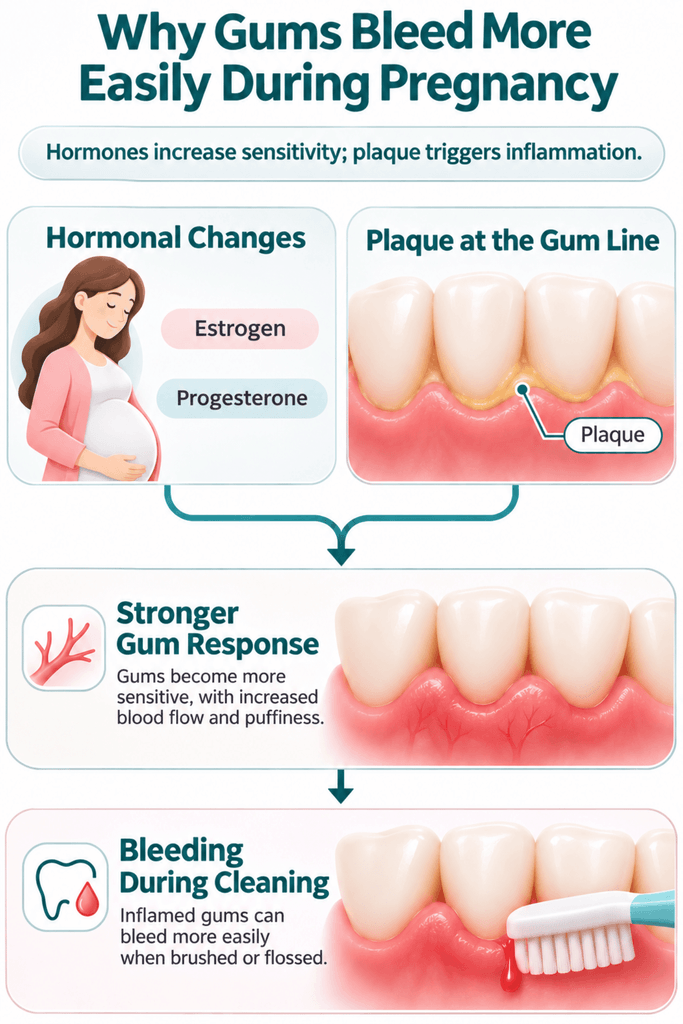
Pregnancy changes how the gums react to plaque. Hormones can increase gum sensitivity and inflammation, while plaque remains the main local irritant. This explains why one pregnant patient may develop bleeding gums while another does not.
How Pregnancy Hormones Affect Your Gums
Estrogen and progesterone levels rise during pregnancy. These hormonal changes affect blood vessels and the way gum tissue responds to bacteria. A small amount of plaque may therefore cause more redness, swelling, and bleeding than it did before pregnancy, especially during the second or third trimester.
Hormones do not cause gingivitis by themselves. They make the gums more susceptible to inflammation when plaque is present along the gum line.
How Plaque and Tartar Trigger Bleeding
Plaque is a soft, sticky layer of bacteria that forms on teeth throughout the day. If it remains near the gum line, it can irritate the gums and cause inflammation. Inflamed gums bleed more easily during brushing, flossing, or eating firm foods.
Plaque that is not removed can harden into tartar, also called calculus. A toothbrush and floss cannot remove hardened tartar. Professional dental cleaning is needed to remove it and create a surface that is easier to keep clean at home.
Factors That Can Make the Bleeding Worse
Several factors can increase inflammation or make oral care more difficult during pregnancy:
- Gum Problems Before Pregnancy: Gingivitis or periodontitis that was already present may become more noticeable during pregnancy.
- Changes in Oral Care: Tiredness, nausea, or a stronger gag reflex may make it harder to brush and floss thoroughly.
- Frequent Snacking: Regular sugary or starchy snacks provide more fuel for plaque bacteria, especially when cleaning becomes inconsistent.
- Morning Sickness: Nausea may shorten brushing time, while repeated vomiting exposes teeth to stomach acid and can make the mouth feel uncomfortable.
- Dry Mouth: Reduced saliva can allow plaque and food debris to remain around the teeth longer.
- Tobacco Use: Smoking and other tobacco products increase the risk of periodontal disease. Smoking can also hide some early signs by reducing visible gum bleeding.
Signs the Bleeding May Be Pregnancy Gingivitis
Pregnancy gingivitis is inflammation of the gums that becomes more noticeable during pregnancy. It does not damage the bone supporting the teeth in its early stage, but untreated inflammation can progress in some patients.
Common findings include:
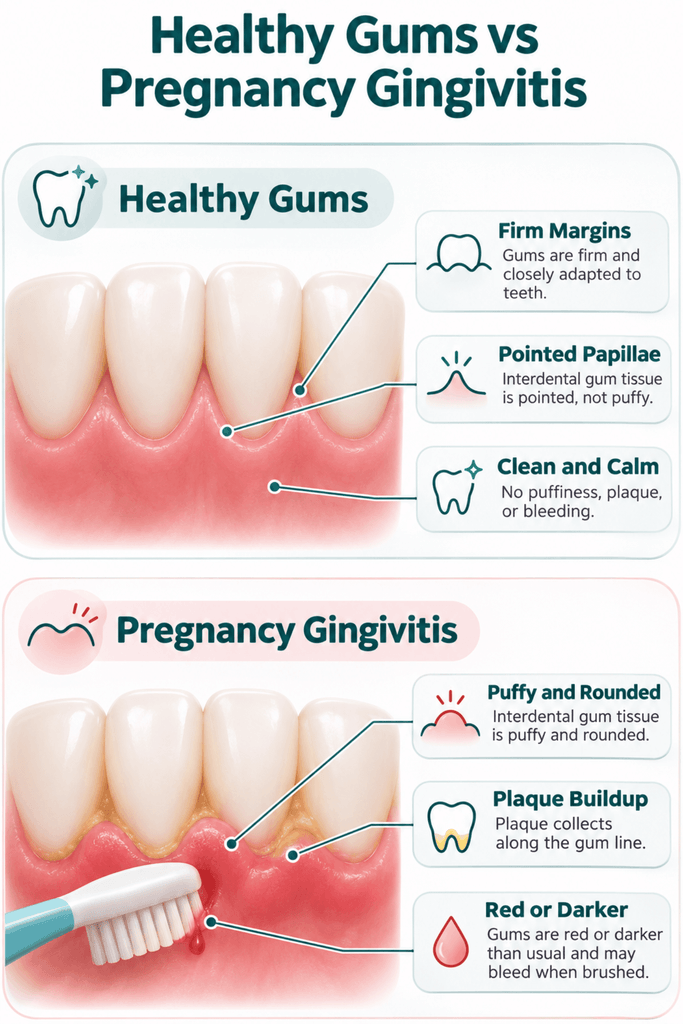
- Bleeding During Cleaning: The gums bleed when you brush or clean between your teeth.
- Red or Darker Gums: Healthy pink gum tissue may look redder or darker around the teeth.
- Swollen Gums: The gum edges may appear puffy, smooth, or enlarged.
- Tenderness: The gums may feel sore when touched or while eating.
- Persistent Bad Breath: Plaque and inflamed gums may cause an unpleasant smell or taste that returns after brushing.
- Bleeding With Gentle Contact: Even careful flossing or a soft toothbrush may trigger bleeding.
These signs can suggest pregnancy gingivitis, but they cannot confirm it. A dentist must examine the teeth and gums to distinguish gingivitis from periodontitis or another condition.
What Else Can Cause Bleeding Gums While Pregnant?
Not every case of bleeding gums during pregnancy is caused by pregnancy gingivitis. Brushing too hard, starting a new flossing routine, or injuring the gum with hard food can cause temporary bleeding. A rough filling, trapped food, or tartar around one tooth may create a more localized problem.
Heavy, spontaneous, or unexplained bleeding should not be blamed on pregnancy without an assessment. Tell your dentist and prenatal care provider if the bleeding is unusual, especially when it occurs with frequent nosebleeds, unexplained bruising, or bleeding elsewhere.
Other possible causes include:
- Cleaning-Related Injury: Forceful brushing or snapping floss into the gums can damage delicate tissue.
- Localized Dental Irritation: Food, tartar, a rough filling, or an ill-fitting dental appliance may irritate one area.
- Periodontitis: This more serious form of gum disease can cause gum recession, deeper pockets, pus, or loose teeth.
- Pregnancy Granuloma: This noncancerous gum growth, sometimes called a pregnancy tumor, may bleed easily when touched.
- Medications: Aspirin, blood thinners, and some other medicines can affect bleeding. Never stop a prescribed medicine without medical advice.
- Medical Conditions: Less common blood, platelet, or nutritional problems can contribute to bleeding and require medical assessment.
How to Reduce Bleeding Gums During Pregnancy Safely
Do not avoid the bleeding areas or stop cleaning your teeth. Plaque will continue to collect and may make the inflammation worse. Gentle, consistent cleaning gives the gums the best chance to recover.
Brush Without Irritating Your Gums
- Choose a Soft Toothbrush: Use a soft-bristled manual or electric toothbrush that fits comfortably in your mouth.
- Use Fluoride Toothpaste: Brush with a fluoride toothpaste twice a day to protect the teeth while removing plaque.
- Clean the Gum Line Gently: Aim the bristles toward the area where the teeth meet the gums. Use small, controlled movements without scrubbing.
- Brush for Two Minutes: Give each part of your mouth enough attention, including the inner surfaces of the teeth.
- Spit Without Rinsing: Spitting out the toothpaste without rinsing leaves more protective fluoride on the teeth.
Some bleeding may continue when you first improve your home care routine. This does not usually mean that brushing is causing the disease. Arrange a dental visit if the bleeding is heavy, painful, or does not begin to improve.
Clean Between Your Teeth Every Day
A toothbrush cannot fully clean the narrow spaces between teeth. Floss or interdental brushes can remove plaque from these areas and help reduce inflammation.
- Choose a Suitable Tool: Use floss for tight contacts and correctly sized interdental brushes where space allows.
- Clean With Control: Guide the floss gently below the gum edge instead of snapping it down. Move an interdental brush without forcing it through.
- Clean Once Daily: Daily cleaning is more useful than occasional aggressive cleaning.
- Ask for Help if Needed: A dentist or dental hygienist can demonstrate the correct size and technique if cleaning causes significant pain.
Protect Your Mouth After Morning Sickness
Vomiting exposes the teeth to stomach acid, which temporarily softens enamel. The HRSA guidance on oral health during pregnancy recommends rinsing afterward and maintaining regular oral care throughout pregnancy.
- Rinse First: Rinse with plain water to clear acid and the unpleasant taste.
- Wait Before Brushing: Allow at least 30 minutes before brushing so you do not scrub acid-softened enamel.
- Resume Fluoride Care: Brush gently with fluoride toothpaste once the waiting period has passed.
- Adjust Your Routine: If toothpaste taste or brushing triggers nausea, try a smaller brush head or brush at a time when nausea is less severe.
When to See a Dentist for Bleeding Gums During Pregnancy
A dental visit can identify the cause before the inflammation becomes more difficult to manage. Contacting a dentist does not mean that you will need surgery, medication, or extensive dental work. Many cases improve with professional cleaning and a better home care routine.
Arrange a Dental Checkup if Bleeding Continues
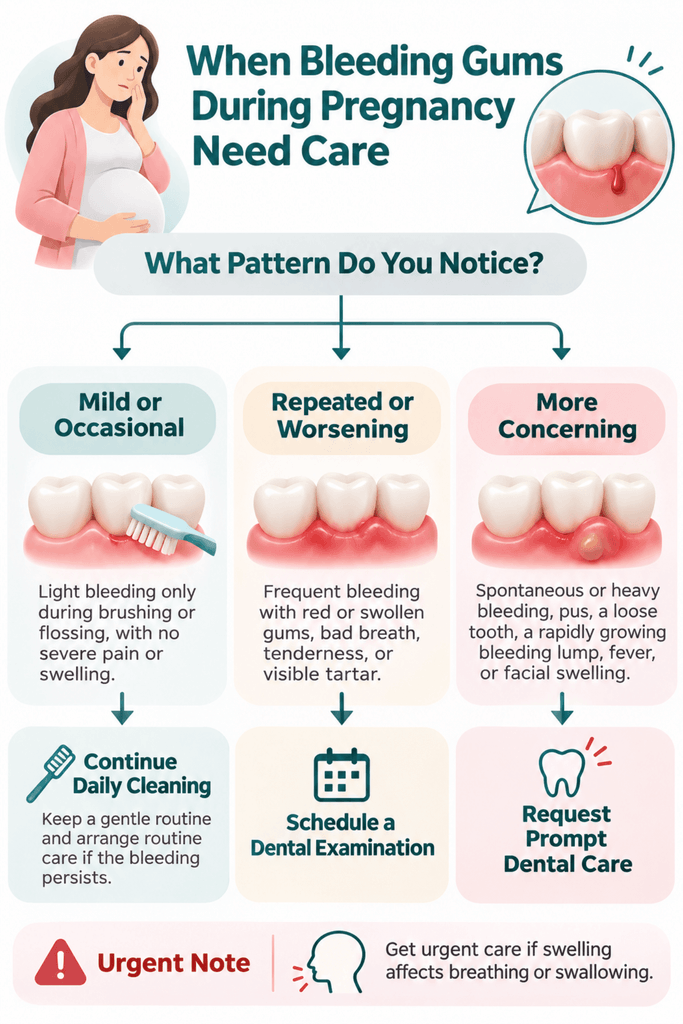
Schedule a routine dental examination if you notice:
- Repeated Bleeding: Your gums bleed during most brushing or flossing sessions.
- Ongoing Inflammation: Redness, tenderness, or swollen gums do not improve with consistent gentle cleaning.
- Persistent Bad Breath: Bad breath or an unpleasant taste returns soon after brushing.
- Visible Tartar: You can see or feel hard deposits along the gum line.
- Localized Bleeding: The same area around one tooth continues to bleed.
- Overdue Dental Care: You have not had a dental examination or professional cleaning recently.
Request Prompt Care for More Concerning Changes
Seek prompt dental advice when bleeding comes with:
- Severe Pain or Swelling: Increasing pain or swelling may indicate a more active dental or gum problem.
- Pus or a Bad Taste: Drainage around a tooth or the gum line may be a sign of infection.
- Loose Teeth: Tooth movement can indicate damage to the supporting gum and bone.
- Receding Gums: Gums pulling back or new spaces between teeth may suggest periodontitis.
- A Bleeding Gum Lump: A rapidly growing or repeatedly bleeding lump needs professional examination.
- Spontaneous Bleeding: Bleeding that begins without brushing or does not stop with gentle pressure requires assessment.
- Fever or Facial Swelling: Contact a dentist promptly. Seek urgent medical care if swelling affects breathing or swallowing.
Tell your prenatal care provider as well if gum bleeding occurs with unexplained bruising, frequent nosebleeds, or bleeding elsewhere.
How a Dentist Checks and Treats Bleeding Gums
The dentist will look for the cause of the bleeding and determine whether the inflammation is limited to the gums. Treatment depends on the examination findings rather than the stage of pregnancy alone.
- Reviewing Your Health History: Tell your dentist you are pregnant, your trimester, whether the pregnancy is considered high-risk, and which medicines or supplements you take.
- Examining the Teeth and Gums: The dentist looks for plaque, tartar, swelling, decay, damaged restorations, and other local irritants.
- Checking Gum Support: When appropriate, the dentist measures the spaces around the teeth and checks for gum recession, bleeding, or tooth movement.
- Removing Plaque and Tartar: Professional cleaning removes deposits that cannot be cleared with a home care routine.
- Treating Gum Disease: If periodontitis is present, the dentist may recommend deeper cleaning below the gum line and closer monitoring.
- Improving Home Care: The dental team can suggest a toothbrush, interdental tool, or cleaning method suited to sore or inflamed gums.
- Coordinating Care: The dentist may contact the obstetrician when medication, sedation, a high-risk pregnancy, or a complex medical condition affects the treatment plan.
Is Dental Treatment Safe During Pregnancy?
Yes. Routine dental examinations, cleanings during pregnancy, clinically necessary X-rays, local anesthesia, fillings, root canal treatment, extractions, and periodontal treatment can generally be provided when needed. The American Dental Association’s guidance on dental treatment during pregnancy states that preventive, diagnostic, and restorative dental care is safe throughout pregnancy.
The second trimester may feel more comfortable for longer elective appointments, but necessary treatment does not need to wait for a particular trimester. Delaying infection treatment can allow the problem to become more complex. Sedation, nitrous oxide, antibiotics, and pain medicines require individual planning with the dentist and prenatal care provider.
Before dental care, remember to:
- Tell Your Dentist You Are Pregnant: Share your stage of pregnancy and expected due date.
- List Your Medications: Include prescribed medicines, low-dose aspirin, vitamins, and nonprescription products.
- Discuss Pregnancy Risks: Tell the dental team if your obstetrician considers the pregnancy high-risk.
- Share New Symptoms: Report nausea, reflux, high blood pressure, swelling, or other changes that may affect positioning or care.
- Ask for Comfort Breaks: Shorter visits or changes in chair position may help later in the third trimester.
Can Bleeding Gums During Pregnancy Affect the Baby?
Mild gum bleeding or gingivitis does not mean that the baby is being harmed. Research has found an association between periodontitis and outcomes such as preterm birth and low birth weight, but an association does not prove that gum disease directly causes these outcomes. The American College of Obstetricians and Gynecologists’ oral health guidance emphasizes that the evidence does not establish a causal relationship.
Treating gum disease during pregnancy improves the mother’s oral health and is considered safe. Research into whether periodontal treatment also prevents adverse pregnancy outcomes remains mixed; a 2025 systematic review of dental treatment and preterm birth found possible benefit but also important uncertainty and differences between studies. Dental treatment should therefore protect gum health, not promise a specific pregnancy outcome.
Will the Bleeding Stop After Pregnancy?
Pregnancy-related gum sensitivity often improves after delivery as hormone levels change. Good plaque control, professional cleaning, and regular dental visits can help the gums recover. However, delivery does not remove plaque or tartar and does not cure established periodontal disease.
Arrange a dental examination if your gums remain red, swollen, sore, or prone to bleeding after pregnancy. Persistent symptoms may mean that gingivitis, periodontitis, a rough restoration, or another local problem still needs care.
Frequently Asked Questions
Can Bleeding Gums Be an Early Sign of Pregnancy?
Hormonal changes can affect the gums early in the first trimester, but bleeding gums are not a reliable sign of pregnancy. Gingivitis, forceful brushing, plaque buildup, and several other conditions can cause the same symptom. Use an appropriate pregnancy test and contact your healthcare provider if you think you may be pregnant.
Why Are My Gums Bleeding Around Only One Tooth During Pregnancy?
Bleeding around one tooth usually points to a local issue rather than hormones alone. Plaque, tartar, trapped food, decay, a rough filling, or an early infection may irritate that area. Pregnancy can make the reaction more noticeable. A dentist should examine persistent bleeding around the same tooth.
Can I Use Mouthwash for Bleeding Gums While Pregnant?
Some fluoride and antimicrobial mouthwashes are considered safe during pregnancy, but the right product depends on the cause of the bleeding. Ask your dentist before using a medicated rinse such as chlorhexidine. Mouthwash may support oral care, but it cannot replace brushing, flossing, or professional tartar removal.
Is a Salt Water Rinse Safe for Bleeding Gums During Pregnancy?
An occasional warm saltwater rinse is generally acceptable if you spit it out rather than swallow it. It may soothe irritated gum tissue, but it does not remove plaque or treat established gum disease. Continue to brush and floss gently, and see your dentist if the bleeding continues.
Why Is There a Red Lump on My Gum That Bleeds During Pregnancy?
A red lump may be a pregnancy granuloma, also called a pregnancy tumor or pyogenic granuloma. It is usually noncancerous but can grow and bleed easily, often near the upper front teeth. The European Association of Oral Medicine’s guidance on pyogenic granuloma explains why professional examination is needed to confirm the diagnosis and guide care.
Can Low-Dose Aspirin Make My Gums Bleed More During Pregnancy?
Aspirin affects platelets and may make bleeding easier to notice in some people, although inflamed gums are often the main local cause. Do not stop prescribed low-dose aspirin on your own. Tell your dentist and the clinician managing your pregnancy, especially if the bleeding is heavy, prolonged, or accompanied by unusual bruising.
Do Bleeding Gums Get Worse Later in Pregnancy?
Gum inflammation may become more noticeable during the second and third trimesters as hormonal changes continue. However, timing and severity vary between pregnant patients. Bleeding that becomes heavier, occurs without brushing, or comes with pain, swelling, pus, or loose teeth should be examined rather than accepted as a normal stage of pregnancy.
Bottom Line: Bleeding Gums During Pregnancy Are Manageable
Bleeding gums during pregnancy are common, but regular bleeding usually means the gum tissue is inflamed. Keep brushing and cleaning between your teeth gently, and arrange routine dental care instead of avoiding the affected areas.
See your dentist sooner if the bleeding is persistent, heavy, or accompanied by pain, swelling, pus, a gum lump, or loose teeth. Dental care is safe throughout pregnancy when planned around your health needs.
