Sore gums can make brushing, eating, or even drinking uncomfortable. Safe home remedies for sore gums, such as a gentle warm saltwater rinse, a cold compress on the outside of your cheek, and careful cleaning with a soft toothbrush, may reduce mild soreness for a short time. However, they cannot cure gum disease, a dental abscess, or another problem that needs professional treatment.
What helps depends on why your gums hurt. You may have irritated the tissue by brushing too hard, trapped food between your teeth, or developed early gum inflammation. If the soreness keeps returning, feels severe in one area, or comes with swelling or bleeding, simply masking the discomfort will not address its cause.
Start with methods that protect your gums instead of burning, scraping, or numbing them with unproven mixtures. Knowing which remedies to avoid is just as important as knowing which ones to try. First, it helps to understand what home care can and cannot do before choosing the safest way to ease your discomfort.
Can Home Remedies Heal Sore Gums?
Home remedies for sore gums may ease mild gum pain, tenderness, and swelling. They can provide temporary relief when the gum tissue is irritated by hard brushing, new flossing, or trapped food. However, even an effective home remedy for gum discomfort will not remove tartar, treat gum disease, or cure a dental infection.
The right approach depends on the underlying cause of your gum pain. If plaque, tooth decay, an abscess, or another dental problem is causing pain, professional dental care is necessary. Home care may reduce pain and discomfort while you arrange an appointment, but it should not replace professional dental care if symptoms persist or worsen.
Safe Home Remedies for Sore Gums
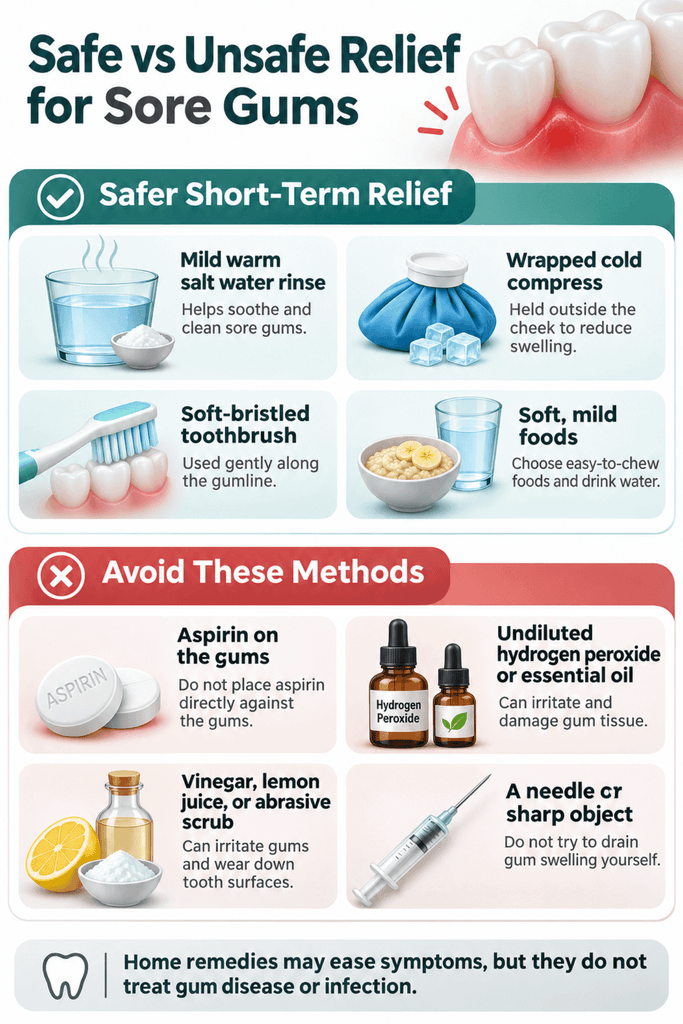
The safest home remedies for gum pain focus on soothing irritated tissue and keeping the area clean. Stop any treatment at home that causes burning, increased gum swelling, discoloration, or worsening pain.
Rinse Gently With Warm Salt Water
A mild salt water rinse may soothe inflamed gums and loosen food debris around the gum line. Follow the NHS instructions for preparing a salt water mouth rinse and avoid making the solution too concentrated.
- Prepare the Rinse: Dissolve half a teaspoon of table salt in one glass of warm—not hot—water.
- Rinse Gently: Take a small sip and move it around the sore area without vigorous swishing.
- Spit It Out: Do not swallow the salt water.
- Use It Briefly: Rinse your mouth two or three times daily for a few days. Stop if it dries or irritates the gum tissue.
Salt water can provide temporary pain relief, but it is not a cure for a gum infection. Children who cannot rinse and spit reliably should not use this remedy.
Apply a Cold Compress Outside Your Cheek
A cold compress may reduce pain and swelling when your gums are swollen. It works by cooling the area and temporarily narrowing nearby blood vessels. Do not place ice directly on your gums or bare skin.
- Wrap the Cold Pack: Cover an ice pack or a small bag of frozen vegetables with a clean, thin towel.
- Place It Outside Your Mouth: Hold it against the cheek near the sore area, not directly on the gum tissue.
- Limit Each Application: Keep it in place for about 10 to 15 minutes.
- Allow a Rest Period: Remove it for at least 10 to 15 minutes before using it again.
A cold compress may offer gum pain relief, but it will not treat the root cause of the pain.
Continue Brushing With a Gentle Technique
Do not stop brushing simply because your gums are sore. Plaque can remain along the gum line and contribute to gum inflammation. Use a soft-bristled brush, fluoride toothpaste, and light pressure.
The American Dental Association’s toothbrushing guidance recommends brushing twice daily with a soft-bristled toothbrush. Hold the brush at about a 45-degree angle toward the gum line and use short, gentle strokes instead of aggressive scrubbing.
Clean Carefully Between Your Teeth
Food and plaque trapped between the teeth are a common cause of gum irritation. Cleaning the area may help, but forcing floss under swollen gums can damage the tissue and increase bleeding.
- Use Floss Gently: Slide floss between the teeth instead of snapping it against the gums.
- Curve Around Each Tooth: Form a C shape around the tooth and move the floss gently up and down.
- Consider an Interdental Brush: A correctly sized interdental brush can help clean larger spaces, around braces, or beneath certain dental appliances.
- Avoid Sharp Objects: Never use needles, pins, fingernails, or pointed toothpicks to remove trapped food.
- Stop If Pain Increases: Persistent pain in the gums after cleaning may indicate a problem that needs dental care.
Choose Foods That Will Not Irritate Your Gums
Soft foods at a comfortable temperature can make eating easier while the gums heal. Try to chew on the opposite side if one area is especially tender.
- Choose Soft Foods: Yogurt, eggs, soft vegetables, oatmeal, and mild soups require less chewing.
- Avoid Sharp Foods: Chips, crusty bread, seeds, and popcorn hulls can scrape or become trapped beneath the gums.
- Limit Acidic Foods: Citrus fruits, vinegar-based foods, and acidic drinks may sting irritated gum tissue.
- Skip Spicy Foods: Hot spices may increase burning and discomfort.
- Avoid Extreme Temperatures: Very hot or icy foods can worsen sensitivity in some tooth and gum conditions.
- Drink Water: Water helps rinse away loose food particles and supports normal saliva flow.
Use Over-the-Counter Pain Relief Carefully
An over-the-counter pain reliever may reduce pain for some adults. The ADA’s guidance on oral pain medicines explains that nonsteroidal anti-inflammatory drugs, such as ibuprofen, and acetaminophen can help manage short-term dental pain when used correctly.
Follow the product label and avoid taking more than directed. Before using pain medicine, consult a dental professional, physician, or pharmacist if you are pregnant, take blood thinners, have kidney or liver disease, have a history of stomach ulcers, or are selecting medicine for a child. Pain relief does not treat the dental problem causing the symptoms.
Home Remedies and Habits That Can Make Sore Gums Worse
Some popular home remedies for sore gums can irritate the mouth or delay proper treatment. Natural does not automatically mean safe, especially when a concentrated product is placed directly on inflamed gums.
- Aspirin on the Gums: Do not place an aspirin tablet or crushed aspirin against the sore area. The ADA’s dental emergency guidance warns that aspirin can burn gum tissue.
- Undiluted Hydrogen Peroxide: Household peroxide may irritate or damage oral tissues when used incorrectly. Use only an oral product intended for the mouth and follow its label or your dentist’s instructions.
- Undiluted Essential Oils: Clove, tea tree, peppermint, and other concentrated oils can burn or irritate the gum tissue. They may also be harmful if swallowed.
- Vinegar and Acidic Mixtures: Vinegar, lemon juice, and similar acidic products may sting sore gums and contribute to enamel erosion.
- Salt or Baking Soda Scrubs: Rubbing coarse mixtures on the gums does not remove an infection. Abrasive scrubbing may damage gum tissue and increase pain.
- Strong Alcohol-Based Products: Alcohol may dry or irritate sensitive oral tissues. Stop using a mouthwash if it increases burning or soreness.
- Aggressive Brushing: Hard bristles and heavy pressure can cause gum irritation or make existing soreness worse.
- Cutting or Draining Swelling: Never puncture a gum boil or swollen area at home. This can spread bacteria and injure nearby tissue.
- Stopping Oral Care Completely: Avoiding the sore area for several days allows more plaque to collect. Continue gentle oral care unless your dentist gives different instructions.
Why the Cause of Your Sore Gums Matters
There is no single remedy for gum soreness because several dental issues can produce similar symptoms. A home remedy may help mild gum irritation, but recurring or persistent gum pain may indicate a problem that requires treatment.
- Hard Brushing or New Flossing: Excessive pressure may irritate the gums. Improving your technique usually matters more than adding another remedy.
- Trapped Food: Meat fibers, popcorn hulls, or other debris can cause pain in one small area. Gentle flossing may help, but persistent soreness needs an examination.
- Plaque-Related Gingivitis: Plaque can cause gums to become inflamed, red, swollen, and prone to bleeding. Home remedies cannot remove hardened tartar or fully treat gum disease.
- Braces or Dentures: A wire, bracket, or poorly fitting denture can repeatedly rub the tissue. The appliance may need adjustment if protective measures do not solve the problem.
- Mouth Sores: Canker sores and small injuries may cause localized pain even when the surrounding gums look healthy.
- Wisdom Tooth Inflammation: Food and bacteria may collect beneath the gum around a partly erupted wisdom tooth. Recurring swelling, a bad taste, or difficulty opening your mouth requires dental care.
- Tooth or Gum Infection: Tooth decay, a cracked tooth, or periodontal infection can cause pain that feels as if it comes from the gums. A gum infection may require drainage, root canal treatment, periodontal care, or another dental procedure.
For a fuller breakdown of these possibilities, use the related sore gums guide to review causes, symptoms, and professional treatment options.
How Quickly Do Home Remedies for Sore Gums Work?
The timeline depends on what caused the soreness. Mild gum irritation from hard brushing or food trapped between the teeth should begin improving after you remove the trigger and switch to gentle oral care. Home remedies for sore gums may reduce pain during this period, but they cannot guarantee a specific healing time.
Look for a steady decrease in pain and swelling. Arrange an examination if your symptoms remain unchanged, keep returning, or become worse. Persistent pain may indicate gingivitis, a damaged tooth, an abscess, or another condition that home remedies cannot correct.
When to See a Dentist for Sore Gums
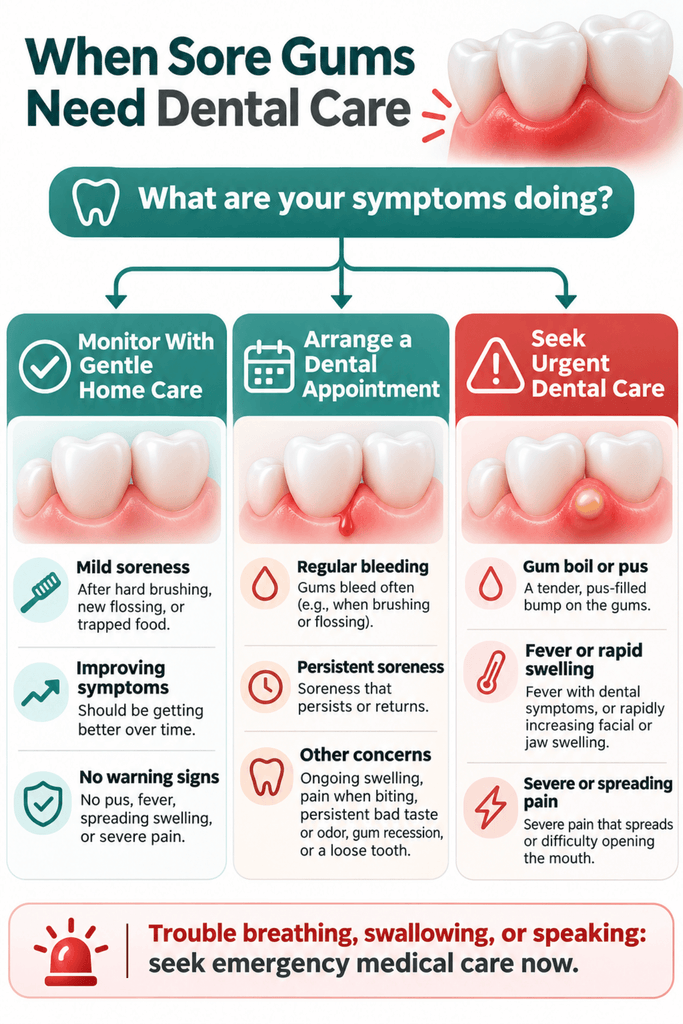
Professional evaluation becomes more important when symptoms persist, return, or involve bleeding gums, swelling, pus, or tooth pain. Prompt dental care can help find the underlying cause of your gum symptoms and prevent gum disease or infection from getting worse.
Arrange a Dental Appointment
The ADA’s list of gum disease warning signs includes red, swollen, tender, or easily bleeding gums. Contact a dentist if you notice any of the following:
- Persistent Soreness: Pain continues despite several days of gentle home care.
- Recurring Gum Problems: The same area repeatedly becomes painful or swollen.
- Regular Bleeding: Your gums bleed often rather than only after a single brushing or flossing injury.
- Ongoing Swelling: Gum swelling does not improve or continues to spread.
- Gum Recession: The gums pull away from the teeth or the teeth begin to look longer.
- Bad Breath or Taste: A persistent unpleasant taste or odor may occur with plaque buildup or infection.
- Pain When Biting: This may point to a tooth problem rather than simple gum irritation.
- Loose or Shifting Teeth: These can be signs of advanced gum disease and require professional care.
A dentist can examine your teeth and gums, measure the spaces around the teeth, and take X-rays when needed. This helps identify and treat the cause rather than only relieving the symptoms.
Seek Urgent Dental or Medical Care
A dental abscess will not heal with home treatment. The NHS guidance on dental abscesses and emergency symptoms recommends urgent dental treatment for suspected infection and emergency medical help when swelling affects breathing or swallowing.
- Pus or a Gum Boil: A pimple-like bump, drainage, or a bad taste may indicate an abscess.
- Increasing Facial or Jaw Swelling: Rapidly growing swelling needs urgent assessment.
- Fever With Dental Symptoms: Fever, weakness, or swollen neck glands may mean the infection is spreading.
- Severe or Spreading Pain: Pain that becomes intense or spreads through the jaw, face, ear, or neck needs prompt care.
- Difficulty Opening Your Mouth: Limited mouth opening can occur with a more serious dental infection.
- Trouble Swallowing or Speaking: Seek emergency medical care, especially when swelling is increasing.
- Difficulty Breathing: Call emergency services immediately. Do not wait for a routine dental appointment.
How to Keep Sore Gums From Returning
Keeping teeth and gums healthy requires daily plaque control and regular dental care. Repeatedly treating swollen gums at home without addressing the cause allows many gum problems to return.
- Brush Twice Daily: Use fluoride toothpaste, a soft-bristled toothbrush, and gentle pressure along the gum line.
- Clean Between Your Teeth: Floss or use another suitable interdental cleaner once daily to remove plaque a toothbrush cannot reach.
- Correct Harmful Habits: Reduce brushing pressure and avoid using sharp objects to clean between teeth.
- Keep Dental Appliances Clean: Follow your dentist’s instructions for cleaning braces, retainers, mouthguards, and dentures.
- Check the Fit of Dentures or Appliances: Repeated rubbing can damage gum tissue and cause chronic soreness.
- Limit Tobacco Use: Smoking and other tobacco products increase the risk of gum disease and can interfere with healing.
- Attend Dental Checkups: Regular examinations allow your dentist to identify plaque, tartar, tooth decay, and early signs of gum disease.
- Get New Symptoms Checked: Do not rely on repeated home remedies for gum pain when soreness keeps returning.
Frequently Asked Questions
Why Are My Gums Sore in Only One Spot?
Soreness in one area may come from trapped food, a small mouth ulcer, hard brushing, an erupting tooth, or a localized gum infection. Gently clean the area without using sharp objects. See a dentist if the pain persists, a bump develops, or you notice pus, swelling, pain when biting, or a bad taste.
Is Mouthwash Safe to Use on Sore Gums?
It depends on the product and the cause of the soreness. Strong flavors or alcohol may irritate inflamed gums. Choose a mouthwash intended for daily oral care and follow its label. Do not use prescription-strength or medicated rinses longer than directed. Stop using the product if burning, peeling, dryness, or pain increases.
Can I Use Home Remedies for Sore Gums During Pregnancy?
Gentle brushing, careful flossing, a cold compress, and a mild salt water rinse are usually reasonable options during pregnancy. Do not swallow the rinse. Ask your dentist, physician, or pharmacist before taking a pain reliever or using numbing gels, essential oils, or herbal products. Persistent gum swelling or bleeding still needs professional dental care.
Can Home Remedies Help Sore Gums Around a Wisdom Tooth?
Warm salt water and careful cleaning may provide temporary relief around a partly erupted wisdom tooth. However, they cannot remove deeply trapped debris or treat an established infection. Arrange a dental assessment if swelling returns or you develop pus, a bad taste, fever, facial swelling, or difficulty opening your mouth.
What Helps Sore Gums Caused by Braces or Dentures?
Clean the area gently and choose soft foods until the tissue feels better. Orthodontic wax can cover a bracket or wire that rubs your cheek or gums. Dentures that repeatedly cause sores may need professional adjustment. Do not file, bend, or reshape a dental appliance at home because this can damage it or worsen the injury.
Is It Normal for Gums to Feel Sore After a Dental Cleaning?
Mild tenderness can occur after a dental cleaning, especially when the gums were already inflamed or a large amount of tartar was removed. The discomfort should gradually improve. Contact the dental office if pain intensifies, swelling increases, bleeding remains heavy, or the soreness does not begin to settle as expected.
Are Home Remedies for Sore Gums Safe for Children?
Not every home remedy is suitable for a child. Avoid salt water rinses if the child cannot spit reliably, and never give pain medicine or a numbing product without checking the age instructions. A dentist should assess ongoing pain, swelling, bleeding, fever, difficulty eating, or soreness that affects sleep or normal activities.
The Bottom Line: Home Remedies for Sore Gums
Gentle salt water rinsing, a cold compress, soft foods, and careful cleaning may provide temporary relief from mild gum soreness. Avoid harsh, acidic, abrasive, or concentrated products that can irritate the gum tissue.
Home remedies for sore gums cannot treat every underlying cause. Contact a dentist when symptoms persist, return, or worsen, and seek urgent care for spreading swelling, fever, pus, difficulty opening your mouth, or problems breathing or swallowing.
