If your partner has bleeding gums or has been diagnosed with periodontitis, you may wonder, “Is gum disease contagious?” Gum disease does not spread like a cold or the flu. However, bacteria linked to gingivitis and periodontitis can pass from one person to another through saliva, including during kissing or when people share items used in the mouth.
Exposure to these bacteria does not mean you will develop gum disease. The condition forms when plaque bacteria build up, and your gums react with inflammation. Your oral hygiene, smoking, diabetes, genetics, medications, and existing gum health can all affect your risk. A brief kiss is not the same as “catching” an infection.
The most useful response is not to fear normal contact with someone you love. Focus on healthy daily habits, avoid sharing toothbrushes, and encourage anyone with bleeding, swelling, persistent bad breath, or loose teeth to see a dentist. First, it helps to understand the important difference between a contagious disease and bacteria that can move through saliva.
Is Gum Disease Contagious? The Short Answer
Gum disease is not contagious in the same way as a cold or the flu. You cannot catch it by standing near someone, hugging them, or breathing the same air. However, bacteria associated with gingivitis and periodontitis can pass from person to person through saliva.
This distinction matters. Transferring bacteria is not the same as transferring the disease itself. Gum disease develops when plaque remains around the teeth and the body responds with ongoing inflammation. According to the American Academy of Periodontology’s patient guidance on periodontal disease, periodontal bacteria can spread through saliva, but the inflammatory condition is not technically considered contagious.
How Gum Disease Bacteria May Move Between People
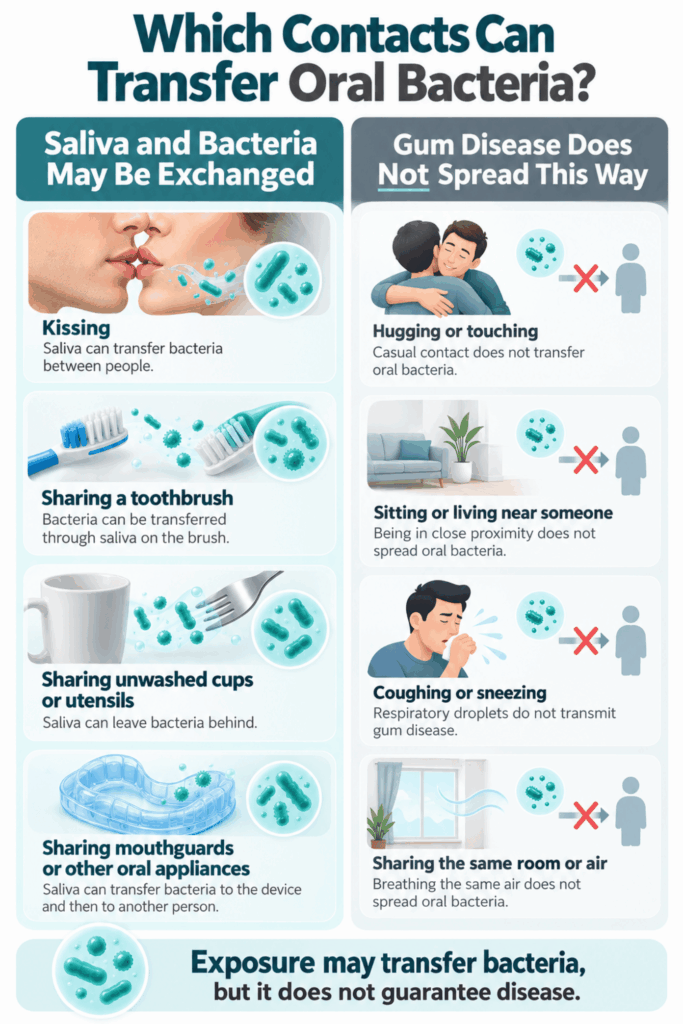
Saliva contains many types of oral bacteria. Kissing and sharing items that enter the mouth can transfer some of these bacteria, but the amount transferred and what happens afterward vary. The other person’s plaque control, existing gum health, immune response, and personal risk factors all affect whether gum inflammation develops.
Kissing and Repeated Saliva Contact
Kissing exchanges saliva and oral bacteria. Therefore, bacteria associated with periodontal disease may move between partners, especially through repeated saliva contact over time. This does not mean that kissing someone with gum disease will automatically give you gingivitis or periodontitis.
There is no reliable way to calculate someone’s risk from one kiss or a specific number of kisses. Normal affection should not become a source of fear. It is more useful for both partners to maintain good oral hygiene and for the person with active gum disease to receive appropriate dental care.
Shared Toothbrushes and Oral-Care Tools
Do not share toothbrushes or other oral-care tools. These items contact plaque, saliva, gum tissue, and sometimes small amounts of blood. The American Dental Association’s toothbrush guidance advises keeping toothbrushes personal rather than sharing them.
Items that should remain separate include:
- Toothbrushes: Each person should use their own brush, even within a couple or family.
- Interdental Brushes: These small brushes enter spaces where plaque and bleeding may be present.
- Floss Picks and Dental Picks: Never reuse another person’s cleaning tools.
- Water Flosser Tips: Give each user a separate, clearly identified tip.
- Mouthguards and Retainers: These appliances collect saliva and oral bacteria and should not be shared.
- Removable Dental Appliances: Dentures, whitening trays, and similar devices are made for one person and should never be exchanged.
Cups, Utensils, Food, and Casual Contact
Sharing cups, forks, spoons, or food can exchange saliva. This may transfer oral bacteria, but occasional sharing does not prove that gum disease will develop. Exposure is only one part of a much larger process.
- Sharing Drinks: Drinking from the same cup or bottle may transfer saliva, but gum disease is not automatically passed with it.
- Sharing Utensils: Forks and spoons may carry oral bacteria when used before being washed. Avoid regularly sharing unwashed utensils, especially when someone has untreated gum problems.
- Sharing Food: Taking bites from the same food may exchange saliva. This should not be treated as a major cause of periodontal disease by itself.
- Hugging or Touching: Gum disease is not contagious through skin contact such as hugging or touching.
- Coughing or Sneezing: Periodontal disease does not spread through respiratory droplets like the flu.
- Being Near Someone: Living or working with a person who has gum disease does not make you infected through ordinary contact.
Why Bacterial Exposure Does Not Guarantee Gum Disease
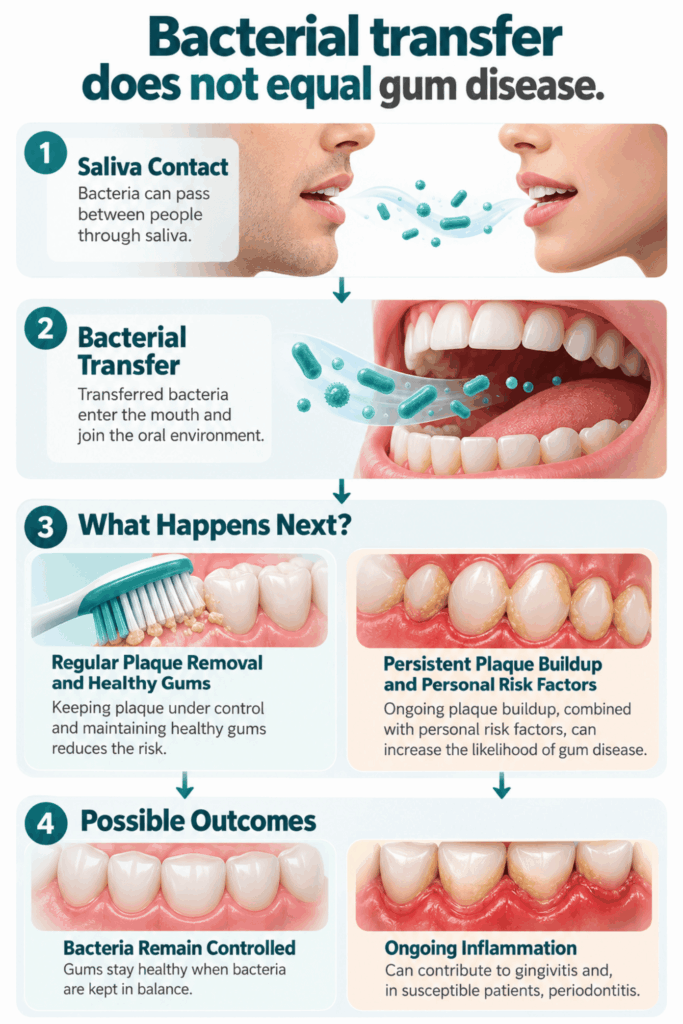
Bacteria must do more than enter the mouth to cause lasting problems. They need to survive, join the existing oral community, collect in plaque around the gumline, and contribute to inflammation. Saliva, daily cleaning, the immune system, and competition from other oral bacteria may prevent transferred organisms from becoming established.
Even when two people carry similar periodontal bacteria, this does not prove that one person gave the other gum disease. They may share meals, habits, tobacco exposure, dental-care patterns, or genetic risk factors. A transferred bacterium may also be present without causing visible inflammation or tissue damage.
Daily Plaque Control and Existing Gum Health
Regular plaque removal makes it harder for harmful bacteria to remain in large numbers around the gumline. Daily brushing and flossing, or another suitable interdental cleaning method, can reduce inflammation and support a healthier balance of oral bacteria. These habits lower risk, but they cannot guarantee that gum disease will never develop.
Health and Lifestyle Factors That Affect Risk
Your response to plaque and bacteria depends on more than exposure. Several health and lifestyle factors can increase the risk of developing gum disease or make existing disease harder to control.
- Poor Oral Hygiene: Plaque that remains along and below the gumline can trigger persistent gum inflammation.
- Smoking and Tobacco Use: Tobacco increases the risk of periodontal disease and can hide bleeding, making gum problems less noticeable.
- Diabetes: Poorly controlled blood sugar can make gum disease more severe and may slow healing.
- Genetics: Some people have a stronger inherited tendency toward periodontal inflammation or earlier tissue breakdown.
- Dry Mouth: Reduced saliva can allow plaque to build up more easily. Dry mouth may result from medications, health conditions, or dehydration.
- Certain Medications: Some medicines reduce saliva or cause gum enlargement, making plaque control more difficult.
- Hormonal Changes: Puberty, pregnancy, and menopause can make gum tissue more sensitive to plaque.
- Immune Health: Conditions or treatments that affect the immune system may change how the body responds to oral bacteria.
- Previous Gum Disease: A history of periodontitis increases the need for ongoing periodontal care because the condition can become active again.
The CDC’s overview of periodontal disease identifies factors such as smoking, diabetes, poor oral hygiene, genetics, hormonal changes, and certain medical conditions as important influences on risk.
Do Gingivitis and Periodontitis Spread the Same Way?
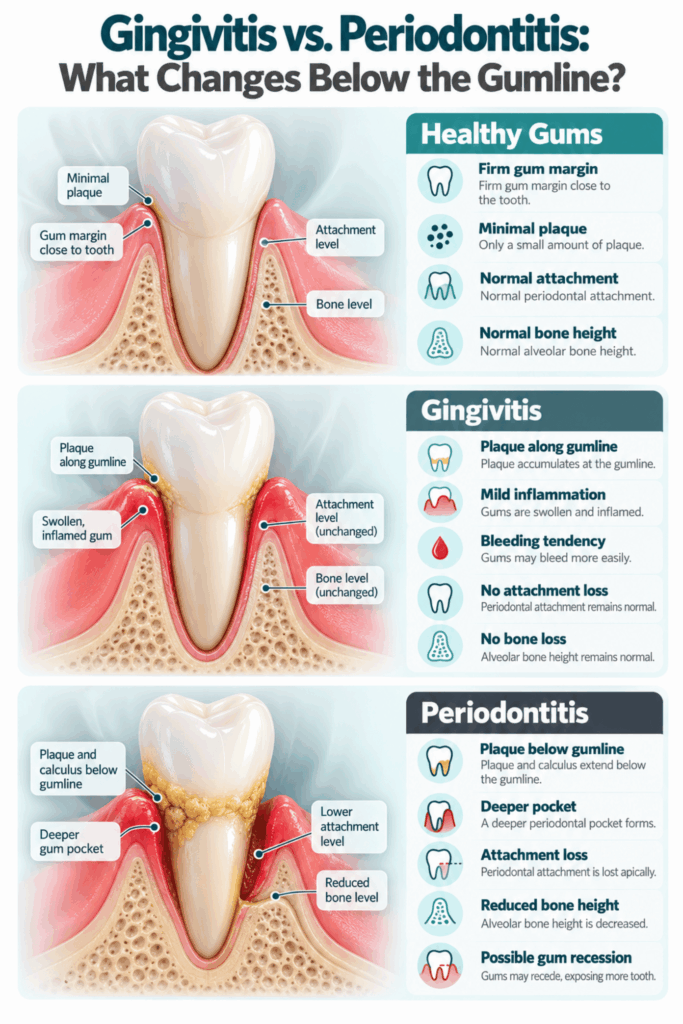
Bacteria associated with both gingivitis and periodontitis can be exchanged through saliva. However, neither condition transfers as a complete disease. Gingivitis develops when plaque triggers inflammation limited to the gums. It may cause redness, swelling, tenderness, and bleeding, but it does not include the attachment and bone loss seen in periodontitis.
Plaque-related gingivitis can often be reversed with effective daily plaque control and professional cleanings when needed. Periodontitis causes lasting damage to the tissues and bone that support the teeth. Treatment can control the disease and reduce further damage, but it cannot simply restore all lost support.
Can Gum Disease Run in Couples and Families?
Gum disease may appear in several family members, but that does not make it contagious or prove that it was directly transmitted. Partners and relatives may share oral bacteria, food choices, hygiene routines, tobacco exposure, access to dental care, and other environmental influences. They may also share genetic traits that affect their inflammatory response.
A systematic review of Porphyromonas gingivalis in cohabiting family members found that this periodontal bacterium was often detected in more than one family member. However, shared detection does not prove that gum disease itself passed between them or that every person carrying the bacterium would become ill.
What to Do If Your Partner Has Gum Disease
You do not need to isolate yourself from a partner who has gum disease. Focus on treatment, personal plaque control, and sensible hygiene precautions.
- Encourage Professional Treatment: Your partner should complete the recommended periodontal treatment and attend maintenance visits. Untreated gum disease may continue damaging the supporting tissues around the teeth.
- Use Separate Oral-Care Tools: Never share toothbrushes, interdental brushes, floss picks, water flosser tips, mouthguards, or retainers.
- Maintain Your Own Plaque Control: Brush twice a day thoroughly with fluoride toothpaste and clean between your teeth every day.
- Watch for Gum Changes: Pay attention to repeated bleeding, swelling, gum recession, persistent bad breath, or loose teeth.
- Review Your Personal Risk: Smoking, diabetes, dry mouth, previous gum problems, and a family history of periodontitis may justify closer monitoring.
- Book an Examination When Appropriate: Arrange a dental evaluation if you have symptoms, known risk factors, or have not had your gums checked recently.
- Continue Normal Affection: There is usually no reason to avoid ordinary kissing solely because a partner has gum disease. Good dental care is more useful than fear of everyday contact.
Signs That Your Gums Should Be Checked
Gum disease often begins with mild changes and little or no pain. Waiting for severe discomfort can allow the condition to progress unnoticed. A dentist or dental hygienist can check for inflammation, gum pockets, recession, and loss of support around the teeth.
Common Early Signs of Gum Disease
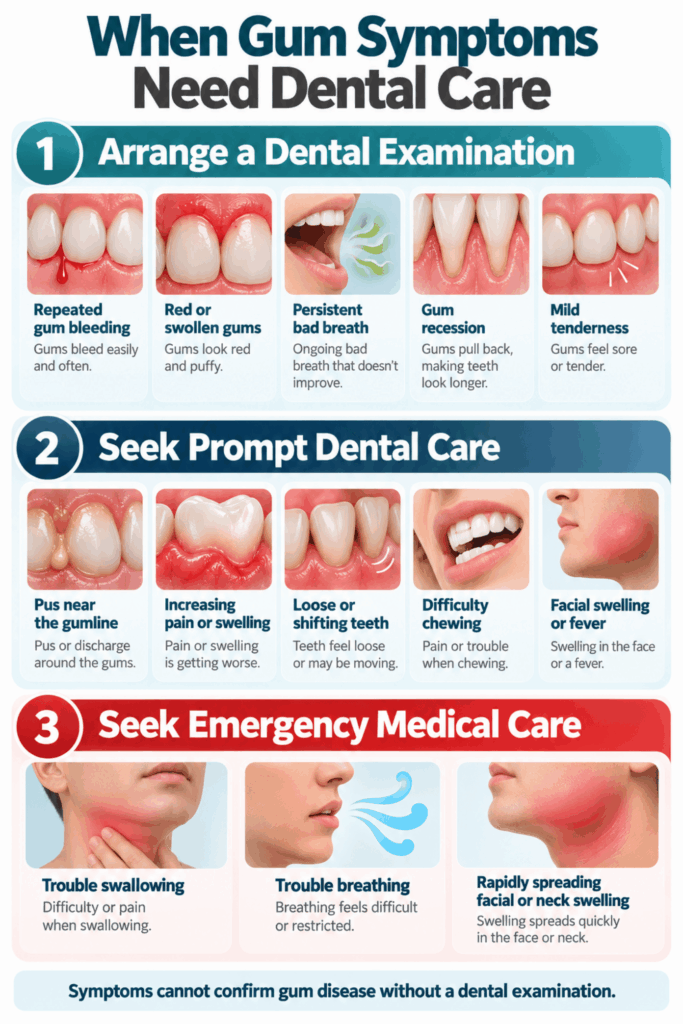
- Repeated Bleeding: Gums that regularly bleed during brushing or flossing may be inflamed. One isolated episode from brushing too hard is different from ongoing bleeding.
- Red or Swollen Gums: Healthy gums are usually firm. Persistent puffiness or redness deserves attention.
- Gum Tenderness: Soreness along the gumline may develop when plaque and inflammation are present.
- Persistent Bad Breath: Bad breath that returns soon after brushing may be linked to plaque, gum inflammation, dry mouth, or another dental problem.
- Gum Recession: Teeth may look longer as the gum margin moves away from its previous position.
- Changes Between the Teeth: New spaces, trapped food, or changes in how floss fits may indicate movement or loss of gum support.
The National Institute of Dental and Craniofacial Research’s gum disease overview describes bleeding, swollen gums, persistent bad breath, painful chewing, recession, and loose teeth among the signs that require dental assessment.
Signs That Need Prompt Dental Care
Some changes suggest more advanced disease or an active dental infection. Contact a dentist promptly rather than trying to manage them with mouthwash alone.
- Pus Near the Gumline: Pus, a pimple-like bump, or a bad taste from one area may indicate an abscess.
- Increasing Pain or Swelling: Rapidly worsening discomfort is not typical of mild gingivitis.
- Loose or Shifting Teeth: Tooth movement may indicate significant loss of periodontal support.
- Difficulty Chewing: Pain or changes in the bite require professional assessment.
- Rapid Gum Breakdown: Fast-developing ulcers, gum loss, or severe bleeding need prompt evaluation.
- Facial Swelling or Fever: These signs can occur when a dental infection spreads beyond its original site and may require same-day care.
- Trouble Swallowing or Breathing: Seek emergency medical care because swelling affecting the airway can become dangerous.
How Dentists Diagnose and Treat Gum Disease
A dentist begins by examining the teeth and gums for plaque, tartar, bleeding, recession, swelling, and tooth movement. A small periodontal probe measures the spaces between the gums and teeth. Dental X-rays may be needed to check the bone supporting the teeth, especially when periodontitis is suspected.
Treatment depends on the diagnosis and severity. Plaque-related gingivitis may improve with better home care and a professional cleaning. Periodontitis may require scaling and root planing, sometimes called a deep cleaning, to remove plaque and tartar from below the gumline and smooth contaminated root surfaces. Advanced disease may need additional periodontal treatment or referral to a periodontist.
How to Lower Your Risk Without Avoiding Normal Contact
The best way to protect your oral health is through consistent plaque control and timely dental care. Trying to eliminate all contact with another person’s saliva is neither realistic nor necessary.
- Brush Effectively Twice a Day: Use fluoride toothpaste and clean gently along the gumline rather than scrubbing only the chewing surfaces.
- Clean Between Your Teeth Daily: Use floss, interdental brushes, or another tool recommended by your dental professional.
- Do Not Share Toothbrushes: Keep toothbrushes and other personal oral-care tools separate.
- Attend Dental Examinations: Your recall schedule should reflect your gum health and risk. Not everyone needs the same interval.
- Complete Recommended Cleanings: Professional cleanings remove hardened tartar that a toothbrush cannot remove.
- Avoid Tobacco: Stopping smoking or tobacco use can lower periodontal risk and improve healing after treatment.
- Manage Diabetes: Work with your medical team to control blood sugar and tell your dentist if your diabetes or medications change.
- Address Dry Mouth: Ask a dentist or physician about persistent dryness rather than stopping prescribed medication on your own.
- Use Mouthwash as an Addition, Not a Replacement: A suitable rinse may support plaque control in some cases, but it cannot replace brushing, interdental cleaning, or periodontal treatment.
- Treat Existing Gum Disease: Professional care can reduce inflammation and the amount of plaque and harmful bacteria around the gums.
Frequently Asked Questions
Can My Partner Give Me Gum Disease Again After Treatment?
Gum disease is not contagious like a cold and does not simply pass back and forth between partners. Partners may continue exchanging oral bacteria, but recurrence usually depends more on remaining plaque, smoking, diabetes, maintenance care, and personal susceptibility. Both partners should maintain good oral hygiene, and the treated person should continue periodontal maintenance as recommended.
Should Both Partners See a Dentist If One Has Periodontitis?
The unaffected partner does not automatically need urgent treatment. However, an examination is sensible if they have bleeding, swelling, persistent bad breath, gum recession, loose teeth, important risk factors, or an overdue dental visit. A dentist can determine whether their gums are healthy rather than assuming they have the same condition.
Is Gum Disease Contagious After a Deep Cleaning?
Scaling and root planing reduce plaque, tartar, and bacteria below the gumline, but they do not sterilize the mouth. There is no specific date when gum disease becomes “noncontagious” because the disease is not transmitted like a viral infection. Healing, home care, and periodontal maintenance remain important after treatment.
What Should You Do After Accidentally Sharing a Toothbrush?
Stop using the shared toothbrush, rinse your mouth with water, and use a separate brush. One accidental use does not mean you will develop gum disease. If the brush had visible blood or the other person has a known bloodborne infection, contact a healthcare professional promptly for advice about the exposure.
Can Someone Pass Gum-Disease Bacteria Without Having Symptoms?
Yes. A person may carry oral bacteria associated with periodontal disease without visible swelling, bleeding, or pain. However, passing bacteria does not mean the other person will develop gum disease. The recipient’s plaque control, gum health, immune response, smoking status, diabetes, and other risk factors influence the outcome.
Can Gum Disease Spread From One Tooth to Another?
Gum disease does not jump between teeth like a contagious infection. However, plaque can build up at many sites, and bacteria can move within the mouth. Without effective plaque control and dental treatment, inflammation and periodontal damage may gradually affect more teeth.
Do You Need Antibiotics After Exposure to Gum-Disease Bacteria?
No. Exposure to another person’s oral bacteria is not a reason to take antibiotics. Dentists reserve antibiotics for selected infections and clinical situations after an examination. The American Dental Association’s antibiotic guidance also emphasizes dental treatment over unnecessary antibiotic use for most localized dental problems.
The Bottom Line: Bacteria Can Spread, but Gum Disease Is Not Simply Caught
Oral bacteria associated with gum disease can pass through saliva during kissing or when people share items used in the mouth. However, gum disease is not contagious in the same way as the flu. Developing it usually requires plaque buildup, an inflammatory response, personal risk factors, and enough time for tissue damage to occur.
There is no need to fear normal contact with a partner or family member. Keep oral-care tools separate, control plaque every day, and seek dental care for persistent bleeding, swelling, bad breath, recession, or loose teeth. A dental examination can show whether gum disease is present and what care is actually needed.
