If your gums look puffy or leave blood on your toothbrush, you may wonder whether this is normal. The main difference between healthy gums vs gingivitis is inflammation: healthy gums usually feel firm and fit closely around the teeth, while gingivitis can make them swollen, tender, or more likely to bleed.
Color alone does not tell the full story. Healthy gums can range from light pink to deep brown because natural pigmentation differs from person to person. A change from your usual color matters more. Gingivitis often develops where plaque collects along the gumline, and it may affect one area before the rest of the mouth.
These early changes are worth addressing even when they do not hurt. Plaque-related gingivitis can usually improve when plaque is removed well, but hardened tartar needs professional cleaning. A dentist can also check whether bleeding or swelling has another cause and look for signs of deeper gum disease. Start by comparing the features you can see and feel.
Healthy Gums vs. Gingivitis: A Quick Comparison
The main difference between healthy gums vs. gingivitis is inflammation. Healthy gums are firm and generally do not bleed during gentle cleaning. Gingivitis makes the gum tissue inflamed, so it may look swollen, feel tender, or bleed easily.
| Feature | Healthy Gums | Gingivitis |
|---|---|---|
| Color | Even, stable color ranging from light pink to brown | Redder, darker, or different from your usual color |
| Firmness | Firm and resilient | Soft, puffy, or swollen |
| Shape | Thin, well-defined edges around the teeth | Rounded, enlarged, or rolled gum margins |
| Fit | Fits closely around each tooth | May look swollen where the gum meets the tooth |
| Bleeding | Does not usually bleed during gentle brushing or flossing | May bleed easily or repeatedly |
| Tenderness | Comfortable during routine cleaning | May feel tender or irritated |
| Breath | No persistent odor caused by gum inflammation | Plaque buildup may contribute to bad breath |
| Bone Support | No periodontal bone loss | No periodontal bone loss |
Gingivitis is the earliest stage of gum disease, but it does not cause the attachment and bone loss found in periodontitis. If gingivitis remains untreated, inflammation may persist, and some people may develop periodontitis over time. However, progression is not inevitable, and early plaque control can restore gum health. The UK government’s clinical definitions of gingivitis and periodontitis describe gingivitis as reversible inflammation limited to the gums.
Color alone cannot confirm gum health. Natural pigmentation varies widely, so swelling, repeated bleeding, texture, and changes from your normal appearance are often more useful warning signs.
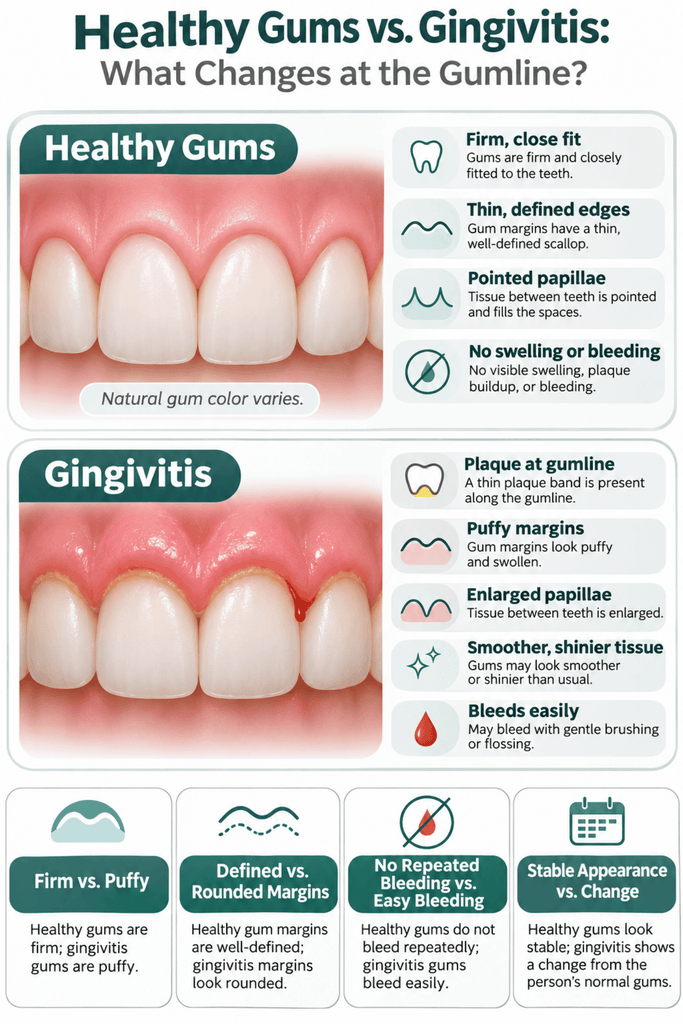
What Do Healthy Gums Look and Feel Like?
Healthy gums usually feel firm and fit closely around the teeth. They should not look swollen or bleed repeatedly when you brush or floss gently.
Healthy gums also help form a protective seal around each tooth. This seal supports oral health by making it harder for plaque and food debris to collect below the gumline.
Natural Gum Color and Pigmentation
Healthy gum tissue can range from light pink to dark brown. Genetics, skin tone, blood vessels, tissue thickness, and natural melanin all affect gum color.
Look for changes from your normal appearance rather than comparing your gums with someone else’s. New redness, pale patches, sores, or unexplained color changes deserve attention, especially when they appear with swelling, bleeding, or discomfort.
Shape, Texture, and Fit Around the Teeth
Healthy gums usually form a thin, firm border around each tooth. The tissue between neighboring teeth should fill the space without appearing enlarged or puffy.
- Firm Texture: Healthy gums feel firm rather than soft, spongy, or swollen.
- Close Fit: The gum margin fits closely around the tooth instead of looking loose or enlarged.
- Defined Shape: Healthy gum edges usually follow the natural curve of the teeth.
- Stable Position: The gumline should not appear to move noticeably over a short period.
- Comfortable Cleaning: Gentle brushing and interdental cleaning should not cause repeated pain or bleeding.
Receding gums are not the same as gingivitis. Gum recession may result from periodontal disease, thin gum tissue, tooth position, forceful brushing, or other factors. New or worsening recession should be checked during a dental visit.
What Are the Early Signs of Gingivitis?
The first signs of gingivitis often include redness, puffiness, and bleeding around the gumline. These changes may remain mild, and many people do not notice them because the earliest stage of gum disease is often painless.
Gingivitis may affect the whole mouth or remain limited to one area. A crowded tooth, trapped food, braces, or a rough filling can make one spot harder to clean and more likely to become inflamed.
Redness, Puffiness, and Bleeding
Unlike healthy gums, gingivitis may make the gumline look fuller, smoother, or shinier. The margin around the tooth may lose its thin, defined shape and become rounded.
Bleeding gums are another common warning sign. A one-time injury from snapping floss or brushing too hard does not confirm disease, but repeated bleeding during gentle cleaning suggests that the gum tissue needs attention. Healthy gums generally do not bleed without a reason.
Tenderness, Bad Breath, and Other Changes
Gingivitis does not always hurt, but some people notice mild soreness or sensitivity along the gumline. Plaque and gum inflammation may also contribute to persistent bad breath or an unpleasant taste.
Watch for changes such as:
- Mild Tenderness: The gums may feel sensitive when touched, brushed, or flossed.
- Persistent Bad Breath: Odor may return soon after brushing because plaque remains around or between the teeth.
- Unpleasant Taste: Inflamed areas and trapped debris may create a stale or unpleasant taste.
- Visible Plaque or Tartar: Deposits may appear near the gumline or between teeth.
- Repeated Bleeding: Blood may appear on the toothbrush, floss, or interdental brush.
Severe pain, pus, fever, or marked swelling is not typical of uncomplicated gingivitis. These signs may point to a gum infection, dental abscess, or another problem that needs professional care.
Why Do Healthy Gums Become Inflamed?
The change from healthy gums to gingivitis often begins when plaque remains around the gumline long enough to cause inflammation. However, local conditions, health problems, medications, and lifestyle factors can affect the body’s response to plaque.
Plaque and Tartar Along the Gumline
Plaque is a sticky film of bacteria that forms constantly on the teeth. When it stays near the gumline, the body responds with inflammation. This can cause swollen gums, redness, and bleeding.
Daily brushing and interdental cleaning can remove soft plaque. If plaque mineralizes into tartar, also called calculus, it cannot be brushed or flossed away. Tartar creates a rough surface that holds more plaque and often requires professional removal.
Factors That Can Increase Gum Inflammation
Plaque remains the main cause of common gingivitis, but several factors can increase the risk or make effective cleaning more difficult.
- Cleaning Difficulties: Crowded teeth, braces, bridges, and limited hand movement can leave areas of plaque behind.
- Local Dental Factors: Rough filling edges, overhanging restorations, and poorly fitting appliances can trap plaque or irritate the gums.
- Smoking and Vaping: Tobacco use increases the risk of periodontal disease and affects the gum tissue’s ability to heal. Smoking may also reduce visible bleeding, making disease harder to notice.
- Diabetes: Poorly controlled blood sugar can affect the body’s ability to fight infection and may increase gum inflammation.
- Hormonal Changes: Puberty, pregnancy, and other hormonal changes can make the gums respond more strongly to plaque.
- Dry Mouth: Reduced saliva allows plaque and food debris to remain in the mouth more easily.
- Medications: Some medicines contribute to dry mouth or gum enlargement. Never stop a prescribed medication without speaking with the prescribing clinician.
- Reduced Immunity: Conditions or treatments that affect immune function may change the severity or appearance of gum problems.
These factors do not confirm gingivitis by themselves. A dental examination is needed when symptoms persist, recur, or do not match the amount of visible plaque.
Can You Compare Healthy Gums vs. Gingivitis at Home?
You can look for possible signs of gingivitis at home, but you cannot confirm the diagnosis or rule out periodontitis. A mirror check may help you notice changes early and decide when to arrange dental care.
- Check the Color: Look for areas that appear redder, darker, or noticeably different from your normal gum color.
- Examine the Shape: Notice whether the gum margins look firm and defined or rounded and puffy.
- Watch for Bleeding: Check for repeated blood on your toothbrush, floss, interdental brush, or saliva.
- Notice Tenderness: Pay attention to soreness during gentle brushing, flossing, or eating.
- Check Your Breath: Persistent bad breath may accompany plaque buildup and gum inflammation, although it has many other possible causes.
- Look for Recession: Compare the gumline around similar teeth and note whether any tooth appears longer than before.
- Check Tooth Stability: A loose or shifting adult tooth is not a typical sign of simple gingivitis and needs professional assessment.
Do not place sharp objects under the gums or try to measure periodontal pockets yourself. You could injure the tissue, introduce bacteria, or misinterpret what you find.
How a Dentist Distinguishes Gingivitis vs. Healthy Gums
A dentist does more than look at gum color. The examination checks for inflammation, bleeding, plaque, tartar, gum recession, periodontal pockets, attachment loss, and changes in the supporting bone.
- Reviewing Your History: The dentist asks about bleeding, discomfort, home care, smoking, diabetes, pregnancy, medications, and previous periodontal care.
- Examining Plaque and Tartar: Deposits are checked around the gumline, between teeth, and in areas that are difficult to clean.
- Assessing the Gum Tissue: The dentist examines color, contour, swelling, texture, recession, and other visible signs of gum disease.
- Using a Periodontal Probe: A small measuring instrument is placed gently around each tooth to record pocket depth and bleeding. Do not attempt this at home.
- Checking Attachment and Tooth Stability: Gum recession, attachment loss, tooth movement, and bite changes may suggest disease beyond simple gingivitis.
- Taking X-Rays When Indicated: X-rays can reveal bone loss, but they are not always needed to assess uncomplicated gingivitis.
Under current clinical criteria, gingivitis includes inflammation and bleeding on probing without attachment or bone loss caused by periodontitis. The SDCEP periodontal diagnostic guidance explains how bleeding measurements, pocket depths, attachment, and bone levels help distinguish periodontal health from gingivitis.
Gingivitis and periodontitis are both forms of gum disease, but they are not interchangeable. Unlike gingivitis, periodontitis damages the tissues and bone that support the teeth. Scaling and root planing, often called deep cleaning, may be needed for periodontitis but is not automatically required for simple gingivitis.
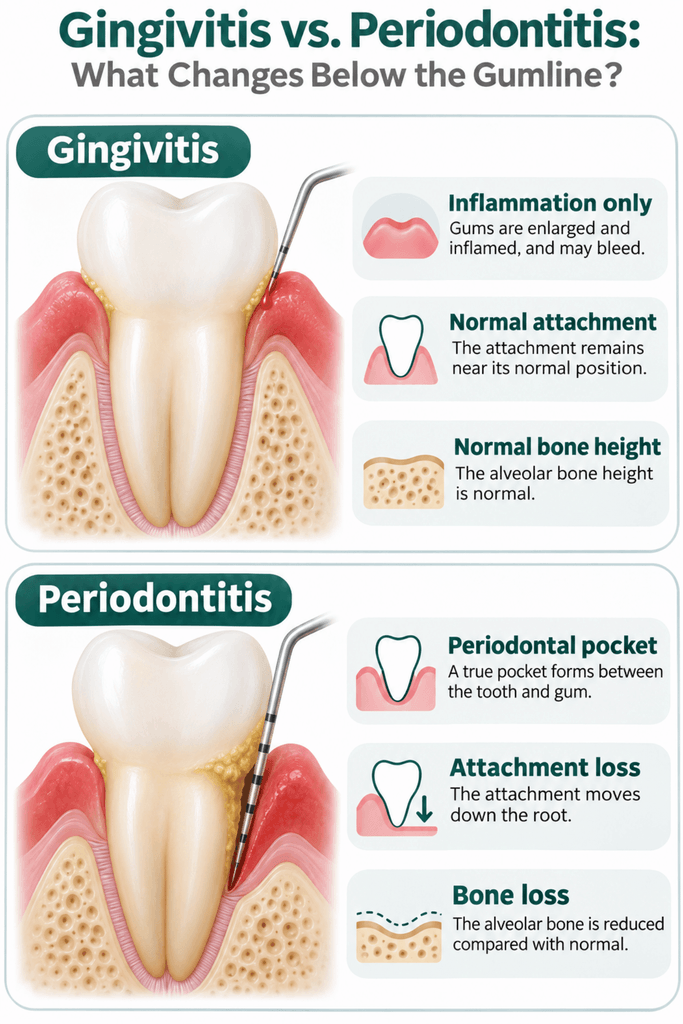
Can Gingivitis Return to Healthy Gums?
Plaque-related gingivitis can usually return to periodontal health because the inflammation remains limited to the gums. It has not yet caused the attachment or bone loss that defines periodontitis.
Improvement depends on how well plaque is removed, whether tartar or rough dental work is present, and whether factors such as smoking or diabetes are controlled. Gingivitis may return if plaque begins collecting again.
Improve Plaque Removal at Home
Better technique matters more than aggressive brushing. Scrubbing harder can injure the gum margin without cleaning between the teeth effectively.
- Brush Twice Daily: Use fluoride toothpaste and a soft or appropriate powered toothbrush.
- Aim at the Gumline: Angle the bristles toward the area where the teeth and gums meet, using gentle, controlled movements.
- Clean Between the Teeth: Use floss, interdental brushes, or another device recommended for the spaces between your teeth.
- Clean Difficult Areas Carefully: Spend extra time around crowded teeth, braces, bridges, implants, and back teeth.
- Check Your Progress: Watch for less bleeding and swelling, but seek dental care if the symptoms persist or worsen.
Do not stop cleaning an inflamed area simply because it bleeds. Continue gently unless a dentist advises otherwise. Avoid snapping floss into the gums or forcing an interdental brush through a space that is too small.
Know When Professional Cleaning Is Needed
Home care removes soft plaque but cannot safely remove hardened tartar. Scraping tartar with household tools may cut the gums, scratch the roots, or leave deposits behind.
A dentist or dental hygienist can remove plaque and calculus with appropriate instruments, identify areas you are missing, and correct plaque-retentive factors when possible. The SDCEP recommendations for managing gingivitis support personalized oral hygiene instruction and professional plaque removal at inflamed sites when needed.
Professional cleaning does not replace daily oral hygiene. Long-term gum health depends on keeping plaque under control between dental visits.
When Do Gum Changes Need Dental Care?
Arrange dental care when gum changes persist, return repeatedly, or include signs that do not fit simple gingivitis. Early detection helps distinguish reversible gum inflammation from advanced gum disease or another dental condition.
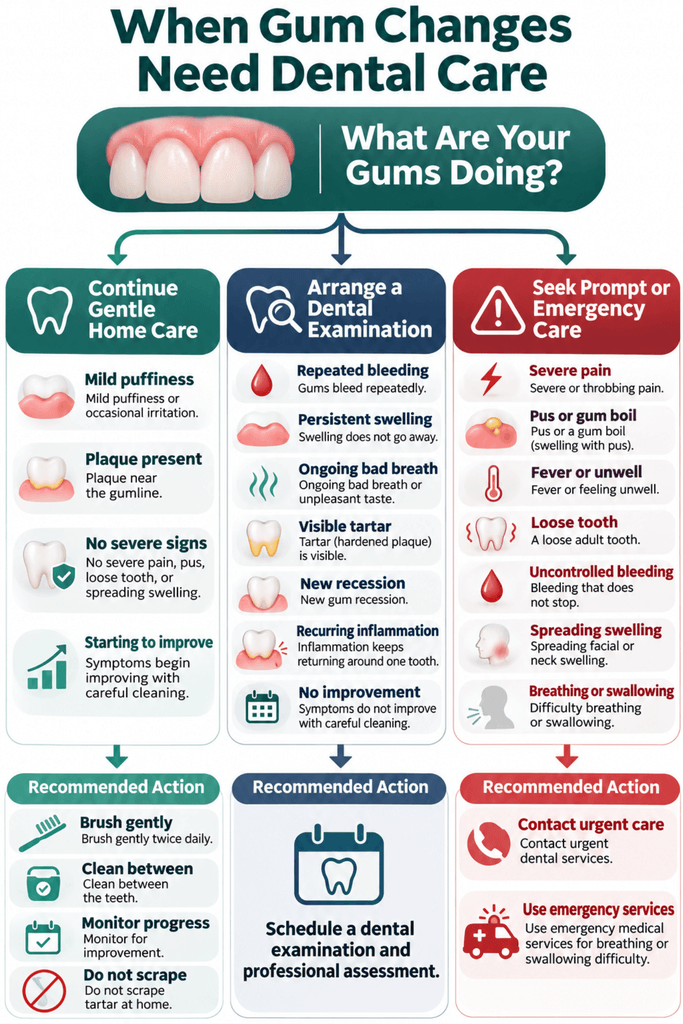
Arrange a Dental Examination
A routine dental examination is appropriate when you notice:
- Repeated Bleeding: Your gums continue to bleed during gentle brushing or interdental cleaning.
- Persistent Swelling: Puffy or enlarged gums do not settle after improving your cleaning.
- Ongoing Bad Breath: Odor or an unpleasant taste returns despite regular oral hygiene.
- Visible Tartar: Hard deposits remain around the gumline and cannot be brushed away.
- New Gum Recession: A tooth begins to look longer, or the gumline changes noticeably.
- Recurring Localized Inflammation: The same area repeatedly becomes swollen, tender, or difficult to clean.
- Higher-Risk Health Factors: You have diabetes, smoke, are pregnant, take medication that affects the gums, or have a history of periodontal disease.
Regular dental visits allow the dental team to monitor changes that may not be visible at home. Recall timing should reflect your gum health, medical history, disease risk, and previous treatment rather than following one schedule for everyone.
Seek Prompt Care for More Serious Symptoms
Simple gingivitis usually does not cause severe pain, pus, facial swelling, or a loose adult tooth. These findings may indicate periodontitis, an abscess, trauma, or another condition.
Seek prompt dental care for:
- Severe or Throbbing Pain: Pain that is strong, worsening, or disturbing sleep needs assessment.
- Pus or a Gum Boil: Drainage, a bad taste, or a pimple-like swelling may indicate infection.
- Spreading Swelling: Swelling that extends into the face, jaw, or neck needs urgent attention.
- Fever or Feeling Unwell: General symptoms may suggest that an infection is spreading.
- Loose Adult Teeth: Tooth mobility may reflect loss of support or another significant problem.
- Uncontrolled Bleeding: Bleeding that does not stop with gentle pressure requires urgent advice.
Difficulty breathing or swallowing with mouth, facial, or neck swelling is an emergency. Seek immediate medical help rather than waiting for a routine appointment. The NHS guidance on emergency dental symptoms identifies breathing or swallowing difficulty caused by oral or neck swelling as requiring emergency care.
How to Keep Gums Healthy After Inflammation Improves
Healthy gums require ongoing plaque control. Once the bleeding and swelling improve, keep the same routine instead of returning to the habits that allowed plaque to build up.
- Brush the Gumline Twice Daily: Clean every tooth surface gently with fluoride toothpaste.
- Clean Between Teeth Daily: Choose floss, interdental brushes, or another suitable device based on the size of the spaces.
- Replace Worn Tools: Change toothbrush heads or brushes when the bristles become bent or worn.
- Attend Regular Dental Visits: Let your dentist set the interval according to your individual risk and periodontal history.
- Avoid Tobacco: Smoking increases the risk of periodontal disease and can reduce blood flow to the gums, making bleeding less noticeable.
- Manage Diabetes: Work with your medical team to control blood sugar and tell your dentist about changes in your condition.
- Report Medication Changes: Ask whether a new medicine may contribute to dry mouth, gum enlargement, or other oral changes.
- Monitor Your Baseline: Notice what your healthy gums normally look and feel like so that new changes are easier to recognize.
Healthy gums do not have to be perfectly pale pink or identical around every tooth. The important signs are stable color, firm tissue, comfortable cleaning, and the absence of repeated inflammation.
Frequently Asked Questions About Healthy Gums vs. Gingivitis
Is Gingivitis Contagious?
Gingivitis itself is an inflammatory response and is not directly passed from one person to another. However, oral bacteria can be exchanged through saliva. The American Academy of Periodontology’s explanation of gum-disease transmission notes this distinction. Daily plaque control and regular dental care matter more than avoiding normal family contact.
Can Gingivitis Affect Only One Tooth?
Yes. Gingivitis can remain localized around one tooth when plaque or food collects in a hard-to-clean area. Crowding, braces, a rough filling, or an overhanging restoration may contribute. Arrange an examination if the same spot remains inflamed, repeatedly bleeds, or develops pain, pus, recession, or swelling.
Should I Stop Flossing if My Gums Bleed?
Usually, no. Continue cleaning gently because avoiding the area allows more plaque to remain. Do not snap the floss into the gums or force it through tight contacts. Ask your dentist or dental hygienist to check your technique if bleeding is heavy, unexplained, persistent, or limited to one recurring site.
Is Mouthwash Enough to Treat Gingivitis?
No. Mouthwash cannot replace brushing and interdental cleaning because it does not mechanically remove the sticky plaque attached to teeth. Some therapeutic rinses may provide additional benefit when used appropriately. The American Dental Association’s guidance on mouthrinse describes it as an addition to, not a replacement for, daily cleaning.
Can You Have Gingivitis Without Bleeding Gums?
Yes. Early or localized inflammation may not produce obvious bleeding at home. Smoking can also reduce visible bleeding by affecting blood flow to the gums. Look for puffiness, color changes, tenderness, plaque, or persistent bad breath, but remember that a dental examination is more reliable than symptoms alone.
Can Gingivitis Make Your Teeth Loose?
Simple gingivitis does not destroy the bone or periodontal attachment that holds teeth in place. A loose adult tooth may indicate periodontitis, injury, bite-related stress, or another problem. Do not assume it is an expected stage of gingivitis; arrange a dental examination promptly to identify the cause.
Can a Photo Confirm Gingivitis?
A photo may show redness, puffiness, recession, or visible deposits, but it cannot confirm gingivitis. It cannot measure bleeding on probing, periodontal pockets, attachment loss, or bone loss. A dentist must combine the visual examination with clinical measurements and X-rays when indicated to distinguish gingivitis from periodontitis or another gum condition.
The Bottom Line: Healthy Gums vs. Gingivitis
Healthy gums are firm, fit closely around the teeth, and generally do not bleed during gentle cleaning. Gingivitis causes inflammation that may appear as puffiness, redness, tenderness, bad breath, or repeated bleeding, but it does not cause the bone loss seen in periodontitis.
Brush gently twice daily, clean between your teeth, and arrange professional care when symptoms persist or tartar is present. Seek faster attention for severe pain, pus, loose teeth, fever, spreading swelling, or difficulty breathing or swallowing.
.)