Red, swollen, or bleeding gums can make you wonder how to get rid of gingivitis at home. The direct answer is to remove plaque thoroughly every day and have any hardened tartar removed professionally. When the inflammation is limited to gingivitis, these steps can usually return the gums to health without permanent damage.
The goal is not to scrub the gums harder. Gentle brushing with fluoride toothpaste, daily cleaning between the teeth, and the right professional care work together to control the cause. Mouthwash may provide extra help for some people, but it cannot replace brushing, interdental cleaning, or a dental cleaning when tartar is present.
Your gums may need more than home care if bleeding continues, tartar surrounds the teeth, or you notice gum recession, loose teeth, pus, or pain when chewing. Those findings can have other causes or may point to more advanced gum disease. First, it helps to understand what gingivitis is, what can be reversed, and where self-care reaches its limit.
Why Gingivitis Can Usually Be Reversed
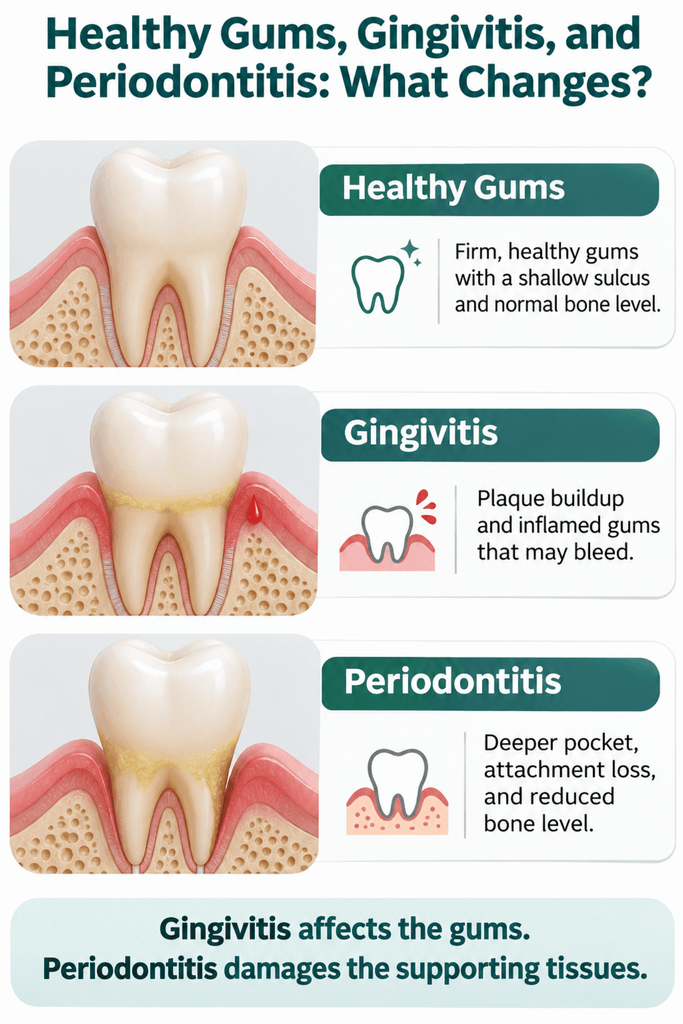
Gingivitis is a mild form of gum disease that causes inflammation without destroying the bone or connective tissue that holds your teeth in place. Common symptoms of gingivitis include red, swollen gums, bleeding during brushing or flossing, gum tenderness, and bad breath.
Most cases develop when dental plaque builds up along the gum line. Because this early stage of gum disease has not caused permanent attachment or bone loss, effective plaque removal can help you get rid of gingivitis before it progresses. If bone loss or deeper periodontal pockets are present, the condition is periodontitis and needs professional management. The National Institute of Dental and Craniofacial Research overview of periodontal disease explains this important difference.
The Difference Between Plaque and Tartar
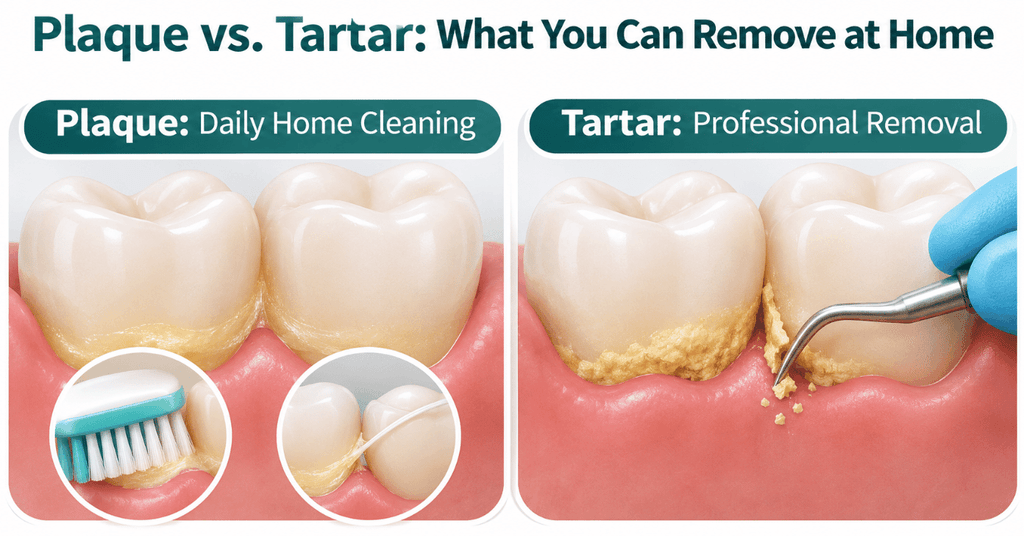
Understanding plaque and tartar helps explain how to get rid of gingivitis and why some cases require professional cleaning.
- Plaque: This soft, sticky film contains bacteria and collects on your teeth throughout the day. A toothbrush and an interdental cleaner can remove it before it hardens.
- Tartar: Plaque that remains on the teeth can absorb minerals from saliva and harden into tartar, also called calculus. You cannot safely brush or floss tartar away.
- Gum Irritation: Tartar creates a rough surface that holds more plaque next to the gum tissue. This can keep the gums inflamed even when you improve your brushing.
- Professional Removal: A dentist or dental hygienist uses specialized instruments to remove hardened deposits without damaging the teeth and gums.
- Safe Home Care: Do not scrape tartar with dental tools, pins, or sharp objects. These can cut your gums, scratch tooth roots, and push bacteria beneath the gum line.
How to Get Rid of Gingivitis: The Steps That Matter Most
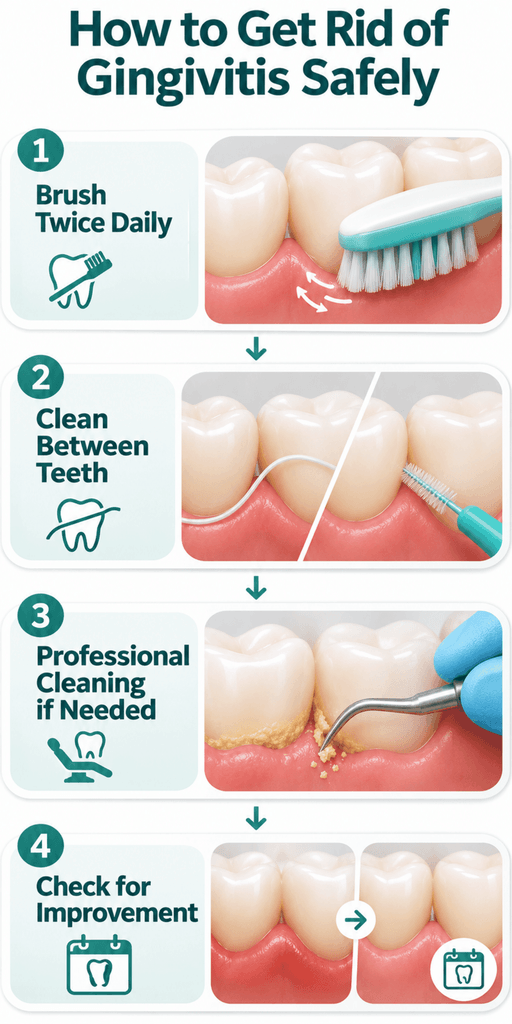
If you want to know how to get rid of gingivitis at home, focus on controlling plaque every day. Home care works best when combined with professional removal of any tartar or plaque traps that you cannot clean yourself.
- Brush gently with fluoride toothpaste twice a day.
- Clean between every tooth once a day.
- Keep dental appliances and restorations clean.
- Schedule a professional cleaning if tartar is present.
- Address smoking, dry mouth, diabetes, and other contributing factors.
Brush the Gumline Gently Twice a Day to Help Get Rid of Gingivitis
Brush your teeth twice a day for about two minutes with fluoride toothpaste. Both manual and powered toothbrushes can remove plaque when used correctly, although a powered brush may help people with limited hand control. The American Dental Association’s home oral-care recommendations support twice-daily brushing and choosing products according to individual needs.
Use gentle pressure. Brushing harder does not help you get rid of gingivitis faster and can irritate the gum tissue or wear away exposed tooth surfaces.
- Choose Soft Bristles: Use a soft-bristled toothbrush that can reach the back teeth comfortably.
- Aim Toward the Gum Line: Angle the bristles slightly toward the area where each tooth meets the gum. Use small, controlled movements.
- Clean Every Surface: Brush the outer, inner, and chewing surfaces of each tooth. Do not rush the areas behind the lower front teeth or around the back molars.
- Use Fluoride Toothpaste: Fluoride helps prevent cavities while you work on improving your gum health.
- Apply Gentle Pressure: If the bristles spread widely against the teeth, you may be pressing too hard.
- Replace a Worn Brush: Change the toothbrush or brush head when the bristles become bent or frayed.
Clean Between Your Teeth Every Day
A toothbrush cannot fully reach the narrow spaces between teeth. Daily interdental cleaning removes plaque from hidden areas and helps you get rid of gingivitis when combined with effective brushing. The American Dental Association’s guidance on floss and interdental cleaners explains the role of these devices alongside toothbrushing.
There is no single device that works best for everyone. Choose one that fits your teeth, dental work, and hand control and that you can use consistently.
- Dental Floss: Floss often works well between teeth with tight contacts. Curve it around each tooth and move it gently beneath the edge of the gum.
- Interdental Brushes: Small brushes may be easier and more effective in open spaces, around bridges, or between teeth affected by gum recession. The brush should fit without being forced.
- Water Flossers: An oral irrigator may help around braces, implants, bridges, or areas that are difficult to reach. Follow the manufacturer’s instructions and begin with comfortable pressure.
- Floss Holders: These can help people who find traditional floss difficult to control.
- Professional Advice: A dental professional can demonstrate the right device and size for different parts of your mouth.
Inflamed gums may bleed when you first clean them more effectively. Continue gently rather than avoiding the area, but arrange an examination if the bleeding is heavy, painful, unexplained, or does not begin to improve.
Keep Retainers, Dentures, and Other Appliances Clean
Plaque can collect around braces, retainers, dentures, bridges, crowns, and dental implants. An appliance that does not fit properly may also irritate the gums or create spaces that are difficult to clean.
- Follow Cleaning Instructions: Use the method recommended for your particular appliance. Some products can damage certain materials.
- Clean Around Attachments: Pay close attention to the gum line around brackets, bridgework, implant crowns, and denture clasps.
- Remove Appliances When Directed: Clean removable retainers and dentures outside the mouth according to your dentist’s instructions.
- Check the Fit: Ask your dentist to examine an appliance or restoration that rubs, moves, traps food, or causes repeated gum irritation.
Arrange a Professional Cleaning When Tartar Is Present
A routine professional cleaning removes plaque and tartar that may prevent you from getting rid of gingivitis with home care alone. The dentist or dental hygienist may use hand instruments, an ultrasonic scaler, or both. Polishing can then remove remaining surface deposits and stains.
Scaling and root planing, often called a deep cleaning, is not automatically needed for simple gingivitis. Dentists usually reserve it for deposits below the gum line and clinical findings associated with periodontitis. Your gum measurements, X-rays when indicated, and the location of the deposits help determine the appropriate treatment.
Address Factors That Make Gingivitis Harder to Control
Plaque is the main cause of dental plaque-induced gingivitis, but several factors can increase inflammation or make good oral hygiene more difficult.
- Smoking and Tobacco: Tobacco increases the risk of periodontal disease and can reduce visible bleeding, making gum problems appear less obvious.
- Diabetes: Poorly controlled blood sugar can increase susceptibility to gum inflammation and slow the response to gingivitis treatment.
- Dry Mouth: Reduced saliva allows plaque to collect more easily. Dry mouth may result from medication, dehydration, or a health condition.
- Hormonal Changes: Pregnancy, puberty, and other hormonal changes can make gum tissue react more strongly to plaque.
- Medication: Some medicines contribute to dry mouth or gum enlargement. Do not stop prescribed medication without speaking to the prescribing clinician.
- Dental Work: Crowded teeth, rough filling edges, poorly fitting crowns, and certain appliances may trap plaque and make cleaning difficult.
Improving these factors does not replace plaque removal, but it can make managing gingivitis more successful. Discuss persistent problems with your dentist and the clinician managing any related medical condition.
Can Mouthwash or Home Remedies Get Rid of Gingivitis?
Mouthwash and home remedies cannot remove tartar or replace brushing and flossing. Some rinses may provide added plaque control or temporary relief, but the main treatment of gingivitis remains effective mechanical cleaning.
- May Provide Support: An approved therapeutic mouthwash, used as directed, may help reduce plaque and gum inflammation.
- May Soothe Discomfort: A mild warm saltwater rinse may temporarily soothe tender or swollen gums.
- Cannot Remove Tartar: No rinse, oil, gel, or homemade mixture can dissolve hardened tartar safely.
- Cannot Correct Poor Technique: Mouthwash cannot clean plaque from areas repeatedly missed by a toothbrush or interdental cleaner.
- Evidence Varies: Many natural gingivitis treatments have limited or inconsistent research behind them.
Therapeutic Mouthwash
Cosmetic mouthwash mainly freshens the breath. Therapeutic mouthwash contains active ingredients intended to help control plaque, gingivitis, cavities, or bad breath. Ingredients found in some therapeutic products include essential oils and cetylpyridinium chloride.
The American Dental Association’s evidence summary for therapeutic mouthrinse notes that antimicrobial rinses can provide additional plaque and gingivitis control but do not replace mechanical cleaning. Some ingredients may stain teeth or restorations, so follow the label and your dentist’s advice.
Chlorhexidine is a stronger antimicrobial rinse that may be recommended for specific situations. Use it only for the dose and duration directed by your dental professional. A Cochrane review of chlorhexidine mouthrinse found that it can reduce plaque when added to mechanical oral hygiene, but longer use commonly causes external staining and may affect taste or increase calculus.
Saltwater Rinses and Other Popular Remedies
A warm saltwater rinse may ease mild gum irritation for a short time. It does not remove the plaque and tartar causing gingivitis, so use it only as supportive care rather than the main treatment.
May help:
- Warm Saltwater: A mild rinse may temporarily soothe swollen gums. Spit it out rather than swallowing it.
- Approved Oral-Care Products: Toothpaste and therapeutic mouthwash with tested ingredients are safer choices than unmeasured homemade mixtures.
- Comfort Measures: Drinking water and avoiding tobacco or irritating products may make the mouth more comfortable while you improve plaque control.
Avoid:
- Scraping Tartar: Sharp home instruments can damage gum tissue and tooth roots.
- Undiluted Essential Oils: Concentrated oils may burn or irritate oral tissues and can be harmful if swallowed.
- Strong Peroxide Mixtures: Improvised concentrations can injure the gums and do not replace professional care.
- Abrasive Homemade Pastes: Scrubbing with rough powders may irritate the gums or damage tooth surfaces. This is different from using a tested fluoride toothpaste that contains professionally formulated ingredients.
- Relying on Oil Pulling: Evidence is not strong enough to use oil pulling instead of brushing, interdental cleaning, or dental treatment.
Mistakes That Can Keep Your Gums Inflamed
- Brushing Aggressively: Hard pressure may injure the gums without improving plaque removal. Use a soft brush, gentle pressure, and enough time to clean carefully.
- Ignoring the Gum Line: Brushing only the crowns of the teeth leaves plaque where gingivitis commonly begins. Direct the bristles gently toward the tooth-gum border.
- Stopping Floss Because the Gums Bleed: Avoiding inflamed areas allows more plaque to remain. Continue gentle cleaning and ask a dentist to check bleeding that persists or worsens.
- Using Mouthwash Alone: A rinse cannot physically remove the sticky plaque attached to your teeth. Use it only as an addition to brushing and interdental cleaning.
- Trying to Remove Tartar at Home: Scraping can cause cuts, infection, root damage, or gum recession. A dentist or dental hygienist should remove hardened deposits.
- Smoking: Tobacco increases the risk of periodontal disease and interferes with healthy gum tissue. Ask your dental or medical professional about help with quitting.
- Cleaning Intensely Only Once in a While: Gingivitis often returns when plaque is allowed to rebuild. Gentle daily cleaning works better than occasional aggressive cleaning.
- Expecting Instant Results: Inflamed gums need time to respond after plaque and tartar are controlled. Look for steady improvement rather than a change after one brushing session.
How Dentists Diagnose and Treat Gingivitis
A dentist must determine whether the inflammation is limited to the gums or has progressed to periodontal disease. Other conditions, including tooth infection, trauma, dry mouth, and medication-related gum changes, can cause similar symptoms.
The evaluation also helps identify why gingivitis keeps returning. Treatment can then target the plaque, tartar, cleaning difficulties, and health factors that must be controlled to get rid of gingivitis.
Gum Examination and Periodontal Measurements
The dentist begins by asking about bleeding, pain, bad breath, home oral care, tobacco use, medication, pregnancy, diabetes, and other health factors. The teeth and gums are examined for plaque, tartar, redness, swelling, recession, and areas that trap food.
A periodontal probe is a small measuring instrument used gently around each tooth. It measures the space between the tooth and gum and checks for bleeding. These findings help distinguish gingivitis from periodontitis.
Dental X-rays may be taken when the dentist needs to evaluate the bone supporting the teeth or investigate another problem. X-rays are not required merely to see red gums, but they can help identify bone loss that is not visible during a routine examination.
Professional Plaque and Tartar Removal
During professional cleaning, the dentist or dental hygienist removes plaque and tartar from the teeth and around the gum line. This creates a cleaner surface that the patient can maintain with daily brushing and flossing.
Home care remains essential after the cleaning. If plaque builds up again, the gum inflammation can return. Your dental professional may also show you missed areas and adjust your toothbrush or interdental-cleaning technique.
If the examination shows deeper deposits, periodontal pockets, or loss of supporting tissue, the dentist may recommend scaling and root planing or other periodontal treatment. That decision should be based on clinical findings, not simply on the presence of bleeding gums.
Correcting Other Sources of Irritation
Some patients need more than plaque and tartar removal. A dentist may smooth or replace a rough filling, correct an overhanging restoration, adjust an irritating appliance, or suggest tools that clean crowded teeth more effectively.
Dry mouth may require changes in oral care or coordination with a medical professional. If diabetes, medication, or another health issue affects the gums, dental and medical care may need to work together. Not every patient requires these additional steps.
How Long Does It Take to Get Rid of Gingivitis?
Mild gingivitis may begin improving within several days after effective plaque control, but there is no single recovery time for everyone. The amount of tartar, the quality of daily cleaning, smoking, dry mouth, diabetes, and the severity of inflammation all affect healing.
Many people notice a clear reduction in bleeding and swelling within one to two weeks after the cause is controlled. However, ongoing bleeding does not always mean that you need to brush harder. It may mean that tartar remains, your technique is missing an area, or the condition is not simple gingivitis.
- First Few Days: The gums may still bleed during gentle brushing or interdental cleaning. Focus on careful, consistent plaque removal.
- After One to Two Weeks: Redness, swelling, and bleeding should be trending downward when plaque control is effective.
- No Meaningful Improvement: Arrange a dental examination if the gums remain inflamed despite consistent home care.
- Symptoms Become Worse: Increasing pain, pus, marked swelling, fever, or loose teeth need earlier assessment.
- After Professional Cleaning: Continue daily care. A cleaning removes existing deposits, but it does not prevent new plaque from forming.
Gingivitis vs. Periodontitis: Why the Difference Matters
| Feature | Gingivitis | Periodontitis |
|---|---|---|
| Affected tissues | Inflammation is limited to the gums | Inflammation has damaged the supporting attachment and bone |
| Common signs | Redness, swelling, bleeding, tenderness, or bad breath | Bleeding, recession, deeper pockets, loose teeth, bite changes, or pain when chewing |
| Bone loss | No | May be present |
| Reversibility | Usually reversible when plaque and tartar are controlled | Lost attachment and bone do not simply grow back with home care |
| Typical treatment | Improved home care and professional plaque or tartar removal | Individual periodontal treatment plus long-term maintenance |
| Risk of tooth loss | Gingivitis itself does not loosen teeth | Progressive disease can lead to tooth loss |
You cannot always tell the stage of gum disease from symptoms alone. Periodontitis may cause little pain, especially early in its course. Gum measurements and X-rays, when indicated, help the dentist assess the supporting tissues and prevent the disease from progressing.
When to See a Dentist to Get Rid of Gingivitis
You do not need to wait until gingivitis becomes severe. A routine dental appointment is appropriate when home care does not produce steady improvement or when you cannot remove the cause yourself.
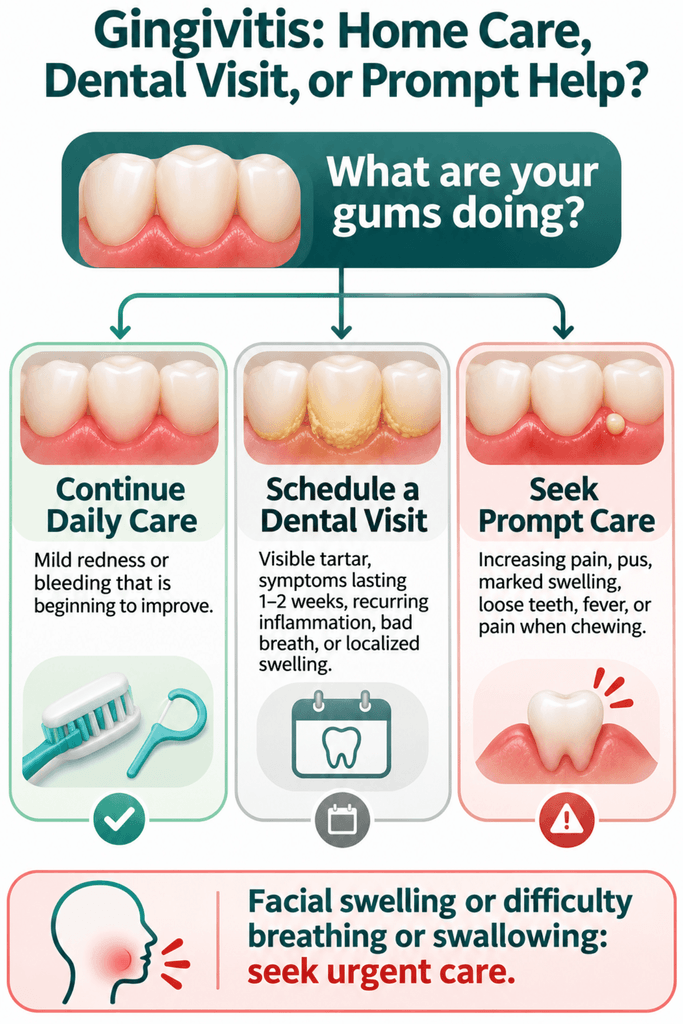
Arrange an appointment when you notice:
- Persistent Bleeding: Your gums continue to bleed despite one to two weeks of gentle, consistent cleaning.
- Visible Tartar: You see or feel hard deposits near the gum line.
- Recurring Inflammation: Symptoms improve briefly but keep returning in the same areas.
- Ongoing Bad Breath: Bad breath remains despite cleaning your teeth, tongue, and interdental spaces.
- Localized Swelling: Gum irritation continues around one tooth, restoration, implant, or appliance.
- Higher Health Risk: You smoke, have diabetes, are pregnant, take medication that affects the mouth, or have a weakened immune system.
- Uncertain Symptoms: You are unsure whether the problem is gingivitis, periodontitis, decay, or an infection.
Signs That Need Prompt Dental Care
Simple gingivitis usually causes mild bleeding, redness, or swelling. The following symptoms may indicate a different or more advanced problem:
- Increasing Pain: Pain that is strong, persistent, or focused around one tooth requires assessment.
- Pus or a Bad Taste: Drainage from the gum may indicate an infection.
- Marked Swelling: Rapidly increasing or one-sided swelling needs prompt attention.
- Loose Teeth: Gingivitis alone should not make permanent teeth loose.
- Gum Recession: Gums pulling away from the teeth may be associated with periodontal disease, trauma, or other causes.
- Pain When Chewing: This may come from a tooth, its supporting tissues, or the bite.
- Fever or Feeling Unwell: These symptoms are not typical of simple gingivitis.
- Rapid Worsening: Symptoms that become noticeably worse over a short period should not be managed only with home remedies.
Seek urgent medical or dental care for facial swelling or difficulty breathing or swallowing. These are not typical gingivitis symptoms and may signal a spreading infection.
How to Keep Gingivitis From Coming Back
Gingivitis often returns when plaque begins collecting again. Prevention depends on a routine you can follow every day, not occasional intense cleaning or a short course of mouthwash.
The European Federation of Periodontology’s gum-disease prevention guidance emphasizes twice-daily brushing, daily interdental cleaning, professional checkups, tartar removal, and control of risk factors such as smoking.
- Brush Twice Daily: Use fluoride toothpaste and clean for about two minutes with gentle pressure.
- Clean Between Teeth Daily: Choose floss, interdental brushes, or another device that fits your mouth and abilities.
- Check the Gum Line: Pay attention to areas that bleed or collect plaque rather than avoiding them.
- Clean Dental Appliances: Follow the correct routine for retainers, dentures, braces, bridges, and implant restorations.
- Avoid Tobacco: Stopping smoking supports healthier gums and improves the response to periodontal care.
- Manage Dry Mouth: Drink water and ask a dental or medical professional about persistent dryness.
- Control Health Conditions: Follow medical advice for diabetes and other conditions that affect gum health.
- Attend Dental Visits: The right recall interval depends on your gum condition, tartar buildup, medical history, and ability to maintain healthy teeth and gums.
- Respond Early: Arrange dental care when gingivitis symptoms return instead of waiting for advanced signs of gum disease.
Frequently Asked Questions
Can Gingivitis Go Away on Its Own?
Gingivitis usually does not improve simply by waiting. Early inflammation may reverse when you remove plaque consistently, but tartar cannot be removed at home. If your gums remain red, swollen, or bleeding after better oral care, schedule a professional cleaning and examination.
Can I Have Gingivitis Even If I Brush Twice a Day?
Yes. Gingivitis can develop when brushing misses the gum line or when plaque remains between the teeth. Tartar, crowded teeth, dental appliances, smoking, dry mouth, diabetes, and ineffective technique can also contribute. Brushing twice daily works best when combined with daily interdental cleaning.
Why Are My Gums Still Bleeding After I Started Flossing?
Already-inflamed gums may bleed when you begin cleaning areas that were previously missed. Use gentle technique and continue daily rather than forcing the floss into the gums. See a dentist if the bleeding is heavy, painful, unexplained, or does not begin improving with consistent care.
Do Antibiotics Get Rid of Gingivitis?
Routine plaque-induced gingivitis usually does not need antibiotics. Treatment focuses on removing plaque and tartar and improving daily oral care. A dentist may use medication for a specific infection or another clinical reason, but antibiotics do not replace professional cleaning or effective brushing and flossing.
Can Gingivitis Affect Only One Tooth?
Yes. Localized plaque buildup, trapped food, tartar, crowding, an irritating filling, or a dental appliance can inflame the gum around one tooth. Persistent swelling in one area should be examined because decay, a tooth infection, or another problem can sometimes cause similar symptoms.
Is Gingivitis Contagious Through Kissing?
Gingivitis is not contagious in the same way as a cold. Oral bacteria can pass through saliva, but bacterial transfer alone does not mean another person will develop gum disease. Plaque buildup, oral hygiene, smoking, health conditions, and individual susceptibility play larger roles.
Can Pregnancy Cause or Worsen Gingivitis?
Pregnancy-related hormonal changes can make gum tissue react more strongly to plaque, leading to increased redness, swelling, or bleeding. Careful brushing, daily interdental cleaning, and regular dental care remain important. Arrange an examination if swelling or bleeding is persistent, localized, painful, or difficult to control.
Can Gingivitis Cause Tooth Pain?
Gingivitis more often causes tender, swollen, or bleeding gums than pain inside a tooth. Strong, localized, or persistent tooth pain may come from decay, a cracked tooth, infection, bite trauma, or another condition. A dentist should evaluate pain rather than assuming gingivitis is responsible.
Bottom Line: How to Get Rid of Gingivitis Safely
Brush twice a day gently with fluoride toothpaste and clean between your teeth daily to remove plaque along the gum line and protect your oral health. If you can see or feel hardened tartar, arrange a professional cleaning because brushing, flossing, and mouthwash cannot remove it safely.
Monitor whether bleeding, redness, and swelling begin to improve. See a dentist if your symptoms persist, keep returning, or include pain, pus, recession, or loose teeth. Gingivitis can usually be reversed with timely care, but periodontitis causes more serious damage and requires professional management.
