A swollen gum around a wisdom tooth often develops when the tooth is only partly through the gum. Food and plaque can collect beneath the loose gum flap, making the tissue red, sore, and puffy. Dentists call this inflammation pericoronitis. However, swelling can also come from normal eruption, irritation, tooth decay, gum disease, or an abscess.
Mild swelling may improve with careful cleaning and warm salt-water rinses. These steps only provide temporary relief if trapped debris, infection, or an impacted tooth is causing the problem. Pain, pus, a bad taste, fever, or swelling that keeps returning means the area needs a dental examination.
A dentist can check whether the wisdom tooth has enough space to erupt and whether the nearby gum, bone, or second molar has been affected. Treatment may involve professional cleaning, local care, medicine, removal of the gum flap, or wisdom tooth extraction. The right choice depends on what is causing the swelling and whether the tooth can remain healthy and easy to clean.
What Does a Swollen Gum Around a Wisdom Tooth Mean?
A swollen gum around a wisdom tooth means the nearby gum tissue is irritated or inflamed. It is a symptom, not a diagnosis. The area may swell while the tooth is erupting, but plaque, trapped food, trauma, decay, gum disease, or infection can cause a similar change.
This problem often affects a partially erupted wisdom tooth. A flap of gum tissue may cover part of the crown and create a space that is hard to clean. However, not every swollen area is infected, and swelling does not automatically mean you need wisdom teeth removal.
What Swollen Gum Around a Wisdom Tooth May Look and Feel Like
Wisdom tooth gum swelling can range from a small, painless bump to tender tissue that interferes with chewing. Look at the area with good lighting, but do not press, squeeze, or probe it.
Common local findings include:
- Puffy Gum Tissue: The gum may appear raised or thicker than the tissue around nearby teeth.
- Redness: An inflamed gum often looks redder than the surrounding healthy tissue.
- Tenderness: The area may hurt when you brush, chew, or touch it.
- Bleeding: Inflamed tissue may bleed during brushing or after food becomes trapped beneath it.
- Gum Flap: A piece of gum tissue may partly cover an erupting tooth.
- Pain While Chewing: Food or the opposing upper tooth may press against the swollen tissue.
- Bad Breath or Taste: Bacteria and trapped debris may produce an unpleasant smell or taste.
Pus, fever, facial swelling, swollen lymph nodes, or increasing difficulty opening your mouth can point to a more significant wisdom tooth infection. These symptoms deserve prompt dental care.
Why Is the Gum Around My Wisdom Tooth Swollen?
The location gives your dentist an important clue, but it does not confirm the cause. A dental examination may be needed to distinguish simple gum irritation from pericoronitis, decay, periodontal disease, or an abscess.
Pericoronitis Around a Partially Erupted Wisdom Tooth
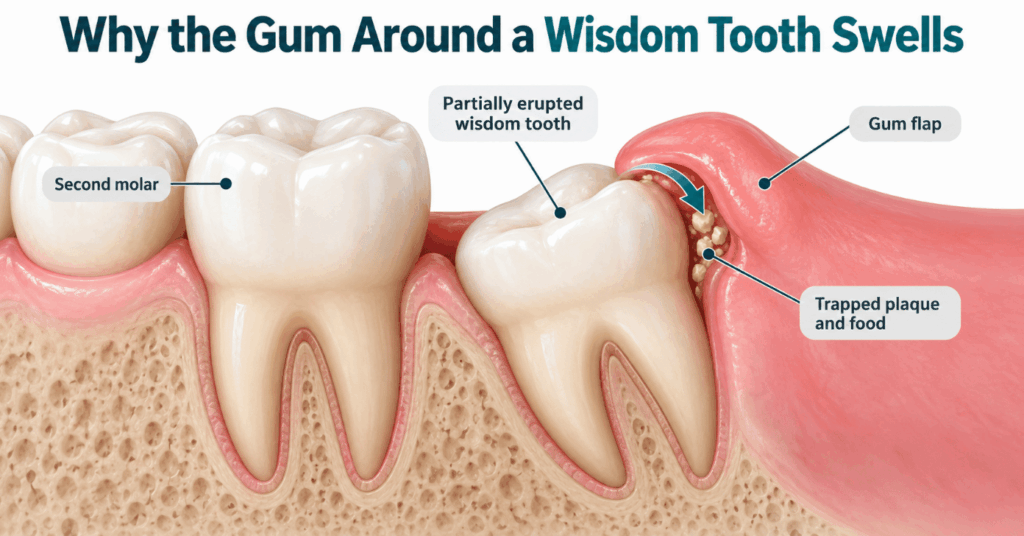
Pericoronitis is inflammation of the soft tissue surrounding a partially erupted tooth. It usually develops when plaque, bacteria, and food become trapped under the gum flap, also called an operculum. The area is difficult to reach with a regular toothbrush, so inflammation can return even when the rest of the mouth is clean.
The condition is most common around partially erupted lower wisdom teeth. It often appears in the late teens or early twenties, when wisdom teeth typically erupt. Symptoms of pericoronitis can include gum pain, redness, swelling, a bad taste, bad breath, and discomfort while chewing. If an infection spreads, it can also cause fever, facial swelling, or limited mouth opening.
Normal Eruption and Gum Irritation
An erupting tooth must pass through the gum tissue. This process may cause mild tenderness or gum swelling near wisdom teeth, especially when part of the crown first becomes visible. The discomfort should remain manageable and move toward improvement rather than becoming steadily worse.
Do not assume that ongoing pain and swelling are normal signs of eruption. A wisdom tooth may stop erupting because it lacks space, sits at an unfavorable angle, or meets the neighboring tooth. Persistent or recurring symptoms need an examination.
Food and Plaque Trapped Under the Gum Flap
A partially erupted wisdom tooth sits at the back of your mouth, where cleaning is already difficult. A covering flap creates an additional pocket in which food and plaque can remain after brushing.
Repeated buildup can irritate the tissue, produce bad breath, and cause soreness or bleeding. It may also allow pericoronitis to develop. Cleaning can reduce the buildup, but a deep or poorly positioned flap may remain difficult to maintain without professional help.
Biting or Trauma From the Opposing Tooth
An upper wisdom tooth may bite directly onto the gum tissue covering a lower wisdom tooth. Each bite can press or rub the already swollen tissue, much like repeatedly biting the inside of your cheek.
This mechanical irritation can maintain swelling and pain even after trapped food has been removed. A dentist can assess your bite and determine whether the opposing tooth, the gum flap, or both contribute to the problem.
Tooth Decay, Gum Disease, or an Abscess
Swelling around the wisdom tooth does not always come from pericoronitis. The affected tooth and neighboring second molar can develop other problems that produce similar symptoms.
- Wisdom Tooth Decay: A wisdom tooth that is hard to brush can develop a cavity. Deep decay may inflame or infect the tissue inside the tooth.
- Decay in the Second Molar: An impacted or angled wisdom tooth can create a plaque-trapping area against the tooth in front of it.
- Localized Gum Disease: Plaque beneath the gumline may form a periodontal pocket and damage the supporting tissue.
- Dental Abscess: Infection may create a collection of pus beside the tooth or near its root.
- Cracked or Damaged Tooth: A fracture can allow bacteria to enter the tooth and cause pain or swelling.
Pain, drainage, or a bad taste cannot show which condition is present. Your dentist must examine the tooth and may need an X-ray to locate the source.
Is the Swelling From Normal Eruption or an Infection?
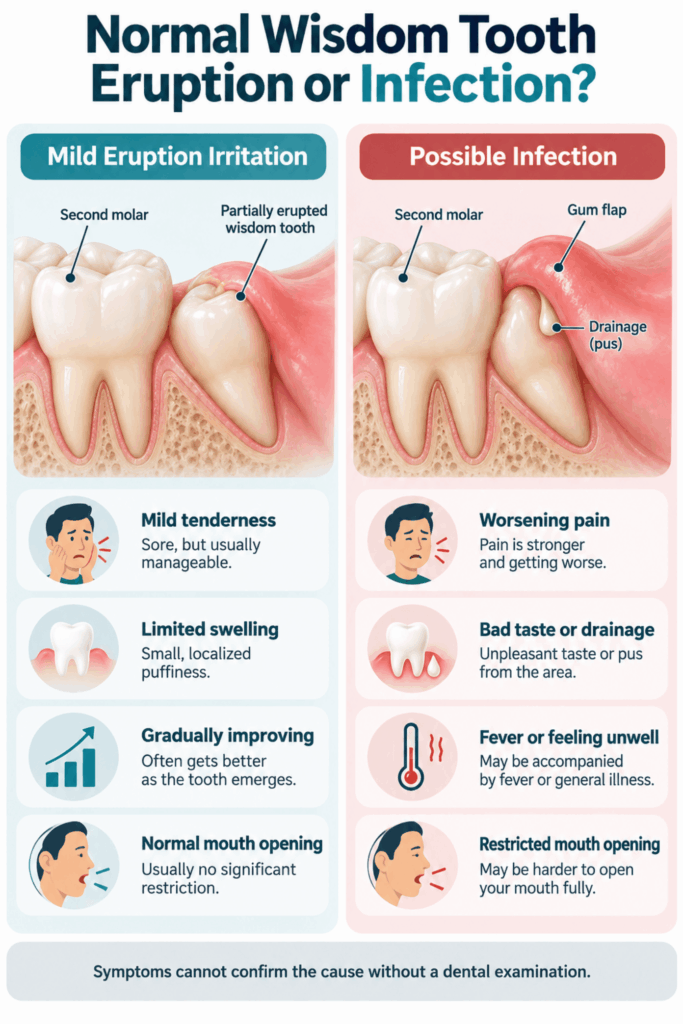
Mild irritation can occur as wisdom teeth grow through the gum. Infection becomes more likely when symptoms intensify, spread, or affect how you feel overall.
| Feature | More Consistent With Mild Eruption Irritation | More Suggestive of Infection |
|---|---|---|
| Swelling | Small and limited to the erupting tooth | Increasing or extending beyond the local gum |
| Pain | Mild tenderness or pressure | Worsening, throbbing, or persistent pain |
| Gum appearance | Slight redness or puffiness | Marked redness, tenderness, or visible pus |
| Taste and breath | Usually unchanged | Bad taste, drainage, or persistent bad breath |
| General health | You otherwise feel well | Fever, chills, fatigue, or feeling unwell |
| Mouth opening | Normal | Becoming difficult or painful |
| Progress | Gradually improving | Persisting, recurring, or getting worse |
These patterns are clues rather than a home diagnosis. Pericoronitis can begin with mild local symptoms, and not every infection produces fever or visible pus. Arrange a dental examination if the swelling persists, returns, or becomes more painful.
What to Do for a Swollen Gum Around a Wisdom Tooth
Home care may reduce irritation while you arrange appropriate dental care. It cannot correct an impacted tooth, treat deep decay, drain an abscess, or create more room in the jaw.
- Look for Warning Signs: Check for facial swelling, fever, pus, trouble swallowing, or increasing difficulty opening your mouth.
- Clean the Area Carefully: Remove accessible plaque and food without injuring the gum.
- Use a Warm Saltwater Rinse: Gentle rinsing may loosen debris and soothe irritated tissue.
- Protect the Area While Eating: Choose softer foods and chew on the other side.
- Manage Discomfort Safely: Consider a cold compress and an appropriate nonprescription pain reliever.
- Arrange Dental Care: See a dentist if symptoms persist, recur, or suggest infection.
Clean Around the Wisdom Tooth Gently
Use a soft-bristled toothbrush to clean the visible tooth and gumline. Angle the bristles toward the back of the mouth, use small movements, and stop if aggressive brushing increases bleeding or pain.
- Use Light Pressure: Firm scrubbing may damage the inflamed gum.
- Clean After Eating: This can reduce food trapped near the affected tooth.
- Use an Oral Irrigator Carefully: Choose a low setting and avoid forcing the tip deeply under swollen tissue unless your dentist has shown you how.
- Avoid Sharp Objects: Never use a pin, toothpick, fingernail, or dental tool to lift or dig beneath the flap.
Rinse With Warm Salt Water
Warm salt water can help flush loose debris from around your wisdom teeth and may soothe irritated tissue. It offers short-term support but does not treat decay, impaction, or a spreading infection.
- Prepare the Rinse: Mix about half a teaspoon of salt into 8 ounces of comfortably warm water.
- Rinse Gently: Move the solution around the affected area without forceful swishing.
- Spit It Out: Do not swallow the rinse.
- Repeat as Needed: Use it a few times during the day, particularly after meals, until you can obtain dental advice.
Stop if the rinse irritates the tissue. People on a medically restricted sodium plan can ask a healthcare professional whether a saltwater rinse is suitable.
Manage Pain and External Swelling Safely
A cold compress against the outside of the cheek may reduce discomfort. Wrap it in a cloth and use it for short periods rather than placing ice directly on your skin.
For many adults, nonsteroidal anti-inflammatory drugs such as ibuprofen, alone or combined with acetaminophen, are effective first-line options for short-term dental pain. The American Dental Association’s acute dental pain guideline supports non-opioid medicines as first-line treatment when they are appropriate for the patient.
Before taking a pain reliever:
- Read the Label: Follow the stated dose and maximum daily limit.
- Check Other Products: Cold, flu, and headache medicines may contain the same ingredient.
- Avoid Aspirin in Children and Teens: It may cause a rare but serious condition called Reye syndrome.
- Ask About Pregnancy: Confirm medicine choices with a dentist, physician, or pharmacist.
- Check Your Health History: Seek advice if you have ulcers, kidney or liver disease, bleeding problems, or medication allergies.
- Review Your Medicines: Blood thinners and other drugs may interact with pain relievers.
- Remember the Limitation: Pain medicine can reduce symptoms but cannot remove the cause.
Choose Foods That Do Not Irritate the Area
Choose:
- Soft Foods: Yogurt, eggs, oatmeal, soup that is not hot, soft rice, and tender cooked vegetables require less chewing.
- Comfortable Temperatures: Cool or lukewarm foods may feel better than very hot meals.
- The Other Side: Chew away from the affected tooth when possible.
- Water: Drinking water after eating can help move loose particles.
Avoid:
- Hard or Sharp Foods: Chips, nuts, popcorn, and crusty bread may scrape the inflamed gum.
- Sticky Foods: Chewy candy and similar foods can lodge beneath the flap.
- Small Seeds and Crumbs: These may become trapped near the affected tooth.
- Very Hot or Spicy Foods: They may increase gum irritation.
What Not to Put on a Swollen Wisdom Tooth Gum
Trying to burn, cut, or drain the tissue can worsen the injury and delay proper treatment.
- Do Not Place Aspirin on the Gum: Aspirin can cause a chemical burn when held against oral tissue.
- Avoid Concentrated Essential Oils: Clove, tea tree, and other oils may irritate or burn the gum when used improperly.
- Do Not Use Harsh Chemicals: Bleach, household disinfectants, and undiluted hydrogen peroxide do not belong on oral tissue.
- Avoid Excessive Heat: A very hot rinse or compress can burn the mouth.
- Do Not Cut the Gum Flap: Removing excess gum tissue is a dental procedure, not a home treatment.
- Do Not Squeeze the Swelling: Pressure can injure the tissue and does not safely treat an abscess.
- Do Not Drain Pus Yourself: Infection may extend deeper than the visible swollen tissue.
- Do Not Take Leftover Antibiotics: The drug, dose, or duration may be wrong and may delay effective treatment.
How Long Can Wisdom Tooth Gum Swelling Last?
There is no single timeline because the cause matters. Mild irritation from an erupting tooth or trapped food may improve after gentle cleaning, but infection, repeated biting, decay, or wisdom tooth impaction can keep the area swollen.
Pay more attention to the direction of the symptoms than to an exact number of days. Swelling that is increasing, failing to improve, or returning after it settles needs dental evaluation. Seek care sooner when pain, pus, fever, facial swelling, or limited mouth opening accompanies it.
Can Swollen Gum Around a Wisdom Tooth Go Away on Its Own?
Mild gum inflammation may settle after debris is removed and oral hygiene improves. A gum infection can also seem better if pressure decreases or an abscess drains. Temporary relief does not prove that the source has healed.
Pericoronitis sometimes returns because the partly erupted tooth and gum flap continue to trap plaque. Recurrence is more likely when the tooth cannot erupt into a cleanable, functional position. A dentist can determine whether monitoring, local treatment, or removing the wisdom tooth offers the better long-term plan.
When Should You See a Dentist?
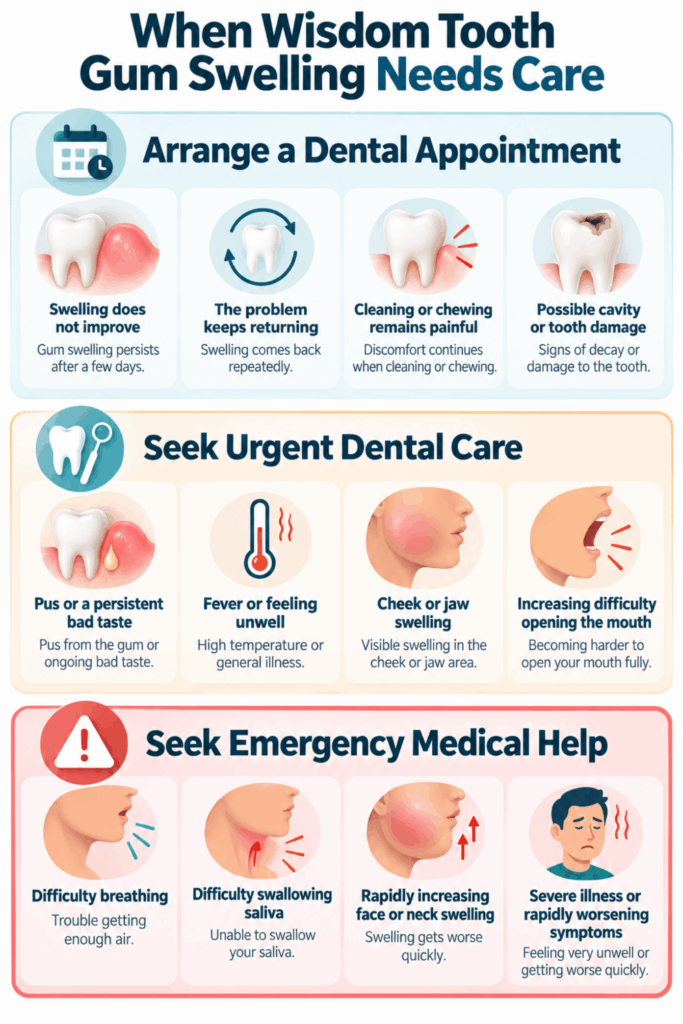
See a dentist when swelling persists, returns, worsens, or affects eating and cleaning. The correct timing depends on your symptoms.
Arrange a dental appointment when you notice:
- Persistent Swelling: The tissue does not move toward improvement with gentle home care.
- Repeated Episodes: The same gum becomes inflamed again after seeming to heal.
- Increasing Pain: Discomfort becomes stronger, throbbing, or difficult to control.
- Bleeding or Cleaning Difficulty: The area remains hard to maintain without pain.
- Possible Tooth Damage: You notice a hole, broken tooth, or pain when biting.
Seek urgent dental care when you develop:
- Pus or Drainage: A bad taste or visible discharge may indicate infection.
- Fever or Illness: Feeling feverish, weak, or generally unwell can indicate a broader response to infection.
- Facial Swelling: Swelling that extends into the cheek or jaw needs prompt assessment.
- Worsening Mouth Opening: Increasing stiffness can occur when inflammation affects nearby tissues.
- Tender Lymph Nodes: Enlarged, painful nodes beneath the jaw may accompany infection.
- Pain With Swallowing: This requires prompt evaluation, especially if it is getting worse.
Seek Emergency Medical Help for Spreading Symptoms
Go to an emergency department or call your local emergency number if you have:
- Difficulty Breathing: Any breathing change associated with mouth, jaw, or neck swelling is an emergency.
- Difficulty Swallowing Saliva: Drooling or an inability to swallow can suggest deeper swelling.
- Rapidly Increasing Facial or Neck Swelling: Infection may be spreading beyond the tooth.
- Severe or Rapidly Worsening Trismus: You can barely open your mouth or the restriction is progressing.
- Serious Illness: Confusion, marked weakness, dehydration, or rapidly worsening fever requires medical assessment.
Do not drive yourself if you are having trouble breathing, feel faint, or are seriously unwell.
How a Dentist Finds the Cause
A dentist combines your history, an examination, and imaging when needed. The aim is to identify whether the swelling starts in the gum, the wisdom tooth, the adjacent molar, or deeper supporting tissue.
- Review Your Symptoms: The dentist asks when the swelling began, whether it has happened before, and whether you have pain, drainage, fever, or trouble opening your mouth.
- Check Your Medical History: Pregnancy, immune conditions, allergies, medicines, and previous dental treatment may affect care.
- Examine the Gum: The dentist looks for an operculum, trapped debris, redness, pus, bleeding, and tissue injured by the opposing tooth.
- Test the Teeth: An examination may include checks for decay, cracks, tenderness, tooth vitality, and pain during biting.
- Assess the Supporting Gum: Gentle measurements may identify a deep periodontal pocket or damage behind the second molar.
- Evaluate Tooth Position: The dentist checks how much of the wisdom tooth has erupted and whether it appears functional and cleanable.
- Take Selected X-Rays: A periapical image or panoramic X-ray may show impaction, decay, roots, bone, and the neighboring tooth.
Dental imaging should be selected for the individual clinical need rather than used as automatic screening. The FDA’s guidance on selecting patients for dental radiographs notes that panoramic or selected periapical images may be used to assess developing third molars.
How Dentists Treat Swollen Gum Around a Wisdom Tooth
Treatment depends on the source, severity, tooth position, and whether the problem has happened before. Dentists usually address the local cause first rather than treating gum swelling as an isolated symptom.
Professional Cleaning and Irrigation
For pericoronitis, a dentist may gently clean and irrigate beneath the gum flap to remove food, plaque, and discharge. This can reduce the bacterial load and allow inflamed tissue to settle.
Local care may be enough for a mild first episode when the tooth is likely to erupt into a useful, cleanable position. Follow-up still matters because symptoms can return if the same pocket continues to collect debris.
Drainage and Treatment of Decay or Gum Disease
Treatment changes when the swelling begins somewhere other than the gum flap.
- Abscess: The dentist may establish drainage and treat the tooth or periodontal source.
- Wisdom Tooth Cavity: A cleanable, restorable erupted wisdom tooth may be repaired. A severely damaged or poorly positioned tooth may require extraction.
- Second-Molar Decay: The neighboring tooth may need a filling, root canal treatment, or another appropriate procedure.
- Periodontal Pocket: Professional cleaning and a longer-term gum-care plan may be needed.
- Bite Trauma: The dentist may address the tissue injury and evaluate whether the opposing tooth contributes to repeated inflammation.
- Cracked Tooth: Treatment depends on the location and extent of the crack.
When Antibiotics May Be Needed
Antibiotics are not automatically needed for a swollen gum or localized pericoronitis. Professional cleaning, irrigation, drainage, and treatment of the source often matter more. Current SDCEP guidance for acute periodontal conditions emphasizes local measures and limits antibiotics to situations with spreading infection, systemic involvement, or other specific clinical reasons.
An antibiotic cannot clean beneath a gum flap, repair decay, or change the position of an impacted wisdom tooth. Do not use another person’s medicine or save unfinished tablets for a future episode. A dentist must consider your symptoms, medical history, allergies, pregnancy status, and local prescribing guidance.
Gum-Flap Removal, Wisdom Tooth Extraction, or Monitoring
Once active inflammation is controlled, the dentist can discuss the long-term treatment options.
- Monitoring: This may suit a healthy, functional tooth that is erupting into a cleanable position and has not caused significant disease.
- Operculectomy: Removing excess gum tissue may help selected teeth with adequate eruption space. The flap can return if the tooth’s position still creates a deep, uncleanable area.
- Wisdom Tooth Extraction: Removal may be considered when pericoronitis recurs, the tooth is impacted, disease is present, or the position threatens the adjacent second molar.
- Treatment of the Opposing Tooth: In selected cases, an unneeded upper tooth that repeatedly traumatizes the lower gum may require management.
- Specialist Assessment: Complex roots, limited access, medical concerns, or a close relationship with important structures may justify referral for oral surgery.
The decision should balance the harm caused by retaining the tooth against the risks of surgery. The NICE guidance on wisdom tooth extraction states that a mild first episode of pericoronitis alone is not normally a reason for surgery, while a particularly severe or recurrent episode can support removal.
Does a Swollen Gum Mean the Wisdom Tooth Must Be Removed?
No. Gum swelling alone does not mean the affected tooth must come out. A first mild episode may respond to local care, especially when the tooth has room to erupt fully and can become easy to clean.
Removal becomes more reasonable when the tooth repeatedly causes pericoronitis, remains partly impacted, develops decay, damages neighboring teeth, or cannot function and stay clean. Wisdom teeth may also be retained when they are healthy, useful, and free of disease.
A dentist will consider:
- Eruption Space: Is there enough room for the tooth to come through?
- Tooth Angle: Is it upright or blocked by the second molar?
- Cleaning Access: Can you keep the tooth and gum tissue around it free of plaque?
- Function: Does the tooth meet an opposing tooth and contribute to chewing?
- Current Disease: Is there decay, gum damage, an abscess, or another problem?
- History of Symptoms: Is this a first mild episode or a recurring infection?
- Effect on Nearby Teeth: Is the wisdom tooth creating decay or bone loss behind the second molar?
- Surgical Risk: How close are the roots to important nerves or other structures?
What to Expect After Treatment
The next steps depend on whether you receive local cleaning, treatment for decay or gum disease, or oral surgery. After the cause is controlled, pain and swelling should generally begin moving toward improvement rather than worsening.
Follow the instructions given for your specific treatment:
- Keep the Area Clean: Use the cleaning method recommended by your dentist.
- Take Medicines Correctly: Follow the prescribed or labeled dose and timing.
- Choose Suitable Foods: Avoid irritating the area until chewing feels comfortable.
- Attend Follow-Up Visits: Your dentist may need to reassess eruption, healing, or recurrence.
- Watch the Trend: Contact the office if swelling or pain increases instead of settling.
- Report New Warning Signs: Fever, pus, facial swelling, trouble swallowing, or worsening mouth opening requires prompt advice.
After wisdom teeth removal, follow the surgeon’s instructions rather than applying advice meant for an inflamed tooth that is still present. Extraction creates a healing socket with different cleaning and dietary needs.
How to Reduce the Chance of Swelling Returning
Good oral hygiene lowers plaque buildup, but it cannot make space for an impacted tooth or repair existing damage. The goal is to keep the area clean and identify structural problems before they cause repeated symptoms.
- Brush the Back Molars Daily: Use a small, soft brush head to reach behind the second molar.
- Clean Between Nearby Teeth: Floss or use another device recommended by your dental professional.
- Rinse After Meals: Water can help remove loose food from the back of the mouth.
- Avoid Tobacco: Smoking and other tobacco use can harm oral health and healing.
- Attend Dental Checkups: Your dentist can monitor eruption, cleaning access, decay, and gum health.
- Do Not Ignore Recurrence: Repeated swelling suggests that the local cause may still be present.
- Follow the Long-Term Plan: Monitoring only works when the tooth remains healthy and you attend recommended reviews.
Common Questions About Swollen Wisdom Tooth Gums
Can I Use Mouthwash on a Swollen Gum Around a Wisdom Tooth?
A gentle, alcohol-free rinse may feel more comfortable than a strong product, while a dentist may prescribe an antimicrobial rinse for a specific reason. Mouthwash cannot reliably remove food packed beneath a deep gum flap or treat decay and impaction. Stop using any product that burns or worsens the irritation.
Can a Fully Erupted Wisdom Tooth Still Cause Gum Swelling?
Yes. An erupted wisdom tooth may be hard to brush because of its position at the back of your mouth. Plaque, trapped food, decay, periodontal disease, or a cavity in the neighboring tooth can cause swelling even when no flap covers the crown.
Can an Upper Wisdom Tooth Cause Swollen Gum?
Yes. Gum swelling can occur around upper and lower wisdom teeth. Pericoronitis occurs more often around a partially erupted lower wisdom tooth, but difficult cleaning, decay, food trapping, or gum irritation can affect an upper molar tooth as well.
Can Wisdom Tooth Gum Swelling Cause Ear or Throat Pain?
Inflammation around a lower wisdom tooth can produce referred pain felt near the ear, jaw, or throat. This does not always mean the infection has spread. However, painful or difficult swallowing, neck swelling, fever, or worsening difficulty opening your mouth needs urgent assessment.
Is Swollen Gum Around a Wisdom Tooth Contagious?
Pericoronitis is not usually described as a contagious condition. People can exchange oral bacteria through saliva, but the infection develops because of local conditions around the affected tooth, such as a plaque-trapping gum flap and poor cleaning access.
What Should I Do About Wisdom Tooth Gum Swelling During Pregnancy?
Contact a dentist instead of waiting for the swelling to become severe. Necessary dental assessment and treatment should not be delayed solely because of pregnancy, but your dentist needs to know how far along you are and whether your pregnancy has any complications.
Do not choose pain relievers, antibiotics, or medicated rinses based only on general online advice. Your dentist, obstetric clinician, or pharmacist can check which options are appropriate for your stage of pregnancy and medical history.
Bottom Line
A swollen gum around a wisdom tooth commonly develops where a partially erupted crown is covered by tissue that traps food and plaque. Pericoronitis is a common explanation, but normal eruption, trauma, decay, gum disease, and an abscess are also possible.
Gentle cleaning, warm salt water, suitable foods, and safe pain control may provide temporary relief. See a dentist if gum swelling persists, returns, produces pus, or becomes more painful. Difficulty breathing or swallowing and rapidly increasing facial or neck swelling require emergency medical help.
