Seeing blood on your floss can be worrying, especially when you are trying to care for your teeth. If your gums bleed when flossing, the most common reason is inflammation caused by plaque around and between the teeth. Starting to floss after a long break can also trigger brief bleeding. However, healthy gums should not bleed every time you clean between your teeth.
Do not assume that flossing is the problem or stop cleaning the area. In many cases, gentle daily flossing helps remove the plaque that keeps the gums inflamed. Snapping floss into the gums or pressing too hard can cause injury, so technique matters. Bleeding that keeps returning may point to gingivitis or, less often, another dental or health issue.
Pay attention to how often the bleeding happens, how much blood you see, and whether you notice other gum changes. These details can help you decide whether better home care may be enough or a dental exam is needed. The first step is understanding why flossing can reveal bleeding and what different patterns may mean.
Why Do Gums Bleed When Flossing?
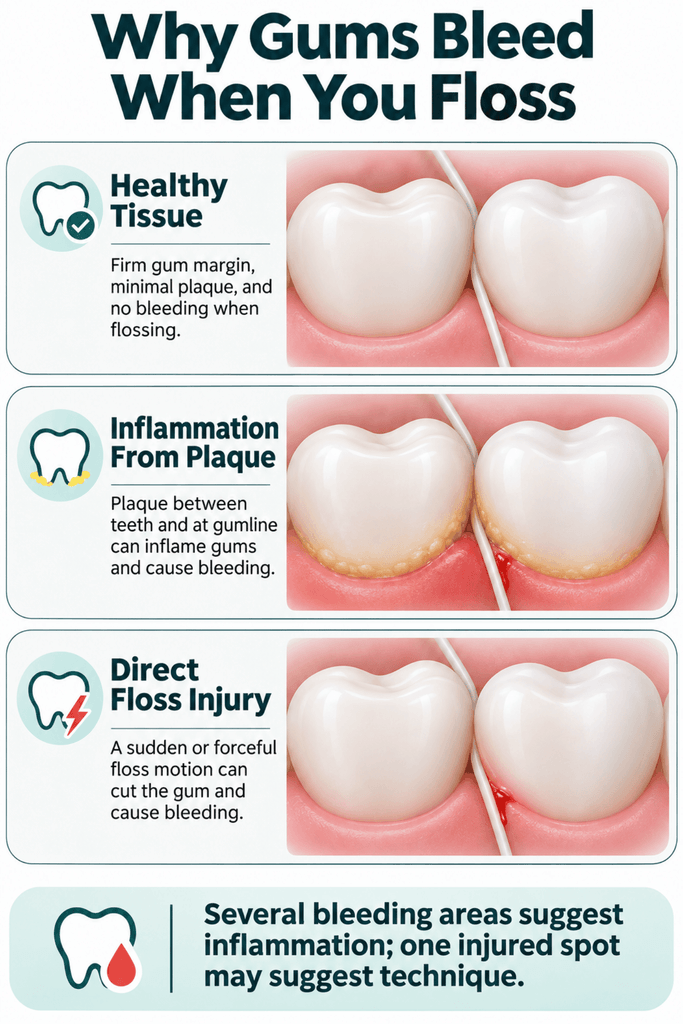
If your gums bleed when flossing, the floss is often touching tissue that is already inflamed. Plaque buildup is the most common reason, although restarting a flossing routine or using too much force can also cause bleeding. This symptom does not automatically mean you have advanced gum disease.
Plaque Buildup and Gingivitis
Plaque is a sticky layer of bacteria that collects on the teeth and around the gum line. When you do not remove plaque from between your teeth, it can irritate the gums. The inflamed tissue becomes red, swollen, and prone to bleeding when floss passes along the gumline.
This early stage of gum disease is called gingivitis. It can often be reversed with proper brushing and flossing plus professional dental care when needed. Plaque that remains can harden into tartar, which requires professional removal and may allow inflammation to progress below the gums. The CDC’s explanation of periodontal disease describes how plaque, tartar, gingivitis, and deeper periodontal pockets are connected.
Starting or Restarting Flossing
Your gums may bleed when you start flossing after weeks or months without cleaning between your teeth. Plaque has had time to build up and irritate the tissue, so even gentle contact may trigger mild bleeding. The amount and frequency should gradually decrease when you continue to floss correctly each day.
Flossing Too Hard or Using Poor Technique
Aggressive flossing can cut or bruise the gums. This usually causes bleeding at the point where the floss struck the tissue, while gum inflammation may cause several areas to bleed easily.
Common technique problems include:
- Snapping the Floss Down: Forcing floss through a tight contact can make it hit the gum with too much pressure.
- Sawing Across the Gum: Rapid side-to-side movement can cut the soft tissue instead of cleaning the tooth surface.
- Pressing Too Deeply: Floss should move slightly under the gum edge, but it should not be forced into the tissue.
- Cleaning Only the Gap: Moving floss straight up and down without wrapping it around each tooth may leave plaque along the gum line.
- Using Damaged Floss: Frayed floss can catch on a filling, crown, or rough tooth surface and irritate the gums.
Other Factors That Can Increase Bleeding
Plaque and gingivitis remain the most common causes, but other factors can make the gums more sensitive or make bleeding easier to notice.
- Pregnancy: Hormonal changes can increase the gums’ response to plaque, causing swelling and bleeding. Dental care remains important during pregnancy, as explained in the American College of Obstetricians and Gynecologists’ guidance on oral health during pregnancy.
- Blood-Thinning Medication: Anticoagulants and antiplatelet medicines can make bleeding last longer. Do not stop prescribed medication on your own. The NHS guidance for people taking anticoagulants advises changing or stopping these medicines only under professional direction.
- Tobacco Use: Smoking can damage periodontal health while reducing visible bleeding by restricting blood flow. Bleeding may become more noticeable after quitting because circulation begins to recover.
- Nutritional or Medical Conditions: A severe vitamin C deficiency, a clotting disorder, or another health problem can contribute to bleeding gums. These causes are less common than plaque-related inflammation and should not be assumed without a medical evaluation.
Is It Normal for Gums to Bleed When Flossing?
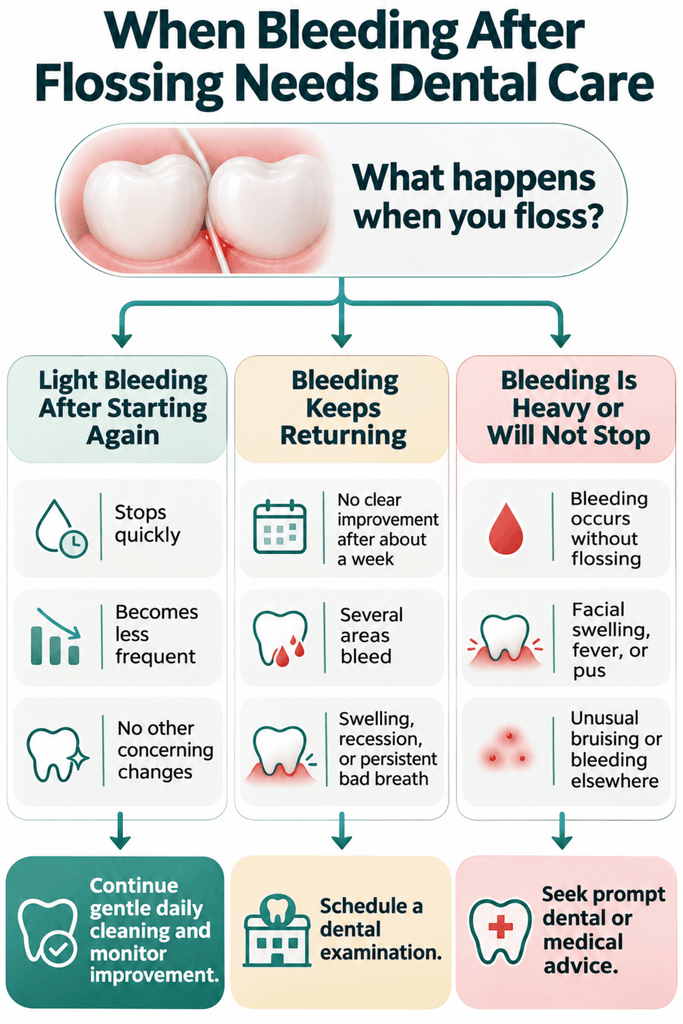
Mild bleeding can happen when you start flossing or return after a long break. It should be light, stop quickly, and become less frequent as your oral hygiene improves. Bleeding may therefore be common in this situation, but it is not a sign of fully healthy gum tissue.
Frequent, heavy, spontaneous, or worsening bleeding is different. It may indicate ongoing gum inflammation, tartar buildup, an injury, or another problem that needs attention. Healthy gums should not routinely bleed during gentle brushing and flossing.
Should You Stop Flossing If Your Gums Bleed?
You usually should not stop flossing because of mild bleeding. Continuing to floss gently can remove the plaque that keeps the tissue inflamed. The American Dental Association’s guidance on floss and interdental cleaners recommends cleaning between the teeth once a day as part of routine oral hygiene.
Use these steps to decide what to do:
- Continue Gentle Cleaning: Keep flossing daily if the bleeding is minor, stops quickly, and appears to be improving.
- Reduce the Pressure: Slow down and guide the floss through each contact instead of snapping it toward the gums.
- Avoid Repeated Injury: If you cut one spot, do not keep forcing floss into the same wound. Clean the surrounding tooth surfaces carefully and let your dentist know if the area does not heal.
- Watch the Pattern: Note whether the bleeding affects one area or several areas and whether it decreases over the following days.
- Consult Your Dentist: Arrange an examination if your gums continue to bleed, the bleeding worsens, or you notice other gum changes.
How to Floss Bleeding Gums Without Hurting Them
Correct flossing technique removes plaque while limiting unnecessary pressure on the gums. Move slowly, especially if your teeth have tight contacts or the tissue is already tender.
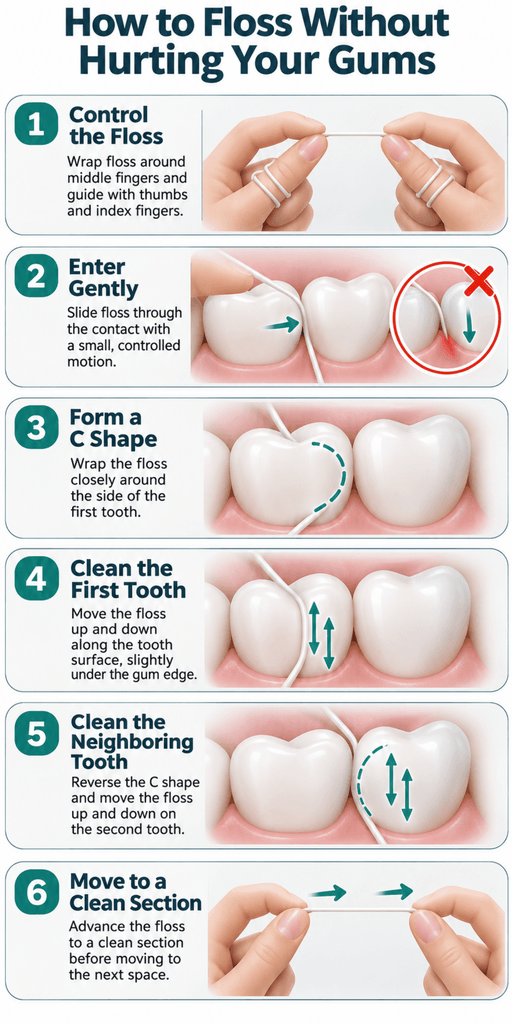
- Start With Enough Floss: Use a clean length of floss that gives you control. Wrap most of it around your middle fingers and guide it with your thumbs and index fingers.
- Enter the Contact Gently: Ease the floss between two teeth with a small back-and-forth motion. Do not snap it downward.
- Form a C Shape: Curve the floss around the side of one tooth so it hugs the surface.
- Clean Along the Tooth: Slide the floss up and down several times, moving gently beneath the gum edge without forcing it into the tissue.
- Clean the Neighboring Tooth: Curve the floss in the opposite direction and repeat the movement on the other side of the space.
- Use a Fresh Section: Move to a clean part of the floss before cleaning the next space.
- Include the Back Teeth: Floss behind the last tooth on each side, where plaque can also collect.
Avoid sawing across the gum, repeatedly forcing floss through a tight contact, or stopping as soon as you see blood. If you cannot pass floss without pain or shredding, a dentist should check for tartar, decay, or a rough dental restoration.
When Another Interdental Cleaner May Work Better
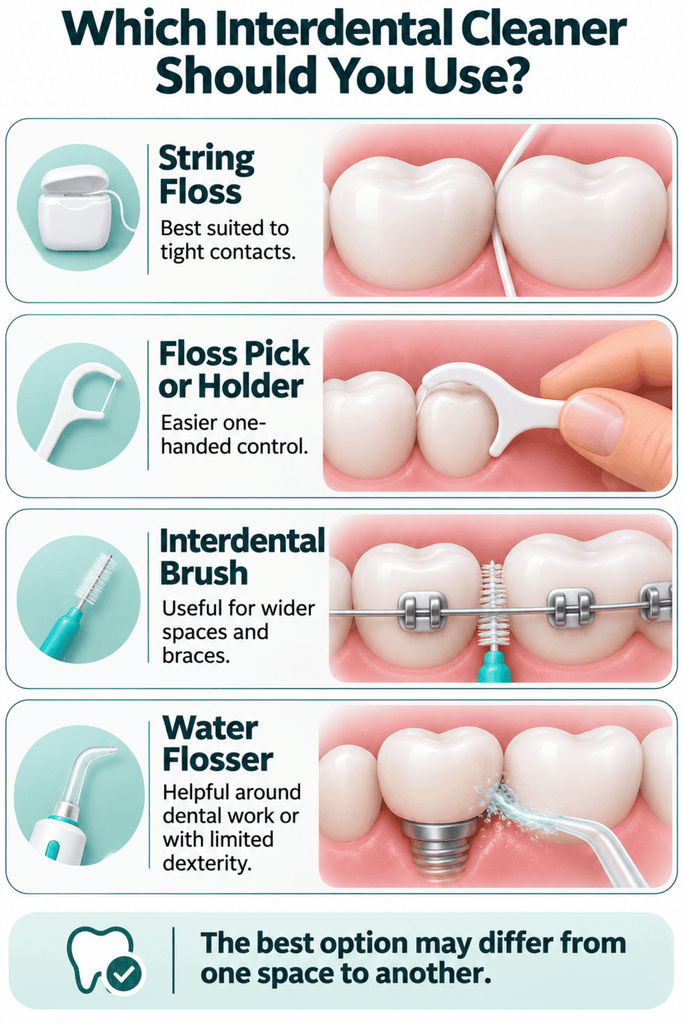
Traditional floss works well in many tight spaces, but the best cleaning tool depends on your teeth, gums, dental work, and hand control.
- Floss Holders or Floss Picks: These may help if wrapping floss around your fingers is difficult. Guide the floss gently and clean both sides of each space instead of pushing the pick straight down.
- Interdental Brushes: Small brushes can work well in wider spaces, around braces, or where gum recession has created open areas. The brush must be the correct size because forcing a large brush through a small space can injure the gum.
- Water Flossers: A water flosser may be easier around braces, bridges, or implants and for people with limited hand movement. Start with a comfortable pressure and follow the device instructions.
- Specialized Threaders: A floss threader can guide floss beneath a bridge or orthodontic wire.
Ask your dentist or hygienist which cleaner fits each part of your mouth. Some people need more than one type because the spaces between their teeth are not all the same.
How Long Should Bleeding Last After You Start Flossing?
When mild bleeding is related to a new flossing routine, it should begin to decrease as plaque is removed and the gum inflammation settles. The American Dental Association’s patient guidance about bleeding gums notes that bleeding after beginning a new flossing routine often resolves in about a week. Healing may take longer if there is substantial plaque, tartar, or established gum disease.
Look for a clear trend rather than expecting every area to stop bleeding at the same time. Schedule an appointment if the bleeding is not improving after about a week of gentle daily care, returns repeatedly, or becomes heavier. Do not wait for a specific number of days if you have spontaneous bleeding, severe swelling, pus, loose teeth, or bleeding that will not stop.
How to Help Stop Gums Bleeding When Flossing
Stopping the bleeding begins with controlling plaque without causing new injury. A consistent routine works better than cleaning aggressively only after the gums become sore.
- Floss Gently Every Day: Clean each tooth surface with a controlled C-shaped motion.
- Brush Twice Daily: Use fluoride toothpaste and a soft-bristled toothbrush. Place the bristles along the gumline without scrubbing hard.
- Clean Between Every Tooth: Do not avoid the areas that bleed unless you have an open injury or your dentist gives different instructions.
- Choose a Suitable Tool: Use string floss, floss picks, interdental brushes, or a water flosser according to the size of the spaces and your ability to handle the device.
- Do Not Depend on Mouthwash Alone: A rinse may support oral care in selected cases, but it cannot physically remove plaque from tooth surfaces.
- Avoid Tobacco: Smoking increases the risk of periodontal disease and can hide visible signs of gum inflammation.
- Eat a Balanced Diet: Regular sources of vitamin C and other nutrients support normal gum tissue, but supplements will not remove plaque or treat tartar.
- Track Improvement: Notice whether fewer areas bleed and whether the amount decreases over several days.
When Professional Cleaning Is Needed
Plaque can be removed at home, but hardened plaque and tartar cannot. A dentist or hygienist can remove these deposits and show you how to keep difficult areas clean. If periodontitis has created deeper pockets, treatment may include scaling and root planing to clean below the gum line rather than a routine dental cleaning.
When Bleeding Gums Need a Dental Visit
Arrange a dental appointment when bleeding continues despite gentle daily cleaning or when the pattern suggests more than temporary irritation.
Schedule a dental examination if you notice:
- Persistent Bleeding: Your gums continue to bleed without clear improvement after about a week of proper care.
- Recurring Bleeding: The symptom improves but repeatedly returns in the same areas.
- Bleeding Without Flossing: Your gums bleed on their own or with very light contact.
- Ongoing Inflammation: Redness, swelling, tenderness, or gum recession remains.
- Other Periodontal Signs: You notice persistent bad breath, pus, loose teeth, new spaces, or changes in your bite.
- A Localized Problem: One spot repeatedly bleeds or catches floss near a filling, crown, or damaged tooth.
Seek prompt dental or medical advice if:
- Bleeding Will Not Stop: The area continues bleeding despite steady, gentle pressure with clean gauze.
- Facial Swelling or Fever Develops: These findings may indicate an infection that needs timely care.
- Bleeding Appears Elsewhere: Frequent nosebleeds, unusual bruising, blood in urine or stool, or other unexplained bleeding requires medical assessment.
- You Take Blood Thinners: Contact the prescribing clinician if gum bleeding becomes prolonged, frequent, or difficult to stop, but do not change the medication yourself.
How a Dentist Finds and Treats the Cause
A dentist looks at the full pattern rather than diagnosing gum disease from bleeding alone. The examination helps distinguish plaque-related inflammation from injury, a defective restoration, periodontitis, or a possible medical contributor.
- Reviewing Your History: The dentist asks when the bleeding started, how often you floss, what technique you use, and whether the bleeding occurs anywhere else. Mention pregnancy, tobacco use, medical conditions, medicines, and supplements.
- Examining the Teeth and Gums: The dentist checks for plaque and tartar, swelling, recession, decay, food traps, and rough edges on fillings or crowns.
- Measuring the Gum Pockets: A small periodontal probe measures the spaces around the teeth and checks for bleeding, attachment loss, and other signs of periodontal disease.
- Taking X-Rays When Needed: Dental X-rays may be used when the examination suggests bone loss, hidden tartar, decay, or another problem that cannot be fully seen.
- Choosing the Treatment: Mild gingivitis may improve with better plaque removal and professional cleaning. Periodontitis may require scaling and root planing, ongoing periodontal maintenance, or referral to a periodontist. A rough restoration may need adjustment, while unusual bleeding may require coordination with a physician.
The National Institute of Dental and Craniofacial Research overview of gum disease explains how care can range from improved daily cleaning to scaling and root planing or more advanced periodontal treatment.
How to Prevent Bleeding During Future Flossing
You may not be able to prevent every episode, but you can lower the chance of plaque-related bleeding and floss injuries.
- Clean Between Your Teeth Daily: Regular cleaning prevents plaque from remaining around the gums for long periods.
- Use Gentle Technique: Guide the floss and wrap it around each tooth instead of snapping or sawing it into the gum.
- Choose the Right Tool: Match floss, floss picks, interdental brushes, or a water flosser to your dental spaces and hand control.
- Brush the Gumline Carefully: Brush twice daily with a soft-bristled toothbrush and fluoride toothpaste.
- Attend Regular Dental Checkups: Your dentist can identify tartar, gingivitis, periodontal pockets, and rough restorations before they cause more trouble.
- Follow a Personalized Cleaning Schedule: Some people need more frequent professional dental visits because of periodontitis, diabetes, smoking, braces, or complex dental work.
- Manage Personal Risk Factors: Avoid tobacco and keep medical conditions under appropriate professional care.
Common Questions About Gums Bleeding When Flossing
Why Do My Gums Bleed in Only One Spot When Flossing?
Bleeding in one spot may come from localized plaque, tartar, trapped food, or repeated injury from flossing technique. Floss may also catch on decay or a rough filling or crown. Clean gently, but ask your dentist to examine the area if it keeps bleeding, feels painful, or repeatedly traps or shreds the floss.
Does Bleeding During Flossing Mean I Have Periodontitis?
No. Bleeding commonly occurs with gingivitis and does not prove that you have periodontitis. Periodontitis involves loss of the attachment and bone supporting the teeth. A dentist diagnoses it by examining the gums, measuring periodontal pockets, and using dental X-rays when indicated, not from bleeding alone.
Why Do My Gums Bleed When Flossing but Not Brushing?
A toothbrush may not reach the inflamed tissue between two teeth. Floss contacts this hidden area directly, so it can reveal bleeding that brushing does not. Rough flossing may also injure the tissue. If the same spaces keep bleeding despite gentle daily cleaning, have your dentist check for plaque, tartar, decay, or a food trap.
What Should I Do if Floss Gets Stuck and My Gum Bleeds?
Do not pull the floss forcefully upward into the gum. Try easing it out through the side of the contact. Waxed floss may pass more easily next time. If floss repeatedly sticks, frays, or breaks, a tight contact, tartar, decay, or a rough filling may be responsible and should be checked by a dentist.
Is Bleeding Normal When Using a Water Flosser or Floss Pick?
Mild bleeding may occur when you first use a water flosser or floss pick on inflamed gums. Use low, comfortable pressure and avoid pushing a pick sharply into the tissue. Bleeding should decrease with consistent cleaning. Continued, heavy, or worsening bleeding needs a dental assessment rather than simply increasing the device pressure.
Why Do My Gums Bleed More When Flossing Around Braces?
Brackets and wires trap plaque and make the gum line harder to clean. This can cause gum inflammation and bleeding during flossing. An orthodontic threader, a correctly sized interdental brush, or a water flosser may help. Ask your dentist or orthodontic team for advice if swelling or bleeding continues.
Is It Normal for a Child’s Gums to Bleed When Flossing?
A child’s gums may bleed because plaque has built up or because the floss is being used too forcefully. An adult may need to guide the floss and help with daily cleaning until the child has enough control. Recurring bleeding, swelling, pain, or bleeding in one specific area should be checked by a dentist.
Bottom Line
Gums often bleed during flossing because plaque has already inflamed the tissue. Flossing can also cause a small injury when it is snapped or forced into the gum, but mild bleeding usually is not a reason to stop cleaning between your teeth.
Continue flossing gently, correct your technique, and watch for steady improvement. Schedule a dental visit if the bleeding persists, worsens, happens without flossing, or appears with other changes in your teeth and gums.
