Baby bottle tooth decay might sound like a small problem, but it can lead to big dental issues for your little one. From the moment your baby’s first teeth appear, they are vulnerable to dental caries, also known as cavities or early childhood caries. This type of decay in infants and toddlers often affects the upper front teeth, but if left untreated, it can spread to other teeth. The main cause is prolonged exposure of your baby’s teeth to sugary liquids, such as milk, formula, juice, or even breast milk in bottles, especially when your child falls asleep with a bottle in their mouth. In this blog post, we will discuss what causes baby bottle tooth decay, how to spot the early signs, and the best ways to protect your infant’s teeth.
What is Baby Bottle Tooth Decay?
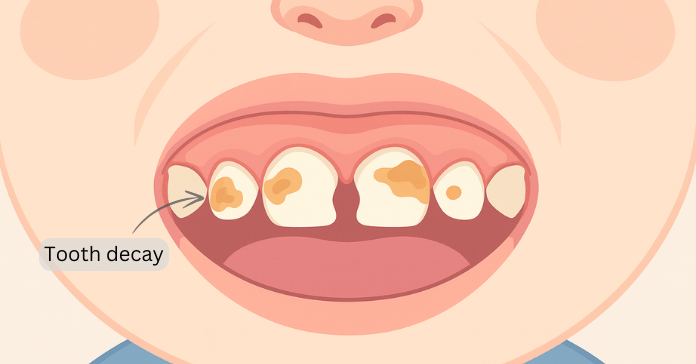
Baby bottle tooth decay is a type of early childhood dental problem that happens when a baby’s teeth are exposed to sugary liquids for long periods. It often affects the upper front teeth but can spread to other teeth if not treated. Dentists also call it nursing caries or nursing bottle caries because it usually develops when a baby is put to bed with a bottle of milk, juice, or any liquid that contains sugar. The sugar stays around the teeth for hours, feeding bacteria that cause tooth decay in infants.
Over time, this can lead to white or brown spots on the teeth, cavities in baby teeth, and even early tooth loss. Since baby teeth are important for chewing, speaking, and guiding adult teeth into place, protecting them from baby bottle tooth decay is an essential step in giving your child a lifetime of good dental health.
What Causes Baby Bottle Tooth Decay?
Baby bottle tooth decay happens when bacteria in the mouth feed on sugars left on the teeth from milk, juice, or other sweet liquids. These bacteria turn sugar into acids, which attack the tooth enamel and cause cavities in children. Since baby teeth are softer than adult teeth, decay can occur more quickly if good oral care is not practiced. When a baby goes to sleep with a bottle or uses one frequently, saliva flow decreases, and sugar stays around the teeth for hours, increasing the risk of tooth decay. Here are some common risk factors that lead to baby bottle tooth decay:
- Putting a Baby to Bed with a Bottle: Letting your baby sleep with a bottle of juice or milk keeps sugar on the teeth for hours, causing decay.
- Frequent Snacking or Bottle Use: Giving sweetened liquids or snacks too often provides a constant food source for bacteria in the mouth.
- Poor Oral Hygiene: Not cleaning your child’s teeth or gums regularly allows bacteria and sugar to stay around the teeth, increasing the risk of decay.
- Low Amount of Fluoride Exposure: Fluoride strengthens tooth enamel. A lack of it makes your child’s teeth more likely to develop cavities.
- Sharing Pacifiers or Utensils: When parents share items with a baby, bacteria in their saliva can pass to the child’s mouth and cause problems with your child’s teeth.
Early Signs and Symptoms of Baby Bottle Tooth Decay
The earliest signs of baby bottle tooth decay often appear as faint white spots on the front teeth, which can be easy to miss if parents don’t look closely. As the condition worsens, these spots may turn into brown or black discoloration, signaling that cavities are developing. A child with baby bottle tooth decay may also show signs of discomfort, such as tooth sensitivity, fussiness, or irritability during feeding.
In more advanced cases, pain can make it difficult for the baby to chew, sleep, or even speak when teeth come in. Since baby teeth are important for guiding adult teeth and helping children chew and smile with confidence, spotting these symptoms early allows parents to seek proper dental care and help prevent tooth decay from getting worse.

Potential Complications of Baby Bottle Tooth Decay
If baby bottle tooth decay is left untreated, it can lead to several serious problems that affect both the child’s comfort and future oral health. Here are some of the main complications parents should be aware of:
- Pain and Discomfort: Cavities caused by baby bottle tooth decay can lead to sensitivity and severe toothaches, making it difficult for your child to eat or sleep.
- Infections and Swelling: Untreated decay may spread deeper into the tooth, leading to infection that can cause swelling in the gums and face, requiring urgent dental care.
- Difficulty Chewing and Eating: Damaged baby teeth may make it hard for children to chew properly, which can affect nutrition and healthy growth.
- Early Tooth Loss and Alignment Issues: If a tooth is lost too early due to decay, nearby teeth may shift out of place, affecting how permanent teeth come in later.
- Speech Development Problems: Baby teeth also help children learn how to pronounce words. Losing teeth too soon can interfere with speech development.
- Overall Oral Health Concerns: Poor dental hygiene in early years can create a lifelong increased risk for tooth decay and other oral health issues.
When to See a Pediatric Dentist?
A pediatric dentist plays an important role in protecting your child’s oral health and preventing baby bottle tooth decay. Dentists can diagnose decay by examining the teeth for white or brown spots, checking for cavities, and looking at the overall condition of the gums and enamel. In some cases, they may use special dental tools or X-rays to see how far the decay has spread. Early visits allow dentists to guide parents on proper oral care and reduce the risk of serious problems later.
You should take your child to a pediatric dentist if:
- Your child’s first tooth appears.
- You notice white spots, brown spots, or discoloration on the teeth.
- Your baby shows pain, fussiness, or difficulty feeding.
- A tooth looks chipped or broken due to decay.
- There is swelling or infection around the gums.
- Your child has not had a dental checkup by their first birthday.
Regular dental visits not only help detect baby bottle tooth decay early but also set the foundation for a lifetime of good oral health.
Treatment Options for Baby Bottle Tooth Decay
If your baby shows signs of baby bottle tooth decay, it is very important to visit a pediatric dentist as soon as possible. Early dental visits can prevent small cavities from turning into bigger problems. Treatment depends on how severe the decay is and how much damage has already happened to your child’s primary teeth.
- Fluoride Varnish for Early Decay: The dentist may apply a thin layer of fluoride varnish on the affected teeth. This helps stop early cavities from getting worse and strengthens the enamel of your baby’s teeth.
- Dental Fillings for Small Cavities: If the decay has created small holes in the teeth, the dentist can clean out the cavity and place a filling. This restores the tooth and prevents further damage, allowing your child to use their teeth to chew and speak normally.
- Pulpotomy or Pulpectomy for Deeper Decay: When the decay reaches the inner pulp of the tooth, a pulpotomy (partial pulp removal) or a pulpectomy (complete pulp removal) may be needed. These treatments relieve pain, remove infection, and save the primary tooth until the permanent teeth come.
- Stainless Steel Crown for Weak Teeth: If the tooth is badly damaged, the dentist may place a stainless steel crown. This protects the tooth, restores chewing function, and keeps space for the permanent tooth that will erupt later.
- Tooth Extraction and Space Maintainer: In severe cases where the tooth cannot be saved, extraction might be necessary. To prevent nearby teeth from shifting, the dentist can place a space maintainer. This ensures there is enough room for the permanent teeth to come in properly.
Seeing a pediatric dentist early ensures that baby bottle tooth decay is treated at the right time. Following the dentist’s advice will help protect your child’s primary teeth, which are essential for chewing, speaking, and guiding the proper growth of adult teeth.
How to Prevent Baby Bottle Tooth Decay?
Preventing baby bottle tooth decay starts with good oral care from the very beginning. Even before baby teeth come in, parents should gently wipe the gums with a clean gauze pad or soft cloth after feedings to remove sugars and bacteria.
Once the first tooth appears, brushing twice a day with a small smear of fluoride toothpaste helps keep teeth strong and healthy. It’s also important to avoid putting a baby to sleep with a bottle, since keeping a milk or juice bottle in the crib allows sugar to stay on the teeth for hours and increases the risk of decay.
Limiting prolonged bottle use and switching to a cup as your child grows can further reduce the risk. With simple daily habits, parents can protect their child’s smile and set the foundation for a lifetime of healthy teeth.
Feeding and Bottle Habits to Reduce Risk
Healthy feeding habits play an important role in lowering the chances of baby bottle tooth decay. Experts in dentistry recommend helping your child switch from a bottle to a cup around 12 months of age, since prolonged bottle use keeps liquids in the mouth longer and increases the risk of cavities.
Parents should also avoid filling bottles with honey, juice, or sweetened milk, because these sugary drinks coat the teeth and give bacteria the fuel they need to cause decay. Instead, it’s best to offer plain water between meals and reserve milk for mealtimes. By making these simple changes, you can reduce the risk of decay, protect your baby’s teeth, and encourage a lifetime of healthy oral habits.
Importance of the First Dental Visit
The first dental visit is an important step in protecting your child from baby bottle tooth decay and building healthy habits early. The American Dental Association recommends scheduling this visit by the child’s first birthday or when the first tooth appears. During the appointment, the dentist will gently check your baby’s teeth, gums, and jaw to make sure everything is developing normally.
Parents can also learn more about dental care, including how to clean their child’s teeth, avoid common risks like bottles with liquids at bedtime, and reduce the chance of cavities. This early visit helps detect any problems before they become serious and gives parents the guidance they need to care for their baby’s smile with confidence.
Conclusion
Baby bottle tooth decay may start small, but it can quickly lead to pain, infections, and long-term problems with your child’s oral health. From the early signs like white or brown spots on the teeth to more serious issues such as difficulty chewing, speech delays, or early tooth loss, the effects can be significant if not addressed in time. The good news is that this condition is preventable with proper care and awareness.
Simple steps like cleaning your baby’s gums before the first tooth appears, brushing with fluoride toothpaste once teeth come in, and avoiding bottles filled with juice or sweetened milk at bedtime can make a big difference. Regular dental visits, ideally by your child’s first birthday, allow dentists to spot early signs of decay and guide parents on the best ways to care for their baby’s teeth.
By practicing healthy feeding habits, building daily oral care routines, and seeking professional advice when needed, you can protect your child’s smile and set the foundation for a lifetime of good oral health. Taking action early ensures that your child not only keeps their baby teeth strong but also grows with the confidence of a healthy, happy smile.
