If the backs of your teeth feel fuzzy, rough, or coated, you may be feeling plaque or tartar. Plaque on the back of teeth is common because these surfaces are easy to miss while brushing. Soft plaque can usually be removed with careful brushing and cleaning between the teeth. Once it hardens into tartar, however, a dentist or dental hygienist must remove it.
The buildup often appears behind the lower front teeth, along the gumline, between teeth, or around crowded teeth and dental work. Its color and texture can offer clues: plaque is usually soft and sticky, while tartar feels hard and firmly attached. If the area remains rough after careful cleaning, a dentist can determine whether it is tartar, stain, or another change.
Removing soft plaque each day helps lower the risk of cavities, bleeding gums, bad breath, and gum disease. If the deposit stays after thorough cleaning, or your gums are swollen, sore, or bleeding, arrange a dental check. The first step is learning what the buildup is and why the back surfaces of teeth collect it so easily.
Is Plaque on Back of Teeth Actually Plaque or Tartar?
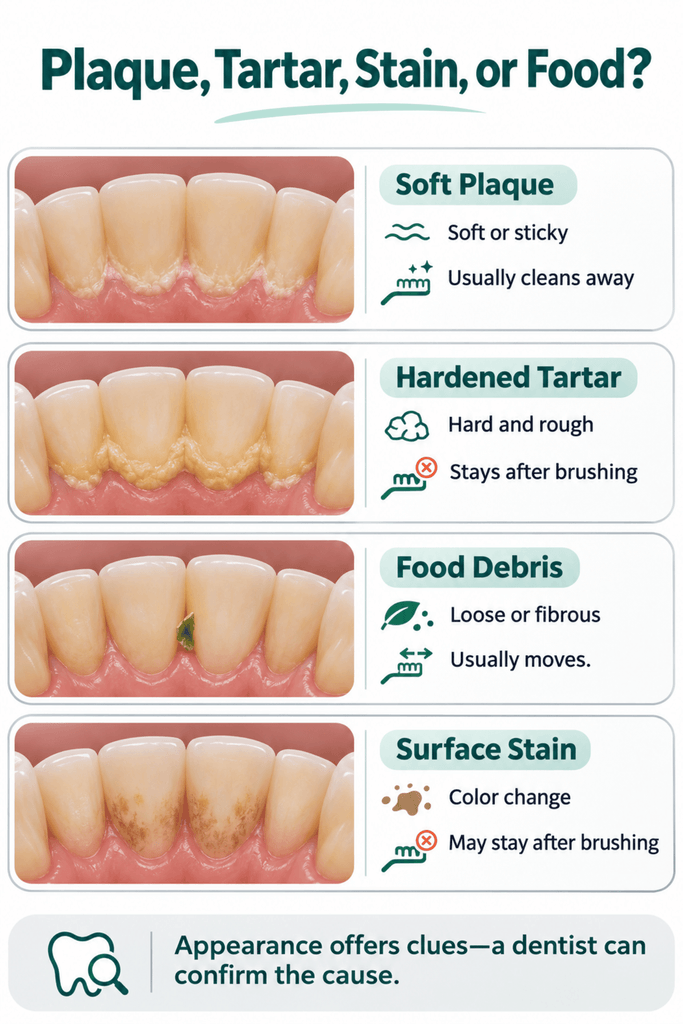
Plaque on the back of teeth is not always easy to see. You may notice a fuzzy feeling, a rough edge, or a yellow area when you look in a mirror. Texture, color, and response to cleaning can offer clues, but they cannot confirm the cause.
| Finding | Usual Texture | Possible Color | Response to Home Cleaning | What to Do |
|---|---|---|---|---|
| Dental plaque | Soft, sticky, or fuzzy | Often colorless, pale, or slightly yellow | Usually comes away with thorough brushing and interdental cleaning | Improve daily cleaning and check whether the surface becomes smooth |
| Tartar or calculus | Hard, rough, or crust-like | White, cream, yellow, brown, or darker | Remains firmly attached after brushing and flossing | Arrange professional removal |
| Food debris | Soft or fibrous | Depends on the food | Often moves with rinsing, brushing, or flossing | Clean gently and check whether anything remains |
| Surface stain | Usually smooth, but may cover rough tartar | Yellow, brown, gray, or black | May not come away with normal brushing | Ask a dentist to identify the stain and rule out decay or tartar |
Plaque is a soft bacterial film. Tartar is plaque that has absorbed minerals and hardened on the tooth surface. A rough patch alone cannot confirm whether the buildup is plaque or tartar, so do not try to scrape it off with a sharp tool.
Why Plaque Builds Up Behind the Teeth
Dental plaque forms every day as bacteria collect in a sticky film on your teeth. The inner surfaces can be difficult to see and reach, so plaque may remain there even when the front surfaces look clean.
Common reasons for plaque buildup on the back of teeth include:
- Limited Visibility: It is easy to rush past a surface that you cannot see clearly in a bathroom mirror.
- Brush Position: Holding the brush horizontally may leave plaque behind the lower front teeth or the last molars.
- The Gumline: Plaque often collects where each tooth meets the gum because the area requires careful, gentle brushing.
- Crowded Teeth: Overlapping or rotated teeth create narrow spaces that ordinary brush bristles may not reach.
- Dental Appliances: Braces, fixed retainers, bridges, and removable appliances add small areas where plaque and food can collect.
- Irregular Surfaces: Rough filling edges, damaged restorations, or natural grooves can make plaque removal more difficult.
Plaque buildup does not always mean that someone has poor oral hygiene. Anatomy, dental work, manual dexterity, and the cleaning tools used can all affect how much plaque remains.
Why Lower Front Teeth Collect Buildup Quickly
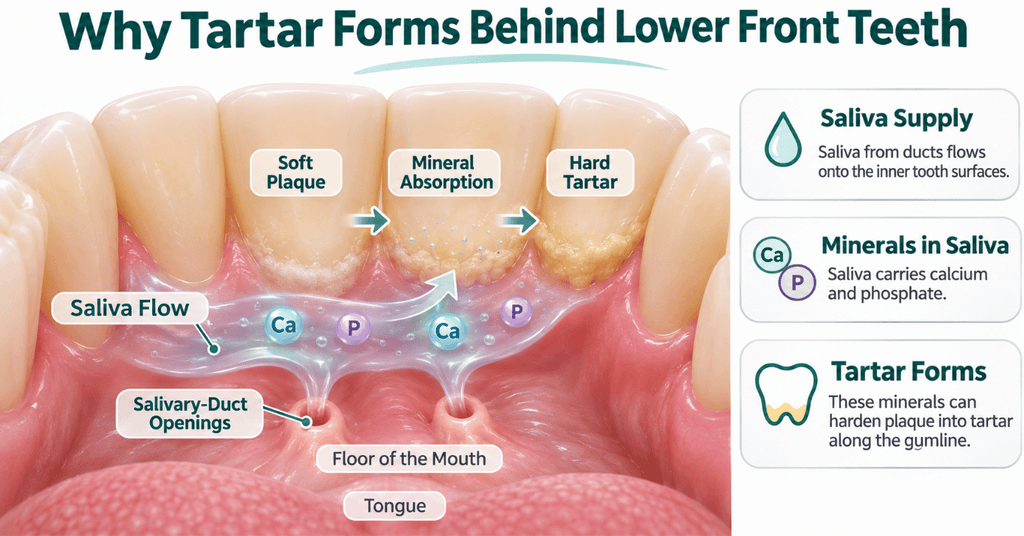
The ducts from the submandibular and sublingual salivary glands open beneath the tongue, close to the inner surfaces of the lower front teeth. Saliva contains calcium, phosphate, and other minerals that help protect tooth enamel. However, these minerals can also enter plaque that was not removed and contribute to tartar formation.
This helps explain why tartar buildup is common behind the lower incisors, even in people who brush regularly. A peer-reviewed review of dental-calculus formation and its common locations reports that deposits often form on tooth surfaces close to salivary-duct openings.
Other Places Plaque Commonly Hides
The lower front teeth are not the only difficult area. Different locations may require different tools or brush positions.
- Back Molars: The last tooth on each side can be hard to reach, especially on the cheek-facing and rear surfaces.
- Between Teeth: Brush bristles cannot fully clean tight contact areas, so floss or another interdental cleaner may be needed.
- Along the Gumline: Plaque may remain if the brush passes over the tooth without reaching the edge of the gum.
- Crowded Areas: Rotated and overlapping teeth may need a smaller brush head or a single-tufted brush.
- Around Braces and Retainers: Wires and brackets create extra surfaces that require careful daily cleaning.
- Around Bridges and Implants: These restorations may need floss threaders, interdental brushes, or tools recommended by a dental professional.
What Plaque and Tartar Can Do to Teeth and Gums
Bacteria in plaque use sugars and starches from food and drinks. They produce acids that remove minerals from enamel and may eventually contribute to tooth decay. Plaque along the gumline can also irritate the gums, making them red, swollen, or more likely to bleed.
Tartar has a rough surface that can hold new plaque close to the gums. Not every area of plaque or tartar will lead to advanced disease, but leaving buildup in place makes effective oral hygiene more difficult. The CDC’s overview of periodontal disease explains how plaque-related inflammation can progress when it is not controlled.
The possible progression includes:
- New Plaque: A sticky bacterial film forms on the surfaces of the teeth.
- Tartar Formation: Plaque that remains may absorb minerals and harden.
- Gingivitis: The gums can become inflamed, red, swollen, or prone to bleeding.
- Periodontitis: In susceptible people, ongoing inflammation may damage the tissues and bone supporting the teeth.
- Advanced Damage: Severe untreated periodontitis can contribute to loose teeth and eventual tooth loss.
Gingivitis does not always progress to periodontitis. Removing plaque, treating tartar, and managing personal risk factors can help protect the teeth and gums.
How to Remove Soft Plaque From the Back of Teeth
Soft plaque can usually be removed by physically disturbing the sticky film. This requires daily brushing and cleaning between teeth rather than harsh pressure, sharp instruments, or abrasive home remedies.
Brush the Inner Tooth Surfaces Effectively
Use a small-headed, soft-bristled toothbrush and fluoride toothpaste. A manual or powered brush can work when it reaches every tooth surface.
- Divide Your Mouth Into Sections: Clean the upper right, upper left, lower right, and lower left areas so that no section is rushed.
- Clean Every Surface: Brush the outer, chewing, and inner surfaces rather than focusing only on the teeth visible when you smile.
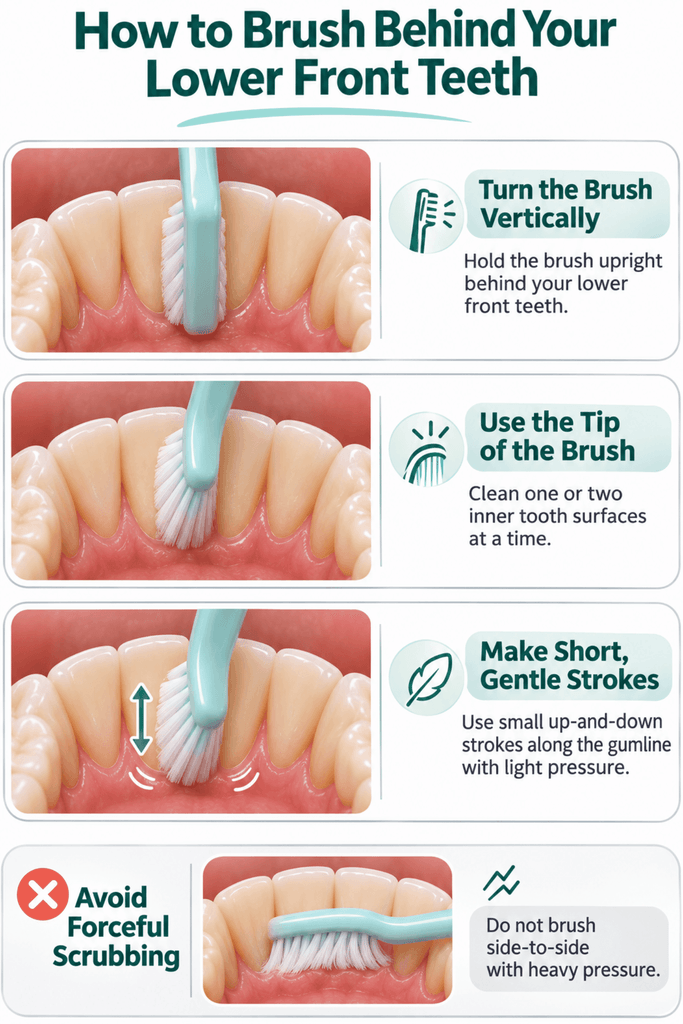
- Turn the Brush Vertically: Behind the lower front teeth, hold the brush upright and use the tip of the brush with short, gentle strokes.
- Follow the Gumline: Angle the bristles toward the point where the teeth meet the gums and use small movements. Do not press hard enough to bend the bristles widely.
- Brush Twice a Day: Brush for about two minutes with fluoride toothpaste, including before bed. Give extra attention to areas where plaque keeps returning.
Brushing harder does not remove tartar and may irritate the gums or wear exposed root surfaces. Better positioning and enough cleaning time matter more than force.
Clean Between Teeth and Around Dental Work
Cleaning between the teeth helps remove plaque where a toothbrush cannot reach. The best device depends on the size of the space, dental work, and how easily you can handle the tool.
- Floss Tight Contacts: Curve the floss around the side of each tooth in a C shape and move it gently beneath the gum edge. Avoid snapping it into the gums.
- Use Interdental Brushes Where They Fit: These small brushes may work well in open spaces, around braces, or beneath some bridges. The wire should not scrape the tooth.
- Consider a Water Flosser: A water flosser may help remove food and control soft plaque in difficult areas. It does not remove hardened tartar.
- Clean Beneath Fixed Retainers: A floss threader, special retainer floss, or a suitably sized interdental brush can help reach beneath the wire.
- Ask for a Demonstration: A dentist or hygienist can select an appropriate tool and show you how to use it without injuring the gums.
The National Institute of Dental and Craniofacial Research’s oral-hygiene guidance recommends regular interdental cleaning and describes several options, including floss, small brushes, picks, and water flossers.
Check for Areas You Keep Missing
A dental mirror can help you inspect the inner surfaces of your teeth. Plaque-disclosing tablets or solutions can temporarily color plaque that remains after brushing, making missed areas easier to find.
Use the product according to its label, rinse as directed, and inspect the colored areas under good light. Clean those surfaces again with gentle brushing and interdental care. The dye shows where plaque remains, but it cannot diagnose tartar, cavities, or gum disease.
Why Brushing Cannot Remove Hardened Tartar
Plaque is a soft biofilm, so brushing and interdental cleaning can disturb it. When plaque mineralizes, it becomes tartar—a hard deposit that bonds firmly to the tooth. This hardened buildup may develop above the gumline or on root surfaces beneath the gums.
Toothpaste, mouthwash, floss, and vigorous brushing cannot safely lift established tartar. These methods can help control new plaque around the deposit, but a dentist or dental hygienist must use professional instruments to remove tartar.
Why Scraping Tartar at Home Is Unsafe
Dental instruments are shaped for specific tooth surfaces and require controlled pressure, good lighting, and clinical training. Trying to copy professional scaling at home can injure the gums, scratch root surfaces, or push bacteria beneath the gumline.
Avoid the following methods:
- Home Dental Scalers: A sharp metal scaler may slip and cut the gums, especially behind teeth where visibility is poor.
- Fingernails or Household Objects: These do not remove tartar safely and may introduce bacteria or injure the tissues.
- Acidic Remedies: Lemon juice, vinegar, and similar acids can soften or erode tooth enamel rather than dissolve tartar safely.
- Abrasive Powders: Aggressive rubbing with abrasive materials may damage exposed roots, gums, or dental restorations.
- Hard Scrubbing: Extra pressure does not turn tartar back into removable plaque and may cause soreness or wear.
Deposits below the gumline cannot be seen or assessed reliably at home. A dental examination is needed to determine where the tartar ends and whether gum disease is present.
How a Dental Professional Removes Tartar
Professional removal may be part of a routine cleaning or periodontal treatment. The appropriate procedure depends on the amount and location of the deposit and the condition of the gums.
- Dental Examination: The dentist or hygienist checks the teeth and gums and may measure the spaces around the teeth. X-rays may be recommended if there are signs of bone loss, decay, or another problem.
- Scaling: Hand instruments or an ultrasonic scaler loosen and remove plaque and tartar from accessible tooth surfaces.
- Interdental Cleaning and Polishing: Remaining plaque and surface stains may be removed, and the teeth may be polished when appropriate.
- Periodontal Treatment When Needed: If tartar and inflammation extend below the gumline, the dentist may recommend deeper cleaning, often called scaling and root planing or root-surface debridement.
Professional cleaning removes deposits; it does not replace daily plaque removal. New plaque begins forming again, so home care remains essential after treatment.
When Plaque Buildup Needs Dental Care
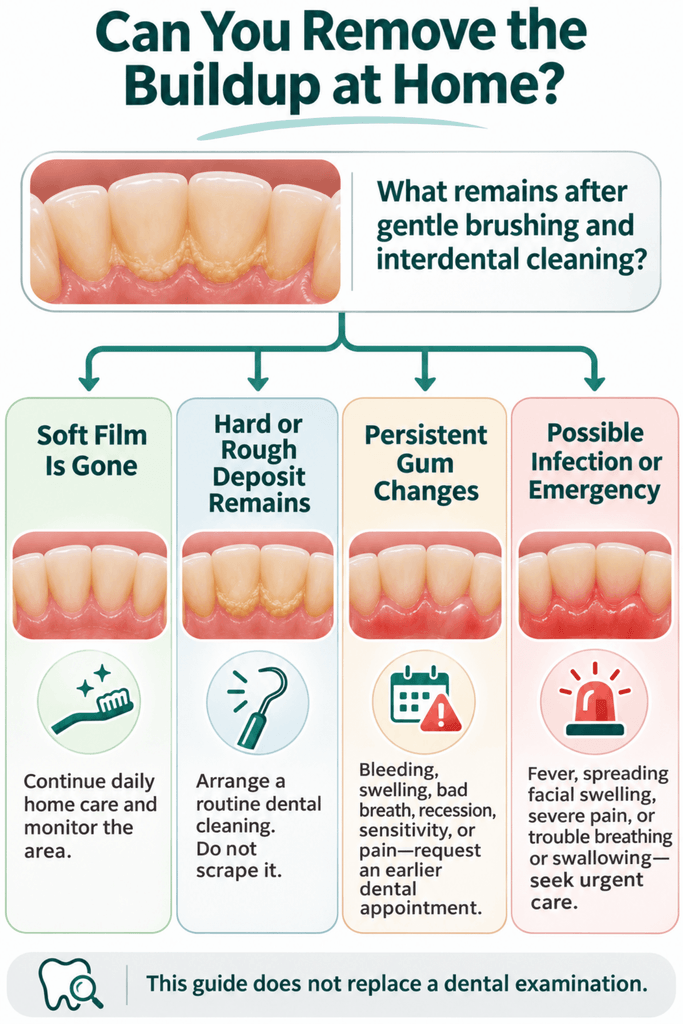
Soft plaque that comes away with careful cleaning can usually be managed through better daily oral hygiene. Hard buildup that remains attached needs professional removal, even when it is not painful.
Use these general care paths:
- Continue Home Care: The film is soft, improves with brushing and interdental cleaning, and is not accompanied by persistent gum changes.
- Arrange a Routine Visit: The deposit feels hard, returns repeatedly, or has not been assessed by a dental professional.
- Request an Earlier Appointment: The buildup occurs with persistent bleeding, swelling, bad breath, recession, sensitivity, or pain.
- Seek Urgent Help: Severe pain, fever, spreading facial swelling, or difficulty breathing or swallowing may indicate an infection rather than simple plaque buildup. The NHS guidance on dental-abscess warning signs identifies breathing or swallowing difficulty and major mouth swelling as reasons for emergency care.
Common Findings That Are Usually Not Urgent
The following findings commonly allow time for a routine dental appointment, although a professional still needs to confirm the cause:
- Soft Film That Brushes Away: This is more consistent with removable plaque than tartar.
- Painless Mild Staining: Surface stains are not usually urgent, but they can hide or cover tartar.
- Recurring Lower-Front Buildup: This area commonly collects tartar because of its location near salivary-duct openings.
- A Rough Deposit Without Pain: A hard deposit should be removed professionally, but it is not usually an emergency by itself.
- Food Trapped Around Dental Work: Clean the area gently and arrange a check if food repeatedly catches in the same place.
Signs to Arrange a Dental Appointment
Book a dental examination if you notice:
- Hard Buildup: The deposit remains after thorough brushing and interdental cleaning.
- Persistent Bleeding: The gums continue to bleed during gentle cleaning rather than improving.
- Red or Swollen Gums: Ongoing inflammation may indicate gingivitis or another problem.
- Persistent Bad Breath or Taste: Odor that remains despite cleaning may come from plaque, gum disease, decay, dry mouth, or another cause.
- Gum Recession: The tooth may look longer, or a root surface may become visible or sensitive.
- Pain or Sensitivity: Discomfort can have several causes and should not be blamed on plaque without an examination.
- Pus Near a Tooth: This may indicate an infection and needs prompt dental care.
- Loose Teeth or Bite Changes: These findings require professional assessment and should not be treated with home plaque remedies.
How to Prevent Plaque and Tartar From Returning
You cannot stop dental plaque from forming, but removing it consistently can help prevent tartar from building up. Focus on consistent technique rather than harsh cleaning.
- Brush Twice Daily: Use fluoride toothpaste for about two minutes, reaching the inner, outer, and chewing surfaces of every tooth.
- Clean Between Teeth Daily: Use floss, interdental brushes, a water flosser, or another tool suited to your teeth and dental work.
- Target High-Risk Areas: Spend extra time behind the lower front teeth, along the gumline, and around the last molars.
- Care for Appliances: Clean beneath retainers, around braces, and under bridges using tools recommended by your dental team.
- Check Your Technique: A mirror or occasional plaque-disclosing product can show whether the same areas are being missed.
- Use Mouthwash Appropriately: A therapeutic mouthrinse may support plaque or gingivitis control for some people, but it does not replace brushing and interdental cleaning. The American Dental Association’s clinical information about therapeutic mouthrinses explains their possible roles and limitations.
- Replace Worn Brush Heads: Change the toothbrush or powered brush head when its bristles become worn or splayed.
- Follow a Personal Dental Schedule: The right interval depends on current disease, previous cavities or gum disease, tartar formation, medical factors, and cleaning ability. NICE recommendations for risk-based dental recall intervals support tailoring follow-up to the individual rather than using one schedule for everyone.
Common Questions About Plaque on Back of Teeth
Why Does Plaque Keep Returning Even Though I Brush Every Day?
Plaque forms every day, so some return is expected. Buildup may remain if the brush misses inner surfaces, crowded teeth, the gumline, or areas around dental work. Some people also form tartar more readily than others. A hygienist can show you where plaque remains and adjust your cleaning technique without assuming that you neglect your teeth.
What Should I Do If a Piece of Tartar Breaks Off Behind My Teeth?
Do not pull or scrape at the remaining deposit. The area may feel sharp because part of the tartar remains or because the newly exposed tooth surface feels different. Rinse gently, continue normal brushing, and arrange a dental examination so the remaining tartar and the tooth beneath it can be checked safely.
Can Mouthwash Remove Plaque From the Back of Teeth?
Mouthwash may help reduce bacteria or support plaque control when it contains an appropriate active ingredient. However, it cannot replace the physical action of brushing and cleaning between teeth. Mouthwash also cannot detach tartar that has bonded to the tooth, so hard buildup still requires professional removal.
Can Plaque Behind My Teeth Cause Bad Breath or a Bad Taste?
Yes. Plaque bacteria and trapped food can release unpleasant-smelling substances, while inflamed gums may contribute to a bad taste. However, persistent odor can also come from decay, dry mouth, tongue coating, infection, or non-dental conditions. Seek a dental assessment if better cleaning does not improve it.
How Do I Control Plaque Around a Permanent Retainer?
Brush above and below the wire, then clean between the teeth with a floss threader, retainer floss, or a suitably sized interdental brush. A water flosser may provide additional help but may not replace other cleaning for everyone. Ask your dentist or hygienist to select tools that fit without bending the wire or injuring the gums.
Is an Electric Toothbrush Better for Plaque Behind the Teeth?
Both manual and electric toothbrushes can remove plaque when used thoroughly. A powered brush may make consistent movement and timing easier, particularly for someone with limited dexterity. It still needs to be guided behind the lower front teeth and around the last molars; the brush cannot clean a surface it never reaches.
Why Do My Teeth Feel Different After Tartar Removal?
Teeth may feel smoother, more separated, or temporarily sensitive after tartar is removed because the deposit had filled spaces or covered part of the tooth. These changes do not mean the cleaning removed healthy enamel. Contact the dental office if you notice persistent roughness, worsening pain, swelling, or sensitivity that concerns you.
Bottom Line
Soft plaque on the back of teeth can usually be removed with careful brushing and daily interdental cleaning. Once plaque hardens into tartar, toothpaste, floss, mouthwash, and home scraping cannot remove it safely.
Arrange a dental examination when buildup stays firmly attached, returns quickly, or occurs with persistent bleeding, swelling, bad breath, recession, or pain. Professional removal combined with good oral hygiene can support your oral health and help keep your teeth and gums healthy.
