When a tooth is lost, the surrounding jawbone can begin to shrink or deteriorate, making it difficult to replace the missing tooth with a dental implant. A bone graft for tooth replacement helps rebuild that lost bone, creating a strong, healthy foundation for future dental treatments.
This procedure involves placing bone material, natural or synthetic, in the area where bone has been lost. Over time, your body naturally grows new bone around it, restoring proper bone density and structure. Whether the graft uses synthetic bone, autogenous bone, or donor bone, the goal is the same: to help your jaw regain its natural shape and support for implants or other restorations.
In this blog post, you’ll learn exactly how a dental bone graft works, the different types of grafting procedures, costs, healing stages, and what to expect before and after the procedure. Let’s explore why bone grafting is one of the most essential steps in restoring a confident, natural-looking smile.
What Is a Dental Bone Graft?
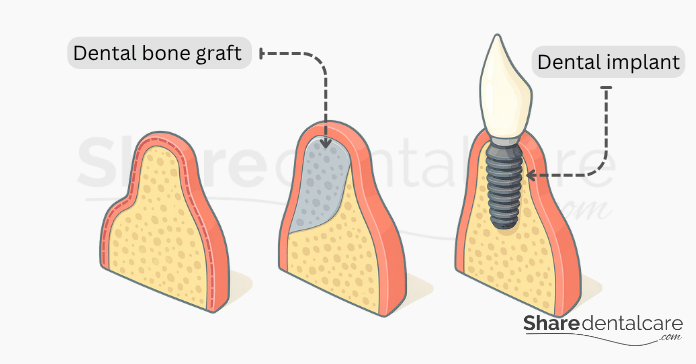
A dental bone graft is a surgical procedure that restores or rebuilds lost bone in the jaw. It is commonly performed when a patient has experienced bone loss due to tooth loss, trauma, or gum disease. During the procedure, a dentist or oral surgeon places bone graft material, which may come from your own body, a donor, or a synthetic source, into the area where bone is missing. Over time, this bone graft material encourages the growth of new bone tissue, strengthening the jaw and improving its ability to support teeth or dental implants.
Beyond rebuilding bone, a bone graft for tooth replacement plays a crucial role in maintaining healthy jawbone structure. Without enough bone in your jaw, it can be difficult or even impossible to support an implant. The graft provides a scaffold for new bone growth, allowing your natural bone to regenerate and preventing further deterioration of the jawbone.
Why You Might Need a Dental Bone Graft?
You may need a bone graft for a tooth implant or other restorative dental treatments if your jawbone is too thin or weak to support them. Several conditions and situations can lead to bone loss and make an oral bone graft necessary:
- Tooth Loss: After a tooth is lost, the bone in your jaw begins to resorb (shrink) because it no longer receives stimulation from chewing. A bone graft can restore this missing bone to prepare for an implant.
- Periodontal (Gum) Disease: Advanced gum infection can destroy the bone structure around teeth, requiring a bone graft for periodontitis to stabilize the area.
- Trauma or Injury: Accidents or injuries can cause bone loss in the jaw, especially if a tooth or part of the bone is fractured.
- Developmental Defects: Some people naturally have less bone density in certain areas and may need a graft before receiving restorative work.
- Preparing for Dentures or Implants: Patients getting dental implants or full dentures often need a bone graft procedure to ensure a strong foundation.
How Does a Bone Graft for a Tooth Work?
A bone graft for a tooth works by providing a scaffold for new bone formation. Once the bone graft material is placed, your body begins to form new bone tissue around it. This biological process allows your natural bone to integrate with the synthetic bone or donor bone, gradually replacing it as new bone grows. Over several months, the grafted area strengthens and becomes part of your existing bone, creating a stable base for future dental implants.
Step-by-Step Dental Bone Graft Procedure
The dental bone graft procedure usually involves several stages: from diagnosis and planning to the surgical procedure and recovery. Your oral surgeon or dentist will first assess the amount of bone needed and then perform a surgical procedure to place the graft. The healing process takes several months, during which the graft integrates with your natural bone before an implant can be added.
Preparation and Planning
Before surgery, your dentist performs a full diagnostic assessment, including X-rays and 3D scans (CBCT), to evaluate bone loss and measure the quantity of bone required. This helps determine the type of bone graft, whether autogenous, allograft, xenograft, or synthetic, based on your specific needs. Careful planning ensures there’s enough bone to support future dental implants.
The Bone Grafting Procedure
During the surgical procedure, local anesthesia or sedation is administered to ensure comfort. The oral surgeon makes a small incision in the gum to expose the jawbone, places the bone graft material into the area, and then carefully secures it. The site is closed with sutures, and the graft begins to stimulate new bone growth. The goal is to rebuild healthy bone that can support dental implants and other restorative treatments.

Healing and Bone Formation
The healing process following a bone graft is gradual. Over the next few months, the bone graft acts as a scaffold while your natural bone grows into it. Eventually, the new bone tissue replaces the graft, resulting in a strong, stable bone structure that’s capable of supporting a dental implant. Full bone formation may take between 3 to 6 months, depending on your health and the type of bone graft used.
Types of Dental Bone Grafts for Tooth Implant
There are several types of dental bone grafts, each suited for different situations. Choosing the right type depends on your bone loss, medical history, and personal preference:
- Autogenous Bone Graft: Uses your own bone tissue from another area of your body.
- Allograft: Uses donor bone from another human.
- Xenograft: Uses bone from an animal, often bovine (cow) in origin.
- Synthetic Bone Graft: Uses biocompatible materials that mimic natural bone.
Autogenous Bone Graft
An autogenous bone graft uses bone from your body, usually taken from the chin, hip, or another location. Because this bone graft uses your own bone, it promotes natural bone growth and reduces the risk of rejection. This type of graft is ideal for patients who require a large amount of bone to grow and provides the most reliable new bone formation.
Allograft and Xenograft Options
Allografts and xenografts are excellent alternatives when you don’t have enough bone from your body. Allografts come from donor bone, while xenografts use bone from an animal, which acts as a scaffold for new bone. Both options are thoroughly processed to ensure safety and effectiveness, making them popular for patients with bone loss in the jaw who need bone graft surgery before implant placement.
Synthetic Bone Graft Materials
Synthetic bone grafts are made from man-made materials that closely resemble natural bone. They are safe, biocompatible, and encourage new bone tissue to form naturally. These bone graft substitutes are an excellent option for patients who prefer not to use donor or animal bone. Over time, the body absorbs the synthetic material and replaces it with healthy bone.
Dental Bone Graft Cost and What Affects It
The dental bone graft cost varies depending on several factors. The type of graft, autogenous, donor, or synthetic, can significantly influence the price. Procedures that use your own bone typically cost more due to the additional surgery required. The amount of bone needed, the complexity of the bone graft procedure, and the experience of your oral surgeon also play a role in determining the total cost.
Another factor that affects cost is whether the dental bone graft is performed alone or in combination with dental implant surgery. If both procedures are done together, overall expenses may be higher. However, investing in a bone graft helps ensure long-term implant success and prevents future complications related to bone loss.
Who Are Good Candidates for Dental Bone Grafts?
Not everyone needs a bone graft, but it’s ideal for patients who meet the following conditions:
- Missing Teeth: Individuals missing one or more teeth for several months or years.
- Bone Loss: Patients with bone loss in the jaw caused by periodontal disease, trauma, or aging.
- Insufficient Bone for Implants: Those who don’t have enough bone to support a dental implant.
- Healthy Oral Tissues: Gums must be healthy and free of infection before bone graft surgery.
- Commitment to Healing: Candidates must follow post-surgery care instructions and attend follow-up visits.
Risks of a Bone Graft for Tooth Replacement
While generally safe, a dental bone graft can have minor side effects, such as swelling, bruising, or mild discomfort at the surgical site. In rare cases, infection or rejection of the graft material may occur. However, these effects of a dental bone graft are usually mild and temporary. With proper care and regular follow-up, most patients recover smoothly and achieve excellent results.
Aftercare Following Bone Graft Surgery
Proper aftercare is key to successful bone graft recovery. Here’s what to expect and how to promote healing:
- Follow Post-Op Instructions: Take prescribed medications and avoid touching the surgical site.
- Control Swelling: Use ice packs during the first 24 hours to minimize swelling.
- Soft Diet: Eat soft foods to avoid disturbing the bone graft as it heals.
- Good Oral Hygiene: Brush gently around the area and use an antimicrobial mouth rinse.
- Avoid Smoking: Smoking slows bone formation and can delay healing.
- Regular Checkups: Attend follow-up visits so your dentist can monitor new bone growth and ensure proper integration.
Alternatives and Bone Graft Substitutes
For mild cases of bone loss, non-surgical alternatives may be considered. These include regenerative materials or growth factors that stimulate new bone formation without traditional surgery. Bone graft substitutes and advanced biological therapies can sometimes help bone to grow naturally, reducing the need for a full bone graft surgery.
Conclusion
Losing a tooth doesn’t just leave a visible gap; it can also cause your jawbone to weaken over time. A bone graft is a procedure that replaces missing bone and helps your body produce new bone, creating the solid foundation needed for the placement of dental implants. Whether your dentist uses synthetic material, a piece of bone from your body, or donor bone, the goal is always the same: to restore bone strength, preserve your jaw’s natural structure, and prepare it for long-term dental health.
Every patient’s dental bone graft surgery experience can vary, depending on the type of bone graft, the extent of bone loss, and the individual healing response. But with good dental care and proper recovery, the formation of new bone can significantly increase your eligibility for dental implants and improve the stability and appearance. Most side effects of a dental bone graft, such as mild swelling or discomfort, are temporary and can be managed with professional guidance.
If you’re considering a dental implant or have experienced bone loss after tooth extraction, talk to your dentist about whether getting a dental bone graft is right for you. This procedure, which replaces missing bone, not only supports future implants but also helps maintain your facial structure and confidence. Investing in your oral health today ensures a stronger, healthier foundation for tomorrow’s smile.
