If your dental crown fell out, it’s normal to wonder if you need emergency dental care or if it can wait a few days. In most cases, a lost crown is not life-threatening, but you should not ignore it. The exposed tooth may be more sensitive, weaker, and more likely to crack or decay. Knowing what to do right away can help protect your tooth until you see your dentist.
You may have noticed the crown come loose while eating, brushing your teeth, or biting into something sticky. Sometimes there is no pain at all. Other times, you may feel sensitivity to hot or cold foods, discomfort when chewing, or worry about how the tooth looks. The reason the crown came off can vary, from worn dental cement to decay developing underneath the restoration.
The next steps depend on what symptoms you have and the condition of the tooth underneath the crown. Some situations require prompt dental attention, while others can safely wait a short time. Understanding why crowns fall out, what you can do at home, and when treatment becomes urgent can help you make the right decision for your oral health.
What Should You Do If a Dental Crown Fell Out?
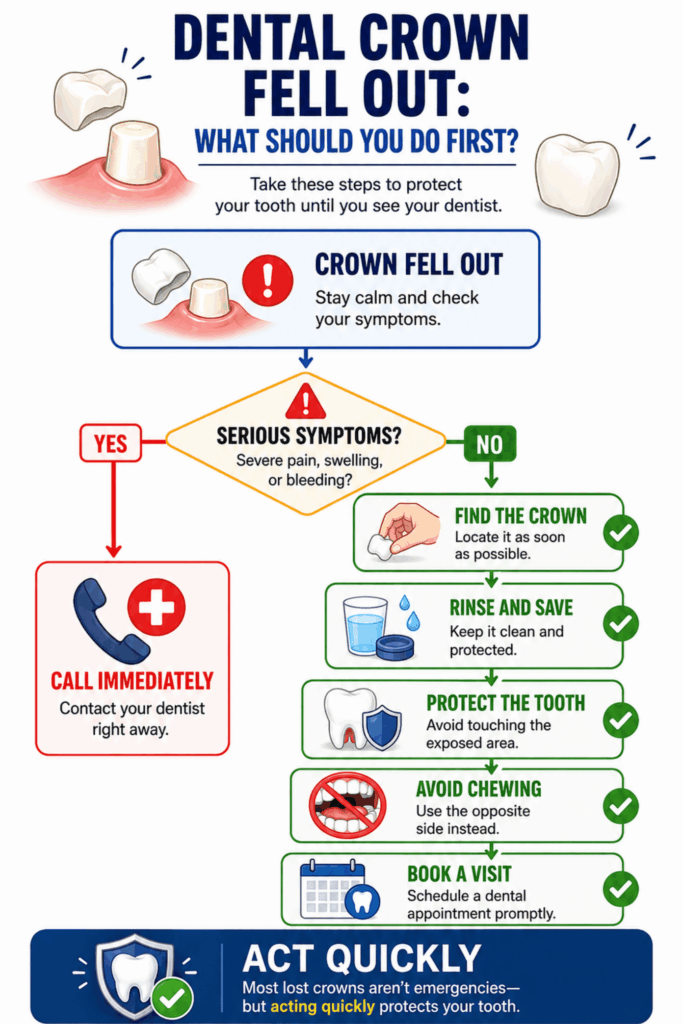
If your dental crown fell out, don’t panic. A fallen crown often feels alarming, especially if it happens while eating or brushing your teeth. The good news is that many crown emergencies can be managed safely until you can see a dentist.
Take these steps to protect the exposed tooth and improve the chances that your dentist may be able to place the crown back in place:
- Stay Calm and Don’t Panic: Losing a dental crown is rarely life-threatening. Acting carefully helps prevent additional damage.
- Retrieve the Crown: Save the crown if possible. If your crown just fell, gently remove it from your mouth and keep it in a clean container.
- Handle It Carefully: Avoid scrubbing, scraping, or trying to reshape the crown. A crown that is still intact may be reused.
- Rinse the Crown: Rinse the crown with clean water to remove food debris. Do not use harsh chemicals.
- Inspect the Tooth and Crown: Look to see whether the crown is still intact and the underlying tooth appears stable. Avoid poking the area repeatedly.
- Protect the Exposed Tooth: The tooth is vulnerable without the crown. Avoid biting directly on it until your dental appointment.
- Avoid Chewing on That Side: Use the opposite side of your mouth when eating to reduce pressure.
- Stick to Soft Foods: Choose foods that require minimal chewing and are less likely to damage your tooth.
- Keep the Area Clean: Continue brushing gently and floss carefully around the tooth and surrounding gums.
- Bring the Crown to the Dental Office: Even if you think you’ll need a new crown, bring the crown with you because your dentist may be able to reuse it.
Can You Put a Dental Crown Back in Yourself?
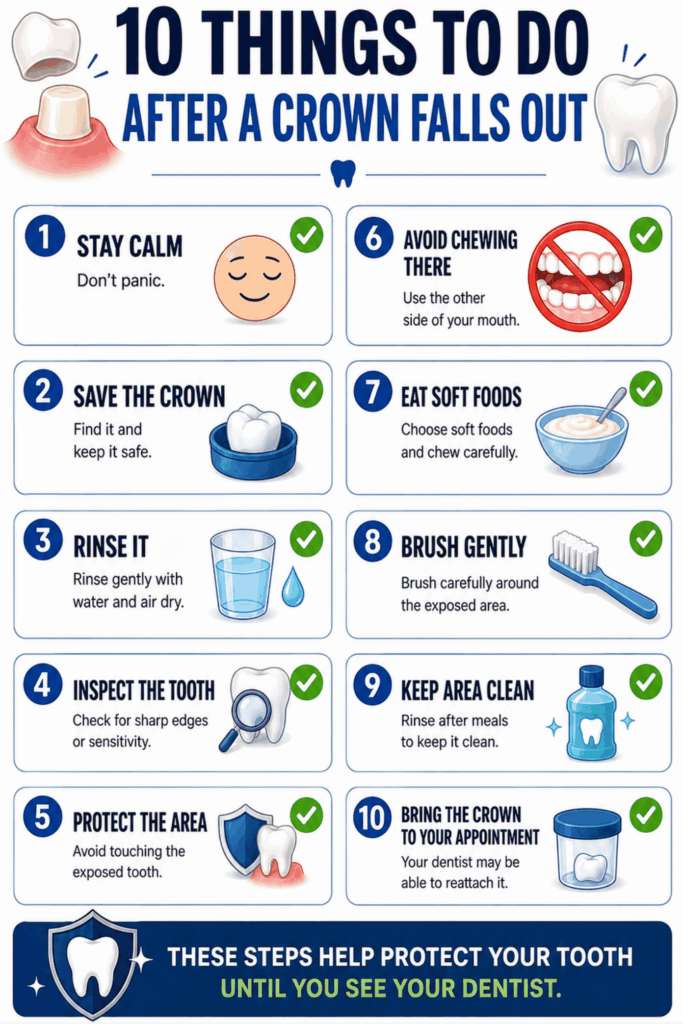
Sometimes, a temporary at-home solution may help protect the tooth until you can reach the dental office. However, putting a crown back yourself should only be considered as a short-term measure. It is not a substitute for professional dental care.
If the crown and your tooth appear intact and you cannot see a dentist immediately, you may buy temporary dental cement designed for dental use. Never force the crown into place if it doesn’t fit properly. If it feels tight, painful, or unstable, stop and contact your dentist as soon as possible.
- Use Temporary Dental Cement Only: Products made specifically for temporary dental use may help secure the crown briefly.
- Never Use Household Glue: Super glue and similar adhesives can damage your tooth and expose you to harmful chemicals.
- Avoid Forcing the Crown: If the crown doesn’t seat naturally, don’t push it into place.
- Do Not Ignore the Problem: Even if you successfully place the crown temporarily, you still need professional evaluation.
- Skip DIY Fixes if the Tooth Hurts: Pain, swelling, or a poor fit means you should avoid home replacement attempts.
Should You Call Your Dentist Right Away?
Yes. You should contact your dentist as soon as possible after losing a dental crown. While not every fallen crown is a dental emergency, delaying treatment can increase the chance of dental problems. Without the crown, the exposed tooth can become sensitive, fracture, shift position, or develop additional decay.
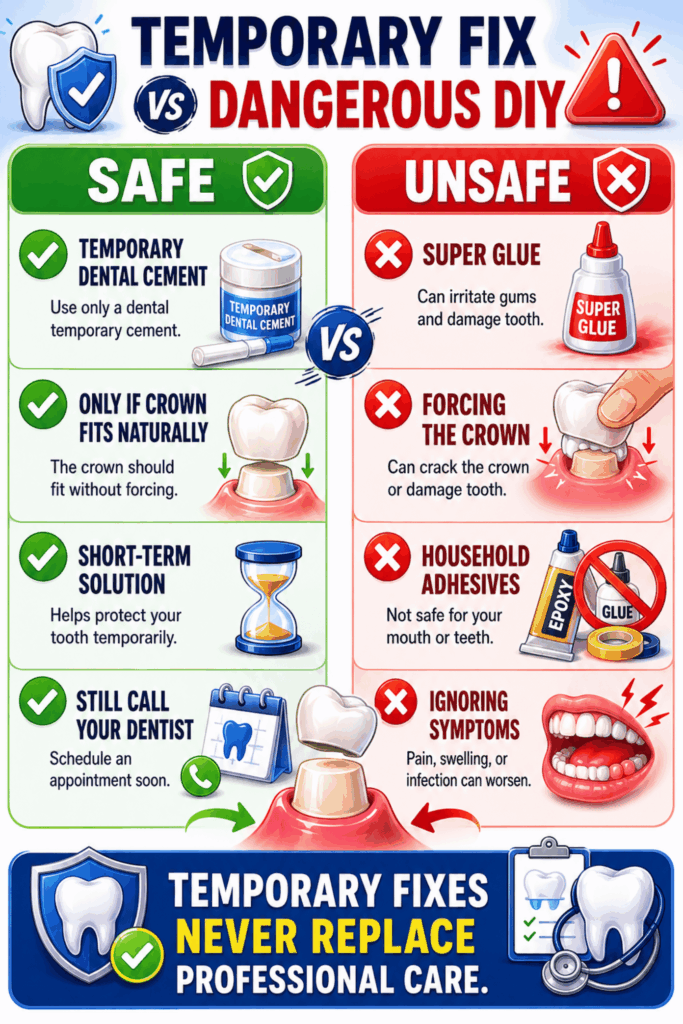
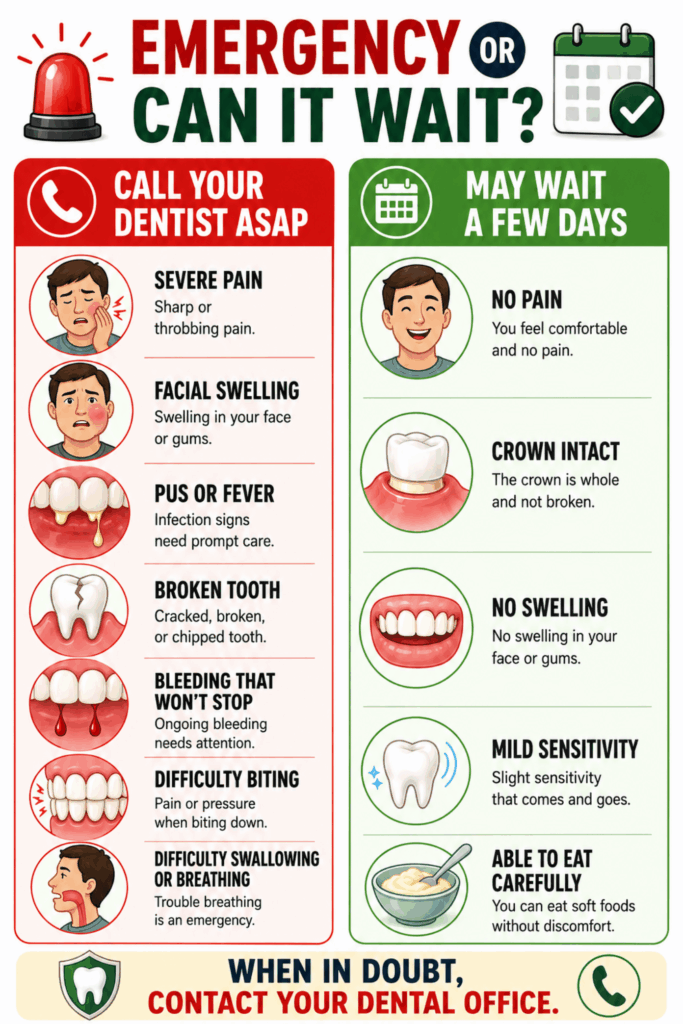
The urgency often depends on your symptoms. If the tooth doesn’t hurt and the crown is still intact, seeing a dentist within a few days may be reasonable. However, severe pain, swelling, or signs of infection deserve prompt attention because they may indicate a more serious underlying issue.
Signs You Need Urgent Dental Care
- Severe Pain: Intense or worsening pain may indicate nerve involvement or infection.
- Facial Swelling: Swelling around the gums, cheek, or jaw requires prompt evaluation.
- Bleeding That Doesn’t Stop: Persistent bleeding is not typical and should be assessed quickly.
- Signs of Infection: Fever, pus, a bad taste, or increasing swelling need urgent care.
- Difficulty Biting: Sudden changes in your bite or inability to close your teeth comfortably may signal damage.
- A Broken Tooth: Cracks or fractures involving the underlying tooth should not wait.
- Difficulty Swallowing or Breathing: Seek immediate medical attention if these symptoms occur.
Situations That Can Usually Wait a Short Time
If the dental crown fell out, the tooth doesn’t hurt, and the crown is still intact, scheduling an appointment within the next few days is often appropriate. Continue protecting the exposed tooth by avoiding chewing on that side, sticking to soft foods, and maintaining good oral hygiene until your dental visit.
Why Did the Dental Crown Fall Out?
A lost crown usually happens for a reason. Understanding the cause helps your dentist decide whether the existing crown can be reused or if additional treatment is necessary. Sometimes, the problem is simply worn dental cement. In other cases, the issue involves the crown, the tooth, or both.
Common causes include:
- Failed Dental Cement: The bonding material can weaken over time.
- Decay Under the Crown: New cavities can affect the fit and stability of the crown.
- Teeth Grinding: Grinding your teeth places repeated stress on dental work.
- Cracks or Fractures: Damage to the crown or tooth can loosen the restoration.
- Trauma: Sports injuries, falls, or accidents may dislodge a crown.
- Biting Hard Foods: Ice, hard candy, and similar foods can increase the risk.
- Normal Wear: Older crowns eventually reach the end of their lifespan.
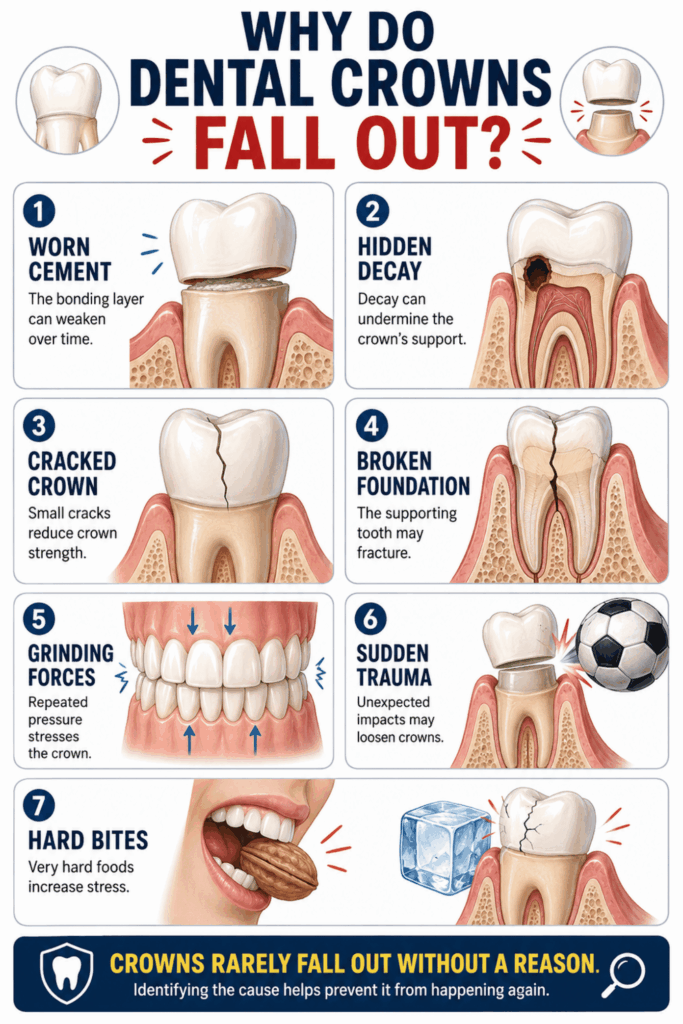
Worn or Failed Dental Cement
Dental cement is strong, but it doesn’t last forever. Over time, normal chewing forces, temperature changes, and years of use can cause the cement to weaken. As the seal breaks down, the crown may become loose and eventually detach. An old crown may simply need to be recemented or replaced after years of service.
Tooth Decay Under the Crown
Decay under the crown can gradually destroy the tooth structure supporting the restoration. As the underlying tooth changes shape, the crown no longer fits securely. Early treatment matters because untreated decay can spread deeper into the tooth, increasing the likelihood of needing more extensive dental procedures.
Damage to the Crown or Tooth
Cracks in the crown, fractures in the tooth, grinding your teeth, trauma, and repeatedly biting hard foods can all contribute to crown failure. Even small damage may alter how the crown fits. In some cases, a mouthguard to protect your crown may help prevent future problems caused by nighttime grinding.
What Happens at the Dental Appointment?
During your dental appointment, your dentist will examine both the crown and the exposed tooth. They may take X-rays to look for hidden problems such as decay under the crown, fractures, or infection affecting the root.
Your dentist will assess whether the existing crown still fits properly. They’ll evaluate the condition of the dental cement, the amount of remaining tooth structure, and whether the crown itself is damaged.
Based on these findings, your dentist will recommend the most appropriate treatment. This could involve placing the crown back in place, creating a replacement crown, treating underlying decay, or addressing nerve-related issues.
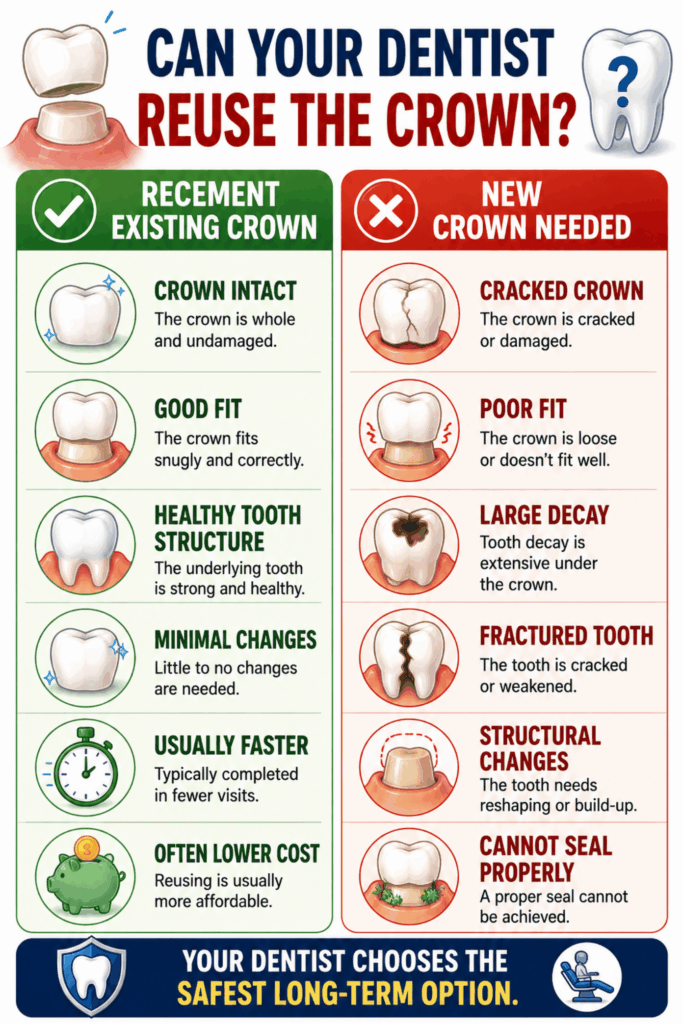
Can the Same Crown Be Recemented?
Yes, sometimes the existing crown can be reused. If the crown is still intact and the tooth has not changed significantly, your dentist may clean both surfaces thoroughly and secure the crown using fresh dental cement. This approach is often faster and less expensive than making a new crown.
When a New Crown May Be Necessary
A new crown may be recommended if the old crown is cracked, worn, misshapen, or no longer fits properly. Significant decay, fractures, or changes in the tooth structure can also make a replacement crown the better option. The goal is to restore function while protecting the tooth long-term.
Could You Need a Root Canal?
Sometimes. Deep decay, repeated crown failures, trauma, or bacterial infection can irritate the nerve inside the tooth. If the pulp becomes inflamed or infected, a root canal may be necessary before placing a permanent crown. Although this sounds intimidating, root canal treatment often relieves pain and helps save the natural tooth.
How to Protect the Tooth Until Your Appointment
- Avoid Chewing on the Affected Side: Use the opposite side of your mouth to reduce stress.
- Choose Soft Foods: Stick to soft foods that require minimal chewing.
- Brush Gently: Clean the area carefully to maintain good oral hygiene.
- Floss With Care: Avoid aggressive flossing that could irritate the exposed tooth.
- Rinse After Meals: Warm water rinses help remove food particles.
- Avoid Sticky Foods: Caramel, gum, and similar foods may worsen the problem.
- Skip Hard Foods: Ice, nuts, and hard candies can damage your tooth.
- Protect the Tooth Overnight: If you grind your teeth, discuss a mouthguard with your dentist.
- Keep the Crown Safe: Bring the crown to your appointment.
- Follow Professional Advice: Contact your dental office if symptoms change.
Can You Eat If Your Dental Crown Fell Out?
Yes, but you’ll need to make temporary adjustments. Without the crown, the tooth is more vulnerable to sensitivity and damage. Choosing the right foods can help you stay comfortable until your appointment.
- Eat Soft Foods: Yogurt, eggs, mashed potatoes, soups, and pasta are safer choices.
- Chew on the Other Side: Avoid using the side of your mouth with the exposed tooth.
- Avoid Sticky Foods: These foods can pull on temporary materials.
- Skip Crunchy Foods: Chips and nuts may damage the tooth.
- Avoid Very Hot or Cold Foods: Temperature sensitivity is common.
- Take Small Bites: Gentle chewing reduces pressure.
Will It Hurt If a Dental Crown Fell Out?
Not always. Some people notice that their dental crown fell out without any pain at all. This often happens when the crown detaches because the dental cement gradually failed. The exposed tooth may feel completely normal, especially if it previously had a root canal.
Others experience sensitivity, discomfort, or pain. The tooth may react to cold drinks, sweet foods, or pressure during chewing. Pain that worsens, swelling, or signs of infection deserve attention because they may indicate deeper problems requiring treatment.
How Much Does It Cost to Fix a Lost Crown?
The cost depends on what treatment is needed. Recementing an existing crown is generally less expensive than creating a replacement crown. Additional procedures such as treating decay, placing a buildup, or performing a root canal can increase the total cost.
Contact your dental office and insurance provider for an accurate estimate based on your situation.
- Recementing the Existing Crown: Often the least costly option.
- Replacement Crown: Costs vary by material and location.
- Diagnostic X-Rays: May be necessary to assess the tooth.
- Tooth Buildup Procedures: Additional support may increase costs.
- Root Canal Treatment: Required only in certain situations.
- Insurance Coverage: Benefits vary between plans.
Can You Prevent a Dental Crown From Falling Out Again?
- Practice Good Oral Hygiene: Brush and floss daily to reduce decay risk.
- Attend Regular Dental Visits: Regular dental checkups allow early detection of problems.
- Wear a Mouthguard: Protect your crown if you grind your teeth.
- Avoid Chewing Ice: Hard objects increase stress on restorations.
- Limit Sticky Foods: They can loosen dental work.
- Report Loose Crowns Early: A crown is loose long before it completely falls out in many cases.
- Treat Decay Promptly: Early intervention helps preserve the tooth.
- Follow Your Dentist’s Instructions: Personalized recommendations improve longevity.
Frequently Asked Questions About a Dental Crown Fell Out
How Long Can I Go Without My Crown?
You shouldn’t wait longer than necessary. While some people can safely wait within a few days, earlier treatment is preferable because the tooth is vulnerable without the crown. Delays increase the risk of damage, sensitivity, and shifting.
Can I Sleep Without My Crown?
Yes, you can sleep without the crown if it has fallen out. Avoid trying to wear a loose crown overnight because it could become dislodged. Keep the crown in a safe place and protect the tooth by avoiding pressure.
Can I Brush My Teeth Normally?
Yes, but brush gently around the exposed tooth. Use a soft-bristled toothbrush and floss carefully to avoid irritating the area while maintaining good oral hygiene.
What If I Swallowed the Crown?
Most swallowed crowns pass through the digestive system without causing problems. Contact a healthcare professional promptly if you develop abdominal pain, trouble breathing, persistent coughing, or other concerning symptoms.
Key Takeaways When a Dental Crown Falls Out
If your dental crown fell out, don’t panic. Retrieve the crown, protect the exposed tooth, avoid chewing on that side, and contact your dentist as soon as possible. Not every fallen crown is a dental emergency, but waiting too long can allow small problems to become larger ones.
The best outcome often depends on acting promptly. Avoid risky home fixes, recognize warning signs such as swelling or severe pain, and follow professional advice. With timely treatment, many people can have their smile back to normal while preserving their natural tooth for years to come.
