Pain that becomes stronger a few days after a tooth extraction can make you wonder if you have a dry socket and whether you can manage it at home. Some home remedies for dry socket may ease pain for a short time, but they cannot replace an examination or the treatment your dentist may provide.
Dry socket develops when the blood clot protecting the extraction site breaks down, moves, or does not form properly. Pain often starts or worsens several days after the extraction and may spread toward the ear, temple, or jaw. A bad taste or smell can also occur. However, pain alone cannot confirm the problem.
Until you receive dental advice, gentle mouth care, appropriate pain medicine, and an external compress may make you more comfortable. Other popular remedies can irritate exposed tissue or delay proper care. Knowing what helps, what to avoid, and when to contact your dentist can protect the area and help you get the right relief.
Can Home Remedies for Dry Socket Treat the Problem?
Home remedies for dry socket may ease pain for a short time, but they do not treat the exposed socket itself. Home care cannot confirm the diagnosis, remove debris trapped in the socket, or place a medicated dressing over the sensitive bone and nerves.
Call the dentist or oral surgeon who removed the tooth if you suspect dry socket. Treatment at the dental office often provides better pain relief than repeatedly trying remedies at home. Until you can be seen, gentle self-care may help you manage pain without further irritating the area.
How Can You Tell If You May Have Dry Socket?
Dry socket, also called alveolar osteitis, usually causes pain that becomes stronger instead of gradually improving during the first several days after a tooth extraction. It is more common after a lower molar or wisdom tooth is removed. However, dry socket can occur after any permanent tooth is pulled.
Possible signs include:
- Increasing Pain: Pain becomes intense, or returns after you initially started to feel better.
- Pain That Spreads: Throbbing pain may travel from the socket to your ear, temple, jaw, or neck on the same side.
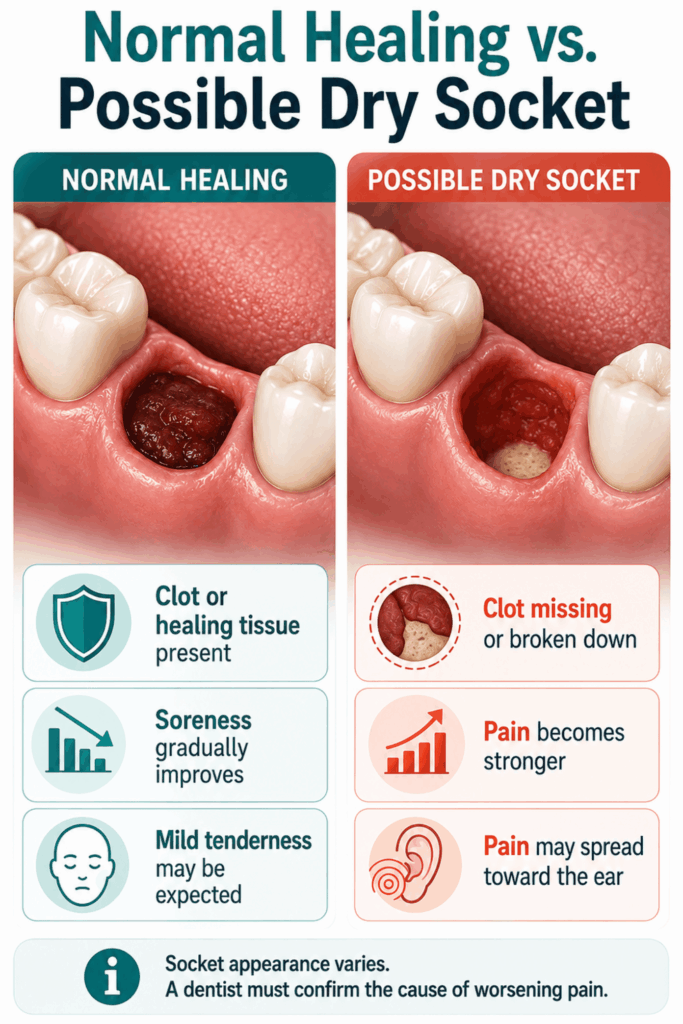
- An Empty-Looking Socket: The protective blood clot may be partly or completely missing. The socket may look like an empty hole where your tooth was removed.
- Visible Bone: Exposed bone may appear at the bottom of the socket, although it can be difficult to see without a dental examination.
- Bad Taste or Breath: Food and debris can collect in the socket, causing an unpleasant taste or odor.
- Pain That Is Hard to Control: Regular pain relievers may provide little relief, and the pain may interfere with sleep or daily activities.
Do not touch the socket or pull your cheek forcefully to inspect it. The appearance alone cannot confirm dry socket, and probing the area may cause more pain.
Normal Healing Pain vs. Dry Socket Pain
Some soreness, swelling, and tenderness are expected after a tooth extraction. The pattern of the symptoms often matters more than how the socket looks.
| Feature | Normal Healing | Possible Dry Socket |
|---|---|---|
| Pain pattern | Usually becomes easier to manage each day | Becomes stronger or returns after improving |
| Pain location | Mainly near the extraction site | May spread toward the ear, temple, or jaw |
| Socket appearance | May contain a dark clot or white or yellow healing tissue | May look partly empty or show exposed bone |
| Taste and breath | Mild changes may occur temporarily | A persistent unpleasant taste or odor may develop |
| Response to pain medicine | Often improves with recommended medicine | May remain intense despite pain medicine |
White or pale yellow tissue is often part of the natural healing process. It does not automatically mean pus, exposed bone, or infection. A dentist must consider the pain pattern, timing, clinical appearance, and other symptoms before diagnosing dry socket.
Home Remedies for Dry Socket That May Ease Pain
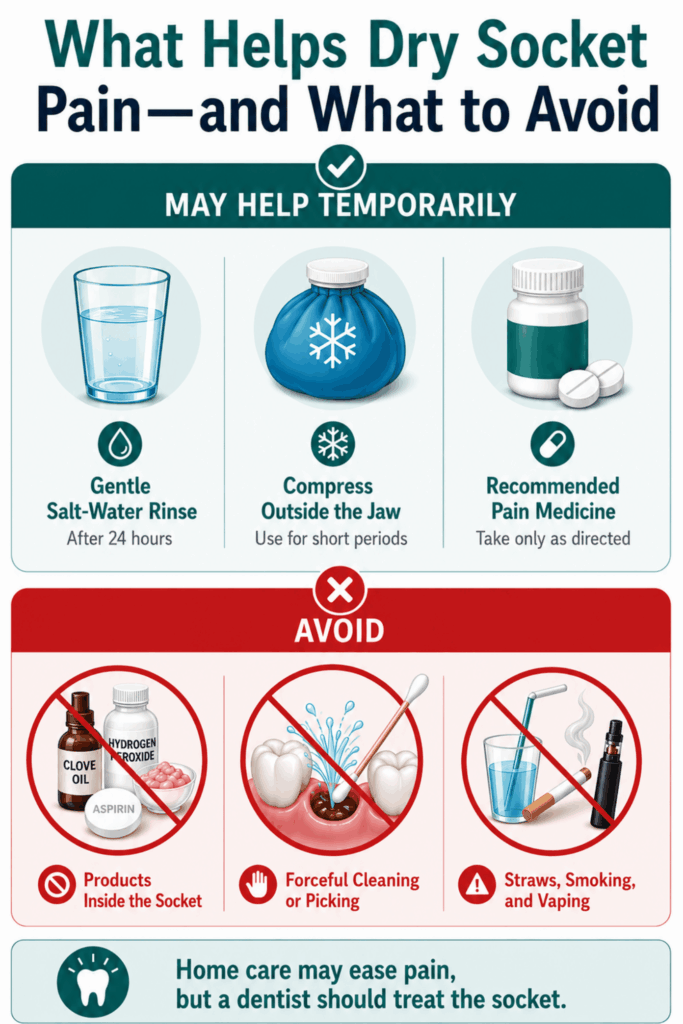
Dry socket home remedies should support comfort while you arrange dental care. They should not involve packing, scraping, or pouring concentrated products into the wound. Follow the instructions provided by your dentist because the right aftercare can vary based on when the tooth was removed, whether stitches are present, and your medical history.
Use a Gentle Warm Salt-Water Rinse
A warm salt-water rinse may help clear loose food and keep the mouth clean. Do not rinse during the first 24 hours after tooth removal unless your dentist tells you to do so. Rinsing too early or too forcefully can disturb the blood clot while it is forming.
After the first 24 hours, follow these steps unless your dentist gave you different instructions:
- Prepare the Rinse: Mix about half a teaspoon of salt into 8 ounces of warm water. The water should feel comfortable, not hot.
- Hold It Gently: Take a small mouthful and slowly tilt your head so the salt water reaches the area. Do not swish with force.
- Let It Drain Out: Lean over the sink and allow the water to fall from your mouth. Avoid forceful spitting.
- Repeat as Directed: A gentle rinse after meals may help remove loose debris. Follow the schedule provided by your dentist.
Salt water may soothe the area and support oral hygiene, but it cannot replace cleaning the socket when debris is lodged deeply inside it. Never use a home irrigation device to flush out the socket unless your dentist has shown you how and when to use it.
Apply a Compress Outside the Jaw
A compress against the outside of your cheek may offer temporary pain relief. A cold compress can numb the area, while gentle warmth may feel better for throbbing or aching that develops several days after the extraction.
- Protect Your Skin: Wrap an ice pack in a thin towel instead of placing ice directly against your face.
- Use Short Sessions: Apply the compress for about 15 to 20 minutes, then remove it to give your skin a break.
- Keep Heat Mild: Use a comfortably warm cloth, not a hot pack that could burn the skin.
- Keep It Outside: Do not place ice, heat packs, or unclean materials inside the mouth or against the empty socket.
A compress will not make dry socket heal faster, but it may make the discomfort easier to manage until you receive care.
Take an Appropriate Over-the-Counter Pain Reliever
Over-the-counter pain medications may reduce dry socket pain, but no single medicine is appropriate for everyone. The American Dental Association’s guideline on managing pain after tooth extraction recommends nonopioid medicines as first-line options for most adolescents and adults.
An NSAID such as ibuprofen may reduce pain and inflammation. Acetaminophen is another option, and a dental or medical professional may recommend using it with an NSAID in some situations. Follow the product label or the specific directions provided by your healthcare professional. Do not take extra doses because the pain remains severe.
Check with a dentist, physician, or pharmacist before taking pain medicine if any of these situations apply:
- You Have a Relevant Medical Condition: Kidney disease, liver disease, stomach ulcers, bleeding disorders, heart disease, or uncontrolled high blood pressure may affect which medicine is appropriate.
- You Take Other Medicines: Blood thinners and products that already contain acetaminophen or an NSAID can raise the risk of harmful interactions or accidental overdose.
- You Are Pregnant or Breastfeeding: Medicine choices and timing may need to change during pregnancy or breastfeeding.
- You Have an Allergy or Previous Reaction: Avoid a medicine that has caused hives, swelling, breathing trouble, or another allergic response.
- The Patient Is a Child or Teenager: Use an age-appropriate product and dose. Do not give aspirin to a child or teenager unless a clinician specifically directs it.
Pain relievers can help manage pain, but they do not clean or medicate the socket. Pain that remains intense despite appropriate medication is a reason to call your dentist.
Choose Soft Foods and Stay Hydrated
Soft, mild foods reduce pressure on the extraction site and are less likely to become trapped in the socket. Chew on the other side of your mouth and drink directly from a cup.
Helpful choices include:
- Soft Protein Foods: Try scrambled eggs, smooth yogurt, cottage cheese, or tender fish that requires little chewing.
- Smooth Meals: Mashed potatoes, blended soup, applesauce, and well-cooked pasta are usually easier to manage.
- Comfortable Temperatures: Choose cool or lukewarm foods. Very hot food or drinks may increase discomfort.
- Plenty of Fluids: Sip water throughout the day without drinking through a straw.
Avoid hard chips, nuts, seeds, popcorn, crusty bread, and other foods that can scratch the area or become trapped in the socket. Spicy and acidic foods may also sting exposed tissue. Do not rely only on sweet foods; protein and balanced meals support the overall healing process.
Keep Your Mouth Clean Without Disturbing the Socket
Continue brushing the rest of your teeth with a soft toothbrush, but move carefully around the painful area. Good oral health helps control plaque and food buildup without requiring you to scrub the wound. Follow your dentist’s instructions about when to brush near the extraction site.
Do not put a toothbrush, toothpick, cotton swab, finger, or another object into the socket. A dentist may provide a curved irrigation syringe after some extractions, especially wisdom teeth removal, but the timing matters. Using one too early or with too much pressure could irritate the tissue, so use it only as directed.
Which Dry Socket Home Remedies Should You Avoid?
Some home remedies for dry socket use natural ingredients, but natural does not automatically mean gentle enough for an open extraction site. If the clot has broken down or dissolved, the socket may contain exposed bone and nerve endings. Concentrated chemicals or loose materials can irritate this tissue and make professional cleaning more difficult.
Avoid these approaches unless your dentist has given you specific instructions:
- Packing the Socket Yourself: Cotton, gauze, herbs, food products, and homemade pastes may leave fibers or debris behind.
- Applying Undiluted Oils: Concentrated clove, oregano, peppermint, or tea tree oil may burn or irritate oral tissue.
- Using Harsh Rinses: Alcohol and hydrogen peroxide may sting and damage delicate healing cells.
- Scraping Away Material: White or yellow tissue may be normal healing tissue, not something that needs removal.
- Trying Several Remedies Together: Mixing products can increase irritation and make it harder to identify what caused a reaction.
Clove Oil and Homemade Socket Dressings
Clove oil contains eugenol, an ingredient used in some dental materials because it can soothe pain. However, a dentist uses a controlled product and places it carefully. That is different from pouring undiluted clove oil into an empty socket or soaking homemade gauze with it.
Concentrated eugenol can cause local irritation, allergic reactions, and tissue injury. The National Institutes of Health overview of eugenol safety notes local irritation and contact reactions among its possible adverse effects. Homemade dressings can also become trapped in the socket or press against exposed bone.
Do not combine clove oil with honey or a black tea bag and pack the mixture into the wound. Although some small studies have examined honey or other local products, that does not establish a reliable home treatment method. If a medicated dressing is needed, let a dentist place it using a product intended for clinical use.
Hydrogen Peroxide, Alcohol, and Essential Oils
Hydrogen peroxide, alcohol-based products, and concentrated essential oils can irritate a healing extraction site. They may cause burning without treating the reason for dry socket pain.
Avoid placing the following products directly in the socket:
- Hydrogen Peroxide: Bubbling does not mean the wound is healing or that trapped material has been removed.
- Rubbing Alcohol or Strong Alcohol-Based Rinses: These products can sting and dry or irritate sensitive tissue.
- Tea Tree Oil: Do not place tea tree oil alone, with honey, or on gauze inside the socket.
- Oregano Oil: Do not apply oregano oil directly to exposed tissue.
- Other Concentrated Essential Oils: A pleasant smell or numbing sensation does not prove that an oil is effective or harmless.
Use only a rinse or topical product recommended by your dentist. If a product causes burning, swelling, or a rash, stop using it and seek professional advice.
Aspirin Placed on the Gum
Never place an aspirin tablet or crushed aspirin against the gum or inside the socket. Aspirin is acidic and can cause a chemical burn when it stays in direct contact with oral tissue. Published medical descriptions of aspirin-related oral chemical burns document this type of injury.
This warning is different from swallowing an appropriate pain reliever. Some adults can take aspirin by mouth, but it may increase bleeding and is not suitable for everyone. Use the medication recommended by your dentist or physician instead of applying any tablet to the wound.
Forceful Rinsing, Suction, and Picking at the Socket
A painful or bad-tasting socket can create a strong urge to clean it aggressively. Force does not speed up healing and may irritate new tissue or dislodge material placed by your dentist.
Avoid the following:
- Vigorous Swishing: Hold a recommended rinse gently rather than moving it around with force.
- Forceful Spitting: Let liquid fall from your mouth when possible.
- Drinking Through a Straw: Suction can interfere with the extraction site or dislodge a medicated dressing.
- Smoking or Vaping: Tobacco, nicotine, heat, chemicals, and suction can delay wound healing.
- Picking at the Socket: Do not use your tongue, fingers, tweezers, toothpicks, or a cotton swab to remove material.
- Unapproved Irrigation: Do not flush out the socket with a syringe, water flosser, or high-pressure device unless your dental professional specifically instructs you.
The NHS guidance on recovery after wisdom tooth removal recommends gentle cleaning while avoiding actions that could damage the wound or blood clot.
Can Dry Socket Heal on Its Own?
Dry socket can eventually heal as new tissue grows over the exposed bone. It is considered a self-limiting condition, meaning the underlying healing process can continue without a specific cure. However, this does not mean you should endure severe pain or assume that every painful socket is dry socket.
Professional care can make recovery more comfortable and rule out other problems, such as infection, a retained root or bone fragment, or food trapped in the socket. A dentist can also check whether healing is progressing as expected. Waiting without an assessment may leave you in unnecessary pain and delay treatment for a different problem.
What Will a Dentist Do for Dry Socket?
Dry socket treatment aims to reduce pain and protect the sensitive extraction site while natural healing continues. Your dentist or oral surgeon will first examine the area and ask when the pain began, how it has changed, and whether you have swelling, fever, or other symptoms.
Treatment may include:
- Examine the Socket: The dentist checks for a missing clot, exposed bone, trapped food, swelling, pus, or another cause of pain.
- Take an X-Ray if Needed: Imaging is not required for every dry socket. It may help if the dentist suspects a retained tooth fragment, bone fragment, or another condition.
- Flush Out the Socket: Gentle irrigation with an appropriate solution can remove loose food and debris without aggressive scraping.
- Place a Medicated Dressing: A soothing dressing may cover the exposed area and provide pain relief. Some dressings need to be changed or removed at a follow-up visit.
- Review Pain Control: The dentist may recommend suitable over-the-counter pain medication or adjust the plan based on your health and current medicines.
- Arrange Follow-Up Care: Persistent symptoms may require another examination, cleaning, or dressing change.
Dry socket is mainly an inflammatory healing complication rather than a routine bacterial infection. Therefore, an antibiotic is not automatically part of treatment. The Health Service Executive’s clinical guideline for dry socket advises reserving antibiotics for signs of spreading infection or systemic illness.
When Should You Contact Your Dentist?
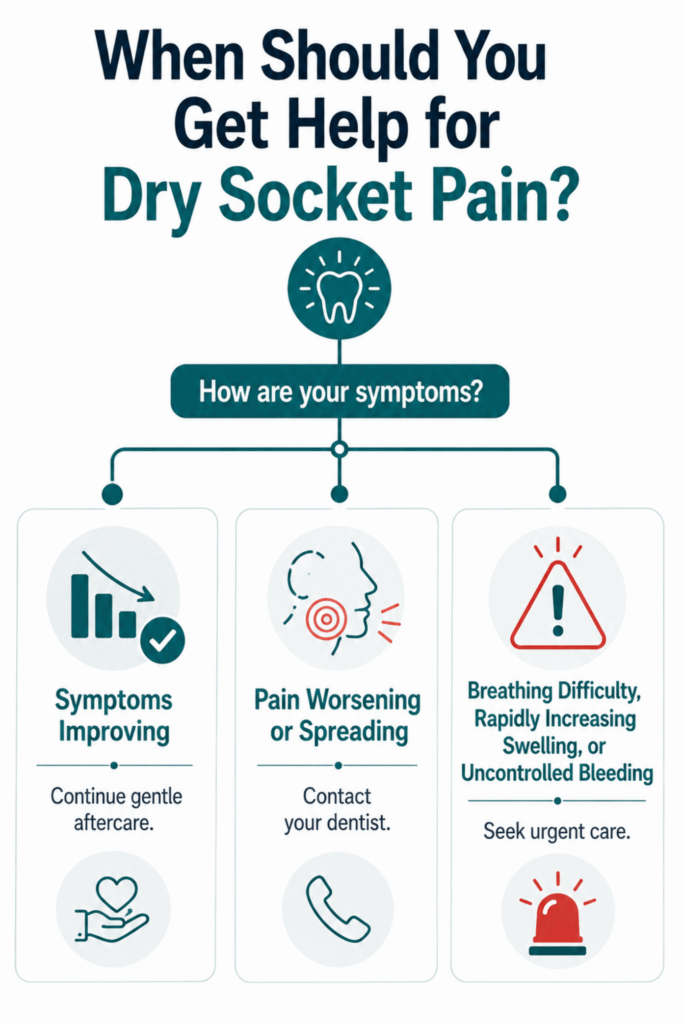
Call your dentist if pain becomes stronger after it had started to improve, especially during the first several days after extraction. You should also request an assessment if pain spreads from the socket to your ear or jaw, interrupts sleep, or remains intense despite appropriate pain medicine.
Contact the office if you notice:
- An Empty-Looking Socket: The clot appears missing, or you think you can see exposed bone.
- Persistent Bad Taste or Odor: A lasting unpleasant taste or bad breath may occur when material is trapped in the socket.
- Pain That Is Getting Worse: Normal postoperative soreness should generally trend toward improvement, even if progress is not perfectly steady.
- Poor Response to Pain Medicine: Recommended pain relievers provide little relief or wear off very quickly.
- Difficulty Eating or Drinking: Pain prevents you from taking enough fluids or soft food.
- Uncertainty About Healing: You are worried about the socket’s appearance, stitches, or a change in your symptoms.
A telephone description or photo may help the dental team assess timing, but it may not confirm the diagnosis. A direct examination is often needed.
When Do Symptoms Need Urgent Care?
Dry socket is very painful, but it does not usually cause marked facial swelling, pus, or a high fever. Those findings may point to infection or another complication that needs prompt assessment.
Seek urgent dental or medical help for:
- Trouble Breathing or Swallowing: Call emergency services, especially if swelling is affecting your tongue, throat, or neck.
- Rapidly Increasing Swelling: Spreading facial or neck swelling needs urgent assessment.
- Fever With Worsening Symptoms: Fever, chills, weakness, or feeling seriously unwell may suggest infection beyond the socket.
- Pus or Significant Swelling: These are not typical features of dry socket alone and may require different treatment.
- Uncontrolled Bleeding: Apply firm pressure with clean gauze as instructed and seek urgent help if bleeding does not slow.
- Inability to Drink: Severe pain, repeated vomiting, or difficulty swallowing fluids can lead to dehydration.
Do not wait for a routine appointment if breathing or swallowing becomes difficult. Use emergency services available in your area.
How Can You Avoid Making the Socket Worse?
Gentle care can protect the area while you wait to see your dentist. The goal is to avoid irritation, not to scrub or medicate the wound yourself.
- Do Rinse Carefully: After the first 24 hours, use a gentle salt-water rinse if it matches your dentist’s instructions.
- Do Eat Soft Foods: Choose foods that require little chewing and chew on the opposite side.
- Do Drink From a Cup: Stay hydrated without using a straw.
- Do Brush Carefully: Clean the other teeth while avoiding direct trauma to the painful socket.
- Do Use Medicine as Directed: Follow the label or instructions from your dentist, physician, or pharmacist.
- Do Call Your Dentist: Worsening or intense pain deserves an assessment.
- Do Not Smoke or Vape: Tobacco, nicotine, heat, and suction can interfere with wound healing.
- Do Not Pack the Socket: Leave clove oil, tea bags, honey, cotton, and homemade dressings out of the wound.
- Do Not Pick or Scrape: Material inside the socket may be healing tissue or a professional dressing.
- Do Not Start Leftover Antibiotics: An antibiotic does not treat uncomplicated dry socket and may cause side effects or contribute to resistance.
Frequently Asked Questions
What Can I Do If Dry Socket Pain Starts at Night or Over the Weekend?
Use an appropriate over-the-counter pain reliever, apply a wrapped compress outside your cheek, and use a gentle salt-water rinse if more than 24 hours have passed and your aftercare instructions allow it. Contact an emergency dental service if the pain is unmanageable. Trouble breathing, trouble swallowing, or rapidly increasing swelling requires urgent medical care.
Can I Use Oral Numbing Gel on a Dry Socket?
Do not place benzocaine or another numbing gel inside the socket unless your dentist recommends a specific product. These gels may irritate the wound, can be swallowed, and do not treat the exposed socket. Ask a dentist or pharmacist whether a topical product is appropriate for your age, health, and other medicines.
Can I Use Home Remedies if There Are Stitches Over the Socket?
Stitches do not rule out dry socket because they may close the gum edges without fully covering the socket. Do not lift, cut, or remove them, and never push a remedy beneath them. Contact your dentist if pain worsens, spreads toward your ear or jaw, or remains difficult to control.
What Should I Do if a Dry Socket Dressing Falls Out?
Do not push the dressing back into place or make a replacement at home. Call your dentist because some dressings are designed to loosen, while others may need replacement. Until you receive advice, avoid picking at the socket and use only the pain-control and cleaning measures your dental team has approved.
Are Home Remedies for Dry Socket Different During Pregnancy?
Pregnancy can change which pain relievers and topical products are appropriate. Ask your dentist, obstetric clinician, or pharmacist before using ibuprofen, aspirin, essential oils, herbal products, or medicated gels. Do not delay dental assessment because of pregnancy; your dental and medical teams can select options suited to your stage of pregnancy.
Is Dry Socket Contagious?
No. Dry socket cannot spread to another person through kissing, utensils, or close contact. It happens at an extraction site when the protective blood clot breaks down, moves, or does not form properly. Although bacteria may influence healing, uncomplicated dry socket is not considered a contagious infection.
The Bottom Line on Home Remedies for Dry Socket
Home remedies for dry socket may ease pain temporarily, but they cannot confirm the condition, clean deeply trapped debris, or place a medicated dressing. Gentle salt water, a compress outside the jaw, suitable pain medicine, soft foods, and careful oral hygiene may help while you arrange care.
Avoid putting clove oil, essential oils, aspirin, hydrogen peroxide, honey, tea bags, or homemade dressings inside the socket. If pain becomes stronger rather than better, call your dentist. Prompt professional treatment can soothe the area, protect the healing socket, and rule out infection or another cause of severe pain.
