When it comes to orthodontic and oral health problems, impacted canines are one of the most common challenges dentists and orthodontists face. An impacted canine surgery is often necessary when a maxillary canine (upper eye tooth) fails to erupt into its proper position because baby teeth, extra teeth, or bone and gum tissue block it. Since canine teeth play a critical role in your bite and smile, addressing impaction early is crucial to prevent long-term dental complications.
In many cases, impacted canine teeth do not erupt naturally and require a combined approach between an orthodontist and an oral surgeon. The process may involve creating space with braces, performing a minor gum surgery to expose the impacted tooth, and placing a small bracket to guide it into position. If the tooth is severely impacted or fused to the bone, extraction and dental implant surgery may be considered. Understanding the causes, treatment process, and recovery can help patients and parents prepare for this procedure with confidence.
In this blog post, we will explain everything you need to know about impacted canine surgery, from early recognition of impaction to treatment methods, surgical steps, recovery tips, and long-term outcomes.
What Is an Impacted Canine?
An impacted canine occurs when a canine tooth fails to erupt into its normal position in the dental arch. The upper canines, also known as maxillary cuspid teeth or eyetooth, are the most commonly impacted after wisdom teeth. These teeth are critical because they guide the bite into proper alignment, support the lips and facial structure, and help distribute chewing forces evenly. When a canine tooth becomes impacted, it can affect not only the appearance of the smile but also the health of adjacent teeth and the overall function of the mouth.
Causes of Impacted Canine Teeth
Several factors can cause canines to become impacted. Common reasons include:
- Genetics and Family History: A family history of impacted teeth increases the risk of canine impaction.
- Overcrowding: When there is not enough space in the jaw, adult teeth may become blocked and fail to erupt.
- Extra Teeth or Growths: Supernumerary (extra) teeth or cysts may block the natural eruption pathway.
- Over-Retained Baby Teeth: If baby canines do not fall out on time, they may prevent adult canines from erupting.
- Misaligned Eruption Path: Sometimes, the position of the impacted tooth causes it to grow in the wrong direction.
Signs and Early Recognition of Impacted Canines
Dentists and orthodontists often detect impacted canines through regular dental exams and X-rays. Early recognition is important because it allows specialists to develop a treatment plan before adjacent front teeth are damaged or misaligned. Identifying the problem early can create room for the impacted canine to erupt naturally or prepare for surgical exposure and orthodontic treatment if needed.
Treatment Options for Impacted Canines
Treatment for impacted canines depends on the position of the tooth and the patient’s age. Options include oral surgery to expose the impacted tooth, orthodontic traction with braces to guide it into place, or extraction if the tooth cannot be saved. In cases where extraction is necessary, the missing tooth may be replaced with a dental implant, bridge, or other prosthetic solution. A referral to an oral surgeon is often required for complex cases.
Impacted Canine Surgery: Step-by-Step Procedure
Impacted canine tooth surgery involves collaboration between the oral surgeon and orthodontist. The oral surgeon performs the surgical procedure to expose the impacted tooth, while the orthodontist manages the process of moving the tooth into place. Together, they ensure the canine is guided into its proper position safely and effectively.
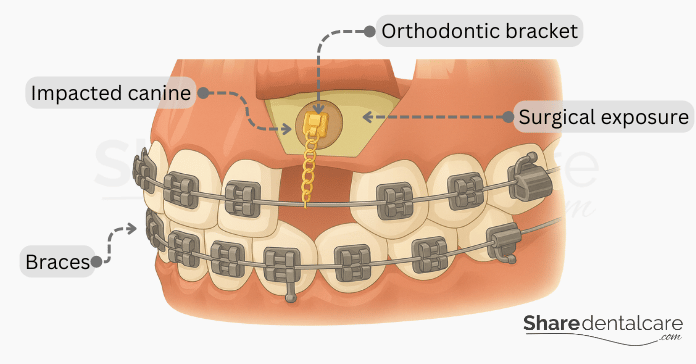
Surgical Exposure of Impacted Teeth
During the impacted canine surgery, the gum covering the impacted tooth is carefully opened. In some cases, a small amount of bone may also be removed to access the tooth. Once the tooth is exposed, the oral surgeon prepares it for the next phase of treatment.
Bracketing an Impacted Tooth
After exposure, the orthodontist attaches a small orthodontic bracket to the exposed tooth. This bracket is often connected to a chain or wire, which is then linked to the braces. Over time, gentle traction is applied to encourage the impacted tooth to erupt into its proper place.
Guiding the Impacted Canine Into Position
The orthodontist plays a vital role in guiding the impacted tooth into position. Using braces and controlled force, the tooth is gradually moved into alignment with the other teeth. This process may take several months to over a year, depending on the severity of the impaction and the patient’s overall treatment plan.
Recovery After Impacted Canine Surgery
After impacted canine surgery, it is normal to experience mild discomfort and swelling. Healing typically takes a few days to a couple of weeks, depending on the procedure. Patients can support recovery by following their dentist’s instructions:
- Manage Pain: Use prescribed or over-the-counter pain relievers as directed.
- Control Swelling: Apply a cold compress to the cheek during the first 24 hours.
- Maintain Oral Hygiene: Brush gently around the surgical site and rinse with a saltwater solution to reduce infection risk.
- Soft Diet: Stick to soft foods and avoid chewing near the surgical site until healing improves.
- Follow-Up Visits: Attend all scheduled appointments to monitor healing and tooth movement.
Risks and Possible Complications of Impacted Canine Surgery
While impacted canine surgery is generally safe, some risks may occur. These include root resorption of adjacent teeth, delayed tooth movement, or the impacted tooth not responding to orthodontic traction. In rare cases, the impacted canine may be fused to the bone (ankylosed) and unable to erupt. Your dental team will monitor progress closely to reduce these risks.
Alternatives if the Impacted Canine Cannot Be Saved
If the impacted canine cannot be guided into place, tooth extraction may be necessary. The missing tooth can then be replaced with a dental implant, bridge, or removable prosthetic. These options restore appearance, maintain proper bite function, and prevent shifting of adjacent teeth.
Preventing Canine Impaction and the Importance of Early Intervention
Preventive care plays a key role in avoiding complications from impacted canines. Steps include:
- Timely Removal of Baby Teeth: Extract over-retained baby teeth to create room for adult canines.
- Regular Dental Exams: Early X-rays help detect abnormal eruption patterns.
- Monitor Jaw Growth: Dentists and orthodontists can identify overcrowding or extra teeth early.
- Early Orthodontic Evaluation: Children around ages 11–13 should be evaluated to detect and treat canine impaction promptly.
Conclusion
Impacted canine surgery is an important procedure that helps restore both the function and appearance of your smile when a critical cuspid tooth is unable to erupt naturally. Since the canine is a critical tooth for guiding your bite, supporting facial structure, and protecting adjacent teeth, early recognition and treatment are essential. Whether caused by extra teeth, over-retained baby teeth, or limited space in the jaw, timely intervention allows dentists and orthodontists to create room for the impacted tooth to move into its proper place.
Treating impacted canines usually involves a combined approach: minor gum surgery to expose the impacted canine, attaching a bracket to the exposed tooth, and using braces to gradually guide it into position. In cases where the impacted eyetooth will not erupt or is fused to the bone, tooth extraction may be required, followed by replacement with a dental implant, bridge, or other prosthetic solution. With proper planning, most patients achieve excellent outcomes and regain the natural function of their anterior teeth.
Preventing future complications starts with early intervention, removing over-retained baby teeth, monitoring growth, and scheduling orthodontic evaluations at the right age. If you or your child has been advised to see an oral surgeon for the extraction or exposure of an impacted tooth, don’t delay. Taking action now ensures space for the canine, protects the health of teeth on either side, and helps guide the impacted tooth into place for a healthy, confident smile.
