Moderate Teeth Crowding: Causes and Orthodontic Treatments

Have you ever looked in the mirror and noticed your teeth slightly overlapping, especially in the front, or wondered why your smile isn’t as even as you’d like it to be? You’re not alone. Teeth crowding is one of the most common orthodontic concerns among both children and adults. It happens when there’s not enough space in the jaw for permanent teeth to align properly, causing one or more teeth to shift, overlap, or rotate. While moderate crowding may not seem as urgent as severe cases, it can still impact your oral hygiene, bite alignment, and confidence. In this blog post, we will explore the causes of moderate teeth crowding, the risks it poses if left untreated, and the most effective orthodontic treatments for restoring proper alignment and a confident smile.

What Is Moderate Teeth Crowding?

Moderate teeth crowding is a dental condition where there isn’t enough space in the jaw for permanent teeth to align properly. As a result, the teeth may overlap, twist, or push against each other, especially in the front teeth of the upper and lower jaw. This condition is more than just a cosmetic issue; it can affect how you clean your teeth, bite, and even speak. Moderate crowding usually falls between mild crowding, where the teeth are slightly out of line, and severe crowding, where multiple teeth are significantly displaced. Here’s how moderate teeth crowding compares to other levels of dental crowding:

  • Mild Crowding: Only one or two teeth are slightly rotated or overlapped. It may not cause major problems, but it can still affect the look of your smile.
  • Moderate Crowding: Multiple teeth (usually 3 teeth or more) are noticeably misaligned. The crowding may involve both upper and lower teeth, especially the bottom front teeth, and might require orthodontics like clear aligners or braces.
  • Severe Teeth Crowding: Many teeth are badly rotated, blocked out, or overlapping. Severe cases may need tooth removal to create space before realignment.
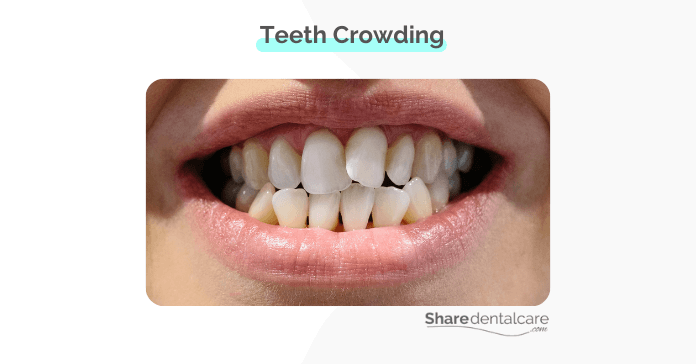
Close-up of a smile showing moderate teeth crowding and overlapping front teeth.
Moderate teeth crowding with visible overlapping and misalignment of front teeth.

What Causes Moderate Teeth Crowding?

Moderate teeth crowding can occur for several reasons; some cases start early in childhood, while others develop gradually over time. Understanding the root causes is essential to creating the right treatment plan and preventing the crowding from becoming more severe. Here are the most common causes of crowded or overcrowded teeth:

  • Lack of Space in the Jaw: When the jaw is too small, it can’t hold all the permanent teeth properly. This lack of space causes the teeth to overlap or twist out of position, leading to crowding.
  • Early or Late Loss of Baby Teeth: Losing baby teeth too soon allows nearby teeth to shift into the empty space. On the other hand, if baby teeth stay too long, they may block adult teeth from coming in correctly. 
  • Mismatch Between Tooth and Jaw Size: If your teeth are large but your jaw is small, there won’t be enough room for all the teeth to line up properly. 
  • Childhood Oral Habits: Prolonged thumb sucking, pacifier use, or tongue thrusting can affect the alignment of the baby teeth and jaws. These habits increase the chances of crowding later in life.
  • Jaw or Bite Alignment Issues: When the upper and lower teeth don’t fit together correctly (malocclusion), it can cause some teeth to drift or rotate over time.
  • Genetics: Dental crowding often runs in families. If your parents had crowded or overlapping teeth, you may inherit a similar dental structure.

Although many people believe that wisdom teeth eruption causes anterior crowding, scientific studies have not consistently supported this claim. Current evidence suggests that moderate teeth crowding in the lower front teeth is more likely due to natural age-related changes and jaw growth patterns rather than direct pressure from erupting third molars.

How to Identify If You Have Overcrowded Teeth

One of the first signs of moderate teeth crowding is when your teeth appear crooked, twisted, or pushed out of line, especially in the front area of the mouth. You might notice that bottom teeth crowding makes brushing or flossing more difficult, as some teeth are too close together.

In many cases, people also feel that their bite doesn’t feel right, or that their misaligned teeth cause discomfort while chewing. Over time, crowding of teeth can trap food and plaque, increasing the risk of cavities and gum disease. If teeth overlap in the upper or lower jaw, you may feel like there’s not enough space to clean around them.

Overcrowded top and bottom teeth can also affect your smile’s appearance, making people feel self-conscious. If teeth overcrowding is left untreated, it can worsen with age and lead to problems that eventually require more complex treatment to correct crowding and bring the teeth into proper alignment.

Why Does Moderate Teeth Crowding Need Treatment?

While moderate teeth crowding might seem like a small issue at first, leaving it untreated can lead to a variety of dental and oral health problems. Here are the most important reasons why timely treatment is necessary:

  • Higher Risk of Tooth Decay and Gum Disease: Crowded teeth can be difficult to clean properly. When brushing and flossing become less effective, plaque builds up between teeth, increasing the risk of cavities and periodontal disease.
  • Abnormal Tooth Wear: Misaligned or rotated teeth may not fit together properly when you bite. This can create uneven pressure on certain teeth, causing them to wear down faster over time.
  • Difficulty Chewing or Speaking Clearly: As the severity of the crowding increases, your bite may be affected. This can make it harder to chew food evenly or pronounce some words correctly.
  • Jaw Pain and Bite Problems: Moderate dental crowding may lead to a misaligned bite, which puts stress on the jaw joints (TMJ). This can result in discomfort, tension headaches, or even clicking and popping in the jaw.
  • Shifting of Other Teeth Over Time: If crowded or overcrowded teeth are not treated, they may continue to shift. This can make the alignment worse and complicate future orthodontic treatment.
  • Lower Confidence and Aesthetics: Teeth that are crowded or crooked may affect how your smile looks. Many people with teeth crowding feel self-conscious about their appearance, which can impact their self-esteem.

Orthodontic Treatment Options for Moderate Teeth Crowding

If you’re dealing with moderate teeth crowding, there are several effective ways to fix it, depending on the severity of the crowding and your dental needs. Common orthodontic treatment options include traditional braces, clear aligners like Invisalign, and in some cases, retainers or minor adjustments.

These options work by gently guiding the crowded or rotated teeth into proper alignment over time. While each method varies in cost, appearance, and treatment length, your dentist or orthodontist will help choose the best solution to treat crowded teeth based on your unique situation. We’ll explore each option in more detail in the next sections.

Traditional Braces to Fix Crowded Teeth

Traditional metal braces are one of the most reliable ways to correct moderate teeth crowding. They use a system of brackets and wires that apply constant pressure to your teeth, slowly moving them into proper alignment. This method is highly effective for different types of tooth crowding, including rotated teeth and overlapping teeth, especially when the severity of crowding is more than mild. Because braces are fixed in place, they work continuously and don’t rely on patient compliance like removable aligners do.

Benefits of Traditional Braces

  • Effective for All Levels of Crowding: Braces are suitable for mild, moderate, and severe crowding of teeth, including cases where teeth are severely rotated or out of position.
  • Precise Tooth Movement: Orthodontists have more control over how each tooth moves, which is important for correcting complex alignment problems.
  • Doesn’t Rely on Patient Discipline: Since braces are not removable, you won’t forget to wear them like aligners; this ensures steady progress.
  • Lower Cost Than Some Alternatives: In many cases, metal braces are more affordable than clear aligners or advanced orthodontic systems.

Drawbacks of Traditional Braces

  • Visible Appearance: Metal brackets are noticeable, which may make some patients, especially adults, feel self-conscious.
  • Discomfort and Irritation: The brackets and wires can irritate the mouth, especially during the early adjustment phase.
  • Difficult Oral Hygiene with Braces: Brushing and flossing around braces requires extra time and care to prevent plaque buildup and staining.
  • Food Restrictions: Sticky or hard foods must be avoided during treatment to prevent damage to the braces.
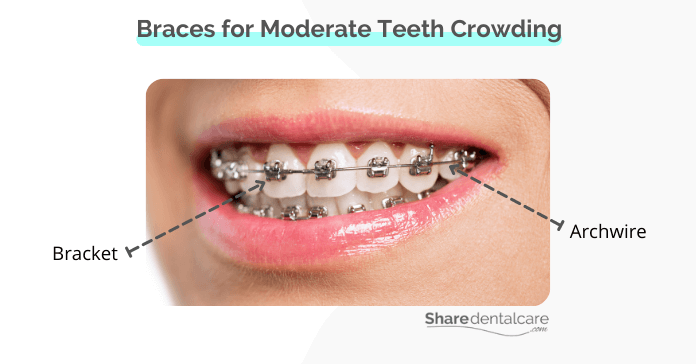
Close-up of smiling mouth with metal braces on upper and lower teeth for orthodontic treatment.
Metal braces help straighten teeth and correct bite alignment.

Clear Aligners (Invisalign)

Clear aligners like Invisalign are a popular treatment option for patients with moderate teeth crowding who want a more discreet solution. These custom-made trays gradually shift the crowded or rotated teeth into place using gentle, controlled pressure. Invisalign works best for mild to moderate cases and is especially appealing to teens and adults who prefer a clear, removable alternative to metal braces. The success of Invisalign depends on wearing the aligners for 20 to 22 hours per day and following your orthodontist’s instructions carefully.

Benefits of Clear Aligners

  • Virtually Invisible Appearance: Aligners are clear and blend seamlessly with your natural teeth, making them an ideal choice for patients concerned about aesthetics.
  • Removable for Eating and Cleaning: You can remove aligners during meals and while brushing or flossing, making daily hygiene much easier than with fixed braces.
  • Smooth and Comfortable Fit: Unlike braces, Invisalign trays have no wires or brackets, reducing irritation to cheeks and gums.
  • Easier Maintenance: Since aligners are removable, there are no dietary restrictions, and you can clean your teeth normally.
  • Fewer Office Visits: Invisalign often requires fewer in-person appointments, making it more convenient for busy schedules.

Drawbacks of Clear Aligners

  • Not Ideal for Severe Cases: Invisalign is most effective for mild to moderate crowding of teeth. Complex or severe cases may still require braces or other tools.
  • Requires Strong Patient Compliance: Aligners must be worn consistently. Skipping hours can delay progress or reduce effectiveness.
  • Higher Cost: In some cases, Invisalign may cost more than traditional braces, depending on your treatment plan and location.
  • May Not Move Teeth as Precisely: For certain types of dental crowding, braces provide more controlled and targeted tooth movement.
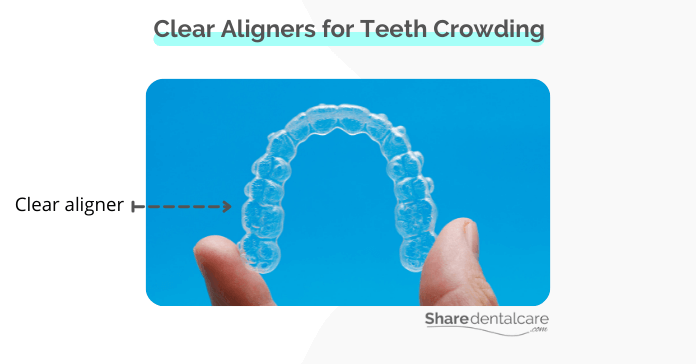
Hand holding an invisible clear aligner for teeth straightening.
Clear aligners offer a discreet and removable solution for teeth alignment.

Can You Fix Crowded Teeth Without Braces?

In some mild cases of teeth crowding, it may be possible to improve your smile without using traditional braces or clear aligners. Cosmetic treatments, such as dental bonding for crowded teeth or veneers for overlapping teeth, can reshape the surface of the teeth to create a straighter appearance. These options don’t move the teeth but can create a more even, symmetrical look. 

They’re often chosen by adults who want fast results without going through orthodontic treatment. However, these solutions are typically best for patients whose crowding is minor and doesn’t cause functional issues like bite problems or gum irritation. If you’re considering this route, your dentist can help you decide if a non-orthodontic crowding treatment is right for your smile goals.

Before and after image showing correction of crowded teeth using ceramic veneers for improved alignment and appearance.
Ceramic veneers used to correct crowded teeth and enhance smile aesthetics.

Factors That Influence the Right Treatment for Dental Crowding

Choosing the right way to fix crowded or overcrowded teeth depends on several important factors. Dentists and orthodontists consider more than just the look of your smile. They assess your bite, jaw structure, and overall oral health to recommend the best option for your unique case of moderate teeth crowding. Here are the key factors that help guide treatment decisions:

  • Severity of Crowding: The degrees of crowding play a major role. Mild to moderate crowding of teeth may be fixed with clear aligners or braces. In severe cases of crowding, extra steps like removing one or more teeth to create space might be necessary.
  • Age and Jaw Development: Early intervention during childhood, called interceptive orthodontic treatment, can guide the eruption of adult teeth. Removing baby teeth to make room or using space maintainers helps prevent crowding from worsening.
  • Bone and Tooth Structure: The size of the teeth, the amount of available space, and the condition of the bone around the teeth can all affect what’s possible. Strong, healthy bone supports more precise tooth movement.
  • Bite Alignment and Function: If your crowded teeth are causing bite issues or jaw discomfort, the treatment may need to focus on more than just straightening. In those cases, braces and aligners may be more appropriate than veneers.
  • Tooth Position and Rotation: When teeth are rotated or erupt out of alignment, it can affect neighboring teeth and make teeth move into incorrect positions. Proper evaluation helps choose the best method to guide the teeth into place.
  • Patient Compliance and Lifestyle: Aligners work best for patients who can commit to wearing them 20–22 hours per day. People with busy lifestyles or children may benefit more from fixed braces that don’t rely on daily discipline.
  • Aesthetic Preferences: For adults and teens who want a more discreet option, clear aligners or veneers may be preferred.
  • Budget and Treatment Time: Some options may take longer or cost more than others. Your budget and insurance coverage can influence the final decision.

The most effective teeth crowding treatment is one that balances function, comfort, and appearance, depending on the severity and your personal needs.

Conclusion

Moderate teeth crowding is more than just a cosmetic concern; it can impact your oral hygiene, bite function, and long-term dental health if left untreated. From childhood habits and jaw size to genetics and tooth alignment, several factors can cause crowding or make it worse over time. Identifying the issue early and understanding the treatment options based on severity helps prevent more serious complications like tooth decay, gum disease, or abnormal wear.

Thanks to modern orthodontic treatment, there are several ways to fix crowded or overcrowded teeth. Whether through traditional braces, clear aligners, or cosmetic approaches like dental bonding or veneers, the right choice depends on your unique case and preferences. Factors such as the severity of the crowding, jaw development, lifestyle, and budget all play a role in choosing the most effective and comfortable solution.

If you’re noticing signs of dental crowding, don’t wait until it gets worse. Talk to your dentist or orthodontist about a personalized teeth crowding treatment plan. With the right care, you can protect your oral health, improve your bite, and enjoy a confident, healthier smile.

Related Posts

Infected Wisdom Tooth Symptoms: 9 Signs to Watch For

Learn infected wisdom tooth symptoms, how they differ from normal eruption pain, and when swelling or jaw stiffness requires dental care.

Wisdom Tooth Infection: Warning Signs, Causes, and Treatment

Pain or swelling behind your last molar can make you wonder if a wisdom tooth infection has started. Other possible signs include red gums,...

Wisdom Tooth Abscess: Warning Signs, Causes, and Treatment

Could your pain or swelling be a wisdom tooth abscess? Learn the symptoms, causes, treatment options, and signs that need urgent care.

Impacted Wisdom Teeth: Symptoms, Types, and Treatment

Impacted wisdom teeth may cause pain, swelling, or infection. Learn the symptoms, types, risks, and when removal may be advised.

Wisdom Tooth Pain: Causes, Relief, and When to See a Dentist

Learn what may cause wisdom tooth pain, how to ease it, and which signs mean you should contact a dentist for an examination and treatment.

Dry Socket Pain: What It Feels Like and How to Get Relief

Dry socket pain can worsen after tooth extraction. Learn the signs, where pain may spread, what can bring relief, and when to call a dentist.