If your tooth pain under a crown comes and goes, you may wonder if it is normal or a sign that something is wrong. The short answer is that occasional discomfort is not always an emergency, but recurring pain should not be ignored. A crowned tooth can become sensitive for several reasons, including bite problems, gum irritation, tooth decay under the crown, or an infection affecting the tooth’s root.
The pattern of the pain often provides important clues. You may notice discomfort when biting down, sensitivity to hot or cold foods, or pain that disappears for days before returning. Some causes are minor and easy to fix, while others require prompt dental treatment to prevent the problem from getting worse. Understanding what triggers the pain can help you decide when to monitor your symptoms and when to schedule a dental visit.
Many people assume that a dental crown completely protects a tooth from future problems. In reality, the tooth and surrounding tissues can still develop issues over time. Knowing the possible causes, warning signs, and treatment options can help you understand what your symptoms may mean and what steps to take next.
Why Does Tooth Pain Under Crown Come and Go?
If tooth pain under crown comes and goes, you’re not imagining it. Intermittent pain can happen weeks, months, or even years after crown placement. The pattern of discomfort often provides important clues about the source of the pain. Some people notice a sharp pain only when chewing, while others experience pain and sensitivity that seems to appear without warning and disappear just as quickly.
The timing matters because different problems behave in different ways. A high bite may trigger pain only when pressure is placed on the tooth. Early decay beneath the crown may cause occasional sensitivity before becoming more constant. Even infection inside the tooth can sometimes create pain that comes and goes before progressing to persistent pain. Understanding these patterns can help you recognize when it’s time to schedule an appointment instead of hoping the problem resolves on its own.
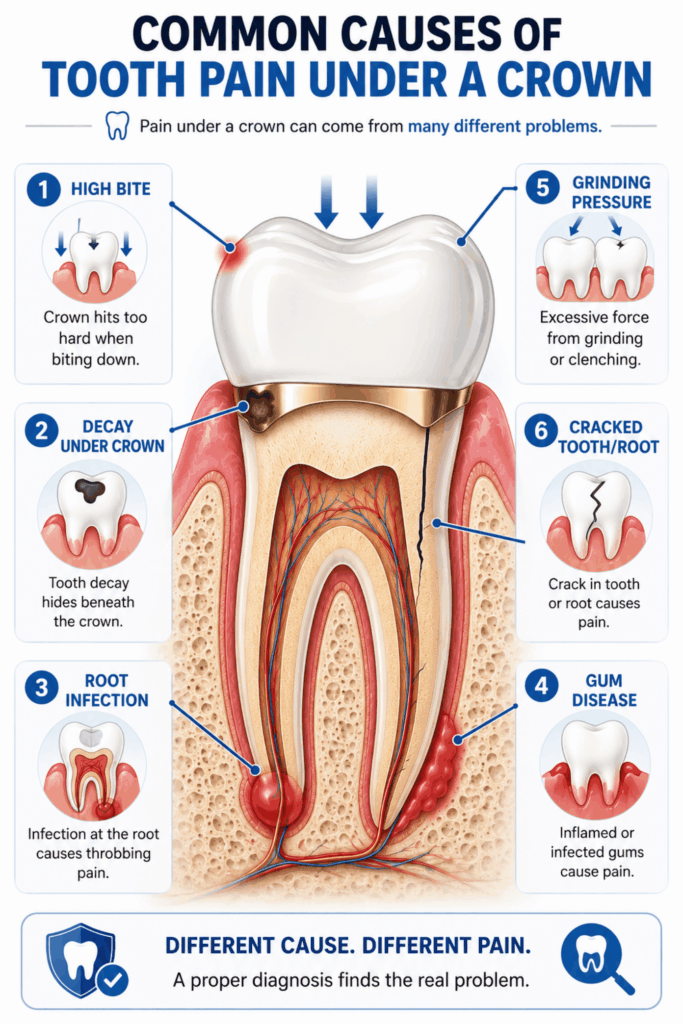
Common Causes of Tooth Pain Under Crown Comes and Goes
Experiencing pain under a crown does not automatically mean the crown has failed. Several conditions can affect the tooth underneath the crown, the surrounding gums, or the supporting structures around the tooth. Identifying the source of the pain is the key to finding the right treatment and preventing further complications.
- High Bite or Poor Fit: A fitted crown that sits slightly too high can create extra pressure on the tooth during chewing, leading to crown-related tooth pain.
- Decay Beneath the Crown: Bacteria may enter around the crown margins and damage the underlying tooth structure.
- Nerve Infection: Infection or inflammation inside the tooth can cause sharp or throbbing pain that returns periodically.
- Gum Disease: Inflamed gums around the crown area can mimic dental pain and make the tooth hurt.
- Grinding and Clenching: Extra pressure on the tooth during sleep can irritate the tooth and surrounding tissues.
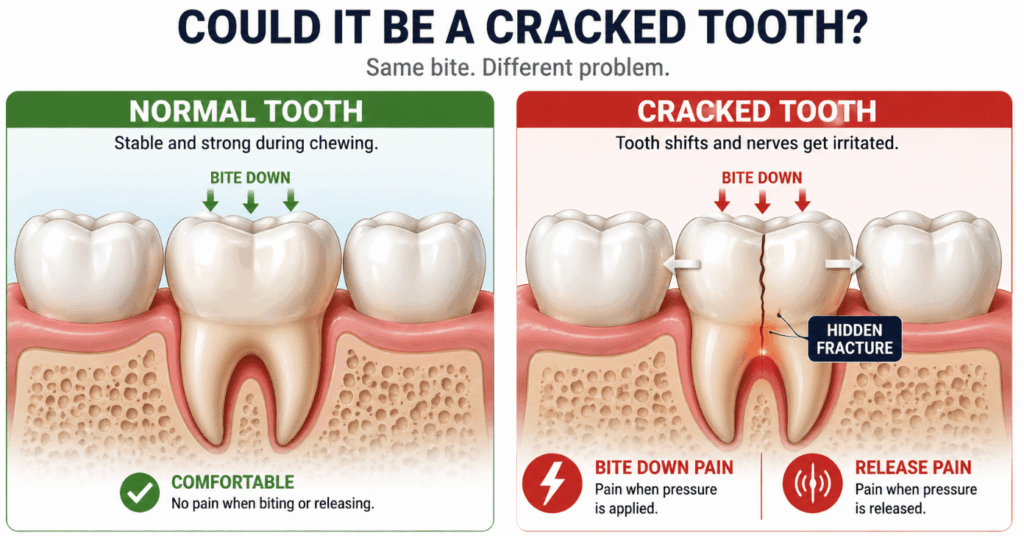
- Cracked Tooth or Root: Hidden cracks may lead to tooth pain after a crown when biting or releasing pressure.
A High Bite or Poor Crown Fit
A crown feels comfortable most of the time, but if it is slightly higher than your natural bite, chewing forces become uneven. That extra pressure on the tooth can irritate the ligament around the root, causing dental crown pain that often appears during meals and fades afterward. People commonly describe pain when biting down, tenderness around the crown, or the feeling that the crowned tooth touches first when they close their mouth.
Tooth Decay Under the Crown
Even a permanent crown cannot make a tooth immune to decay. If bacteria enter through tiny gaps at the crown margins, they can attack the tooth underneath the crown. Early decay may cause pain that comes and goes because the sensitive areas of the tooth become irritated only under certain conditions, such as eating sweets or drinking cold beverages. Left untreated, the decay can progress and affect the tooth more deeply.
Infection Inside the Tooth or Root
A tooth with an inflamed nerve may cause intermittent discomfort before developing severe pain. If the nerve inside the tooth becomes infected, pressure changes within the tooth can trigger episodes of throbbing pain followed by symptom-free periods. This pattern sometimes confuses patients because the tooth seems to improve temporarily.
Warning signs of a deeper problem include lingering sensitivity to heat, throbbing tooth pain after eating, pain that wakes you at night, swelling, or discomfort that gradually becomes more frequent. In these situations, you may need a root canal treatment to remove the infection and save the tooth before the condition worsens.
Gum Irritation or Gum Disease
Inflamed gums around the crown can sometimes mimic tooth pain. Tenderness, swelling, redness, bleeding while brushing, or soreness around the crown area may make it difficult to tell whether the discomfort comes from the gums or the tooth itself. Addressing gum inflammation early through proper dental care can prevent more serious periodontal problems.
Teeth Grinding and Clenching
Many people who grind or clench their teeth are unaware they do it. This repeated force places extra stress on a tooth with a crown and may lead to recurring discomfort.
- Morning Soreness: Pain is often worse after waking up.
- Jaw Tightness: Tension in the jaw muscles can accompany crown tooth pain.
- Headaches: Frequent morning headaches may point toward nighttime grinding.
- Wear Patterns: Flattened teeth or chipped dental work can be important clues.
- Increased Sensitivity: Extra pressure can irritate the tooth and surrounding tissues.
Cracked Tooth or Root Problems
A cracked tooth beneath the crown can be difficult to diagnose because symptoms are often inconsistent. Patients may experience a sharp pain when biting down and another brief pain when releasing pressure. Tiny cracks can shift slightly during chewing, triggering discomfort only under specific conditions. Root fractures are particularly challenging because they may not appear clearly on routine examinations.
What Does Tooth Pain Under Crown That Comes and Goes Feel Like?
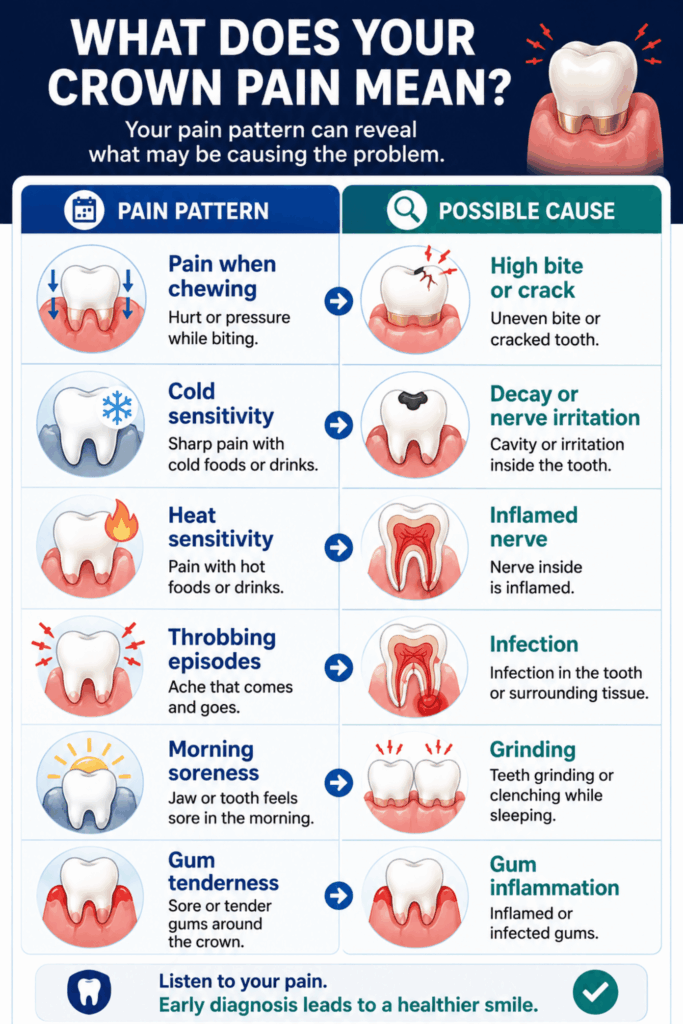
The type of pain you experience can sometimes help narrow down possible causes. While symptoms alone cannot provide a diagnosis, recognizing patterns can help you communicate more effectively with your dentist.
- Sharp Pain During Chewing: May suggest bite issues or cracks.
- Cold Sensitivity: Can indicate exposed tooth structure, decay, or nerve irritation.
- Heat Sensitivity: May point toward inflammation inside the tooth.
- Throbbing Pain: Could signal infection or pressure buildup.
- Spontaneous Pain: Pain without a trigger deserves prompt evaluation.
- Pain Around the Crown: Gum inflammation may be contributing to symptoms.
Pain When Biting Down
Discomfort during chewing often suggests that pressure is affecting the tooth or supporting tissues. A high bite, cracked tooth, root inflammation, or problems with crown placement can all cause pain when pressure on the tooth increases. If this symptom persists for more than a few days or becomes more intense, professional evaluation is recommended.
Sensitivity to Hot or Cold
Temperature sensitivity can have several explanations. Cold sensitivity may occur when decay affects the tooth underneath the crown or when the nerve remains irritated after getting a crown. Heat sensitivity is often more concerning because it can suggest inflammation inside the tooth that may eventually require root canal treatment. Lingering sensitivity that lasts several minutes deserves attention.
Throbbing or Spontaneous Pain
Throbbing pain that occurs without chewing, temperature changes, or other obvious triggers should not be ignored. Possible causes include infection, nerve pain, or pressure from inflammation inside the tooth. If pain continues, worsens, or interrupts sleep, schedule an appointment promptly to identify the source of the pain and prevent complications.
When Should You Worry About Tooth Pain Under a Crown?
Not every episode of discomfort is an emergency, but some symptoms deserve prompt attention. The goal is not to create fear but to recognize when your body may be signaling a problem that requires treatment.
- Persistent Pain: Pain that lasts several days without improvement.
- Worsening Pain: Increasing intensity over time.
- Swelling: Puffiness around the gums, face, or jaw.
- Bad Taste: Drainage from infection can create an unpleasant taste.
- Difficulty Chewing: Functional limitations affecting daily life.
- Sleep Disturbance: Pain severe enough to wake you at night.
Signs You Should Call a Dentist Soon
- Persistent Pain: Pain continues beyond a few days despite self-care.
- Increasing Sensitivity: Hot or cold discomfort becomes more noticeable.
- Pain During Biting: Chewing consistently triggers symptoms.
- Gum Changes: Bleeding, swelling, or tenderness develops around the crown.
- Loose Crown: The crown is loose, or the crown is loose enough to shift.
- Recurring Episodes: Pain comes and goes more frequently over time.
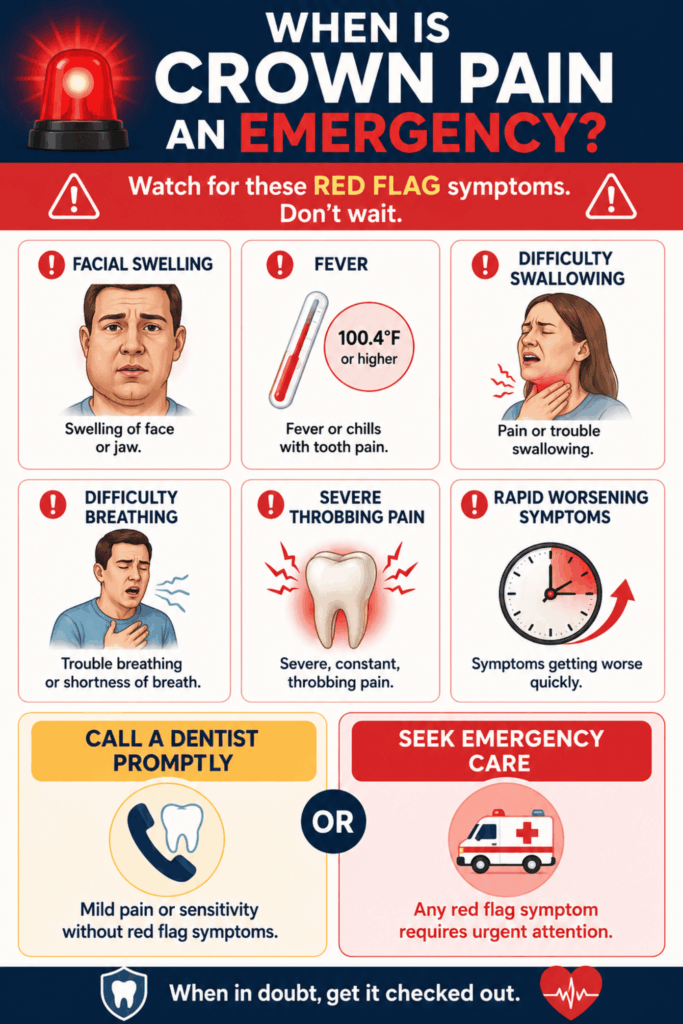
Signs That May Require Urgent Dental Care
- Facial Swelling: May indicate a spreading infection.
- Fever: Infection affecting the body requires prompt attention.
- Difficulty Swallowing: Can signal a serious complication.
- Difficulty Breathing: Requires immediate medical evaluation.
- Severe Throbbing Pain: Intense pain that does not respond to pain relievers.
- Rapidly Worsening Symptoms: Escalating discomfort should not be delayed.
How Dentists Find the Cause of Tooth Pain Under Crown Comes and Goes
Many patients assume their dentist can identify the problem simply by looking at the crown. In reality, diagnosis involves gathering information from symptoms, clinical findings, and diagnostic tests. The goal is to determine why pain may occur rather than simply treating the discomfort.
Your dentist may ask when the pain started, what triggers it, how long it lasts, and whether it has changed over time. Small details often provide important clues that guide further testing and help distinguish between nerve pain, gum issues, bite problems, and structural damage.
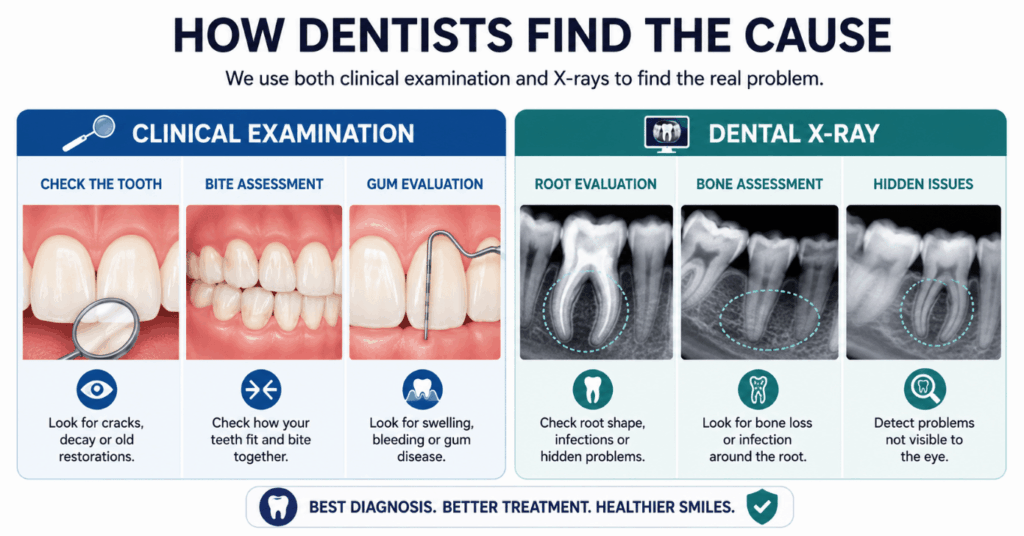
Clinical Examination and Bite Assessment
During the examination, the dentist evaluates the crown, surrounding tissues, and bite alignment. They look for signs of decay, gum inflammation, cracks, mobility, tenderness, and whether extra pressure on the tooth occurs during chewing. Bite paper may be used to identify uneven contact points that contribute to pain.
Dental X-Rays and Additional Tests
Dental X-rays help reveal hidden decay, infection around the roots, bone changes, or problems beneath the crown that cannot be seen during a visual exam. Additional tests, such as temperature testing, percussion testing, or bite tests, provide valuable information about the health of the underlying tooth and surrounding structures. These tools improve diagnostic accuracy and support appropriate treatment decisions.
Treatment Options for Tooth Pain Under a Crown
Treatment depends on the underlying cause rather than the symptom alone. Relieving pain is important, but long-term success requires addressing why the discomfort developed in the first place. Some problems have simple solutions, while others require more advanced care to save the tooth.
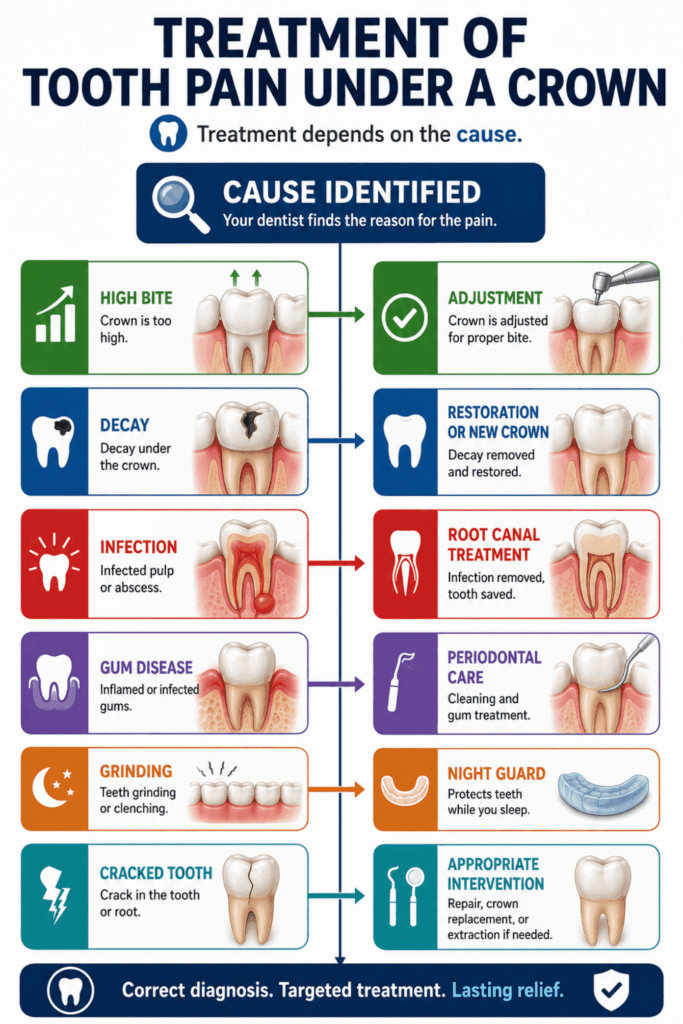
Adjusting the Bite or Crown
If the crown placement creates uneven pressure, a minor adjustment can often relieve symptoms quickly. The dentist carefully reshapes high contact points to improve bite balance. In some situations, modifying or replacing the crown may be necessary if the fit contributes to ongoing discomfort.
Treating Decay Around the Crown
When decay develops beneath the crown, treatment depends on the extent of damage. Early decay may allow the crown to be removed, the cavity treated, and the area restored. More extensive damage may require a new crown to protect the tooth structure and prevent additional complications.
Root Canal Treatment Through or After Crown Removal
If infection develops inside the tooth, root canal treatment may become necessary. During the procedure, the infected tissue is removed, the canals are cleaned and sealed, and the tooth is preserved whenever possible.
Many patients worry that a crowned tooth cannot be treated without losing the restoration. In some cases, the dentist can perform root canal treatment through the existing crown. In others, removing the crown first provides better access. The approach depends on the condition of the crown and the overall treatment plan.
Managing Gum Problems
Gum inflammation around the crown often improves with professional cleaning, improved home care, and targeted periodontal treatment when needed. Addressing plaque buildup and gum disease early can relieve pain and support the long-term health of the tooth with a crown.
Night Guards for Grinding and Clenching
Night guards create a protective barrier between the teeth and reduce the forces generated by grinding and clenching. They may be recommended for patients with recurring crown pain, worn teeth, jaw discomfort, or evidence of bruxism. Protecting the teeth during sleep can prevent pain and reduce future damage.
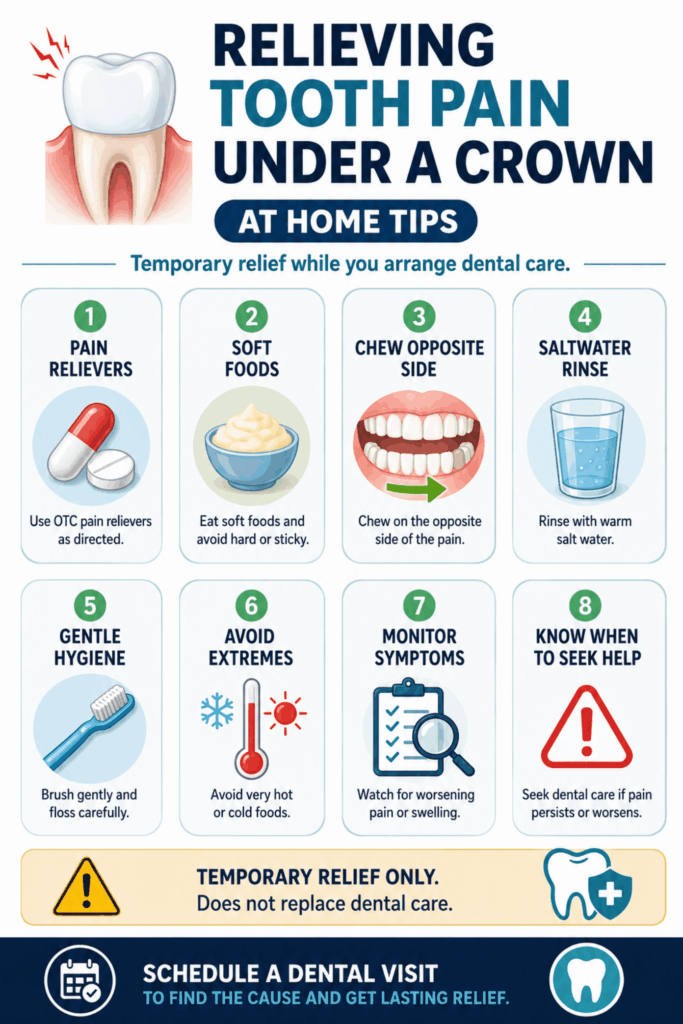
What Can You Do at Home Until You See a Dentist?
Home measures may help relieve pain temporarily, but they do not treat the underlying cause of tooth pain under the crown. Persistent or worsening pain still requires professional evaluation.
- Use Over-the-Counter Pain Relievers: Follow label instructions and use only as directed.
- Avoid Hard Foods: Reduce extra pressure on the tooth while chewing.
- Chew on the Opposite Side: Minimize irritation to the crown area.
- Rinse With Warm Salt Water: Helps soothe irritated tissues.
- Maintain Good Oral Hygiene: Brush and floss gently around the crown.
- Avoid Temperature Extremes: Very hot or cold foods may trigger sensitivity.
- Monitor Symptoms: Notice what triggers pain and share these details with your dentist.
Can Tooth Pain Under Crown Come and Go Resolve on Its Own?
Sometimes symptoms improve temporarily because the trigger is no longer present. You may stop chewing on that side, inflammation may decrease for a short period, or the tooth may simply enter a quieter phase. This temporary relief can create the impression that the problem has resolved.
However, the underlying issue often remains. Decay, infection, cracks, and bite problems usually do not disappear without treatment. Monitoring mild, short-lived symptoms for a brief period may be reasonable, but persistent or worsening pain under your crown should be evaluated professionally to prevent more extensive treatment later.
How to Prevent Future Problems With Dental Crowns
- Brush Twice Daily: Remove plaque and protect the tooth underneath the crown.
- Floss Carefully: Clean around crown margins to reduce decay risk.
- Attend Regular Checkups: Early detection helps prevent pain and complications.
- Address Bite Changes Promptly: Report if the crown feels different when chewing.
- Wear a Night Guard: Protect against grinding and clenching forces.
- Limit Sugary Snacks: Reduce the risk of decay around the crown.
- Avoid Chewing Ice: Prevent unnecessary stress on crowned teeth.
- Report New Symptoms Early: Pain that comes and goes should not be ignored.
- Maintain Professional Cleanings: Support gum health and long-term success.
- Follow Dental Recommendations: Consistent dental care helps save the tooth and protect your investment in treatment.
Key Takeaways About Tooth Pain Under Crown Comes and Goes
Tooth pain under a crown that comes and goes is not always a sign of an emergency, but it is your body’s way of telling you that something deserves attention. Sometimes the cause is relatively simple, such as a bite adjustment or gum irritation. In other cases, a problem affecting the tooth crown or the tooth underneath may require treatment to prevent it from progressing.
If recurring discomfort keeps returning, don’t assume it will eventually disappear for good. Having a dentist evaluate the area can help identify the cause, protect a damaged tooth, and preserve your long-term oral health. The sooner you understand what’s behind the pain, the easier it often is to address it and move forward with confidence.
