If you feel aching, pressure, or swelling at the very back of your mouth, a wisdom tooth may be involved. Wisdom tooth pain can happen as the tooth breaks through the gum, but it can also come from trapped food, inflamed gum tissue, decay, infection, or a tooth that does not have enough room to grow.
Mild soreness may settle, especially when a tooth is coming in. Pain that keeps returning, becomes stronger, or occurs with swelling or a bad taste needs a dental examination. Safe home care may ease symptoms for a short time, but it cannot show whether the tooth is impacted or treat the source of the problem.
The location and pattern of the pain offer useful clues, yet they cannot confirm the cause. A dentist may need to examine the gum and take an X-ray before recommending cleaning, treatment, monitoring, or removal. The first step is understanding how wisdom tooth pain usually feels and how it differs from pain that starts elsewhere.
What Does Wisdom Tooth Pain Feel Like?
Wisdom tooth pain often feels like a dull ache, pressure, or tenderness at the back of the mouth. The gum may feel sore when you chew, brush, or touch the area. If inflammation increases, the discomfort may become sharp or throbbing and keep you up at night.
The symptoms can remain steady, come and go, or flare when food touches the gum. Pain alone cannot tell you whether the tooth is erupting, impacted, decayed, or infected. The direction of change matters: mild discomfort that improves is less concerning than persistent pain that becomes stronger.
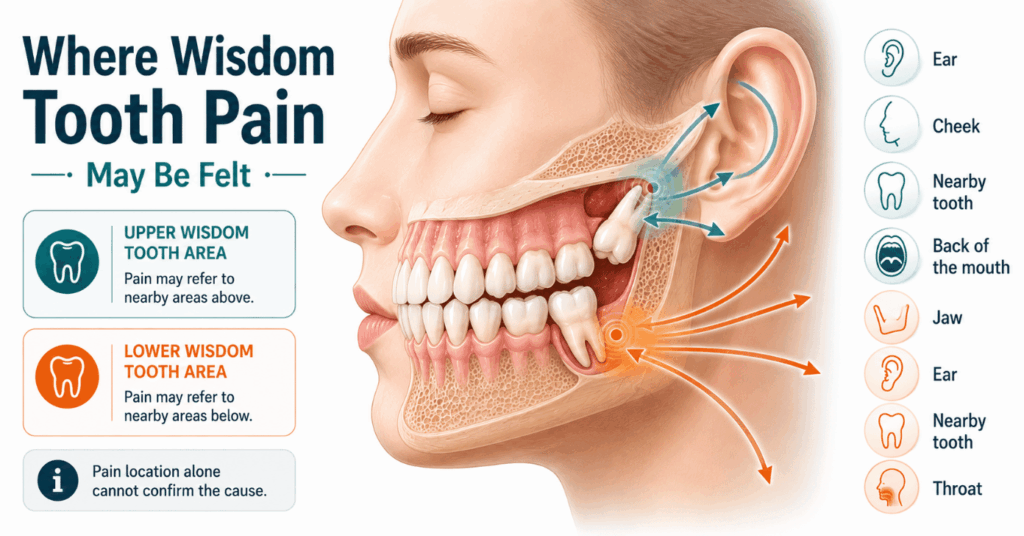
Where Wisdom Tooth Pain May Be Felt
Pain usually begins behind the last regular molar. However, nearby nerves and tissues can make the discomfort feel as though it is coming from another part of your face.
- Back of the Mouth: Tenderness may develop in the gum around a partially erupted or impacted tooth.
- Jaw: A lower wisdom tooth may cause an ache near the angle of the jaw or make jaw movement uncomfortable.
- Cheek: An upper tooth that grows toward the cheek may rub the soft tissue and create a sore spot.
- Ear: Pain from a lower molar can travel toward the ear even when the ear itself is healthy.
- Throat: Inflamed gum behind a lower molar may make swallowing uncomfortable.
- Nearby Teeth: Pressure, decay, or inflammation around the second molar may make it difficult to identify which tooth hurts.
Referred pain does not confirm that a wisdom tooth is responsible. A dental examination is the best way to locate the true cause.
Upper vs. Lower Wisdom Tooth Pain
Lower wisdom tooth pain often involves tenderness behind the last molar, swelling around a gum flap, or stiffness when opening the mouth. Food and bacteria can get trapped around a partially erupted lower tooth because this area is hard to see and brush.
Upper wisdom teeth may cause discomfort near the back of the upper jaw or rub the inside of the cheek. Upper molar pain can also resemble sinus pressure. These patterns offer clues, but the location alone cannot provide a diagnosis.
What Causes Wisdom Tooth Pain?
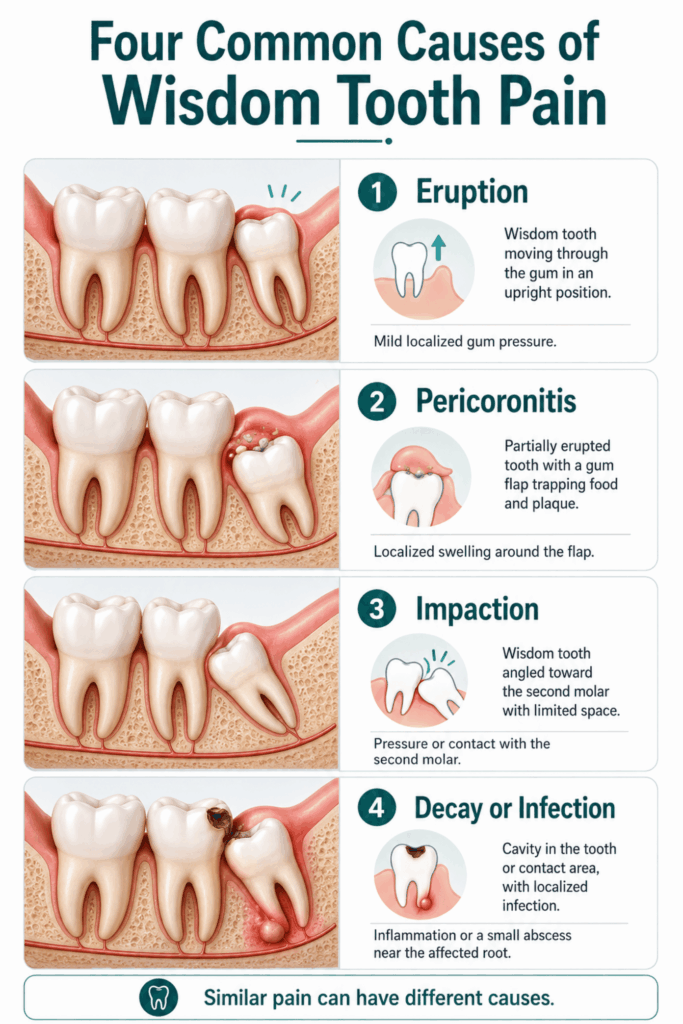
Wisdom teeth can cause pain for several reasons, including eruption, inflamed gum tissue, impaction, tooth decay, and infection. A nearby tooth, jaw muscle, or other structure may also produce similar dental pain. Your dentist may need to examine the area and take an X-ray to determine the cause of your pain.
A Wisdom Tooth Breaking Through the Gum
The third molars usually begin to emerge during the late teens or early adulthood. As a tooth moves through the gum line, you may notice pressure, mild tenderness, or discomfort for a few days. This can happen in episodes because the tooth does not always emerge in one continuous movement.
Mild eruption soreness should remain manageable and move toward improvement. Pain that keeps returning, becomes severe, or occurs with swelling, pus, fever, or a bad taste may have another cause. It should not automatically be dismissed as normal “teething.”
Inflamed Gum Around a Partially Erupted Tooth
When part of a wisdom tooth appears, but the rest remains beneath the gum, a flap of tissue may cover part of its crown. Food and bacteria can get trapped beneath this flap, causing inflammation called pericoronitis. Partially erupted wisdom teeth are especially difficult to keep clean.
Possible symptoms include:
- Tender Gum: The tissue around the tooth may look red, feel sore, or bleed during cleaning.
- Localized Swelling: The gum flap can become puffy and may be painful when the opposing tooth bites against it.
- Bad Breath or Taste: Trapped debris, discharge, or infection can create an unpleasant smell or taste.
- Pain During Chewing: Pressure on the swollen tissue may make eating uncomfortable.
- Difficulty Opening the Mouth: More significant inflammation can cause stiffness in the jaw muscles.
- Discomfort When Swallowing: Swelling behind a lower molar may irritate the nearby tissues.
A mild first episode does not always mean the tooth must be removed. However, repeated pericoronitis deserves reassessment because the area may continue trapping debris.
An Impacted Wisdom Tooth
A wisdom tooth is impacted when it does not have enough room to emerge normally or grows in an unfavorable direction. It may remain completely within the jawbone, stay beneath the gum, or enter the mouth only partway.
Not all impacted wisdom teeth cause problems. When problems do occur, they may include food trapping, pericoronitis, tooth decay, gum disease, or damage to neighboring teeth. An impacted wisdom tooth may also develop a cyst around its crown, although this is less common. An X-ray helps the dentist assess the tooth’s angle, depth, and relationship to nearby structures.
Tooth Decay, Gum Disease, or an Abscess
Wisdom teeth are hard to clean because they sit so far back in the mouth. A toothbrush may not reach every surface, especially when the tooth is tilted or only partly visible. This can increase the risk of decay and gum disease around the wisdom tooth and the molar in front of it.
- Wisdom Tooth Decay: A cavity can produce sensitivity, aching, or sharp pain when you eat something sweet, hot, or cold.
- Decay in the Second Molar: A tilted wisdom tooth can create a hard-to-clean contact area where the neighboring tooth develops decay.
- Gum Disease: Plaque may collect in a deep pocket around either molar, causing bleeding, tenderness, bone loss, or a bad taste.
- Dental Abscess: Infection around a tooth root or gum pocket may cause throbbing pain, swelling, pus, fever, or tenderness when biting.
These symptoms may resemble eruption discomfort. A dentist may need X-rays and clinical tests to separate decay, gum inflammation, and a wisdom tooth infection.
Pain That Only Feels Like It Comes From a Wisdom Tooth
Pain at the back of the jaw does not always start in a third molar. A cavity, crack, or inflamed nerve in the second molar may produce nearly identical symptoms. Jaw joint problems, tight chewing muscles, ulcers, and trauma from biting the cheek can also cause pain in this area.
Upper back-tooth discomfort may sometimes be related to sinus pressure. Ear and throat conditions can also cause referred pain. If the source is unclear or symptoms persist, avoid assuming that wisdom teeth removal will solve the problem before a dentist confirms the diagnosis.
Wisdom Tooth Pain vs. Normal Eruption Discomfort
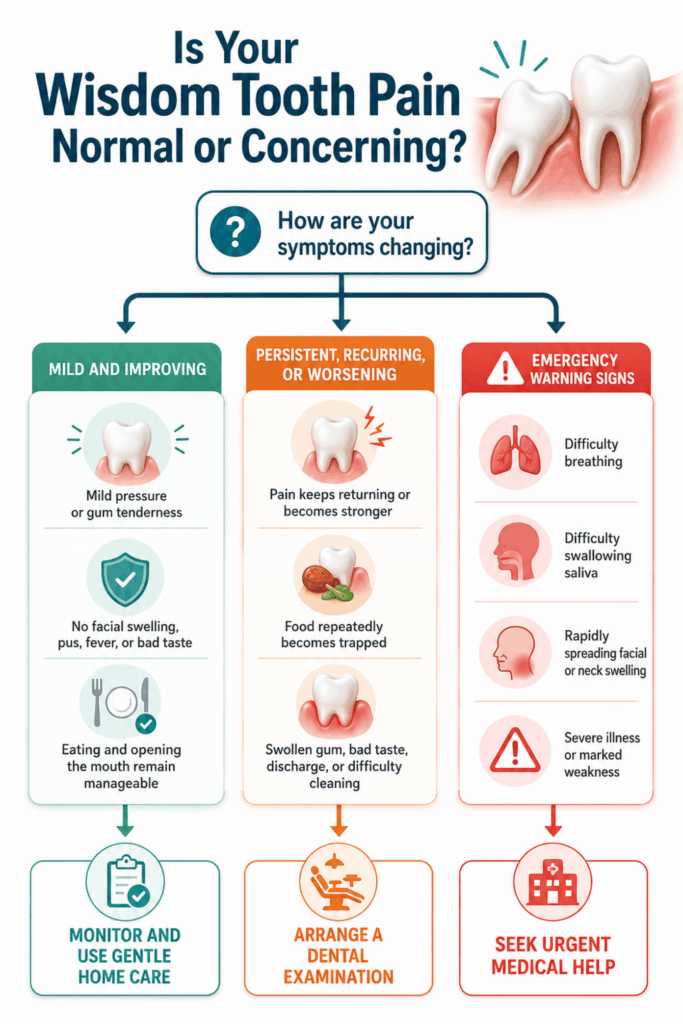
Mild tenderness can occur as a wisdom tooth comes through the gum. Persistent, recurring, or worsening symptoms are more likely to need professional assessment.
| Feature | More Consistent With Eruption Discomfort | More Concerning Finding |
|---|---|---|
| Pain | Mild soreness or pressure that improves | Moderate to severe, throbbing, recurring, or worsening pain |
| Gum | Mild tenderness near the emerging tooth | Increasing redness, swelling, pus, or easy bleeding |
| Taste and Breath | No major change | Persistent bad taste, discharge, or bad breath |
| General Health | You otherwise feel well | Fever, chills, weakness, or feeling unwell |
| Mouth Opening | Normal or only mildly uncomfortable | Increasing difficulty opening the mouth |
| Eating | Minor tenderness with firm food | Significant pain when chewing or trouble swallowing |
| Face and Jaw | No visible swelling | Increasing facial, jaw, or neck swelling |
These differences can help you decide what to do next, but they cannot confirm the diagnosis. A painful wisdom tooth with swelling, discharge, fever, or limited mouth opening should be assessed promptly.
How Long Does Wisdom Tooth Pain Last?
There is no single timeline because the cause determines how long wisdom tooth pain lasts. Mild soreness from eruption may settle as the tissue adapts. Pain from decay, repeated food trapping, or impaction may continue or return until the underlying problem receives treatment.
Pay attention to the pattern rather than relying only on the number of days. Symptoms that become milder are moving in a better direction. Ongoing pain, repeated flare-ups, or worsening swelling suggests that the area needs an examination.
Pain While a Wisdom Tooth Is Coming In
Eruption-related discomfort may appear in short episodes as the tooth moves through the gum. You may feel pressure or mild gum tenderness, followed by a period with few or no symptoms. The timing varies because wisdom teeth do not all develop or emerge at the same rate.
Repeated pain does not always mean the tooth is simply “still coming in.” A lack of space, a partly erupted tooth, trapped debris, or pericoronitis can create similar symptoms. A dentist can check whether the tooth has enough room to emerge and remain clean.
Pain That Comes and Goes
Pain may fade when gum inflammation settles and return after food and bacteria collect beneath the flap again. This pattern is common around partially erupted wisdom teeth. Keep your dental appointment even if the discomfort disappears, especially when episodes repeat or have included swelling, a bad taste, or difficulty opening your mouth.
How to Relieve Wisdom Tooth Pain Safely
Home care may provide temporary wisdom tooth pain relief while you arrange dental care. It cannot change the position of an impacted tooth, repair decay, drain an abscess, or eliminate every gum infection.
- Clean the Area Gently: Use a soft toothbrush to remove plaque and visible food without forcing bristles beneath a painful gum flap.
- Rinse With Warm Salt Water: A gentle warm saltwater rinse may loosen debris and soothe irritated tissue. Spit it out rather than swallowing it.
- Use a Cold Compress: Apply it to the outside of the cheek for short periods to help reduce swelling and discomfort.
- Choose Soft Foods: Eat foods that require little chewing and avoid small, hard pieces that can lodge around the tooth.
- Consider Appropriate Pain Medicine: Over-the-counter medication may help when it is safe for you. Follow the label and ask a pharmacist, dentist, or physician if you have any uncertainty.
- Arrange an Examination: Seek dental care if pain persists, returns, becomes stronger, or occurs with signs of infection.
Gentle Cleaning and Warm Saltwater Rinses
Brush the tooth and gum carefully with a small, soft toothbrush. Cleaning may feel uncomfortable, but allowing more plaque and food to collect can make inflammation worse. Focus on visible surfaces and avoid forcing anything beneath the tissue.
Mix salt with warm, not hot, water and rinse gently. Do not probe the gum with toothpicks, pins, fingernails, or water jets at high pressure. These actions may injure the tissue or push debris deeper.
Cold Compresses and Easier-to-Chew Foods
A wrapped cold pack against the cheek may help reduce pain and swelling. Do not place ice directly on the skin or inside the mouth.
While the area is tender:
- Choose Soft Meals: Yogurt, eggs, soup that is not hot, and other easy-to-chew foods can reduce pressure on the area.
- Chew on the Other Side: This limits direct contact with a painful gum flap or tooth.
- Avoid Small Hard Pieces: Seeds, nuts, popcorn, and similar foods can become trapped around the tooth.
- Avoid Extreme Temperatures: Very hot or cold foods may worsen sensitivity if tooth decay is present.
Over-the-Counter Pain Medicine
Nonopioid medicines can help control short-term dental pain when they are appropriate for the patient. The American Dental Association’s guideline for acute dental pain supports NSAIDs, such as ibuprofen or naproxen, alone or with acetaminophen as first-line options for many adults and adolescents.
These medicines are not safe for everyone. Follow the product label and never exceed the stated dose.
- Check Your Medical History: NSAIDs may be unsuitable for some people with stomach ulcers, kidney disease, bleeding problems, certain heart conditions, or NSAID allergy.
- Review Other Medicines: Blood thinners and some other drugs may interact with pain relievers.
- Avoid Duplicate Ingredients: Many cold, flu, and combination pain products already contain acetaminophen.
- Ask During Pregnancy: Confirm any medication with a dentist, physician, or pharmacist.
- Consider Age: Children and teenagers require age-appropriate products and dosing. Never give aspirin to a child unless a qualified clinician specifically directs it.
Pain medicine reduces symptoms; it does not correct the source of the dental pain.
What Not to Put on a Painful Wisdom Tooth
Strong substances placed directly on the gum may cause a chemical burn without treating the problem. Avoid attempting to numb, drain, or clean beneath the tissue with unapproved products or sharp objects.
- Aspirin on the Gum: Aspirin should be swallowed only when medically appropriate and used according to its label. Holding it against the tissue can cause a painful burn.
- Undiluted Essential Oils: Concentrated clove oil and other oils may irritate or damage oral tissue.
- Harsh Chemicals: Do not apply bleach, alcohol, peroxide concentrates, household disinfectants, or crushed medication.
- Leftover Antibiotics: The drug may be wrong for the condition, and an incomplete course can cause harm without treating the dental source.
- Sharp Tools: Pins, tweezers, or toothpicks may cut the gum and introduce more bacteria.
- Repeated Squeezing or Touching: Pressing a swollen area can increase irritation and does not safely drain an abscess.
Use gentle cleaning and approved pain relief instead. Seek professional care if wisdom tooth pain becomes persistent or severe.
When Should You See a Dentist for Wisdom Tooth Pain?
Arrange a dental appointment when pain does not improve, keeps returning, or makes it difficult to eat or clean the area. You should also be examined if food repeatedly becomes trapped around the tooth or you notice damage near the neighboring molar.
Contact a dentist for:
- Recurring Episodes: Pain that settles and returns may indicate ongoing food trapping or pericoronitis.
- Persistent Pain: Ongoing discomfort may come from decay, gum disease, impaction, or another tooth.
- Cleaning Difficulty: A tooth that remains hard to brush may continue developing inflammation or decay.
- A Broken or Decayed Tooth: A visible hole, rough edge, or food-catching area deserves assessment.
- Uncertain Pain: An examination can help separate wisdom tooth pain from a second molar, jaw joint, sinus, or muscle problem.
- Treatment Planning: A dentist can determine whether the tooth can be monitored, restored, cleaned, or should be considered for removal.
Warning Signs That Need Prompt Dental Care
A wisdom tooth infection may remain localized, but some infections can spread into nearby tissues. Prompt care is appropriate when symptoms are worsening or affecting normal function.
- Increasing Pain: Throbbing or persistent pain that becomes stronger may indicate increasing inflammation or infection.
- Gum or Facial Swelling: Swelling around the tooth, cheek, or jaw needs assessment, particularly if it is growing.
- Pus or a Persistent Bad Taste: Discharge is a sign that infection may be present.
- Fever or Feeling Unwell: These symptoms suggest that the problem may no longer be limited to the tooth or gum.
- Swollen Lymph Nodes: Tender lumps beneath the jaw or in the neck can occur with infection.
- Limited Mouth Opening: Increasing jaw stiffness may accompany significant pericoronitis or a spreading infection.
- Painful Swallowing: This can result from inflamed tissues near a lower wisdom tooth and should not be ignored when it worsens.
When to Seek Emergency Help
A severe dental infection can occasionally affect deeper spaces in the face or neck. Seek urgent medical help if you develop:
- Breathing Difficulty: Any breathing change associated with dental or facial swelling is an emergency.
- Difficulty Swallowing Saliva: Seek immediate help if you cannot swallow normally, drool, or feel that your throat is closing.
- Rapidly Spreading Swelling: Swelling moving into the face, beneath the jaw, around the eye, or down the neck requires urgent assessment.
- Severe Illness: Confusion, marked weakness, dehydration, or a high fever with dental swelling needs emergency care.
- Airway or Neck Symptoms: A change in voice, neck tightness, or trouble holding your mouth open can signal deeper infection.
Do not rely on home remedies if these warning signs appear. Emergency care focuses on protecting the airway and stopping the infection from spreading.
How a Dentist Finds the Cause of Wisdom Tooth Pain
A dentist combines your symptom history, a clinical examination, and imaging when needed. The goal is to confirm which tooth or tissue hurts and identify why it hurts before recommending treatment.
- Review the Symptoms: The dentist asks when the pain began, whether it is constant or intermittent, and what makes it better or worse.
- Examine the Gum: They look for a partially erupted tooth, inflamed flap, trapped debris, swelling, pus, ulcers, and areas that bleed.
- Check the Teeth: The wisdom tooth and neighboring teeth are examined for cavities, cracks, tenderness, and painful biting.
- Assess the Jaw and Nearby Tissues: Mouth opening, jaw muscles, lymph nodes, and facial swelling may be checked when relevant.
- Take Dental X-Rays When Needed: Images can show whether the wisdom tooth is impacted, its direction within the jawbone, decay, bone changes, and its relationship to the second molar.
- Create a Treatment Plan: Findings help determine whether the tooth should be cleaned, restored, monitored, or referred to a dentist or oral surgeon for removal.
An X-ray does not replace the clinical examination. Some painful problems involve the gum or tooth nerve and may not be fully explained by the tooth’s position alone.
How Dentists Treat a Painful Wisdom Tooth
Treatment depends on what is causing the pain. The dentist considers the tooth’s position, the condition of the surrounding gum and bone, the health of nearby teeth, and whether the problem is likely to return. Pain relief may make you more comfortable, but definitive care must address the source.
Cleaning and Treating Inflamed Gum Tissue
For pericoronitis, a dentist may flush and clean beneath the gum flap to remove food and bacteria. They can also show you how to brush or irrigate the area safely after the acute tenderness settles.
Cleaning may control the immediate episode, but symptoms can return if the tooth remains partly covered and difficult to maintain. Repeated episodes may lead to a discussion about longer-term treatment, including removal when clinically appropriate.
Treating Decay or Problems With a Nearby Tooth
A fully erupted wisdom tooth may sometimes be repaired if the decay is accessible and the tooth can remain clean and useful. A dentist may consider a filling or another restorative treatment based on the amount of healthy tooth left and its long-term outlook.
Treatment may instead focus on the second molar if that is the true source of pain. If the wisdom tooth blocks access, contributes to damage, or has a poor outlook, removal may form part of the plan. The decision should follow an examination and appropriate imaging.
When Antibiotics May Be Needed
Antibiotics are not routine pain relief for every painful wisdom tooth. Local cleaning, drainage, restoration, or removal usually addresses the dental source more directly. Antibiotics cannot create space for an impacted tooth or remove debris trapped under a gum flap.
They may be appropriate when an infection is spreading or causes systemic symptoms such as fever or malaise. The ADA guideline on antibiotics for dental pain and swelling emphasizes dental treatment rather than antibiotics alone for many localized dental conditions. Take antibiotics only when prescribed for the current problem and complete them as directed.
When Wisdom Tooth Removal May Be Recommended
Wisdom teeth removal may be recommended when there is a clear disease or a repeated problem that cannot be managed predictably another way. Pain or impaction alone does not always make extraction necessary.
Possible reasons include:
- Repeated Pericoronitis: Recurring gum infection around a partially erupted tooth may continue while the flap traps debris.
- Unrestorable Decay: Removal may be appropriate when a wisdom tooth is too damaged or inaccessible to repair.
- Damage to a Neighboring Tooth: A tilted wisdom tooth may contribute to decay, gum breakdown, or root damage involving the second molar.
- Cyst or Other Disease: A cystic change or other abnormal tissue around an impacted tooth requires assessment and treatment.
- Persistent Symptoms With a Confirmed Cause: Removal may be considered when the tooth is responsible for ongoing pain and has a poor long-term outlook.
- Limited Ability to Keep the Tooth Healthy: A tooth that cannot be cleaned or restored predictably may continue to cause problems.
The NICE recommendations on extracting wisdom teeth advise limiting removal of impacted third molars to teeth with evidence of disease. They also note that a first episode of pericoronitis, unless severe, is not automatically an indication for surgery.
Does Every Painful Wisdom Tooth Need to Be Removed?
No. A painful wisdom tooth may be kept when it is healthy or treatable, functions normally, and can be cleaned. Temporary gum inflammation may improve with professional cleaning and better home care. A dentist may monitor an impacted tooth that shows no disease rather than removing it simply because it is present.
Removal becomes more reasonable when the tooth has unrestorable decay, repeated infection, a cyst, damage to neighboring teeth, or another confirmed problem. The decision should balance the benefit of preventing further disease against the risks and recovery involved in surgery. Your symptoms, examination, and X-rays guide that choice.
Wisdom Tooth Pain Before vs. After Removal
Pain before removal usually comes from eruption, pericoronitis, impaction, decay, or infection. The painful tooth is still present, and the symptoms may improve only after the cause receives appropriate treatment.
After a tooth is removed, soreness and swelling are expected parts of early healing. They should generally move toward improvement after the initial postoperative period. Follow the aftercare instructions from your dentist or oral surgeon because recovery varies with the tooth’s position and the difficulty of the procedure.
When Pain After Removal May Signal a Problem
Increasing pain after initial improvement is different from ordinary early soreness. Contact the treating office if the recovery pattern changes or symptoms become more intense.
- Severe Radiating Pain: Strong pain that develops or increases several days after extraction and spreads toward the ear or temple may suggest dry socket.
- Worsening Swelling: Swelling that continues to grow rather than settle may indicate infection or another complication.
- Fever, Pus, or Feeling Unwell: These are possible signs of postoperative infection.
- Persistent Heavy Bleeding: Oozing can occur early, but bleeding that remains heavy despite following the dentist’s instructions needs prompt advice.
- Breathing or Swallowing Difficulty: Seek emergency help rather than waiting for a routine follow-up.
The NHS guidance on wisdom tooth removal and recovery explains that some pain, jaw soreness, and swelling can occur after surgery but should begin improving. Do not place medication or home remedies directly into the extraction socket unless your clinician instructs you to do so.
How to Reduce the Chance of Wisdom Tooth Pain Returning
Good cleaning may lower the chance of inflammation around erupted or partly erupted wisdom teeth. It cannot correct every impaction or prevent all disease, so regular assessment remains important.
- Brush the Last Molars Carefully: Angle a small, soft toothbrush toward the back and clean every reachable surface without injuring the gum.
- Clean Between the Teeth: Floss or another dentist-recommended aid can remove plaque between the second and third molars when access allows.
- Rinse After Food Trapping: Gentle rinsing can help loosen debris around a partly erupted tooth.
- Attend Regular Dental Examinations: A dentist can look for decay, gum pockets, or damage before symptoms become severe.
- Follow the Monitoring Plan: If an impacted tooth is being observed, return for the examinations or imaging recommended for your situation.
- Report Recurring Symptoms: Do not wait for each episode to become severe. Repeated inflammation may change the treatment decision.
Common Questions About Wisdom Tooth Pain
Can a Straight or Fully Erupted Wisdom Tooth Still Hurt?
Yes. A straight wisdom tooth can develop decay, gum disease, a crack, or inflammation like any other molar. Its position at the back of the mouth can make it hard to clean even when it erupted normally. A dentist should check persistent pain rather than assuming that a straight tooth is healthy.
Should I Keep My Dental Appointment If the Pain Has Stopped?
Yes, especially if the pain has happened more than once or came with swelling, a bad taste, or limited mouth opening. Inflammation can settle when trapped debris moves, then return later. An examination can reveal decay, pericoronitis, or impaction even when the area is not painful that day.
Why Does My Wisdom Tooth Hurt More at Night?
Pain may seem stronger at night because you have fewer distractions and notice it more. Lying down and clenching or grinding your teeth may also increase pressure or jaw discomfort. Nighttime pain cannot identify the cause, so ongoing or worsening symptoms still need a dental examination.
Can Wisdom Teeth Push Other Teeth and Cause Crowding?
Crowding has several causes, including jaw growth, tooth size, aging, and changes after orthodontic treatment. Research has not shown that wisdom teeth alone consistently cause the front teeth to crowd. A systematic review of wisdom teeth and lower front-tooth crowding found conflicting evidence, so crowding alone is not a reliable reason for removal.
Can Stress or Teeth Grinding Make Wisdom Tooth Pain Worse?
Yes. Stress-related clenching or grinding can strain the chewing muscles and make pain near the back teeth feel stronger. However, it does not rule out decay, inflamed gum tissue, or impaction. A dental examination can help separate muscle or jaw-joint pain from a problem around the wisdom tooth.
Is Wisdom Tooth Pain During Pregnancy Safe to Treat?
Pregnant patients should not delay necessary dental assessment. According to the American Dental Association’s guidance on dental care during pregnancy, needed examinations, dental X-rays, local anesthesia, fillings, root canal treatment, and extractions can be provided during pregnancy. Medication and sedation choices still require individual review with the dentist and obstetric clinician.
The Bottom Line
Wisdom tooth pain may come from eruption, inflamed gum tissue, impaction, tooth decay, or infection. Mild soreness may settle, but temporary pain relief does not identify or correct the cause.
Arrange a dental examination if the pain persists, keeps returning, becomes stronger, or occurs with swelling or a bad taste. Your dentist can examine the area and take X-rays when needed to determine whether cleaning, restoration, monitoring, or wisdom teeth removal is the right treatment.
