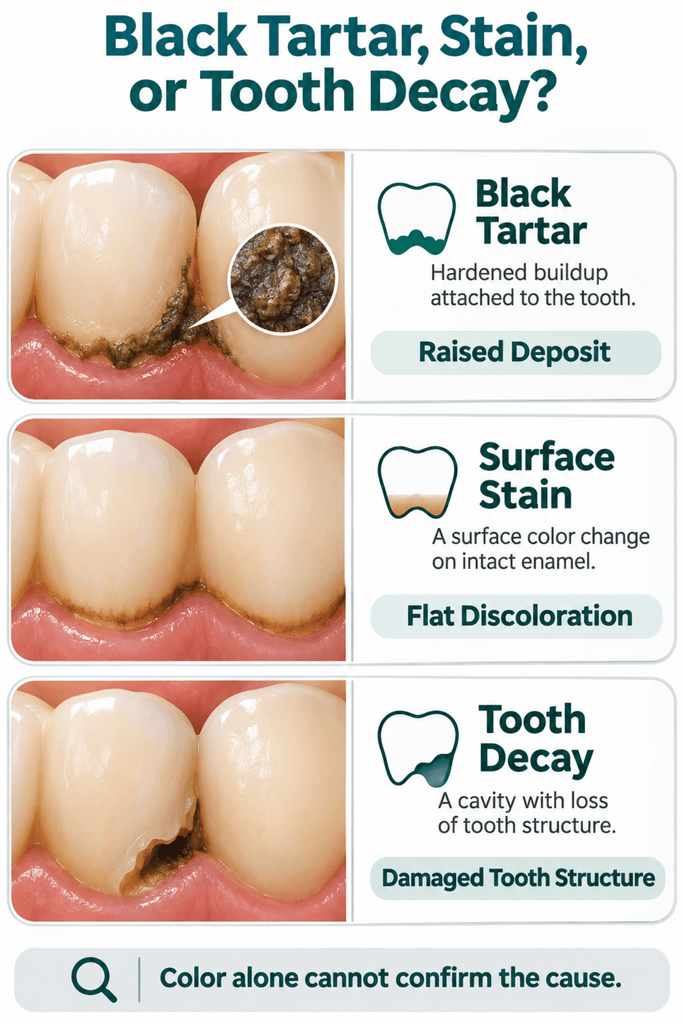
A hard black line or spot near your gums can be worrying, especially when brushing does not remove it. Black tartar on teeth is hardened dental plaque that has become dark from tobacco, coffee, or tea stains, or contact with blood below the gumline. Color alone cannot confirm the cause because surface stains and tooth decay can also look black.
Unlike soft plaque, tartar bonds firmly to the tooth. A toothbrush, floss, or mouthwash may help prevent more plaque, but they cannot remove existing tartar. A dentist or dental hygienist must examine the area and remove the deposit with professional instruments. The right type of cleaning depends on whether the buildup is above or below the gums.
Black tartar by itself is not usually a dental emergency, but leaving it in place makes cleaning harder and can irritate the gums. Arrange a dental assessment sooner if you also have pain, pus, marked swelling, loose teeth, or a bad taste that does not go away. First, it helps to understand what the dark deposit is and why it formed.
What Black Tartar on Teeth Actually Is
Black tartar on teeth is hardened dental plaque that has become dark. Plaque is a sticky film of bacteria that forms throughout the day. When it remains on a tooth, minerals from saliva or gum fluid can turn it into tartar, also called dental calculus.
Tartar may sit above the gum line where you can see it or extend beneath the gums. Its rough surface makes plaque control more difficult. A peer-reviewed review of dental calculus and oral health describes calculus as an important plaque-retentive factor that dental professionals routinely remove.
How Plaque Turns Into Black Tartar
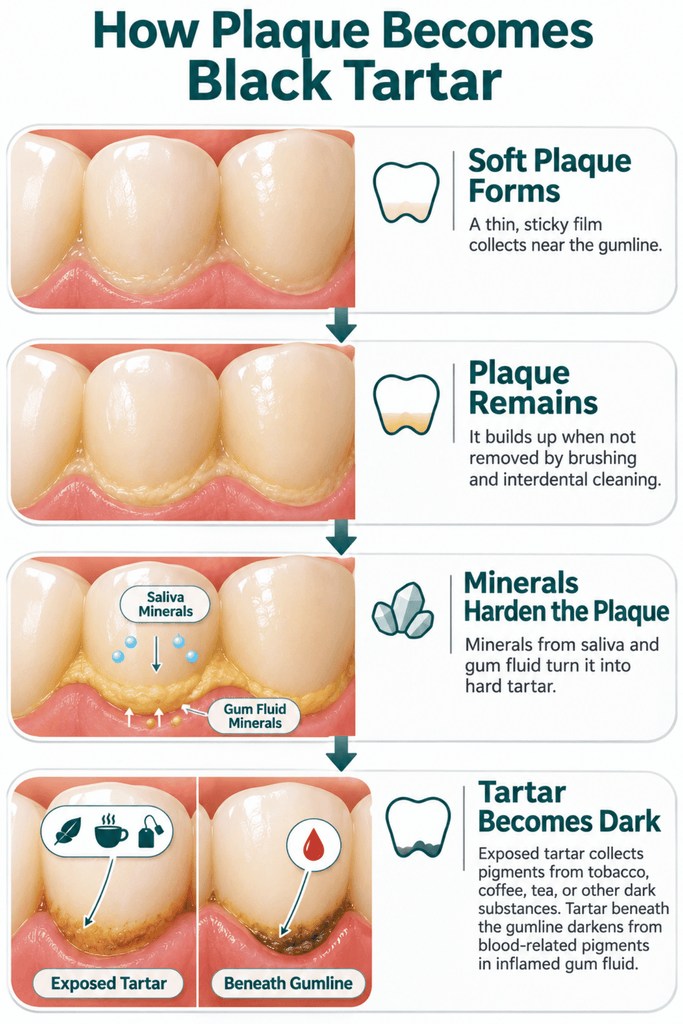
The change happens in two stages. Soft plaque first absorbs minerals and hardens into tartar. The deposit can then collect pigments that make it look brown, dark green, or black. However, not every dark mark follows this process; tooth decay, external stains, old fillings, and changes inside a tooth may look similar.
How Soft Plaque Hardens on Teeth
Plaque contains bacteria within a sticky layer attached to the tooth. If regular brushing and flossing do not remove plaque early, calcium and phosphate from saliva or gum fluid can become trapped within it. The plaque hardens into tartar that a toothbrush, floss, or mouthwash can no longer remove.
Why Tartar Can Look Brown or Black
Tartar on teeth has a rough surface that can absorb pigments and appear black over time. The source of the dark color often depends on whether the deposit is above or below the gums.
- Blood-Related Pigments: Tartar inside a gum pocket can absorb iron-containing pigments from blood and inflamed gum fluid. This helps explain why tartar below the gum line often looks dark brown or greenish black.
- Tobacco Exposure: Smoking or chewing tobacco can leave dark pigments on teeth and existing tartar.
- Dark Drinks: Coffee, tea, red wine, and other strongly colored drinks can stain exposed tartar.
- Food and Mouth Pigments: Colored food particles and bacterial products may collect on a rough deposit and deepen its appearance.
- Time on the Tooth: A deposit that remains for a long period has more opportunity to collect stains. Its color alone does not show how severe the underlying problem is.
Where Black Tartar Commonly Appears
Tartar buildup is most common where plaque is difficult to remove or where teeth receive a steady flow of mineral-rich saliva. Deposits below the gums may not be visible, even when they are extensive.
- Along the Gum Line: A hard yellow, brown, or black edge may develop where the tooth meets the gum.
- Between Teeth: Plaque between teeth can harden when daily interdental cleaning is missed.
- Behind Lower Front Teeth: Salivary ducts open close to the tongue-facing surfaces of these teeth, making this a common site for tartar.
- Beside Upper Back Teeth: Tartar can collect on the cheek-facing surfaces of upper molars near another major salivary duct.
- Inside Gum Pockets: Tartar may extend onto the root beneath the gum line. A dentist or hygienist often detects it by touch during a periodontal examination.
- Around Crowded Teeth or Restorations: Overlapping teeth, braces, and rough filling edges can create areas where plaque builds up more easily.
Black Tartar, Surface Stain, or Tooth Decay?
A dark area cannot be identified reliably by color alone. Its texture, location, shape, and effect on the tooth provide useful clues, but a dental examination may still be necessary.
| Feature | Black Tartar | Surface Stain | Tooth Decay |
|---|---|---|---|
| What It Is | Mineralized plaque attached to a tooth | Pigment on the outer tooth surface | Damage and mineral loss within the tooth |
| Typical Appearance | Raised, crust-like, or irregular deposit | Flat line, spot, or general discoloration | White, brown, or black area that may become a hole |
| Common Location | Near or below the gum line and between teeth | Any exposed surface, often where pigments collect | Grooves, between teeth, near fillings, or along the gum line |
| How It Feels | Usually hard and rough | Usually follows the tooth’s normal contour | May feel normal, rough, soft, or cavitated |
| Does Brushing Remove It? | No | Some recent stains may lighten, but many require polishing | No |
| Possible Symptoms | Bleeding gums, bad breath, or no symptoms | Usually cosmetic only | Sensitivity, pain, food trapping, or no early symptoms |
| Usual Management | Professional scaling | Polishing or stain management after assessment | Fluoride treatment, a filling, or other care based on depth |
A raised black deposit on teeth may suggest tartar, but this is not a home diagnosis. A cavity can hide beside tartar, and removing a deposit may reveal a stained filling, exposed root, or damaged tooth surface underneath.
How Black Tartar Can Affect Your Gums
Tartar is not the same as a cavity. However, its rough surface holds plaque close to the gums and makes the area harder to clean. The bacteria in that plaque can trigger gingivitis, the early stage of gum disease.
Gingivitis may improve after professional cleaning and better oral hygiene. In some people, ongoing inflammation progresses to periodontitis, which damages the tissues and bone supporting the teeth. The darkness of the tartar does not reveal whether bone loss is present.
- Bleeding Gums: Inflamed gums may bleed during brushing, flossing, or eating firm foods.
- Redness or Swelling: The gum edge may look puffy and feel tender around the buildup.
- Persistent Bad Breath: Bacteria and trapped debris can contribute to an unpleasant smell or taste.
- Gum Recession: The gums may pull away from the teeth as periodontal problems progress.
- Deeper Gum Pockets: Spaces between the gums and teeth can deepen and collect more plaque and tartar.
- Tooth Mobility: A loose tooth can indicate loss of supporting tissue and needs prompt assessment.
Can You Remove Black Tartar at Home?
You cannot safely remove established black tartar from your teeth at home. Brushing, flossing, and interdental brushes remove soft plaque, but they cannot break the firm bond between hardened calculus and the tooth.
Home care still matters. Cleaning around the deposit reduces fresh plaque buildup while you arrange professional dental care. It also lowers the chance that new plaque will harden elsewhere.
What Brushing and Interdental Cleaning Can Do
- Brush Twice Daily: Use fluoride toothpaste and a soft-bristled toothbrush. Angle the bristles gently toward the gum line without scrubbing hard.
- Clean Between Teeth Daily: Use floss, an interdental brush, or another method recommended for the size of your spaces.
- Control New Plaque: Regular brushing and flossing can prevent plaque from hardening into more tartar.
- Watch the Gums: Note persistent bleeding, swelling, pain, or discharge and report these findings to your dentist.
- Do Not Rely on Appearance: Teeth may look cleaner after brushing even though tartar remains beneath the gums.
The American Dental Association’s guidance on interdental cleaning explains that these methods remove plaque between teeth before it hardens, while established tartar requires cleaning by a dental professional.
Why DIY Tartar Removal Can Cause Harm
Home dental tools may look similar to professional instruments, but safe tartar removal requires training, visibility, controlled pressure, and knowledge of tooth and root anatomy. Scraping the visible edge also leaves deposits beneath the gums untreated.
- Avoid Sharp Scalers and Blades: These tools can cut the gums, scratch root surfaces, or slip into the soft tissue.
- Avoid Pins and Household Tools: They are not designed or sterilized for dental use and may damage enamel or restorations.
- Avoid Acidic Mixtures: Lemon juice, vinegar, and similar acids do not safely dissolve tartar and may weaken enamel.
- Avoid Highly Abrasive Powders: Forceful rubbing can irritate the gums and wear exposed root surfaces without removing deeper deposits.
- Do Not Pry Under the Deposit: A piece may break off while tartar remains attached below it. You could also mistake part of a tooth or filling for buildup.
How a Dentist Identifies the Black Area
A dentist considers more than color. The goal is to determine whether the mark is attached to the tooth, part of the tooth, or located beneath the gums. Not every patient needs X-rays or a full periodontal assessment for a small surface stain.
- Visual Examination: The dentist checks the shape, location, color, and surrounding tooth structure.
- Texture Assessment: A dental instrument can help determine whether the area is a raised, hard deposit or a defect within the tooth.
- Gum Examination: The dentist looks for inflammation and may measure the spaces between the teeth and gums when gum disease is suspected.
- Targeted X-Rays: Images may be recommended when the dentist needs to check for decay between teeth, bone loss, or another problem that cannot be seen directly.
Current ADA recommendations for selecting dental X-rays emphasize performing a clinical examination first and choosing images according to the patient’s symptoms and individual risk.
How Dentists Remove Black Tartar Safely
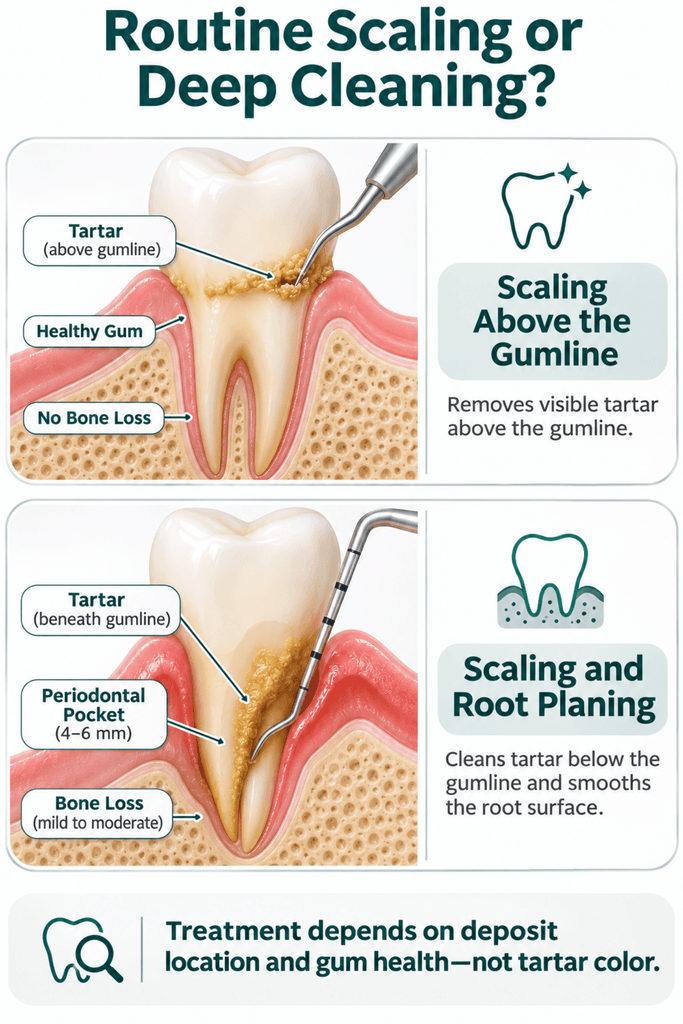
Treatment depends on where the deposit sits and whether the surrounding gums are healthy. Visible tartar above the gum line may need routine scaling, while deposits inside periodontal pockets may require more extensive treatment. Black color alone is not a reason to perform a deep cleaning.
Scaling for Tartar Above the Gumline
A dentist or hygienist removes visible hardened plaque with manual scalers, ultrasonic instruments, or both. Polishing may then smooth the surface and remove remaining external stains. Polishing alone cannot remove a thick or firmly attached tartar deposit.
Deep Cleaning for Tartar Below the Gumline
Scaling and root planing, often called deep cleaning, may be recommended when periodontitis is present and bacterial deposits extend along the roots. The dentist or oral hygienist cleans inside periodontal pockets and smooths contaminated root surfaces when needed. Local anesthetic may be used to keep the area comfortable.
Not everyone with black tartar needs this treatment. The decision should be based on gum measurements, inflammation, attachment loss, bone levels, and deposit location. The European Federation of Periodontology’s evidence-based treatment guideline supports professional plaque and calculus removal as part of periodontal care while matching treatment to the diagnosed stage of disease.
What to Expect After Black Tartar Removal
Your mouth may feel different after tartar removal, especially when the buildup was thick or extended beneath inflamed gums. Mild tenderness, bleeding, or temperature sensitivity can occur for a short period, but the experience varies with the amount of treatment performed.
- Follow the Cleaning Instructions: Brush gently but thoroughly with a soft toothbrush unless your dental professional gives different advice.
- Clean Between the Teeth: Resume flossing or interdental cleaning as directed. Some treated areas may need a gentler approach at first.
- Expect a Different Texture: Teeth often feel smoother because the rough deposit is gone.
- Do Not Be Alarmed by New-Looking Spaces: Thick tartar and swollen gums may have hidden natural spaces between teeth. These spaces can look larger after cleaning and as inflammation settles.
- Manage Sensitivity as Directed: Use any recommended sensitivity product or medication according to your dentist’s instructions.
- Attend the Follow-Up: Deeper pockets may need reassessment to check healing and decide whether more periodontal treatment is necessary.
- Report Unexpected Problems: Contact the dental office about worsening pain, heavy bleeding, increasing swelling, pus, fever, or symptoms that do not begin to improve.
The ADA’s patient guidance on recovery after scaling and root planing describes temporary tenderness, bleeding, and sensitivity as possible effects after deep cleaning.
How to Prevent Black Tartar From Returning
Professional tartar removal does not stop plaque from forming again. Prevention depends on controlling plaque every day and managing factors that make cleaning more difficult. Stain-control toothpaste may reduce some surface discoloration, but it cannot remove tartar already attached to a tooth.
- Brush Your Teeth Twice Daily: Use fluoride toothpaste and clean every tooth surface for about two minutes without aggressive scrubbing.
- Clean Between Teeth Every Day: Choose floss, interdental brushes, or another suitable device. Crowded areas may need special attention.
- Improve Your Technique: Ask a dental professional to show you how to clean around crowded teeth, bridges, implants, braces, or gum recession.
- Avoid Tobacco: Smoking and other tobacco products stain tartar and increase the risk of periodontal disease.
- Limit Frequent Staining Exposure: Rinsing with water after coffee or tea may reduce the time pigments remain on the teeth, although it will not remove existing calculus.
- Attend Risk-Based Dental Visits: Some people need professional cleaning more often than others. Your gum health, plaque control, medical history, and previous tartar buildup should guide the schedule rather than a fixed rule for everyone.
- Address Plaque Traps: A dentist can assess rough fillings, crowded teeth, or other areas where food particles and plaque repeatedly collect.
When to See a Dentist About a Black Deposit
A hard black deposit that does not brush away should be examined, even if it causes no pain. Most cases do not require emergency treatment, but delaying care gives plaque and tartar more time to collect around the gums.
- Arrange a Routine Visit: Book an examination if you notice a firm dark line, rough patch, or repeated tartar buildup near the gum line.
- Request an Earlier Appointment: Seek faster assessment for persistent bleeding, increasing pain, gum recession, a loose tooth, or bad breath that does not improve with oral hygiene.
- Seek Urgent Dental Care: Pus, a growing gum lump, significant facial swelling, fever, or a lasting foul taste may indicate an infection rather than tartar alone.
- Seek Immediate Medical Help: Difficulty breathing or swallowing, swelling spreading toward the eye or neck, or severe rapidly increasing facial swelling requires emergency care.
Frequently Asked Questions
Does Black Tartar Always Mean You Have Gum Disease?
No. Tartar can be present without periodontitis, but its rough surface retains plaque and may occur with gingivitis. Black color does not show how much tissue damage exists. A dentist must assess gum inflammation, pocket depths, attachment levels, and sometimes bone levels on X-rays to determine whether gum disease is present.
Can Teeth Whitening Remove Black Tartar?
No. Whitening products change pigments within or on the tooth, but they cannot detach hardened calculus. Professional tartar removal should come first. After cleaning, a dentist can determine whether any remaining dark area is an external stain, natural discoloration, a filling, decay, or a color change that may respond to whitening.
What Should You Do if Black Tartar Breaks Off?
Do not scrape or pry at the remaining buildup. A broken piece can leave a rough or sharp edge, but it may also uncover decay, gum recession, or a damaged filling. Save the fragment if you are unsure whether it came from a tooth, and arrange a dental examination.
Why Does Black Tartar Return After a Dental Cleaning?
New plaque begins forming after cleaning and can harden again if it remains undisturbed. Recurrence is more likely around crowded teeth, rough restorations, difficult-to-clean areas, or periodontal pockets. Tobacco can also darken new deposits. Ask your dental professional to review your technique and recommend a cleaning schedule based on your risk.
Does a Dark or Black Tooth Mean It Is Covered in Tartar?
Not necessarily. Tartar is a hard deposit attached to the outside of a tooth, often near the gums. When most of one tooth becomes darker, the color may come from previous trauma, decay, a restoration, or changes inside the tooth. That tooth needs an examination rather than scraping or whitening at home.
Can Children Develop Black Tartar on Their Teeth?
Children can develop calculus, but dark lines near their gums may be a type of external black stain rather than tartar or decay. A 2025 clinical review of dental black stain describes it as dark dots or lines near the cervical, or gum-side, part of the tooth. A dentist should confirm the cause before removal.
Why Is There Black Tartar on Only One Tooth?
A single tooth may collect more plaque because it is crowded, rotated, difficult to reach, or beside a rough filling. A deep localized gum pocket can also hold tartar below the gum line. However, one black spot could be a stain or cavity, so its location alone cannot confirm tartar.
Bottom Line
Black tartar on teeth is hardened plaque that has collected dark pigments. It cannot be removed at home with brushing, whitening products, acidic mixtures, or dental scrapers. Professional examination and scaling are the safest ways to identify and remove the deposit.
Daily brushing and cleaning between the teeth help prevent plaque from hardening again. If a black area persists, let a dentist determine whether it is tartar, surface staining, tooth decay, or another change that requires different care.
