Do your teeth feel fuzzy by the end of the day, or do you notice a pale film near the gumline? That film may be tooth plaque, a soft, sticky layer of bacteria that forms on teeth every day. It is common and can usually be removed with good brushing and cleaning between the teeth.
Plaque itself is often hard to see, but leaving it in place gives bacteria more time to produce acids and irritate the gums. This can raise the risk of cavities and gingivitis. Plaque that stays on the teeth can also harden into tartar, which a toothbrush or floss cannot remove.
Finding plaque does not always mean your mouth is unhealthy or that you need urgent treatment. What matters is how much builds up, where it collects, and whether you have signs such as bleeding gums, bad breath, pain, or a hard deposit. Knowing how plaque forms and how it differs from tartar makes it easier to choose the right home care and know when to see a dentist.
What Is Tooth Plaque?
Tooth plaque is a soft, sticky biofilm that forms on your teeth. It contains bacteria held together by substances from the bacteria and saliva. Food particles can become trapped in it, but plaque is more than food left after a meal.
Dental plaque forms naturally every day, even in a healthy mouth. A small amount is not automatically a sign of disease. Problems become more likely when plaque remains undisturbed, grows thicker, or collects near the gums and in other hard-to-clean areas. Plaque bacteria can produce acids that lead to tooth decay and irritate the gums.
Why Tooth Plaque Forms Every Day
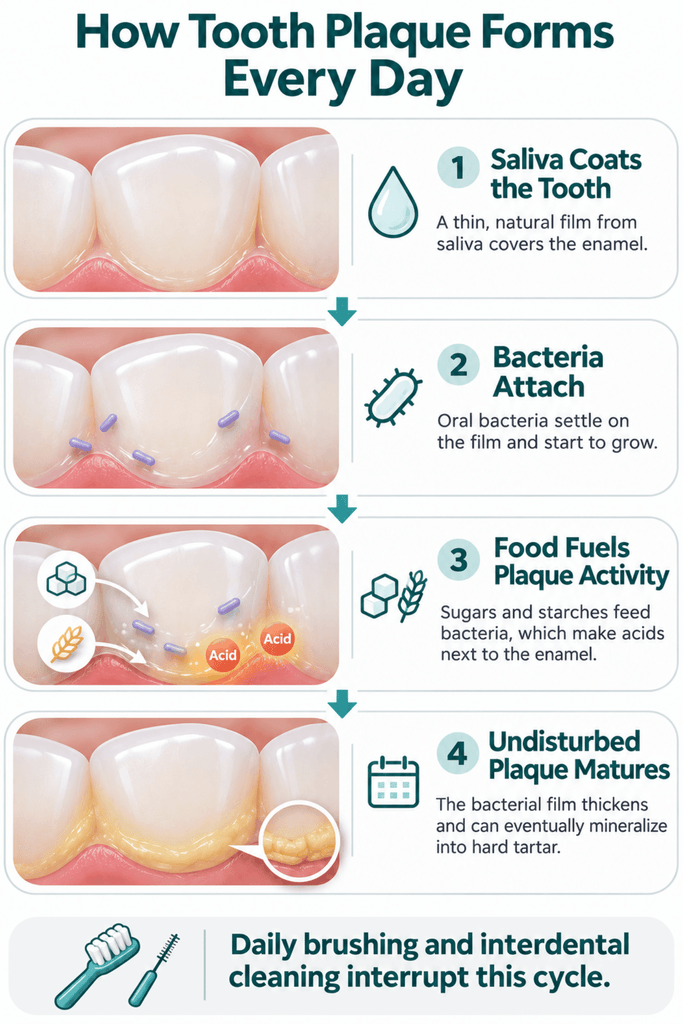
Soon after you clean your teeth, proteins from saliva create a thin coating on the tooth surface. Bacteria in your mouth attach to this coating and begin forming a sticky community. More bacteria join as the biofilm matures.
These bacteria are normal parts of the mouth. You cannot permanently stop plaque from forming, but you can disrupt it before it causes tooth decay, gum inflammation, or tartar buildup.
How Sugary and Starchy Foods Affect Plaque
Bacteria in plaque use sugars and some starches from food and drinks. They produce acids that can remove minerals from tooth enamel. Repeated acid attacks are more harmful when you sip or snack frequently because the enamel has less time to recover.
- Limit Frequent Snacking: Reduce how often your teeth are exposed to sugary or starchy snacks throughout the day.
- Choose Water More Often: Water washes away some food particles and does not provide sugar for plaque bacteria.
- Have Sweets With Meals: Saliva flow is usually higher during meals, which helps clear food and neutralize acids.
- Use Fluoride Toothpaste: Fluoride helps strengthen enamel and repair the earliest stages of mineral loss.
The American Dental Association advises reducing the amount and frequency of carbohydrate exposure, especially for people at greater risk of cavities.
Why Some People Develop More Buildup
Visible plaque does not always mean someone never brushes. Tooth shape, dental work, saliva, health conditions, and the ability to use cleaning tools can all affect plaque buildup.
- Crowded or Rotated Teeth: Overlapping teeth create narrow spaces that a toothbrush may miss.
- Braces and Retainers: Brackets, wires, and appliance edges provide extra places for plaque to collect.
- Crowns, Bridges, and Implants: Plaque can gather along restoration edges and near the gumline.
- Dry Mouth: Reduced saliva allows food and acids to remain longer and can increase the risk of tooth decay.
- Reduced Hand Movement: Arthritis, disability, or other movement problems can make detailed cleaning difficult.
- Missed Interdental Areas: Brushing does not fully remove plaque from tight spaces between teeth.
- Frequent Sugar Exposure: Regular sipping or snacking gives plaque bacteria repeated access to carbohydrates.
What Does Tooth Plaque Look and Feel Like?
Tooth plaque is often colorless or pale, so it may be difficult to see. A thin layer can make the teeth feel fuzzy, sticky, or less smooth when you run your tongue across them.
A yellow, brown, or dark deposit is not always plaque. It could be stained plaque, tartar, food debris, or a tooth stain. A hard or rough deposit that remains after careful brushing is more likely to be tartar and should be checked by a dental professional.
Common Places Where Plaque Hides
Plaque often remains in places where toothbrush bristles cannot make good contact.
- Along the Gumline: Plaque collects where each tooth meets the gum, especially when brushing stays mainly on the crowns.
- Between Teeth: Tight contacts prevent a toothbrush from cleaning the side surfaces fully.
- Behind Front Teeth: These inner surfaces are easy to miss, particularly behind the lower teeth.
- Back Molars: Limited space and visibility make the last teeth harder to reach.
- Chewing Grooves: Deep grooves can trap bacteria and food particles.
- Crowded Areas: Overlapping teeth create sheltered spaces that need extra attention.
- Around Dental Work: Braces, bridges, crowns, implants, and removable appliances create additional plaque-retention areas.
How Disclosing Tablets Reveal Missed Plaque
Plaque-disclosing tablets or solutions contain a dye that temporarily colors plaque. They can show which areas remain after brushing and help you improve your technique. The MedlinePlus instructions for identifying dental plaque at home describe both disclosing tablets and plaque-revealing lights.
- Clean Your Teeth Normally: Brush and clean between your teeth as you usually would.
- Follow the Product Directions: Chew the tablet or apply the solution exactly as instructed on the label.
- Rinse as Directed: Spit out the product and gently rinse if the instructions tell you to do so.
- Check the Stained Areas: Use a mirror to look along the gumline, between teeth, and behind the front teeth.
- Clean the Missed Plaque: Brush and clean between the stained teeth again using gentle pressure.
The dye may temporarily color your tongue, lips, or dental work. Ask a dentist or hygienist before using a disclosing product if you have allergies, extensive restorations, or difficulty following the instructions.
Tooth Plaque vs. Tartar: How to Tell the Difference
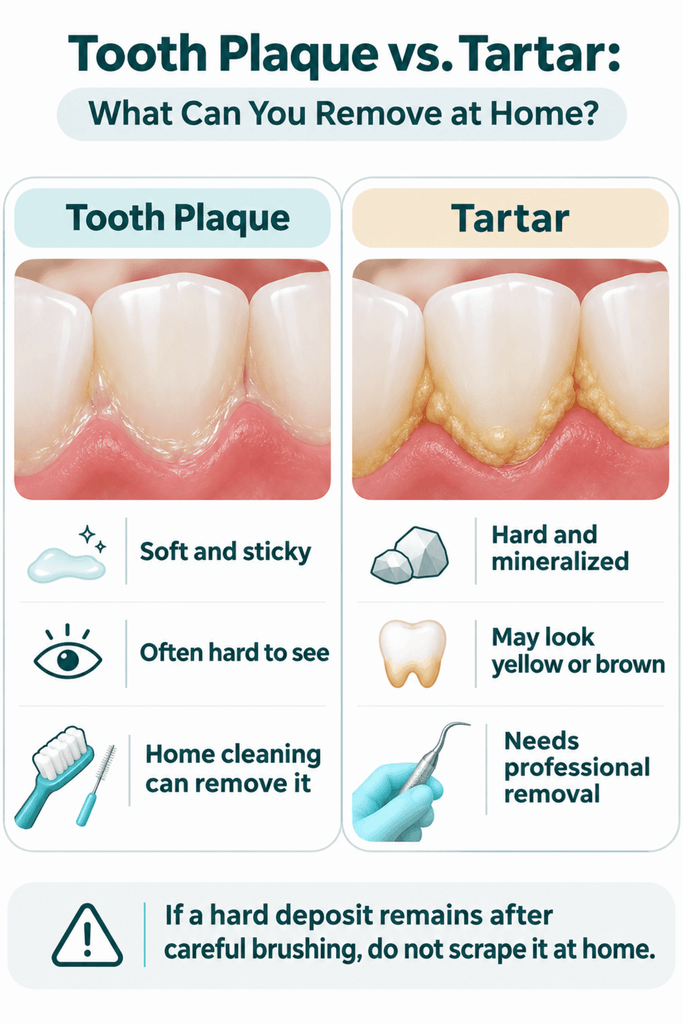
Plaque and tartar are related, but they are not the same material. Tartar forms when minerals from saliva enter plaque and create a hard deposit that bonds firmly to the tooth surface.
| Feature | Tooth Plaque | Tartar |
|---|---|---|
| Texture | Soft, sticky, or fuzzy | Hard, rough, or crust-like |
| Usual appearance | Often colorless or pale | Often yellow or brown, but may become darker |
| Formation | Develops continually as a bacterial biofilm | Forms when plaque becomes mineralized |
| Common locations | Any tooth surface, especially gumlines and spaces between teeth | Often near salivary gland openings and along or below the gumline |
| Home removal | Can usually be disrupted with brushing and interdental cleaning | Cannot be safely brushed or flossed away |
| Required care | Consistent daily cleaning | Removal by a dentist or dental hygienist |
If a deposit stays in place after careful brushing and cleaning between the teeth, do not force it off. The National Institute of Dental and Craniofacial Research’s oral-hygiene guidance explains that hardened tartar requires professional removal.
What Happens If Tooth Plaque Stays on Your Teeth?
A small amount of plaque does not guarantee that a dental problem will develop. Risk depends on where the plaque collects, how long it remains, how often the teeth face acid attacks, fluoride exposure, saliva, and individual susceptibility.
When plaque remains undisturbed, however, its bacteria can contribute to enamel damage and gum inflammation. The plaque may also mineralize and become tartar, making the area more difficult to clean.
Tooth Decay and Cavities
After exposure to sugars or fermentable starches, bacteria in plaque produce acids. Repeated acid attacks remove minerals from tooth enamel. An early area of mineral loss may appear as a chalky white spot, although some early changes are difficult to see.
Early mineral loss is not the same as a cavity. Fluoride, saliva, and improved plaque control may help the enamel recover before the surface breaks down. Once a true hole forms in the tooth, brushing cannot replace the missing structure, and the tooth may need professional treatment.
Gingivitis and Gum Disease
Plaque that remains along the gumline can irritate the gums. They may become red, swollen, tender, or more likely to bleed during brushing and interdental cleaning. This early inflammation is called plaque-induced gingivitis.
Gingivitis can often improve when plaque and tartar are controlled. Periodontitis is different: it affects the deeper tissues and bone supporting the teeth and requires professional diagnosis. Advanced periodontal disease can cause gum recession, loose teeth, and eventually tooth loss. The NIDCR overview of gum-disease signs, diagnosis, and treatment explains this progression in more detail.
Watch for changes such as:
- Repeated Gum Bleeding: Bleeding that continues despite gentle, consistent cleaning may indicate inflammation.
- Persistent Redness or Swelling: Healthy gums should not remain puffy or tender.
- Gum Recession: Gums that pull away can expose sensitive root surfaces.
- Loose or Shifting Teeth: These changes require professional assessment and should not be blamed on simple surface plaque.
- Pain When Chewing: Pain may indicate decay, infection, or damage to the supporting tissues.
Bad Breath and Visible Buildup
Plaque, food debris, tongue coating, cavities, and gum inflammation can all contribute to bad breath. Plaque near the gumline may also trap stains and make buildup easier to see.
Bad breath has several possible causes, so mouthwash alone may not solve it. Arrange a dental assessment if the odor continues despite thorough brushing, tongue cleaning, interdental care, and good hydration.
How to Remove Soft Tooth Plaque at Home
Soft plaque can usually be removed by physically disrupting it with a toothbrush and an interdental cleaning tool. Hardened tartar cannot be removed safely through stronger brushing, whitening toothpaste, or home scraping.
Use gentle, consistent cleaning rather than aggressive pressure. Detailed techniques may vary according to your tooth spacing, dental work, braces, and ability to handle different tools.
Brush Every Tooth Surface
Brush your teeth twice a day for about two minutes with fluoride toothpaste and a soft-bristled toothbrush. Manual and powered brushes can both work when used correctly. The American Dental Association’s evidence-based toothbrushing recommendations cover brushing time, bristle choice, technique, and brush replacement.
- Divide Your Mouth Into Sections: Cleaning one area at a time makes it less likely that you will miss a surface.
- Angle the Bristles Toward the Gumline: Use gentle, short movements where plaque commonly collects.
- Clean Every Side: Brush the outer, inner, and chewing surfaces of each tooth.
- Reach Behind the Front Teeth: Hold the brush more vertically to clean these narrow inner surfaces.
- Use Gentle Pressure: Scrubbing harder does not improve plaque removal and may irritate the gums.
- Check the Bristles: Replace a worn or frayed brush because bent bristles may clean less effectively.
Clean Between Your Teeth
Toothbrush bristles cannot fully clean the surfaces where neighboring teeth touch. Cleaning between teeth once a day disrupts plaque in these spaces and along the nearby gumline. The ADA evidence review of floss and other interdental cleaners notes that the best tool depends on the person and the space being cleaned.
- Dental Floss or Tape: These options usually work well in tight contacts when the floss can curve around each tooth.
- Interdental Brushes: Small brushes may be easier to use in wider spaces, around bridges, or between some orthodontic wires.
- Floss Threaders: These help guide floss under fixed bridges and certain appliances.
- Water Flossers: They may be useful for people with braces, dental work, or difficulty handling string floss.
Ask a dentist or hygienist to demonstrate the tool if it bends, becomes trapped, causes repeated injury, or does not fit comfortably.
Understand What Mouthwash Can and Cannot Do
Mouthwash is an added product, not a replacement for brushing and cleaning between teeth. Some fluoride rinses help protect against tooth decay, while certain antimicrobial rinses may provide extra plaque or gingivitis control for selected people.
The right product depends on age, cavity risk, gum health, dry mouth, and other needs. Some ingredients may cause staining, taste changes, irritation, or other side effects. Follow the label and use prescription rinses only as directed. The ADA review of mouthwash benefits, limitations, and precautions explains why rinsing should remain an addition to mechanical cleaning.
How to Prevent Excess Tooth Plaque Buildup
You cannot stop dental plaque from forming, but you can prevent plaque buildup from remaining long enough to damage your teeth and gums or become tartar. A simple routine performed consistently is usually more helpful than using many products irregularly.
- Brush Twice a Day: Use fluoride toothpaste and clean for about two minutes each time.
- Clean Between Teeth Daily: Choose floss, an interdental brush, or another tool suited to your spaces.
- Limit Frequent Sugar Exposure: Reduce repeated sipping and snacking on sugary or refined starchy products.
- Drink Water: Water helps clear food particles and supports a healthier mouth, especially after meals.
- Clean Around Dental Work: Pay extra attention to braces, bridges, implants, crown edges, and removable appliances.
- Address Dry Mouth: Speak with a dental or medical professional if your mouth regularly feels dry, particularly if you take medicines that affect saliva.
- Adapt the Tools When Needed: A powered toothbrush, floss holder, larger handle, or caregiver assistance may make cleaning easier.
- Attend Regular Dental Visits: Your dentist should recommend an examination and dental cleaning schedule based on your personal risk rather than a single timetable for everyone.
Why Plaque Can Remain Even When You Brush
Brushing twice a day does not guarantee that every surface is clean. A brush may pass over the teeth without reaching the gumline, inner surfaces, or back molars. It also cannot fully clean tight spaces between teeth.
A rough area that remains after careful brushing may not be soft plaque at all. It could be tartar, a stain, an uneven filling, a chipped tooth, or another change that needs examination.
If plaque seems to remain, try these checks:
- Slow Down: Give each part of your mouth enough attention instead of repeatedly brushing the easiest surfaces.
- Follow the Same Route: Starting in the same place and moving tooth by tooth can reduce missed areas.
- Clean the Gumline Gently: Angle the bristles so they contact the edge where each tooth meets the gum.
- Add Interdental Cleaning: Brushing alone leaves plaque between the teeth.
- Replace a Worn Brush: Frayed bristles may not reach the tooth surface effectively.
- Use a Disclosing Product: Occasional plaque staining can reveal a repeated pattern of missed areas.
- Adjust for Dental Work: Braces, bridges, implants, and crowded teeth may require special tools.
- Request a Professional Check: A dentist or hygienist can identify tartar and demonstrate a better technique for your mouth.
When Tooth Plaque Needs Professional Dental Care
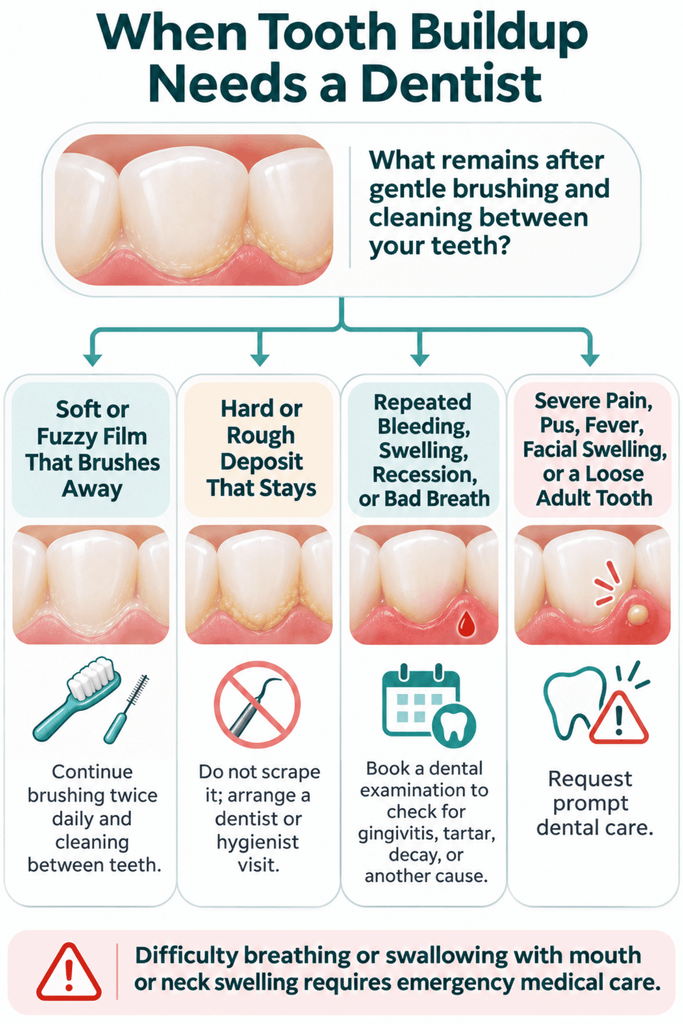
A thin, soft film without other symptoms can usually be managed with improved home care. Arrange a dental visit when deposits feel hard, plaque repeatedly remains in the same area, or you notice lasting changes in your teeth or gums.
- Continue Home Care: Soft, fuzzy plaque that brushes away without pain or gum changes usually needs consistent daily control.
- Book a Dental Examination: Seek routine care for hard deposits, repeated bleeding, gum recession, persistent bad breath, or areas you cannot clean.
- Request Prompt Care: Contact a dentist promptly for increasing pain, pus, fever, swelling, or a loose adult tooth.
Dental cleaning frequency should reflect your cavity risk, gum health, tartar formation, medical history, smoking status, and ability to clean at home.
Signs That Suggest Tartar or Gum Inflammation
A dentist or hygienist can determine whether a deposit is plaque, tartar, stain, or another change.
- Hard or Rough Deposits: Buildup that does not move with careful brushing may be tartar.
- Frequent Bleeding: Repeated bleeding can indicate gingivitis, although other causes are possible.
- Persistent Swelling: Puffy or tender gums deserve assessment when they do not improve.
- Gum Recession: A receding gumline may expose sensitive root surfaces and create new plaque-retention areas.
- Ongoing Bad Breath: Persistent odor may come from gum inflammation, cavities, tongue coating, dry mouth, or another cause.
- Increasing Sensitivity: Sensitivity can result from exposed roots, decay, cracks, or other problems that need diagnosis.
Symptoms That Need Prompt Assessment
Simple tooth plaque does not normally cause severe pain, fever, or facial swelling. These findings may indicate decay, an abscess, or another condition requiring prompt treatment.
- Severe or Increasing Pain: Contact a dentist, especially when pain interferes with eating, sleep, or normal activities.
- Facial or Jaw Swelling: Swelling may indicate that an infection is spreading.
- Fever or Feeling Unwell: These symptoms can occur with a dental infection.
- Pus or a Bad-Tasting Discharge: Drainage near a tooth or gum needs assessment.
- A Loose Adult Tooth: New movement can result from injury, advanced gum disease, or another serious problem.
- Difficulty Breathing or Swallowing: Seek emergency medical care for spreading mouth or neck swelling that affects breathing or swallowing.
What Happens During a Dental Plaque Assessment?
A dental professional examines more than the visible buildup. The goal is to identify where plaque and tartar collect, whether they have affected the teeth or gums, and which home-care changes would be useful.
- Review Your Concerns: The dental team asks about bleeding, sensitivity, pain, bad breath, dry mouth, home care, diet, medicines, and relevant health conditions.
- Examine the Teeth: The dentist checks for plaque deposits, tartar buildup, enamel changes, cavities, cracks, and restoration problems.
- Assess the Gums: The examination may include checking for redness, bleeding, recession, and the depth of spaces around the teeth.
- Use Additional Tests When Needed: Disclosing dye may show plaque, while dental X-rays are taken only when they are clinically indicated.
- Remove Professional Deposits: A dentist or hygienist uses dental instruments to remove tartar that has bonded to the tooth surface.
- Plan Further Care: Treatment depends on the findings. A simple cleaning may be enough for some people, while tooth decay or periodontal disease may require additional care.
Frequently Asked Questions About Tooth Plaque
Is It Safe to Scrape Plaque or Tartar off Your Teeth?
Do not use a dental scaler, knife, pin, or another sharp object at home. Improper scraping can injure your gums and damage exposed roots or dental restorations. Remove soft plaque with brushing and interdental cleaning. A dentist or hygienist should remove hard tartar with professional instruments.
How Quickly Does Tooth Plaque Form and Harden Into Tartar?
Plaque begins reforming soon after you clean your teeth. Minerals from saliva can gradually enter deposits and turn them into tartar, but the timing varies with plaque location, saliva, cleaning habits, and individual risk. Do not rely on a fixed number of hours or days before cleaning again.
Why Does Tooth Plaque Return After a Professional Cleaning?
A dental cleaning removes existing plaque, stains, and tartar but does not change the mouth’s natural ability to form biofilm. Bacteria begin attaching to teeth again after cleaning. Brushing twice a day, cleaning between teeth, and following your recommended dental visit schedule help control new buildup.
Is Tooth Plaque Contagious?
Tooth plaque is not contagious in the same way as a cold. People can exchange oral bacteria through saliva, but receiving bacteria does not mean harmful plaque buildup or disease will develop. Home care, diet, fluoride exposure, saliva, and individual susceptibility have a larger role in what happens next.
Can Plaque Form Around Crowns, Fillings, or Dental Implants?
Yes. Plaque can attach to natural teeth and dental materials, especially along restoration edges and nearby gumlines. Clean these areas carefully with the tools recommended for your dental work. Seek an examination for persistent bleeding, swelling, soreness, a rough edge, or a restoration that feels loose.
Can Tooth Plaque Cause Pain?
Soft plaque usually does not hurt by itself. Pain can develop when plaque contributes to a cavity, inflamed gums, exposed roots, or a dental infection. New, persistent, or increasing pain should be examined rather than treated as a simple plaque problem.
Bottom Line: Control Tooth Plaque Before It Hardens
Tooth plaque forms naturally every day, but consistent home care can prevent it from harming your oral health. Brushing with fluoride toothpaste twice a day, cleaning between teeth, limiting frequent sugar exposure, and attending risk-based dental visits can help prevent plaque buildup, cavities, gingivitis, and tartar.
See a dental professional if deposits remain hard or rough, your gums continue to bleed or swell, or you develop pain, sensitivity, recession, or persistent bad breath. Seek prompt care for fever, pus, facial swelling, or other signs of infection.
