If you have ever wondered what holds a dental implant in place or why it looks and feels like a natural tooth, understanding dental implant parts is the first step. Every implant is made of several connected components, and each one has a specific job in replacing a missing tooth. When these parts work together, they create a stable, functional, and natural-looking smile.
Some people only hear about the implant screw, while others are surprised to learn there is also an abutment, a crown, and additional small parts that help secure the restoration. The type of implant system, the location of the missing tooth, and your dentist’s treatment plan can all affect which components are used and how they fit together.
Knowing the purpose of each part makes it easier to understand your treatment, ask informed questions, and care for your implant after placement. From the piece hidden inside the jawbone to the visible crown you use every day, each component plays an important role in long-term success.
What Are Dental Implant Parts?
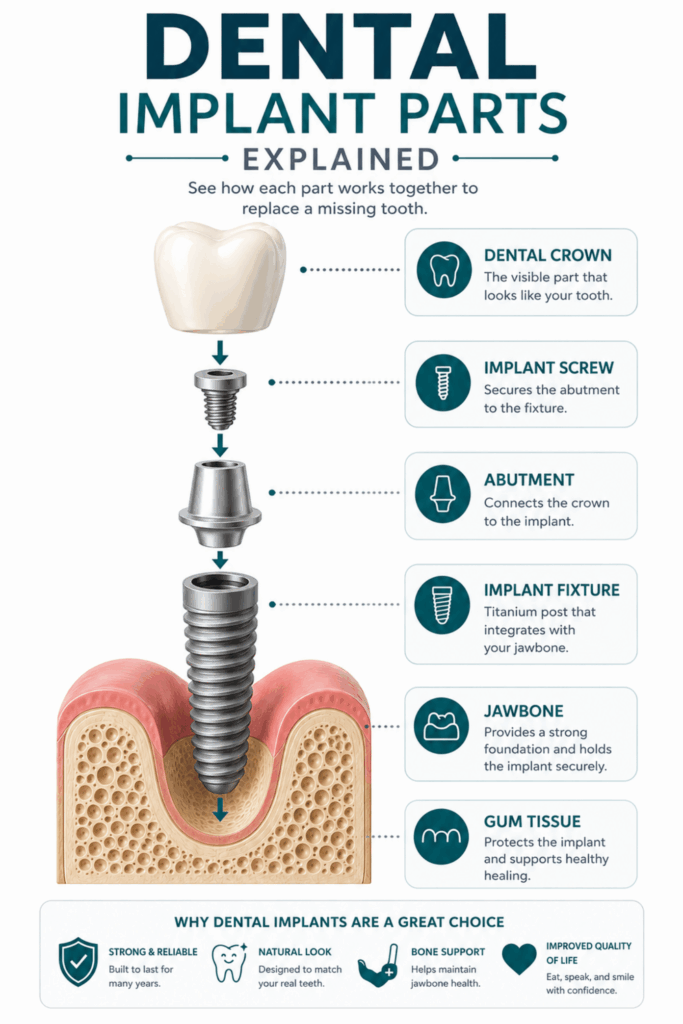
Dental implant parts are the individual components that work together to replace a missing tooth from the root to the visible chewing surface. Instead of being a single piece, a dental implant system typically includes an implant fixture that acts as an artificial tooth root, an implant abutment that connects the pieces, and a custom-made dental crown that looks like a natural tooth. Each component has a specific role, and together they create a stable tooth replacement that supports chewing, speaking, and a healthy smile.
The Main Dental Implant Parts Explained
Every dental implant is designed as a complete system, with each part performing a different function. Understanding these basic parts makes it easier to see why dental implants feel so secure and why replacing one component does not always mean replacing the entire implant.
- Implant Fixture: The titanium or zirconia implant body is surgically placed into the jawbone and replaces the natural tooth root.
- Implant Abutment: This connector joins the implant fixture to the final restoration while supporting proper alignment.
- Dental Implant Crown: The visible tooth is custom-made to restore appearance and chewing ability.
- Implant Screw: A precision screw secures the abutment or crown and helps maintain long-term stability.
- Retention Components: Depending on the design, restorations may be screwed or cemented into place for reliable function.
Implant Fixture (The Artificial Tooth Root)
The implant fixture is the foundation of the entire restoration. This small post is surgically placed into the jawbone, where it replaces the natural tooth root and provides support for the new tooth. Most implant fixtures are made from titanium alloys because they encourage osseointegration, a process where bone grows directly onto the implant surface. Some patients may also receive zirconia dental implants as a metal-free alternative, although titanium remains the most widely used material in modern dentistry.
Abutment (The Connecting Piece)
The implant abutment is the connector that links the implant fixture beneath the gum to the dental crown above it. It is carefully selected or custom-made to create the proper height, angle, and support for the final restoration. A well-designed abutment helps distribute chewing forces evenly while creating a natural-looking transition between the gum and the visible tooth, improving both function and appearance.
Dental Implant Crown (The Visible Tooth)
The dental implant crown is the part everyone sees when you smile. It is custom-made in a dental lab to match the shape, size, and color of your surrounding teeth for a natural result. Crowns are commonly made from porcelain, ceramic, zirconia, or porcelain fused to other materials, allowing patients to chew comfortably while restoring confidence in their smile. Once attached to the implant, the crown functions much like a healthy natural tooth.
Implant Screw and Retention Components
Small implant screws and retention components keep the restoration securely attached to the implant. In a screw-retained implant crown, the crown is fastened directly with a precision screw that allows future removal if maintenance is needed. Other restorations may be cemented onto the abutment instead. Proper tightening by a dentist is essential because even a tiny amount of movement can increase wear, loosen components, or affect long-term implant stability.
How Dental Implant Parts Work Together
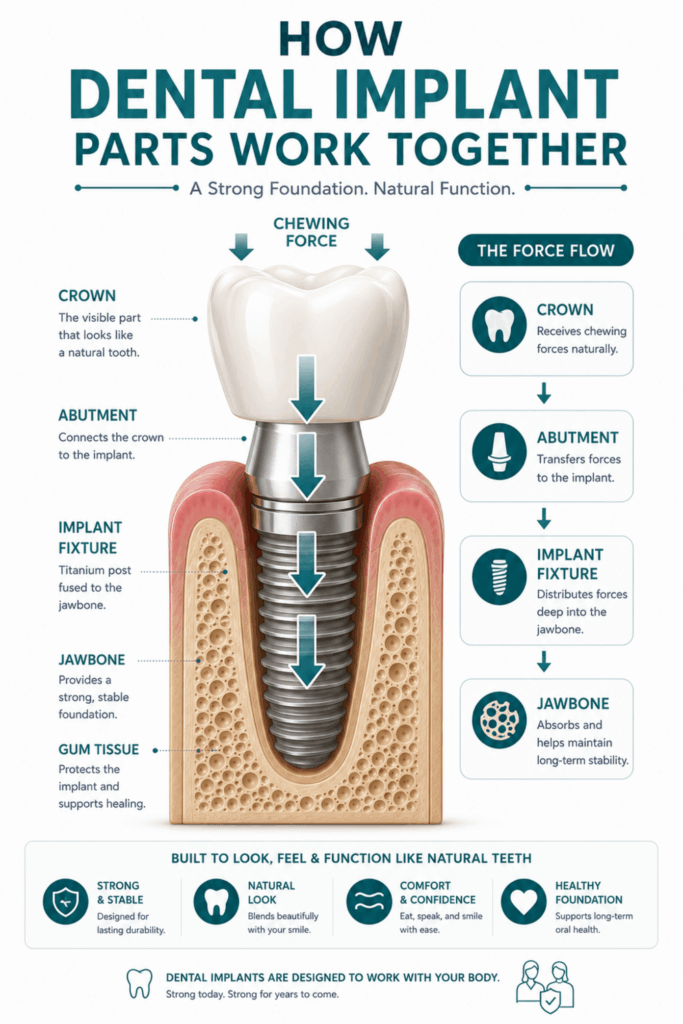
Although each component has its own purpose, dental implant parts are designed to function as one complete system. The implant fixture acts as the artificial tooth root by anchoring inside the jawbone; the abutment serves as the connector, and the dental crown replaces the visible tooth that you use every day.
This layered design allows chewing forces to travel through the crown, into the abutment, and finally into the implant fixture and surrounding bone. The result is a stable tooth replacement that closely mimics the function of a natural tooth root while helping preserve bone and gum health over time.
Are All Dental Implant Parts the Same?
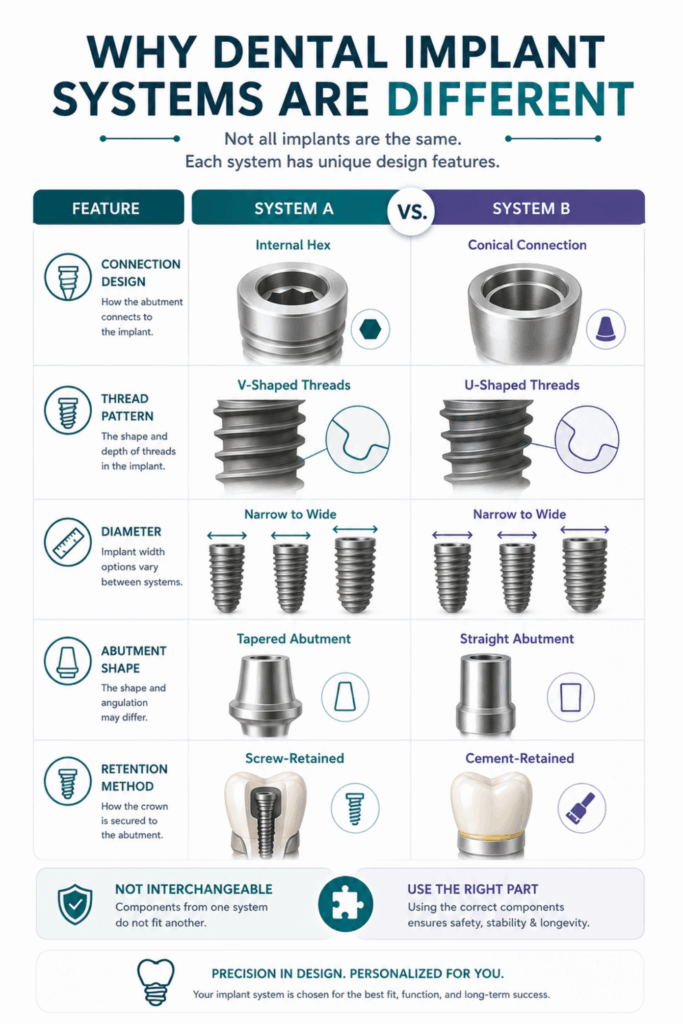
Dental implant systems may look similar, but they differ in design, dimensions, materials, and connection types. Because manufacturers use unique engineering standards, components from one system often cannot be safely mixed with another.
- Connection Design: Internal and external connections are engineered differently and are usually not interchangeable.
- Implant Size: Fixtures come in various diameters and lengths to fit different jawbone conditions.
- Material Choice: Systems may use titanium, titanium alloys, or zirconia depending on clinical needs.
- Thread Pattern: Different thread designs influence initial stability and placement techniques.
- Abutment Shape: Straight and angled abutments are selected based on implant position and bite alignment.
- Retention Method: Restorations may be screwed or cemented depending on the treatment plan.
Materials Used for Dental Implant Parts
Different implant parts are made from materials chosen for strength, durability, and compatibility with the body. Each material has unique benefits depending on the component and clinical situation.
- Titanium: The most common material for the implant post because it is strong, durable, and safely bonds with the jawbone, creating a stable foundation for the new tooth.
- Zirconia: A white, metal-free material used for some implant posts and crowns, making it a popular choice for patients who want a tooth-colored alternative.
- Porcelain or Ceramic: These natural-looking materials are commonly used to make dental crowns because they closely match the color and appearance of real teeth.
- Mixed Materials: Many dental implants combine different materials, such as a titanium implant post with a porcelain or ceramic crown, to provide both strength and a lifelike appearance.
Additional Components That May Be Used
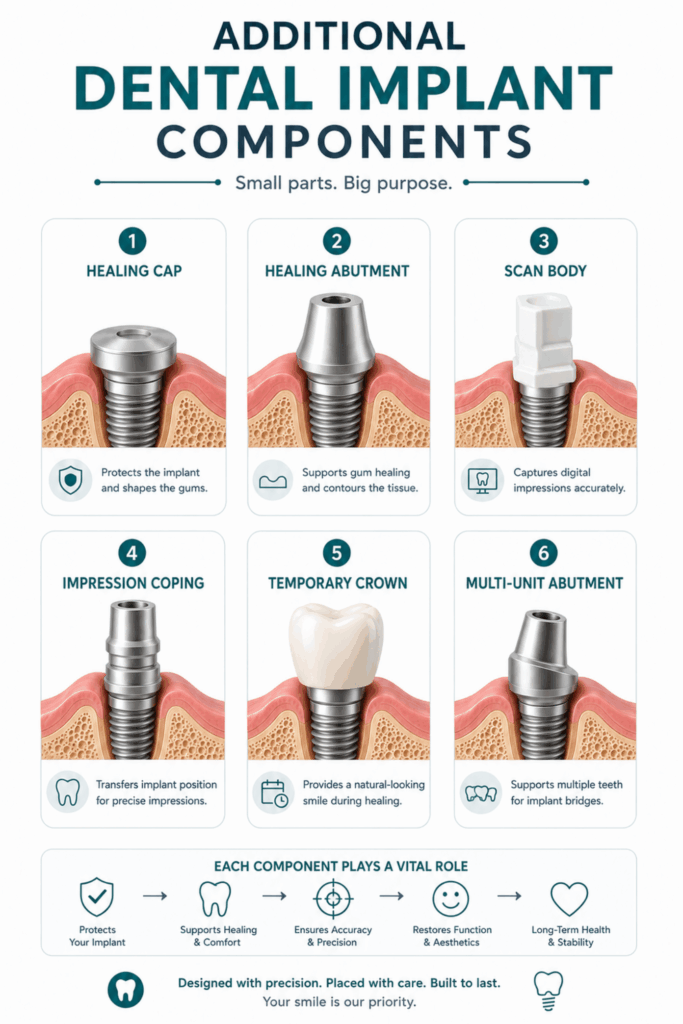
Not every implant treatment uses the same parts. Depending on the stage of treatment and the type of restoration, your dental provider may use several additional components to achieve a precise fit.
- Healing Abutment: Shapes the gum tissue after implant placement and prepares it for the final restoration.
- Healing Cap: Protects the implant opening during healing while supporting healthy gum formation.
- Scan Body: Helps digital scanners accurately record implant position for computer-designed restorations.
- Impression Coping: Transfers the exact implant location to a dental lab when traditional impressions are taken.
- Temporary Crown: Provides appearance and limited function while the implant heals before the permanent crown is placed.
- Multi-Unit Abutment: Used to support implant bridges or dentures and improve restoration alignment across multiple implants.
Dental Implant Parts During the Treatment Process
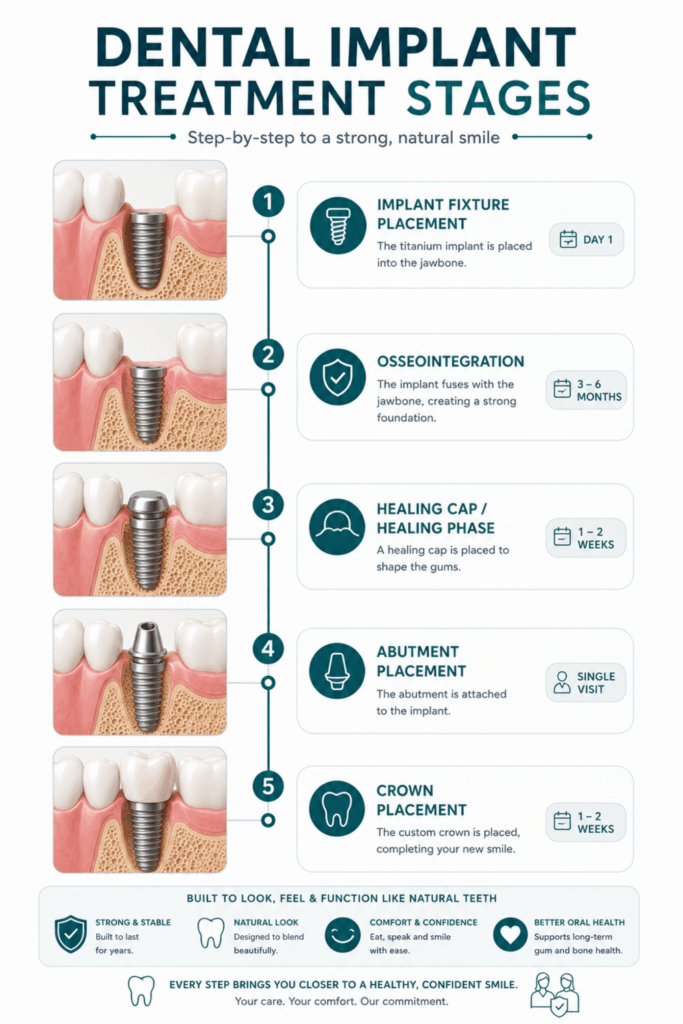
Dental implant treatment happens in stages, and different components appear at different times. Knowing what is happening beneath the gum helps many patients feel more comfortable throughout the process.
At first, only the implant fixture is placed into the jawbone. As healing progresses, temporary components may be attached before the permanent abutment and crown complete the restoration.
Surgical Placement
During implant surgery, the dentist surgically places the implant fixture into the jawbone where the missing tooth root once existed. The implant body remains hidden beneath the gum while the surrounding bone and gum begin the healing process. Depending on the treatment plan, a healing cap may be visible above the gum.
Healing and Osseointegration
Over the next several weeks or months, osseointegration allows the bone to bond directly with the implant fixture, creating a stable foundation for future chewing forces. During this phase, healing abutments or temporary components may be attached to guide gum healing and prepare the site for the final restoration.
Final Restoration
Once healing is complete, the permanent implant abutment is connected to the implant fixture, and the custom-made dental crown is attached. The restoration may be screwed or cemented into place, resulting in a functional and natural-looking replacement tooth designed for everyday use.
Can Dental Implant Parts Be Replaced Individually?
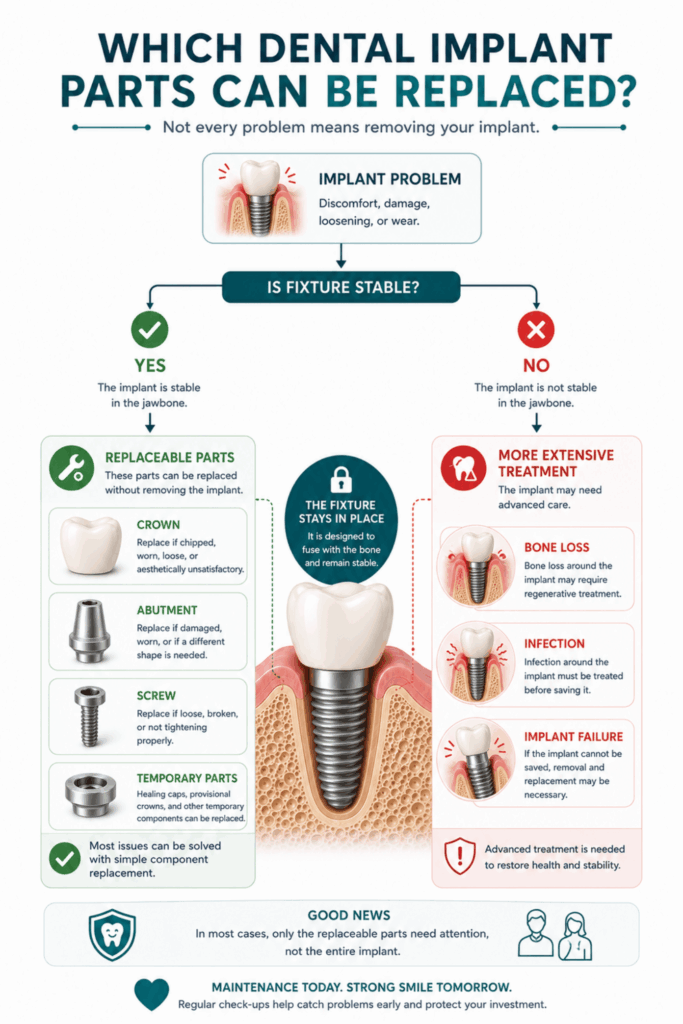
One advantage of modern dental implant systems is that many components can be replaced without removing the implant fixture from the jawbone. If the artificial tooth root remains healthy and stable, treatment is often simpler and less invasive.
- Crown Replacement: A worn, chipped, or damaged dental crown can often be replaced while leaving the implant untouched.
- Abutment Replacement: An abutment may be changed to improve fit, appearance, or function.
- Screw Replacement: Loose or worn implant screws can usually be removed and replaced during a routine dental visit.
- Temporary Component Exchange: Healing parts and temporary restorations are designed to be replaced as treatment progresses.
- Wear or Damage: Accidents, heavy bite forces, or long-term use may affect individual components without causing implant failure.
- Cosmetic Updates: Patients sometimes replace crowns to improve color or match changes in surrounding teeth.
Common Problems Affecting Dental Implant Parts
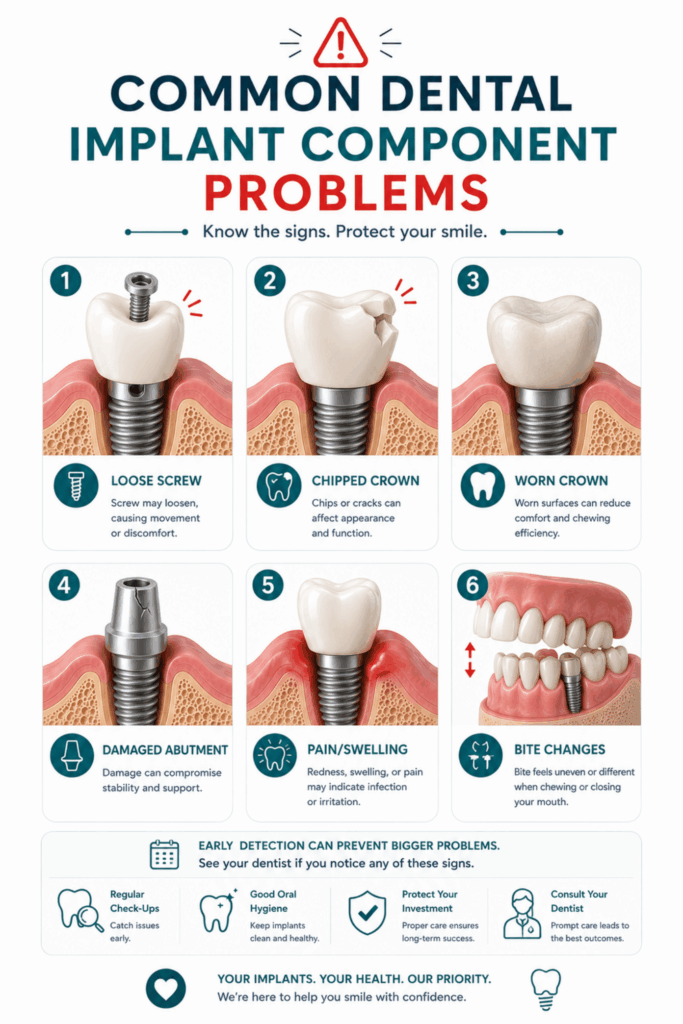
Dental implants are highly successful, but like any restoration, their components can experience wear or mechanical issues over time. Early attention often prevents more serious complications.
- Loose Screw: A loose implant screw may cause slight movement or clicking when chewing.
- Worn Crown: Years of use can gradually wear down the chewing surface.
- Chipped Restoration: Porcelain or ceramic crowns may chip after trauma or heavy biting.
- Damaged Abutment: Excessive force can occasionally bend or damage the connecting piece.
- Component Wear: Repeated chewing cycles naturally create small amounts of wear over many years.
- Pain or Swelling: Discomfort around the implant or gum should always be evaluated by a dentist.
- Changes in Bite: A restoration that suddenly feels high or unstable may indicate a mechanical problem requiring adjustment.
How to Care for Dental Implant Parts
Good daily care protects both the implant components and the surrounding bone and gum tissue. A consistent routine can significantly extend the life of your restoration.
- Brush Twice Daily: Use a soft-bristled toothbrush to remove plaque around the crown and gumline.
- Clean Between Teeth: Floss or use implant-friendly interdental brushes to reach difficult areas.
- Use Water Flossers if Recommended: Water irrigation can help clean around implant restorations.
- Avoid Chewing Hard Objects: Ice, pens, and hard candies can damage crowns and screws.
- Wear a Night Guard: Patients who grind their teeth can reduce stress on implant parts.
- Attend Regular Checkups: Professional exams allow your dentist to detect loose components before they become bigger problems.
- Maintain Overall Oral Health: Healthy gums and surrounding teeth provide long-term support for successful implant treatment.
How Long Do Dental Implant Parts Last?
The implant fixture often lasts decades and may remain functional for a lifetime when supported by good oral hygiene and healthy bone. Titanium implant bodies are extremely durable and resistant to normal chewing forces.
Other components have different life expectancies. Dental crowns, screws, and abutments may eventually need repair or replacement because of normal wear, bite forces, accidents, or changes in the mouth. Regular dental visits, excellent oral hygiene, and avoiding excessive pressure all help extend the lifespan of every implant component.
Key Takeaways About Dental Implant Parts
Parts of a dental implant work together to replace both the artificial tooth root and the visible tooth, creating a stable and natural-looking restoration. The implant fixture anchors into the jawbone, the abutment serves as the connector, and the dental crown restores appearance and chewing function. Additional components such as healing caps, impression copings, and scan bodies help ensure accurate treatment and long-term success.
Understanding the role of each component makes it easier to appreciate why dental implants are one of the most reliable tooth replacement options available. With proper care, routine checkups, and timely maintenance, many implant systems continue functioning comfortably for many years while supporting healthy bone, gum tissue, and confident smiles.
