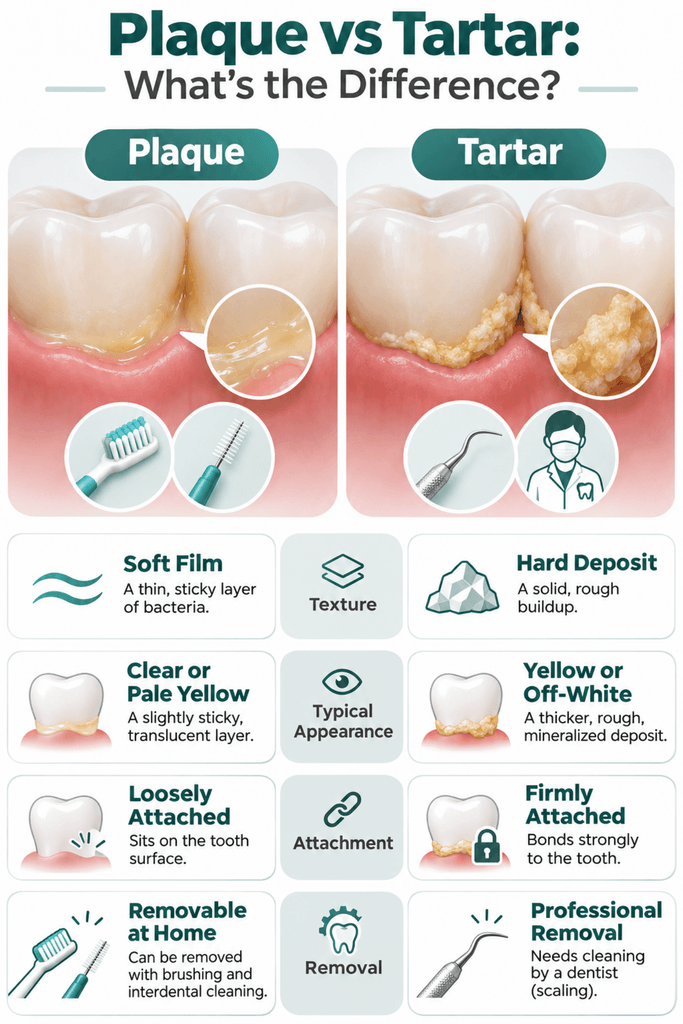
Do your teeth feel fuzzy after a meal, or have you noticed a hard yellow line near your gums? The plaque vs tartar difference comes down mainly to texture and removal. Plaque is a soft, sticky film of bacteria that forms every day. Tartar, also called dental calculus, is plaque that has absorbed minerals from saliva and hardened onto the teeth.
Regular brushing and cleaning between your teeth can remove plaque before it hardens. Once tartar forms, a toothbrush, floss, or mouthwash cannot lift it away; a dentist or dental hygienist must remove it with professional instruments. Color alone is not enough to identify the deposit because stains, food, and tooth decay can look similar.
Knowing which type of buildup you may have helps you choose the next step without damaging your teeth or gums. Soft film that clears with cleaning is more likely plaque, while a rough, firmly attached deposit may be tartar. The comparison below explains how each forms, how it affects oral health, and when home care should give way to a dental visit.
Plaque vs Tartar: Key Differences at a Glance
A plaque vs tartar comparison begins with one key fact: the two forms of buildup are related, but they are not the same. Plaque is a soft bacterial film that develops each day. When plaque remains long enough to absorb minerals and harden, it becomes tartar, also called dental calculus.
| Feature | Plaque | Tartar |
|---|---|---|
| What It Is | A soft, sticky bacterial biofilm | Hardened, mineralized plaque |
| Texture | Fuzzy, slippery, or sticky | Hard, rough, and firmly attached |
| Typical Color | Often colorless or pale yellow | White, yellow, brown, or sometimes darker |
| How It Forms | Continuously develops on tooth surfaces | Forms when plaque remains and mineralizes |
| Common Locations | Along the gumline, between teeth, in grooves, and around dental work | Near the gumline, behind the lower front teeth, beside upper back teeth, and sometimes below the gums |
| Home Removal | Thorough brushing and interdental cleaning can remove it | Brushing, flossing, and mouthwash cannot remove it |
| Professional Care | Cleaning may be needed where home care misses | A dentist or dental hygienist must remove it |
The most useful plaque vs tartar difference is removability. A soft film that clears with careful cleaning is more likely plaque. A hard deposit that stays firmly attached may be tartar. However, color and texture provide clues, not a confirmed diagnosis.
What Is Dental Plaque?
Dental plaque is a soft biofilm made of bacteria and other substances from the mouth. It develops on clean teeth throughout the day, including when you are not eating. The American Dental Association’s explanation of dental plaque notes that plaque left behind can eventually harden into tartar.
Plaque may feel fuzzy when you run your tongue over your teeth. It is often colorless, so your teeth can look clean even when plaque is present. Disclosing tablets or solutions can temporarily color plaque and show areas missed during brushing.
Plaque commonly collects in these areas:
- Along the Gumline: Bristles may pass over this area if the brush is not angled toward the edge of the gums.
- Between Teeth: A toothbrush cannot fully reach the surfaces where neighboring teeth touch.
- Inside Grooves: Deep pits and grooves on back teeth can hold bacteria and food particles.
- Behind Lower Front Teeth: These tongue-side surfaces are easy to miss during brushing.
- Around Dental Appliances: Braces, retainers, bridges, dentures, and implant restorations create extra surfaces that require careful cleaning.
- Near Crowded or Rotated Teeth: Overlapping teeth may block normal brush and floss access.
Plaque contains bacteria that use sugars and other carbohydrates from food. Some bacteria produce acids that can weaken tooth enamel, while others contribute to gum inflammation.
What Is Tartar and How Does It Form?
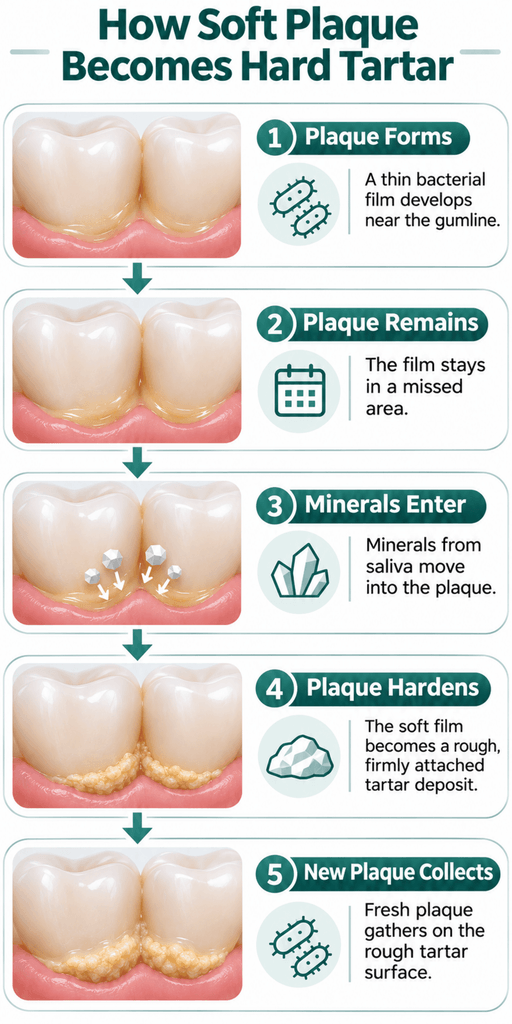
Tartar is plaque that has hardened through mineralization. It is also called dental calculus. Minerals from saliva and fluids around the gums enter plaque that has not been removed, turning the soft film into a firm deposit attached to the tooth.
The speed of tartar formation varies. Saliva, plaque location, oral hygiene, tooth position, dry mouth, smoking, and individual biology can all affect how quickly deposits develop.
- Plaque Forms: A soft bacterial film attaches to the tooth.
- Plaque Remains Undisturbed: Missed areas allow the film to stay in place and become more organized.
- Minerals Enter the Plaque: Calcium and phosphate from oral fluids begin to mineralize the deposit.
- The Deposit Hardens: The plaque becomes a rough layer that brushing and flossing cannot lift away.
- More Plaque Collects: The rough tartar surface can hold fresh plaque, making the area harder to clean.
Tartar Above and Below the Gumline
Tartar above the gumline is called supragingival calculus. It may appear white, cream, yellow, brown, or darker when it absorbs stains. Common sites include the tongue side of the lower front teeth and the cheek side of upper back teeth, where salivary ducts open nearby.
Tartar below the gumline is called subgingival calculus. It forms inside the space between the tooth and gum and may extend onto the root surface. You may not be able to see or feel it yourself. A dental professional assesses these areas using an examination, gum measurements, and other findings when needed.
How to Tell Plaque From Tartar on Your Teeth
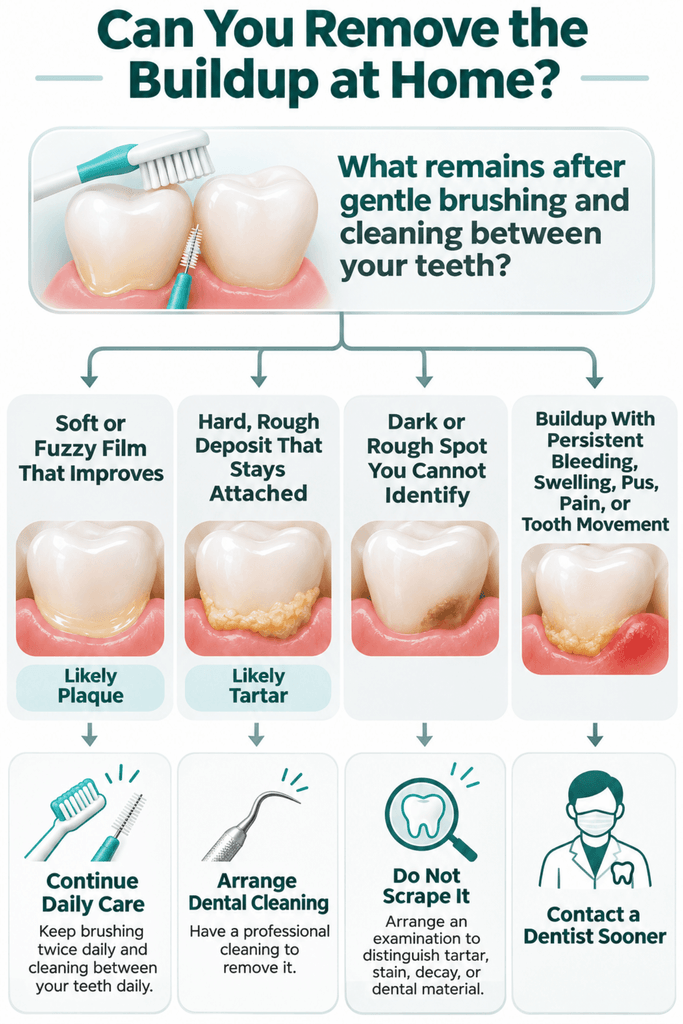
A simple plaque vs tartar check starts with gentle, thorough cleaning. Do not use your fingernail or a sharp object to test a deposit. Instead, notice how it feels, where it sits, and whether normal brushing and interdental cleaning change it.
Consider these clues:
- Response to Cleaning: Plaque can usually be disturbed or removed with effective home care. Tartar stays attached.
- Surface Texture: Plaque may feel fuzzy or slippery. Tartar usually feels rough and hard.
- Attachment: Plaque is a soft coating. Tartar can feel like part of the tooth because it bonds tightly to the surface.
- Location: A hard ridge near the gumline or behind the lower front teeth may be tartar, but location alone cannot confirm it.
- Gum Changes: Bleeding, redness, or swelling near the deposit may mean plaque is irritating the gums and should be evaluated if it continues.
Look and Feel Clues
- Soft or Fuzzy Film: This finding is more consistent with dental plaque, especially if it improves after careful brushing.
- Hard or Crusty Deposit: A firm layer that does not move with brushing may be dental tartar.
- Nearly Invisible Coating: Plaque is often colorless or pale, although food and drinks may stain it.
- Yellow or Brown Ridge: Tartar can have this appearance, particularly around the gumline.
- Dark Deposit: Older tartar may become dark, especially below the gums or when it absorbs tobacco and food stains. Dark color can also have other causes.
These features can help you describe the problem to your dentist, but they cannot confirm whether a spot is plaque, tartar, decay, or another dental condition.
What Else Can Look Like Tartar?
Not every rough, yellow, brown, or black area is tartar. Trying to scrape an uncertain spot can injure the gums or damage a restoration without addressing the real problem.
Possible look-alikes include:
- Food Debris: Small pieces of food may become trapped between teeth or around dental work.
- Surface Stains: Coffee, tea, tobacco, and strongly colored foods can stain teeth without forming tartar.
- Tooth Decay: A cavity may appear white, brown, or black and can feel rough when it affects the tooth surface.
- Exposed Roots: Gum recession can reveal yellowish root surfaces that look different from enamel.
- Enamel Changes: Natural grooves, thin enamel, white spots, and developmental changes may alter tooth color.
- Dental Materials: Fillings, bonding, crowns, cement, and adhesive around braces may resemble tooth buildup.
Arrange a dental examination if the area is hard, dark, painful, growing, or unchanged after normal cleaning.
Can You Remove Plaque or Tartar at Home?
Plaque can be controlled at home, but hardened tartar must be removed by a dental professional using suitable scaling instruments. You can remove and control plaque at home with effective brushing and daily cleaning between your teeth. Plaque forms again, so oral hygiene must be consistent rather than occasional.
Tartar cannot safely be removed at home once it is firmly attached. Tartar-control toothpaste and some mouthrinses may help slow new deposits, but they do not dissolve or lift away existing dental tartar. For plaque vs tartar removal, this difference determines whether home care is enough or professional cleaning is needed.
How to Remove Plaque Safely
The ADA’s daily oral-health recommendations include brushing twice a day with fluoride toothpaste. Cleaning between the teeth is also important because toothbrush bristles cannot fully reach these surfaces.
- Brush Twice a Day: Use a soft-bristled toothbrush and fluoride toothpaste. Clean the outer, inner, and chewing surfaces.
- Clean the Gumline Gently: Angle the bristles toward the edge of the gums. Use small, controlled movements instead of aggressive scrubbing.
- Clean Between Your Teeth Daily: Use floss, an interdental brush, or another tool suited to the space. The ADA’s evidence-based guidance on floss and interdental cleaners explains how these tools help remove plaque where a toothbrush cannot reach.
- Clean Around Dental Work: Follow your dentist’s instructions for braces, bridges, implants, retainers, or removable dentures.
- Check Commonly Missed Areas: Spend extra time behind the lower front teeth and along the gumline of back teeth.
- Use Disclosing Products if Helpful: A plaque-disclosing tablet can reveal missed areas, but it does not diagnose tartar or dental disease.
Brushing harder does not clean better. Excessive pressure may irritate the gums and wear exposed root surfaces.
Why Tartar Needs Professional Removal
Tartar is a mineralized deposit bonded to the tooth. Toothbrush bristles, floss, water flossers, and mouthwash can remove or control soft plaque around it, but they cannot reliably detach the hardened layer.
A dentist or dental hygienist removes tartar through scaling. Hand instruments or an ultrasonic scaler break the deposit away while the clinician controls the instrument against the tooth. The amount and location of tartar, along with the health of the gums, determine the type of cleaning needed.
A hard deposit does not automatically mean you require deep cleaning. That decision depends on the full periodontal examination, including gum inflammation, pocket measurements, attachment loss, and bone support when relevant.
Why You Should Not Scrape Tartar Yourself
If you can feel a hard ridge that does not brush away, schedule a dental appointment. Until then, continue gentle brushing and interdental cleaning around the area without forcing a tool beneath the gums.
Safety Note: Do not use fingernails, dental picks, metal scrapers, or improvised tools to remove tartar. You may cut the gums, scratch exposed root surfaces, damage fillings or crowns, or leave tartar behind. Home scraping can also create the impression that the area is clean when deposits remain below the gumline.
How Plaque and Tartar Affect Teeth and Gums
The health effects of plaque vs. tartar overlap, but plaque bacteria drive much of the disease process. Tartar adds a hard, rough surface that holds fresh plaque and makes oral hygiene more difficult.
Possible effects include:
- Tooth Decay: Some bacteria in plaque turn sugars and starches into acids. Repeated acid exposure removes minerals from enamel and can eventually lead to a cavity.
- Gingivitis: Plaque that remains along the gumline can cause red, swollen, or bleeding gums. Gingivitis is inflammation without the attachment and bone loss found in periodontitis.
- Periodontal Disease: Ongoing inflammation in a susceptible person may progress below the gumline and damage the tissues supporting the teeth. The National Institute of Dental and Craniofacial Research’s guidance on gum disease explains how plaque, tartar, inflammation, and periodontal treatment are related.
- Bad Breath: Bacterial buildup, inflamed gums, food retention, dry mouth, and other oral conditions may contribute to persistent bad breath.
- More Difficult Home Care: A rough tartar deposit creates areas that are difficult to brush and clean between.
- Visible Discoloration: Dental tartar can absorb stains, creating yellow, brown, or dark deposits near the gums.
Tartar does not mean that advanced gum disease is inevitable. The condition of the gums, the amount and location of plaque, smoking, diabetes, home care, and individual susceptibility all influence the outcome.
What Happens During Professional Tartar Removal?
Professional tartar removal begins with an assessment rather than immediate scraping. The dentist or hygienist needs to understand where the deposits are and whether the surrounding gums are healthy, inflamed, or affected by periodontal disease.
A typical appointment may involve:
- Examining the Teeth and Gums: The dental professional looks for plaque, tartar, cavities, bleeding, gum recession, and other changes.
- Measuring the Gums When Needed: A periodontal probe can measure the spaces around the teeth and help identify areas requiring closer care.
- Removing Deposits: Hand instruments, an ultrasonic scaler, or both may be used to remove plaque and tartar above and below the gumline as appropriate.
- Smoothing and Polishing When Helpful: Polishing may remove some surface stains and leave accessible tooth surfaces smoother. It is not a substitute for scaling.
- Reviewing Home Care: The clinician may point out missed areas and recommend a toothbrush or interdental tool that fits your needs.
- Planning Follow-Up Care: The next dental cleaning depends on your gum health, tartar rate, home care, medical factors, and past dental problems.
Teeth may feel smoother or slightly different after a large tartar deposit is removed. Mild sensitivity can occur, especially when tartar covered an exposed root or inflamed area. Report pain or sensitivity that is severe, worsening, or not settling as your dental professional advised.
Routine Cleaning vs Deep Cleaning
A routine cleaning generally removes plaque, tartar, and stain in a mouth without untreated periodontitis. The clinician may clean slightly below the gum edge, but the appointment is preventive rather than treatment for attachment loss.
Deep cleaning usually refers to scaling and root planing, a nonsurgical treatment used for periodontal disease. It involves removing deposits from affected root surfaces below the gums. The need for this treatment depends on examination findings, not merely the color of tartar or how long it has been since the previous cleaning. NIDCR provides a patient explanation of scaling and root planing as part of periodontal treatment.
When Does Tooth Buildup Need a Dentist?
Arrange a dental examination when a deposit remains hard and firmly attached after normal brushing and interdental cleaning. A dentist can determine whether it is tartar, stain, decay, dental material, or another change.
Arrange a Routine Appointment If:
- A Hard Deposit Remains: The area does not change after several careful cleaning attempts.
- Buildup Keeps Returning: Deposits repeatedly form in the same place despite regular oral hygiene.
- Tartar Breaks Away: A fragment leaves a rough or sharp area on the tooth.
- Your Gums Bleed Repeatedly: Bleeding continues even after you improve gentle plaque control.
- Bad Breath Persists: The problem continues despite brushing your teeth, cleaning your tongue, and cleaning between the teeth.
- Cleaning Is Difficult: Crowded teeth, limited hand movement, braces, bridges, or implants prevent reliable access.
Contact a Dentist Sooner If:
- Your Gums Are Swollen or Painful: Increasing tenderness or swelling may require prompt evaluation.
- You Notice Pus or a Persistent Bad Taste: These findings may indicate an infection around a tooth or the gums.
- Your Gums Are Receding: A tooth may look longer as the gumline moves.
- A Tooth Feels Loose: Adult tooth mobility requires professional assessment.
- Pain Is Worsening: Pain may come from decay, infection, a crack, or another problem rather than tartar alone.
Seek urgent care for rapidly spreading facial swelling, difficulty swallowing or breathing, or swelling accompanied by significant illness.
How to Prevent Plaque and Slow Tartar Buildup
You cannot stop plaque from forming completely, but you can remove it before large amounts harden into tartar. Preventing plaque and tartar buildup depends more on daily consistency than aggressive cleaning.
A useful routine includes:
- Brush Thoroughly: Brush your teeth twice a day with fluoride toothpaste.
- Clean Between Teeth: Use floss, interdental brushes, or another suitable device each day.
- Focus on High-Risk Areas: Pay attention to the gumline, back teeth, crowded areas, and the tongue side of lower front teeth.
- Clean Appliances and Restorations: Use the method recommended for braces, bridges, implants, dentures, or retainers.
- Avoid Tobacco: Smoking can increase periodontal risk, mask gum bleeding, and contribute to staining.
- Manage Dry Mouth: Ask a dentist or physician about persistent dryness, particularly if it began after a medication change.
- Attend Dental Visits: Follow a dental care schedule based on your needs rather than waiting for tartar to become heavy.
Improve Daily Plaque Control
- Use a Soft Brush: A soft-bristled manual or powered toothbrush can remove plaque without requiring heavy pressure.
- Brush for Long Enough: Clean every surface instead of repeatedly brushing only the visible front teeth.
- Use Fluoride Toothpaste: Fluoride strengthens enamel against acid attacks and helps prevent cavities.
- Clean Between Teeth Daily: Floss works well in tight contacts. Interdental brushes may suit larger spaces, while water flossers may help some patients with appliances or limited dexterity.
- Adapt to Your Dental Work: Bridges may require a floss threader or small interdental brush. Implants and braces often need more than one cleaning tool.
- Check Your Technique: If tartar buildup continues despite daily care, ask your dentist or hygienist to observe your method and identify missed areas.
- Replace Worn Tools: Bent or spread toothbrush bristles clean less effectively. Replace brush heads when worn or according to the product instructions.
Reduce Factors That Feed Plaque
Plaque bacteria use fermentable carbohydrates, including sugars and cooked starches. Frequent exposure gives acid-producing bacteria more opportunities to lower the pH around the teeth. What matters is not only how much sugar you consume but also how often your teeth are exposed.
- Limit Frequent Sugary Drinks: Repeated sipping exposes the teeth for longer than drinking the same beverage with a meal.
- Reduce Constant Snacking: Give saliva time to help neutralize acids between eating occasions.
- Choose Water Often: Plain water does not feed plaque bacteria and can help rinse loose food particles.
- Avoid Sticky Foods Between Meals: Sticky sweets and refined starches may remain on teeth longer.
- Keep Cleaning Consistent: Diet changes can lower cavity risk, but they do not replace brushing and interdental cleaning.
Follow a Personalized Dental Visit Schedule
There is no single cleaning interval that suits every patient. Someone with healthy gums, low cavity risk, effective home care, and little tartar may need a different schedule from someone with periodontal disease, dry mouth, heavy deposits, crowded teeth, or limited ability to clean.
Patients previously treated for periodontal disease often need ongoing supportive care to control inflammation and reduce recurrence. The ADA’s clinical overview of periodontitis and supportive periodontal care explains why long-term maintenance is important after treatment.
Your dentist should base the schedule on current findings, risk factors, previous disease, and how quickly plaque and tartar buildup return, not a universal calendar rule.
Plaque vs Tartar FAQs
Why Do I Get Tartar Even Though I Brush Every Day?
Brushing twice a day does not guarantee that every surface is cleaned. Plaque may remain between teeth, along the gumline, behind the lower front teeth, or around crowded teeth and dental work. Brushing technique, limited interdental cleaning, saliva composition, and how quickly you mineralize plaque can all affect tartar formation.
How Quickly Can Plaque Turn Into Tartar?
Plaque can begin mineralizing relatively quickly, but there is no exact timeline that applies to everyone. Saliva composition, deposit location, oral hygiene, smoking, dry mouth, and individual biology affect the process. Daily plaque removal matters because you cannot predict exactly when a missed deposit will become firmly attached tartar.
Can Mouthwash Remove Plaque or Tartar?
Mouthwash cannot remove hardened tartar. Some therapeutic rinses may help reduce plaque or slow new tartar formation, but they do not replace brushing and interdental cleaning. The ADA’s review of therapeutic mouthrinses and plaque control describes mouthwash as an addition to, not a substitute for, mechanical cleaning.
What Should I Do If Tartar Breaks Off and Leaves a Sharp Spot?
Do not pick at the remaining deposit or try to smooth the area with a home tool. The sharp surface could be remaining tartar, exposed tooth, a damaged restoration, or another problem. Arrange a dental examination, especially if you also notice pain, bleeding, swelling, or continued irritation.
Why Does Tartar Build Up Behind the Lower Front Teeth?
Salivary ducts open close to the tongue side of the lower front teeth. This exposes plaque in the area to mineral-rich saliva. The surfaces are also easy to miss, especially when teeth overlap. Angle the toothbrush toward the gumline and clean between these teeth daily, but leave hardened deposits for a dental professional.
Can Tartar Return Soon After a Professional Cleaning?
Yes. Professional cleaning removes existing deposits, but plaque begins forming again afterward. If it remains in a difficult-to-clean area, it can mineralize into new tartar. The rate varies, so early recurrence does not always mean the cleaning failed. Ask your dentist to check your technique and recommend a suitable follow-up schedule.
Is Sensitivity Normal After Tartar Removal?
Mild, short-term sensitivity can occur after cleaning, particularly if tartar covered an exposed root or the gums were inflamed. It should gradually settle rather than worsen. Contact the treating dentist if sensitivity is severe, lasts longer than expected, disrupts eating or sleep, or occurs with swelling or increasing pain.
Bottom Line: Plaque and Tartar Need Different Care
The plaque vs tartar difference determines how the buildup should be managed. Plaque is a soft bacterial film that you can control with daily brushing, fluoride toothpaste, and cleaning between your teeth. Tartar is hardened plaque that requires professional removal.
Do not scrape a hard or uncertain deposit yourself. Continue gentle oral hygiene around the area and visit your dentist if it remains, returns quickly, or appears with bleeding, swelling, pain, recession, or loose teeth.
