Tooth decay between teeth often starts quietly, which is why many people do not notice it until it becomes a bigger problem. This type of decay forms in tight spaces where a toothbrush cannot always reach, even when you brush twice a day. Plaque and bacteria can build up between teeth, weaken the enamel, and slowly create a cavity without clear warning signs at first.
Many people assume that if a tooth looks fine and does not hurt, everything must be okay. In reality, interproximal cavities can grow between teeth while the surface still looks normal. You might feel mild sensitivity, notice food getting stuck, or see nothing at all until a dentist finds the problem on X-rays. Catching cavities early often means simpler dental treatment and a better chance to keep your natural tooth.
Below, we explain how tooth decay forms between teeth, the common signs people miss, and what treatment options dentists use. Understanding what to watch for and how to protect your teeth can help you act early and avoid more serious dental care later.
What Is Tooth Decay Between Teeth?
Tooth decay between teeth develops in the tight spaces between adjacent teeth, where plaque and bacteria easily collect. These areas are difficult to clean with brushing your teeth alone, which allows cavities to form slowly over time. This type of decay is also known as interproximal cavities, meaning it affects the surfaces between two teeth. Because the outer tooth enamel may look normal, this decay often stays hidden until it grows larger. Many people do not realize they have a cavity between teeth until a dentist examines the area closely.
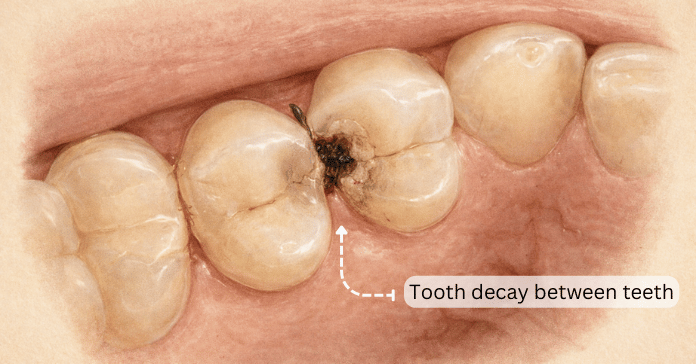
How Do These Cavities Form?
Cavities form when plaque and bacteria feed on sugars and produce acids that weaken the tooth enamel. Over time, this acid attack damages the protective layer of the tooth and leads to cavity formation, especially between teeth where food and plaque remain trapped. Floss plays a key role because it removes plaque from the space between your teeth that a toothbrush cannot reach. Without good oral hygiene, cavities can form slowly and quietly in these areas. This is why brushing twice a day and flossing daily help prevent tooth decay and protect long-term oral health.
Why is a Cavity Between Two Teeth Hard to See?
A cavity between two teeth is hard to spot because it develops on surfaces that are not visible in the mirror. Even careful brushing of your teeth may not reveal a hidden cavity forming below the contact point. Dentists rely on X-rays to identify cavities between two teeth before they cause major damage. These images allow the dentist to inspect your teeth beneath the surface and spot early signs of decay. Early detection helps treat cavities before they grow larger or cause pain.
Common Causes of Tooth Decay Between Teeth
Several everyday habits and conditions increase the risk of cavities forming between teeth. These causes often work together and slowly lead to decay over time:
- Poor Oral Hygiene: Skipping flossing allows plaque and bacteria to stay in tight spaces between adjacent teeth and lead to decay.
- Infrequent Flossing: Without floss, food particles remain trapped and increase the risk of cavities between teeth.
- Frequent Snacking: Eating sugary or starchy foods often feeds bacteria and increases cavity formation.
- Weak Tooth Enamel: Thin or damaged enamel makes it easier for cavities to develop and progress faster.
- Lack of Fluoride: Not using fluoride toothpaste reduces protection against enamel breakdown.
- Irregular Dental Visits: Skipping regular dental checkups delays cavity detection and treatment.
Early Signs and Symptoms of a Cavity Between Teeth
The early signs of cavities between teeth can be easy to miss at first. You may notice mild pain or sensitivity when eating sweets or drinking something cold. Food may also get stuck in the space between your teeth more often than usual. Some people experience bad breath or a strange taste that does not go away. These symptoms of cavities are often subtle, which is why many cavities develop unnoticed until they worsen.
Signs of a Hidden Cavity Many People Ignore
A hidden cavity may not cause sharp pain right away, making it easy to overlook. Paying attention to small changes helps spot early problems:
- Mild Sensitivity: You may experience pain or sensitivity to cold or sweet foods without visible damage.
- Food Trapping: Food getting stuck in the same spot may signal a cavity between your teeth.
- Dull Discomfort: A vague ache that comes and goes can be a sign of decay forming.
- Changes in Texture: Roughness between teeth may indicate enamel damage.
- No Pain at All: Some cavities develop silently until they reach deeper layers of the tooth.
When Tooth Decay Between Teeth Becomes Serious?
When tooth decay between teeth is left untreated, the cavity progresses deeper into the tooth structure. Once the cavity has reached the inner layer of the tooth, bacteria can infect the nerve and cause significant pain. At this stage, the risk of tooth loss increases, and even tooth loss may occur if treatment is delayed. Infection can spread and lead to swelling or dental abscess formation. Prompt treatment helps prevent serious damage and protects the affected tooth.
How Dentists Spot Hidden Decay?
A dentist diagnoses tooth decay between teeth by examining your teeth and reviewing dental X-rays. These images help identify cavities that cannot be seen during a visual exam. The dentist will use special tools to inspect your teeth and check for soft or decayed areas. Regular dental visits allow dentists to identify cavities between teeth before symptoms appear. Regular dental checkups are essential for early detection and effective treatment.

Treatment Options for Cavities Between Teeth
Treatment options for cavities depend on how far the decay has progressed. Early treatment is simpler and helps preserve more of the natural tooth:
- Small Cavity Treatment: A dental filling is often enough when a cavity is detected early.
- Moderate Decay Care: Deeper cavities may require removing more decayed tooth structure and placing a stronger filling.
- Advanced Decay Treatment: A root canal may be needed if the cavity reaches the nerve.
- Tooth Protection: A dental crown may be placed to restore strength after significant decay.
- Personalized Treatment Plan: The dentist will choose the most effective treatment based on cavity size and location.
Dental Filling for a Cavity Between Teeth
A dental filling is the most common way to treat a cavity between teeth when decay is still limited. The dentist removes the decayed part of the tooth and cleans the area thoroughly. Filling material is then placed to restore the portion of the tooth and prevent further decay. This treatment helps keep your teeth strong and functional. Dental fillings are effective, quick, and help stop cavities from spreading.
Root Canal or Dental Crown for Advanced Decay
When decay becomes severe and the cavity has reached the nerve, a root canal may be required. This treatment removes infected tissue and relieves pain while saving the affected tooth. After a root canal, a dental crown is often placed to protect the weakened tooth structure. These treatments aim to prevent tooth loss and restore normal function. With proper care, treated teeth can last for many years.
What to Expect After Cavity Treatment?
After a tooth filling, mild sensitivity or soreness is common for a short time. Most people return to normal eating within a day, depending on the procedure. Following your dentist’s instructions helps reduce discomfort and promotes healing. Avoid chewing hard foods on the treated tooth at first. Maintaining good oral hygiene supports recovery and long-term success.
Risks of Ignoring Tooth Decay Between Teeth
Ignoring tooth decay between teeth allows cavities to grow larger and cause serious damage. Untreated cavities can lead to infection, severe pain, and damage to your teeth. Over time, decay may spread and cause tooth loss in advanced cases. Treatment becomes more complex and costly as cavities progress. Early care prevents complications and protects your oral health.
How to Prevent Tooth Decay Between Teeth?
Daily habits play a major role in preventing cavities between teeth. Consistent care helps protect enamel and prevent tooth decay:
- Brush Twice a Day: Use fluoride toothpaste to strengthen tooth enamel and reduce plaque.
- Floss Daily: Floss removes plaque from tight spaces between teeth where cavities develop.
- Use Fluoride Products: Fluoride helps prevent cavities and strengthens enamel.
- Limit Sugary Snacks: Reducing sugar lowers the risk of cavities forming.
- Maintain Good Oral Hygiene: Clean teeth consistently to protect long-term oral health.
The Role of Regular Dental Care in Prevention
Regular dental visits help prevent cavities and detect problems early. Professional cleanings remove plaque and bacteria that brushing may miss. Dentists can identify cavities early and recommend prompt treatment. Regular dental checkups support overall oral health and help keep your teeth strong. Seeing a dentist regularly helps prevent serious dental problems before they start.
Why Does Spotting Tooth Decay Between Teeth Early Matter?
Tooth decay between teeth often develops quietly, which is why it is easy to miss. This problem, known as an interproximal cavity, can grow slowly in tight spaces and turn into larger cavities if ignored. Over time, cavities weaken the tooth and may lead to tooth damage that is harder to fix. Understanding the causes of cavities and the early signs and symptoms to watch helps you act before small issues become serious.
The good news is that early care makes a big difference. Paying attention to subtle changes, keeping up with brushing and flossing, and seeing your dentist regularly can stop decay before it spreads. When cavities are caught early, treatment is simpler and helps protect your natural teeth. If you notice warning signs or feel unsure, do not wait. Taking action early helps prevent problems that can eventually lead to tooth loss and keeps your smile healthy for the long term.
