Many people who have lost most or all of their teeth want a solution that feels secure, looks natural, and allows them to eat comfortably again. All-on-6 dental implants use six dental implants to support a full arch of replacement teeth, creating a fixed alternative to removable dentures. This treatment can improve chewing ability, smile appearance, and overall stability while helping preserve the jawbone.
You may be wondering whether six implants are better than four, how much treatment costs, or how long the results last. The answer depends on factors such as your bone quality, oral health, treatment goals, and the type of restoration your dentist recommends. Understanding how the system works can help you decide whether it fits your needs.
A successful outcome involves more than placing implants. The number of implants, healing process, long-term maintenance, and expected lifespan all play important roles. Knowing what to expect before, during, and after treatment makes it easier to evaluate the benefits and potential limitations of All-on-6 dental implants.
What Are All-on-6 Dental Implants?
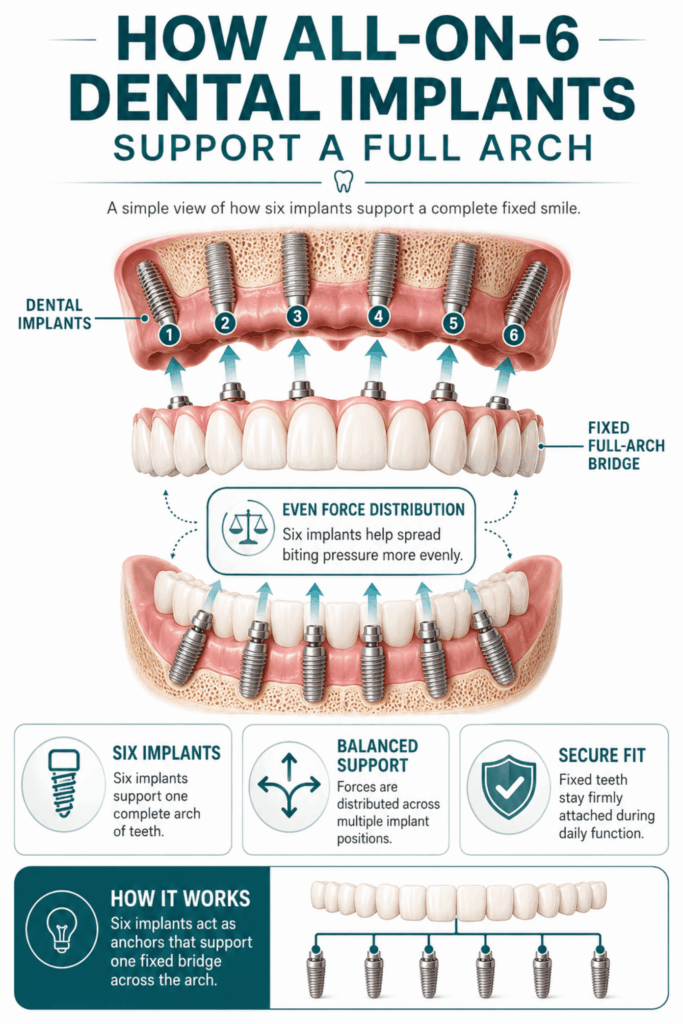
All-on-6 dental implants are a full-arch tooth replacement solution that uses 6 dental implants to support a complete prosthetic dental arch. Instead of replacing each missing tooth with an individual implant, the all-on-6 dental implant procedure uses six strategically placed titanium implants to anchor a full set of upper or lower replacement teeth.
This approach allows dentists to replace an entire dental arch with fewer implants while still providing excellent support and function. The result is a fixed dental restoration that looks, feels, and functions like natural teeth, offering a long-term alternative to traditional dentures.
How Do All-on-6 Dental Implants Work?
All-on-6 implants work by distributing biting and chewing forces across six implants that are placed throughout the upper or lower jaw. This broader distribution helps reduce stress on individual implants and can improve overall stability. Because the implants are anchored directly into the jawbone, they create a strong foundation for replacement teeth.
After the implants are placed and integrated with the bone, a fixed bridge attaches securely to them. Unlike removable dentures, the bridge remains firmly in place during daily activities. This design allows patients to eat, speak, and smile with confidence while enjoying teeth that function like natural teeth.
Who Is a Good Candidate for All-on-6 Dental Implants?
Not everyone with missing teeth needs the same tooth replacement solution. Before recommending all-on-6 dental implants, a dentist evaluates oral health, bone volume, medical history, and treatment goals. Many patients who have lost most or all teeth in a full upper or lower arch may be candidates for all-on-6 dental implants.
- Multiple Missing Teeth: Patients missing most or all teeth in the upper or lower jaw often benefit from a full-arch solution.
- Adequate Bone Support: Sufficient jawbone is needed for implant placement, although some patients may qualify after a bone graft or grafting procedure.
- Healthy Gums: Healthy gum tissue helps support successful healing and long-term implant stability.
- Good Overall Health: Conditions that affect healing should be well controlled before implant surgery.
- Difficulty With Dentures: Patients frustrated by loose or uncomfortable traditional dentures may prefer a fixed restoration.
- Desire For Long-Term Tooth Replacement: People seeking a stable, durable solution often choose all-on-6 treatment.
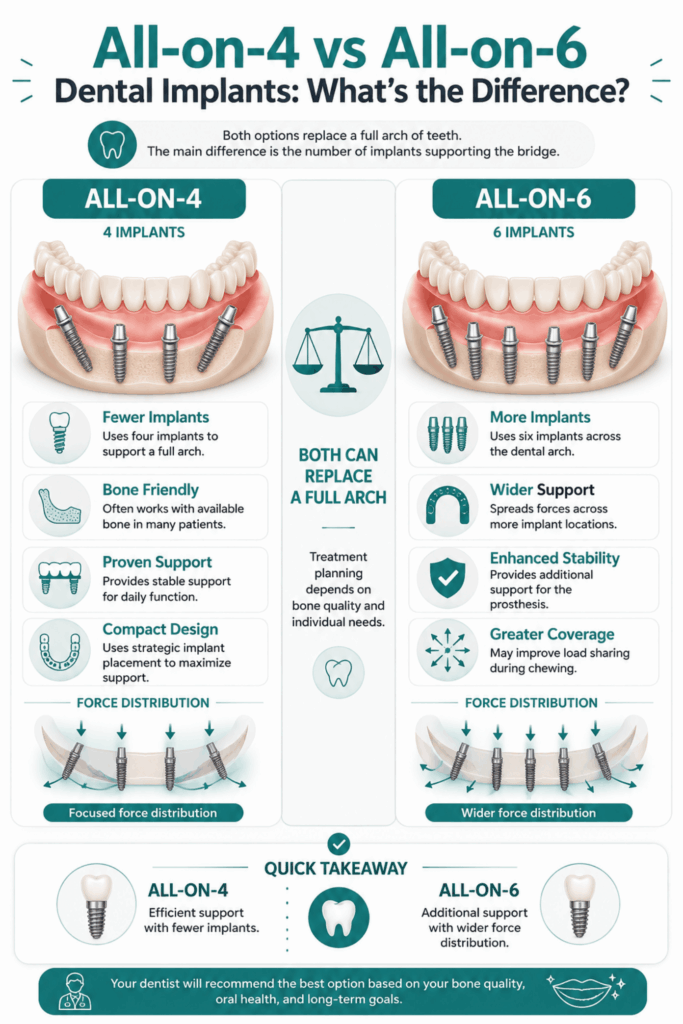
All-on-6 Dental Implants vs All-on-4 Dental Implants
| Feature | All-on-4 Dental Implants | All-on-6 Dental Implants |
|---|---|---|
| Number of Implants | Four dental implants | Six dental implants |
| Support | Good support for many patients | Increased support across the arch |
| Stability | Strong stability | Greater stability and force distribution |
| Bone Requirements | Often suitable for patients with less bone | Usually benefits from more available bone |
| Chewing Efficiency | Excellent | May provide additional biting support |
| Treatment Planning | Simpler placement pattern | More implant placement options |
| Long-Term Load Distribution | Shared across four implants | Shared across six implants |
Both all-on-4 and all-on-6 dental implants can provide excellent results. A dentist may recommend all-on-4 implants when bone volume is limited or all-on-6 implants when additional support, stability, and force distribution are desired. The best option depends on anatomy, bone quality, treatment goals, and long-term expectations.
Benefits of All-on-6 Dental Implants
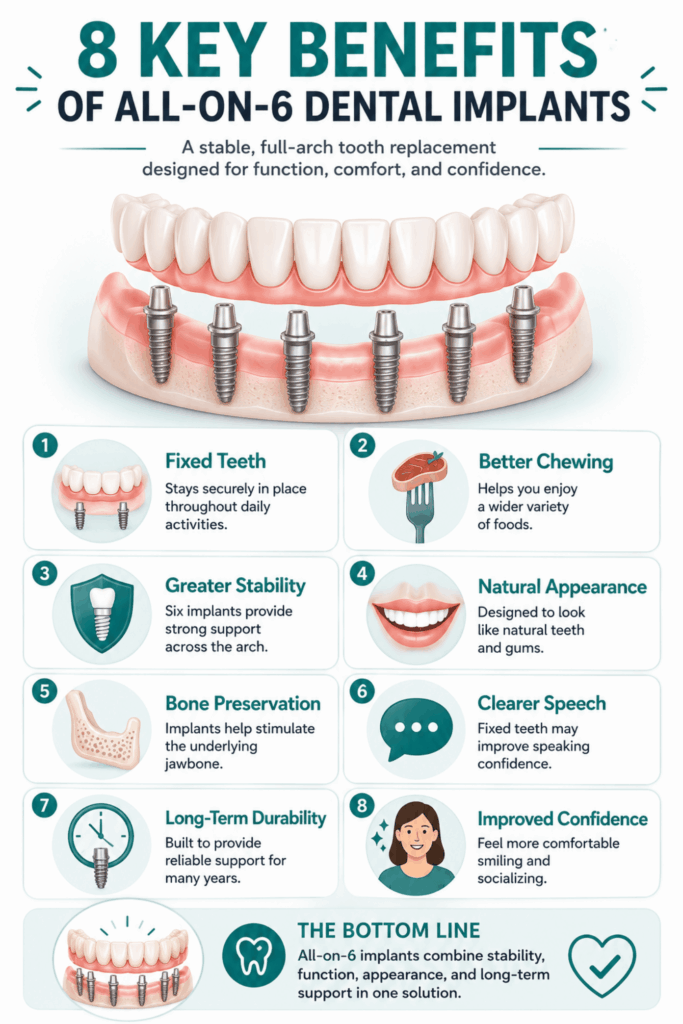
All-on-6 dental implants offer more than just replacement teeth. They can improve daily comfort, restore function, and help preserve overall oral health. Many patients notice meaningful improvements in quality of life after treatment.
- Fixed Replacement Teeth: The prosthetic remains securely attached and does not move during eating or speaking.
- Improved Chewing Ability: Patients can often enjoy a wider variety of foods compared with traditional dentures.
- Enhanced Comfort: Implant-supported teeth eliminate many common denture-related problems.
- Natural Appearance: Modern artificial teeth are designed to closely resemble natural teeth.
- Bone Preservation: Implants provide stimulation to the jawbone that helps reduce bone loss.
- Better Speech: Secure teeth help many patients speak more clearly.
- Long-Term Solution: With proper care, dental implants can last for many years.
- Improved Confidence: A stable smile often improves social interactions and self-esteem.
Improved Stability and Chewing Function
Because six implants support the restoration, patients often experience excellent stability during daily activities. The additional implant support helps distribute chewing forces efficiently and can improve comfort when eating tougher foods. Many patients find it easier to enjoy foods such as meat, vegetables, fruits, and nuts that may have been difficult with traditional dentures.
Natural Appearance and Confidence
Modern full-arch restorations are carefully designed to match facial features, smile shape, and natural tooth proportions. The new teeth are crafted to look realistic while providing a comfortable fit. Replacing missing teeth can also restore facial support, reduce the sunken appearance associated with tooth loss, and improve confidence in social and professional situations.
Jawbone Support and Long-Term Oral Health
After tooth loss, the jawbone gradually shrinks because it no longer receives stimulation from tooth roots. Dental implants into the jawbone help mimic natural tooth roots and stimulate bone during chewing. Preserving bone structure supports facial appearance, helps maintain stability, and contributes to better long-term oral health.
What Is the All-on-6 Dental Implant Procedure?
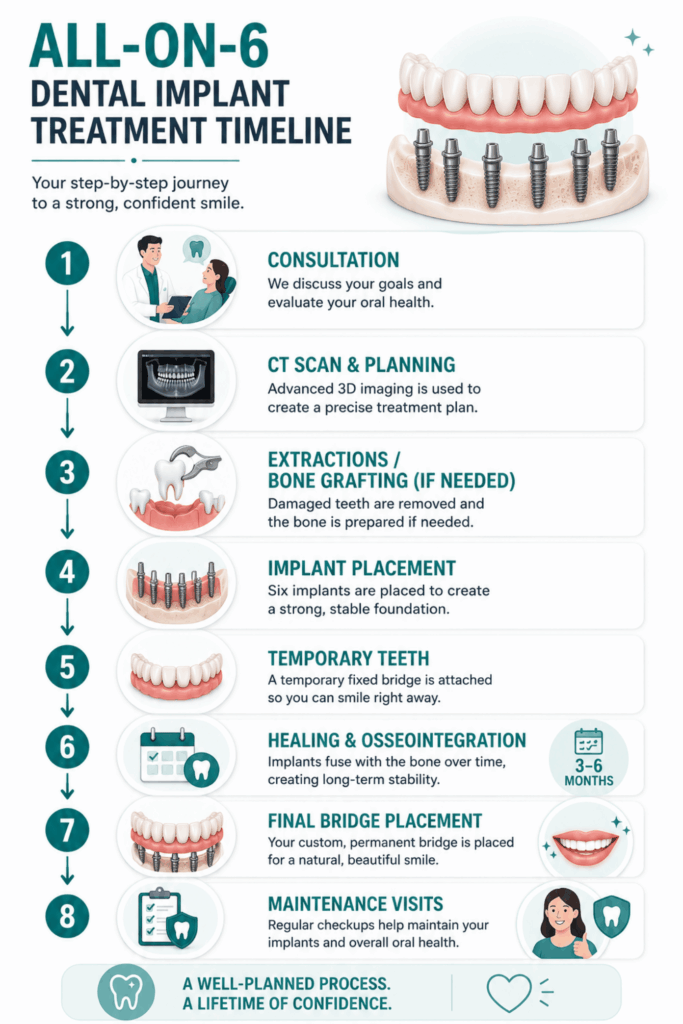
The all-on-6 procedure involves several stages, beginning with evaluation and ending with the placement of a permanent full-arch restoration. Although every case is different, most patients follow a similar treatment sequence.
- Initial consultation and examination
- Diagnostic imaging and treatment planning
- Preparation procedures if needed, such as extractions or bone grafting
- Implant placement surgery
- Placement of temporary teeth when appropriate
- Healing and osseointegration period
- Final restoration fabrication
- Placement of the permanent prosthetic dental arch
- Ongoing maintenance and regular dental visits
Consultation and Treatment Planning
The process begins with a comprehensive dental exam, digital imaging, and evaluation of the jawbone. The dentist will make detailed measurements to determine implant placement, assess bone quality, and identify any dental problems that could affect treatment. This planning stage helps ensure that implants are placed in positions that maximize support and long-term success.
Implant Placement Surgery
During dental implant surgery, the implants are placed into carefully selected areas of the jawbone. Local anesthesia, sedation, or other anesthesia options help keep patients comfortable throughout the procedure. Most patients report manageable discomfort and swelling during the initial recovery period.
Temporary Teeth During Healing
Many patients receive temporary teeth shortly after implant placement. These temporary restorations allow patients to maintain appearance and basic function while the implants take time to integrate with the bone. During healing, patients typically follow a soft-food diet and avoid excessive pressure on the implants.
Final Full-Arch Restoration
Once healing is complete, the final bridge is attached to the implants. Patients often notice improved comfort, stronger chewing ability, and a more natural feel compared with temporary restorations. The final prosthetic is designed for durability, function, and aesthetics.
How Long Does Recovery Take After All-on-6 Dental Implants?
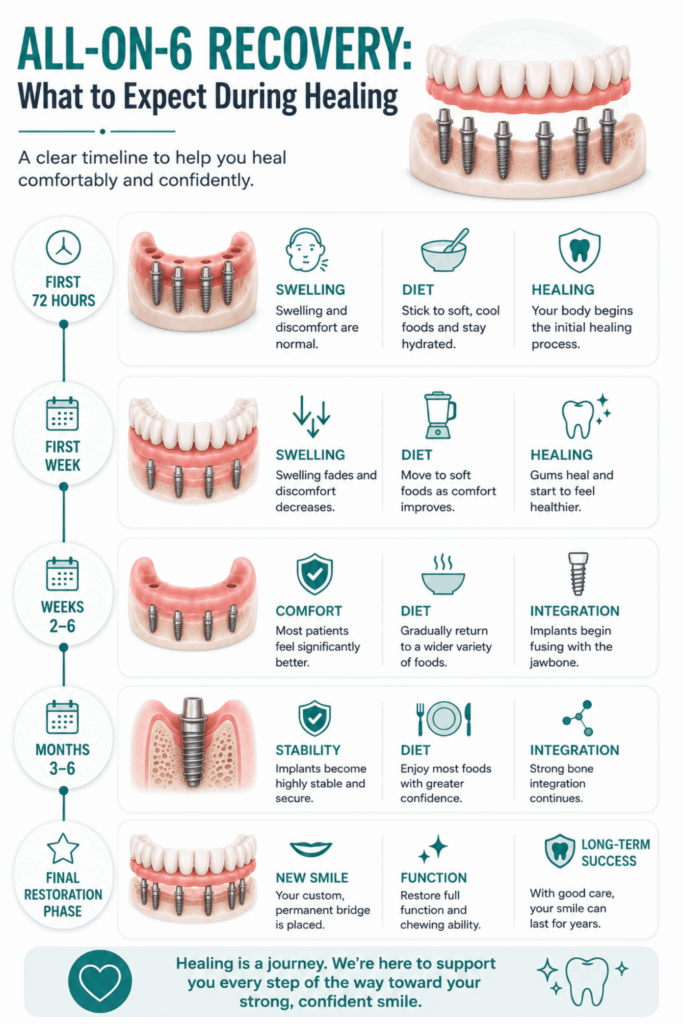
Recovery occurs in stages. While initial healing happens relatively quickly, complete integration between the implants and bone takes several months.
First 24–72 Hours
- Mild discomfort and swelling are common.
- Rest and follow post-operative instructions carefully.
First Week
- Swelling gradually improves.
- Most patients return to routine activities.
Weeks 2–6
- Soft tissues continue healing.
- Temporary teeth may remain in place.
Months 3–6
- Osseointegration occurs as implants fuse with the jawbone.
- Implant stability continues to improve.
After Final Restoration
- Normal function gradually returns.
- Patients adapt to their new teeth.
The exact timeline varies based on bone quality, overall health, smoking status, oral hygiene, and whether additional procedures such as grafting were required.
What Can You Eat After All-on-6 Dental Implant Surgery?
Diet plays an important role in protecting healing implants. Choosing appropriate foods reduces stress on the surgical area and supports recovery.
- Choose Soft Foods: Yogurt, mashed potatoes, eggs, soups, and smoothies are often comfortable during early healing.
- Eat Protein-Rich Foods: Fish, soft poultry, and protein shakes support tissue repair.
- Stay Hydrated: Adequate fluids promote healing and overall health.
- Avoid Hard Foods: Nuts, hard candy, and crunchy snacks may place excessive force on healing implants.
- Avoid Sticky Foods: Sticky foods can stress temporary restorations.
- Limit Extremely Hot Foods: Very hot foods may increase discomfort during early recovery.
- Follow Dietary Instructions: Your dental office may recommend specific restrictions based on your case.
How Much Do All-on-6 Dental Implants Cost?
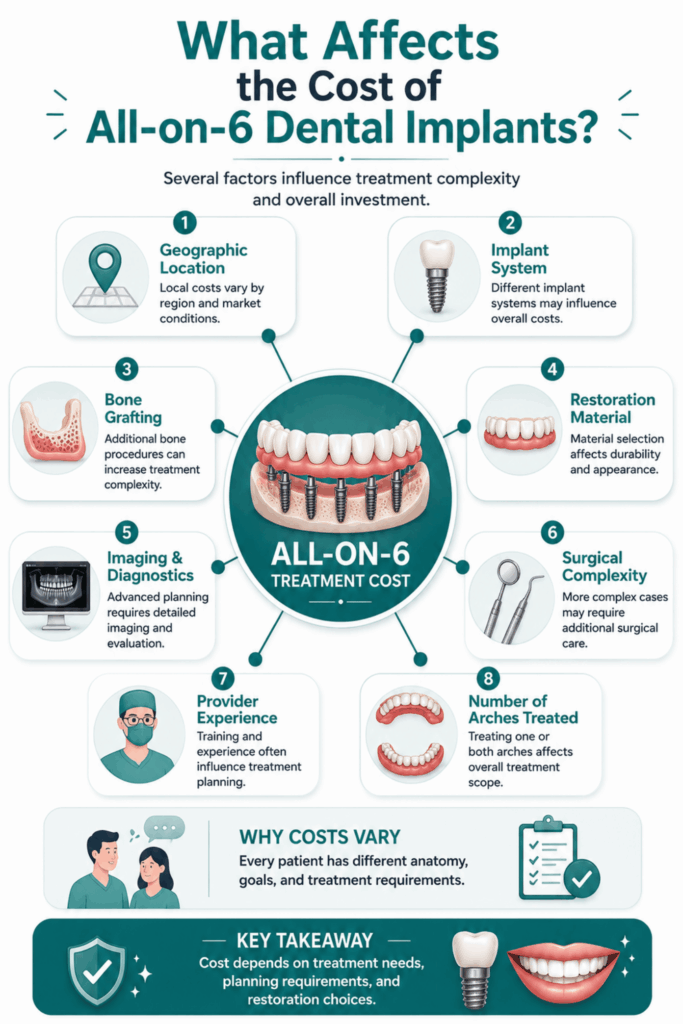
The average cost of all-on-6 dental implants varies significantly between patients. Unlike single implants, full-arch treatment includes multiple components that influence the final cost. The initial cost may seem substantial, but many patients view the treatment as a long-term investment in oral function and quality of life.
Prices vary because no two cases are identical. Factors such as bone volume, restoration materials, diagnostic requirements, and geographic location can all affect treatment expenses.
- Geographic Location: Costs vary between cities, regions, and countries.
- Diagnostic Imaging: CT scans, digital planning, and evaluations contribute to treatment costs.
- Bone Graft Procedures: Additional grafting may increase costs.
- Implant Brand and Materials: Different implant systems and titanium components affect pricing.
- Number of Teeth Being Replaced: Full upper or lower arch treatment may differ from dual-arch treatment.
- Restoration Material: Acrylic, composite, and premium ceramic restorations vary in cost.
- Surgical Complexity: More complex cases may require additional planning and procedures.
- Provider Experience: Advanced training and expertise can influence fees.
How Long Do All-on-6 Dental Implants Last?
All-on-6 dental implants are designed to provide long-term tooth replacement. The implants themselves can last for decades and, in some cases, implants can last a lifetime when supported by good dental hygiene and professional care. The prosthetic teeth may require maintenance, repair, or replacement over time due to normal wear.
- Maintain Excellent Oral Hygiene: Clean around the implants daily.
- Attend Regular Dental Visits: Regular dental monitoring helps identify problems early.
- Avoid Tobacco Use: Smoking increases the risk of complications.
- Protect Against Grinding: Night guards may help reduce excessive forces.
- Follow Professional Recommendations: Proper care supports long-term success.
Potential Risks and Complications of All-on-6 Dental Implants
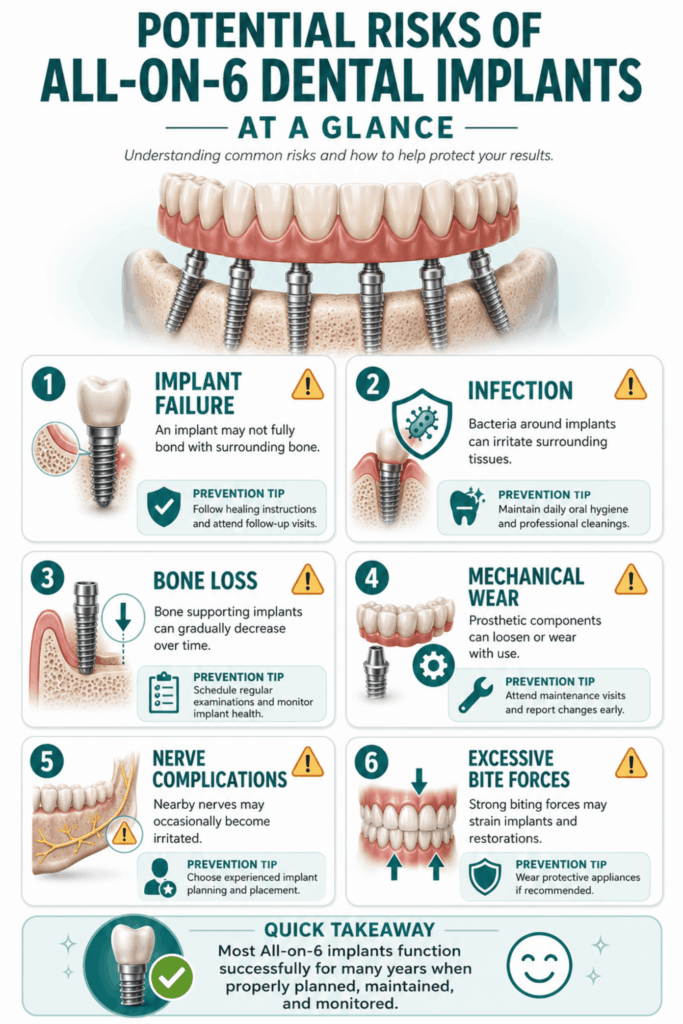
Like any oral surgery procedure, all-on-6 treatment carries potential risks. Fortunately, careful planning, proper surgical technique, and good aftercare help reduce many complications and improve long-term outcomes.
- Implant Failure: Incomplete integration between the implant and bone can affect stability.
- Infection: Bacterial buildup around the implants may damage supporting tissues.
- Bone Loss: Progressive bone changes can affect long-term support.
- Mechanical Wear: Prosthetic components may require maintenance or replacement.
- Nerve or Sinus Complications: Rare complications can occur depending on implant location.
- Excessive Bite Forces: Clenching and grinding may increase stress on restorations.
Implant Failure
The risk of implant failure is generally low, but it can occur if the implant does not properly integrate with the bone. Smoking, uncontrolled medical conditions, poor oral hygiene, and excessive stress on healing implants can increase risk. Patients should contact their dentist if they notice unusual movement, persistent pain, or changes in implant stability.
Infection Around the Implants
Infection around the implants, sometimes called peri-implant disease, can damage gum tissue and supporting bone. Common signs include bleeding, swelling, tenderness, bad taste, or discharge around the implants. Good dental hygiene, routine professional cleanings, and early treatment of symptoms help reduce complications.
Bone Loss or Mechanical Problems
Over time, some patients may experience bone loss around the implants or wear involving prosthetic components. Excessive bite forces, poor maintenance, or untreated inflammation can contribute to these problems. Regular evaluations help identify issues early and protect the long-term success of the restoration.
How to Care for All-on-6 Dental Implants
Proper maintenance plays a major role in long-term success. Even though implants cannot develop cavities, the surrounding gum and bone still require daily care.
- Brush Thoroughly Every Day: Remove plaque from the prosthetic and gumline.
- Clean Under the Bridge: Use specialized floss, water flossers, or recommended cleaning aids.
- Attend Regular Dental Checkups: Professional examinations help monitor implant health.
- Schedule Professional Cleanings: Regular maintenance removes hard-to-reach deposits.
- Avoid Smoking: Tobacco increases the risk of complications around the implants.
- Protect Against Teeth Grinding: Wear a night guard if recommended.
- Report Changes Early: Contact your dentist if you notice pain, swelling, looseness, or bleeding.
Frequently Asked Questions About All-on-6 Dental Implants
Are All-on-6 Dental Implants Permanent?
The implants themselves are intended to be a long-term part of the jawbone and may last for decades. However, the prosthetic teeth can experience wear and may require maintenance or replacement over time.
Do All-on-6 Dental Implants Feel Like Natural Teeth?
Most patients adapt well and report that their teeth feel stable and comfortable. While they are not identical to natural teeth, they function much more like natural teeth than removable dentures.
Can Smokers Get All-on-6 Dental Implants?
Yes, but smoking can slow healing and increase the risk of implant failure. Dentists often recommend reducing or stopping smoking before and after implant surgery.
Are All-on-6 Dental Implants Worth It?
For many patients, the benefits of all-on-6 dental implants include improved function, stability, appearance, and long-term oral health. Whether they are worth it depends on treatment goals, budget, oral health, and personal expectations.
Key Takeaways About All-on-6 Dental Implants
All-on-6 dental implants provide a fixed solution for replacing a full upper or lower arch of missing teeth. By using six strategically placed implants to anchor a full restoration, this treatment can improve stability, chewing ability, appearance, and overall oral health. While treatment requires surgery, healing time, and a significant financial investment, many patients consider the long-term benefits worthwhile.
If you have extensive tooth loss, struggle with traditional dentures, or want a more permanent tooth replacement option, it may be time to schedule a professional evaluation. A thorough examination can determine whether you are a candidate for all-on-6 dental implants and help you understand the expected benefits, costs, recovery process, and long-term results for your specific situation.
