If your dental implant feels sore, your gums bleed when you brush, or you notice swelling around the implant, you may be wondering if something is wrong. Peri-implantitis is an infection that affects the gum and bone supporting a dental implant. The good news is that early treatment can often stop the damage and may help save your implant before the problem becomes severe.
Many people mistake the early signs for mild gum irritation and wait too long to see a dentist. During that time, the infection can spread deeper and cause bone loss around the implant. Knowing the warning signs, risk factors, and treatment options can help you act before the implant becomes loose.
Not every implant problem leads to implant failure. The right treatment depends on how early the condition is found and how much bone has already been affected. Understanding what peri-implantitis is, how dentists diagnose it, and what you can do at home and in the dental office will help you make informed decisions about protecting your implant.
What Is Peri-Implantitis?
Peri-implantitis is a serious inflammatory condition that affects the gums and bone supporting a dental implant. It develops when harmful bacteria collect around the implant, causing infection in the peri-implant tissue. As the inflammation spreads, it can damage the bone that keeps the implant stable. Without appropriate treatment, the implant may eventually become loose or fail.
Unlike healthy peri-implant tissue, which is firm, pink, and tightly attached around the implant, peri-implantitis causes swelling, bleeding, and progressive peri-implant bone loss. Because bone loss cannot always be fully restored, early diagnosis and treatment offer the best chance of controlling the disease and saving the implant.
Peri-Implantitis vs. Peri-Implant Mucositis
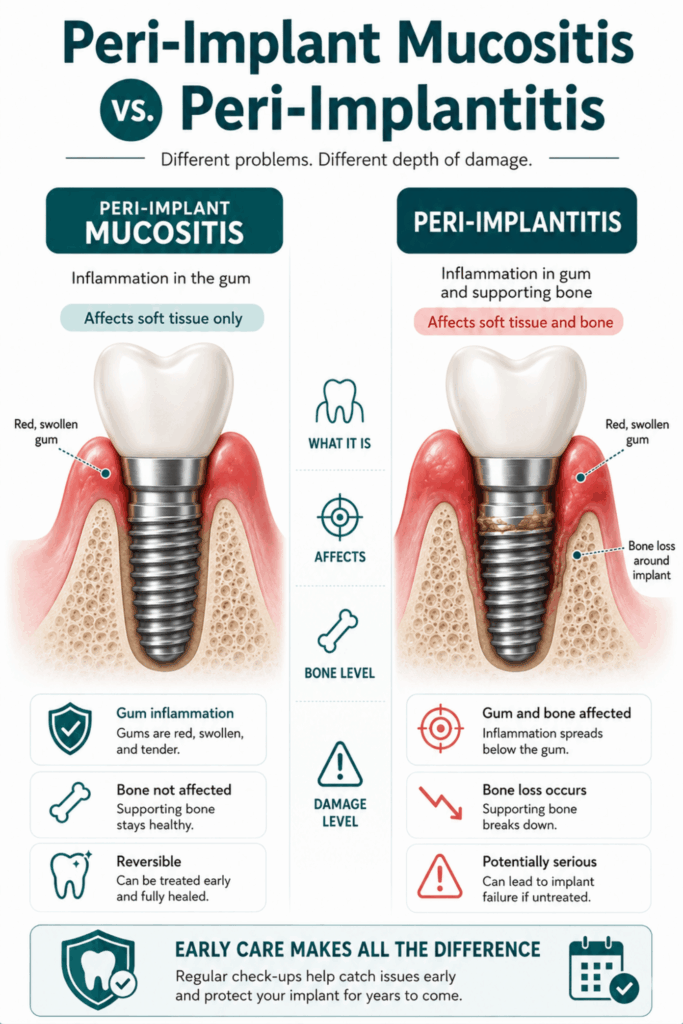
Many people confuse peri-implant mucositis with peri-implantitis, but the two conditions are not the same. Understanding the difference helps explain why early treatment is so important.
| Feature | Peri-Implant Mucositis | Peri-Implantitis |
|---|---|---|
| Area Affected | Soft tissue around the implant | Soft tissue and supporting bone |
| Bone Loss | No | Yes |
| Bleeding on Probing | Common | Common |
| Swelling and Redness | Present | Present |
| Implant Stability | Usually stable | May become loose over time |
| Reversible? | Usually yes with prompt care | Disease can often be controlled, but lost bone may not fully return |
| Typical Treatment | Professional cleaning and improved oral hygiene | Nonsurgical or surgical treatment, depending on severity |
The biggest difference is that peri-implant mucositis affects only the gums, while peri-implantitis has already damaged the supporting bone. This is why regular dental checkups matter. Finding inflammation before bone loss develops often allows simpler treatment and improves the long-term outlook for the implant.
What Causes Peri-Implantitis?
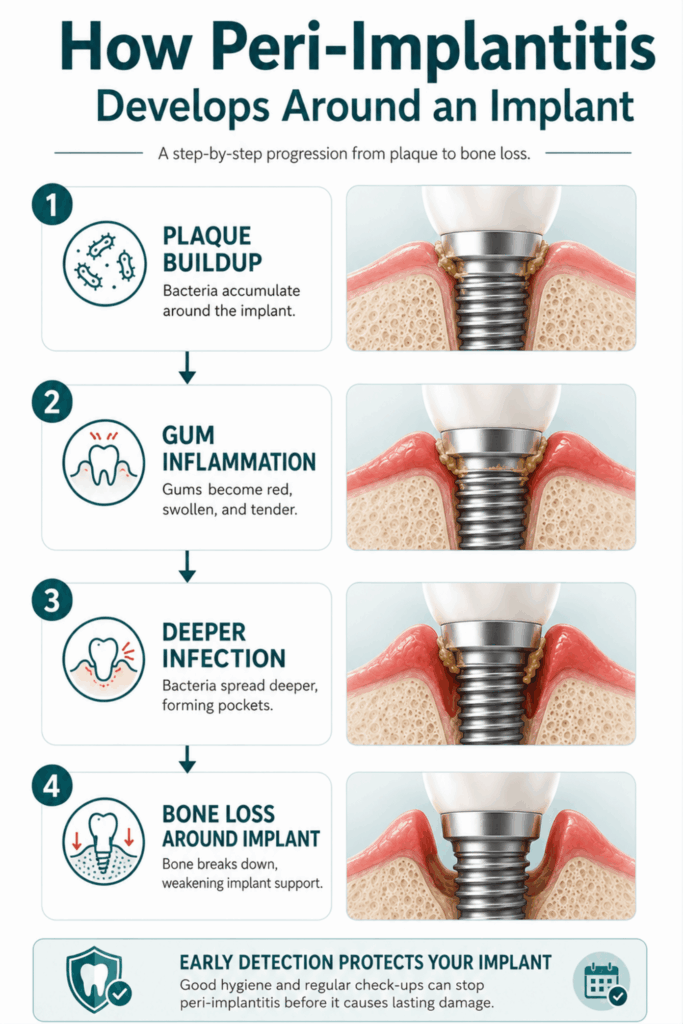
Peri-implantitis develops when harmful bacteria collect around dental implants and remain there long enough to trigger inflammation in the surrounding tissues. At first, the inflammation affects only the soft tissue, a condition called peri-implant mucositis. If plaque and bacteria are not removed, the infection can spread deeper, damaging the bone that supports the implant. This gradual breakdown can eventually loosen the implant if left untreated.
Although bacteria start the process, they are rarely the only cause. Peri-implantitis usually develops when bacterial plaque combines with one or more risk factors that make it easier for the disease to progress. The inflammation around the peri-implant mucosa becomes persistent, bone loss begins, and the implant becomes less stable over time. The good news is that catching the problem during the early stages gives your dentist a much better chance of stopping the disease before significant damage occurs.
Who Is Most at Risk?
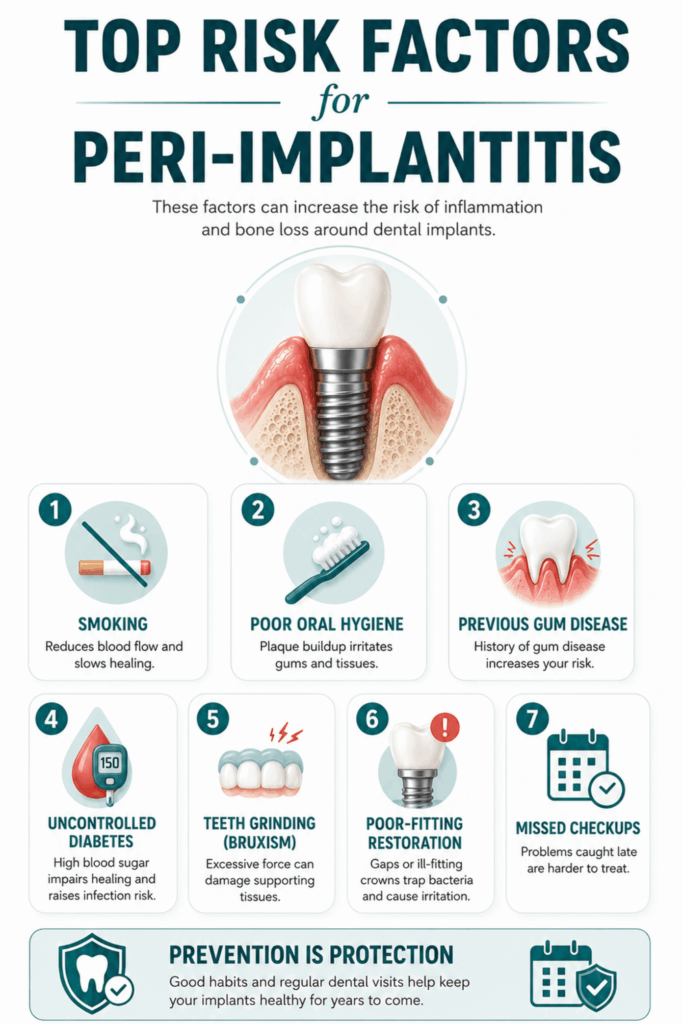
Not everyone with dental implants develops peri-implantitis. However, certain factors make some people much more likely to experience inflammation and bone loss around implants. Some of these risks can be reduced with good habits and regular dental care, while others require closer monitoring by your dentist.
- Smoking: Tobacco reduces blood flow to the gums, slows healing, and weakens the body’s ability to fight infection. Quitting smoking is one of the most effective ways to lower your risk.
- Poor Oral Hygiene: Plaque that is not removed daily allows bacteria to collect around implants and beneath the gumline. Brushing, flossing, and cleaning around dental implants every day are essential for maintaining peri-implant health.
- Previous Gum Disease: A history of periodontitis is one of the strongest risk factors for peri-implantitis. People who have lost bone from gum disease need ongoing periodontal maintenance because the same bacteria can affect oral implants.
- Uncontrolled Diabetes: High blood sugar can impair healing and increase inflammation, making infections more difficult to control. Keeping diabetes well managed can significantly reduce this risk.
- Excess Biting Forces: Heavy biting, teeth grinding, or an uneven bite can place excessive stress on an implant. While these forces do not directly cause infection, they can contribute to tissue damage and make existing inflammation worse.
- Poorly Fitting Restorations: Crowns, bridges, or dentures that are difficult to clean or do not fit properly can trap plaque around implants. Replacing or adjusting these restorations can improve cleaning and reduce bacterial buildup.
- Infrequent Dental Checkups: Skipping maintenance visits allows early inflammation to go unnoticed. Regular professional cleanings help your dentist detect peri-implant mucositis before it progresses to peri-implantitis.
- Inadequate Plaque Control During Healing: The tissues around a newly placed implant are especially vulnerable. Following your dentist’s cleaning instructions during healing helps establish healthy peri-implant tissues from the beginning.
- Limited Access for Cleaning: Implants placed in hard-to-reach areas or surrounded by complex restorations may be more difficult to clean thoroughly. Your dental team can recommend special brushes or other cleaning aids to improve plaque removal.
Many of these risk factors are within your control. Improving daily oral hygiene, managing medical conditions, stopping smoking, wearing a night guard if you grind your teeth, and attending regular maintenance visits can greatly reduce the likelihood that peri-implant mucositis will progress into peri-implantitis.
Peri-Implantitis Symptoms to Watch For
Peri-implantitis often begins quietly. In its early stages, you may notice only small changes around the implant, and pain is frequently absent. That is why paying attention to subtle warning signs and keeping regular dental appointments is so important.
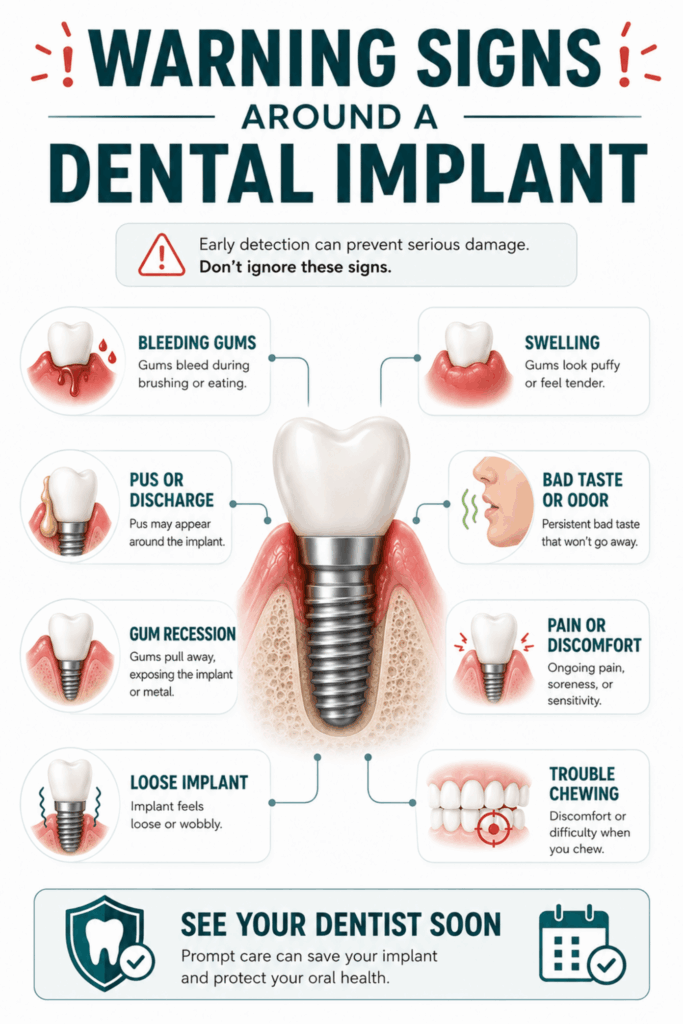
- Bleeding When Brushing or Flossing: One of the earliest signs of peri-implant mucositis or peri-implantitis is bleeding around the implant during routine cleaning.
- Red or Swollen Gums: Inflamed peri-implant tissue may appear red, puffy, or tender instead of firm and pink.
- Persistent Bad Breath or Bad Taste: Bacteria trapped around the implant can produce unpleasant odors or leave a bad taste in your mouth.
- Pus Around the Implant: Drainage or pus is a sign of active infection and should never be ignored.
- Increasing Pocket Depth: During an examination, your dentist may detect a deeper peri-implant probing depth, often accompanied by bleeding on probing, which suggests disease progression.
- Gum Recession: As supporting tissue breaks down, more of the implant or restoration may become visible.
- Pain or Discomfort: While early peri-implantitis may not hurt, discomfort can develop as inflammation worsens or infection spreads.
- Loose Implant: A dental implant that begins to move is a serious sign that significant peri-implant bone loss may have occurred and requires immediate evaluation.
- Difficulty Chewing: Changes in comfort or stability while eating may indicate that the tissues supporting the implant are no longer healthy.
Recognizing these symptoms early gives your dentist a better opportunity to stop the disease before extensive bone loss occurs. Even minor bleeding around an implant deserves professional evaluation because healthy implants should not bleed regularly.
How Dentists Diagnose Peri-Implantitis
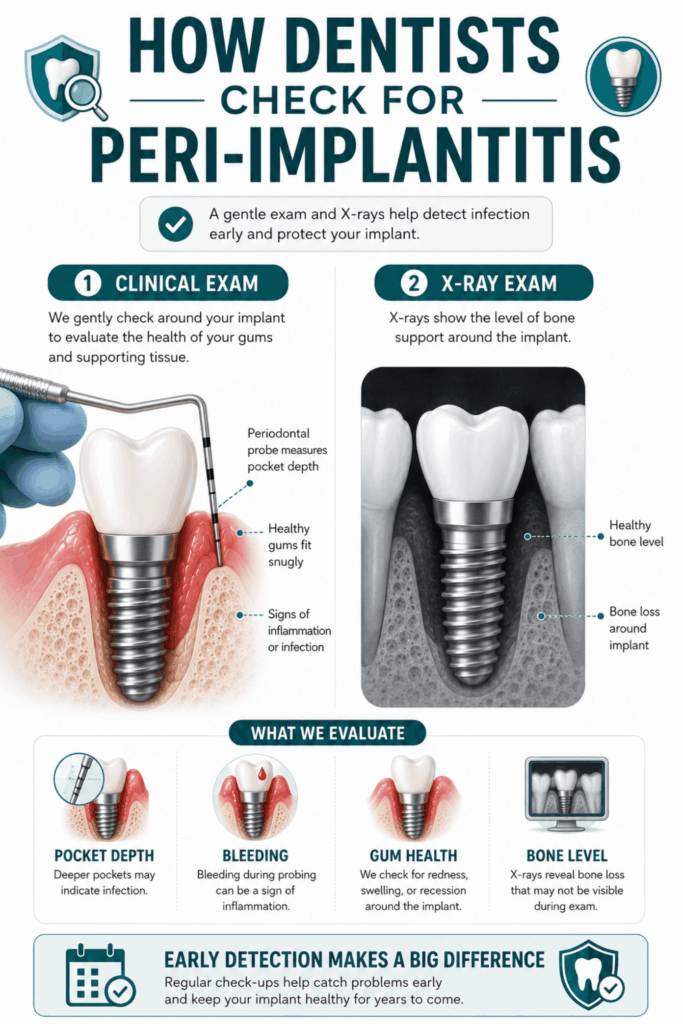
Diagnosing peri-implantitis involves more than simply looking at the implant. Your dentist combines a clinical examination with dental X-rays to determine whether inflammation is limited to the gums or has already caused peri-implant bone loss. This careful evaluation helps distinguish peri-implant mucositis and peri-implantitis, since the treatments for these conditions are different.
During the examination, your dentist checks for redness, swelling, pus, bleeding on probing, and changes in peri-implant probing depth using a periodontal probe. A radiograph is then used to evaluate the bone around the implant. Bone loss that extends beyond the normal remodeling seen after implant placement, along with signs of inflammation, confirms the diagnosis of peri-implantitis and helps guide the most appropriate treatment plan.
Peri-Implantitis Treatment Options
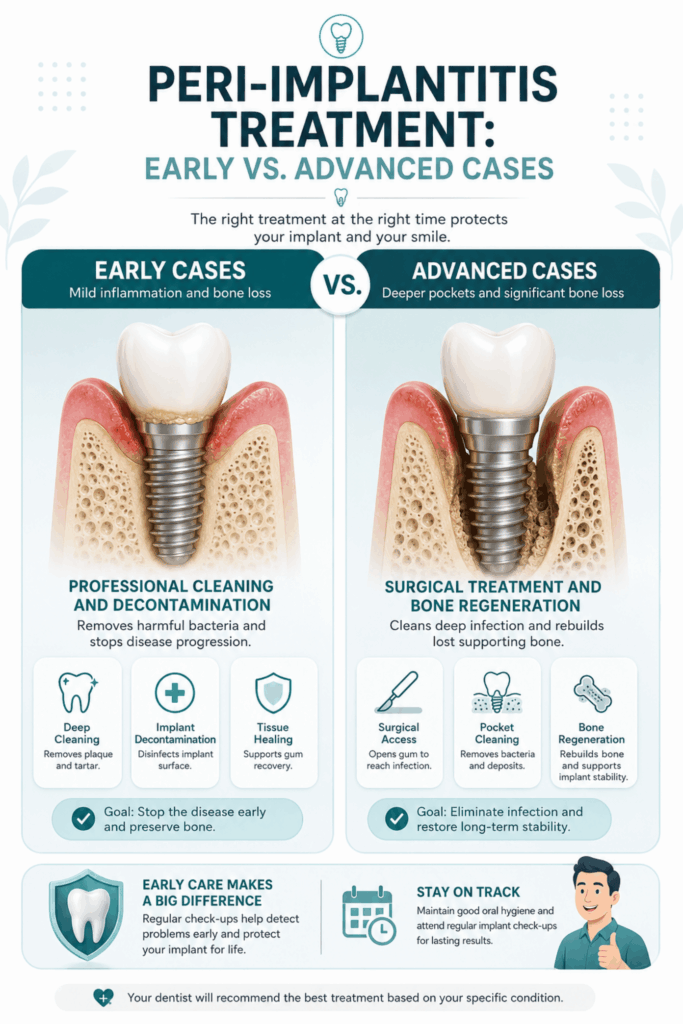
There is no single treatment that works for every case of peri-implantitis. The best approach depends on how much bone has been lost, how stable the implant remains, and whether the infection is caught early. The main goals of peri-implantitis treatment are to eliminate harmful bacteria, stop disease progression, preserve healthy supporting tissue, and save the implant whenever possible.
- Nonsurgical Treatment: Early peri-implantitis may be managed with professional cleaning, implant surface decontamination, improved oral hygiene, and, in some cases, antimicrobial therapy.
- Surgical Treatment: More advanced peri-implantitis may require surgery to thoroughly clean the implant surface, reduce deep pockets, remove infected tissue, and, when appropriate, rebuild lost bone.
Nonsurgical Treatment
Nonsurgical treatment is usually recommended when peri-implantitis is detected early or when bone loss is still limited. The goal is to reduce bacterial buildup, calm the inflammation, and create conditions that allow the surrounding tissues to heal. In many cases, early intervention can stop the disease before surgery becomes necessary.
Treatment typically includes professional cleaning around the implant, implant surface decontamination, and personalized instructions for improving oral hygiene at home. Your dentist may also recommend antiseptic mouth rinses or antibiotics in certain situations, although these medications are generally used as supportive treatments rather than as the main solution. Patients with peri-implant mucositis or mild peri-implantitis usually have the best response to non-surgical treatment of peri-implant diseases, especially when they maintain excellent home care afterward.
Surgical Treatment
Surgical treatment becomes necessary when nonsurgical care cannot adequately remove bacteria or when deeper pockets and significant bone loss have developed. Surgery gives the dentist direct access to the affected area, allowing thorough cleaning of the implant surface and removal of infected tissue that cannot be reached through routine cleaning alone.
Depending on the severity of the disease, the procedure may include reducing deep pockets, reshaping damaged tissue, or performing regenerative treatment of peri-implantitis to rebuild lost bone when conditions are favorable. Although surgery cannot guarantee complete recovery, it can significantly improve treatment outcomes by stopping further bone destruction and increasing the likelihood of preserving the implant.
Can Peri-Implantitis Be Cured?
Peri-implantitis is best viewed as a chronic condition that can often be controlled rather than permanently cured. Once bone has been lost around an implant, it may not fully regenerate, even after successful treatment. However, controlling the infection and preventing additional bone loss are realistic goals that allow many implants to function successfully for years.
Long-term success depends on more than the treatment itself. Daily oral hygiene, routine maintenance visits, management of risk factors such as smoking or uncontrolled diabetes, and prompt treatment of any recurring inflammation all play an important role. Patients who stay committed to ongoing care generally achieve much better long-term results than those who stop maintenance after treatment.
Can Peri-Implantitis Be Reversed?
Whether peri-implantitis can be reversed depends on how early it is detected. Inflammation limited to the gums, known as peri-implant mucositis, is usually reversible with prompt treatment and improved oral hygiene. Once peri-implantitis has caused bone loss, however, the lost bone cannot always be completely restored. Even so, many implants can still be preserved if treatment begins before severe damage occurs.
- Stage of the Disease Matters: Earlier treatment offers a much greater chance of stopping the disease before extensive bone loss develops.
- Amount of Bone Loss: Mild bone loss is generally easier to manage than advanced destruction around the implant.
- Implant Stability: An implant that remains firmly attached to the bone has a better long-term outlook than one that has become loose.
- Response to Treatment: Some cases respond well to professional cleaning and surgery, while others require more complex management because of implant design or anatomy.
- Patient Commitment: Careful brushing, flossing, professional maintenance, and controlling risk factors are essential for long-term success.
- Smoking Status: Quitting smoking improves healing and reduces the chance that inflammation will return after treatment.
- Overall Health: Good control of diabetes and other medical conditions supports healing and improves treatment outcomes.
- Regular Follow-Up Care: Ongoing monitoring allows your dentist to detect recurrent inflammation before significant new bone loss occurs.
What Happens If Peri-Implantitis Is Left Untreated?
Peri-implantitis does not usually improve on its own. As bacteria remain around the implant, inflammation continues to damage the supporting tissues. What may begin as mild bleeding or swollen gums can gradually progress to significant bone loss, making the implant less stable over time.
If the infection continues unchecked, the implant may eventually become loose and fail. At that stage, the implant often needs to be removed, and replacing it may require additional procedures such as bone grafting before a new implant can be placed. Seeking treatment early is usually simpler, less invasive, and more likely to save the implant.
How to Help Prevent Peri-Implantitis
Although peri-implantitis is a common complication of dental implants, many cases can be prevented with consistent home care and regular professional maintenance. A few daily habits can make a significant difference in protecting the tissues around your implant and reducing the risk of infection.
- Brush Thoroughly Every Day: Clean around your implant twice a day using a soft-bristled toothbrush to remove plaque before it causes inflammation.
- Clean Between Your Teeth and Implants: Use dental floss, interdental brushes, or other cleaning aids recommended by your dentist to remove plaque from hard-to-reach areas.
- Attend Regular Dental Checkups: Professional examinations and cleanings help detect early signs of inflammation before bone loss develops.
- Avoid Smoking: Quitting smoking improves gum health, supports healing, and lowers the risk of peri-implantitis.
- Manage Medical Conditions: Keeping diabetes and other health conditions under good control helps your body fight infection and heal more effectively.
- Protect Your Implant From Excessive Force: If you grind or clench your teeth, wearing a night guard can reduce stress on your implant.
- Report Changes Early: Do not ignore bleeding, swelling, or discomfort around an implant. Prompt evaluation often prevents more serious problems.
When Should You Contact Your Dentist?
Small changes around a dental implant can be the first signs of peri-implantitis. Contacting your dentist early gives you the best chance of stopping the disease before it causes significant bone loss or threatens the stability of the implant.
- Bleeding Around the Implant: Bleeding during brushing, flossing, or eating should be evaluated, especially if it continues for several days.
- Swollen or Red Gums: Persistent swelling or redness around an implant may indicate inflammation that requires professional care.
- Pus or Drainage: Any discharge around an implant is a sign of infection and should be examined as soon as possible.
- Increasing Pain or Discomfort: Although early peri-implantitis may not be painful, new or worsening discomfort should not be ignored.
- A Loose Implant: An implant that feels loose is a dental emergency and should be evaluated promptly.
- Difficulty Chewing: Changes in your bite or discomfort while chewing may indicate that the implant or surrounding tissues need attention.
- Persistent Bad Taste or Bad Breath: Ongoing unpleasant taste or odor may be caused by bacteria trapped around the implant.
Frequently Asked Questions About Peri-Implantitis
Can Food Get Trapped Around a Dental Implant and Cause an Implant Infection?
Yes. Food trapped around an implant can encourage plaque buildup if it is not removed. Over time, this increases the risk of inflammation and infection, especially if oral hygiene is poor.
Can I Still Brush and Floss During Peri-Implantitis Treatment?
Yes. Unless your dentist gives different instructions after a procedure, you should continue cleaning around the implant carefully. Good oral hygiene is an important part of successful treatment.
Is Peri-Implantitis Contagious?
No. Peri-implantitis itself is not contagious. However, the bacteria that contribute to gum disease can be shared between people, making good oral hygiene important for everyone.
Can an Implant Infection Affect Neighboring Teeth?
Yes. If left untreated, the inflammation and bacteria may affect the gums and supporting tissues around nearby natural teeth, especially if periodontal disease is also present.
Can Peri-Implantitis Develop Years After Getting a Dental Implant?
Yes. Peri-implantitis can develop months or even many years after implant placement. Regular dental checkups remain important throughout the life of the implant.
Can a Dental Implant Become Infected More Than Once?
Yes. Even after successful treatment, peri-implantitis can return if plaque accumulates again or if underlying risk factors are not well controlled.
Will My Dental Implant Need to Be Replaced After Treatment?
Not always. Many implants can be saved when peri-implantitis is diagnosed and treated early. However, severe bone loss or a loose implant may make removal and replacement necessary.
Does Dental Implant Insurance Usually Cover Peri-Implantitis Treatment?
Coverage varies depending on your insurance plan. Some policies cover part of the treatment, while others may only cover certain procedures. Contact your insurance provider to confirm your specific benefits.
Final Thoughts
Peri-implantitis is a serious condition, but it does not always lead to implant failure. When the problem is identified early, treatment can often stop the infection, protect the surrounding bone, and preserve the implant. Paying attention to bleeding, swelling, or other changes around an implant gives you the best opportunity for successful treatment.
If you notice symptoms that could indicate peri-implantitis, do not wait for them to become painful or more severe. A prompt dental evaluation can determine the cause, recommend the right treatment, and help protect your implant and your long-term oral health.
