Many people who need a tooth replacement ask whether ceramic dental implants are a safer or more natural-looking choice than traditional titanium implants. The short answer is that ceramic implants can be an excellent option for the right patient. They blend well with natural teeth, do not contain metal, and have high success rates when placed under the right conditions. However, they are not the best choice for everyone.
Your dentist will look at your jawbone, bite, gum health, and treatment goals before recommending a ceramic implant. While these implants offer several advantages, they also have some limitations, including higher costs and fewer treatment options in certain situations. Understanding both the benefits and drawbacks helps you make a more confident decision.
Many patients also wonder how long ceramic implants last, whether they are stronger than titanium, who qualifies for them, and what the procedure involves. The following sections explain these questions step by step, beginning with what ceramic implants are and how they differ from other types of dental implants.
What Are Ceramic Dental Implants?
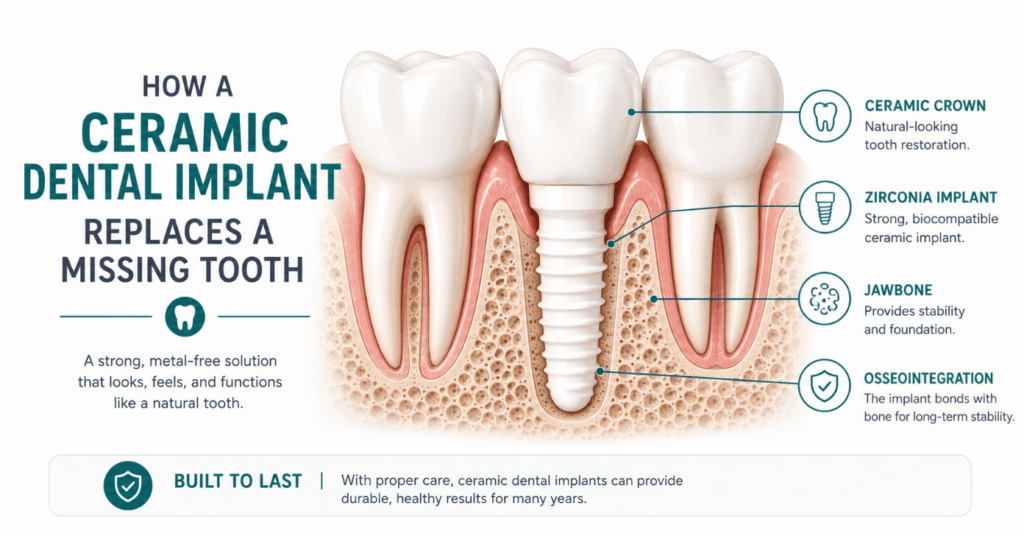
Ceramic dental implants are artificial tooth roots that replace missing teeth. Like traditional implants, they are surgically placed into the jawbone, where they support a dental crown, bridge, or other restoration. Their purpose is to replace the root of a missing tooth, restoring chewing function, speech, and the appearance of your smile.
Most ceramic implants are made from zirconia, also known as zirconium oxide. This strong, tooth-colored ceramic is highly biocompatible, corrosion-resistant, and known for its excellent durability. Ceramic implants offer a metal-free alternative for patients seeking a natural-looking restoration while providing the strength needed for everyday chewing.
How Ceramic Dental Implants Differ From Titanium Implants
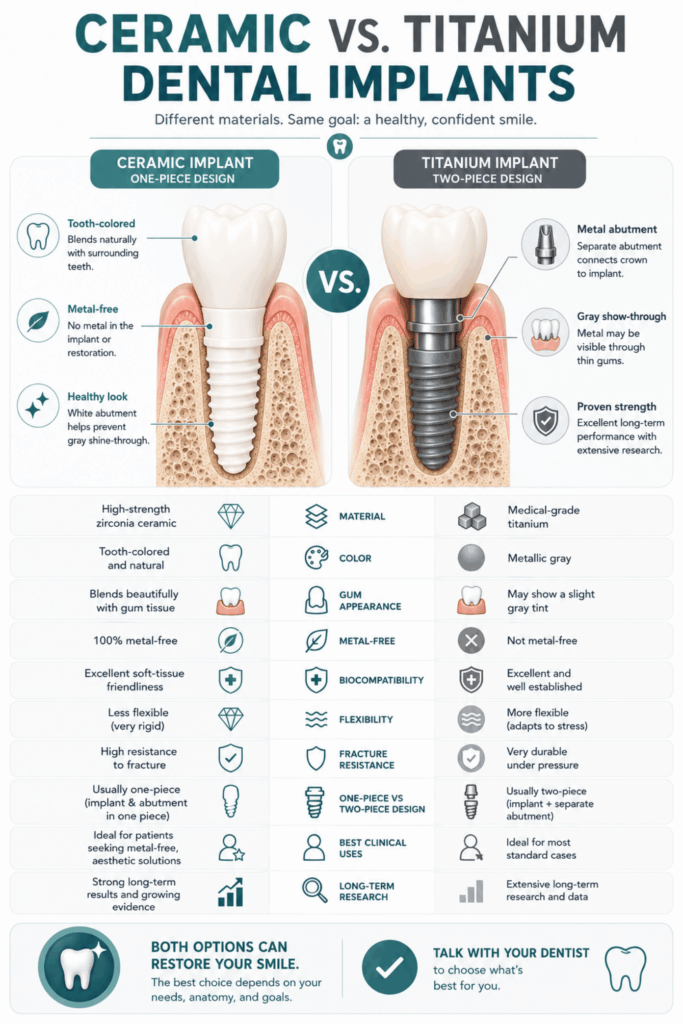
Ceramic and titanium implants both replace missing tooth roots and rely on osseointegration to bond with the jawbone. However, they differ in their material, appearance, flexibility, and restorative options. Ceramic implants are made from zirconia, while titanium implants are made from medical-grade titanium. Neither material is universally better; the right choice depends on your oral health, cosmetic goals, and the complexity of your treatment.
| Feature | Ceramic Dental Implants | Titanium Dental Implants |
|---|---|---|
| Material | Zirconia ceramic (zirconium oxide) | Medical-grade titanium alloy |
| Appearance | White, tooth-colored | Gray metallic |
| Visibility at Gum Line | Less likely to show through thin gums | May become visible if gums recede |
| Metal-Free | Yes | No |
| Biocompatibility | Excellent | Excellent |
| Strength | Very strong but less flexible | Strong with greater flexibility |
| Corrosion Resistance | Highly corrosion-resistant | Highly corrosion-resistant under normal conditions |
| Common Design | Often one-piece implants | Mostly two-piece implants |
| Long-Term Clinical Evidence | Growing body of research | Extensive research spanning decades |
| Common Uses | Cosmetic cases and patients seeking a metal-free implant | Routine and complex implant treatments |
Pros of Ceramic Dental Implants
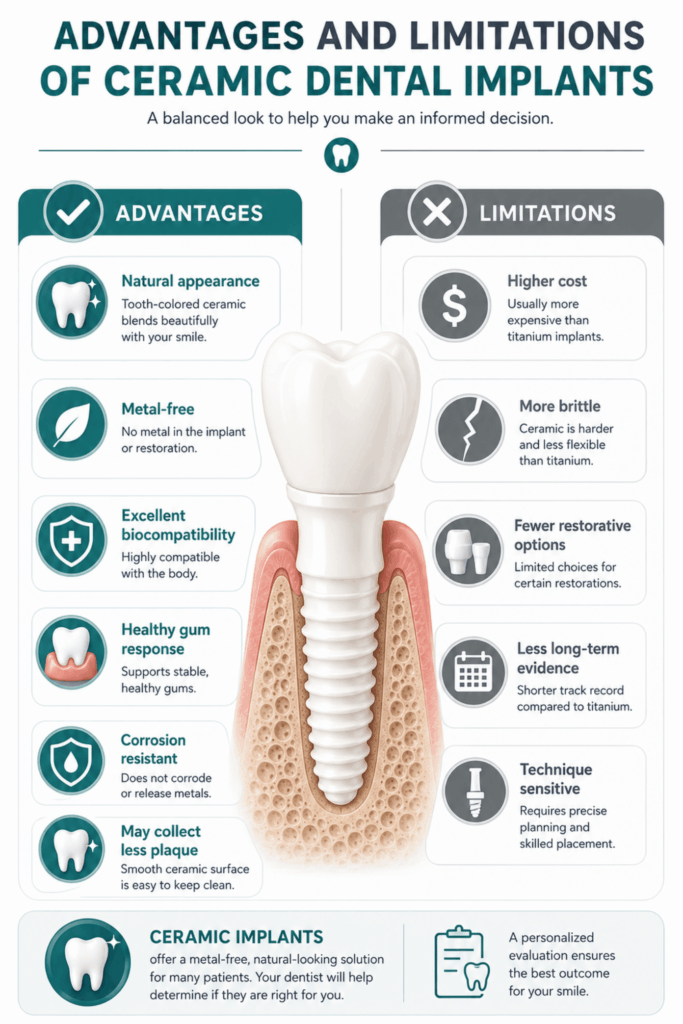
Ceramic dental implants offer several practical advantages that make them an attractive option for many patients. Their natural appearance, excellent tissue compatibility, and metal-free construction are among the most common reasons patients choose them. While they are not the ideal solution for every case, they can provide outstanding long-term results when used in the right clinical situations.
- Natural Tooth-Colored Appearance: The white zirconia material closely resembles a natural tooth root, making it less noticeable if the gums are thin or recede over time.
- Completely Metal-Free: Ceramic implants contain no metal, making them a preferred option for patients who want a fully metal-free restoration.
- Excellent Biocompatibility: Zirconia is highly biocompatible and is generally well tolerated by the surrounding bone and gum tissues.
- Suitable for Metal Sensitivities: Although true titanium allergy is rare, ceramic implants provide an alternative for patients with confirmed metal allergies or concerns about certain metals.
- Healthy Gum Response: Soft tissues often heal well around zirconia, helping create a stable seal that supports long-term gum health.
- Corrosion-Resistant: Zirconia does not rust or corrode in the moist environment of the mouth, even after years of normal function.
- Reduced Risk of Gray Gum Discoloration: Because the implant is white instead of gray, it is less likely to create a dark shadow beneath thin gum tissue.
- Strong Osseointegration: Ceramic implants bond directly with the jawbone through osseointegration, providing a stable foundation for replacement teeth.
- May Attract Less Plaque: Some studies suggest zirconia surfaces may accumulate less plaque than certain other dental materials, although daily oral hygiene remains essential.
- Excellent Esthetics for Visible Teeth: Ceramic implants blend seamlessly with natural teeth, making them especially appealing for replacing front teeth.
Cons of Ceramic Dental Implants
Ceramic dental implants also have limitations that patients should understand before choosing treatment. These disadvantages do not mean ceramic implants are inferior, but they may influence which implant material is best for your individual situation.
- Higher Cost: Ceramic implants often cost more because fewer manufacturers produce them and fewer dentists routinely place them.
- Fewer Implant System Options: Compared with titanium, ceramic implant systems offer fewer sizes, components, and restorative choices.
- Less Flexibility for Complex Cases: Advanced restorative treatments sometimes require components that are more widely available for titanium implants.
- Greater Brittleness: Zirconia is extremely strong but less flexible than titanium, making it more susceptible to fracture under excessive force.
- Often Designed as One-Piece Implants: Many ceramic systems combine the implant and abutment into one piece, limiting restorative flexibility after placement.
- Technique-Sensitive Placement: Ceramic implants require precise surgical planning because making adjustments after placement is more limited.
- Less Long-Term Clinical Data: Current research is encouraging, but titanium implants have a much longer track record of documented long-term success.
- May Not Be Ideal for Heavy Bite Forces: Patients who grind or clench their teeth may place excessive stress on ceramic implants, increasing the risk of complications.
- Limited Availability: Not all implant dentists offer zirconia implant systems, so treatment options may vary by location.
Who Is a Good Candidate for Ceramic Dental Implants?
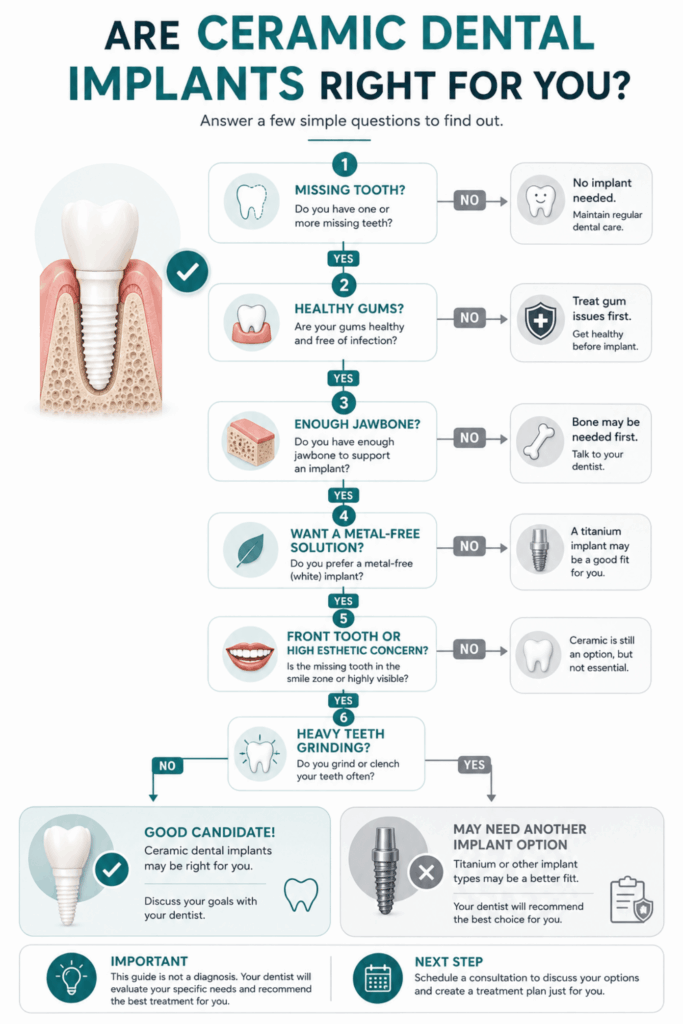
Ceramic dental implants may be an excellent choice for adults with one or more missing teeth, healthy gums, and enough jawbone to support an implant. They are especially popular among patients who want a metal-free restoration, have thin gum tissue where esthetics matter, or prefer a tooth-colored implant that blends naturally with their smile.
However, ceramic implants are not automatically the best option for everyone. Patients with severe bone loss, complex bite problems, multiple missing teeth requiring advanced restorations, or heavy teeth grinding may achieve a more predictable outcome with another implant system. After evaluating your oral health, bone quality, bite, and treatment goals, your dentist can recommend the implant material most likely to provide long-term success.
When Ceramic Dental Implants May Not Be Recommended
Ceramic dental implants work well in many situations, but certain clinical conditions may make another implant material a better choice. The decision depends on a careful evaluation of your oral health, bone anatomy, bite, and restorative needs rather than personal preference alone.
- Significant Bone Loss: Severe bone loss may require specialized implant designs or advanced procedures that are more commonly available with titanium systems.
- Complex Full-Mouth Restorations: Replacing many teeth often requires greater restorative flexibility than some ceramic implant systems provide.
- Heavy Teeth Grinding or Clenching: Strong bite forces increase stress on implants and may raise the risk of mechanical complications.
- Limited Space Between Teeth: Narrow spaces sometimes require implant sizes or components that are not available in every ceramic system.
- Need for Angled Restorations: Some cases require custom angled abutments, which are generally more widely available with titanium implants.
- Complicated Bite Problems: Patients with challenging bite relationships may benefit from implant systems that allow more restorative adjustments.
- Active Gum Disease: Untreated periodontal disease increases the risk of implant failure regardless of the implant material and should be treated first.
- Poor Oral Hygiene: Successful implants require consistent brushing, flossing, and regular dental visits to prevent complications.
- Smoking: Smoking slows healing, reduces blood flow, and increases the risk of implant failure.
- Certain Medical Conditions: Poorly controlled diabetes, medications that affect bone healing, and some other health conditions may require additional evaluation before implant surgery.
Ceramic Dental Implant Procedure Step by Step
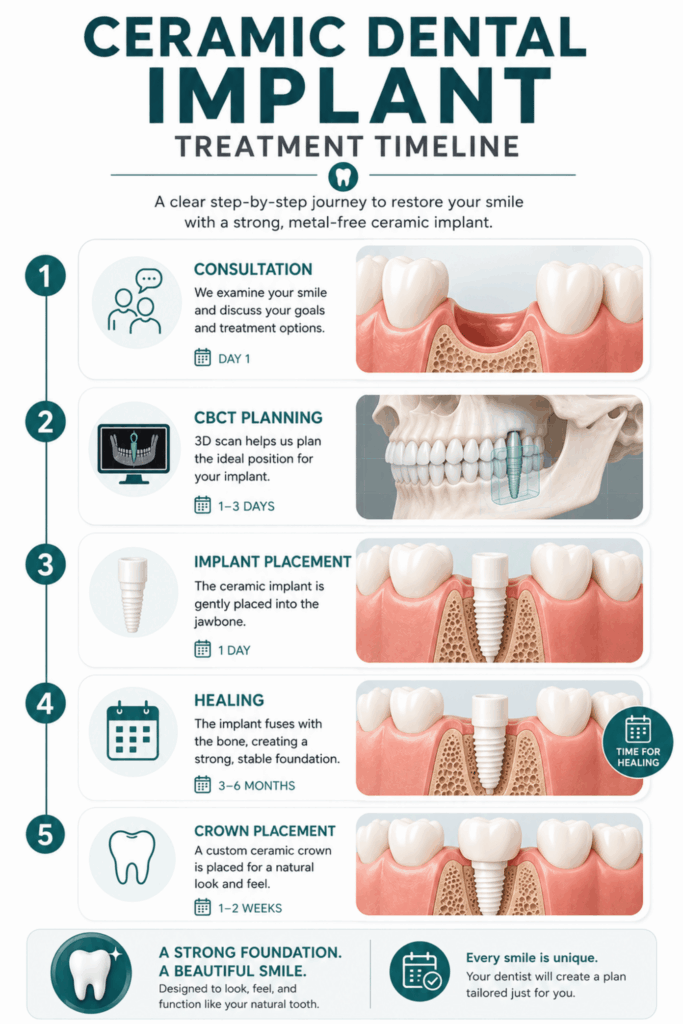
Getting ceramic dental implants is a process that usually takes several months because the jawbone needs time to heal around the implant. Understanding each stage helps you know what to expect and why every step is important for achieving a stable, long-lasting result.
- Comprehensive Evaluation: Your dentist examines your teeth, gums, bite, and overall oral health to determine whether ceramic implants are the right treatment.
- Detailed Treatment Planning: Digital X-rays or a 3D CBCT scan measure the available bone and help plan precise implant placement.
- Implant Placement: The zirconia implant is surgically placed into the jawbone under local anesthesia.
- Healing and Osseointegration: The jawbone gradually bonds to the implant, creating a secure foundation for the final restoration.
- Final Crown Placement: A custom-made crown is attached after healing to restore normal appearance and chewing function.
Consultation and Treatment Planning
Your treatment begins with a comprehensive examination that includes digital X-rays or a 3D CBCT scan to evaluate your jawbone, gum health, bite, and nearby anatomical structures. Your dentist also reviews your medical history and treatment goals to determine whether ceramic dental implants are appropriate or if another implant system would provide a better long-term outcome. If needed, procedures such as tooth extraction or bone grafting are planned before implant placement.
Implant Placement
On the day of surgery, local anesthesia numbs the treatment area so you remain comfortable throughout the procedure. Your dentist creates a small opening in the gum, prepares the bone with specialized instruments, and carefully inserts the zirconia implant into the jawbone. Most patients feel pressure and vibration rather than pain, and mild soreness afterward is usually controlled with prescribed or over-the-counter pain medication.
Healing and Osseointegration
Following surgery, the implant gradually bonds with the surrounding bone through a natural process called osseointegration. This healing period typically takes three to six months, although it varies depending on bone quality, overall health, smoking habits, and whether bone grafting was necessary. Following your dentist’s instructions and maintaining excellent oral hygiene are essential for successful healing.
Final Crown Placement
After the implant has fully integrated with the jawbone, your dentist takes impressions or digital scans to create a custom crown that matches your natural teeth. The permanent crown is then attached to the implant, restoring your ability to bite, chew, speak, and smile comfortably. With proper care, the implant and crown can provide many years of reliable function and natural-looking results.
How Much Do Ceramic Dental Implants Cost?
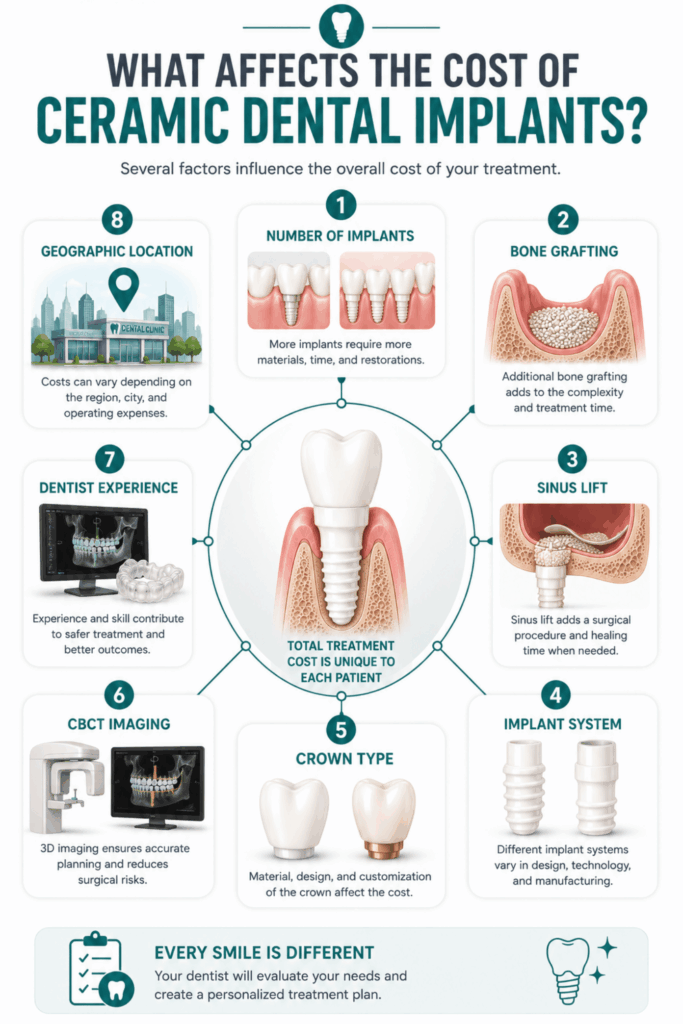
The cost of ceramic dental implants varies from one patient to another because every treatment plan is different. A single implant may require only the implant and crown, while another patient may need additional procedures before implant placement. Rather than focusing on a fixed price, it is more helpful to understand the factors that influence the total cost.
- Implant System: Different zirconia implant systems vary in manufacturing, design, and available restorative components, which can affect the overall treatment cost.
- Number of Implants: Replacing multiple missing teeth naturally costs more than replacing a single tooth because additional implants and restorations are needed.
- Bone Grafting: If there is not enough healthy jawbone to support the implant, a bone graft may be recommended before or during implant placement.
- Sinus Lift or Other Procedures: Some patients require additional surgical procedures to create enough bone for successful implant placement.
- Type of Restoration: The final restoration may be a single crown, bridge, or another prosthesis, each with different laboratory and material costs.
- Diagnostic Imaging: Digital X-rays, CBCT scans, and treatment planning are important parts of implant therapy and contribute to the overall cost.
- Dentist’s Experience: Implant dentists with advanced training and extensive experience may charge more for their expertise.
- Geographic Location: Treatment costs often vary by city, region, and local cost of dental care.
- Materials Used: The quality of the implant system, abutment design, and final crown can influence the total treatment fee.
- Need for Temporary Restorations: In some cases, temporary teeth are placed during healing, adding to the overall treatment cost.
What Is the Success Rate of Ceramic Dental Implants?
Current research shows that ceramic dental implants have high survival and success rates when they are carefully planned and placed in suitable patients. Modern zirconia implants continue to show encouraging long-term outcomes, although titanium implants still have a longer history of clinical research. As with any implant, success depends on several factors, including healthy gums, adequate bone support, proper surgical technique, excellent oral hygiene, and regular dental follow-up. Patients who avoid smoking, manage medical conditions, and follow their dentist’s instructions are more likely to enjoy long-lasting results.
How Long Do Ceramic Dental Implants Last?
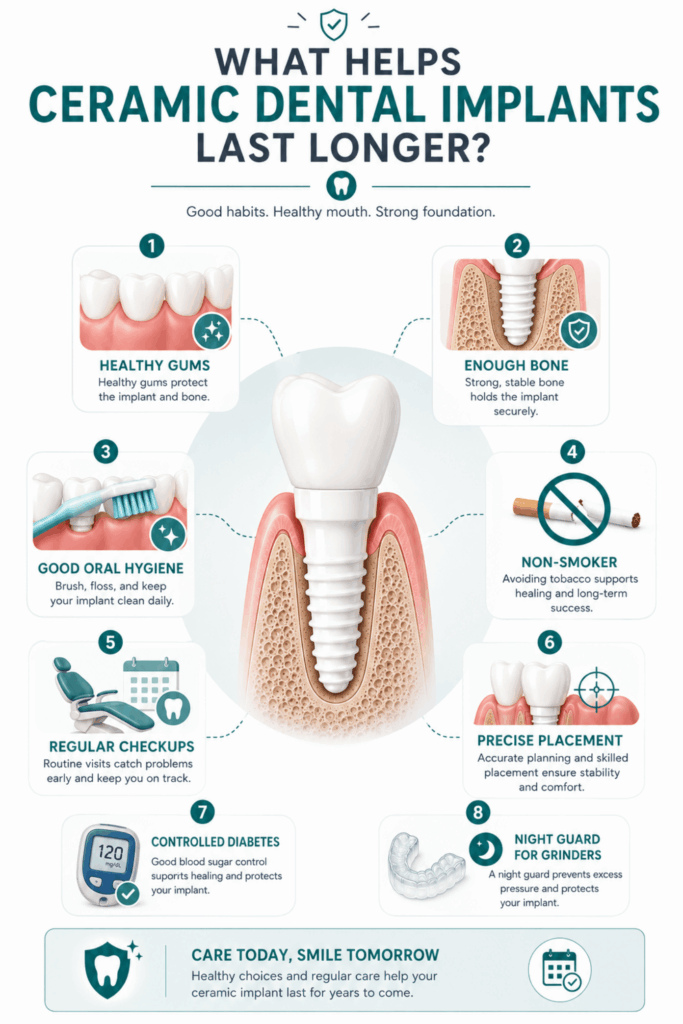
Ceramic dental implants are designed to be a long-term replacement for missing tooth roots. With proper placement and good oral care, many implants can last for decades. Their lifespan depends on factors such as bone health, bite force, oral hygiene, smoking habits, and regular dental maintenance, rather than on age alone.
It is also important to distinguish between the implant and the crown attached to it. The implant itself may last much longer than the restoration placed on top. While the zirconia implant can remain stable for many years, the crown may eventually need repair or replacement because of normal wear, damage, or changes in your bite.
Are Ceramic Dental Implants Safe?
Ceramic dental implants are considered safe for appropriately selected patients and have been used successfully in implant dentistry for many years. Zirconia is highly biocompatible, meaning it is generally well accepted by the body and supports healthy healing of the surrounding bone and gum tissue. Because the material is metal-free and corrosion-resistant, it is also an attractive option for patients who prefer non-metal implant materials.
Many people worry that ceramic implants are less reliable or that their body might reject them. Current evidence does not support these concerns when treatment is properly planned. Like titanium implants, ceramic implants rely on osseointegration to bond with the jawbone. Their long-term success depends far more on careful case selection, precise placement, and good oral hygiene than on the implant material itself.
Risks and Possible Complications
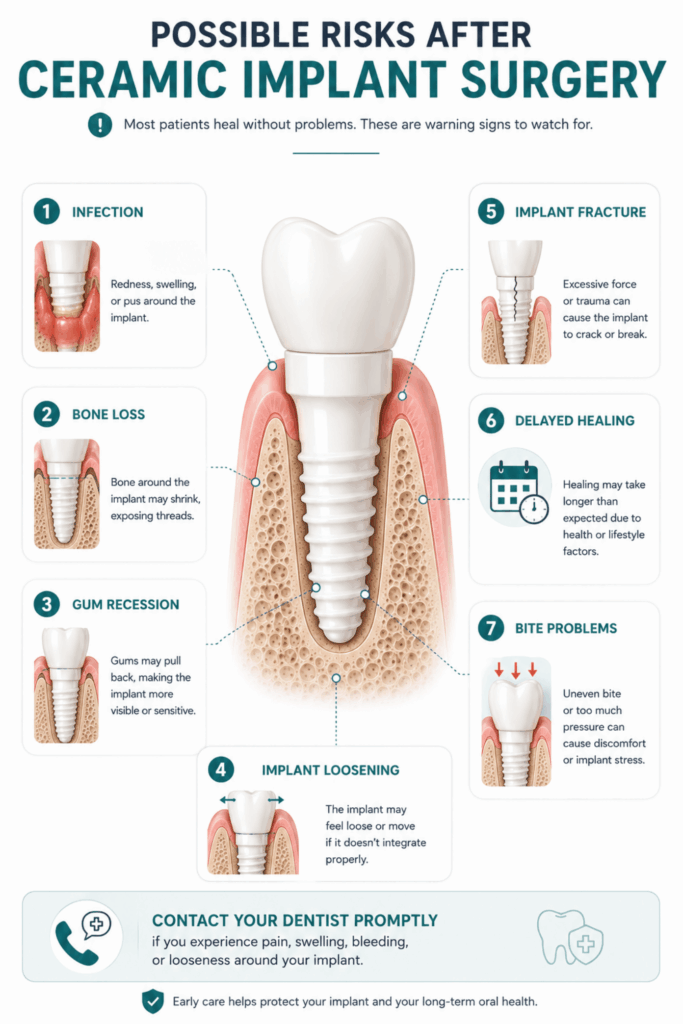
Although ceramic dental implants have a high success rate, no surgical procedure is completely free of risk. Understanding the possible complications helps patients recognize warning signs early and appreciate the importance of proper treatment planning and follow-up care.
- Infection: Bacteria can infect the tissues around the implant if healing is disrupted or oral hygiene is poor.
- Implant Failure: In some cases, the implant does not successfully bond with the jawbone, making removal necessary.
- Implant Fracture: Although uncommon, excessive bite forces or trauma can cause a ceramic implant to fracture.
- Bone Loss Around the Implant: Progressive bone loss may reduce implant stability if inflammation develops around the implant.
- Delayed Healing: Smoking, uncontrolled diabetes, and certain medications can slow healing after surgery.
- Damage to Surrounding Structures: Nearby teeth, nerves, or the sinus cavity may be affected if implant placement is not carefully planned.
- Gum Recession: Changes in the gum tissue may expose more of the restoration and affect the final appearance.
- Bite Problems: An improperly adjusted bite can place excessive pressure on the implant and surrounding teeth.
- Peri-Implant Disease: Inflammation affecting the tissues around the implant can develop if plaque accumulates over time.
- Need for Additional Treatment: Occasionally, complications require further procedures such as bone grafting, implant removal, or replacement.
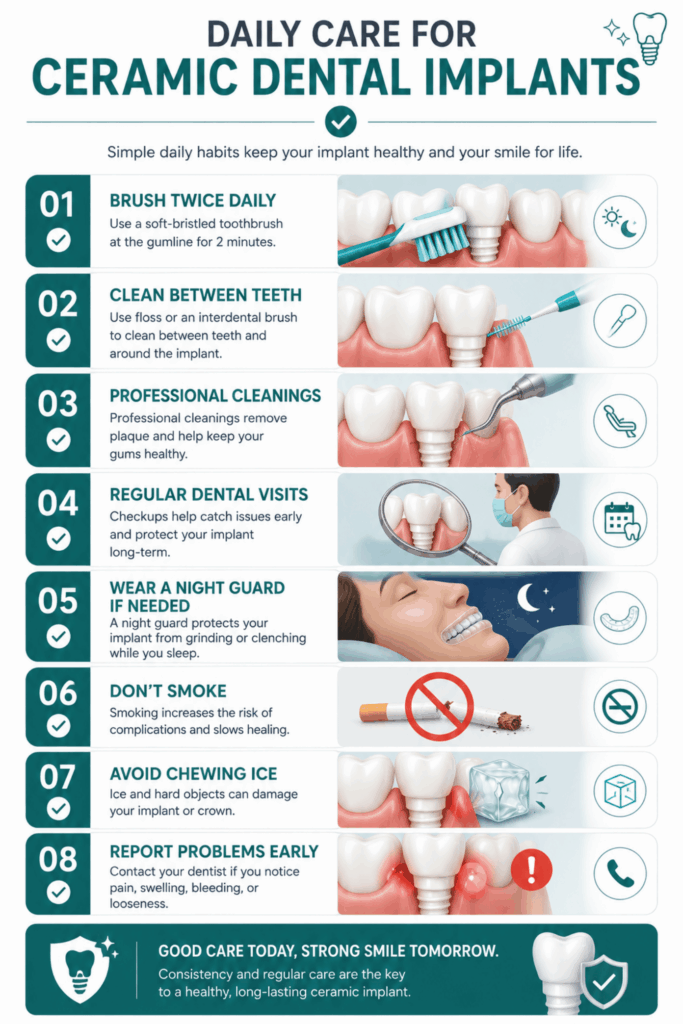
How to Care for Ceramic Dental Implants
Ceramic dental implants require the same daily care as natural teeth. Although they cannot develop cavities, the surrounding gums and bone can still become inflamed if plaque is allowed to build up. Good home care and regular dental visits are the keys to protecting your investment for many years.
- Brush Twice Daily: Use a soft-bristled toothbrush and fluoride toothpaste to remove plaque around the implant and neighboring teeth.
- Clean Between the Teeth: Floss or use interdental brushes every day to clean areas your toothbrush cannot reach.
- Attend Regular Dental Checkups: Routine examinations allow your dentist to monitor the implant, gums, and bite before small problems become serious.
- Schedule Professional Cleanings: Regular cleanings help remove hardened deposits that cannot be removed at home.
- Avoid Smoking: Smoking reduces blood flow, slows healing, and increases the risk of implant complications.
- Protect Against Teeth Grinding: If you grind your teeth, wearing a custom night guard can reduce excessive forces on the implant.
- Maintain Good Overall Health: Managing conditions such as diabetes supports healthy healing and long-term implant success.
- Avoid Using Teeth as Tools: Do not bite hard objects, open packages, or chew ice, as these habits can damage both the crown and the implant restoration.
- Follow Your Dentist’s Instructions: Every treatment plan is unique, so following your dentist’s recommendations helps ensure the best long-term outcome.
- Report Problems Early: Contact your dentist if you notice pain, swelling, bleeding, looseness, or changes in your bite instead of waiting for symptoms to worsen.
Frequently Asked Questions
Can Ceramic Dental Implants Be Used for Front Teeth?
Yes. Ceramic implants are often chosen for front teeth because their white, tooth-colored material blends naturally with the surrounding teeth and is less likely to create a gray shadow beneath thin gums. However, the final decision depends on factors such as bone support, gum thickness, bite forces, and your overall treatment plan.
Can You Get a Ceramic Implant If You Have a Bone Graft?
Yes. A previous or planned bone graft does not automatically prevent you from getting a ceramic implant. In fact, bone grafting is commonly performed to create enough healthy bone for stable implant placement. Your dentist will confirm that the graft has healed properly before moving forward with treatment.
Are Ceramic Dental Implants MRI Safe?
Yes. Ceramic dental implants are non-metallic and do not interfere with MRI scans. It is also reassuring to know that most modern titanium dental implants are generally considered MRI compatible and are safe for patients undergoing MRI examinations.
Can an Implant Be Replaced If It Fails?
In many cases, yes. If an implant fails, your dentist first identifies the cause, such as infection, poor osseointegration, or excessive bite forces. After the area heals, and if necessary after bone grafting, a new implant may often be placed successfully.
At What Age Can You Get a Ceramic Implant?
Dental implants are usually placed only after jaw growth is complete, which is typically in the late teens or early adulthood. There is generally no upper age limit, provided you are healthy enough for implant surgery and have enough bone to support the implant.
Can Ceramic Implants Replace Several Missing Teeth?
Yes, ceramic implants can replace several missing teeth and may support bridges in selected cases. However, for extensive restorations, such as full-arch treatment or highly complex cases, another implant system may provide greater restorative flexibility. Your dentist will recommend the option that offers the best long-term outcome.
Will My Body Reject a Ceramic Implant?
True immune rejection of a ceramic implant is extremely rare. Most implant failures occur because the implant does not successfully bond with the jawbone, a process called osseointegration, rather than because the body rejects the material itself. Careful treatment planning and good healing greatly improve the chances of success.
How Soon Can I Eat Normally After Implant Surgery?
Most patients begin with soft foods for the first few days after surgery and gradually return to their normal diet as healing progresses. The exact timeline varies depending on the complexity of the procedure and your individual healing rate. Following your dentist’s instructions helps protect the implant during the early healing period.
Final Thoughts
Ceramic dental implants provide a durable, natural-looking, and metal-free solution for replacing missing teeth. Their excellent biocompatibility, tooth-colored appearance, and resistance to corrosion make them an appealing option for many patients, especially those with high cosmetic expectations or concerns about metal materials. At the same time, they also have limitations, including higher cost, fewer restorative options, and situations where titanium implants may still provide a more predictable outcome.
The best implant material is the one that fits your individual needs, not simply the newest or most popular option. A comprehensive evaluation allows your dentist to determine whether ceramic or titanium implants are better suited to your oral health, bone condition, bite, and long-term goals. By understanding the benefits, limitations, and expected outcomes of each option, you can make an informed decision and enjoy a healthy, confident smile for years to come.
