You may be a few days past a tooth extraction and wondering whether your pain is part of normal healing. So, when does dry socket happen? It most often starts within the first few days after a tooth is removed, commonly around days 2 to 5. The timing can vary, so the pattern of your symptoms matters more than the calendar alone.
Normal extraction pain is often strongest early and then begins to ease. Dry socket pain usually follows a different course: it may become severe, return after some improvement, or spread toward the ear, temple, or jaw. A bad taste or odor may occur too. These signs cannot confirm dry socket by themselves, but they are good reasons to call your dentist.
Knowing the usual timeline can help you avoid worrying about every ache while still noticing a real change in recovery. Your extraction type, healing progress, and personal risk factors can affect how long you need to be careful. Start by looking at what normally happens during each stage of the first week.
When Does Dry Socket Happen After Tooth Extraction?
Dry socket can happen about 2 to 5 days after a tooth is extracted. Some clinical sources describe pain beginning within 1 to 3 days, so there is no single cutoff that applies to everyone. The key clue is not the exact day. It is pain that becomes stronger instead of gradually improving.
Also called alveolar osteitis, dry socket is a painful condition that can happen after tooth removal. It develops when the extraction site loses enough protection to leave the underlying bone and nerve endings exposed. It is especially common after wisdom teeth removal from the lower jaw. A Cochrane review of alveolar osteitis describes severe pain developing about 2 to 3 days after surgery as a typical feature.
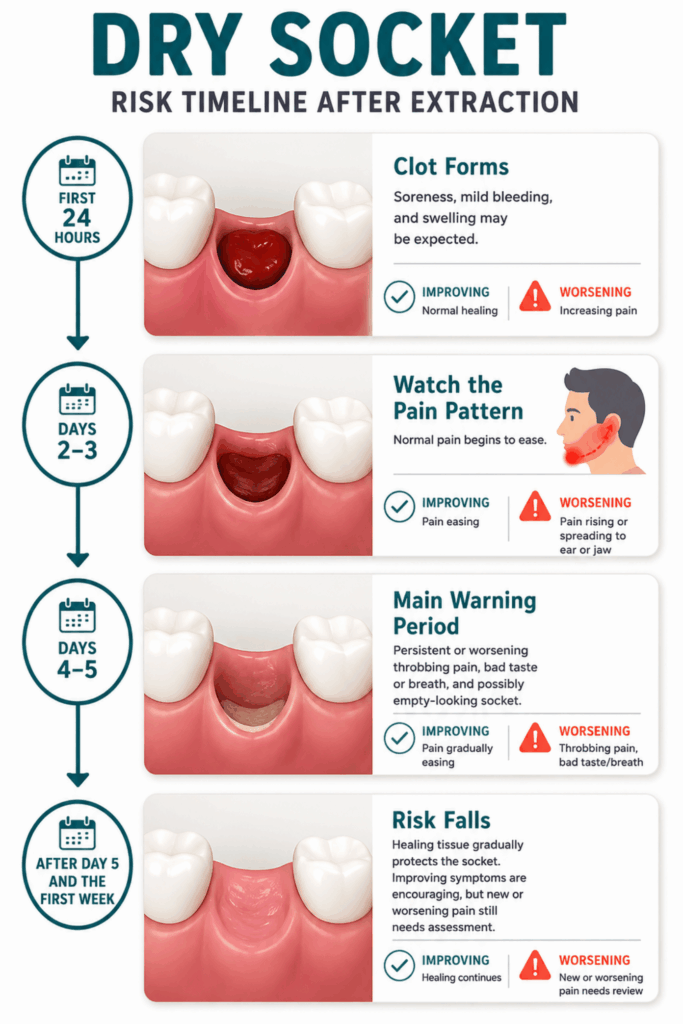
The First 24 Hours
During the first 24 hours, soreness, mild bleeding, swelling, and tenderness are usually expected. A blood clot forms in the socket and acts as a protective layer over the bone and nerve endings. You may see a dark blood clot in the area where the tooth was pulled, but you should not touch or inspect it closely.
Dry socket symptoms are less likely to happen immediately after the procedure. Pain during this early stage is usually related to the extraction itself. However, severe pain that seems unusual, uncontrolled bleeding, or rapidly increasing swelling deserves a call to your dentist or oral surgeon.
Days 2 to 5: The Main Risk Period
Days 2 to 5 are the main period when dry socket usually becomes noticeable. Normal discomfort should begin to settle during this time. With dry socket, pain may remain intense, return after improving, or become much worse.
A typical timeline may look like this:
- Day 2: Soreness and swelling may still be present. The discomfort should remain manageable and should not suddenly become much stronger.
- Day 3: New or increasing throbbing pain becomes more concerning, especially if it spreads from the socket to your ear, temple, or jaw.
- Days 4 and 5: Persistent or worsening pain, an unpleasant taste, bad breath, or an empty-looking socket may point to dry socket.
The exact timing varies. Some people notice symptoms earlier, while others develop them later in the first week. According to Guy’s and St Thomas’ NHS guidance on dental surgery recovery, increasing pain, a foul taste, and bad breath from dry socket often appear 3 to 5 days after treatment.
After Day 5 and the First Week
If you reach day 5 with pain and swelling steadily improving, your dry socket risk is usually lower. Healing tissue gradually replaces the clot’s early protective role, making the extraction site less vulnerable.
Dry socket can still happen after day 5, so this is not a guaranteed cutoff. Healing after a tooth extraction depends on the tooth removed, the difficulty of the procedure, your health, and how well the site has been protected. New or worsening pain later in the week still needs attention because dry socket or another complication may be responsible.
Why Dry Socket Usually Starts a Few Days Later
Dry socket does not usually appear the moment a tooth is removed. When the tooth comes out, bleeding fills the empty tooth socket, and a clot begins to form. This clot covers the exposed bone, protects sensitive nerve endings, and supports the first stage of healing.
Over the next few days, several changes may interfere with that protection:
- The Clot Does Not Form Properly: In some cases, the socket does not develop a stable clot after tooth removal.
- The Clot Breaks Down Early: Natural clot-dissolving activity within the wound may occur too quickly, leaving the socket unprotected before healing tissue can cover it.
- The Clot Becomes Dislodged: Smoking, forceful spitting, vigorous rinsing, suction, or disturbing the extraction site may loosen the clot.
- The Extraction Was Difficult: More tissue and bone trauma during oral surgery may increase inflammation and the likelihood of developing dry socket.
- Local Conditions Affect Healing: Bacteria, existing inflammation, and food debris may contribute, although dry socket is not simply a bacterial infection.
This is why the phrase “dry socket” can be misleading. The socket does not have to be completely dry. A clot may be missing, partly broken down, or no longer providing enough protection.
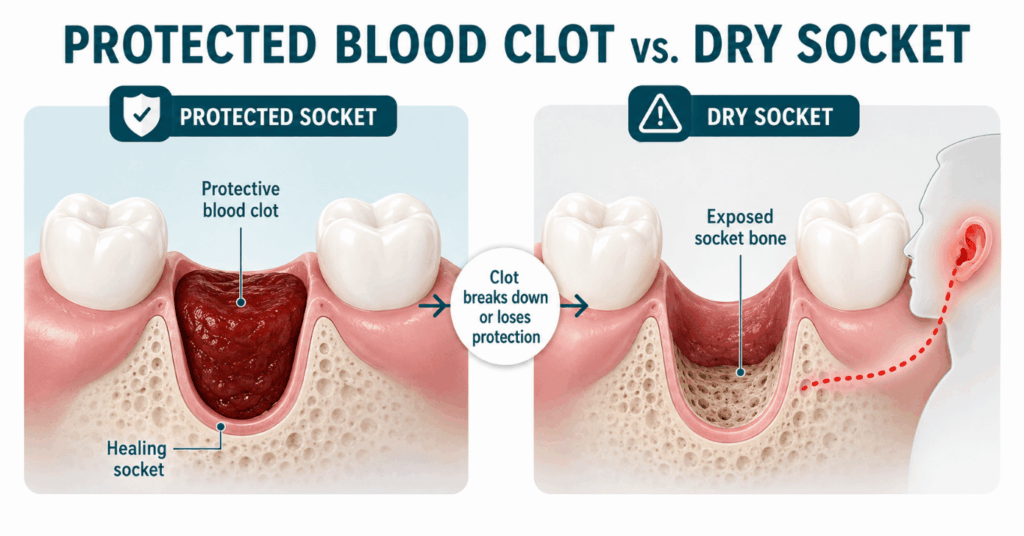
Normal Healing Pain vs. Dry Socket Pain
Normal healing and dry socket can both cause discomfort, but their patterns are usually different. Pain progression often provides more useful information than how the socket looks.
| Feature | Normal Healing | Possible Dry Socket |
|---|---|---|
| Timing | Pain is often strongest during the first 24 to 48 hours | Pain commonly develops or becomes worse about 2 to 5 days after extraction |
| Direction of Pain | Gradually improves | Persists, returns, or becomes more intense |
| Pain Intensity | Usually manageable with the recommended pain-relief plan | May be deep, severe, throbbing, or difficult to control |
| Pain Spread | Mostly stays near the extraction site | May travel from the socket to your ear, temple, jaw, or side of the face |
| Taste and Breath | A mild blood-like taste may occur early | An unpleasant taste or bad breath may develop |
| Socket Appearance | A dark clot or light-colored healing tissue may be visible | The socket may look empty, with possible exposed bone |
| Response to Pain Medicine | Usually becomes easier to manage | May respond poorly or only briefly |
Do not poke the socket, pull at healing tissue, or try to remove anything to check what lies underneath. Normal healing tissue may look white, cream, yellowish, or uneven. A dentist cannot diagnose dry socket from color alone, and a patient photograph may not show the deeper part of the socket.
Warning Signs That May Point to Dry Socket
No single sign confirms dry socket at home. The strongest concern is a group of symptoms appearing together, especially when pain worsens after the extraction initially seemed to be healing.
Watch for the following changes:
- New or Worsening Pain: Pain becomes stronger around days 2 to 5 rather than easing each day.
- Deep, Throbbing Pain: The discomfort feels intense, persistent, or out of proportion to the expected recovery.
- Pain That Spreads: Pain may travel from the socket to your ear, temple, jaw, or neck on the same side.
- Poor Response to Pain Relief: Medicine taken as directed provides little relief or stops helping as well as it did earlier.
- Bad Taste or Breath: An unpleasant taste or odor develops along with increasing pain.
- An Empty-Looking Socket: The extraction site may appear to have no dark clot, and exposed bone may be visible.
- Delayed Improvement: Eating, sleeping, or normal daily activities become harder because the pain is not settling.
Contact your dentist if you suspect dry socket. A clinical examination is the best way to tell whether the symptoms come from alveolar osteitis, normal healing, infection, or another problem.
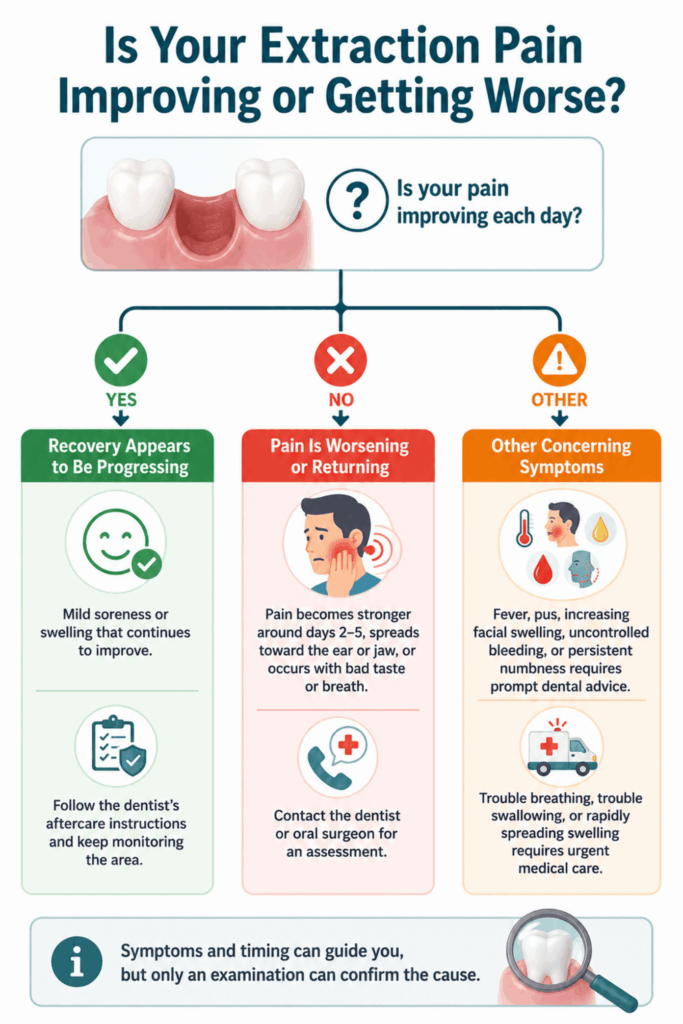
Could Your Symptoms Be Something Other Than Dry Socket?
Pain after tooth removal does not always mean dry socket. Normal inflammation can cause soreness, swelling, jaw stiffness, and difficulty chewing for several days. The discomfort should generally follow an improving trend, although recovery may not feel better at the same rate every day.
Food trapped near the extraction site can also cause pressure, tenderness, or a bad taste. Other possibilities include infection, irritation from a sharp bone edge, a retained tooth or root fragment, damage to a nearby tooth, or another oral surgery complication. A dentist may need to examine the area because several conditions can feel similar at home.
Pay attention to symptoms that do not fit classic dry socket:
- Increasing Facial Swelling: Swelling that becomes worse after several days may suggest infection or another complication.
- Fever or Feeling Unwell: Dry socket alone does not usually cause significant fever or general illness.
- Pus or Spreading Redness: These findings are more consistent with infection and need professional assessment.
- Persistent Numbness: Continued or worsening numbness after the anesthetic should have worn off may indicate nerve irritation.
- Trouble Breathing or Swallowing: Seek urgent medical care for breathing difficulty, swallowing difficulty, or rapidly spreading swelling.
- Bleeding That Will Not Settle: Persistent active bleeding requires advice from the treating dental team.
A clinical review of alveolar osteitis diagnosis and other causes of post-extraction pain notes that severe pain during the first week may need to be distinguished from normal postoperative discomfort, food debris, infection, or retained material.
When Can You Stop Worrying About Dry Socket?
The risk becomes much lower once you have passed the first week, with pain, swelling, and tenderness continuing to improve. By this stage, healing tissue is beginning to cover and protect the socket, even though the hole may remain visible for longer.
There is no universal day when every patient becomes risk-free. A surgical wisdom tooth extraction may heal differently from a simple tooth removal. Continue following your dentist’s instructions until the site is comfortable, food no longer collects easily, and healing is progressing normally. If pain returns or becomes worse at any point, contact your dentist rather than assuming the timing rules out a complication.
Who Is More Likely to Develop Dry Socket?
Dry socket can happen to anyone who has a tooth pulled, but some situations increase the likelihood. Having one or more risk factors does not mean the complication will happen.
- Smoking or Vaping: Tobacco can interfere with blood flow and healing. The sucking action may also disturb the clot. A systematic review of smoking and dry socket found that smokers had more than three times the odds of developing dry socket after extraction.
- Lower Wisdom Tooth Removal: Dry socket is more common after wisdom tooth extraction, particularly when an impacted tooth is surgically removed from the lower jaw.
- A Difficult Extraction: Longer or more traumatic oral and maxillofacial surgery may cause greater tissue inflammation around the socket.
- Previous Dry Socket: A history of dry socket may indicate a higher risk during a future extraction. Tell your dentist before treatment so your aftercare plan can reflect that history.
- Oral Contraceptive Use: Estrogen-containing birth control may be associated with a higher risk after impacted lower wisdom tooth removal. The evidence is specific to certain patient groups, so do not stop prescribed medication without speaking to the prescriber. A systematic review of oral contraceptives and alveolar osteitis discusses this association.
- Poor Oral Hygiene: Heavy plaque and food debris may affect the local environment around the healing socket. Keep the rest of your mouth clean without brushing directly inside the wound.
- Existing Oral Infection or Inflammation: Problems around the tooth before extraction may affect healing afterward.
- Not Following Aftercare Instructions: Vigorous rinsing, forceful spitting, smoking, and repeatedly touching the area can interfere with the early clot.
What to Do If You Think You Have Dry Socket
Contact your dentist or oral surgeon if pain becomes severe, returns after improving, spreads toward your ear or jaw, or does not respond as expected to your recommended pain-relief plan. Dry socket treatment can reduce pain and keep the socket clean while healing continues.
Until you receive professional advice:
- Call the Treating Dental Office: Describe when the tooth was removed, when the pain began, whether it is improving or worsening, and whether you have swelling, fever, bad taste, or drainage.
- Use Medicine Only as Directed: Follow the plan provided by your dentist or the product label. Do not exceed the dose or combine medicines unless a qualified health professional has confirmed that it is safe for you.
- Keep the Area Undisturbed: Do not probe the empty socket with a finger, toothbrush, cotton swab, or dental tool.
- Avoid Packing the Socket at Home: Do not place aspirin, clove oil, essential oils, alcohol, peroxide, herbal products, or other materials into the wound. These substances can irritate or burn healing tissue.
- Follow Your Rinsing Instructions: If more than 24 hours have passed and your dentist allows it, you may gently rinse your mouth with warm salt water. Do not swish or spit forcefully.
- Choose Soft Foods: Eat on the other side when possible, and avoid foods that are hard, sharp, sticky, or likely to leave small pieces in the socket.
Do not try to treat dry socket by aggressively flushing it yourself unless your dentist has examined the area and taught you how and when to irrigate it.
How a Dentist Checks the Extraction Site
The dentist will ask when the pain started, how it has changed, and whether it spreads beyond the extraction site. They will examine the socket and nearby teeth for exposed bone, food debris, swelling, drainage, or another source of pain. An X-ray is not always required, but the dentist may take one to rule out a retained root, bone fragment, or another problem that cannot be confirmed by sight alone.
How Dentists Relieve Dry Socket Pain
Treatment focuses on relieving pain and protecting the area while new tissue grows. What you need depends on the socket’s condition and the severity of your symptoms.
A dentist may:
- Gently Irrigate the Socket: Careful rinsing with saline can remove food debris and loose material without aggressive scraping.
- Apply a Medicated Dressing: The dentist may place a soothing medicated paste or dressing over the sensitive area. The dressing may need to be changed depending on the material and your symptoms.
- Recommend Suitable Pain Relief: The plan should account for your medical history, allergies, current medicines, pregnancy status, and other safety concerns.
- Arrange a Follow-Up: A review may be needed if pain continues, the dressing requires removal or replacement, or another diagnosis remains possible.
Antibiotics are not routinely used to treat dry socket because alveolar osteitis is not primarily a bacterial infection. They may be appropriate when the dentist finds a separate infection or another clinical reason. The Canadian Dental Association’s clinical approach to dry socket describes irrigation and local dressing as common management while noting that antibiotic therapy does not treat uncomplicated alveolar osteitis itself.
How to Protect the Socket During the Risk Period
The best way to prevent dry socket is to protect the blood clot and follow the instructions given for your specific extraction. No method can prevent a dry socket in every patient, but careful aftercare can reduce your risk.
- Do Not Rinse During the First 24 Hours: Unless your dentist gave different instructions, avoid swishing, gargling, or forceful spitting while the clot stabilizes.
- Avoid Smoking and Vaping: Stay away from tobacco and inhaled products for as long as your dental team recommends. The chemicals, heat, and suction can interfere with healing.
- Do Not Use Straws: Drink from a cup to avoid creating suction in your mouth during early healing.
- Eat Soft Foods: Choose yogurt, eggs, mashed vegetables, soft pasta, or other foods that require little chewing. Keep hot, hard, sharp, and crumbly foods away from the extraction site.
- Brush Carefully: Continue cleaning the other teeth, but do not push the toothbrush into the socket.
- Rinse Gently After 24 Hours: If your dentist approves, use warm salt water and let it fall from your mouth without forceful spitting.
- Do Not Touch the Socket: Avoid checking the clot with your tongue, finger, cotton swab, or any tool.
- Take Only Recommended Medicines: Do not start antibiotics or a medicated rinse on your own. Chlorhexidine can help prevent dry socket in selected situations, but it should be used according to professional instructions. The Cochrane evidence on dry socket prevention found that certain chlorhexidine rinse or gel protocols may reduce risk.
- Follow Procedure-Specific Advice: Aftercare may differ after a simple extraction, difficult wisdom tooth surgery, bone graft, or multiple extractions. Follow the plan from the dentist or oral surgeon who performed your procedure.
Frequently Asked Questions
Socket appearance, stitches, antibiotics, and changing pain can create questions that a basic timeline does not fully answer. The following answers cover these common concerns without replacing a dental examination.
Can You Have Dry Socket Even If You Can See a Blood Clot?
Yes, it may still be possible. What appears to be a clot could be healing tissue, debris, or only part of the original clot. The deeper socket may not be visible in a mirror or photograph. Dentists place more weight on worsening pain, its timing, and the clinical examination than on appearance alone.
Can You Have Dry Socket Without Severe Pain?
Severe or significant pain is a central feature of classic dry socket. An empty-looking hole without new or worsening pain may simply be a normally healing socket. Color and appearance change as healing continues, so do not scrape the area or assume that visible white tissue is exposed bone.
Can Dry Socket Pain Come and Go?
The intensity may fluctuate, especially after eating or taking pain medicine. However, dry socket more often causes persistent or increasing pain than occasional mild aches that continue to improve. Contact your dentist if pain repeatedly returns, becomes stronger, spreads toward your ear or jaw, or interrupts sleep.
Can You Get Dry Socket With Stitches?
Yes, dry socket can happen even when stitches are protecting part of the extraction site. Stitches bring the gum edges together and may help protect the area, but they do not always seal the socket or guarantee that the clot will remain stable. Watch how your pain changes instead of relying on the stitches. Worsening pain after initial improvement still deserves a dental assessment.
Can Antibiotics Prevent Dry Socket?
Antibiotics do not routinely prevent dry socket, and uncomplicated alveolar osteitis is not primarily an infection. Dentists reserve antibiotics for patients with a clear indication because unnecessary use can cause side effects and promote antibiotic resistance. Depending on the procedure and individual risk, a dentist may consider other preventive measures instead.
Can Dry Socket Develop After Any Tooth Extraction?
Yes, dry socket can happen after any permanent tooth is removed. However, it is more likely after a difficult extraction and is particularly associated with lower wisdom teeth. The location changes the level of risk, but the main warning pattern remains the same: pain becomes worse instead of steadily improving.
Can You Get Dry Socket Again After a Future Extraction?
Yes, recurrence is possible, but it is not certain. A history of dry socket is one factor your dentist may consider when planning another extraction. Tell the dental team what happened previously, follow the new aftercare instructions closely, and discuss smoking, medicines, and other factors that may affect healing.
The Bottom Line
When does dry socket happen? It usually develops during the first few days after tooth removal, most often around days 2 to 5. The most useful warning sign is not the calendar alone; it is pain that becomes severe, returns after improving, or spreads from the socket toward the ear, temple, or jaw.
Normal healing should move in an improving direction, even if some soreness remains. Contact your dentist or oral surgeon if pain is worsening, difficult to control, or accompanied by bad taste, bad breath, swelling, fever, or drainage. Only a clinical examination can confirm the cause and guide the right treatment.
