After a tooth is removed, you may worry that one wrong sip, meal, or rinse could cause dry socket. The good news is that you can lower your risk. Learning how to avoid dry socket after a tooth extraction starts with protecting the soft blood clot that forms inside the empty socket.
During the first days of healing, avoid smoking, vaping, straws, forceful spitting, and vigorous rinsing. Choose soft foods, clean your mouth gently, and follow the instructions from your dentist or oral surgeon. These steps support healing, but no method can prevent dry socket in every case.
It also helps to know how long each precaution matters and which changes deserve a dental call. Mild soreness and swelling can be expected after an extraction, but pain that becomes stronger after a few days may need professional care. First, it is useful to understand why the blood clot is so important and what happens when it breaks down or comes out too soon.
Why Protecting the Blood Clot Helps Prevent Dry Socket
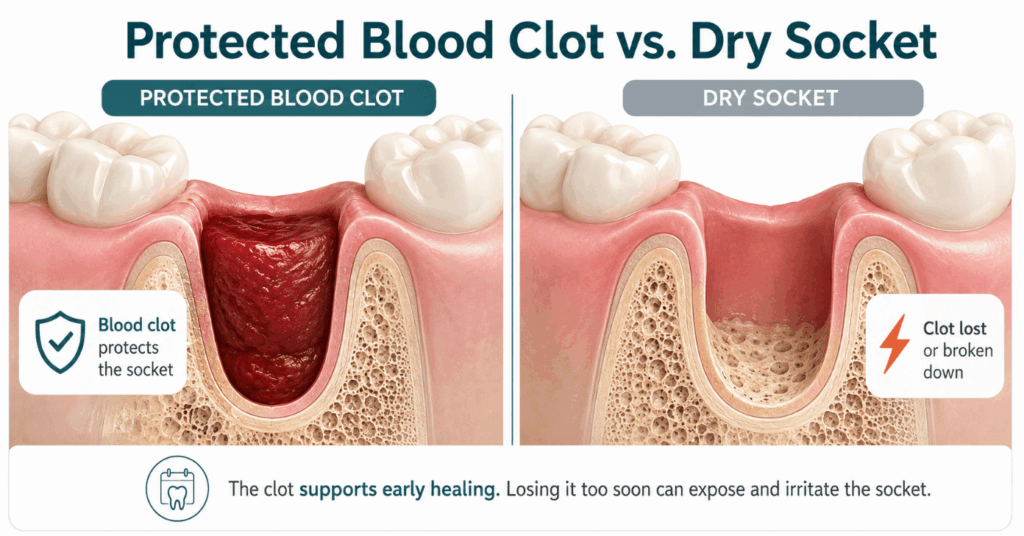
After a tooth is removed, blood fills the empty tooth socket and forms a clot. This clot works like a protective layer over the underlying bone and sensitive tissues. It also creates a base for new tissue to grow as part of the normal healing process. Understanding this process is central to learning how to avoid dry socket.
Dry socket, also called alveolar osteitis, can develop when the clot does not form properly, breaks down too early, or comes out before the socket has started to heal. Without enough protection, the underlying bone becomes exposed and irritated. This can cause intense pain and delay healing. Dry socket is not the same as an infection, although both problems can sometimes produce pain or an unpleasant taste.
How to Avoid Dry Socket After a Tooth Extraction: 9 Key Tips
The most effective dry socket prevention steps focus on protecting the clot and supporting proper healing. Your dentist’s instructions should always come first because aftercare can vary based on the tooth removed, the difficulty of the procedure, and your medical history.
1. Leave the Extraction Site Undisturbed
To help avoid dry socket, do not touch the extraction site with your tongue, fingers, toothbrush, toothpick, or any other object. It may feel natural to check the empty tooth socket, but repeated pressure can irritate the wound or dislodge the blood clot.
If your dentist places gauze over the site, bite down with steady pressure for the recommended time. Remove or replace it as directed. Do not chew the gauze, change it repeatedly without a reason, or sleep with it in your mouth. If active bleeding continues, follow the specific instructions from your dental office.
2. Do Not Rinse or Spit Forcefully
Avoid rinsing, gargling, and forceful spitting during the first 24 hours unless your dentist gives you different directions. These actions create movement and pressure inside the mouth that may interfere with early clot formation.
If saliva mixed with a little blood collects in your mouth, let it fall gently into a tissue or sink instead of spitting hard. You can drink from a cup, but do not swish the liquid around the socket. After the first day, you may begin gently rinsing if your dentist approves.
3. Avoid Straws and Other Suction
To avoid dry socket, do not drink through a straw because it creates suction inside the mouth. This pressure may loosen the clot that protects the extraction site, especially during early healing. Drink directly from a cup instead.
Avoid other strong sucking actions as well. Do not try to pull food from the socket with your mouth, suck on hard candy, or create suction to check whether the clot is still present. The American Association of Oral and Maxillofacial Surgeons recommends avoiding straws during early recovery in its professional guidance on preventing dry socket. Follow your dentist’s timeframe, particularly after a surgical or wisdom tooth extraction.
4. Stop Smoking, Vaping, and Using Tobacco
Smoking after tooth extraction is one of the most important preventable risk factors for dry socket. Drawing on a cigarette, vape, or other smoking device creates suction that may disturb the clot. Smoke, heat, nicotine, and other chemicals can also reduce blood flow, irritate the wound, and delay healing. A systematic review of smoking as a dry-socket risk factor found a clear association between smoking and a higher occurrence of this complication.
Avoid cigarettes, vaping, marijuana, cigars, pipes, and smokeless tobacco for as long as your dentist advises. Smoking through gauze is not a safe alternative. If stopping is difficult, speak with your dentist or physician before the extraction about appropriate support. Do not place nicotine gum, chewing tobacco, or any nicotine product against the wound.
5. Choose Soft Foods and Safe Drinks
Choose soft, cool or lukewarm foods during the first stage of recovery. Chew on the other side of your mouth when possible, and take small bites. Wait until numbness has worn off before chewing so you do not accidentally bite your cheek, lip, or tongue.
Helpful food and drink choices include:
- Soft Protein Foods: Try scrambled eggs, smooth Greek yogurt, cottage cheese, soft fish, or blended beans when you can eat comfortably.
- Smooth Fruits and Vegetables: Applesauce, mashed banana, mashed potatoes, and smooth vegetable purées require little chewing.
- Soft Grains: Well-cooked pasta, soft rice, cooled oatmeal, and smooth porridge may be easier to manage as healing progresses.
- Cool or Lukewarm Liquids: Drink water from a cup. Soups and broths should not be hot enough to irritate the wound or restart bleeding.
- Foods to Avoid: Skip hard, crunchy, sticky, spicy, or very hot foods. Nuts, chips, popcorn, seeds, and sharp crumbs may irritate the extraction site or become trapped in it.
Smoothies can be useful, but drink them from a cup or eat them with a spoon. Do not use a straw, and avoid blends that contain small seeds.
6. Clean Your Mouth Without Disturbing the Socket
Good oral hygiene helps keep plaque and food away from the healing area, but the socket needs gentle care. Do not scrub inside the wound or aim a strong stream of water at it.
- Wait for the Right Time: Do not rinse during the first 24 hours unless your dentist tells you to do so.
- Brush Your Other Teeth Carefully: Continue to brush your other teeth, but avoid direct contact with the socket during early healing. Be especially careful around stitches.
- Begin Gentle Rinsing When Approved: Starting the day after tooth removal, your dentist may recommend a gentle warm salt-water rinse. Hold or move the liquid softly, then let it fall from your mouth without forceful spitting.
- Use Mouthwash Only as Directed: Do not assume that any mouthwash is safe for a fresh wound. Alcohol-containing products may irritate the area, and prescription rinses require specific timing and use.
- Do Not Irrigate Too Early: Avoid using a syringe, water flosser, or strong water jet unless your dentist has shown you when and how to use it.
The NHS provides similar advice to clean the other teeth carefully while protecting the clot and any stitches. Your own postoperative instructions may differ depending on the procedure.
7. Rest and Limit Strenuous Activity
Rest on the day of your extraction. Running, heavy lifting, intense workouts, and repeated bending can raise blood pressure and may restart bleeding from a fresh extraction site. More bleeding and movement around the wound can interfere with early clot stability.
Light daily activity is usually easier to resume than strenuous exercise, but recovery varies. A simple tooth removal may require less downtime than impacted wisdom teeth removal. Increase your activity gradually and stop if you notice fresh bleeding, throbbing, or increasing discomfort. Follow any longer restrictions given by your dentist or oral surgeon.
8. Use Medicines and Mouth Rinses Only as Directed
Take prescribed medicines and over-the-counter pain relief exactly as directed. Do not exceed the label dose, combine products that contain the same ingredient, or take someone else’s medication. Never stop blood thinners, aspirin prescribed for a medical condition, or other regular medicines without speaking to the clinician who manages them.
The American Dental Association’s acute dental pain guideline supports nonopioid medicines, such as certain anti-inflammatory drugs alone or with acetaminophen, for many patients after tooth extraction. However, these medicines are not safe for everyone. Your medical history, allergies, pregnancy status, stomach health, kidney function, and other medicines can affect what you may take.
Your dentist may recommend an antibacterial mouthwash containing chlorhexidine in selected cases. A Cochrane review of local measures for preventing and treating dry socket found evidence that certain chlorhexidine protocols can reduce dry-socket risk. That does not mean everyone should use it. Do not begin chlorhexidine, place gel in the socket, or use any medicated rinse without professional instructions.
9. Follow Your Dentist’s Personal Aftercare Plan
Your dentist knows how difficult the extraction was, whether stitches were placed, and whether you have factors that may affect healing. Follow the written instructions you receive even if general online advice gives a different timeframe. Attend a review visit when one is recommended.
Before or after the procedure, tell your dentist about:
- Previous Dry Socket: A past episode may affect the prevention plan for a future extraction.
- Smoking or Vaping: Honest information helps the dental team offer realistic support before tooth removal.
- Regular Medicines: Include prescription medicines, blood thinners, over-the-counter drugs, and supplements. Do not stop any of them on your own.
- Oral Contraceptives: Research, including a meta-analysis of oral contraceptive use after third-molar extraction, suggests an association with a higher risk of alveolar osteitis. Do not stop contraception without medical advice.
- Existing Oral Problems: Gum disease, plaque buildup, pain, swelling, or infection around the tooth may affect treatment and aftercare decisions.
- Difficulty Following Instructions: Tell the dental team if work, caregiving, nausea, coughing, or another issue may make recovery instructions hard to follow.
What to Avoid During the First 24 Hours
To avoid dry socket, protect the blood clot carefully during the first 24 hours while it forms and becomes more stable. Focus on avoiding actions that create suction, pressure, heat, or direct trauma around the extraction site.
- Do Not Smoke or Vape: Smoke, suction, heat, and nicotine can interfere with healing.
- Do Not Use a Straw: Sip from a cup without swishing the drink around your mouth.
- Do Not Rinse or Gargle: Wait until your dentist says gentle rinsing can begin.
- Do Not Spit Forcefully: Let saliva fall gently from your mouth if needed.
- Do Not Touch the Socket: Keep your tongue, fingers, toothbrush, and other objects away from the wound.
- Avoid Hot Food and Drinks: Choose cool or lukewarm items, especially while bleeding or numbness continues.
- Avoid Alcohol: Alcohol may irritate the wound, interact with medicines, and affect early recovery.
- Avoid Hard or Crumbly Foods: Choose soft foods that require little chewing.
- Avoid Heavy Exercise: Rest and postpone strenuous workouts, lifting, and repeated bending.
These are general early precautions. Follow the instructions from your dental team if they recommend stricter limits after surgical tooth removal.
How Long Do You Need to Worry About Dry Socket?
Dry socket pain most often begins during the first several days after an extraction rather than immediately after the tooth is pulled. The risk falls as new tissue begins to protect the socket, but tooth extraction healing time varies, and the socket continues healing after the highest-risk period has passed. Lower wisdom teeth and difficult surgical extractions may need more cautious aftercare.
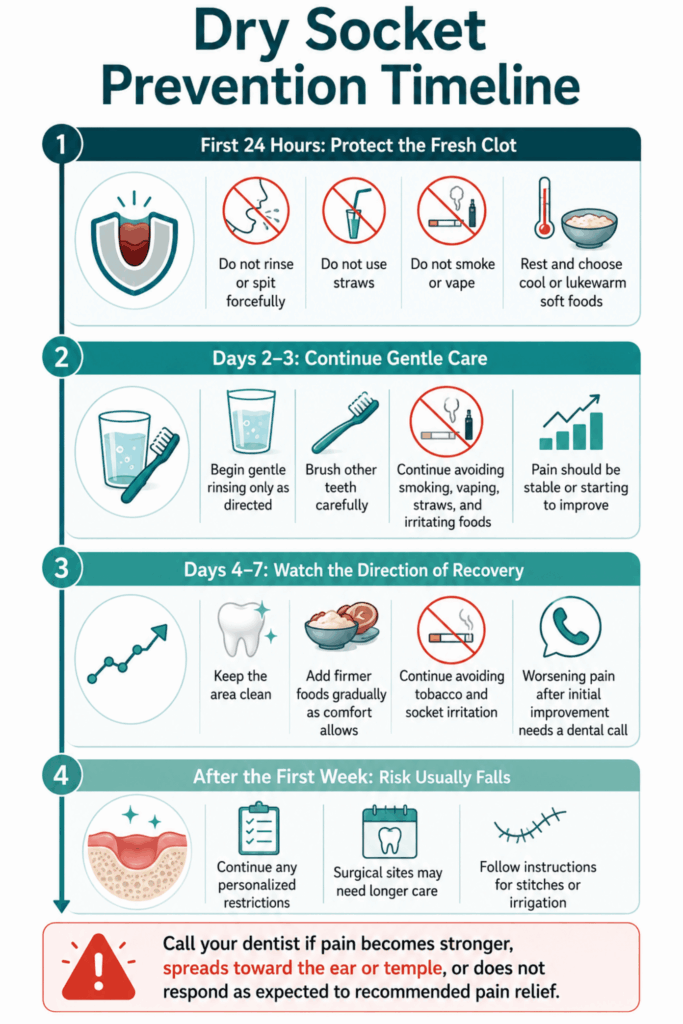
- First 24 Hours: Protect the fresh clot. Avoid rinsing, forceful spitting, suction, smoking, alcohol, hot foods, and strenuous activity.
- Days 2 and 3: Continue avoiding smoking, vaping, straws, and foods that may injure the socket. Begin gentle cleaning or rinsing only as directed. Normal pain should usually be stable or starting to improve rather than becoming dramatically worse.
- Days 4 Through 7: Keep the area clean and continue to avoid tobacco and anything that irritates or becomes trapped in the socket. Slowly add firmer foods as comfort allows, but do not rush because the outside may feel better before deeper healing is complete.
- After the First Week: The risk is usually much lower when pain is improving and healing is progressing normally. Surgical sites may still need special cleaning, food restrictions, or activity limits.
Dry socket commonly becomes noticeable about two to five days after treatment. If pain increases during this period, especially after it had started to improve, contact your dentist rather than waiting for a certain number of days to pass.
Who Has a Higher Risk of Developing Dry Socket?
Dry socket can happen after tooth removal even when a patient follows every instruction. However, certain procedures, habits, and health factors are linked with a higher risk. A risk factor increases the possibility; it does not mean the complication will occur. People with these risk factors may need extra precautions to avoid dry socket.
- Smoking and Tobacco Use: Smoking is strongly associated with developing a dry socket and can delay the healing process.
- Lower Wisdom Tooth Extraction: Alveolar osteitis is more common after lower wisdom teeth are removed, especially when they are impacted or require surgery.
- Difficult or Traumatic Extraction: A longer or more complex procedure may cause more inflammation in the surrounding tissues.
- Previous Dry Socket: Patients who developed it after an earlier extraction may face a higher risk during another tooth removal.
- Poor Oral Hygiene: Heavy plaque, food debris, and inflammation around the tooth can make recovery more difficult.
- Oral Contraceptive Use: Estrogen-containing contraception has been associated with a higher risk after impacted lower wisdom tooth removal. Patients should discuss this with the dentist without stopping contraception on their own.
- Inflammation Around the Tooth: Existing gum inflammation or infection near the extraction site may influence healing and the dentist’s treatment plan.
- Following Aftercare Is Difficult: Frequent vomiting, severe coughing, or an inability to avoid tobacco may make it harder to protect the healing socket.
Age, procedure type, and medical history may also affect risk. Your dentist can evaluate these factors before treatment and decide whether any additional dry socket prevention measures are appropriate.
Can Dry Socket Be Prevented Completely?
You can lower your risk, but it is not always possible to avoid dry socket completely. Careful aftercare lowers avoidable risks, but alveolar osteitis has several possible causes. The clot may break down because of local biological changes even when it was not physically dislodged by a straw, food, or brushing.
Developing a dry socket does not automatically mean you made a mistake. Focus on following your dentist’s instructions and noticing whether your recovery is improving. If the painful condition develops, a dentist can treat dry socket and help control the pain while the area heals.
Normal Healing vs. Possible Dry Socket
Some soreness, swelling, and light blood-stained saliva can be expected after an extraction. The overall direction matters: normal symptoms should gradually become easier to manage, while dry socket pain often becomes stronger after the first couple of days.
| Feature | Normal Healing | Possible Dry Socket |
|---|---|---|
| Pain Pattern | Soreness is often strongest early and then gradually improves. | Pain becomes severe, throbbing, or worse after initial improvement. |
| Pain Location | Discomfort remains mainly around the extraction site. | Pain may spread from the socket to your ear, temple, jaw, or neck on the same side. |
| Swelling | Mild to moderate swelling may peak during the first few days and then settle. | Swelling is not always prominent; rapidly increasing swelling may suggest another complication. |
| Bleeding | Light oozing or pink saliva may occur during early recovery. | Dry socket usually involves pain rather than heavy bleeding. |
| Taste and Breath | A mild temporary taste can occur after surgery. | A persistent unpleasant taste or bad breath may occur with worsening pain. |
| Socket Appearance | A dark clot, pale healing tissue, or a changing socket appearance may be normal. | The socket may appear empty or show exposed bone, but appearance alone cannot confirm dry socket. |
| Response to Pain Relief | Recommended pain relief usually makes discomfort more manageable. | Pain may remain strong despite taking pain medicine as directed. |
Do not diagnose dry socket by color or appearance alone. White or yellow tissue may be normal healing tissue rather than pus or exposed bone. A dentist considers the timing, pain pattern, symptoms, and clinical appearance together.
What to Do if You Think You Have Dry Socket
Contact your dentist or oral surgeon if pain becomes severe, starts to increase after a few days, spreads toward your ear or temple, or does not respond as expected to recommended pain relief. Dry socket usually needs professional assessment, but it is treatable.
- Call the Dental Office: Describe when the tooth was removed, when the pain changed, where it travels, and whether you have swelling, fever, a bad taste, or bleeding.
- Follow Safe Pain Instructions: Take only the medicine recommended for you. Do not increase the dose because the pain is severe.
- Protect the Site: Continue gentle care. Do not probe the socket, smoke, use a straw, or rinse aggressively.
- Do Not Place Home Remedies in the Wound: Aspirin, clove oil, alcohol, hydrogen peroxide, and crushed medicines can burn or irritate tissue. They do not replace dental treatment.
- Attend an Examination: The dentist may inspect the empty tooth socket and gently flush out the socket to remove trapped debris.
- Receive Local Treatment if Needed: The dentist may place a soothing medicated dressing and arrange follow-up care. Treatment aims to reduce dry socket pain while natural healing continues.
Antibiotics do not routinely treat dry socket because alveolar osteitis is not simply a bacterial infection. A dentist may prescribe them if the examination suggests a separate or spreading infection.
When to Seek Urgent Dental or Medical Care
Dry socket can be very painful, but it does not usually cause life-threatening symptoms. Heavy bleeding, breathing problems, or rapidly spreading swelling may point to a different complication and require faster care.
Contact your dentist or oral surgeon promptly if you have:
- Pain That Is Getting Worse: Seek advice if pain increases after initial improvement, spreads toward the ear or temple, or remains severe despite recommended pain relief.
- Possible Infection Signs: Report fever with worsening mouth symptoms, pus, increasing redness, or swelling that continues to grow.
- Persistent Bleeding: Apply gauze as instructed and seek dental help if active bleeding does not settle with firm pressure.
Seek emergency medical care for:
- Trouble Breathing or Swallowing: Severe swelling of the mouth, throat, lips, face, or neck can affect the airway.
- Uncontrolled Heavy Bleeding: Heavy mouth bleeding that will not stop needs urgent assessment.
- A Serious Medication Reaction: Difficulty breathing, facial or throat swelling, faintness, or a rapidly spreading rash may signal a severe allergic reaction.
The NHS guidance on urgent dental emergencies identifies uncontrolled heavy mouth bleeding and severe swelling with breathing difficulty as reasons for immediate emergency care.
Frequently Asked Questions
Can You Get Dry Socket if You Have Stitches?
Yes. You can still develop dry socket with stitches because stitches may help hold the gum tissue in place, may protect part of the wound, but do not always seal the socket completely. The blood clot beneath them can still break down or become disturbed. Follow the same smoking, rinsing, food, and oral hygiene precautions unless your dentist gives you different instructions.
What Should I Do if I Accidentally Used a Straw or Spat After Extraction?
One accidental sip through a straw or one episode of spitting does not mean you will develop dry socket. Stop the action, leave the extraction site alone, and return to your aftercare plan. Contact your dentist if pain becomes stronger after a few days, spreads toward your ear, or does not respond to recommended pain relief.
What Should I Do if Food Gets Stuck in the Extraction Socket?
Do not remove food with your fingernail, a toothpick, tweezers, or a water flosser. After the first 24 hours, a gentle salt-water rinse may loosen small particles if your dentist permits it. Use an irrigation syringe only when your dentist tells you to, because using one too early may disturb healing tissue.
Can Coughing or Sneezing Dislodge the Blood Clot?
An occasional cough or sneeze does not automatically cause dry socket. Repeated or forceful pressure may irritate a fresh extraction site, however. Do not try to hold a sneeze in; sneeze with your mouth open to reduce pressure when appropriate. Contact your dentist if the area starts bleeding again or pain later becomes worse.
Can You Get Dry Socket After a Simple Tooth Extraction?
Yes. Dry socket can happen after any permanent tooth is removed, including a straightforward extraction. It is more common after difficult surgery and the removal of impacted lower wisdom teeth. Regardless of the procedure, protect the clot and follow the aftercare instructions provided by your dentist to avoid dry socket.
Does a Visible Blood Clot Mean Dry Socket Cannot Develop?
A visible clot is generally a good early sign, but it cannot guarantee that dry socket will not develop. The clot may later break down as the wound changes. Do not keep checking or touching it. Pay more attention to the direction of your symptoms, especially whether pain improves or becomes stronger over the next few days.
The Bottom Line on How to Avoid Dry Socket
To avoid dry socket when possible, protect the blood clot, avoid smoking and suction, choose soft foods, clean gently, and follow your dentist’s aftercare plan. These steps promote healing, but they cannot prevent every case.
Contact your dentist if pain becomes stronger instead of improving during the first few days, especially if it spreads from the socket to your ear or temple. Prompt dental care can relieve pain and support the remaining healing process.
