Pain in the jaw after wisdom teeth extraction is common, especially during the first few days. Removing a wisdom tooth can irritate nearby tissues and strain the muscles that open and close your mouth. Mild soreness, swelling, and stiffness usually fit normal healing when they begin to ease rather than grow stronger.
The pattern of pain matters more than one uncomfortable moment. A dull ache that improves each day is different from pain that suddenly returns, spreads, or keeps getting worse. Those changes can point to dry socket, infection, or another problem that your dentist or oral surgeon should assess.
Recovery can vary with the tooth’s position, the difficulty of the extraction, and your usual health. Knowing what to expect can help you care for your jaw without overlooking a warning sign. The best place to start is with the normal recovery pattern and how jaw pain should change as the extraction site heals.
Is Pain in the Jaw After Wisdom Teeth Extraction Normal?
Yes. Jaw pain after wisdom teeth extraction is common during early recovery. Wisdom teeth removal surgery can irritate the gum, jawbone, surrounding muscles, and other nearby tissues. Swelling and jaw stiffness may also make chewing or opening your mouth uncomfortable. The NHS guidance on recovery after wisdom tooth removal notes that these symptoms can continue for up to two weeks, although they should begin to improve earlier.
The direction of jaw pain after wisdom teeth extraction matters more than how uncomfortable it feels at one moment. Expected post-operative discomfort should gradually ease, even if you are not pain-free right away. Contact your dentist or oral surgeon if the pain gets worse, returns after improving, or appears with increasing swelling, fever, discharge, or a bad taste in the mouth.
How Long Should Jaw Pain Last After Wisdom Teeth Extraction?
There is no single recovery time that applies to everyone. How long jaw pain lasts after wisdom teeth extraction depends on the number of teeth removed, whether they were impacted, and how much bone or gum tissue had to be moved. Removing deeply impacted lower wisdom teeth can cause more soreness than a simple tooth removal. The AAOMS guidance on healing after wisdom tooth extraction explains that pain and swelling are common during the first few days and should gradually subside.
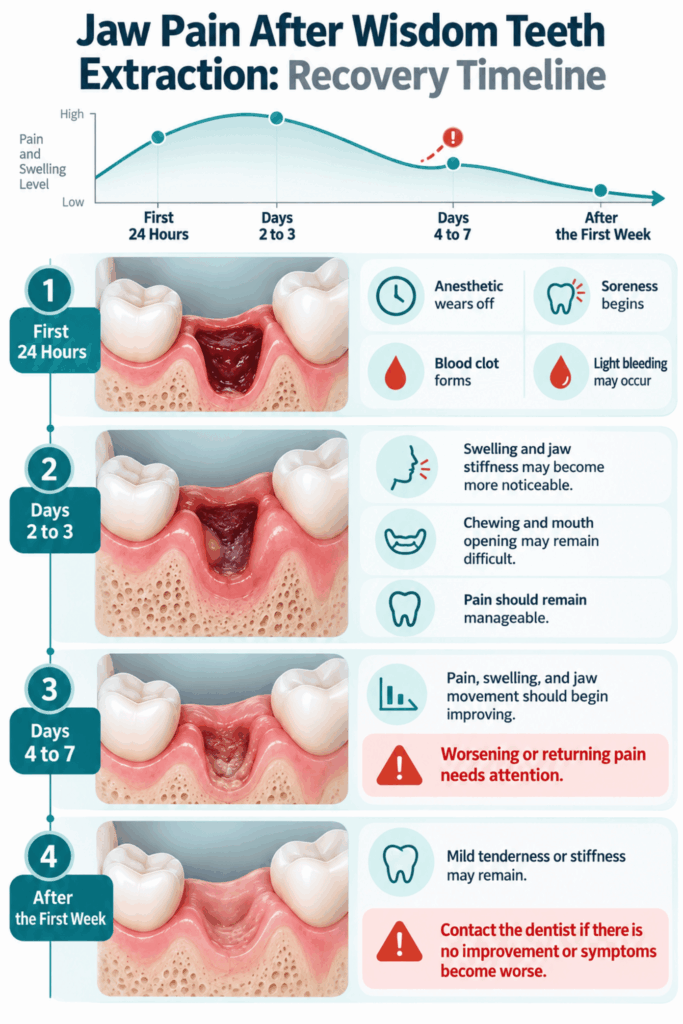
The First 24 Hours
Soreness often begins as the anesthetic wears off. Your jaw muscles may feel tired after being held open during oral surgery, and early swelling can make chewing difficult. Light bleeding or blood-stained saliva may also occur.
A blood clot forms inside each socket where a tooth was removed. This clot protects the jawbone and supports the early healing process. Follow your post-operative instructions carefully, especially those about gauze, food, rinsing, and pain medication.
Days 2 to 3
Pain, facial swelling, and jaw stiffness may feel more noticeable during the first 2 to 3 days. You may find it difficult to open your mouth fully or chew firm food. This can still fit normal healing if the pain remains manageable and does not suddenly become stronger.
Look at the overall pattern rather than comparing your recovery with someone else’s. A complicated extraction may cause more discomfort than an easy one, and each extraction site can heal at a different speed.
Days 4 to 7
During days 4 to 7, you should usually notice some improvement in pain, swelling, chewing, or mouth opening. Your jaw may remain tender, but daily activities should slowly become easier.
Call your dental office if the pain starts to throb, becomes more intense, or returns after it had begun to settle. New pain during this period can occur with dry socket, infection, trapped food, or another problem that needs an examination.
After the First Week
Mild tenderness or jaw stiffness can remain after the first week, particularly following difficult lower wisdom tooth removal. The socket and jawbone continue healing long after the strongest symptoms have settled.
Persistent discomfort does not always mean that something is wrong. However, pain that shows no improvement, interferes with eating, or continues with significant swelling or limited mouth opening should be assessed by your dentist or oral surgeon.
Why Your Jaw Hurts After Wisdom Teeth Extraction
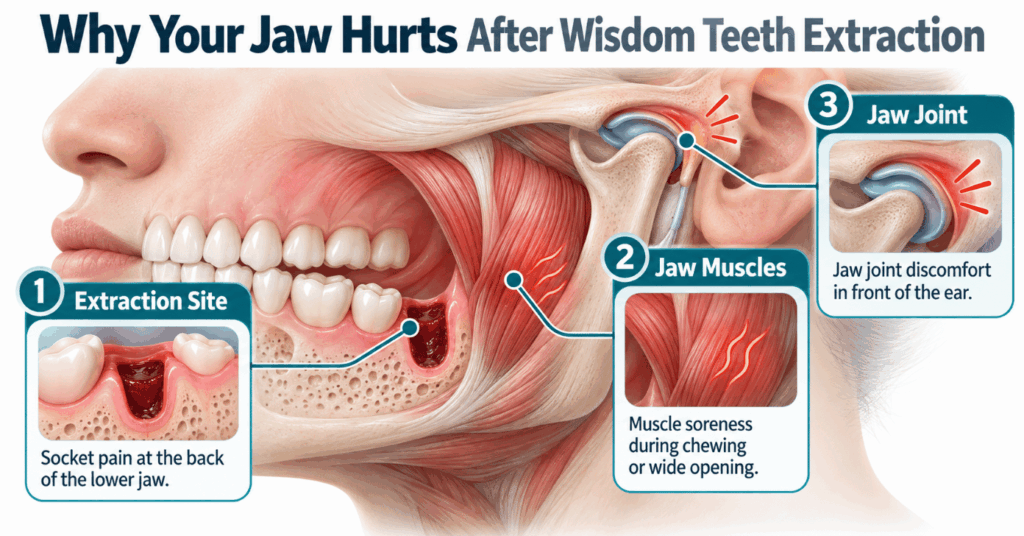
Jaw pain after wisdom teeth extraction can come from the socket, the surrounding tissues, or the muscles and joint used to move the jaw. More than one cause may be present at the same time.
- Surgical Inflammation: Tooth removal causes a controlled injury to the gum and nearby tissues. The body responds with inflammation, which can produce soreness, warmth, and swelling during the early healing process.
- Strain on Your Jaw Muscles: Keeping your mouth open during surgery can strain the jaw muscles and surrounding muscles. This pain often feels worse when chewing, yawning, or trying to open widely.
- Temporary Trismus: Trismus means limited mouth opening caused by tight or irritated jaw muscles. It often happens after lower wisdom teeth are removed and should gradually improve as soreness and stiffness settle.
- Swelling Around the Surgical Site: Swollen tissues can create pressure near the lower jaw and make movement uncomfortable. This pressure may feel like a deep ache rather than pain directly inside the socket.
- Jaw Joint Irritation: Holding the mouth open can place temporary stress on the temporomandibular joint, or TMJ. A person with earlier jaw issues may notice tenderness, clicking, or fatigue during recovery.
- A Difficult or Impacted Tooth: Teeth are impacted when they remain partly or fully trapped under the gum or jaw bone. Deeply impacted wisdom teeth may require more extensive surgery, which can lead to greater post-operative soreness.
- Sensitivity in Surrounding Teeth: The teeth next to the extraction site may feel tender because of pressure during surgery, inflammation, or referred pain. This sensitivity should improve rather than become steadily worse.
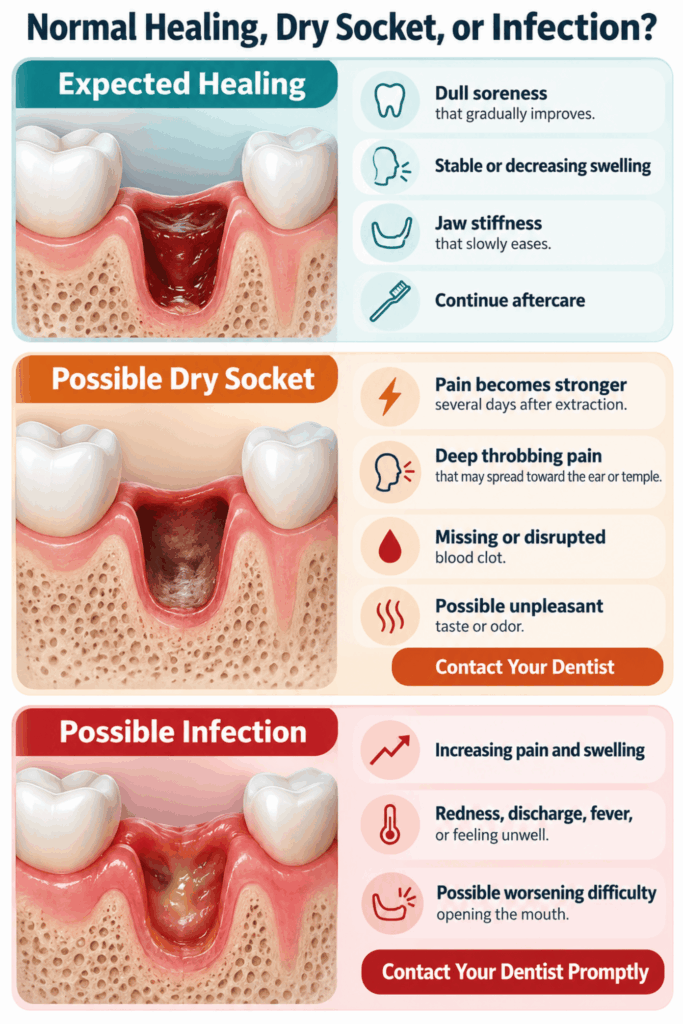
Normal Healing or a Possible Complication?
The following patterns can help you decide whether to monitor the pain or contact your dental office. They cannot confirm the cause without an examination.
| Feature | More Consistent With Normal Healing | May Need Dental Assessment |
|---|---|---|
| Timing | Starts as the anesthetic wears off | New or stronger pain develops several days later |
| Direction | Gradually improves | Stays severe, returns, or gets worse |
| Pain quality | Dull soreness or tenderness | Strong throbbing, sharp, burning, or spreading pain |
| Swelling | Stable or beginning to decrease | Increasing, firm, or spreading swelling |
| Mouth opening | Stiff but slowly improving | Becoming more limited or still severely restricted |
| Taste or odor | Mild temporary unpleasant taste | Persistent foul taste, bad breath, or discharge |
| General health | Otherwise feels well | Fever, chills, weakness, or feeling unwell |
| Next step | Continue the prescribed aftercare | Contact the dentist or oral surgeon |
One unusual symptom does not automatically mean you have a complication. However, worsening pain combined with swelling, fever, discharge, or a foul taste gives your dentist more reason to examine the site promptly.
Problems That Can Cause Worsening or Persistent Jaw Pain
Most pain after wisdom teeth removal improves with proper care. When it does not, a dentist must consider the timing, location, and type of pain as well as other symptoms. An examination can distinguish socket pain from a muscle, joint, nerve, or surrounding tooth problem.
Dry Socket
Dry socket is a painful condition that happens when the blood clot does not form properly, breaks down, or leaves the extraction socket too early. The exposed bone and nerve endings can cause a deep, throbbing pain. Symptoms often begin a few days after surgery instead of immediately afterward.
Pain may spread toward the ear, temple, eye, or neck on the affected side. A foul smell or unpleasant taste may also occur. The AAOMS explanation of dry socket symptoms and prevention advises patients with these symptoms to contact their oral surgeon. The dentist can examine and clean the socket and may place a soothing dressing.
Infection at the Extraction Site
An infection may cause pain that worsens instead of improving. Possible signs include increasing swelling, redness, pus, fever, a persistent bad taste, or feeling unwell. Jaw stiffness may also become more severe if inflammation spreads into nearby tissues.
Antibiotics are not the only part of infection care. Your dentist may need to clean the site, remove trapped debris, drain an abscess, or address another source of infection. Do not start leftover antibiotics or stop prescribed medicine early without speaking to a dental professional.
Jaw Muscle or Jaw Joint Irritation
Muscle-related pain is usually linked to movement. It may feel worse when chewing, yawning, talking for a long time, or opening your mouth widely. The muscles may feel tight or tender when you press along the cheek or lower jaw. Muscle tension may also spread toward the temple and contribute to a headache after wisdom tooth removal.
Jaw joint irritation may cause discomfort in front of the ear, clicking, or a tired feeling when chewing. These symptoms can happen because the mouth remained open during surgery. They differ from pain centered deep inside the extraction socket, although both types can occur together.
Persistent Numbness, Tingling, or Unusual Pain
Local anesthetic can cause numbness for several hours after wisdom teeth are removed. Numbness, tingling, burning, or altered feeling that continues afterward should be reported to your surgeon, especially when it affects the lower lip, chin, or tongue. Most sensory changes do not automatically mean permanent damage, but early documentation and follow-up are important.
How to Ease Jaw Pain at Home Safely
Simple home measures can help you manage pain while the socket and surrounding tissues heal. Follow the instructions from your own dentist or surgeon because they may differ based on the difficulty of the surgery, stitches, bleeding, or other health needs.
Comfort Measures Without Medication
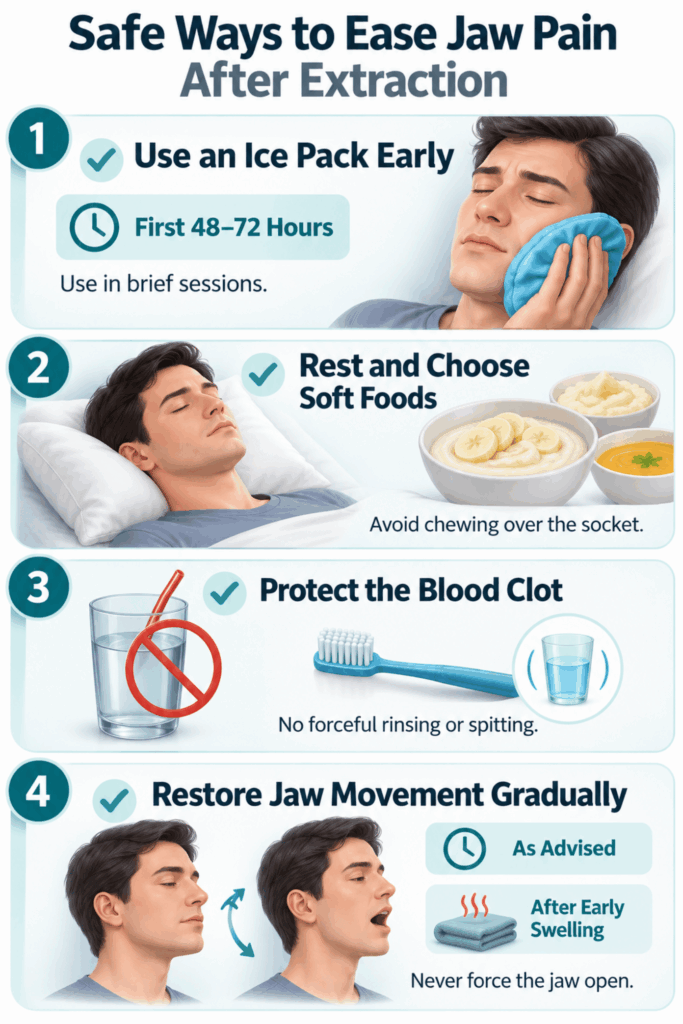
- Use an Ice Pack Early: Place a wrapped ice pack against the cheek in short sessions during the first 48 to 72 hours, as directed. Do not place ice directly on your skin.
- Raise Your Head: Use an extra pillow when resting or sleeping. Keeping your head slightly raised may help limit throbbing and swelling.
- Stick to Soft Foods: Stick to soft foods like yogurt, scrambled eggs, mashed potatoes, soup that is not hot, and soft pasta. Avoid chewing directly over the extraction sites.
- Drink Enough Fluids: Water supports recovery, but do not use a straw during early healing. Suction may disturb the blood clot.
- Clean Your Mouth Gently: Maintain oral hygiene without brushing directly over a fresh socket. Follow your dentist’s instructions about when to begin gentle saltwater rinsing.
- Move the Jaw Gradually: When advised, slowly open and close your mouth within a comfortable range. Gentle movement can help tight jaw muscles, but forceful stretching can increase pain.
- Rest During Early Recovery: Avoid heavy exercise and activities that make the area throb or bleed. Return to normal activity gradually as your symptoms improve.
Using Pain Medicine Responsibly
Nonsteroidal anti-inflammatory drugs, or NSAIDs, such as ibuprofen, may help reduce dental pain and inflammation. Acetaminophen may be used alone or with an NSAID when appropriate. The American Dental Association guideline on acute dental pain management recommends nonopioid medicines as first-line options for most acute pain after tooth extraction.
However, over-the-counter pain relievers are not suitable for everyone. Ibuprofen may be unsafe for some people with stomach ulcers, kidney disease, bleeding problems, certain heart conditions, or blood-thinning medication. Acetaminophen requires caution with liver disease, alcohol use, and other products containing the same ingredient. Follow your surgeon’s directions and the package limits, and ask a pharmacist or clinician if you are unsure.
What to Avoid While the Socket and Jaw Heal
Protecting the socket can reduce irritation and support a smooth recovery. The clot is most vulnerable during early healing, so even a small habit can matter.
- Smoking or Vaping: Tobacco and inhaled products can irritate the wound and interfere with healing. Smoking also raises the risk of dry socket.
- Using a Straw: Suction may disturb the blood clot. Drink directly from a cup until your surgeon says using a straw is safe.
- Forceful Rinsing or Spitting: Avoid vigorous rinsing during the first 24 hours and follow your post-operative instructions afterward. Allow liquid to fall from your mouth instead of spitting forcefully.
- Hard, Crunchy, or Chewy Foods: Nuts, chips, seeds, crusty bread, and tough meat can strain your sore jaw or lodge inside the socket.
- Very Hot Food and Drinks: Heat may increase bleeding and irritate sensitive tissues during early recovery.
- Alcohol: Alcohol may affect healing and can interact with pain medication or antibiotics.
- Heavy Exercise: Vigorous activity can increase throbbing or bleeding during the first days after surgery.
- Aggressive Jaw Stretching: Do not force your mouth open or perform intense jaw exercises. Gentle, comfortable movement is safer.
When to Contact Your Dentist or Oral Surgeon
Contact your dental office when recovery stops moving in the right direction. Your dentist can often tell from the timing and symptoms whether you need an examination now or can continue monitoring the area.
Arrange a Prompt Dental Review
Call your dentist or oral surgeon if you notice:
- Pain That Gets Worse: The pain becomes stronger, starts to throb, or returns after it had improved.
- Severe or Persistent Pain: Pain medication does not provide reasonable relief, or significant pain continues without improvement.
- Increasing Swelling: Swelling grows after the first few days, becomes hard, or spreads across the face or under the jaw.
- Signs of Infection: Fever, pus, worsening redness, chills, or feeling unwell could be signs of infection.
- A Foul Taste or Odor: A persistent unpleasant taste or smell can occur with dry socket, trapped debris, or infection.
- Continued Difficulty Opening Your Mouth: Jaw stiffness becomes worse or makes eating, drinking, or oral hygiene difficult.
- Lasting Sensory Changes: Numbness, tingling, burning, or altered feeling continues in the lip, chin, or tongue.
- Ongoing Bleeding: Bleeding does not settle after following the pressure instructions provided by your dental team.
Seek Urgent Medical Help
Get urgent medical help if swelling spreads rapidly into your mouth, face, or neck, or if you have trouble breathing, speaking, or swallowing. Heavy bleeding that will not stop also needs urgent care. The NHS emergency guidance for serious dental swelling treats breathing or swallowing difficulty and extensive mouth swelling as emergency warning signs. These problems are uncommon, but they should not wait for a routine dental appointment.
How a Dentist Finds the Cause of Jaw Pain
Your dentist will not judge the problem by pain intensity alone. The timing, location, and direction of the symptoms often provide more useful clues.
- Review the Recovery Pattern: The dentist will ask when the pain began, whether it improved before getting worse, and what makes it better or stronger.
- Examine the Socket: They will look for healing tissue, exposed bone, trapped food, discharge, swelling, or loss of the blood clot.
- Check Nearby Tissues and Teeth: The examination may include the surrounding teeth, gums, floor of the mouth, and lymph nodes under the jaw.
- Measure Jaw Movement: The dentist may check how widely you can open and whether movement causes muscle or jaw joint pain.
- Test Sensation: If you report numbness or tingling, the dentist may compare feeling in the lip, chin, tongue, and nearby skin.
- Use Imaging When Needed: An X-ray may help identify a retained tooth fragment, a bone problem, infection, or an issue involving a surrounding tooth. Imaging is not necessary for every sore jaw.
How Treatment Depends on the Cause
Jaw pain after wisdom teeth removal does not have one universal treatment. The dentist first needs to determine whether the pain comes from normal healing, the socket, an infection, the jaw muscles, the joint, or a nearby nerve.
- Expected Post-Operative Pain: Treatment usually involves rest, suitable pain relievers, soft foods, cold or warm compresses at the appropriate stage, and careful oral hygiene.
- Dry Socket: The dentist may gently flush debris from the socket and place a medicated dressing to ease pain. A follow-up visit may be needed if the dressing requires replacement.
- Infection: Treatment may include cleaning or draining the infected area and addressing its source. Antibiotics may be appropriate when the infection is spreading or causing systemic symptoms, but they do not replace necessary dental care. The ADA resources on responsible antibiotic use in dental care explain why antibiotics should be reserved for suitable clinical situations.
- Muscle Tightness or Trismus: The dentist may recommend gradual jaw exercises, moist heat after the early swelling period, a softer diet, or further assessment if movement does not improve.
- Jaw Joint Irritation: Short-term changes to chewing and jaw use may help. Persistent clicking, locking, or joint pain may require a more focused TMJ examination.
- Nerve Symptoms: The surgeon may document the affected area and monitor changes over time. Persistent or severe sensory problems may require referral for further assessment.
What Matters Most During Recovery
Pay attention to the trend rather than expecting every day to be pain free. A sore jaw that slowly improves usually fits the healing process, while pain that remains severe, returns, or gets worse deserves a dental review. Follow your post-operative instructions and contact your dental office if your symptoms do not match the recovery pattern they described.
Frequently Asked Questions
Why Does Only One Side of My Jaw Hurt After Wisdom Teeth Removal?
Each extraction site is a separate surgical area. One side may have contained a deeper impacted tooth, required more bone removal, or taken longer to treat. Uneven swelling and muscle strain can also make one side more painful. The difference should gradually decrease; worsening one-sided pain needs a dental review.
Can Jaw Pain After Wisdom Teeth Removal Spread to the Ear?
Yes. The extraction area, jaw muscles, and jaw joint share nearby nerve pathways, so pain can feel as though it reaches the ear or temple. This is called referred pain. Ear pain alone does not confirm dry socket or an ear infection, but severe or worsening radiating pain should be assessed.
Why Do My Other Teeth Hurt After Wisdom Tooth Extraction?
Nearby teeth may feel tender because of pressure during surgery, inflammation around the socket, or pain referred through the jaw. Your bite may also feel unusual while the area is swollen. Contact your dentist if the sensitivity becomes stronger, affects one specific tooth, or continues after the surrounding soreness improves.
Is Jaw Pain Worse After Lower Wisdom Tooth Extraction?
It can be. Lower wisdom teeth are often surrounded by denser bone and may sit close to jaw muscles and nerves. An impacted lower wisdom tooth may therefore require a more involved procedure. However, pain depends on surgical difficulty and individual healing rather than the tooth’s location alone.
Why Does My Jaw Click or Pop After Wisdom Teeth Removal?
Keeping the mouth open during surgery can temporarily irritate the jaw joint or tire its supporting muscles. This may lead to clicking or popping during movement. A painless click that settles may not require treatment. Arrange an examination if clicking becomes painful or occurs with locking, bite changes, or limited opening.
Can the Numbing Injection Cause Jaw Pain After Extraction?
Occasionally, an injection near the jaw muscles can leave temporary soreness, bruising, or tightness. However, jaw pain after extraction more often comes from the procedure, swelling, or muscle strain from opening the mouth. Pain that becomes severe or does not improve should not be blamed on the injection without an examination.
When Can I Start Gentle Jaw Exercises After Wisdom Tooth Removal?
Follow the timing given by your surgeon. Gentle opening and closing may be suitable during early recovery when it feels comfortable, but you should not force the jaw through significant pain or swelling. Stop if movement increases pain, and contact the dental office if your mouth opening remains severely limited.
Bottom Line: Jaw Pain Should Gradually Improve After Extraction
Jaw pain, soreness, and stiffness are common after wisdom teeth extraction. Rest, appropriate pain relief, soft foods, an ice pack during early recovery, and proper oral hygiene can help you manage pain while the tissues heal.
The most useful sign is gradual improvement. Contact your dentist or oral surgeon if the pain gets worse, returns after easing, or appears with fever, increasing swelling, discharge, a foul taste, or other concerning symptoms.
