Just had your wisdom teeth removed and wondering what you can eat? Start with smooth, cool, or lukewarm foods that need little chewing, such as yogurt, applesauce, or blended soup. As eating gets more comfortable, you can try soft meals like mashed potatoes and scrambled eggs. These 25 foods to eat after wisdom teeth removal offer more choices when your jaw feels sore.
The right choice depends on how your mouth feels and the instructions your surgeon gave you. Even a soft food can be awkward to eat if it has seeds, crunchy pieces, or a texture that takes more chewing than you expected. There is no need to move to firmer food on a set day; let comfort and your surgeon’s advice guide you.
You also need meals that feel satisfying, especially if you are tired of eating the same few things. A little planning can give you options for breakfast, lunch, and dinner without making every meal a challenge. Start with the foods that take the least effort to eat, then consider the softer meals as chewing becomes easier.
25 Foods to Eat After Wisdom Teeth Removal
The best foods to eat after wisdom teeth removal are soft, mild, and easy for you to manage. Start with choices that need little or no chewing. As your mouth feels better, try the more substantial foods on this list. You do not need to eat all 25, and your oral surgeon’s post-operative instructions should guide your choices. The American Association of Oral and Maxillofacial Surgeons’ wisdom tooth aftercare instructions recommend soft foods that are easy to swallow during the first few days.
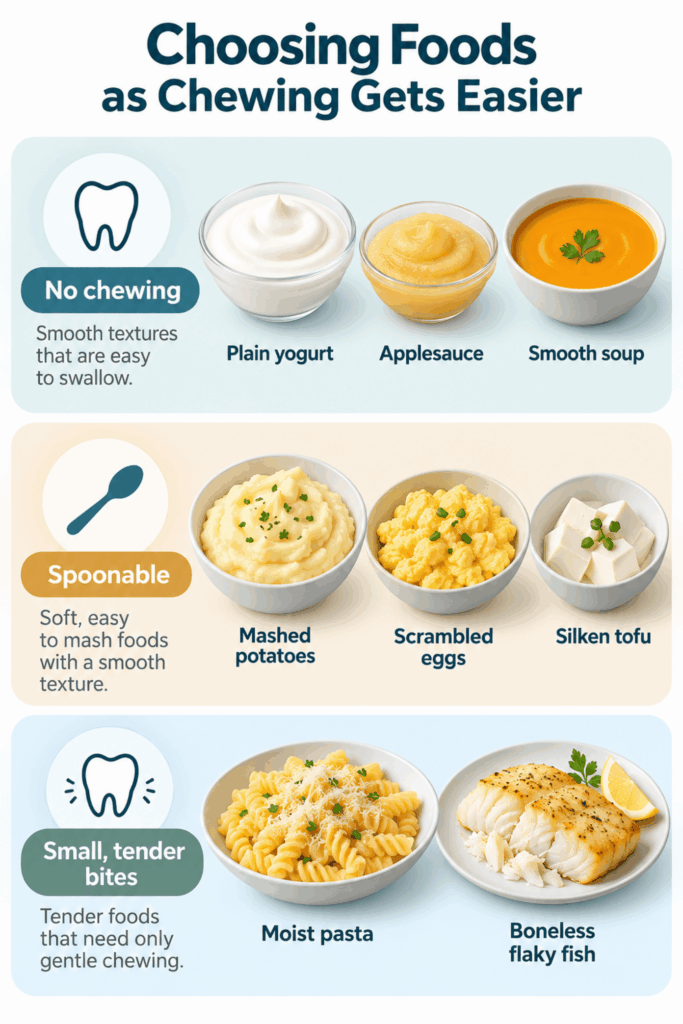
Smooth Foods That Need Little or No Chewing
- Plain Yogurt: Choose a smooth yogurt without granola, seeds, or fruit pieces. Eat it with a spoon.
- Applesauce: Smooth applesauce needs no chewing. Serve it cool or at room temperature, whichever feels better.
- Mashed Banana: Mash a ripe banana until no firm pieces remain. You can thin it with a little milk if you want a smoother texture.
- Mashed Avocado: A ripe avocado mashes easily and makes a soft, filling choice. Skip crunchy toppings and strongly seasoned additions.
- Blended Vegetable Soup: Blend cooked vegetables until the soup is smooth, then let it cool before eating. Check for pieces that might be difficult to manage.
- Smooth Pudding: Pudding is easy to eat when chewing is uncomfortable. Choose one without cookie crumbs, nuts, or other firm mix-ins.
- Plain Ice Cream: Smooth ice cream may feel pleasant if you like cool foods. Avoid cones and flavors with nuts, candy, or crunchy pieces.
- Smooth Hummus: Eat mild, fully blended hummus by itself with a spoon. Leave off whole chickpeas and other chunky toppings.
- Seedless Smoothie: Blend soft fruit until smooth and strain out any seeds or tough bits. Drink it from a cup rather than using a straw.
Soft, Filling Meals for When Chewing Gets Easier
Some foods are easier to eat after wisdom teeth removal, but the meals below may still need a little chewing. Try them when they feel comfortable, and prepare them so they stay soft and moist.
- Scrambled Eggs: Cook eggs until set but still soft. Avoid dry, browned edges that take more effort to chew.
- Mashed Potatoes: Make them smooth and moist with milk, broth, or another suitable liquid. Let them cool from hot to warm before eating.
- Mashed Sweet Potatoes: Mash cooked sweet potatoes until soft and free of firm pieces. Thin them if they feel too thick to eat comfortably.
- Creamy Oatmeal: Cook oats until very soft and let them cool before eating. If the texture feels too coarse, choose a smoother food for now.
- Cream of Wheat: Prepare it with enough liquid to keep it soft and spoonable. Check the temperature before your first bite.
- Silken Tofu: Its smooth texture makes it easy to add to a mild soup or eat as part of a soft meal. Skip crunchy toppings.
- Smooth Mashed Beans: Cook beans until tender, then mash or blend them thoroughly. Remove skins or firm pieces if they make the texture hard to manage.
- Soft Polenta: Serve freshly cooked polenta while it is creamy and spoonable. It becomes firmer as it cools, so add liquid if needed.
- Boneless Flaky Fish: Choose a moist, tender fish and check carefully for bones. Try small bites when you are ready for gentle chewing.
- Well-Cooked Pasta: Cook pasta until tender and add a smooth sauce to keep it moist. Cut larger pieces into small bites.
Soft Snacks and Sides for More Variety
These choices can fill gaps between meals or go alongside a soft main dish. Some are better saved for when a little chewing feels comfortable.
- Cottage Cheese: Choose a soft variety or blend it if the curds bother you. Eat it plain rather than adding seeds or crunchy toppings.
- Ripe Peeled Peach: Peel a very ripe peach and mash it or cut it into tiny, tender pieces. Wait if it still takes too much chewing.
- Mashed Cooked Carrots: Cook carrots until very tender, then mash them smooth. Firm or raw carrot pieces are harder to chew.
- Soft Cooked Zucchini: Peel and cook zucchini until tender, then mash it if needed. Avoid browned or firm pieces.
- Soft Pancakes: Try small bites of a moist pancake once chewing feels easier. Leave hard, crisp edges for later.
- Plain Gelatin Dessert: Gelatin needs little chewing and can add variety when your mouth feels sore. Treat it as a snack alongside more filling food choices.
What Can You Eat on the Day of Surgery?
Follow your surgeon’s instructions about when to eat, especially if you had sedation or general anesthesia. Your mouth may also remain numb for a while after a local anesthetic. While it is numb, you could bite your cheek or tongue without noticing or burn yourself with hot food. The University College London Hospitals’ dental extraction aftercare instructions advise care with eating during this period.
When you are ready to eat after wisdom teeth removal, begin with cool or lukewarm foods that need little chewing. Take your time and choose a small amount first. Suitable options from the list include:
- Plain Yogurt: Smooth and easy to eat with a spoon.
- Applesauce: Soft enough to eat without chewing.
- Blended Soup: A savory choice once it has cooled and contains no firm pieces.
How Should Your Food Choices Change Over the Next Few Days?
Let comfort guide your move toward more solid foods. Soreness and jaw stiffness can make chewing harder, and the pace may differ if several wisdom teeth were removed or the extraction was more involved. You can stay with softer foods longer if you need to.
- Start With Smooth Choices: Pick foods that need little or no chewing, such as yogurt, applesauce, or smooth soup.
- Add Soft Meals: When eating feels easier, try foods such as mashed potatoes, scrambled eggs, or soft tofu. If a food hurts to chew, leave it and try again later.
- Try Tender Foods: Move to small bites of foods such as soft pasta or flaky fish as comfort allows. Keep following your surgeon’s advice about chewing near the extraction sites.
Easy Breakfast, Lunch, and Dinner Ideas
You can make simple meals from the same 25 foods without preparing a separate menu.
- Breakfast: Have plain yogurt with mashed banana. When you feel ready for more texture, try soft scrambled eggs.
- Lunch: Pair blended vegetable soup with smooth hummus eaten by spoon. Let the soup cool before eating.
- Dinner: Try mashed potatoes with silken tofu, or add moist, flaky fish when gentle chewing feels comfortable.
How Can You Make Soft Meals More Filling?
You do not have to rely on pudding and ice cream while your mouth is tender. Combine foods with different textures and flavors that you can still eat comfortably.
- Add a Soft Protein Food: Try eggs, yogurt, silken tofu, smooth beans, or flaky fish when its texture suits you.
- Make a Side Into a Meal: Pair mashed potatoes or polenta with a soft protein food instead of eating it alone.
- Keep Food Moist: Add a little broth or suitable sauce to foods that feel too thick or dry.
- Keep Fluids Nearby: Drink regularly from a cup to stay hydrated, especially when you are eating less than usual.
Which Foods and Drinks Should You Avoid?
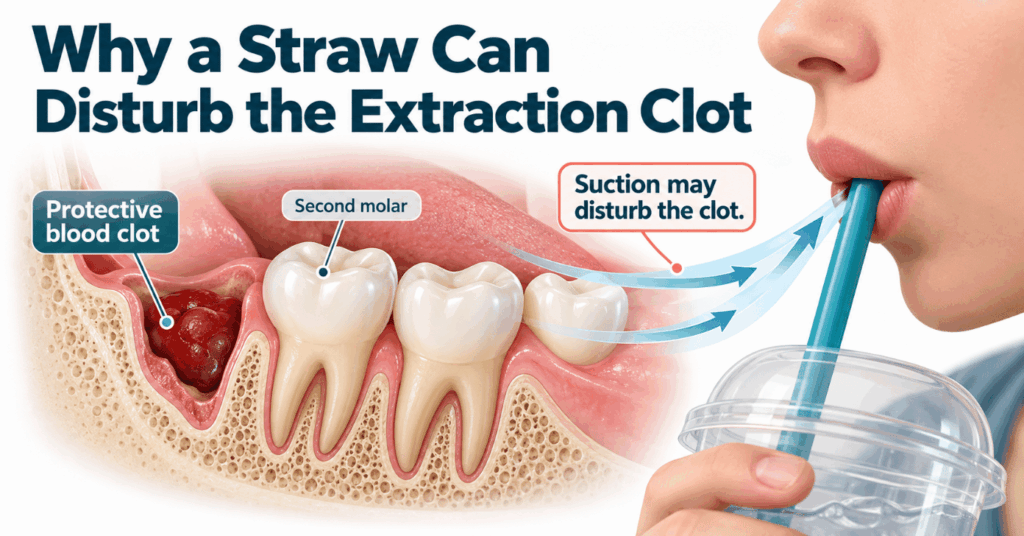
The main concern is whether a food could be hard to chew, irritate the area, or leave pieces near an extraction site. A blood clot protects the socket while it begins to heal, so follow your surgeon’s advice about eating and drinking without disturbing it. The UMass Memorial Health guidance on recovery after wisdom teeth surgery discusses soft foods, drinks, and habits to avoid while the sites heal.
- Hard or Crunchy Foods: Nuts, chips, popcorn, and similar foods can be uncomfortable to chew and may leave pieces behind.
- Small Pieces and Seeds: Tiny seeds and loose grains can collect near a socket. Choose smooth, seedless options early on.
- Tough or Sticky Foods: Chewy meat and sticky candy take more effort to eat and can be difficult to clear away.
- Spicy or Acidic Foods: These may sting or irritate tender areas. Choose milder flavors if your mouth is sensitive.
- Very Hot Food and Drinks: Let soup and drinks cool before having them, especially while your mouth is numb.
- Drinks Through a Straw: Avoid using a straw while your surgeon advises against it. The suction may disturb the blood clot, causing dry socket; drink from a cup instead.
What About Rice, Pasta, Bread, and Ice Cream?
These foods do not all behave the same way in your mouth. How they are prepared, and how comfortable you are eating them, matters.
- Rice: Even though cooked rice is soft, separate grains can collect near an extraction site. Ask your surgeon if you are unsure when to add it back.
- Pasta: Well-cooked, moist pasta may be comfortable once you can manage some chewing. Start with small bites rather than firm or chewy pasta.
- Bread: Crusty bread is hard to chew, while soft bread can still feel sticky or require more jaw movement than expected. Wait until it feels easy to eat.
- Ice Cream: Smooth ice cream is an option if it feels comfortable. Skip cones and flavors with nuts, candy, or cookie pieces.
How Can You Eat and Drink Comfortably?
Small changes can make a meal easier when your jaw is sore or stiff. You do not need to finish a large serving at once.
- Take Small Bites: Use a spoon or cut tender foods into pieces you can manage without opening wide.
- Choose Comfortable Textures: Mash, blend, or moisten food if it feels too thick or requires too much chewing.
- Chew Away From the Sites When Possible: If you have a comfortable side, use it. If all four wisdom teeth were removed, choose foods that need little chewing.
- Drink From a Cup: Sip water and other suitable drinks regularly instead of using a straw while your surgeon advises against it.
What Should You Do If Food Gets Near the Extraction Site?
On the day of surgery, do not poke at the socket with your finger, tongue, or an object. Avoid rinsing or spitting during the first 24 hours unless your surgical team gave you different instructions. These actions can disturb the blood clot.
After that first period, follow your surgeon’s directions for cleaning the area. They may advise gentle warm saltwater rinses after meals or give you specific instructions if food collects near a socket. The American Association of Oral and Maxillofacial Surgeons’ advice on oral care after extraction surgery emphasizes following the dental professional’s instructions around the surgical site. If something will not come away gently, contact the surgical team rather than digging into the socket.
When Can You Eat Normal Food Again?
There is no single day when everyone can return to a normal diet. You may be ready to try some tender solid foods while harder or crunchier foods still feel uncomfortable. The American Association of Oral and Maxillofacial Surgeons’ information on wisdom tooth healing advises patients to discuss food choices during recovery with their oral surgeon.
Add regular foods gradually as you can chew comfortably and as your surgeon’s instructions allow. If trying a food causes pain or leaves bits near the site, return to an easier texture for now.
When Should You Contact Your Dentist or Surgeon?
Some tenderness and jaw stiffness are expected after wisdom teeth extraction. Contact your dentist or surgeon if a problem is getting worse, keeps you from drinking enough, or does not fit the recovery advice you were given. The NHS guidance on when to seek help after wisdom tooth removal identifies persistent bleeding and severe or worsening pain and swelling as reasons to get urgent dental advice.
- Bleeding That Does Not Stop: Follow the pressure instructions your surgical team gave you and seek advice if bleeding continues.
- Severe or Worsening Pain or Swelling: Contact the team, particularly if pain relief is not helping.
- Pain With Other Symptoms: Ask for advice if pain comes with a bad taste, fever, or feeling unwell.
- Trouble Drinking Enough: Let the team know if pain, nausea, or another problem is preventing you from taking fluids.
Frequently Asked Questions
Can I Eat With Gauze in My Mouth After Wisdom Teeth Removal?
Take the gauze out before eating or drinking. If your surgeon told you to continue using gauze because the site is still bleeding, follow their directions on when and how to place fresh gauze afterward. Do not try to chew a meal while holding gauze over the socket. If bleeding is difficult to control, call your surgical team.
Can I Eat Dairy After Wisdom Teeth Removal?
Most people do not need to avoid dairy solely because their wisdom teeth were removed. Smooth yogurt, milk, and plain ice cream may be options if you tolerate them and your surgeon has not advised otherwise. If dairy makes you feel nauseated, choose another soft food or drink. Avoid yogurt or ice cream with hard pieces or seeds.
What Can I Eat If I Feel Nauseated After Wisdom Teeth Removal?
Do not force a meal while you feel sick. Follow any instructions you were given after anesthesia, then try small sips of fluid and a little mild, smooth food when you feel able. If nausea or vomiting persists, or you cannot keep fluids down, contact the surgical team.
How Do I Eat If All Four Wisdom Teeth Were Removed?
You may not have a comfortable side for chewing, especially at first. Choose foods you can eat with little or no chewing, such as smooth yogurt, applesauce, mashed potatoes, or blended soup. As soreness improves, try small amounts of soft meals. Do not feel you must start chewing more firmly on a particular day.
Can I Eat With Stitches After Wisdom Teeth Removal?
Yes. Stitches do not usually mean you must avoid eating, but choose soft foods and try not to chew directly over the surgical sites. Follow your surgeon’s cleaning instructions rather than pulling at food near a stitch. If a stitch comes loose or the area opens, contact your surgical team for advice.
What Can I Eat If My Jaw Is Too Stiff to Open Wide?
Choose foods that fit on a small spoon and need little chewing, such as yogurt, smooth soup, or mashed potatoes. Take small bites and do not force your jaw open to eat a larger piece. Some stiffness can occur after surgery, but contact your dentist or surgeon if it worsens or keeps you from eating or drinking.
The Bottom Line on Foods to Eat After Wisdom Teeth Removal
Start with smooth foods that need little chewing, then add soft, filling meals as eating becomes comfortable. The 25 choices above give you options, but the right one today is a food you can manage without straining your sore jaw.
Avoid hard pieces and other foods that bother the extraction sites. Follow your surgeon’s instructions for eating, drinking, and cleaning around the sockets, and ask for advice if a problem is making it hard to eat or stay hydrated.
