If your dentist recommends a bone graft after tooth extraction, you may wonder if it is really necessary. In many cases, the answer is yes. A bone graft helps reduce bone loss after a tooth is removed, especially if you plan to replace the tooth with a dental implant later. It is not needed after every extraction, but it can make a big difference for long-term oral health.
When a tooth is removed, the surrounding jawbone no longer receives the pressure that keeps it strong. Over the next several months, the bone naturally begins to shrink. A bone graft fills the empty socket with material that supports new bone growth and helps preserve the shape and strength of your jaw.
The decision depends on several factors, including the condition of your jawbone, the reason for the extraction, and your future treatment plans. Understanding why dentists recommend bone grafting, how the procedure works, and what recovery is like can help you decide whether it is the right choice for you.
What Is a Bone Graft After Tooth Extraction?
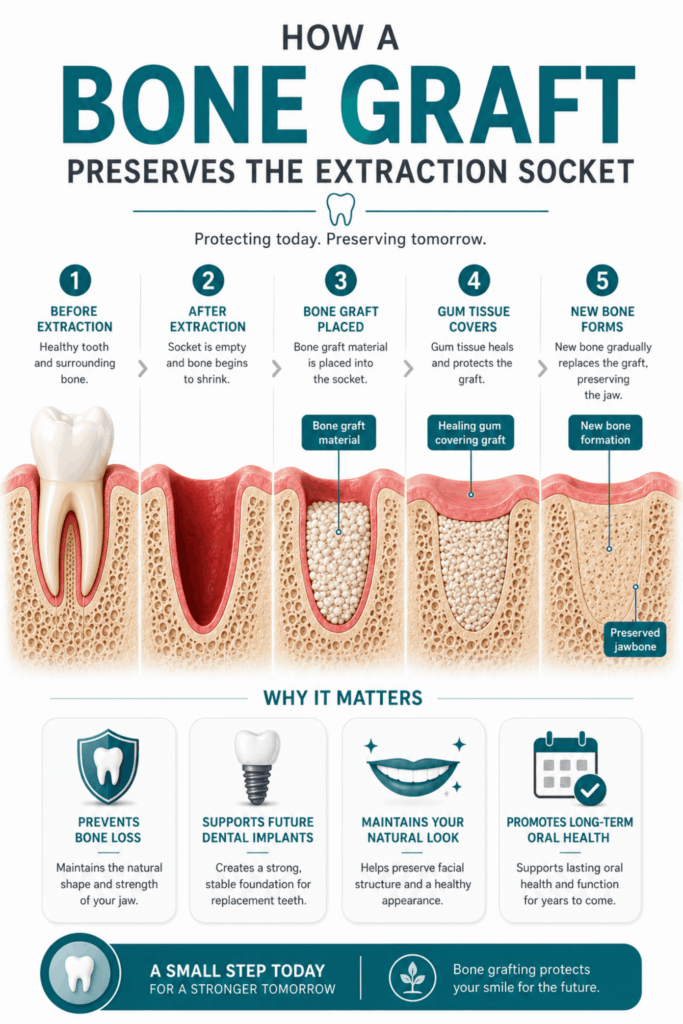
A bone graft after tooth extraction is a procedure that places bone graft material into the empty extraction socket immediately after a tooth is removed. Instead of leaving the socket to heal on its own, the graft supports the natural healing process and encourages your body to grow new bone in the area. The goal is not simply to fill the space but to preserve the jawbone after the tooth root is gone.
As the gum heals over the graft, your body gradually replaces the graft material with natural bone. This helps maintain the shape and strength of the extraction site, making it easier to support nearby teeth and, if needed, prepare the area for future dental implants or other tooth replacement options.
Why Dentists Recommend a Bone Graft After Tooth Extraction
After a tooth is extracted, the jawbone no longer receives the stimulation that the tooth root once provided during chewing. As a result, the bone naturally begins to shrink. Most bone loss occurs during the first few months after extraction, which can reduce both the height and width of the bone in your jaw.
A dental bone graft helps slow this process by preserving the extraction socket while new bone forms. Maintaining healthy bone volume can improve long-term oral health, preserve your facial structure, and provide sufficient bone if you later decide to replace the missing tooth with a dental implant. Even if you’re unsure about future treatment, preserving bone today can keep more options open tomorrow.
When Is a Bone Graft After Tooth Extraction Needed?
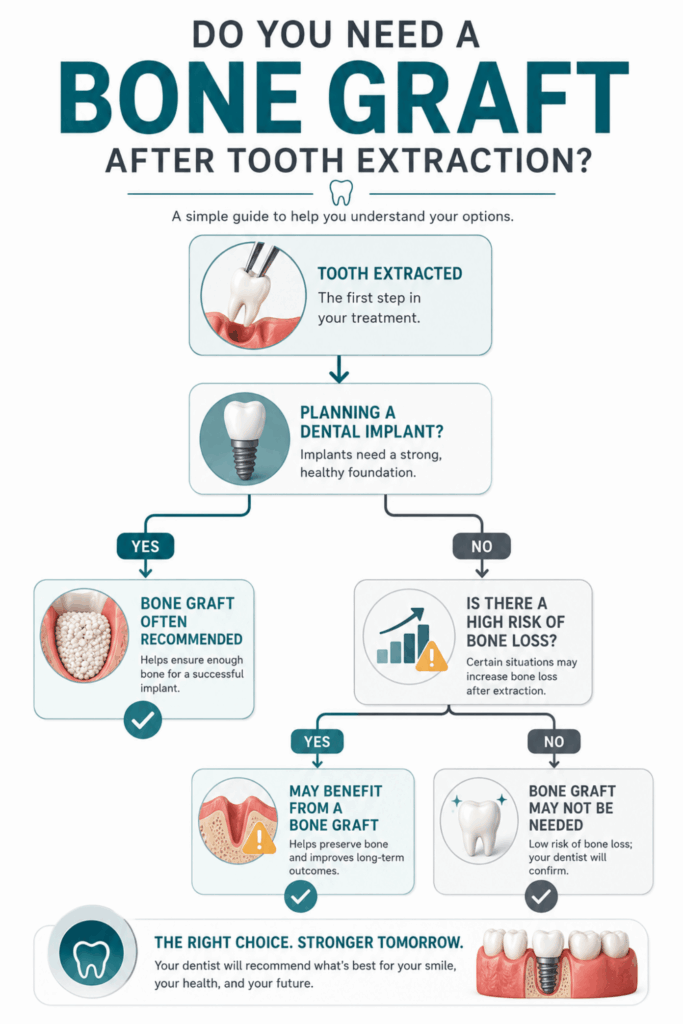
Not every tooth extraction requires a bone graft. Your dentist or oral surgeon considers several factors before recommending one, including the condition of your jaw bone, the location of the tooth, and your long-term treatment goals. The decision is based on preserving enough healthy bone where it matters most.
- You’re Considering a Dental Implant: If you plan on getting a dental implant to replace the missing tooth, preserving bone at the time of extraction often reduces the need for more extensive grafting later.
- The Tooth Has Severe Infection or Bone Loss: Advanced gum disease, large infections, or cysts may have already damaged the existing bone. A graft can help rebuild the area as it heals.
- A Large Extraction Socket Is Expected: Teeth with long roots, multiple roots, or significant surrounding bone loss may leave a larger socket that benefits from grafting.
- The Tooth Is in the Front of the Mouth: Preserving bone in visible areas helps maintain the natural contour of the gum and supports a more natural-looking future restoration.
- The Back of the Jaw Has Limited Bone: Bone in the back of the jaw can shrink quickly after extraction. Preserving it may improve future treatment options.
- Multiple Teeth Are Being Removed: When one or more teeth are extracted, maintaining bone volume becomes more important for supporting future dentures, bridges, or implants.
- You Already Have Reduced Bone Volume: Patients who have experienced previous tooth loss or existing bone loss may benefit from preserving every possible amount of healthy bone.
- Your Dentist Wants to Prevent Future Bone Loss: Even if you have not yet decided how to replace the missing tooth, preserving the bone now can make future treatment simpler and more predictable.
When You May Not Need a Bone Graft
Some patients heal well without a bone graft, especially when future tooth replacement is not planned or when there is already enough healthy bone to support the surrounding teeth. In these situations, the extraction socket may heal naturally without creating significant functional problems.
Your dentist may also decide that grafting is unnecessary if the tooth is removed from an area where some bone shrinkage is unlikely to affect appearance or future treatment. The best approach depends on your oral health, the amount of existing bone, and your long-term goals rather than following the same plan for every patient.
Benefits of Getting a Bone Graft After Tooth Extraction
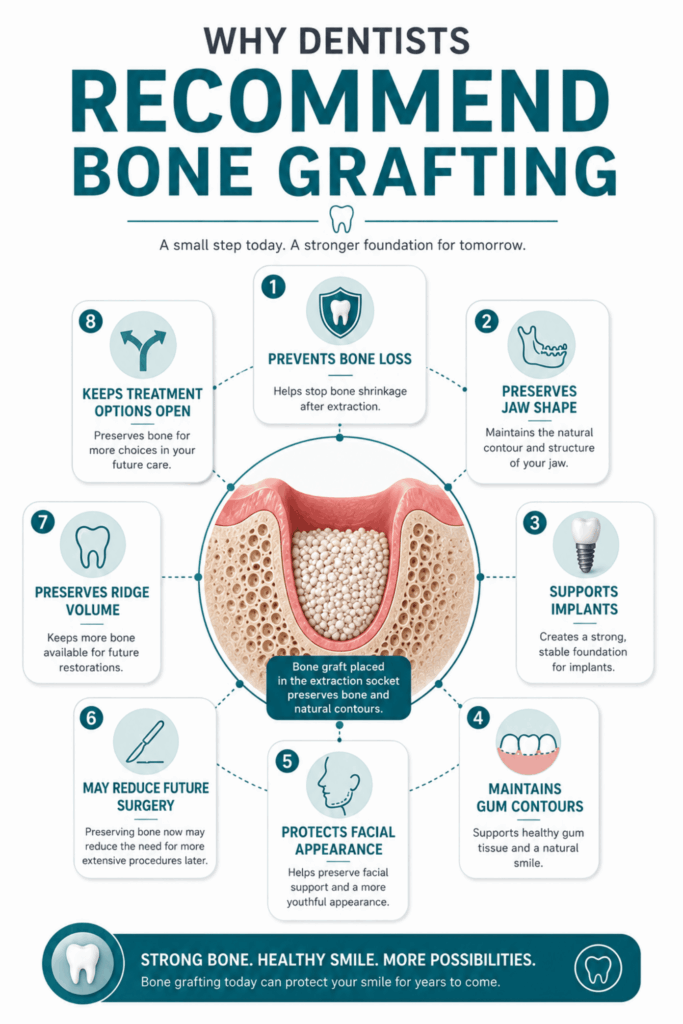
A bone graft offers more than short-term healing. By preserving the extraction site, it helps protect your jawbone and can make future dental treatment simpler and more predictable. Many of the benefits become even more valuable months or years after the tooth is removed.
- Helps Prevent Bone Loss: The graft supports bone regeneration and reduces the natural shrinkage that occurs after tooth extraction.
- Preserves Bone Volume: Maintaining the height and width of the jawbone creates a stronger foundation for future treatment.
- Improves Dental Implant Success: Adequate bone provides better support for dental implant placement and long-term stability.
- Maintains Natural Gum Contours: Preserving the underlying bone helps support the gum tissue, creating a more natural appearance after healing.
- Supports Facial Structure: Preventing excessive jawbone loss helps maintain the natural shape of your face over time.
- May Reduce Future Procedures: Preserving bone immediately after extraction can decrease the need for larger bone graft surgery before implant placement.
- Protects Nearby Teeth: Healthy bone helps support neighboring teeth and contributes to overall oral stability.
- Keeps Future Treatment Options Open: Even if you are not ready for a dental implant now, maintaining sufficient bone gives you more choices later.
What Happens During the Bone Graft Procedure?
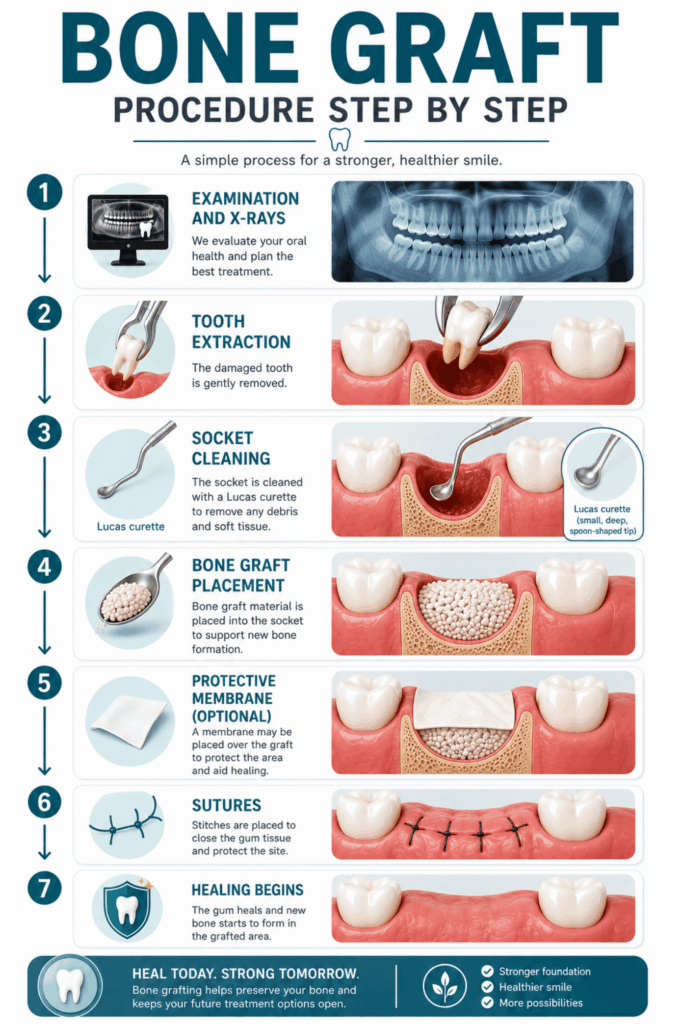
Knowing what happens during the procedure can make the experience feel much less intimidating. In most cases, a bone graft after a tooth extraction is completed during the same appointment, adding only a short amount of time to the overall dental procedure.
Although every case is different, the basic steps are similar from one patient to another.
Examination and Treatment Planning
Before treatment, your general dentist or oral surgeon examines the tooth, surrounding gum, and existing bone using a clinical examination and dental X-rays or 3D imaging when needed. They evaluate how much healthy bone remains, whether infection or gum disease is present, and whether you’re considering a dental implant in the future. This information helps determine whether a graft is recommended and which type of graft material is most appropriate.
Tooth Extraction and Bone Graft Placement
Once the tooth is removed, the extraction socket is carefully cleaned to remove infected tissue, damaged bone, or debris. The dentist then places the selected bone material into the empty socket, gently shaping it to fit the area. The graft acts as a scaffold that supports the body’s natural healing process while encouraging new bone growth over the coming months.
Closing the Site and Beginning Healing
After the graft is in place, your dentist may cover it with a protective membrane before closing the area with stitches when needed. This helps keep the graft stable while the gum begins to heal over the site. During the first few days, a blood clot forms, the initial healing process begins, and the graft gradually becomes incorporated into the surrounding bone as new bone tissue develops.
Types of Bone Graft Materials Used After Tooth Extraction
Several types of graft material can be used after a tooth extraction. Although the names may sound complicated, they all serve the same purpose: providing a framework that supports new bone growth while your body heals. Your dentist or oral surgeon will recommend the most appropriate option based on your oral health, the size of the extraction site, and your future treatment plans.
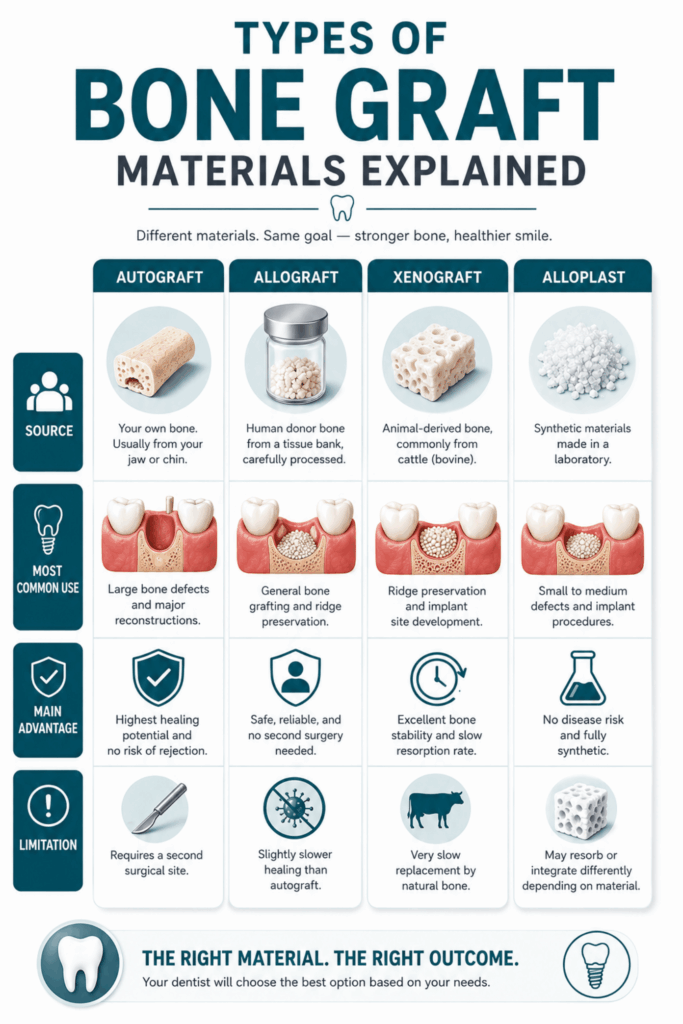
- Autograft (Your Own Bone): This type of bone graft uses bone taken from another area of your body. Because it contains your own living bone tissue, it has excellent healing potential, but it requires a second surgical site and is less commonly used for routine socket preservation.
- Allograft (Donor Bone): Donor bone, sometimes called cadaver bone, comes from carefully screened human tissue banks. It is thoroughly processed and sterilized, making it a safe and widely used option for dental bone graft procedures.
- Xenograft (Animal Bone): Most xenografts are made from purified bovine bone. The natural mineral structure provides a stable scaffold that supports bone regeneration as your body gradually replaces it with new bone.
- Alloplast (Synthetic Bone): Synthetic bone graft materials are manufactured from biocompatible minerals that encourage natural bone formation. They avoid the use of human or animal tissue while providing reliable support during healing.
- Combination Grafts: In some situations, dentists combine two or more graft materials to take advantage of the strengths of each. This approach may improve bone preservation in larger or more complex extraction sites.
Recovery After a Bone Graft Following Tooth Extraction
Recovery after a bone graft following tooth extraction is usually straightforward, and most patients return to normal daily activities within a day or two. Mild discomfort, swelling, minor bleeding, and tenderness around the graft site are common during the first few days and generally improve with prescribed or over-the-counter pain medication. Your dentist will provide post-operative instructions to help protect the graft while the area heals.
Although the gum often appears healed within a few weeks, the bone underneath takes much longer to mature. Over the following months, your body gradually replaces the graft material with natural bone, creating a stronger foundation for future dental implants or other restorations. Following your aftercare instructions carefully during this period gives the graft the best chance of long-term success.
Bone Graft Healing Timeline
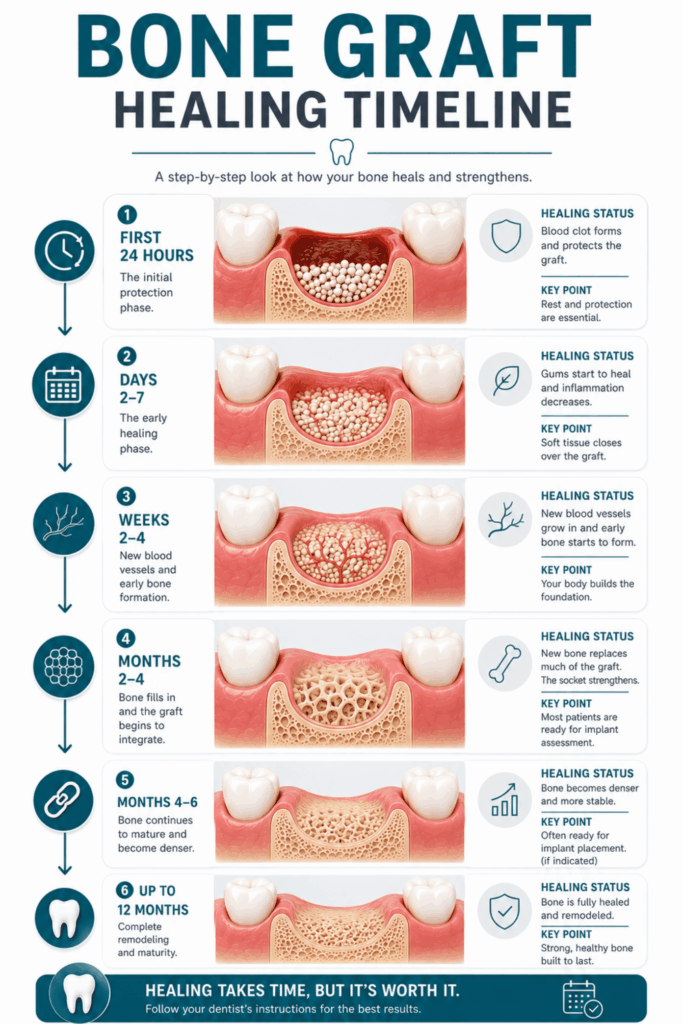
Healing varies from person to person depending on the size of the graft, your general health, and how well you follow your post-operative instructions. The timeline below provides a general idea of what most patients can expect.
- First 24 Hours: A blood clot forms inside the extraction socket, helping protect the graft and beginning the healing process. Mild bleeding and swelling are normal.
- Days 2–7: Swelling and discomfort usually reach their peak before gradually improving. The gum begins to seal over the graft site, and everyday activities become more comfortable.
- Weeks 2–4: Most soft tissue healing is complete, although the bone beneath the gum continues to develop. Any remaining tenderness usually continues to improve.
- Months 2–4: The graft becomes more integrated with the surrounding bone as your body produces new bone tissue. Follow-up visits may include X-rays to monitor healing.
- Months 4–6: Many patients have developed sufficient bone for dental implant placement, although this depends on the size of the graft and individual healing.
- Up to 12 Months: Bone remodeling continues even after the graft appears healed. Your jawbone gradually becomes stronger and more mature over time.
How to Care for a Bone Graft After Tooth Extraction
Proper aftercare protects the graft during its most vulnerable stage. Small daily habits can make a meaningful difference in how well the graft heals and how much healthy bone is preserved.
- Take Medications as Directed: Use pain medication, antibiotics, or other prescribed medicines exactly as instructed to reduce discomfort and lower the risk of infection.
- Protect the Blood Clot: Avoid vigorous rinsing, spitting, or drinking through a straw during the first 24 hours because these actions may disturb the healing socket.
- Eat Soft Foods: Choose foods such as yogurt, mashed potatoes, eggs, smoothies eaten with a spoon, soup, pasta, and oatmeal until chewing becomes comfortable. Avoid hard, crunchy, spicy, or sticky foods that could irritate the graft site.
- Chew on the Opposite Side: Keeping pressure away from the treated area reduces the chance of disturbing the graft while the gum heals.
- Practice Gentle Oral Hygiene: Brush your other teeth normally but avoid scrubbing directly over the graft site. Your dentist may recommend a saltwater rinse or an antimicrobial mouthwash after the first day.
- Avoid Smoking and Vaping: Tobacco and nicotine reduce blood flow to the healing tissues, increasing the risk of delayed healing and graft failure.
- Limit Strenuous Activity: Heavy lifting and intense exercise during the first few days may increase bleeding, swelling, or discomfort.
- Attend Follow-Up Visits: Scheduled appointments allow your dentist to monitor healing and address any concerns before they become larger problems.
Possible Risks and Complications
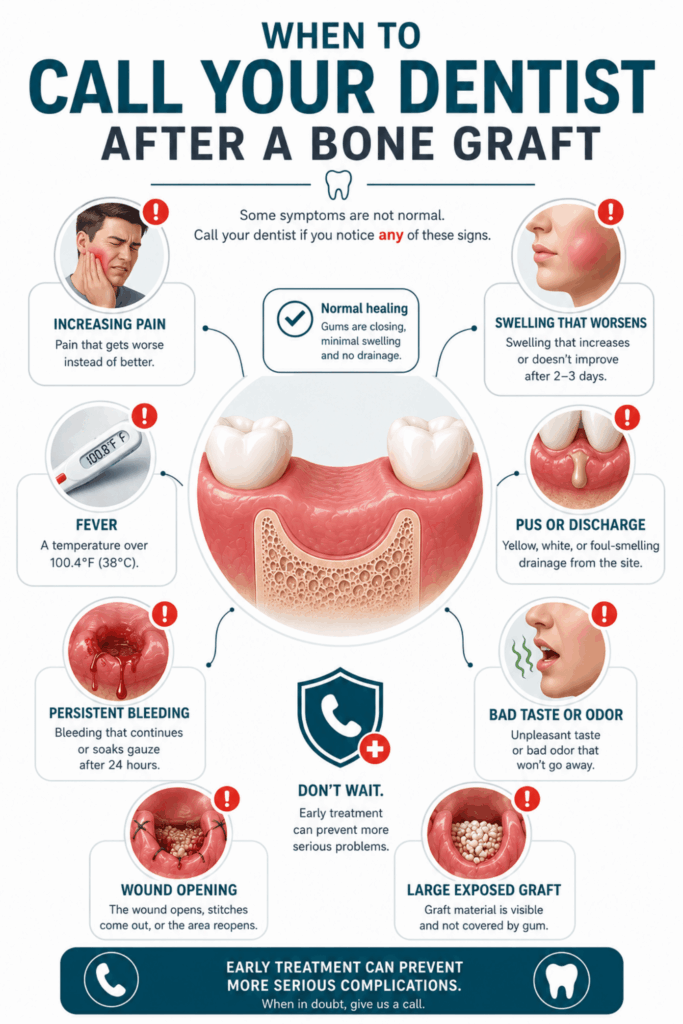
Bone grafting is considered a safe and predictable dental procedure, and serious complications are uncommon. However, like any oral surgery, there is a small risk of infection, delayed healing, prolonged discomfort, or graft failure. Recognizing warning signs early allows your dentist to treat problems before they become more serious.
- Persistent or Worsening Pain: Pain that becomes more severe instead of gradually improving should be evaluated.
- Increasing Swelling After Several Days: Swelling that continues to worsen rather than decrease may indicate infection or another complication.
- Pus or Drainage: Yellow or white drainage from the graft site requires prompt dental evaluation.
- Persistent Bleeding: Bleeding that continues despite following your aftercare instructions should be reported.
- Fever or Feeling Unwell: A fever, chills, or feeling generally sick may suggest an infection that needs treatment.
- Exposed Graft Material: A few tiny bone graft particles are often normal, but larger exposed areas or significant graft loss should be examined.
- Bad Taste or Persistent Bad Odor: Ongoing unpleasant taste or odor may be a sign of infection.
- The Graft Site Opens: If stitches come apart or the wound opens significantly, contact your dentist for advice.
How Much Does a Bone Graft After Tooth Extraction Cost?
The cost of a dental bone graft varies widely because every patient’s treatment is different. Factors such as the amount of bone needed, the type of graft material, whether additional procedures are required, and the experience of the dentist or oral surgeon all influence the final cost. Fees also vary by geographic location and dental practice.
If the graft is performed at the same time as the tooth extraction, treatment may be simpler than waiting until significant bone loss has occurred. Before proceeding, ask your dental office for a detailed treatment estimate and whether any portion of the procedure may be covered by your dental insurance. Understanding the costs in advance can help you compare treatment options and avoid unexpected expenses.
Can You Get a Dental Implant Without a Bone Graft?
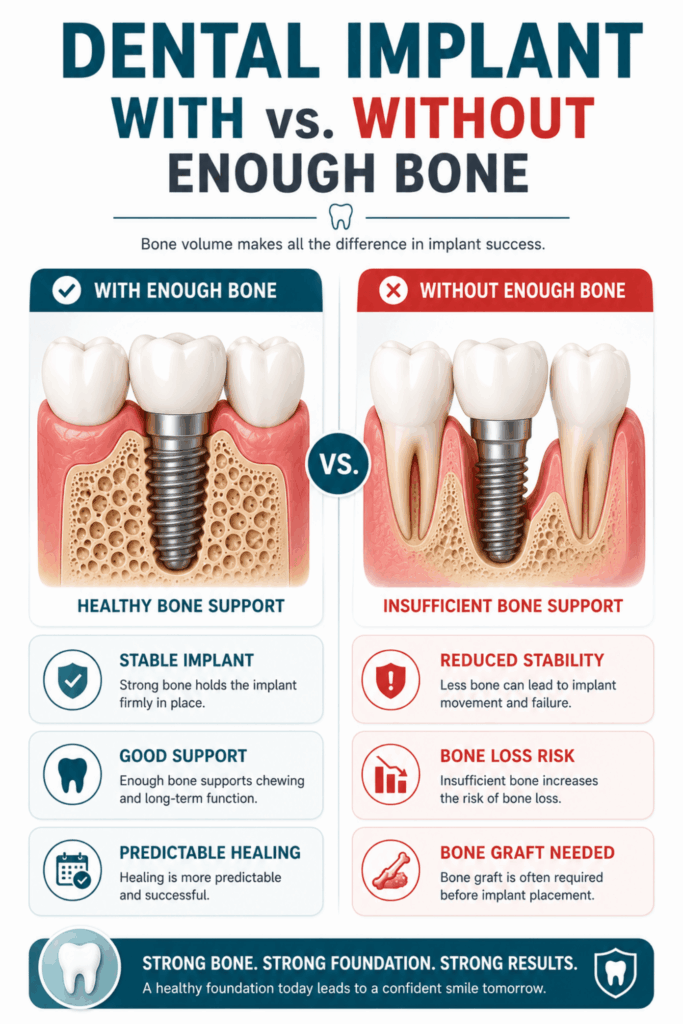
Yes, some patients can receive a dental implant without a bone graft if they already have sufficient healthy bone to support the implant securely. This is more likely when the implant is placed soon after tooth extraction or when very little bone has been lost. Your dentist will evaluate your bone volume using an examination and dental imaging before making this decision.
If too much bone has already been lost, placing an implant without rebuilding the area may reduce its long-term stability. In these situations, a bone graft helps create a stronger foundation before dental implant placement. The goal is not simply to place an implant but to provide enough healthy bone for it to function successfully for many years.
What Happens If You Skip a Bone Graft After Tooth Extraction?
Choosing not to have a bone graft allows the extraction socket to heal naturally, but some amount of bone shrinkage is expected. If you do not plan to replace the missing tooth, this may not create significant problems, especially in areas where appearance and future function are less affected.
However, if you later decide to get a dental implant, the loss of bone may make treatment more difficult. You could require a larger bone graft surgery months or even years later to rebuild the jaw before an implant can be placed. That does not mean skipping a graft is always the wrong decision; it simply means the best choice depends on your current oral health, your treatment goals, and whether preserving bone today could benefit you in the future.
Frequently Asked Questions About Bone Graft After Tooth Extraction
Can a Bone Graft Fail?
Yes, but bone graft failure is uncommon, especially when the procedure is performed under healthy conditions and patients follow their post-operative instructions. Smoking, uncontrolled diabetes, infection, poor oral hygiene, or excessive movement at the graft site can increase the risk. Contact your dentist if you experience worsening pain, increasing swelling, persistent drainage, fever, or if the graft appears to be coming out in large pieces.
Is It Normal to Feel Small Bone Graft Particles in My Mouth?
Yes. Tiny bone graft particles may occasionally work their way to the surface during healing, particularly during the first few weeks. This is usually normal and does not mean the graft has failed. However, if you notice a large amount of graft material coming out or develop increasing pain or swelling, schedule a follow-up visit.
Can I Smoke or Vape During Recovery?
No. Smoking and vaping reduce blood flow to the healing tissues, making it harder for your body to build new bone and increasing the risk of infection and graft failure. Most dentists recommend avoiding all nicotine products for at least two weeks, and longer whenever possible to support the best healing outcome.
What Foods Should I Eat While the Graft Heals?
Choose soft, easy-to-chew foods such as yogurt, mashed potatoes, scrambled eggs, oatmeal, pasta, smoothies eaten with a spoon, and soup that is not too hot. As the area becomes more comfortable, you can gradually return to your normal diet. Avoid hard, crunchy, sticky, or spicy foods until your dentist says the graft site has healed sufficiently.
When Can I Exercise Again?
Light daily activities are usually fine within a day or two, but strenuous exercise should be avoided for the first 48 to 72 hours. Heavy lifting and intense workouts can increase blood pressure, which may lead to bleeding, swelling, or discomfort around the graft site. Your dentist may recommend waiting longer after more complex procedures.
What Happens If Food Gets Stuck in the Graft Site?
Small food particles can sometimes collect near the extraction site, especially during the first week. Do not poke the area with toothpicks, fingers, or other objects because this can disturb the healing graft. Instead, follow your dentist’s instructions for gentle rinsing after the first 24 hours. If food remains trapped or you develop pain, swelling, or a bad taste that does not improve, contact your dental office.
Will My Body Reject the Graft Material?
No. Modern bone graft materials are designed to be highly biocompatible, so true immune rejection is extremely rare. Whether the graft comes from your own bone, a donor, an animal source, or a synthetic material, it acts as a scaffold that supports your body’s natural bone regeneration rather than becoming a permanent foreign object.
Can I Get Another Graft If the First One Doesn’t Work?
Yes. If a graft does not heal as expected, your dentist can often perform a second graft after identifying and treating the underlying cause. Improving factors such as infection control, oral hygiene, smoking cessation, or medical conditions can increase the likelihood of success the next time.
Can a Bone Graft Be Done Months or Years Later?
Yes. A bone graft can still be performed months or even years after a tooth has been removed. However, delayed grafting usually focuses on rebuilding bone that has already been lost, which may require a larger or more complex procedure than placing a graft immediately after extraction. Preserving the bone at the time of extraction is often simpler, but delayed treatment remains a successful option for many patients.
Final Thoughts
A bone graft after tooth extraction is an effective way to preserve the jawbone while the extraction site heals. Although it is commonly recommended for patients planning a dental implant or those at risk of significant bone loss, it is not necessary after every tooth extraction. The right choice depends on your existing bone, oral health, and future treatment goals.
If your dentist recommends a bone graft, don’t hesitate to ask why it may benefit your specific situation. Understanding your bone health, the expected healing process, and your long-term tooth replacement options will help you make an informed decision that supports your smile for years to come.
