A cavity that forms near the gums often does not look like a hole at first. It may appear as a faint dark line, a rough edge, or a spot that feels sensitive when brushing. Cavities at gum line develop where the tooth meets the gum, an area that is harder to clean and easier for decay to begin without obvious warning signs.
This type of tooth decay behaves differently from cavities on the biting surface. The enamel near the gum is thinner, and plaque tends to collect along the gum line. As bacteria stay in contact with the tooth longer, decay can spread sideways or downward before pain appears. Many people assume the problem is gum irritation, not a cavity, which delays proper care.
Below, we explain how decay at the gum line starts, what early signs usually show up first, how dentists confirm the problem, and what treatment looks like at each stage. Understanding this pattern helps you recognize changes early and protect both your teeth and gum health before more serious damage occurs.
What Are Cavities at the Gum Line?
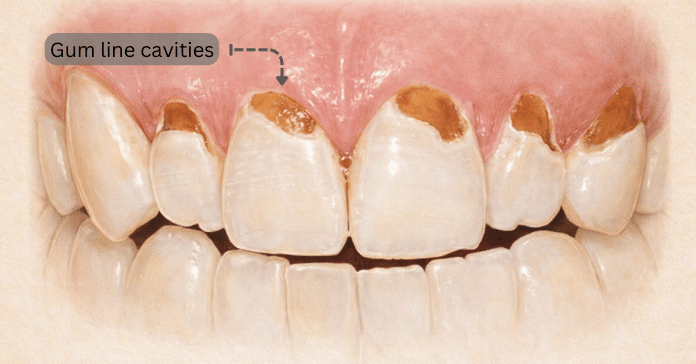
Cavities at the gum line are a type of cavity that forms where the tooth meets the gum tissue, not on the biting surface of your teeth. This area is considered a smooth surface cavity. Unlike biting surface cavities, decay here spreads sideways or downward along your gumline instead of drilling straight into the tooth. Because the tooth enamel is thinner near the gum line, this area is more vulnerable to decay and damage.
Why Tooth Decay Forms Near the Gum Line
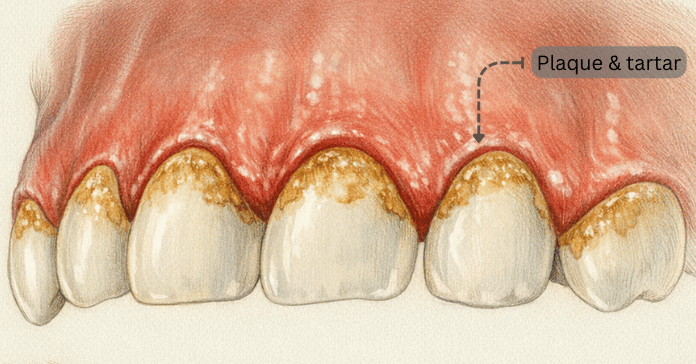
Tooth decay at the gum line starts because plaque and bacteria in your mouth collect easily near the gum line. Brushing often misses this narrow edge where the tooth meets the gum tissue, creating an environment for decay. When plaque stays in place, acid attacks the surface of your teeth and weakens the tooth structure. Over time, a cavity forms near the gum line and may extend beneath the gumline before pain begins. This is why gumline decay can progress without clear warning signs.
How Enamel Breaks Down Along the Gum Line
The enamel near the gum line is thinner than the enamel on the biting surface. Once acid exposure continues, the enamel wears away faster, allowing decay to reach softer tooth layers. If the cavity extends deeper, it can reach the tooth root, which has no enamel protection. When decay reaches this area, cavities become more common and harder to treat. This is why decay near the gumline behaves differently from other cavities.
Common Causes of Gumline Cavities
Gumline cavities occur due to a combination of oral hygiene issues and changes in gum position. The most common causes of gumline cavities include:
- Severe Plaque Build-Up on Teeth: Plaque that remains along the gumline creates constant acid exposure that weakens tooth enamel.
- Gum Recession: When gum tissue pulls back due to gum disease or aging, the root of the tooth becomes exposed and prone to decay.
- Poor Brushing Technique: Brushing that misses along your gumline allows bacteria to remain in place near the gum.
- Dry Mouth: Reduced saliva lowers natural protection against bacteria and makes decay near the gum more likely.
- Irregular Dental Care: Skipping regular dental checkups allows early gumline cavities to grow unnoticed.
Role of Gum Health in Tooth Decay
Healthy gum tissue protects the tooth surface near the gum line. When gum disease develops, the gum pulls away from the tooth, exposing vulnerable areas of the tooth structure. This exposure increases the risk of decay and gum disease occurring together. Tooth decay and gum disease often progress side by side, especially along the gumline. Protecting healthy gum tissue lowers the chance of cavities forming in this area.
Early Symptoms of Cavities Near the Gum
Early symptoms of gumline cavities are subtle and easy to overlook. Common signs include:
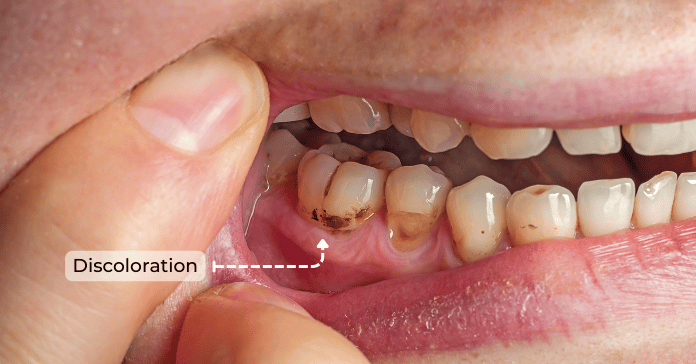
- Color Changes Along the Gumline: Brown, yellow, or dark lines may appear where the tooth meets the gum.
- Sensitivity Near the Gum Line: Cold, sweet, or brushing triggers discomfort near the gum.
- Rough Tooth Surface: The surface of your teeth may feel uneven or chipped near the gumline.
- Localized Gum Irritation: Gum tissue near the cavity may appear inflamed or tender.
Sensitivity Near the Gum Line
Sensitivity occurs when decay near the gum line exposes dentin or the tooth root. Cold drinks, sweet foods, or brushing can trigger sharp discomfort. Sensitivity near the gum often signals early tooth decay rather than simple gum irritation. This discomfort usually appears before visible damage becomes obvious.
How Dentists Diagnose Decay at the Gum Line
Dentists treat gumline decay by first identifying it during a dental checkup. A dentist examines along the gumline using visual inspection and dental tools to detect soft or damaged areas. Dental X-rays may be used if decay reaches beneath the gum or spreads between teeth, including cavities between teeth. Regular dental checkups allow dentists to find gumline cavities early, before more serious damage occurs.
Treatment Options for Cavities at the Gum Line
Treatment options depend on how far the cavity extends and whether the tooth root is involved. Dentists treat decay at this stage using different approaches:
- Regular Dental Filling: Small cavities are repaired with a filling that restores the tooth surface.
- Root Surface Treatment: When decay reaches the root, special materials protect the exposed area.
- Minor Gum Surgery: If the cavity extends beneath the gumline, gum surgery may be needed to access and clean the area.
- Advanced Dental Care: When a root cavity can’t be addressed with simple treatment, more complex procedures may be required.
How Dentists Treat Early Gum Line Cavities
Early gum line cavities are treated with a dental filling placed carefully near the gum. Dentists focus on preserving healthy tooth structure while sealing the area of decay. Smooth surface cavities are cavities that respond well to early intervention. Treating decay early helps protect the rest of your teeth and reduces long-term dental problems.
Treating Advanced Tooth Decay at the Gum
When decay progresses and the cavity extends beneath the gumline, treatment becomes more complex. Dentists may need to reshape gum tissue or perform minor gum surgery to reach the area of decay. If decay reaches deep into the tooth root, treatment aims to stabilize the tooth and prevent tooth loss. Deeper decay requires more advanced dental care.
What Happens After Treatment
After treatment, mild teeth sensitivity after filling is common for a short time. The gum tissue heals as plaque control improves and the area stabilizes. Dentists often recommend follow-up care to monitor healing and prevent new decay. Maintaining good oral hygiene supports recovery and protects treated teeth.
Risks of Ignoring Cavities Along the Gum Line
Ignoring cavities along your gumline allows decay to spread downward and affect the tooth root. Over time, decay progresses and weakens the tooth structure. Cavities can affect the rest of your teeth and increase the risk of tooth decay, gum disease, and dental abscess. Untreated cavities may lead to tooth loss and the need for dental implants.
How to Prevent Gumline Cavities
Preventing gumline cavities depends on daily habits that protect both tooth enamel and gum tissue. Simple, consistent care lowers plaque buildup and reduces the risk of decay forming near the gumline.
- Brush Along the Gumline Daily: Use a soft-bristled toothbrush and angle it slightly toward the gums to clean where the tooth meets the gum tissue. This removes plaque before it hardens and damages enamel.
- Floss Every Day: Floss clears plaque and food particles from between teeth and along the gumline where a brush cannot reach. This step is essential to prevent decay near the gumline.
- Use Fluoride Toothpaste: Fluoride strengthens tooth enamel and helps slow early decay on smooth surfaces near the gums. Regular use improves resistance to acid attacks.
- Control Plaque Buildup: Consistent oral hygiene prevents severe plaque buildup on teeth, which creates an environment for decay. Plaque control is key to protecting vulnerable areas.
- Manage Dry Mouth: Drink water regularly and address dry mouth causes, since saliva helps neutralize acids and protect teeth. Low saliva increases the risk of gumline decay.
- Maintain Healthy Gums: Treat gum disease early and keep gum tissue healthy to prevent recession that exposes the tooth root. Healthy gums shield areas prone to decay.
- Schedule Regular Dental Checkups: Routine dental visits allow early detection and prevention of gumline cavities. Professional cleanings remove plaque that daily care can miss.
Brushing Techniques for the Gum Line
Proper brushing focuses on a gentle angle toward the gum line. The brush should clean along the gumline without damaging gum tissue. This technique removes plaque from vulnerable areas and supports healthy gums. Brushing correctly protects teeth and gums from health issues over time.
Why Flossing Matters Near the Gum
Floss removes plaque from between teeth and along your gumline, where cavities often form. Flossing prevents tooth decay at the gum line and supports gum health. Prevent tooth decay by cleaning areas that brushing misses. This habit is essential for preventing gumline decay.
When to See a Dentist
If sensitivity, discoloration, or roughness appear near the gum line, schedule a dental checkup. Recurring symptoms near the gumline mean professional evaluation is needed. Regular dental visits allow dentists to treat and prevent cavities before decay reaches deeper tooth layers. Early care protects your teeth and maintains long-term oral health.
Final Thoughts on Cavities at the Gum Line
Cavities at the gum line often start small, but they follow a clear pattern. Plaque buildup, gum recession, dry mouth, and poor cleaning along the gumline all play a role in how decay begins and spreads. Early changes like sensitivity, dark lines, or rough edges are common symptoms of gum problems and should not be ignored. When caught early, dentists can treat tooth decay with simple care and protect both the tooth and the surrounding gum tissue.
The good news is that most causes of gumline cavities are preventable. Daily brushing along the gumline, flossing, and regular dental visits help prevent gum issues and keep teeth and gums healthy. If you notice symptoms of gum changes or discomfort near the gums, seeing a dentist early makes treatment easier and more effective. Consistent care and early action are the best ways to protect your smile and prevent long-term dental problems.
