Pain or swelling around a partly erupted wisdom tooth can make eating, brushing, and even opening your mouth uncomfortable. Pericoronitis treatment usually starts with a dentist cleaning and flushing beneath the gum flap where food and bacteria collect. Pain control may help, while antibiotics are generally reserved for an infection that is spreading or causing wider symptoms.
Treatment does more than settle the current flare-up. Your dentist must also decide whether the tooth is likely to erupt into a useful position. A mild first episode may improve with local care and better cleaning. If the problem keeps returning, removing the gum flap or the wisdom tooth may offer a longer-term solution. The right choice depends on the tooth’s position, the available space, and the severity of the infection.
Home measures may ease discomfort for a short time, but they cannot show why the area became inflamed or whether infection has spread. A dental examination, and sometimes an X-ray, helps answer those questions. Understanding what happens at the first visit makes it easier to compare the treatment options that may follow.
How Pericoronitis Treatment Works
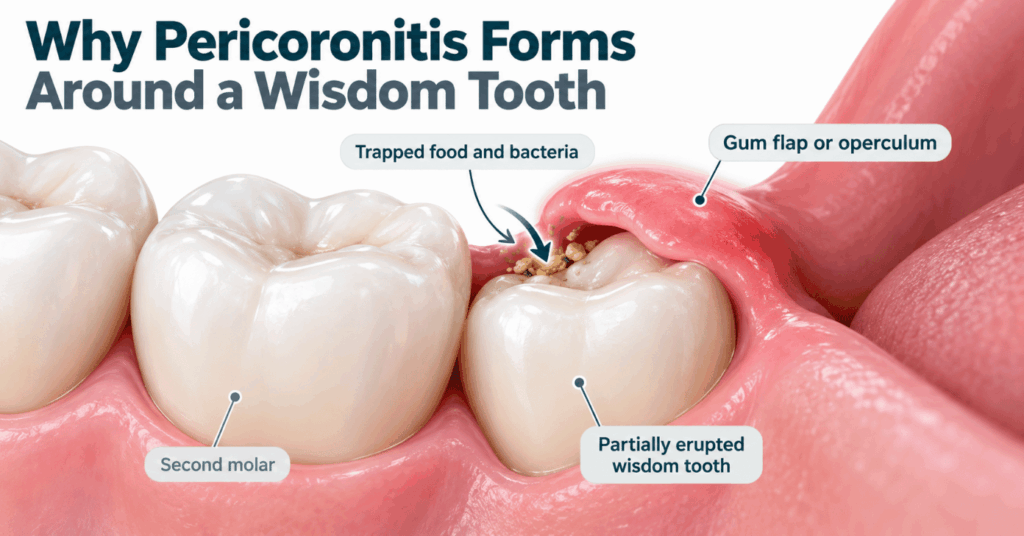
Pericoronitis treatment has two goals. The first is to control the current pain and inflammation around a partially erupted tooth, usually a lower wisdom tooth. The dentist may clean beneath the flap of gum tissue, flush out trapped debris, manage pain, and check whether the infection has spread.
The second goal is to prevent another episode. This may mean improving access for oral hygiene, monitoring the third molar as it erupts, removing the gum flap, or extracting the wisdom tooth. The best treatment depends on the severity of the symptoms of pericoronitis, the tooth’s position, the space available, and whether the problem is new or recurrent.
What Happens at the First Dental Visit
Your dentist will first determine whether the inflammation is limited to the gum tissue or has spread beyond it. The immediate priority is to reduce pain, remove the local source of irritation, and identify any signs that require additional treatment.
Dental Examination and X-Rays
Pericoronitis is usually diagnosed clinically. The dentist examines the gum tissue around the partially erupted tooth and checks for redness, swelling, tenderness, trapped food, discharge, or a bad taste. They may also assess your temperature, lymph nodes, ability to open your mouth, and comfort when swallowing.
The dentist will check whether an upper tooth bites against the swollen gum flap. They may also take an X-ray to evaluate the position of the wisdom tooth, its roots, the nearby second molar, and the surrounding bone. A routine two-dimensional X-ray is often sufficient. Three-dimensional imaging is reserved for selected cases in which more detail could change the treatment plan.
Cleaning and Irrigation Under the Gum Flap
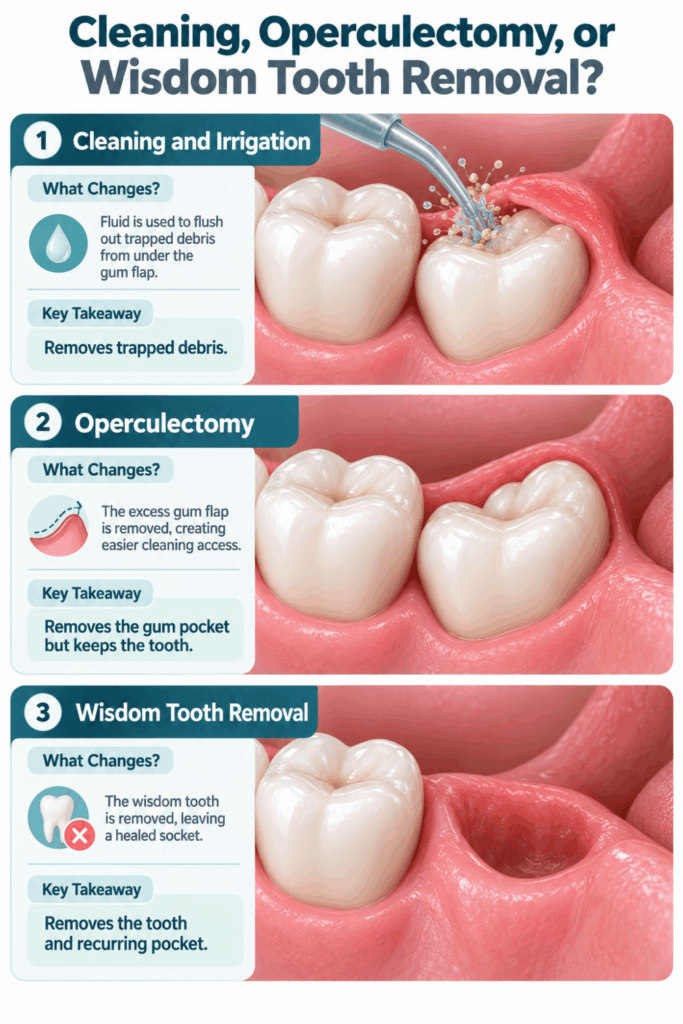
Local cleaning is often the first active step in treating pericoronitis. It targets the food, plaque, and bacteria trapped under the operculum, the flap of gum tissue covering part of the tooth.
A typical appointment may include:
- Examining the Pocket: The dentist gently checks the depth of the space beneath the gum flap and looks for trapped debris or discharge.
- Flushing the Area: The pocket is irrigated to loosen and remove food, plaque, and other material.
- Cleaning Accessible Surfaces: The exposed part of the molar and nearby teeth are cleaned without forcing instruments into inflamed tissue.
- Checking for Drainage: If pus is present, the dentist determines whether it can drain through the existing pocket or needs further treatment.
- Giving Cleaning Instructions: You receive advice on keeping the area clean without injuring the swollen gum.
Cleaning treats the source directly. Antibiotics may help in selected severe cases, but they cannot remove debris trapped beneath a gum flap.
Pain Relief and Bite-Related Irritation
Nonprescription pain relievers can make eating, sleeping, and cleaning easier while the local treatment begins to work. The American Dental Association’s guidance on acute dental pain supports nonopioid medicines, particularly nonsteroidal anti-inflammatory drugs when medically appropriate, as first-line options for many types of acute dental pain.
However, ibuprofen and similar medicines are not suitable for everyone. Kidney disease, stomach ulcers, blood-thinning medication, pregnancy, allergies, and some other conditions can change what is safe. Acetaminophen also has dose limits and may be unsuitable for people with certain liver problems. Follow the product label and ask a dentist, physician, or pharmacist if you are unsure.
An opposing upper tooth may bite against the swollen tissue over a lower wisdom tooth. This repeated trauma can keep the area painful even after debris has been removed. The dentist will assess the bite and decide whether the irritation requires treatment.
Pericoronitis Treatment for Mild, Severe, and Recurrent Cases
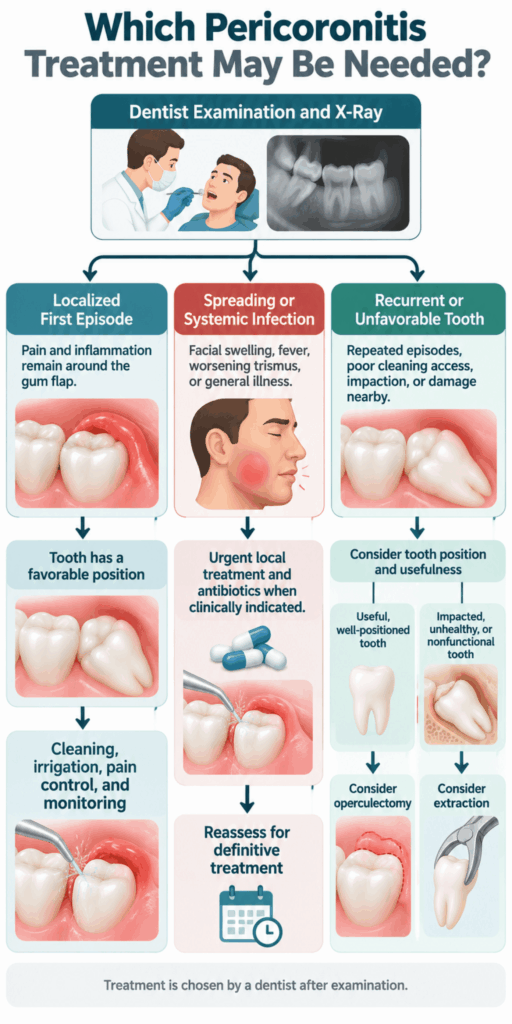
The management of pericoronitis changes according to the clinical situation. The table shows the usual treatment pathway, but it cannot replace an individual examination.
| Clinical Situation | Likely Dental Care | Possible Next Step | Follow-Up |
|---|---|---|---|
| Mild, localized inflammation | Cleaning and irrigation, oral hygiene advice, and suitable pain control | Monitor the wisdom tooth if it can erupt into a healthy position | Review if symptoms persist, worsen, or return |
| Severe or spreading infection | Urgent local treatment, assessment for drainage, and antibiotics when clinically indicated | Definitive treatment after the infection and swelling are controlled, or sooner when safe and appropriate | Close review based on the severity and response |
| Recurrent or chronic pericoronitis | Control the current episode and assess the tooth with an examination and X-ray | Consider operculectomy or wisdom tooth extraction | Planned follow-up to check healing and prevent another episode |
A mild first episode does not automatically mean that the wisdom tooth must be removed. Repeated inflammation, poor tooth position, limited cleaning access, or damage to the neighboring molar makes definitive treatment more likely.
When Are Antibiotics Needed in Pericoronitis Treatment?
Antibiotics are not routinely required when inflammation remains localized around the gum flap and the dentist can treat the source with cleaning and irrigation. Evidence-based recommendations for pericoronitis management favor local treatment first and reserve systemic antibiotics for situations in which the infection is spreading or affecting the patient more widely.
A dentist may consider prescribing antibiotics when there is:
- Spreading Swelling: Swelling extends into the cheek, jaw, face, or neck instead of remaining around the tooth.
- Fever or General Illness: The patient has a fever, feels unwell, or shows other systemic signs of infection.
- Cellulitis: The infection is spreading through the soft tissues rather than forming a small, localized area.
- Significant Trismus: Inflammation makes it difficult to open the mouth, particularly when the restriction is worsening.
- Tender Lymph Nodes: Enlarged or painful lymph nodes may support concern about infection beyond the local gum pocket.
- Higher Medical Risk: Diabetes that is not well controlled, immune suppression, or another medical concern may change the dentist’s treatment threshold.
A dentist chooses the medication according to the clinical findings, allergies, pregnancy status, medical history, local prescribing guidance, and possible drug interactions. Do not use leftover antibiotics or medication prescribed to another person.
A systematic review of antibiotic prescribing for pericoronitis found that antibiotics are often used more widely than evidence-based recommendations support. Inappropriate pericoronitis treatment can expose patients to side effects and contribute to antibiotic resistance without correcting the cause beneath the gum flap.
Why Antibiotics Alone May Not Prevent Another Episode
Antibiotics can help control a spreading infection, but they do not change the position of a partially erupted wisdom tooth or make a deep gum pocket easier to clean. Symptoms may improve and then return once food and plaque collect beneath the tissue again. A follow-up examination is still important so the dentist can decide whether monitoring, operculectomy, or extraction offers a better long-term solution.
Can Pericoronitis Heal Without Surgery?
Mild pericoronitis may settle without surgery when professional cleaning removes the trapped material, and the tooth can continue erupting into a useful, easy-to-clean position. Good oral hygiene and regular dental monitoring can then help prevent pericoronitis from returning.
However, improvement does not always mean that the underlying problem has disappeared. If the tooth remains partially covered, impacted, or difficult to reach, another episode may develop. Surgery is not necessary for every first episode, but repeated or non-transient pericoronitis often leads the dentist to discuss a more definitive treatment.
When Is Operculectomy Used in Pericoronitis Treatment?
An operculectomy removes the flap of gum tissue covering part of a partially erupted tooth. It may improve cleaning access and remove the pocket where food and bacteria collect. It is most useful when the wisdom tooth is in a favorable position and has enough space to erupt or remain functional.
Important points include:
- Patient Selection: The dentist assesses whether the third molar is upright, useful, healthy, and likely to remain easy to clean after the gum heals.
- Local Anesthesia: The area is numbed before the excess tissue is removed. Patients may feel pressure or movement but should not feel sharp pain during the procedure.
- Removal of the Gum Flap: The dentist or oral surgeon removes the operculum using an appropriate surgical method and cleans the area around the tooth.
- Short-Term Healing: Mild soreness, tenderness, and limited swelling may occur as the gum heals. The dentist provides cleaning, eating, and pain-control instructions.
- Risk of Regrowth: Gum tissue may grow over the tooth again if the molar remains partly trapped or lacks enough room to erupt.
- Need for Reassessment: Repeated inflammation after an operculectomy may indicate that keeping the tooth is not a predictable long-term solution.
Operculectomy is not simply a smaller version of extraction. It preserves the tooth, so its position and long-term value matter. If the molar is severely tilted, impacted, decayed, or damaging the neighboring tooth, removing only the gum flap may not correct the main problem.
When Is Wisdom Tooth Removal Recommended?
Wisdom tooth extraction may be recommended when pericoronitis keeps returning or when the tooth is unlikely to erupt into a healthy, functional position. Removal eliminates both the affected tooth and the pocket where debris repeatedly becomes trapped.
The NICE guidance on wisdom tooth extraction states that a first episode of pericoronitis, unless particularly severe, is not by itself an indication for surgery. A second or later episode may provide a stronger reason to consider removal. The final decision still depends on the examination, X-ray findings, symptoms, medical history, and surgical risks.
A dentist may discuss extraction when there is:
- Recurrent Pericoronitis: Pain and swelling return despite cleaning and appropriate dental care.
- Unfavorable Tooth Position: The wisdom tooth is impacted, tilted, or blocked from erupting normally.
- Poor Cleaning Access: The area remains difficult to clean and repeatedly traps food and plaque.
- Disease in the Wisdom Tooth: The tooth has decay, gum disease, or another condition that reduces its long-term value.
- Damage to the Second Molar: Food trapping, decay, gum loss, or root damage affects the tooth directly in front of the wisdom tooth.
- Severe Previous Infection: A prior episode caused significant swelling, restricted mouth opening, or spreading infection.
- Limited Benefit From Keeping the Tooth: The molar does not contribute to chewing or cannot be maintained in good oral health.
Extraction should follow a discussion of benefits, risks, alternatives, and expected recovery. A general dentist may remove a straightforward wisdom tooth or refer a complex case to an oral surgeon.
Can a Wisdom Tooth Be Removed During an Active Infection?
An active episode does not create a universal rule that extraction must always be delayed. In some cases, the dentist or oral surgeon can remove the source safely during the acute stage. This may be reasonable when access is adequate, the patient can open comfortably, and the procedure is not expected to create unnecessary risk.
In other cases, marked swelling, severe trismus, medical concerns, or difficult surgical access may make initial cleaning, drainage, and infection control more appropriate. The tooth can then be removed after the acute symptoms settle. Timing should be based on the individual examination rather than the assumption that every infected tooth must wait.
What If the Tooth Is Close to a Nerve?
The roots of a lower wisdom tooth may lie close to the inferior alveolar nerve, which supplies feeling to the lower lip and chin. Dentists usually begin with a two-dimensional X-ray and may request a cone-beam CT scan if more detail could change the surgical plan. In selected cases, a coronectomy, removing the crown while leaving suitable roots in place, may reduce nerve risk. UCLH guidance on wisdom tooth imaging and coronectomy explains when specialists may consider this alternative.
What Can You Do While Waiting for Dental Care?
Home remedies can help with discomfort, but they are temporary support rather than a complete solution to pericoronitis. Arrange dental care, especially if pain or swelling is increasing.
While waiting:
- Rinse Gently: Use warm salt water to rinse the area without forceful swishing. Spit it out rather than swallowing it.
- Keep the Area Clean: Use a small, soft toothbrush to clean accessible surfaces gently. Do not force sharp objects beneath the gum tissue.
- Choose Comfortable Foods: Eat softer foods and chew on the other side if pressure on the inflamed area hurts.
- Use Pain Relief Safely: If you can take nonprescription pain medicine, follow the label. Ask a pharmacist or healthcare professional if you have medical conditions, take other drugs, or are pregnant.
- Avoid Smoking: Smoking can irritate the tissues and interfere with healing.
- Do Not Apply Aspirin to the Gum: Direct contact can burn and damage the soft tissue.
- Avoid Leftover Antibiotics: They may be inappropriate, expired, or unable to treat the source of the problem.
- Keep Your Appointment: Reduced pain does not confirm that the pocket is clean or that the tooth can erupt normally.
If facial swelling is growing or you feel increasingly unwell, do not rely on home care while waiting for a routine appointment.
How Long Does Pericoronitis Treatment Take to Work?
The response depends on how severe the inflammation is and which treatment you receive. Localized symptoms may begin to improve after the dentist removes trapped debris and reduces irritation. A spreading infection, operculectomy, or wisdom tooth extraction involves a different recovery pattern.
Pain, swelling, mouth opening, and the ability to eat should generally move in the right direction after proper treatment. Contact the dental office if symptoms remain unchanged, become worse, or return after improving.
Recovery After Cleaning or Medication
Tenderness may not disappear immediately after irrigation because the gum tissue is still inflamed. Even so, pain, swelling, bad taste, and restricted mouth opening should begin to improve rather than intensify. Take prescribed medication exactly as directed, complete any requested review, and contact the dentist if discharge, fever, spreading swelling, or difficulty opening the mouth persists.
Recovery After Operculectomy
The gum may feel sore after the local anesthetic wears off, and chewing near the site may be uncomfortable for a short period. Keep the area clean according to the dentist’s instructions and attend follow-up so the dentist can check healing and whether the tooth remains accessible.
Helpful aftercare may include:
- Choose Soft Foods: Avoid foods that are hard, sharp, or likely to become trapped near the healing gum.
- Clean as Directed: Brush nearby teeth carefully and use any prescribed or recommended rinse as instructed.
- Protect the Area: Avoid picking at the surgical site with your tongue, fingers, or cleaning tools.
- Watch for a New Flap: Tell your dentist if gum tissue again begins covering the tooth or trapping food.
- Report Worsening Symptoms: Increasing pain, swelling, bleeding, discharge, fever, or illness needs reassessment.
Recovery After Wisdom Tooth Removal
Soreness, swelling, bruising, jaw stiffness, and discomfort with chewing can occur after extraction. According to NHS wisdom tooth removal and recovery guidance, pain and swelling should usually start improving after the first one or two days, although some symptoms may remain for up to two weeks. More complex oral surgery may require a longer break from normal activities.
Follow the surgeon’s instructions on cleaning, food, smoking, rinsing, activity, and pain medicine. Seek advice if pain becomes severe after initially improving, swelling keeps increasing, bleeding does not stop, or you develop fever, pus, a bad taste, or a feeling of illness. These findings can indicate dry socket, infection, or another postoperative problem.
Can Pericoronitis Come Back After Treatment?
Pericoronitis can return after cleaning or antibiotics if the flap of gum tissue still covers part of the tooth. The same pocket can trap food and plaque again. Chronic pericoronitis may cause milder symptoms than an acute flare, but repeated inflammation still deserves assessment.
An operculectomy may lower the risk when the tooth is well positioned, although the tissue can regrow. Extraction provides the most definitive solution at the affected site because it removes the tooth and the pocket around it.
To reduce recurrence:
- Clean Behind the Second Molar: Angle a small, soft toothbrush toward the back of the mouth to reach the exposed wisdom tooth.
- Follow Professional Instructions: Use an irrigation device or antimicrobial rinse only if your dental professional recommends it and shows you how.
- Maintain Good Oral Hygiene: Brush twice daily and clean between reachable teeth to limit plaque buildup.
- Attend Follow-Up Visits: Monitoring helps identify food trapping, decay, gum disease, or another developing episode.
- Discuss Repeated Symptoms: Do not manage every flare with home remedies or repeated antibiotics. Recurrent cases may need definitive treatment.
What Happens If Pericoronitis Is Left Untreated?
Mild inflammation may remain localized, settle temporarily, or keep returning. Repeated episodes can interfere with eating and cleaning and may contribute to decay or gum disease around the wisdom tooth and the neighboring second molar.
In severe cases, infection may spread into the cheek, jaw, or deeper spaces of the face and neck. Such complications are uncommon, but they can become serious and, in rare situations, life-threatening. Increasing swelling, fever, marked difficulty opening the mouth, trouble swallowing, or trouble breathing requires prompt escalation rather than continued home care.
When Should You Seek Urgent Care?
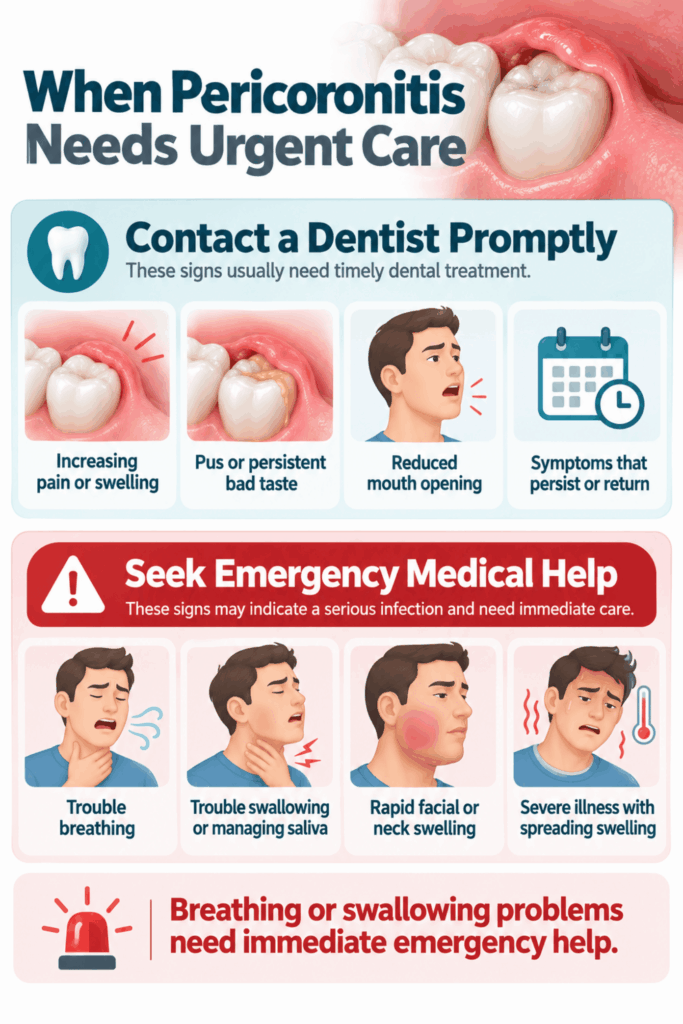
A sore gum around a wisdom tooth is not always an emergency. However, worsening symptoms or signs that infection is extending beyond the local gum pocket should change how quickly you seek treatment.
Contact a Dentist Promptly
Arrange a prompt dental assessment if you notice:
- Increasing Pain: Pain becomes stronger, spreads toward the jaw or ear, or interferes with sleep and eating.
- Persistent Swelling: The gum remains swollen or the swelling begins extending into the cheek.
- Pus or a Bad Taste: Discharge may indicate an infected pocket that needs cleaning and drainage.
- Repeated Episodes: Symptoms improve and then return around the same partially erupted wisdom tooth.
- Difficulty Chewing: Biting or moving the jaw becomes increasingly uncomfortable.
- Reduced Mouth Opening: You cannot open as widely as usual, even if you can still swallow and breathe normally.
- Poor Response to Initial Care: Symptoms fail to improve or worsen after cleaning or prescribed treatment.
Earlier assessment allows the dentist to treat the local cause before pain, swelling, or restricted opening makes care more difficult.
Seek Emergency Medical Help
Seek urgent medical assessment if swelling is spreading quickly or affecting basic functions. Use your local emergency service when breathing or swallowing is affected.
Emergency warning signs include:
- Trouble Breathing: Shortness of breath, noisy breathing, or a sense that the airway is narrowing needs immediate help.
- Difficulty Swallowing: Inability to swallow normally, drooling, or trouble managing saliva can indicate deeper swelling.
- Rapid Facial or Neck Swelling: Swelling that is expanding toward the neck, floor of the mouth, or eye requires urgent assessment.
- Severe Trismus: A marked inability to open the mouth can make examination, eating, and airway management more difficult.
- Marked Illness: Fever with weakness, confusion, a rapid decline, or other signs of severe infection should not wait for a routine dental visit.
Frequently Asked Questions
Should I See a General Dentist or an Oral Surgeon for Pericoronitis?
A general dentist can usually diagnose pericoronitis, clean the area, manage a mild infection, and assess the wisdom tooth. You may be referred to an oral surgeon when extraction is complex, the roots are close to a nerve, mouth opening is restricted, or your medical history requires specialist planning.
Can Pericoronitis Be Treated at the First Dental Appointment?
Initial treatment can often begin at the first visit. The dentist may examine the area, take an X-ray, irrigate beneath the gum flap, and discuss pain control. Operculectomy or extraction may require a separate appointment if more imaging, infection control, specialist referral, or surgical planning is needed.
Does Pericoronitis Treatment Hurt?
The inflamed gum may feel tender during examination and cleaning, although the dentist works carefully and can use local anesthesia when needed. Operculectomy and extraction are performed after the area is numbed. You may feel pressure or movement during a procedure, followed by soreness as the tissues heal.
Is Pericoronitis Treatment Safe During Pregnancy?
Necessary dental treatment should not be delayed simply because you are pregnant. Tell your dentist how far along you are and provide an updated medication list. The American College of Obstetricians and Gynecologists’ oral healthcare guidance supports necessary dental X-rays with appropriate protection and local anesthesia during pregnancy. Medication choices still require individual review.
Does Diabetes or a Weak Immune System Change Pericoronitis Treatment?
It can. Poorly controlled diabetes and immune suppression may affect infection risk, healing, and how quickly symptoms progress. Tell the dentist about your health conditions and medications. You may need earlier assessment, closer follow-up, or coordination with your physician rather than managing the symptoms at home.
Can Pericoronitis Return After the Wisdom Tooth Is Removed?
Pericoronitis cannot return around a wisdom tooth that has been completely removed because the tooth and its surrounding gum pocket are gone. However, postoperative pain or infection can affect the extraction site, and another partially erupted wisdom tooth can develop pericoronitis elsewhere in the mouth.
Can I Drive Home After Pericoronitis Treatment?
You can often drive after an examination, cleaning, or treatment performed with local anesthesia alone, provided you feel well and your dentist agrees. Do not drive after sedation or general anesthesia. Arrange an escort and follow the dental office’s instructions, as restrictions depend on the medication and procedure used.
The Bottom Line
Pericoronitis treatment usually begins with professional cleaning, irrigation, and safe pain control. Antibiotics are reserved for cases with signs of spreading infection or wider illness. A mild first episode may settle without surgery when the tooth can erupt into a useful, easy-to-clean position.
If symptoms keep returning, an operculectomy or wisdom tooth removal may provide a more lasting solution. Contact a dentist promptly for worsening pain, pus, swelling, fever, or reduced mouth opening. Seek emergency help if swelling affects your breathing or swallowing.
