If you’re missing one or more teeth, the idea of walking into a dental office and leaving with a new smile on the same day may sound too good to be true. Same-day dental implants make that possible for some patients. In many cases, dentists can place the implant and attach a temporary tooth during the same visit. However, this treatment is not the right choice for everyone. Your bone health, gum condition, and overall oral health all play a role.
Many people wonder if same-day dental implants are safe, painful, or more likely to fail than traditional implants. The answer depends on proper planning and patient selection. While this approach offers faster results and fewer appointments, it also comes with important risks and limitations that patients should understand before deciding.
Knowing what happens during the dental implant procedure, how recovery works, and who makes the best candidate can help you set realistic expectations. The promise of getting teeth in one day is exciting, but understanding both the benefits and the trade-offs will help you decide whether this treatment fits your needs.
What Are Same-Day Dental Implants?
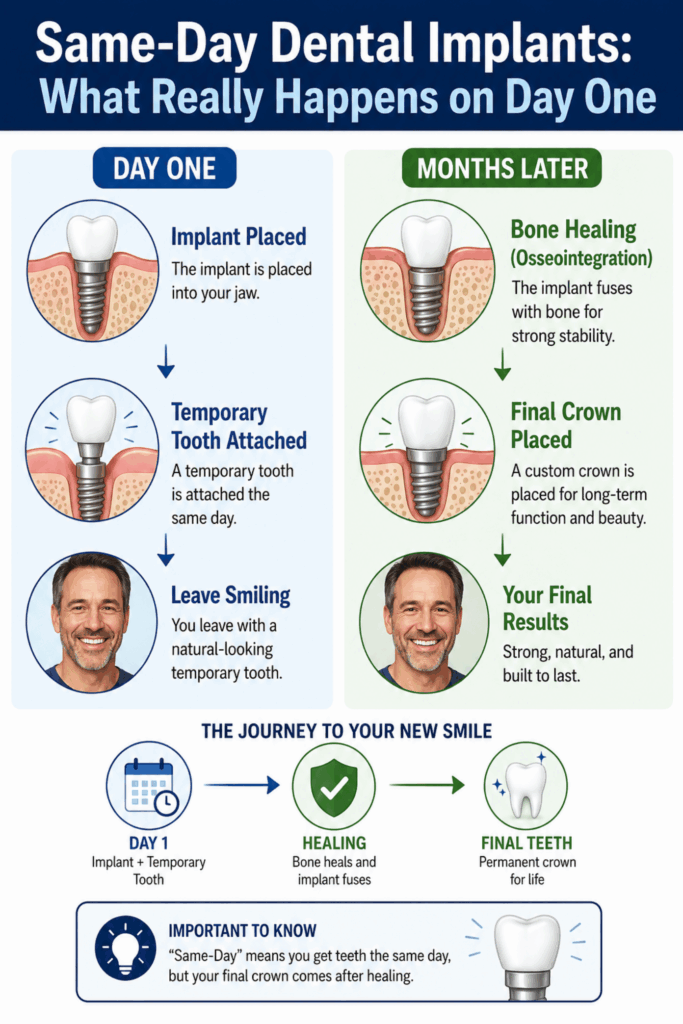
Same-day dental implants are a tooth replacement option that allows the dental implant and a temporary tooth to be placed during the same appointment. This approach is often called “teeth in a day” or immediate load implants because many patients leave the office with a functional smile instead of waiting months with missing teeth. The implant itself is usually made from titanium and is placed into the jawbone to act as an artificial tooth root.
However, same-day dental implants do not mean the entire treatment is finished in one visit. While the implant placement and temporary restoration happen on the day of surgery, the final restoration often comes later. After the healing process is complete and the implants integrate with the jawbone, your dentist replaces the temporary teeth with a permanent crown, bridge, or implant-supported denture designed for long-term function and appearance.
How Do Same-Day Dental Implants Work?
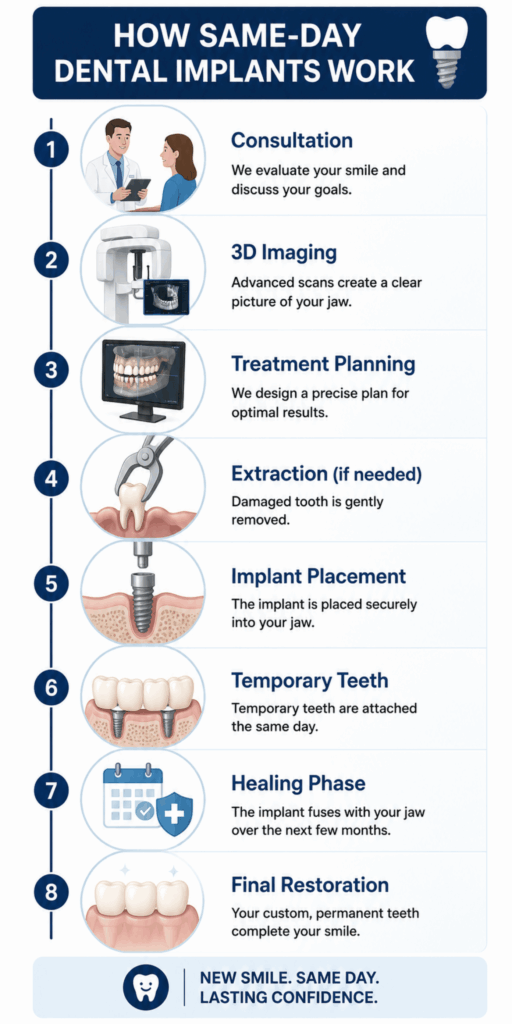
Same-day dental implants streamline several stages of treatment that traditionally occur over multiple appointments. Careful planning is the key to success. Before treatment begins, dental professionals evaluate your oral health, bone support, and overall health to determine whether immediate loading is appropriate. If everything aligns, you may receive new teeth the same day as your implant procedure.
- Comprehensive Consultation: Your dentist reviews your medical history, discusses your goals, and answers questions about same-day implants.
- Advanced Imaging: Digital scans and imaging help determine jawbone quality, implant position, and available bone support.
- Treatment Planning: The dental team creates a customized plan based on the number of missing teeth and restoration type.
- Tooth Extraction if Needed: Damaged teeth may be removed during the same visit before implant placement.
- Implant Placement: The new implant is inserted into the jawbone using precise techniques.
- Temporary Teeth Placement: A temporary set of teeth may be attached so you can smile in one visit.
- Healing Phase: The implants heal beneath the temporary restoration while bonding with the bone.
- Permanent Restoration: Once healing is complete, the final crown, bridge, or denture is placed.
Initial Evaluation and Treatment Planning
Your dentist begins by examining your teeth, gums, and jawbone using X-rays or 3D imaging. Healthy gums, sufficient bone volume, and good overall health improve the chances of successful implant treatment. These findings help determine whether you are a candidate for same-day implants or whether additional procedures, such as bone grafting, may be necessary before implant placement.
Implant Placement and Temporary Teeth
During implant surgery, the implant is placed directly into the jawbone under local anesthesia or sedation. If the implant achieves enough initial stability, temporary teeth may be attached immediately. This process is known as immediate loading. However, same-day implants aren’t suitable for every patient, and some people may benefit from allowing the implant to heal before placing any restoration.
Healing and Final Restoration
Even when you receive teeth the same day, healing continues behind the scenes. During osseointegration, the jawbone gradually bonds to the titanium implant, creating a stable foundation. This healing period often takes several months. After successful integration, your dentist replaces the temporary restoration with a custom-made final restoration designed to function and look like natural teeth.
Who Is a Good Candidate for Same-Day Dental Implants?
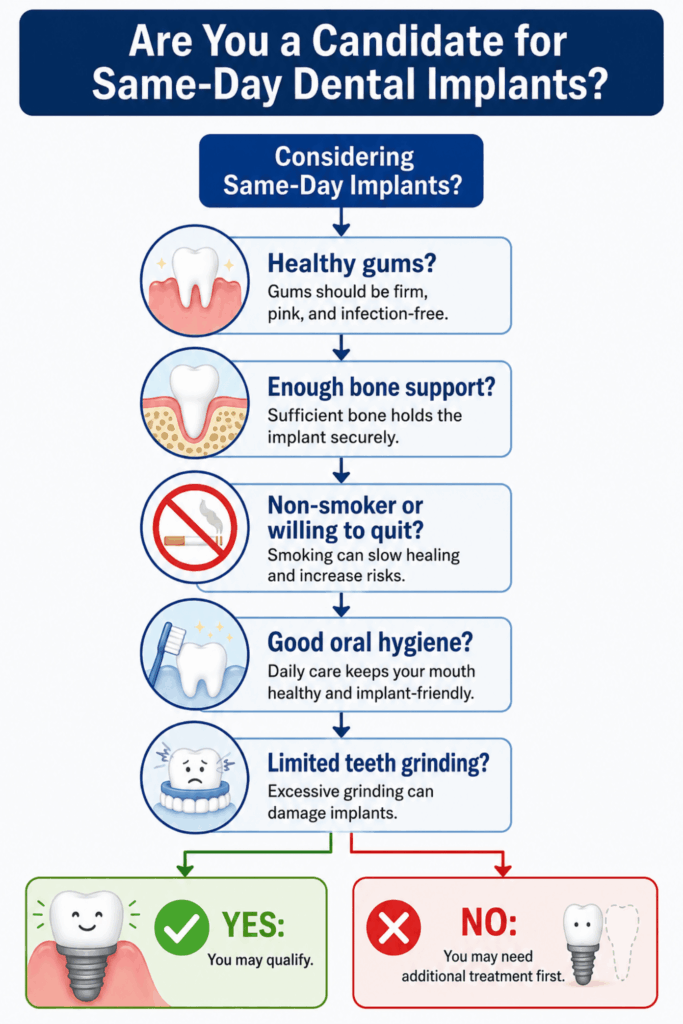
Before deciding if same-day dental implants are right for you, it’s important to understand who tends to have the best outcomes. While many people qualify for this treatment, factors such as gum health, bone support, and overall health can influence healing and long-term success. Your dentist will evaluate these factors to determine whether immediate implant placement is a safe and predictable option.
- Healthy Gums: Healthy gums reduce the risk of infection and support successful healing.
- Adequate Bone Support: Sufficient jawbone density helps stabilize the implant during early healing.
- Good Overall Health: Controlled medical conditions generally improve treatment outcomes.
- Non-Smokers or Willing to Quit: Smoking can increase the risk of implant failure and delayed healing.
- Excellent Oral Hygiene: Daily brushing and flossing help protect the implant site.
- Limited Teeth Grinding: Severe grinding forces may place excessive stress on temporary teeth.
- Stable Bite Patterns: Balanced chewing forces improve implant stability.
- Realistic Expectations: Understanding that temporary teeth differ from permanent restorations leads to greater satisfaction.
- Commitment to Follow-Up Care: Regular dental visits help monitor healing and long-term success.
Benefits of Same-Day Dental Implants
Many patients choose same-day dental implants because they offer both functional and emotional benefits. In addition to reducing the time spent without teeth, this approach can help patients regain confidence and return to daily activities more quickly while working toward a long-lasting tooth replacement.
- Immediate Smile Improvement: Many patients restore their smile without waiting months.
- Enhanced Confidence: Walking out with new teeth often improves self-esteem.
- Fewer Appointments: Combining treatment stages saves time and reduces inconvenience.
- Reduced Time With Missing Teeth: Patients avoid visible gaps after tooth loss.
- Improved Speech: Implant-supported teeth can help support clearer speech.
- Better Chewing Ability: Temporary restorations often function better than missing teeth.
- Jawbone Preservation: Implants help stimulate the jawbone after tooth loss.
- Stable Tooth Replacement: Implants provide a secure alternative to removable options.
- Natural Appearance: Temporary and final restorations are designed to blend with natural teeth.
- Improved Quality of Life: Patients often return to social activities more comfortably.
Faster Smile Restoration
One of the biggest advantages of same-day dental implants is avoiding a long period with missing teeth. Instead of waiting months for a visible tooth replacement, many patients leave our office with a temporary set of teeth that restores appearance immediately. This can make a meaningful difference during work, social events, and everyday interactions.
Fewer Dental Visits
Traditional dental implants often require multiple appointments spread over several months. Same-day dental implants streamline treatment by combining stages whenever possible. Busy patients frequently appreciate reducing the number of visits while still receiving advanced dental care.
Improved Comfort and Function
Missing teeth can affect chewing, speech, and confidence. Same-day implant-supported restorations help patients smile with confidence and participate in daily activities with fewer limitations. While temporary teeth require caution, they often feel more secure than removable replacement options.
Risks and Potential Complications of Same-Day Dental Implants
Same-day dental implants offer many advantages, but no treatment is completely risk-free. Success depends heavily on selecting the right candidates and carefully following treatment recommendations. Understanding the possible drawbacks allows patients to make informed decisions without unnecessary fear.
Many complications can be minimized through proper planning, excellent oral hygiene, and avoiding activities that place excessive pressure on healing implants. Open communication with your dental team plays an important role throughout the process.
Implant Failure Risk
Movement during the healing period can interfere with osseointegration and increase the risk of implant failure. Factors such as smoking, uncontrolled diabetes, poor bone quality, teeth grinding, and ignoring dietary restrictions may affect stability. Following your dentist’s instructions helps protect the implant during this critical phase.
Infection and Healing Problems
Signs of infection may include persistent swelling, worsening pain, drainage, bad taste, or fever. Delayed healing can also occur in people with uncontrolled medical conditions or poor oral hygiene habits. Keeping the surgical area clean and attending follow-up visits supports successful recovery.
Temporary Teeth Limitations
Temporary restorations are designed to protect the implant while healing occurs. They may not function exactly like permanent teeth and often require dietary modifications. Patients should avoid treating them as their final set of teeth until the permanent restoration is delivered.
Same-Day Dental Implants vs Traditional Dental Implants
| Feature | Same-Day Dental Implants | Traditional Dental Implants |
|---|---|---|
| Treatment Timeline | Temporary teeth often placed immediately | Restoration placed after healing |
| Number of Visits | Usually fewer appointments | Often more appointments |
| Temporary Appearance | Smile restored quickly | May require removable temporary options |
| Healing Process | Healing occurs under temporary teeth | Healing occurs before restoration |
| Convenience | Higher convenience for eligible patients | More staged approach |
| Case Selection | Requires strict eligibility criteria | Suitable for a broader range of cases |
| Immediate Function | Possible with adequate stability | Usually delayed |
| Flexibility | Not ideal for every situation | Often preferred in complex cases |
While same-day dental implants appeal to patients seeking faster results, faster is not always better. Traditional dental implants may offer advantages when bone quality is limited, healing concerns exist, or immediate loading could compromise success. The best option depends on your specific oral health needs and treatment goals.
What to Expect During Recovery
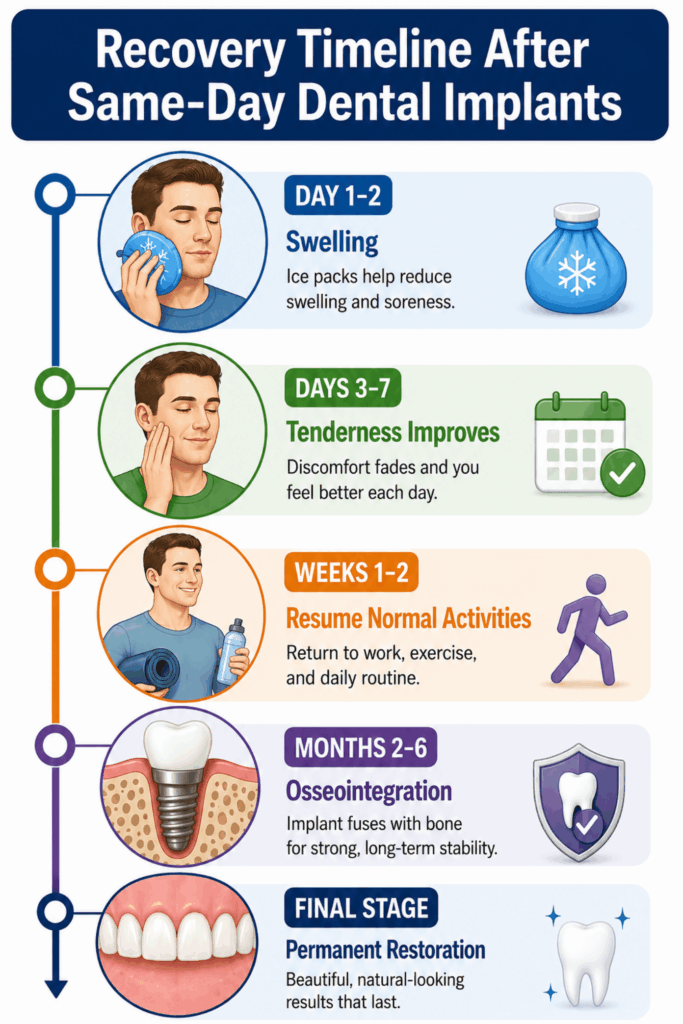
Recovery after same-day dental implants usually involves mild to moderate swelling, tenderness, and minor discomfort during the first few days. Most patients return to normal activities relatively quickly, although strenuous exercise may need to wait. Healing continues for several months beneath the temporary restoration, even when the smile already looks complete.
- Use Medications as Directed: Take prescribed medications exactly as instructed.
- Apply Ice Packs: Ice can help reduce swelling during the first 24 to 48 hours.
- Choose Rest Over Activity: Avoid strenuous exercise during early healing.
- Protect the Implant Site: Avoid touching or disturbing the area unnecessarily.
- Maintain Oral Hygiene: Follow your dentist’s cleaning instructions carefully.
- Attend Follow-Up Visits: Monitoring helps identify concerns early.
- Report Unusual Symptoms: Persistent pain or swelling should be evaluated promptly.
Foods to Eat and Avoid After Same-Day Dental Implants
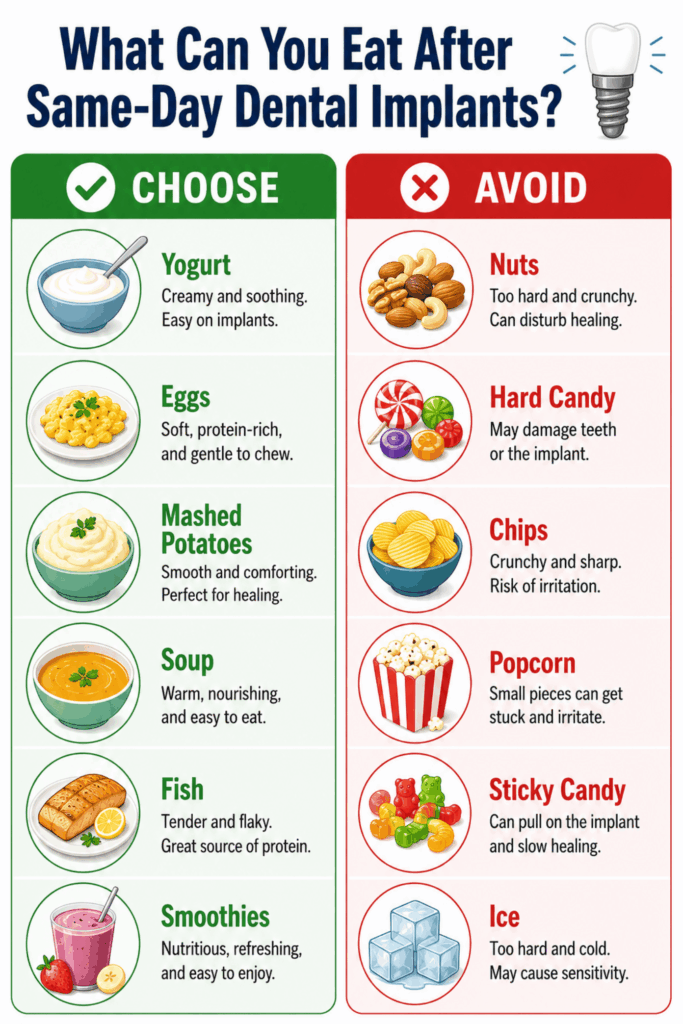
What you eat after same-day dental implants can have a big impact on comfort and healing. Choosing soft, nutritious foods helps protect the implant site while your mouth recovers. As healing progresses, your dentist will guide you on when it is safe to reintroduce firmer foods.
- Choose Soft Foods: Yogurt, eggs, mashed potatoes, soup, and smoothies are gentle choices.
- Eat Cooked Vegetables: Soft vegetables provide nutrition without excessive chewing.
- Include Protein Sources: Fish, shredded chicken, and tofu support healing.
- Stay Hydrated: Adequate fluid intake promotes recovery.
- Avoid Hard Foods: Nuts, ice, and hard candy can stress healing implants.
- Skip Sticky Foods: Caramel and chewy candies may disrupt temporary restorations.
- Limit Crunchy Snacks: Chips and popcorn can irritate surgical areas.
- Avoid Biting With Front Teeth: Follow instructions about chewing patterns.
- Reduce Alcohol Intake: Alcohol may interfere with healing and medications.
- Return to Normal Gradually: Expand your diet only when approved by your dentist.
What Is the Success Rate of Same-Day Dental Implants?
Research shows that same-day dental implants can achieve high success rates that are comparable to traditional approaches when patients are carefully selected. The success of dental implants depends less on speed and more on proper planning, initial implant stability, healthy gums, and patient cooperation during recovery. In other words, the right patient receiving the right treatment at the right time often experiences excellent long-term outcomes.
Factors That Affect Implant Success
- Bone Quality: Strong jawbone support improves implant stability.
- Initial Stability: Adequate stability at placement supports immediate loading.
- Healthy Gums: Healthy tissues reduce infection risk.
- Smoking Status: Smoking increases the risk of implant complications.
- Medical Conditions: Uncontrolled diabetes and certain illnesses may impair healing.
- Oral Hygiene Habits: Daily care protects implants from disease.
- Dietary Compliance: Following soft food recommendations protects the implant.
- Regular Maintenance Visits: Professional monitoring helps detect problems early.
- Bruxism Control: Managing teeth grinding reduces excessive forces.
- Following Instructions: Patient cooperation remains one of the most important factors.
How Much Do Same-Day Dental Implants Cost?
The final cost of same-day dental implants varies based on individual treatment needs. The number of implants, type of restoration, imaging requirements, and additional procedures all influence pricing. Because treatment is highly personalized, your dentist can provide the most accurate estimate after completing a full evaluation.
- Number of Implants: Replacing one tooth differs from restoring an entire arch of teeth.
- Type of Restoration: Crowns, bridges, and implant-supported dentures vary in complexity.
- Diagnostic Imaging: Advanced scans contribute to treatment planning.
- Tooth Extractions: Removing damaged teeth may affect the total cost.
- Bone Grafting Needs: Additional procedures can increase expenses.
- Sedation Options: The type of anesthesia chosen influences fees.
- Materials Used: Restoration materials and implant systems differ.
- Follow-Up Care: Maintenance appointments should be considered.
- Geographic Location: Costs vary by region and provider experience.
Frequently Asked Questions About Same-Day Dental Implants
Do You Get Permanent Teeth With Same-Day Dental Implants?
Not usually. Most patients who choose same-day dental implants receive a temporary dental restoration on the day of surgery so they can leave with a functional smile in just one visit. These temporary teeth protect the implants while healing takes place. Permanent restorations are typically placed several months later after the implants have fully fused with the jawbone.
Can Anyone Get Same-Day Dental Implants?
No. Same-day dental implants are not suitable for everyone. Successful treatment often requires enough healthy jawbone to support the implants, healthy gums, and good overall health. Certain conditions, such as uncontrolled diabetes, heavy smoking, or severe bone loss, may reduce eligibility. Your dentist will use advanced dental technology to determine whether you are a good candidate.
Are Same-Day Dental Implants Painful?
The procedure itself is usually not painful because it is performed under local anesthesia, and sedation may also be available if needed. After the anesthesia wears off, most patients experience mild to moderate discomfort, swelling, or soreness for a few days. These symptoms are typically manageable with prescribed or over-the-counter pain medication and proper aftercare.
How Long Does It Take to Heal After Same-Day Dental Implants?
Initial recovery after same-day dental implants often takes about one to two weeks, allowing most people to return to normal daily activities fairly quickly. However, the deeper healing process, called osseointegration, takes several months. During this time, the new dental implants bond with the jawbone before the final dental restoration is attached.
Can You Eat Normally After Same-Day Dental Implants?
Not right away. Patients are usually advised to follow a soft-food diet during the early healing phase to avoid placing excessive pressure on the implants. Foods such as yogurt, eggs, soups, and mashed vegetables are often recommended. As healing progresses and your dentist confirms stability, you can gradually return to a more normal diet.
The Bottom Line on Same-Day Dental Implants
Same-day dental implants offer an exciting opportunity to restore your smile quickly while reducing the time spent with missing teeth. For the right candidate, they can provide convenience, confidence, and functional benefits that improve everyday life.
At the same time, success depends on careful case selection, realistic expectations, and following your dentist’s recommendations throughout healing. The best tooth replacement option is the one that matches your oral health, lifestyle, and long-term goals. A consultation with experienced dental professionals can help you decide whether same-day dental implants are the right choice for you.
