Smoking not only harms your lungs but also leads to significant oral health problems. People who smoke are at a higher risk for teeth and gum issues compared to non-smokers. Smoking can weaken your body’s defenses against infections, increasing the likelihood of oral infections. This means that smokers face a higher risk for gum disease, tooth loss, and other dental problems. In addition, the effects of smoking on teeth include stained teeth, yellow teeth, and receding gums, where gums pull away from your teeth. Smokers must pay extra attention to oral health and adopt good dental care practices. In this blog post, we will explore how smoking affects your teeth and gums and the long-term health risks. We will also learn how smokers can maintain healthy gums and teeth at home and with professional help.
What are The Effects of Smoking on Oral Health?
Dental plaque is a sticky layer of bacteria on your teeth and gums. These bacteria break down the food you eat and release acids that attack the tooth enamel and irritate the gums. Smokers’ gums and teeth experience higher levels of plaque buildup compared to non-smokers because smoking reduces saliva flow. This dry mouth condition is significant because saliva plays a crucial role in cleansing the mouth, removing food particles, and neutralizing acids produced by bacteria. Without adequate saliva, the acids remain longer, causing more damage.
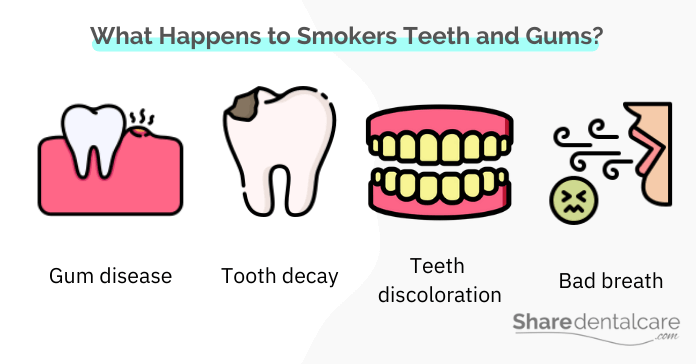
Smokers have a higher risk of gum disease and dental caries. Tobacco use lowers the pH levels in the mouth, making smokers more susceptible to oral infections. The long-term effects of smoking on dental health are severe. Here are some of the problems that affect smokers’ teeth and gums:
- Gum disease
- Tooth decay
- Tooth discoloration
- Bad breath
- Oral Cancer
Gum Disease Caused by Smoking Tobacco
Gum disease, also known as periodontal disease, is a serious oral infection that affects the gums and the tissues that support your teeth. It typically begins with the build-up of plaque on your gums, causing inflammation and swelling, known as gingivitis. Early gum disease, known as gingivitis, is reversible with proper dental care and smoking cessation.
However, if left untreated, it can progress to more severe periodontal disease, known as periodontitis, which destroys the tissues that hold your teeth in place, leading to more severe complications.
According to the Centers for Disease Control and Prevention, smokers have twice the risk for gum disease than non-smokers. This is because smoking reduces saliva flow, which is essential for neutralizing bacterial acids and maintaining oral health.
Smoking and oral health are closely linked, with smoking weakening the tissue that holds your teeth in place. This can lead to a range of problems, including:
- Gum Recession: Smokers often experience their gums pulling away from their teeth, exposing more of the tooth and increasing sensitivity.
- Periodontal Pockets: These spaces form between the teeth and gums, creating an environment for bacteria to thrive and worsen the infection.
- Pain with Chewing: The inflammation and infection can cause significant pain when chewing.
- Abscesses: Painful abscesses can form between the gums and teeth, requiring prompt treatment to prevent further complications.
- Malocclusion: Changes in the way teeth fit together, also known as malocclusion, can occur as the supporting structures of the teeth are damaged.
- Spaces Between Teeth: As the infection progresses, the teeth may shift, creating gaps.
- Loose Teeth and Tooth Loss: The destruction of the supporting tissues can lead to teeth becoming loose and eventually falling out.
Smoking Cigarettes and Tooth Decay
Tooth decay, also known as dental caries, is a progressive disease caused by the breakdown of tooth enamel due to bacterial acids. These acids are produced when plaque bacteria break down sugars and starches from your food, leading to holes in the enamel. Tooth decay from smoking is particularly concerning because smokers have higher levels of plaque buildup than non-smokers, which accelerates the process of decay and contributes to gum disease.
In addition to increasing plaque, smoking can cause dry mouth, which further contributes to cavities. Saliva is essential for washing away food particles and neutralizing acids; the risk of decay increases when its flow is reduced. The complications of dental caries include:
- Sensitivity to Sweets and Cold Foods and Drinks: As decay progresses, it can expose the tooth’s dentin layer, causing sensitivity.
- Continuous Pain: When bacteria reach the inner part of the tooth (pulp), it can cause persistent pain and discomfort.
- Dental Abscess: An infection of the tooth pulp can lead to an abscess, a painful collection of pus that requires treatment.
- Tooth Destruction: Over time, untreated dental caries can destroy the tooth structure, leading to significant damage.
- Tooth Loss: Severe decay can result in the loss of affected teeth.

Discoloration of Smoker’s Teeth & Gums
Smokers have a higher risk of developing yellow, grey, and black stains on their teeth. This discoloration is caused by chemical substances in tobacco that deposit onto the tooth surface when smokers inhale from cigarettes or other forms of tobacco. These substances can penetrate the enamel, leading to stubborn stains that are difficult to remove with regular brushing. Over time, the teeth of smokers can become significantly discolored, affecting both appearance and self-confidence.
In addition to teeth stains, smokers also experience gum pigmentation or darkening, a condition known as smoker’s melanosis. This condition manifests as brown to black pigmentation on the gums due to irritation from chemical substances in tobacco smoke. The dark gum from smoking is not only a cosmetic concern but can also indicate underlying oral health issues caused by tobacco use.

Tobacco Products and Bad Breath
Persistent bad breath, also known as halitosis, is a common issue among smokers due to their tendency to have drier mouths compared to non-smokers. A dry mouth increases the number of bacteria, which are the main source of bad breath odor. These bacteria accumulate on the smoker’s tongue, gums, and around teeth, causing the breath to smell unpleasant. In addition, smokers often suffer from cavities and gum disease, which can also contribute to halitosis.
The chemicals in tobacco products reduce saliva flow, making it harder to clean your mouth naturally. This creates an environment where bacteria can thrive, leading to persistent bad breath even after brushing teeth. Smoking also leaves a residue on oral surfaces, which can trap odors and make the problem worse.
Smoking Increases the Risk of Oral Cancer
Smoking significantly increases the risk of developing mouth cancer, also known as oral cancer. The harmful chemicals in tobacco smoke cause direct damage to the cells in the mouth, leading to mutations that can result in cancer of the mouth. When you smoke, these carcinogens come into contact with the tissues in your mouth, including the lips, tongue, cheeks, and the floor of the mouth, increasing the risk of malignancies in these areas.
The effects of cigarette smoking on your gums and teeth contribute to the overall health risks. Smoking causes inflammation and reduces the immune system’s ability to fight infections. This makes it easier for cancerous cells to develop and spread.
Complications That Occur for Smokers After Teeth and Gums Surgery
Smokers have more complications than non-smokers after they perform teeth extraction, gums surgery, and dental implants. Smoking after oral surgery can cause:
- Discomfort or pain.
- Inflammation and swelling around the surgical site.
- There is a greater chance of getting an infection after your operation.
- Increased bleeding after the procedure.
- Delayed or incomplete healing.
- The failure of oral surgery.
Treatment Options for Smokers’ Teeth & Gums
Gum Disease
- Scaling and Root Planing: This deep cleaning procedure removes plaque and tartar from below the gumline and smooths the tooth roots to help gums reattach to the teeth.
- Antibiotics: Topical or oral antibiotics can help control bacterial infection. These may be used alone or in combination with other treatments.
- Surgery: In advanced cases, surgical procedures such as flap surgery (to remove tartar in deep pockets) or bone and tissue grafts (to regenerate lost bone and tissue) may be necessary.
Tooth Decay
- Fillings: Cavities are treated with dental fillings. The decayed part of the tooth is removed and filled with a durable material.
- Crowns: Severe decay may require a crown to restore the tooth’s structure and function.
- Root Canals: If decay reaches the tooth pulp, a root canal may be necessary to remove the infected tissue and save the tooth.
- Fluoride Treatments: Professional fluoride treatments can help strengthen enamel and prevent further decay.
Bad Breath
- Professional Cleaning: Regular dental cleanings remove plaque and tartar buildup that contribute to unpleasant mouth breath.
- Mouth Rinses: Antibacterial mouthwashes can reduce bacteria and freshen your breath.
- Hydration: Staying hydrated increases saliva production, which helps cleanse the mouth and reduce odor.
Teeth Discoloration
- Professional Teeth Whitening: Dentists offer in-office whitening treatments that can significantly lighten stained teeth.
- At-Home Whitening Kits: Custom-fitted trays and professional-grade whitening gel can be used at home for gradual results.
- Veneers: Porcelain veneers can cover severe stains and provide a bright, uniform appearance.

Dark Gums
- Gum Depigmentation: Black gum from smoking treatments such as laser treatment can lighten dark gums caused by a smoker’s melanosis.
- Quitting Smoking: Stopping smoking can prevent further darkening of the gums and improve overall dental health.
If you notice changes in your mouth or suspect oral cancer, seek immediate attention from a healthcare professional. Symptoms of gum disease, unusual sores, or persistent pain should not be ignored. Early detection and treatment are crucial for preventing serious health effects and reducing the risk of tooth loss.
Tips for Smokers to Keep Their Teeth and Gums Healthy
Quitting smoking is the best way to improve your oral health. However, if you can’t quit at the moment, you can still take steps to protect your teeth and gums:
- Practice Good Oral Hygiene: Brush your teeth at least twice a day with fluoride toothpaste to remove plaque from gums and teeth. Floss once a day to clean between your teeth and prevent gum disease. This will help prevent tooth loss and keep your gums healthy.
- Smoke in Moderation: If you are a heavy smoker, try to limit the number of cigarettes you smoke each day. Reducing your smoking habit can lessen the negative effects on your teeth & gums, lowering your risk for mouth problems.
- Eat Nutritious Foods: Smokers need more nutrients than non-smokers because smoking affects metabolism and nutrient absorption. A well-balanced diet rich in protein, calcium, and vitamin C can strengthen your teeth, and help prevent jaw bone loss.
- Drink Lots of Water: Smoking causes dry mouth, which leads to unpleasant breath and increases the risk of caries. Stay hydrated by drinking at least 8 glasses of water a day to keep your mouth moist and wash away harmful bacteria.
- Limit Sugary Foods and Drinks: Smokers have a higher risk of cavities, especially if they consume a lot of sugary foods and beverages. Limiting these can help prevent cavities and maintain oral health.
- Get Regular Professional Cleanings: Visit your dentist for professional teeth cleanings at least every six months. Regular cleanings remove plaque and tartar, helping to prevent gum disease and tooth loss. Your dentist can also provide you with personalized oral health information.
- Monitor Your Oral Health: Pay attention to any changes in your mouth. If you notice symptoms of gum disease, such as gums pulling away from your teeth or your teeth becoming loose, seek advice from a health care professional. Early intervention can prevent further damage.
Taking these steps can help mitigate the negative effects of cigarette smoke on your mouth, ensuring better oral health even if you continue to smoke.
Quit Smoking for Optimal Dental Health
Quitting smoking is crucial for maintaining optimal dental health. Smoking can have a negative impact on your teeth and gums, causing issues such as gum disease, cavities, and even losing teeth. To stop smoking, consider enrolling in smoking cessation programs. These programs provide resources and support to help you quit. Healthcare professionals can offer personalized advice and medications to ease withdrawal symptoms. Developing healthy habits, such as exercising regularly and finding stress-relief activities, can also aid in your journey to quit smoking.
Former smokers often notice significant improvements in their oral health. After quitting, gums can heal, and the risk of gum disease and tooth loss decreases. Without constant exposure to tobacco, your mouth starts to recover, and the spaces between your teeth become healthier. It’s important to know that smoking causes your teeth to loosen and gums to pull away, leading to severe dental issues. Whether you smoke cigarettes or vape, the health benefits of quitting are substantial. Taking care of your teeth and making the decision to stop smoking will lead to better overall health and a brighter smile.
Conclusion: Smokers’ Teeth and Gums
Smokers have higher risks of developing various oral health issues, including gum disease, dental caries, teeth stains, gum pigmentation, and bad mouth breath. Additionally, smoking can impair healing after dental surgeries, making recovery longer and more complicated.
Smoking is one of the leading causes of these oral problems. The best way to improve your oral health is to quit smoking. People who vape should also be aware of the risks associated with their habits, as vaping can similarly affect oral health.
Smokers can keep their teeth and gums healthy by maintaining good oral hygiene, eating nutritious foods, and visiting a dentist regularly for professional teeth cleanings.
