Have your teeth started to look longer, or do you feel a sharp twinge near the gumline? These changes may point to receding gums, meaning the gum edge has moved away from the tooth, exposing part of the root. Lost gum tissue usually doesn’t grow back on its own, but proper care can often address the cause and help prevent further recession.
Gum recession may affect one tooth or several. It can develop because of gum disease, forceful brushing, thin gum tissue, tooth position, or other factors. Finding the cause matters because brushing harder or trying an unproven home remedy may irritate the area without solving the problem.
A dentist can measure the recession, examine the gums and bone support, and check for damage to the exposed roots. Treatment may be as simple as changing brushing habits and managing sensitivity, or it may involve periodontal care or gum grafting. The best place to begin is understanding what gum recession looks like and how it differs from other gum changes.
What Are Receding Gums?
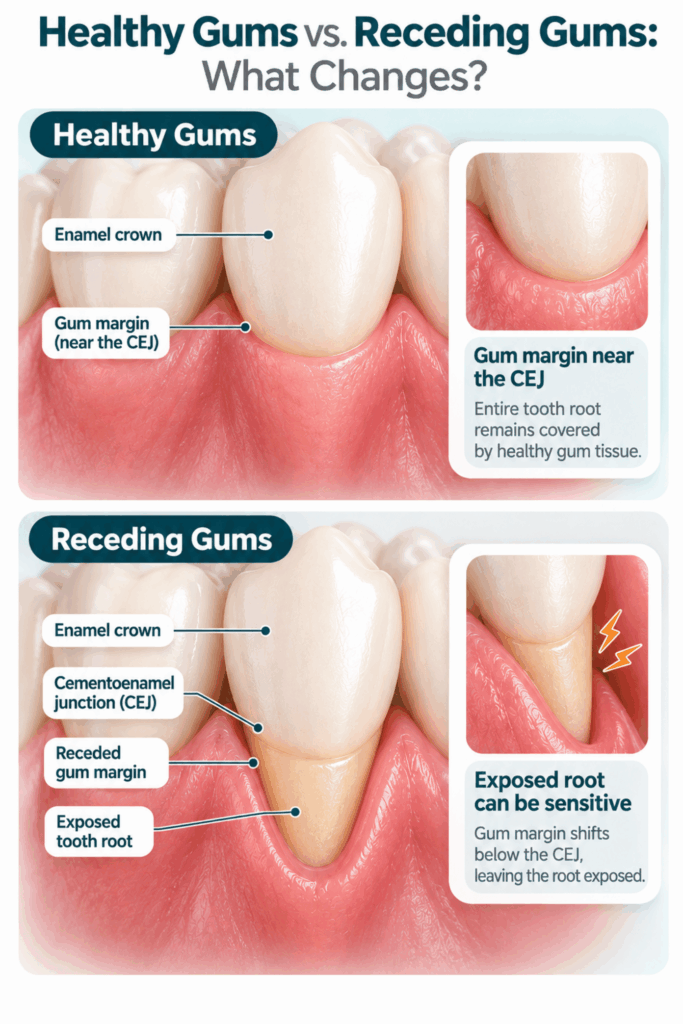
Receding gums develop when the edge of the gum moves away from its normal position and exposes part of the tooth root. Dentists call this change gingival recession. Because the root has less protection than the enamel-covered crown, exposure may make the tooth more sensitive and easier to damage.
Gum recession can affect one tooth, several teeth, or many areas of the mouth. It becomes more common with age because risk factors can build up over time, but it should not be dismissed as a normal part of getting older. Healthy gums should fit firmly around the teeth without ongoing bleeding, swelling, or progressive root exposure.
How to Tell If Your Gums Are Receding
Recession often develops slowly, so you may not notice it at first. Comparing recent photographs with older ones may reveal a changing gum line, but a mirror check cannot show the condition of the supporting bone or confirm what caused the change.
Possible signs of gum recession include:
- Longer-Looking Teeth: More of the tooth becomes visible as the gum margin moves toward the root.
- An Uneven Gumline: One tooth may have a lower gum edge than the neighboring teeth.
- Visible Root Surfaces: Exposed roots often look more yellow than enamel because they have a different structure and color.
- A Notch Near the Gumline: You may feel a small step where the enamel ends and the root begins.
- New Tooth Sensitivity: Cold drinks, sweets, brushing, or even cool air may cause a short, sharp sensation.
- Spaces Near the Gums: Small gaps may form between the teeth as the gum tissue pulls back.
These findings suggest possible receding gums, but they do not reveal the cause or severity. A dental evaluation is the best way to distinguish recession from tooth wear, naturally uneven gum levels, or changes caused by inflammation.
Early Changes You May Notice
Early gum recession may cause no pain. The first sign may be a small strip of exposed root, a slight change in tooth length, or sensitivity near the gum line.
Watch for changes such as:
- A Tooth That Appears Longer: Compare it with the same tooth on the other side or with an older photograph.
- A Change in Color: The exposed root may look darker or more yellow than the crown.
- A Small Groove: Your fingernail may catch at the point where the enamel meets the root, although repeatedly touching the area can irritate it.
- Cold or Sweet Sensitivity: Exposed dentin contains tiny channels that can carry temperature changes toward the nerve.
- Food Trapping: A change in the gum shape may create a space that collects plaque or food.
Recession does not always progress. Still, it is worth recording when you first notice it and asking your dentist to measure the area.
Signs That May Point to Gum Disease
Recession by itself does not prove that you have periodontal disease. However, bleeding, redness, swelling, persistent bad breath, pus, or a bad taste may point to active gum inflammation. Deeper periodontal pockets, shifting teeth, changes in the bite, or tooth mobility raise more concern about damage to the tissues supporting your teeth.
The American Academy of Periodontology’s gum disease warning signs include gums pulling away from the teeth, bleeding, swelling, bad breath, loose teeth, and changes in the bite. Only a dental examination can determine whether these signs come from gingivitis, periodontitis, local irritation, or another problem.
What Causes Receding Gums?
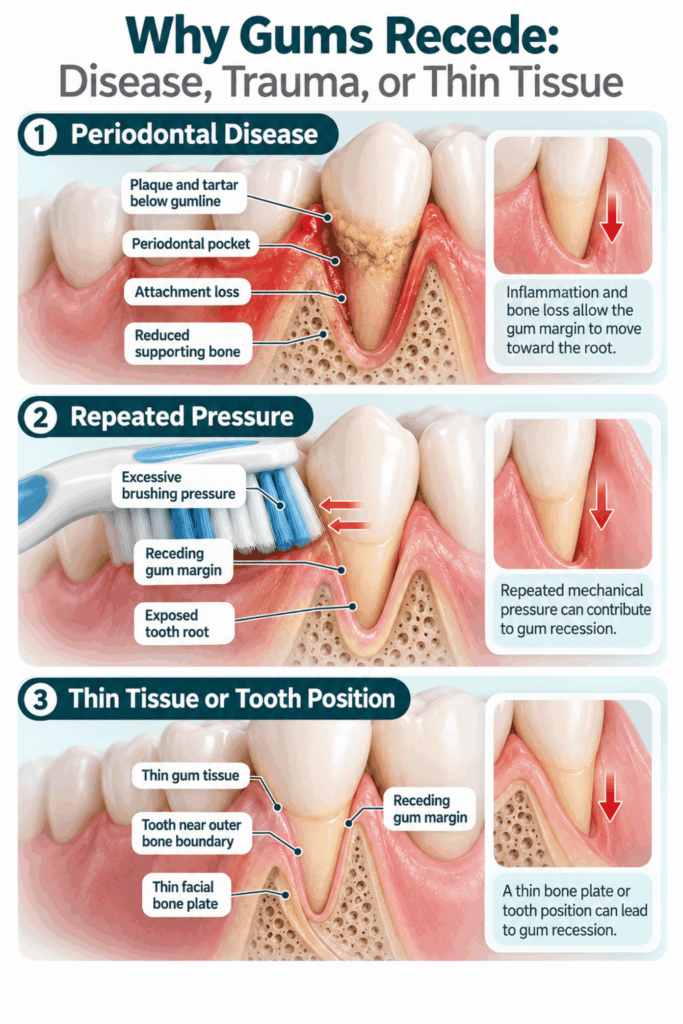
The causes of receding gums are not the same for every patient. Some cases involve plaque and periodontal disease, while others develop around a healthy tooth because of thin gum tissue, tooth position, repeated trauma, or several factors working together.
Common causes and contributing factors include:
- Periodontal Disease: Inflammation can destroy the gum attachment and supporting bone around the teeth.
- Repeated Mechanical Pressure: Forceful brushing or another repeated injury may affect vulnerable tissue.
- Naturally Thin Gum Tissue: Thin gums are less able to tolerate inflammation, trauma, or unfavorable tooth position.
- Tooth Position: A tooth positioned near the outer edge of the jawbone may have limited gum and bone covering its root.
- Orthodontic Movement: Moving a tooth outside its bony housing may increase risk in a susceptible area, but braces do not automatically cause recession.
- Tobacco Use: Smoking and smokeless tobacco can harm oral health and interfere with the normal appearance and healing of gum tissue.
- Oral Piercings: Jewelry that repeatedly rubs against the gum line may cause localized damage.
- Dental Factors: Poorly positioned restoration margins, difficult-to-clean areas, or previous surgery may influence the gum level.
Finding the main cause is essential because the best treatment depends on what is driving the recession.
Gum Disease and Plaque Buildup
Plaque is a sticky bacterial film that forms around the gums and teeth. If plaque remains in place, it can irritate the gum tissue and cause gingivitis. The gums may become red, swollen, or more likely to bleed, but gingivitis does not include the attachment and bone loss that define periodontitis.
Periodontitis develops when inflammation affects the deeper tissues supporting your teeth. Periodontal pockets may deepen as the gum attachment and bone break down. The gum line can move, and the teeth may appear longer. When left untreated, advanced periodontal disease can contribute to mobility and tooth loss, although recession alone does not mean a tooth will be lost.
Forceful Brushing and Repeated Trauma
Brushing your teeth too hard is commonly blamed for gum recession, but the scientific evidence is not simple. A systematic review examining toothbrushing and gingival recession found that the available evidence could not firmly prove or rule out the relationship. Technique, pressure, brush stiffness, tissue thickness, and tooth position may all influence the result.
You should continue cleaning the affected area, but avoid aggressive scrubbing. Helpful changes include:
- Use Soft Bristles: A soft-bristled brush can remove plaque without requiring heavy pressure.
- Reduce Pressure: Let the bristles touch the gum line gently instead of pressing until they spread.
- Avoid Fast Horizontal Scrubbing: Use small, controlled movements based on the technique recommended by your dentist or hygienist.
- Replace Worn Brushes: Bent or frayed bristles clean less effectively and can feel harsh against the gums.
- Check Other Sources of Trauma: Toothpicks, fingernails, oral jewelry, and poorly used interdental tools can repeatedly injure one spot.
Thin Gums, Tooth Position, and Orthodontic Factors
Some people naturally have thin, delicate gum tissue. If a tooth also sits near the outer edge of the supporting bone, only a small amount of tissue may cover its root. In this situation, inflammation or repeated pressure may make recession more likely.
Orthodontic treatment does not automatically cause gum recession. Risk depends on the starting gum thickness, bone boundaries, plaque control, tooth movement, and other patient-specific factors. A systematic review of risk factors for recession after orthodontic treatment supports assessing these factors rather than assuming that braces alone are responsible.
A strong frenum, the band of tissue connecting the lip or cheek to the gums, may also pull on the gum margin in selected cases. Your dentist or periodontist can assess whether this pull is clinically important.
Tobacco, Oral Piercings, and Other Risk Factors
Smoking changes the gum tissue’s response to bacterial plaque and can reduce visible bleeding, which may hide inflammation. Smokeless tobacco can irritate the area where it repeatedly touches the mouth. Both habits can interfere with oral health and healing.
Other possible risk factors include:
- Lip or Tongue Jewelry: Repeated contact with the gum tissue can cause localized recession near the jewelry.
- Previous Dental Treatment: Crown margins, fillings, extractions, or periodontal procedures may alter the shape or position of nearby tissues.
- Poor Plaque Control: Plaque and tartar can maintain inflammation around a vulnerable gum margin.
- Age: Recession becomes more common over time, but age alone does not explain the cause.
- Teeth Grinding: Grinding may place extra stress on teeth, yet its direct role in causing gum recession remains uncertain. Signs of grinding should be assessed separately.
- Limited Gum Thickness: Thin tissue may make the effect of other risk factors more noticeable.
Can Receding Gums Grow Back?
Receding gums generally do not grow back on their own. Once the gum margin has moved and the tooth root is exposed, brushing, mouthwash, supplements, or massage cannot regenerate the missing tissue. However, controlling the cause may help prevent the recession from getting worse.
Stopping progression is different from replacing lost tissue. Desensitizing treatment can make gums and exposed roots more comfortable, while restorative materials may protect worn or decayed root surfaces. When root coverage is needed, a periodontist may reposition existing tissue or add a gum graft. The amount of coverage possible depends on the recession pattern, bone support, tooth position, and surrounding tissue.
How Dentists Diagnose Receding Gums
A dentist diagnoses gum recession by examining the teeth and gum tissue, taking measurements, and looking for the underlying cause. The goal is not only to confirm that the gums are receding but also to determine whether the area is healthy, inflamed, damaged, or continuing to change.
The examination may include:
- Reviewing Your History: The dentist asks when you noticed the change, whether the area is sensitive, and whether you smoke, grind your teeth, have oral piercings, or have received orthodontic or periodontal treatment.
- Examining the Gumline: Each area is checked for root exposure, inflammation, tissue thickness, plaque, tartar, and repeated trauma.
- Measuring the Recession: A periodontal probe is used to measure how far the gum margin has moved from a fixed point on the tooth.
- Checking Periodontal Pockets: The dentist measures the space between each tooth and gum and records bleeding or pus.
- Assessing Tooth Position and Wear: The examination looks for an exposed or worn tooth root, cervical notches, bite-related damage, and difficult-to-clean areas.
- Taking Dental X-Rays When Needed: X-rays help evaluate the bone supporting your teeth when periodontal disease or another deeper problem is suspected.
These findings help the dentist decide whether to monitor the area, control a cause, protect the root, or discuss periodontal treatment.
Measuring Recession and Gum Attachment
Recession depth is usually measured from the cementoenamel junction—the point where the enamel crown meets the root—to the edge of the gum. Clinical attachment level uses that same fixed point but measures to the base of the gum pocket or sulcus.
Two areas may show the same amount of visible recession but have different pocket depths, bone levels, and treatment needs. Measurements can also be more difficult when a filling, crown, or worn area hides the original cementoenamel junction.
Checking for Bone Loss and Root Damage
The dentist checks more than the visible gum line. Important findings include:
- Bone Support: Dental X-rays can reveal bone loss around the roots, although they do not show the exact position of the soft gum margin.
- Root Cavities: Exposed root surfaces are more vulnerable to plaque acids because they are not covered by enamel.
- Cervical Wear: Brushing, acidic exposure, or other forces may create a notch near the gumline.
- Tooth Mobility: Movement may indicate reduced support, bite trauma, or another dental problem.
- Sensitivity: Cold testing and examination help separate an exposed root from decay, a crack, or an inflamed tooth nerve.
- Plaque and Tartar: Deposits around or below the gumline may support inflammation and require professional removal.
Treatment Options for Receding Gums
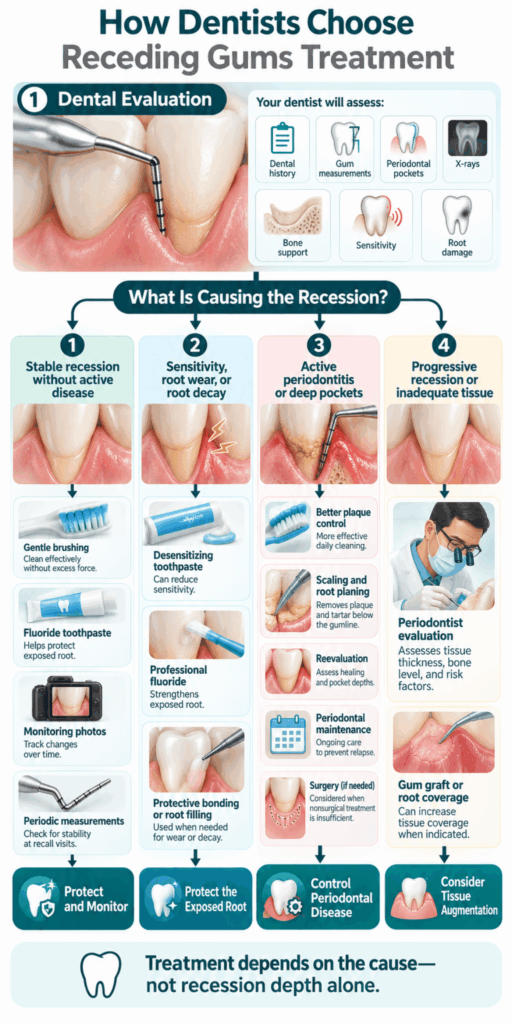
Treatment options for gum recession depend on the cause, severity, symptoms, gum thickness, bone support, and risk of future progression. A shallow, stable area may only need monitoring and protection. Active periodontal disease, progressive root exposure, or severe sensitivity may require more treatment.
Not every patient needs gum surgery. The first goal is usually to control the cause and create a clean, stable area that the patient can maintain.
Controlling the Underlying Cause
Treatment starts by addressing the factors that may cause gum recession or make it worse:
- Improve Plaque Control: Brush your teeth gently and clean between them every day to limit gum inflammation.
- Adjust Brushing Technique: Reduce pressure and use a soft brush rather than avoiding the receding gumline.
- Treat Periodontal Disease: Scaling and root planing or other periodontal care may be needed when deep pockets, plaque, and tartar are present.
- Remove Repeated Trauma: Oral piercings, fingernail habits, poorly used cleaning tools, or other repeated contact may need correction.
- Review Dental Restorations: A dentist can check whether a filling or crown margin traps plaque or irritates the surrounding tissue.
- Assess Tooth Position: Orthodontic and periodontal factors may need joint evaluation when a tooth sits outside a favorable position.
- Address Tobacco Use: Stopping smoking or smokeless tobacco supports gum health and improves healing conditions.
- Monitor the Gumline: Photographs and periodontal measurements can show whether the area is stable or progressing.
Controlling the cause may prevent gum recession from advancing, but it does not guarantee that exposed tissue will reattach to the tooth.
Relieving Sensitivity and Protecting Exposed Roots
An exposed tooth root may react to cold, sweets, touch, or brushing. Treatment should first rule out decay, cracks, leaking fillings, and other common dental causes of sensitivity.
The American Dental Association’s guidance on sensitive teeth lists exposed roots among the possible causes and describes options such as desensitizing toothpaste and professional fluoride treatment.
Treatment may include:
- Desensitizing Toothpaste: Ingredients such as potassium nitrate or stannous fluoride can reduce sensitivity with regular use.
- Fluoride Products: Fluoride toothpaste, gels, or varnish can help strengthen vulnerable tooth surfaces and reduce decay risk.
- Protective Bonding: Tooth-colored material may cover a deeply worn or highly sensitive root surface in selected cases.
- Root-Cavity Treatment: Decay on an exposed root may need a filling or another restoration.
- Diet Changes: Reducing frequent acidic drinks and snacks can limit further surface wear.
These measures protect your teeth and improve comfort, but they do not make lost gum tissue grow back.
Treating Recession Caused by Gum Disease
When periodontitis is present, the priority is controlling the infection and inflammation around the teeth. Scaling and root planing, often called deep cleaning, removes bacterial deposits and hardened tartar from below the gum line. More advanced cases may require additional nonsurgical or surgical periodontal care.
The European Federation of Periodontology’s evidence-based guideline for stages I–III periodontitis uses a stepwise approach that includes risk-factor control, professional plaque removal, subgingival instrumentation, reevaluation, and supportive care.
After inflammation improves, the gums may shrink and look more recessed. This does not necessarily mean that treatment caused new damage. Swollen tissue has returned closer to its healthy size, sometimes revealing root surfaces that the swelling previously covered. Continued periodontal maintenance helps protect the remaining gum tissue and supporting bone.
When Gum Grafting May Be Recommended
A periodontist may recommend gum graft surgery when recession is progressing, the tissue is very thin, sensitivity continues, the root is difficult to clean, or the exposed area is at risk of further damage. Appearance may also influence the decision, especially around front teeth.
A connective tissue graft commonly uses tissue taken from beneath the surface of the roof of your mouth. The tissue is placed over or near the exposed root to increase thickness and support root coverage. Other approaches may reposition nearby gum tissue or use selected graft substitutes.
Gum grafting may:
- Cover an Exposed Root: The procedure can improve coverage, although complete coverage is not possible in every case.
- Increase Tissue Thickness: Thicker tissue may be more resistant to future recession.
- Reduce Sensitivity: Covering the root may reduce its response to cold or touch.
- Improve Cleaning: A more stable tissue shape may make plaque control easier.
- Improve Appearance: Root coverage can create a more even gumline.
The updated Cochrane review of root-coverage procedures found that several periodontal plastic-surgery techniques can improve recession defects, with outcomes varying by the procedure and clinical situation. Your periodontist should explain the likely result, donor-site needs, healing process, and limits before treatment.
How to Care for Receding Gums at Home
Home care cannot regrow lost tissue, but it can reduce plaque, protect exposed roots, and help prevent receding gums from worsening. The aim is to clean thoroughly without placing unnecessary pressure on the gum margin.
Use this daily checklist:
- Brush Twice Daily: Use fluoride toothpaste and a soft-bristled brush.
- Control the Pressure: Keep your grip light and avoid bending the bristles against the teeth and gums.
- Clean Between Your Teeth: Use floss, an interdental brush, or another tool suited to the available space.
- Manage Sensitivity: Use a desensitizing toothpaste if your dentist recommends one.
- Limit Frequent Acids: Repeated exposure to soda, citrus drinks, or acidic snacks can wear down exposed roots.
- Avoid Tobacco: Tobacco use can harm gum health and healing.
- Monitor Changes: Note increasing sensitivity, color changes, bleeding, or further movement of the gum line.
Home care supports professional treatment but does not replace an evaluation when the cause is unknown.
Brush Without Damaging the Gumline
You do not need to scrub hard to remove soft plaque. Use this approach unless your dentist or hygienist recommends a technique for your specific needs:
- Choose a Soft Brush: Select a manual or electric toothbrush with soft bristles.
- Use Light Pressure: Rest the bristles near the gum line without flattening them against the teeth.
- Make Small, Controlled Movements: Clean one or two teeth at a time instead of sawing quickly across the whole side of the mouth.
- Cover Every Surface: Clean the outer, inner, and chewing surfaces for about two minutes.
- Let an Electric Brush Do the Work: Guide it slowly rather than adding a scrubbing motion. A pressure sensor may help if you tend to press too hard.
- Replace the Brush Head: Change it when the bristles become worn or according to the manufacturer’s instructions.
Ask for a brushing demonstration if the gums continue to recede despite a light technique.
Clean Between the Teeth Every Day
A toothbrush cannot fully clean the areas where neighboring teeth meet. Daily interdental cleaning reduces plaque that can lead to gum inflammation.
Useful options include:
- Dental Floss: Floss can fit through tight contacts. Curve it around each tooth and move it gently below the gum edge.
- Interdental Brushes: These small brushes may work better in open spaces, around bridgework, or where gum tissue has pulled back.
- Water Flossers: A water flosser may help some patients manage plaque around dental work or in areas that are difficult to reach.
- Specialized Tools: Floss threaders or end-tuft brushes may help around braces, bridges, implants, or crowded teeth.
The wrong size or force can injure the tissue. Your dentist or hygienist can help you choose a tool that fits your gums and teeth.
Be Careful With Home Remedies
Oil pulling, herbal rinses, gum massage, supplements, and homemade pastes have not been shown to make lost gum tissue reattach or grow back. A mouthwash may help with plaque or inflammation in certain situations, but it cannot replace cleaning between the teeth or treat an exposed root by itself.
Do not place lemon juice, vinegar, undiluted essential oils, baking soda mixtures, aspirin, or other concentrated substances on the gumline. Acidic or abrasive products can irritate soft tissue and wear exposed roots. If a product causes burning, peeling, swelling, or increased sensitivity, stop using it and contact your dentist.
What Can Happen If Gum Recession Gets Worse?
The effects of worsening recession depend on the cause and the condition of the supporting tissues. A small stable area may remain manageable, while active periodontal disease or repeated trauma can produce continued damage.
Possible problems include:
- Increasing Sensitivity: More exposed dentin may react to cold, sweets, touch, or air.
- Root Cavities: The root surface is softer and more vulnerable to plaque acids than enamel.
- Surface Wear: Abrasion and erosion can create deeper notches near the gumline.
- Food and Plaque Trapping: Changes in the gum shape may make cleaning more difficult.
- Uneven Appearance: Teeth may appear longer or the gum line may look irregular.
- Progressive Periodontal Damage: When periodontitis is the cause, continued attachment and bone loss can reduce the support around the teeth.
- Tooth Mobility or Loss: Recession alone does not usually make a tooth fall out. The risk rises when substantial bone and attachment have been lost to advanced periodontal disease.
Early evaluation helps identify which areas only need monitoring and which need active treatment.
When Should You See a Dentist About Receding Gums?
Arrange an evaluation when you first notice a receding gumline or a change in an existing area. Gum recession is rarely an emergency by itself, but waiting makes it harder to tell whether the condition is stable or progressing.
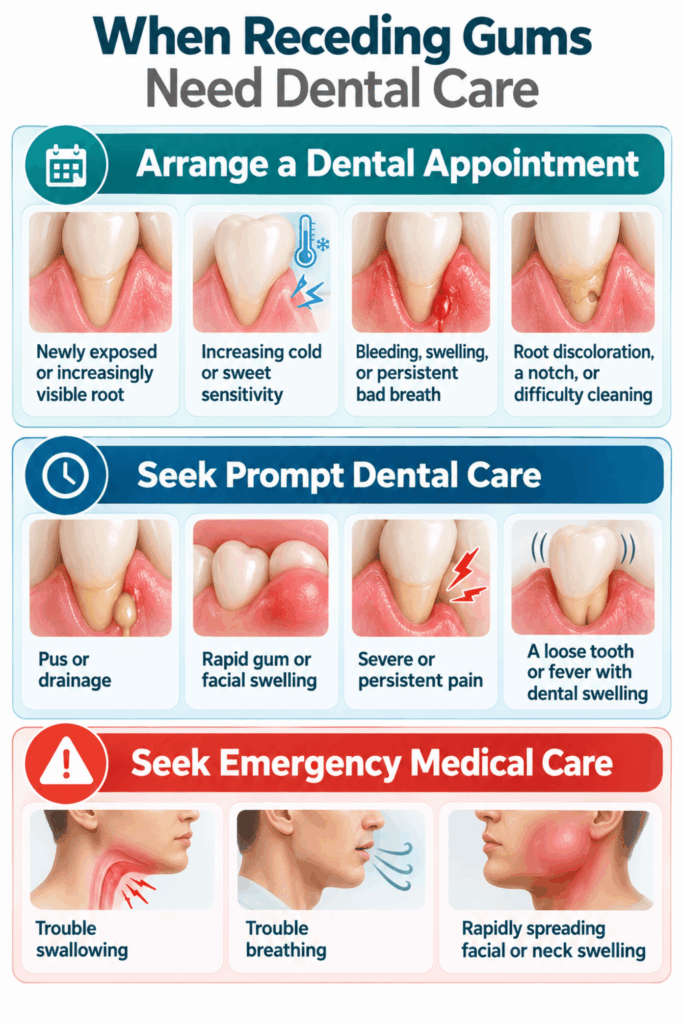
Arrange a routine dental appointment if you notice:
- A Newly Exposed Root: The gumline has changed even if the area does not hurt.
- Increasing Sensitivity: Cold, sweets, air, or brushing repeatedly causes discomfort.
- A Longer-Looking Tooth: One tooth appears different from its neighbors.
- Root Discoloration or a Notch: The exposed area looks brown, yellow, worn, or damaged.
- Bleeding or Swelling: The gums remain inflamed despite regular oral hygiene.
- Persistent Bad Breath: Ongoing odor or a bad taste may accompany gum disease.
- Difficulty Cleaning: Food or plaque repeatedly collects around the receding area.
Seek prompt dental care if you develop:
- Pus or Drainage: This may indicate an active infection.
- Rapid Swelling: Increasing gum or facial swelling needs timely assessment.
- Severe or Persistent Pain: Recession alone may not explain severe pain, so the tooth should be checked for another problem.
- A Loose Tooth: Mobility may point to reduced support, trauma, or infection.
- Fever With Dental Swelling: This combination may indicate a spreading infection and needs urgent professional advice.
- Trouble Swallowing or Breathing: Seek emergency medical care rather than waiting for a routine appointment.
Frequently Asked Questions
Why Is My Gum Receding Around Only One Tooth?
Recession around one tooth often reflects a local factor, such as tooth position, thin gum tissue, repeated brushing pressure, a strong frenum, inflammation, or nearby dental work. The other gums may remain healthy. A dentist can compare tissue thickness, pocket depth, bone support, and root damage to identify the likely cause.
How Fast Do Receding Gums Progress?
There is no fixed timeline. Some areas remain stable for years, while others change more quickly when inflammation, trauma, tobacco use, or unfavorable tooth position continues. Daily mirror checks are unreliable because lighting and viewing angles change. Periodontal measurements and standardized photographs taken over several visits provide a better record of progression.
Can You Have Receding Gums Without Gum Disease?
Yes. Periodontal disease is one cause, but gum recession may also develop around teeth with no active periodontitis. Thin tissue, tooth position, repeated trauma, oral piercings, and dental or orthodontic factors can contribute. A dental examination can check for bleeding, deep pockets, attachment loss, and bone changes before ruling gum disease in or out.
What Toothpaste Is Best for Receding Gums?
Choose a fluoride toothpaste to help protect exposed roots from decay. If the area is sensitive, a desensitizing toothpaste containing an ingredient such as potassium nitrate or stannous fluoride may help with regular use. Avoid highly abrasive whitening or charcoal products, and ask your dentist to examine sensitivity that continues or worsens.
Can Gum Recession Return After a Gum Graft?
Yes, recession can return or develop beside a treated area. Long-term stability depends on the recession pattern, tissue thickness, plaque control, smoking, brushing pressure, tooth position, and management of the original cause. Follow-up care and gentle oral hygiene remain important even when a graft initially provides good root coverage.
Why Are My Gums Receding Around a Crown?
Recession around a crown may result from inflammation, difficult cleaning, tissue changes, crown position, or the tooth’s original gum and bone anatomy. A visible crown margin does not always mean the crown has failed. Your dentist should check the margin, root surface, gum pockets, bone level, and fit before recommending treatment.
Can You Whiten Teeth With Receding Gums?
Whitening may increase sensitivity when roots are exposed, and root surfaces do not whiten like enamel. This can leave an uneven color near the gumline. Have active inflammation, decay, or strong sensitivity assessed first. A dentist can then recommend a suitable whitening method or discuss bonding when exposed root color remains noticeable.
Bottom Line
Receding gums usually do not grow back naturally, but the condition can often be stabilized. Identifying whether the cause is periodontal disease, repeated trauma, thin tissue, tooth position, or another factor is the first step toward protecting the exposed roots.
Treatment may involve gentler brushing, improved plaque control, sensitivity care, deep cleaning for periodontitis, or gum graft surgery in selected cases. Schedule an evaluation if the gumline is changing, the roots feel sensitive, or you notice bleeding, swelling, pus, or tooth mobility.
