Do your teeth feel rough near the gumline even after you brush? You may be feeling tartar, a hard deposit that forms when plaque stays on the teeth and absorbs minerals from saliva. Tartar removal requires professional dental instruments because a toothbrush and floss cannot lift away buildup once it has hardened. Trying to scrape it off yourself may injure your gums or tooth surfaces.
Tartar may appear yellow, brown, or dark and can collect above or below the gumline. Its rough surface gives plaque more places to stick, which can irritate the gums and make daily cleaning harder. Removing it helps your dentist or hygienist clean areas that home care can no longer reach.
The right cleaning depends on where the deposits sit and whether your gums show signs of disease. Some people need routine scaling, while others may need a deeper cleaning below the gumline. Your comfort, recovery, cost, and future cleaning schedule can also vary, so the first step is understanding what tartar is and why it needs professional care.
What Tartar Is and Why It Needs Professional Removal
Tartar, also called dental calculus, is plaque that has absorbed minerals from saliva and hardened on a tooth. It bonds firmly to enamel and exposed root surfaces. Once it forms, normal brushing and flossing cannot lift it away.
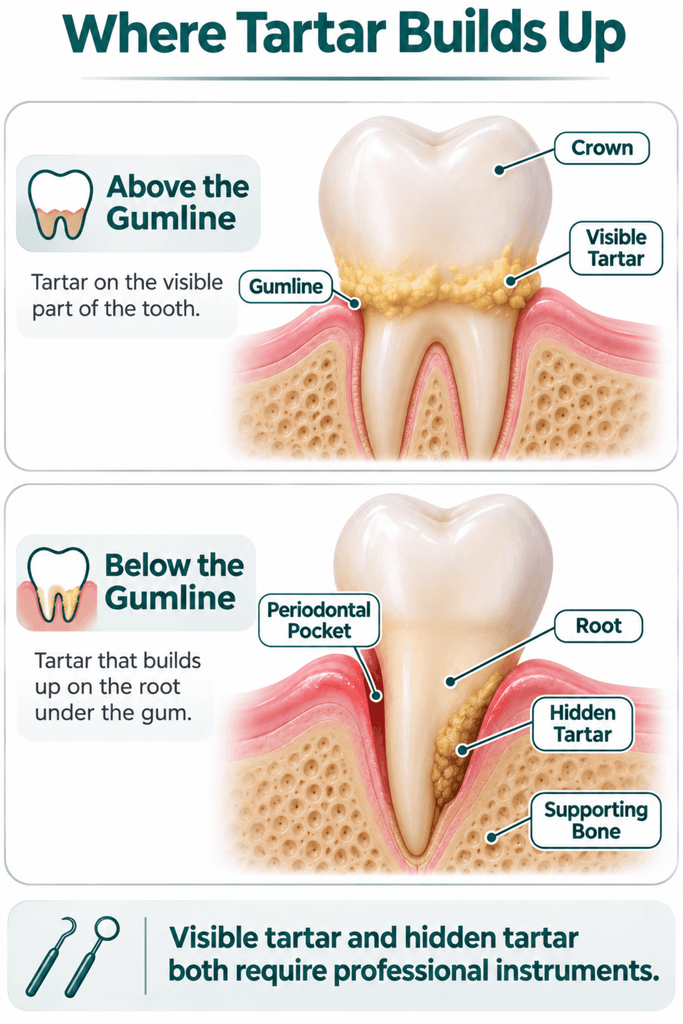
Tartar can develop in two locations:
- Above the Gumline: Supragingival tartar forms on visible tooth surfaces. It often looks yellow or tan and commonly collects behind the lower front teeth or near the upper back teeth.
- Below the Gumline: Subgingival tartar forms inside periodontal pockets. It may look brown or black, but much of it remains hidden during a simple visual check.
- Around Dental Work: Calculus may also collect around crowns, bridges, implants, retainers, and braces when plaque remains in areas that are difficult to clean.
- On Rough Tooth Surfaces: Once tartar forms, its rough surface gives new plaque more places to stick. This can make daily oral hygiene less effective.
The American Academy of Periodontology’s explanation of plaque and calculus confirms that a toothbrush cannot remove calculus once it has hardened.
How Plaque Hardens Into Tartar
Plaque is a soft, sticky film of bacteria that forms on your teeth each day. If it is not removed thoroughly, minerals from saliva enter the plaque and turn it into a hard deposit. How quickly plaque hardens and becomes tartar varies with saliva, oral hygiene, tooth position, and how easily each area can be reached during cleaning.
Why Home Cleaning Cannot Remove Hardened Tartar
Brushing twice a day and cleaning between your teeth can remove soft plaque and help prevent tartar buildup. Tartar-control toothpaste may slow new deposits, but it cannot remove hardened tartar that is already bonded to a tooth. Mouthwash also cannot dissolve established calculus.
Baking soda, oil pulling, vinegar, lemon juice, and other natural remedies do not provide a safe way to remove tartar from your teeth. Acidic products may damage enamel, while sharp home scaling tools can cut the gums, scratch tooth or restoration surfaces, or push bacteria beneath the gumline. A dentist or dental hygienist can remove tartar safely using instruments designed for this purpose.
How to Recognize Tartar Buildup
Tartar often feels like a hard, crusty ledge that remains after you brush your teeth. It may look yellow, tan, brown, or black. Common locations include the gum line, the inside surfaces of the bottom teeth, and the outer surfaces of the upper back teeth.
Look for these clues:
- Hard Texture: The area feels rough or raised rather than soft or sticky.
- Persistent Deposit: It does not come away with gentle brushing and interdental cleaning.
- Typical Location: Buildup appears close to the gums or between teeth that are difficult to clean.
- Color Change: The deposit may absorb stains from tobacco, tea, coffee, or blood from inflamed gums.
- Nearby Gum Changes: The gums around the deposit may look red, swollen, or prone to bleeding.
A rough patch does not confirm tartar by itself. Stain, excess filling material, bonding, a chipped tooth, or a natural change in enamel can feel similar. Avoid scraping the area and let a dental professional identify it.
Signs That Need a Dental Assessment
A visible deposit without pain usually calls for a routine dental appointment rather than emergency care. Book an examination if you notice:
- Hard Buildup: A deposit remains despite normal brushing and flossing.
- Recurring Bleeding: Your gums bleed often during gentle cleaning.
- Swollen Gums: The tissue looks puffy, red, or tender.
- Persistent Bad Breath: Odor continues despite good oral hygiene.
Seek a prompt assessment when the changes suggest that the problem may extend beyond simple tartar buildup:
- Gum Recession: More of a tooth or its root has become visible.
- Tooth Mobility: A permanent tooth feels loose or changes position.
- Pus or Marked Swelling: These signs may indicate an infection that needs treatment.
- Ongoing Pain: Tartar itself may not be the only problem, so the dentist should check for decay, gum disease, or another cause.
Why Tartar Removal Matters for Teeth and Gums
Tartar does not simply sit on the tooth as a harmless stain. Its rough surface holds plaque close to the gums and makes that area difficult to clean. The bacteria in plaque can then keep the gum tissue inflamed.
Early gum inflammation is called gingivitis. Without effective plaque control and professional care when needed, inflammation may progress to periodontitis in susceptible patients. Periodontitis damages the tissues and bone that support the teeth, although tartar is not the only factor involved.
Professional tartar removal can help in several ways:
- Improved Gum Access: Removing hard deposits allows you to clean the gumline more effectively.
- Less Plaque Retention: A cleaner surface gives plaque fewer rough deposits to collect around.
- Better Gum Assessment: Once thick calculus is removed, the dentist can evaluate the teeth and gums more accurately.
- Cleaner Appearance: Scaling may remove visible calculus, while polishing may reduce surface stains.
- Improved Breath: Cleaning may help when plaque, tartar, and inflamed gums contribute to bad breath.
Tartar removal does not replace daily hygiene or cure every dental issue. Cavities, advanced gum disease, defective restorations, and other oral health problems may require separate treatment.
How Professional Tartar Removal Works
Professional tartar removal is usually performed through scaling. A dentist or dental hygienist uses specialized instruments to remove calculus without relying on acids or harsh home remedies.
The method depends on how much tartar is present, where it sits, and whether the patient has healthy gums, gingivitis, or periodontitis. Some people need a routine cleaning, while others need deeper treatment below the gumline.
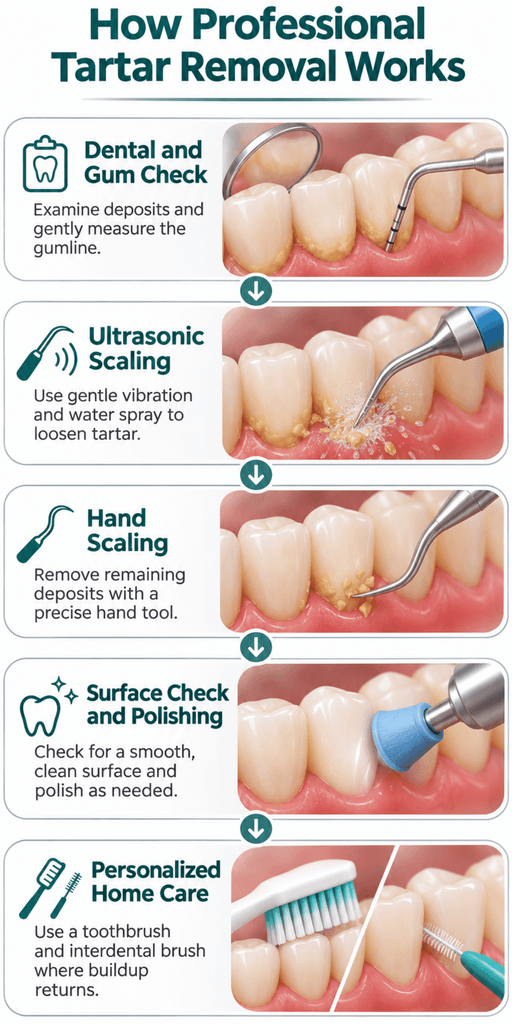
Dental and Gum Assessment
The clinician should assess your mouth before deciding how to clean it.
- Review Your Health History: Tell the dental team about medical conditions, pregnancy, allergies, prescribed medicines, previous sensitivity, and past problems during dental care.
- Examine the Teeth: The clinician checks the location and amount of tartar, tooth decay, restorations, stains, and areas that are difficult to clean.
- Assess the Gums: Gum color, bleeding, recession, and periodontal pocket depths help show whether routine cleaning or periodontal treatment may be needed.
- Consider Dental X-Rays: X-rays may be recommended when they are needed to check bone support, decay, or other problems that cannot be seen during the examination. They are not automatically required before every cleaning.
Current ADA guidance on selecting dental X-rays supports choosing images according to the patient’s symptoms, oral health, disease risk, and clinical findings.
Ultrasonic and Hand Scaling
Ultrasonic and hand instruments can both remove tartar. Clinicians often combine them so they can clean different tooth surfaces efficiently and carefully.
- Ultrasonic Scaling: A narrow metal tip moves with controlled vibration while water cools the area and flushes away loosened debris. The clinician adjusts the power and pressure according to the deposit and tooth surface.
- Hand Scaling: A scaler or curette removes remaining calculus from precise areas, including surfaces that may be difficult to reach with an ultrasonic tip.
- Surface Check: The clinician checks for deposits that remain and continues until the treated surfaces feel appropriately clean.
- Rinsing and Suction: Water and loosened material are removed throughout the procedure to keep the working area clear.
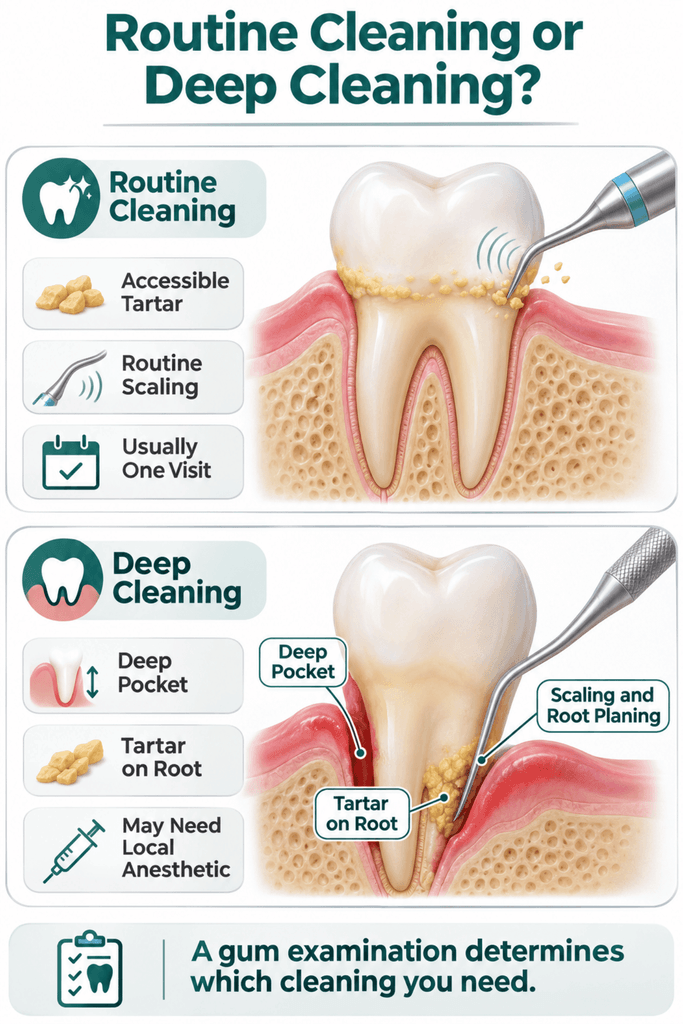
Routine scaling may be completed in one appointment. Heavy deposits or treatment below the gums may require local anesthetic, more time, or more than one visit.
Polishing and Personalized Cleaning Advice
Polishing may follow scaling when suitable stains or surface residue remain. A soft rubber cup, brush, or another polishing system may be used selectively. Polishing can make the teeth feel smoother, but it does not bleach enamel or change the natural tooth color like whitening treatment.
The appointment should also identify why tartar built up. Your dental hygienist may adjust your brushing angle, suggest an interdental brush or floss, or show you how to clean behind your lower front teeth. These small changes often matter more than simply choosing a stronger toothpaste or mouthwash.
Routine Tartar Removal Versus Deep Cleaning
Routine scaling and deep cleaning both remove plaque and tartar, but they are used for different clinical situations.
| Feature | Routine Scaling and Polishing | Deep Cleaning |
|---|---|---|
| Main Purpose | Remove accessible plaque, tartar, and suitable surface stains | Treat deposits and bacterial buildup associated with gum disease |
| Area Cleaned | Tooth surfaces at and around the gumline | Tooth roots inside periodontal pockets below the gumline |
| Typical Indication | Healthy gums, mild gingivitis, or accessible tartar buildup | Periodontitis with deeper pockets, inflammation, or attachment loss |
| Local Anesthetic | Often unnecessary | Commonly used to keep the treated area comfortable |
| Number of Visits | Often completed in one visit | May require treatment by sections over multiple visits |
| Expected Recovery | Little recovery or brief sensitivity | Tenderness, bleeding, or sensitivity may be more noticeable |
| Follow-Up | Based on individual buildup and oral health | Reassessment and periodontal maintenance are usually important |
Deep cleaning is also called scaling and root planing. Scaling removes plaque and calculus above and below the gumline. Root planing treats the root surface within diseased periodontal pockets. The American Dental Association’s guidance on scaling and root planing explains why this treatment is different from a regular cleaning.
Heavy visible tartar does not automatically mean you need deep cleaning. The decision should be based on a gum examination, pocket measurements, bleeding, attachment loss, bone support, and other clinical findings.
Does Tartar Removal Hurt or Damage Teeth?
Routine tartar removal may produce vibration, water spray, pressure, or a scraping sensation. Many patients tolerate these feelings well, but comfort varies. Inflamed gums, exposed roots, sensitive teeth, or heavy buildup can make treatment feel more uncomfortable.
Cleaning below the gumline may require local anesthetic. Tell the clinician if an area hurts rather than trying to tolerate it silently. The dentist or hygienist may adjust the instrument, power, pressure, or anesthesia.
Enamel Damage, Gaps, and Loose Teeth
Professional scaling is designed to remove calculus rather than healthy enamel. Trained clinicians use controlled pressure and select instruments that match the surface being cleaned. Problems are more likely when untrained people use sharp tools or excessive force at home.
Several common concerns have another explanation:
- Myth—Scaling Removes Enamel: Professional instruments target deposits on the tooth. Cleaning does not intentionally shave down the enamel, although careful technique remains important around exposed roots, restorations, and implants.
- Myth—Cleaning Creates Gaps: Thick tartar can fill spaces between teeth. After it is removed and swollen gums settle, spaces that were already present may become easier to see.
- Myth—Scaling Loosens Healthy Teeth: Tartar removal does not loosen teeth with healthy support. Severe gum disease may already have damaged the supporting bone, and heavy deposits can hide that mobility until the teeth are cleaned.
- Myth—Sensitivity Means the Tooth Was Damaged: A root surface that was covered by tartar may react to cold after cleaning. Mild sensitivity often improves, but strong or persistent symptoms need assessment.
What to Expect After Tartar Removal
Many people return to normal activities immediately after routine dental cleaning. Your teeth may feel smoother, while spaces between them may feel more noticeable because hard buildup is no longer present.
Recovery after deep cleaning may involve more tenderness or sensitivity. The amount of inflammation, depth of treatment, and use of local anesthetic all affect how your mouth feels afterward.
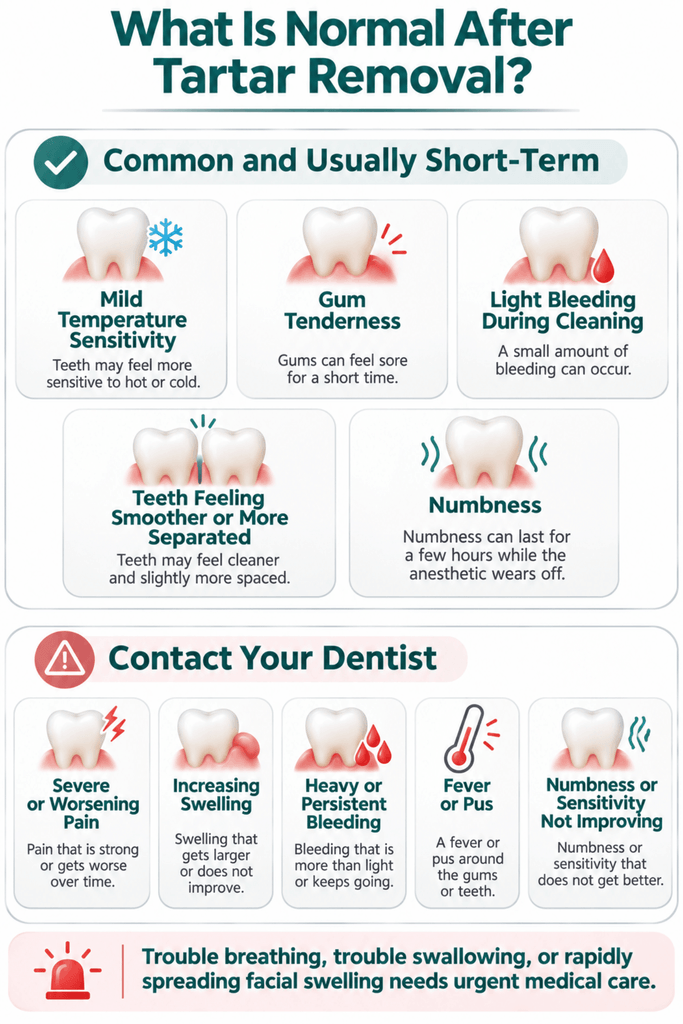
Common Short-Term Effects
- Temperature Sensitivity: Cold drinks or air may briefly bother exposed or recently cleaned surfaces.
- Mild Gum Tenderness: Inflamed gum tissue may feel sore as it begins to recover.
- Light Bleeding: Small amounts of bleeding can occur during brushing, especially when the gums were inflamed before treatment.
- A Different Bite or Texture: The teeth may feel smaller, smoother, or more separated after thick deposits are removed.
- Temporary Numbness: If local anesthetic was used, the lip, cheek, or tongue may remain numb until its effect wears off.
These effects should generally become less noticeable rather than more severe. The dental team can tell you what is expected based on the treatment you received.
Caring for Your Mouth After Cleaning
- Protect Numb Areas: Avoid chewing until normal feeling returns so you do not bite your cheek, lip, or tongue. Be careful with hot food and drinks while numb.
- Keep Brushing Gently: Use a soft-bristled toothbrush and light pressure. Avoiding the area completely allows plaque to return.
- Clean Between Your Teeth: Continue flossing or using the interdental tool recommended by your dental hygienist. Ask when to restart if a treated area is especially tender.
- Choose Comfortable Foods: If your teeth are sensitive, softer foods and mild temperatures may feel better during early recovery.
- Follow Product Instructions: If the dentist applied fluoride or prescribed a mouth rinse, follow the specific timing and directions provided.
- Attend Follow-Up Care: Return for reassessment when advised, especially after scaling and root planing.
When to Contact Your Dentist
Contact the dental office if you develop:
- Severe or Worsening Pain: Discomfort that becomes stronger instead of settling needs evaluation.
- Increasing Swelling: New or expanding swelling may indicate infection or another problem.
- Bleeding That Does Not Stop: Persistent or heavy bleeding requires professional advice.
- Fever or Pus: These are not expected effects of a routine cleaning.
- Persistent Numbness: Numbness that lasts longer than the clinician advised should be reported.
- Sensitivity That Does Not Improve: Ongoing pain with temperature or biting may come from another dental condition.
Seek urgent medical help for trouble breathing, trouble swallowing, or rapidly spreading facial swelling.
How Much Does Tartar Removal Cost?
The cost of tartar removal varies widely, so a useful estimate requires a country, city, examination, and treatment plan. A low advertised price may cover only basic scaling and polishing, while treatment for periodontitis may involve several appointments.
Common cost factors include:
- Cleaning Type: Routine scaling usually costs less than scaling and root planing.
- Amount of Buildup: Heavy or widespread calculus may require more clinical time.
- Location of Deposits: Cleaning deep periodontal pockets is more involved than removing accessible tartar above the gums.
- Number of Visits: Deep cleaning may be divided into sections of the mouth.
- Additional Care: Examination, X-rays, local anesthetic, polishing, or periodontal reassessment may be billed separately.
- Location and Provider: Fees vary by country, city, dental office, and clinician.
- Insurance Coverage: Coverage may depend on the diagnosis, procedure code, waiting period, and plan limits.
Ask for a written estimate after the dental assessment. It should state whether the fee includes the examination, scaling, polishing, anesthesia, and follow-up care.
How Often Should Tartar Be Removed?
There is no single tartar-removal schedule that suits everyone. Some patients develop calculus quickly, while others form very little. Gum health, plaque control, smoking, dry mouth, braces, restorations, implants, diabetes, and a history of periodontitis can affect the recommended interval.
A six-month cleaning is common, but it should not be treated as a universal rule. Someone with stable oral health may need a different schedule from a patient receiving periodontal maintenance. NICE guidance on dental recall intervals supports choosing the interval according to each patient’s current oral health and disease risk.
Your dentist should review the schedule as your health and home care change. Regular dental checkups are still important for your dental health, even when little tartar is visible, because an examination looks for more than calculus.
How to Slow Tartar From Returning
Tartar can return because plaque begins forming again soon after your teeth are cleaned. Good oral hygiene disrupts that plaque before it has more time to harden.
- Brush Twice Daily: Brush your teeth twice a day for about two minutes with fluoride toothpaste and a soft-bristled toothbrush.
- Clean Every Tooth Surface: Reach the outer, inner, and chewing surfaces. Tilt the brush vertically to clean the inside of the front teeth.
- Clean Between Teeth Daily: Use floss, an interdental brush, or another tool recommended for the size of your spaces and any dental work.
- Focus on Buildup-Prone Areas: Spend extra time behind the bottom front teeth, near the gum line, and around crowded teeth, braces, retainers, or bridges.
- Consider an Electric Toothbrush: Both manual and electric toothbrushes can work well. Choose the type you can use thoroughly with gentle pressure.
- Use Tartar-Control Products Realistically: Tartar-control toothpaste may help slow new buildup, but it cannot remove stubborn tartar that has already formed.
- Treat Mouthwash as an Addition: A suitable mouthwash may support a broader oral health routine, but it does not replace brushing, interdental cleaning, or professional treatment.
- Avoid Tobacco: Smoking and other tobacco products raise the risk of periodontal problems and may make tartar darker.
- Follow Your Recommended Cleaning Schedule: Professional cleanings remove deposits that home care can no longer reach.
The ADA recommends brushing twice daily with fluoride toothpaste and cleaning between the teeth each day, while recognizing that the tools should be matched to the individual patient.
Frequently Asked Questions About Tartar Removal
What Should I Do if a Piece of Tartar Breaks Off?
Do not use a sharp tool to remove whatever remains. Gently brush and clean between the teeth, then arrange a dental examination because more calculus may still be attached. A rough edge may be tartar, but it could also be a chipped tooth or restoration. Seek earlier care if you develop pain, swelling, or bleeding.
Can Black Tartar Be Removed During a Regular Dental Cleaning?
Black tartar can be removed professionally, but the required cleaning depends on its location. Dark deposits above the gums may be removed during routine scaling. Tartar inside deeper periodontal pockets may require scaling and root planing. Because stain and tooth decay can also look dark, a dentist should confirm what the area is before treatment.
Can I Eat Immediately After Tartar Removal?
You can often eat when comfortable after routine scaling if no local anesthetic or special fluoride treatment was used. Wait until numbness has worn off before chewing to avoid biting your lip, cheek, or tongue. If your teeth feel sensitive, choose softer foods at mild temperatures and follow any instructions provided by the dental office.
Is Tartar Removal Safe During Pregnancy?
Preventive and necessary dental care, including professional cleaning, is generally considered safe during pregnancy. Tell your dentist how far along you are, whether the pregnancy is high-risk, and which medicines you take. The ADA’s clinical information about dental care during pregnancy also supports providing needed periodontal treatment during pregnancy.
Can Dentists Remove Tartar Around Braces, Crowns, or Implants?
Yes. Dental professionals can remove tartar around orthodontic appliances, crowns, bridges, and implants. They may choose instruments and settings suited to those surfaces to reduce scratching or damage. The hygienist can also recommend floss threaders, interdental brushes, implant-safe tools, or other products that make these areas easier to keep clean.
Should I Stop Blood Thinners Before Tartar Removal?
Do not stop aspirin, warfarin, apixaban, or another prescribed blood thinner on your own. For many patients, medication does not need to be changed for dental care, but the decision depends on the procedure and bleeding risk. The dentist should coordinate any change with the prescribing clinician, consistent with ADA guidance on anticoagulants and dental procedures.
Will Tartar Removal Get Rid of Bad Breath?
It may improve bad breath when plaque, tartar, or inflamed gums are contributing to the odor. However, persistent bad breath can also relate to tongue coating, tooth decay, dry mouth, tobacco, infection, or a non-dental condition. If odor continues despite good oral hygiene and professional cleaning, arrange an assessment to identify the cause.
Bottom Line: Tartar Removal Requires Professional Care
Once plaque has hardened into tartar, toothpaste, mouthwash, baking soda, oil pulling, and home scaling tools cannot remove it safely. A dentist or dental hygienist can examine the gums and choose routine scaling or deeper periodontal cleaning based on where the deposits sit and whether gum disease is present.
After treatment, daily brushing and flossing help prevent tartar from returning, but they do not replace risk-based dental checkups. Book an assessment if you can see or feel hard buildup, especially when it occurs with bleeding, swelling, recession, persistent bad breath, or tooth mobility.
