Swollen gums can feel sore, look puffy, and bleed when you brush. If you are wondering how to reduce gum swelling, start with gentle brushing, careful cleaning between the teeth, a warm saltwater rinse, and a cold compress on the outside of your cheek. These steps may ease mild irritation, but they do not remove hardened tartar or cure a dental infection.
Plaque-related gingivitis is a common cause, but swelling can also develop around trapped food, a wisdom tooth, an abscess, or an irritating dental product. Hormonal changes, certain medicines, and recent dental work may play a role as well. The location and timing of the swelling can offer clues, but only a dental examination can confirm the cause.
Mild swelling may settle once you remove the irritant and improve daily plaque control. Severe swelling, keeps returning, or comes with fever, facial swelling, pus, or trouble swallowing needs professional attention. The safest next step is to know what you can do now, what to avoid, and which signs mean you should call a dentist.
How to Reduce Gum Swelling at Home
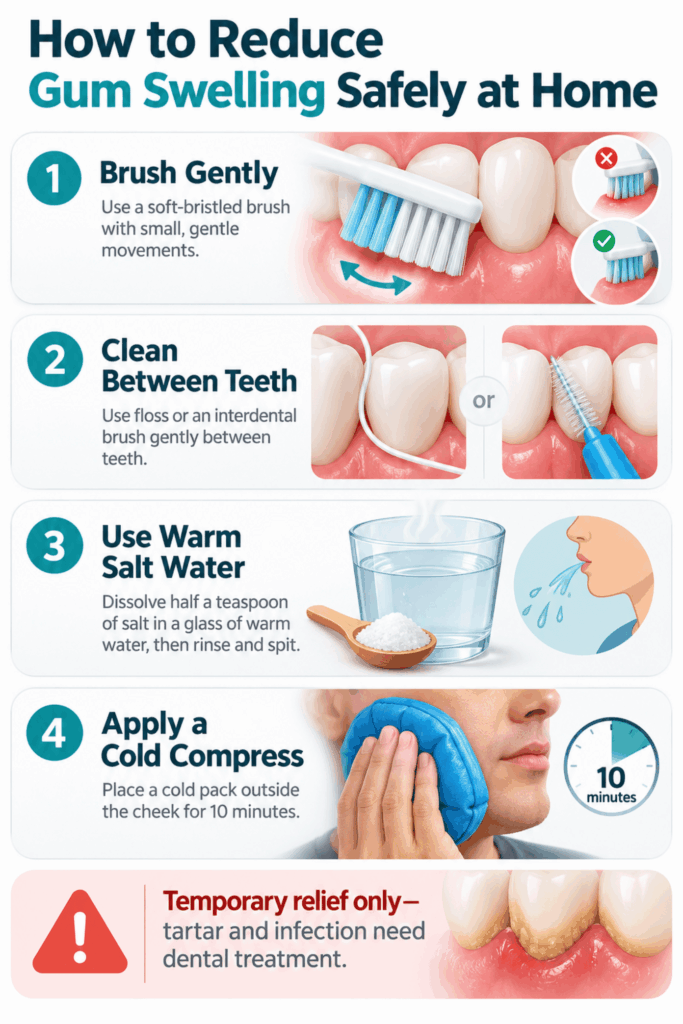
If you want to know how to reduce gum swelling, begin with gentle oral care, a warm salt-water rinse, and a cold compress when needed. These steps may reduce mild gum swelling and soothe irritated tissue. However, home remedies cannot remove tartar, drain an abscess, or treat an infected tooth.
- Brush twice a day gently with fluoride toothpaste.
- Clean between your teeth without forcing the floss.
- Rinse with warm salt water.
- Apply a wrapped cold compress outside your cheek.
- Avoid tobacco, alcohol, and irritating oral products.
- Use pain medicine only when it is safe for you.
- Arrange dental care if the swelling persists, worsens, or returns.
How Gentle Brushing Can Reduce Gum Swelling
Continue brushing your teeth even if your gums feel tender or bleed slightly. Use a soft-bristled toothbrush and small circular movements along the gumline. Hard scrubbing can injure irritated gum tissue without cleaning it more effectively.
Plaque left near the gums can keep inflammation active. Good brushing and interdental cleaning help reduce bacteria and plaque that can worsen gum swelling. The National Institute of Dental and Craniofacial Research’s guidance on gum disease recommends brushing twice a day with fluoride toothpaste and cleaning between the teeth regularly.
Clean Between the Teeth Carefully
Floss or an interdental brush may remove plaque and food caught between the teeth. Slide the cleaner gently rather than snapping it into sore gums. If something appears stuck, do not dig under the gum with a pin, toothpick, or other sharp object.
Do not squeeze or puncture a swollen bump. If cleaning the area causes marked pain, bleeding, or pus, stop and contact a dentist.
Rinse With Warm Salt Water to Soothe Swollen Gums
Rinsing your mouth with warm salt water may reduce mild gum swelling, soothe irritated tissue, and help clear loose debris. It provides temporary relief from swollen gums, but it does not replace brushing, flossing, or professional treatment.
- Dissolve half a teaspoon of salt in a glass of warm water.
- Gently move the solution around your mouth.
- Spit it out instead of swallowing it.
- Repeat when needed, but stop if it increases irritation.
This method follows the NHS instructions for preparing a salt-water mouth rinse. Young children should not use it because they may swallow the solution.
Use a Cold Compress to Reduce Gum Swelling
A wrapped cold compress may help reduce gum swelling and discomfort temporarily. If swelling is accompanied by soreness, wrap a cold pack or a bag of frozen vegetables in a clean cloth. Hold it against the outside of your cheek for about 10 minutes, then remove it and give your skin a break. Never place ice directly on your skin or against the gum tissue.
After a dental procedure, follow the instructions from your own dental team. For example, hospital guidance on using ice packs after implant treatment recommends brief applications rather than continuous exposure.
Avoid Irritants and Drink Enough Water
Give inflamed gums a chance to settle by limiting anything that dries, burns, or rubs the tissue.
- Tobacco: Smoking and other tobacco products can irritate oral tissues and interfere with healing.
- Alcohol: Alcoholic drinks and strong alcohol-based mouthwash may sting sore gums or worsen dry mouth.
- Hot or Spicy Foods: Choose milder foods until chewing feels comfortable.
- New Oral Products: Stop using a recently introduced toothpaste or mouthwash if swelling began soon after you started it.
- Poorly Fitting Appliances: Remove a removable dental appliance if it is rubbing badly, when your dentist has advised that removal is safe.
- Dehydration: Sip water throughout the day to support saliva and help wash away loose food particles.
Use Pain Medicine Only When It Is Safe
An over-the-counter pain reliever may reduce gum pain, but it will not treat the cause of swollen gums. The American Dental Association’s acute dental pain guideline supports non-opioid medicines, including appropriate nonsteroidal anti-inflammatory drugs, as first-line options for many types of short-term dental pain.
Follow the product label and avoid combining medicines that contain the same active ingredient. Ask a dentist, physician, or pharmacist before taking pain medicine if you are pregnant, use blood thinners, have stomach ulcers, kidney or liver disease, take other medicines, or have had an allergic reaction to a pain reliever. Do not use medication to delay treatment for a suspected infection.
What Not to Put on Swollen Gums
Some popular home remedies can cause chemical burns or make gum irritation worse. Use only products designed for oral use and follow their labels.
- Aspirin Against the Gum: Do not hold an aspirin tablet against a painful tooth or gum. Direct contact can damage the oral tissue.
- Undiluted Hydrogen Peroxide: Concentrated or prolonged exposure can irritate or burn the gums. Do not improvise a peroxide rinse.
- Essential Oils: Do not place concentrated clove, peppermint, tea tree, or other oils directly on inflamed gums.
- Harsh Homemade Pastes: Avoid acidic, abrasive, or strongly alkaline mixtures that may injure the tissue.
- Sharp Objects: Never try to open, puncture, or drain a gum bump yourself.
- Someone Else’s Antibiotics: The wrong antibiotic may not treat the problem and could delay proper dental care.
Published reports summarized in a peer-reviewed review of oral reactions to over-the-counter products describe tissue injuries from misused aspirin, peroxide, and strong mouthwash.
Why Are Your Gums Swollen?
Swelling means that the gum tissue is inflamed. It does not identify the cause by itself. Some causes are mild and temporary, while others require professional dental treatment.
The pattern offers useful clues. Swelling across much of the gumline often relates to plaque or another general factor. Swelling beside one tooth raises concern for trapped food, local injury, decay, or infection. A dentist must examine the area to confirm the cause.
Plaque-Related Gingivitis and Tartar
Poor oral hygiene allows plaque to build up along the gumline, making gingivitis a common cause of swollen gums. Plaque is a sticky bacterial film that forms on the teeth. When it remains along the gumline, the gums may become red, swollen, tender, and more likely to bleed. This early form of gum disease is called gingivitis.
Brushing and flossing can remove soft plaque, but they cannot remove hardened tartar. A dentist or hygienist must remove tartar with professional dental cleaning instruments. If inflammation has spread deeper around the teeth, additional periodontal care may be necessary.
Trapped Food, Hard Brushing, or Product Irritation
Gum swelling does not always mean gum disease. Local irritation can also affect the tissue.
- Trapped Food: Meat fibers, popcorn hulls, or other debris may become wedged between two teeth and press against the gum.
- Hard Brushing: Heavy pressure or stiff bristles can injure the gumline.
- Forceful Flossing: Snapping floss into the gums may cause short-term soreness or bleeding.
- New Toothpaste or Mouthwash: Flavorings, detergents, or other ingredients may irritate sensitive tissue.
- Dental Appliances: Braces, retainers, dentures, or mouthguards may rub the gums or make plaque harder to remove.
Mild gum irritation should begin settling after the trigger is removed and proper oral care resumes. Persistent or recurring swelling needs a dental examination.
A Dental Abscess or Infected Tooth
A dental abscess is a collection of pus caused by infection. Swelling may appear beside one tooth or as a raised bump on the gum. Other signs can include throbbing pain, pain when biting, temperature sensitivity, pus, a bad taste, fever, or swelling of the cheek or jaw.
An abscess does not disappear because the pain fades or the bump drains. The source still needs treatment. According to the NHS explanation of dental abscess treatment, a dentist may drain the infection and treat the tooth with root canal therapy or extraction when appropriate. Antibiotics may be added in selected cases, but they do not replace treatment of the source.
Contact a dentist urgently if you suspect an abscess. Seek emergency medical help if swelling spreads toward your eye or neck or makes breathing, swallowing, or speaking difficult.
Inflammation Around a Wisdom Tooth
A partly erupted wisdom tooth may leave a flap of gum over part of its crown. Food and bacteria can collect beneath this flap and cause inflammation called pericoronitis.
The gum behind the last molar may become swollen and painful. You may also notice a bad taste, tenderness when biting, or difficulty opening your mouth. Gentle cleaning and rinsing may provide temporary relief, but recurring symptoms need dental care because the tooth’s position or gum flap may allow the problem to return.
Hormonal Changes, Dry Mouth, and Medicines
Changes elsewhere in the body can influence gum health.
- Pregnancy and Puberty: Hormonal changes can make the gums respond more strongly to plaque, leading to swollen or bleeding gums.
- Dry Mouth: Reduced saliva allows food and plaque to remain around the teeth more easily.
- Medicines: Some anti-seizure medicines, immune-suppressing drugs, and calcium channel blockers can contribute to gum enlargement.
- Health Conditions: Diabetes and other conditions that affect healing or immune function may change how the gums respond to plaque.
Do not stop a prescribed medicine because your gums are swollen. A dentist can assess your oral health and work with the prescriber if a medication change is worth considering. Medication-related enlargement and plaque inflammation may occur together, so better oral hygiene often remains part of treatment.
Recent Dental Treatment or Oral Injury
Some swelling is expected after an extraction, implant procedure, gum treatment, or other oral surgery. It may increase during the first two or three days before it begins to settle. Follow the instructions given by your dental team because brushing, rinsing, diet, and cold-pack advice can vary by procedure.
Contact the dentist if swelling becomes severe, continues to grow after the expected peak, or occurs with fever, pus, worsening pain, or a bad taste. These changes may indicate infection or another complication rather than normal healing.
What the Location and Timing of Swelling May Suggest
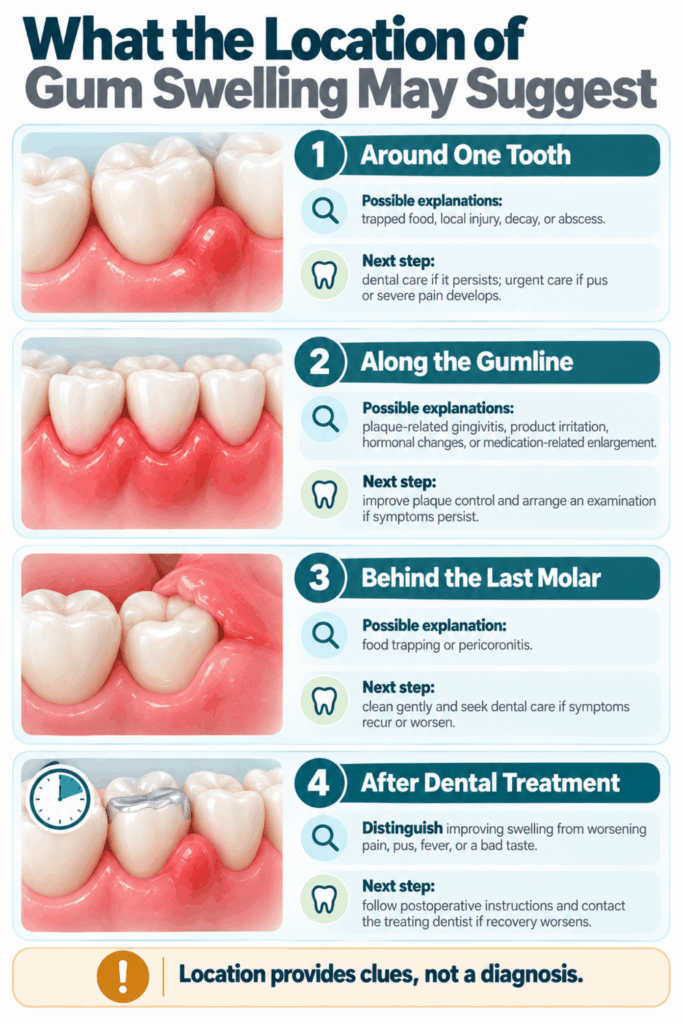
The pattern of swelling can help you decide what to do next, but it cannot confirm a diagnosis.
| Swelling Pattern | Possible Explanation | Accompanying Signs | Appropriate Next Step |
|---|---|---|---|
| Around one tooth | Trapped food, local gum injury, decay, or an abscess | Pain when biting, sensitivity, pus, or a bad taste | Clean gently and arrange dental care if it does not settle; seek urgent care if infection is suspected |
| Along much of the gumline | Plaque-related gingivitis, product irritation, hormonal changes, or medication-related enlargement | Bleeding during brushing, redness, tenderness, or bad breath | Improve daily plaque control and schedule an examination if symptoms persist |
| Behind the last molar | Food trapped around a partly erupted wisdom tooth or pericoronitis | Tender gum flap, bad taste, pain when chewing, or limited mouth opening | Keep the area clean and request dental care if symptoms recur or worsen |
| After dental treatment | Normal healing, tissue irritation, or a complication | Bruising and swelling may be expected; fever, pus, and increasing pain are not | Follow postoperative instructions and contact the treating dentist if recovery moves in the wrong direction |
Sudden facial swelling or difficulty breathing, swallowing, or speaking requires a higher level of care regardless of where the swelling started.
When Should You See a Dentist for Swollen Gums?
The right timing depends on the severity, pattern, and accompanying symptoms. Mild irritation may settle with gentle home care, but recurring, localized, or worsening swelling deserves an examination.
Arrange a Dental Appointment
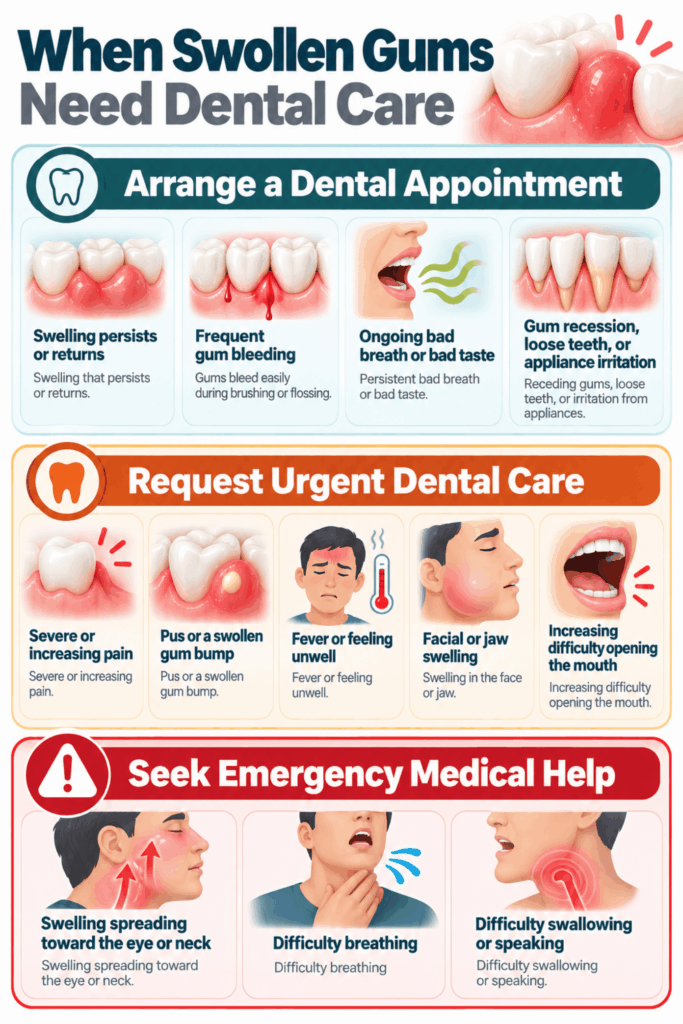
Schedule a dental visit if you notice:
- Persistent Swelling: The gum does not begin improving after you remove an obvious irritant and restore gentle oral care.
- Repeated Episodes: The same area keeps becoming swollen.
- Frequent Bleeding: Your gums bleed often during brushing or flossing.
- Ongoing Bad Breath: The odor or bad taste remains despite normal cleaning.
- Changes Around the Teeth: You notice gum recession, loose teeth, new spaces, or discomfort when chewing.
- Appliance Problems: Braces, dentures, retainers, or another dental appliance rubs the gums or traps plaque.
- Possible Medication Effects: Gum tissue begins enlarging after you start or change a medicine.
Request Urgent Dental Care
Contact a dentist promptly when the symptoms suggest infection or rapid progression:
- Severe or Increasing Pain: The pain is difficult to control or continues to worsen.
- Localized Swelling With Pus: A bump, drainage, or bad taste may indicate an abscess.
- Facial or Jaw Swelling: The swelling has moved beyond the gum.
- Fever or Feeling Unwell: General symptoms can occur when infection is spreading.
- Limited Mouth Opening: Increasing difficulty opening the jaw may accompany inflammation near a wisdom tooth.
- Severe Postoperative Symptoms: Pain or swelling worsens instead of following the expected recovery pattern.
Urgent dental treatment targets the source. Painkillers, mouthwash, or antibiotics alone may not solve the underlying problem.
Seek Emergency Medical Help
Seek emergency medical care if swelling extends toward the eye or neck or makes it difficult to breathe, swallow, or speak. Do not wait for a routine dental appointment. These signs can occur when an infection spreads into spaces around the face or airway. The NHS guidance on emergency and urgent dental appointments distinguishes swelling that needs urgent dental care from severe swelling that requires A&E care or a 999 call.
How a Dentist Finds the Cause
A dentist combines your symptoms with an examination rather than judging the swelling by appearance alone.
- Review the History: The dentist asks when the swelling started, whether it is changing, and whether you have pain, bleeding, discharge, fever, or a bad taste.
- Check Possible Triggers: Discuss recent dental care, oral injuries, pregnancy, health conditions, new oral products, and prescribed medicines.
- Examine the Area: The dentist checks the gum tissue, teeth, fillings, dental appliances, and wisdom teeth for plaque, tartar, decay, injury, or drainage.
- Measure the Gums When Needed: A small periodontal probe may be used to look for bleeding and measure the spaces between the teeth and gums.
- Take Dental X-Rays When Indicated: X-rays may reveal decay, bone loss, an infected tooth root, or the position of a wisdom tooth.
- Coordinate Other Care: If the findings suggest a medication effect, nutritional problem, or health condition, the dentist may recommend medical evaluation.
How Dentists Reduce Gum Swelling by Treating the Cause
The correct treatment for swollen gums depends on the cause. Removing plaque may be enough for mild gingivitis, while an abscess, poorly fitting appliance, or recurrent wisdom tooth problem needs a different approach.
Treatment for Plaque and Gum Disease
For gingivitis, professional dental cleaning removes plaque and tartar that home care cannot reach. The dentist or hygienist also checks your brushing and flossing technique so you can control new plaque each day. Removing plaque and tartar can reduce inflammation, allowing gum swelling to settle as the tissue heals.
Periodontitis affects the deeper structures supporting the teeth. Treatment may include scaling and root planing, often called deep cleaning, to remove deposits from below the gumline. More advanced disease may require periodontal maintenance, medication used alongside mechanical treatment, or surgery. Mouthwash can support selected treatment plans, but it cannot replace cleaning the teeth and gums.
Treatment for an Infected Tooth or Abscess
An abscess usually needs drainage and treatment of the infected source. If the infection began inside a tooth, root canal treatment may allow the dentist to remove infected tissue and preserve the tooth. Extraction may be necessary when the tooth cannot be restored.
Antibiotics may be appropriate when infection is spreading, produces systemic symptoms, or cannot be drained immediately. They are not automatically needed for every abscess and do not remove infected pulp, decay, or another local source.
Treatment for Other Causes
Treatment is matched to the finding:
- Trapped Food: The dentist removes the debris and checks why it became trapped, such as an open contact or damaged filling.
- Braces or Dentures: An orthodontic component or removable appliance may need adjustment, repair, or improved cleaning.
- Wisdom Tooth Inflammation: The dentist may clean beneath the gum flap, recommend an antiseptic product when appropriate, or discuss removal if attacks recur.
- Product Irritation: Stopping or replacing the suspected toothpaste or mouthwash may allow the tissue to recover.
- Medication-Related Enlargement: Better plaque control, professional cleaning, and coordination with the prescriber may help. Some cases require gum treatment or surgery.
- Hormonal or Medical Factors: The dentist treats local plaque and inflammation while coordinating care for any contributing health condition.
How Long Does Gum Swelling Take to Go Down?
There is no single timeline for every cause of swollen gums. What matters most is whether the area begins improving after the correct action or continues to worsen.
- Minor Irritation: Swelling from hard brushing, flossing injury, or a removable irritant should begin settling after the trigger is removed.
- Trapped Food: Relief may begin after the debris is removed, but the area needs evaluation if pain or swelling continues.
- Plaque-Related Gingivitis: The gums may improve as plaque control improves, but tartar remains until a professional dental cleaning removes it.
- Dental Abscess: The swelling may fluctuate or drain, but it will not reliably heal until the source is treated.
- Wisdom Tooth Inflammation: Symptoms may ease with local care but can return when the gum flap continues to trap bacteria and food.
- Dental Surgery: Swelling often increases during the first 48 to 72 hours. It commonly begins settling afterward and may last about a week, depending on the procedure. More complex surgery can take longer.
Contact your dentist when recovery does not follow the instructions you received, especially if swelling continues to increase or appears with fever, pus, or worsening pain.
How to Prevent Gum Swelling From Returning
Preventing swollen gums starts with controlling plaque and correcting problems that repeatedly irritate the tissue.
- Brush Twice Daily: Use fluoride toothpaste and a soft-bristled brush. Clean the gumline without heavy pressure.
- Clean Between the Teeth: Floss or use an interdental cleaner that fits the space once a day or as your dentist recommends.
- Attend Dental Visits: Routine examinations and professional dental cleaning help identify tartar, decay, failing restorations, and early gum disease.
- Clean Dental Appliances: Follow the cleaning instructions for dentures, retainers, mouthguards, aligners, and removable appliances.
- Do Not Smoke: Tobacco raises the risk of gum disease and can interfere with healing.
- Stay Hydrated: Adequate water supports saliva, especially if a medicine causes dry mouth.
- Manage Health Conditions: Work with your healthcare team to manage conditions that affect healing or gum health.
- Watch for Recurring Patterns: Swelling that repeatedly develops in one place often has a local cause that home care cannot correct.
Good oral hygiene lowers the amount of plaque around the teeth, but healthy gums also depend on professional dental care when tartar, infection, or an appliance problem is present.
Frequently Asked Questions
Why Are My Gums Swollen Even Though They Do Not Hurt?
Painless swelling can occur with plaque-related gingivitis, hormonal changes, medication-related gum enlargement, or slow irritation from a dental appliance. A lack of pain does not always mean the tissue is healthy. Arrange a dental examination if the swelling persists, spreads, bleeds easily, or changes the shape of your gums.
Is a Bump on My Gum Always a Dental Abscess?
No. A gum bump may be an abscess, an irritated area, a canker sore, or another type of growth. An abscess is more likely when the bump occurs near a painful tooth or produces pus, a bad taste, biting pain, or facial swelling. Any unexplained bump that persists or returns should be examined.
Why Do My Gums Swell or Bleed After Flossing?
Floss may cause brief irritation if it snaps into the gum, but repeated bleeding often points to existing gum inflammation. Continue cleaning gently instead of forcing the floss or abandoning it. If proper daily care does not improve the problem, a dentist should check for tartar, gingivitis, or another local cause.
Can Braces Cause Swollen Gums?
Braces can make plaque and food harder to remove, allowing inflammation to develop around the brackets and gumline. A wire or appliance may also rub one area. Improve cleaning with the tools recommended by your orthodontist, and request an examination if the swelling persists, becomes painful, or grows over part of a tooth.
Are Swollen Gums During Pregnancy Normal?
Hormonal changes during pregnancy can make the gums more sensitive to plaque, causing redness, swelling, or bleeding. These changes are common, but they should not be ignored. Preventive, diagnostic, restorative, and emergency dental care can generally be provided during pregnancy, so tell the dental team that you are pregnant and arrange an assessment.
Can a Vitamin Deficiency Cause Swollen Gums?
Severe nutritional deficiencies, including vitamin C deficiency, can affect the gums, but they are not the most common explanation for swelling. Plaque, gum disease, local irritation, and infection must also be considered. Do not start high-dose supplements based only on gum symptoms; seek dental or medical assessment when a deficiency is possible.
Can Mouthwash Make Swollen Gums Worse?
Yes. Alcohol, strong flavorings, or another ingredient may irritate already inflamed gums, especially if symptoms began after changing products. Stop the suspected mouthwash and rinse with plain water. Choose another product only after checking its label or asking your dentist, particularly if you have dry mouth or sensitive oral tissue.
Bottom Line: Reduce Gum Swelling and Treat the Cause
Gentle brushing, careful flossing, warm salt water, and a wrapped cold compress are reasonable ways to reduce gum swelling caused by mild irritation. These steps may soothe swollen gums, but they cannot remove tartar or treat an abscess, infected tooth, or recurring wisdom tooth problem.
Arrange dental care when the swelling persists, returns, or occurs with significant pain, bleeding, pus, fever, or facial swelling. Seek emergency help if swelling affects your eye or neck or makes breathing, swallowing, or speaking difficult.
