Tooth decay is a gradual process that can affect anyone, even with daily brushing. Understanding the stages of tooth decay helps explain how cavities develop, why tooth enamel breaks down, and when early care can protect your oral health. Tooth decay is damage produced by plaque and sugary foods that slowly weaken the structure of your tooth.
In its early stages, decay may appear as white or dark spots on your teeth and may not cause pain. As decay progresses deeper into the tooth, symptoms like tooth sensitivity, discomfort, and visible holes can develop. Without proper oral hygiene and regular dental checkups, the decay can move from the enamel to the inner layers of the tooth.
Knowing how tooth decay advances allows you to stop tooth decay early and avoid more complex treatment options. In this guide, we will break down the five stages of tooth decay, explain what happens at each stage, and show how proper care and early intervention can help protect your teeth and gums.
What Are the Stages of Tooth Decay?
The stages of tooth decay describe how tooth decay occurs over time, starting with minor surface damage and progressing to deeper infection. Tooth decay begins when acid produced by bacteria breaks down minerals in the layer of tooth structure, a process known as demineralization.
Dentists divide the tooth decay process into stages to better explain how decay tends to progress and to choose the right stage to restore the tooth. Early identification also makes it easier to prevent tooth decay with the best possible outcomes.
Stage One of Tooth Decay: Early Enamel Damage
The first stage of tooth decay is when enamel decay begins on the outer portion of your tooth. At this stage, acid attacks the enamel, causing early mineral loss without forming a visible hole in a tooth. A common sign is a white spot on the tooth surface, which shows decay in its early stages.
This stage is often painless, so many people experience tooth decay without realizing it. When tooth decay is caught this early, decay from progressing may be possible with fluoride treatments and improved oral care.
Signs of Tooth Decay in Its Early Stages
In the early stages of tooth decay, changes are often subtle but still important to notice. These signs may appear even when the tooth is not painful yet:
- White Spot Formation: Chalky white areas appear where enamel has started to lose minerals.
- Mild Sensitivity: Slight discomfort may occur when eating sweet or acidic foods.
- Surface Discoloration: The tooth surface may look dull or slightly yellow.
- No Visible Cavity: Enamel damage has not yet formed a hole in the tooth.
- Response to Fluoride: Early enamel damage may improve with fluoride treatment.

Stage Two of Tooth Decay: Enamel Breakdown and Cavity Formation
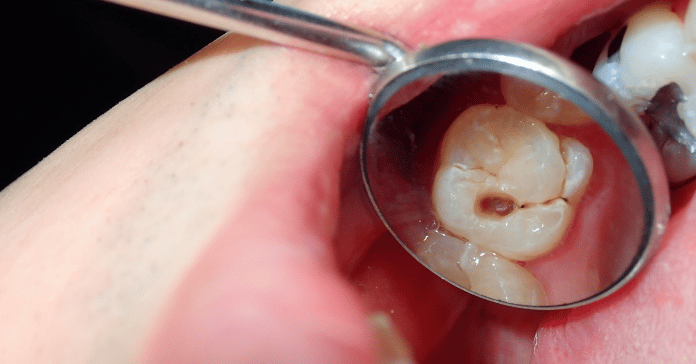
The second stage of tooth decay occurs when enamel damage becomes permanent and a cavity forms. Plaque bacteria continue producing acid, weakening the enamel until a hole in a tooth develops.
At this point, brushing alone cannot repair the damage, even though good hygiene may slow further decay. This second stage of tooth decay is often when people first need a dental filling. As the enamel breaks down, decay affects a larger part of the tooth and may spread quickly, especially in back teeth and cavities in molars.
Food particles and bacteria become trapped in the cavity, allowing decay to deepen. Even though baby teeth are temporary, cavities at this stage still require care. Ignoring treatment allows tooth decay to progress into deeper layers.
Stage Three of Tooth Decay: Dentin Damage and Tooth Sensitivity
In stage three, decay moves beyond the enamel and reaches the dentin, the softer layer beneath. Dentin decay spreads faster because this layer is less resistant to acid. As decay affects dentin, the tooth becomes more sensitive to temperature and pressure. Many people experience tooth decay at this stage, as noticeable discomfort during daily activities. Without treatment, decay reaches deeper toward the inner part of the tooth.
Symptoms Dentists See at This Stage
Dentists commonly identify clear symptoms once decay affects dentin. These signs often prompt patients to visit their dentist for evaluation:
- Hot and Cold Sensitivity: Dentin exposure causes discomfort with temperature changes.
- Pain with Sugary Foods: Sugar can trigger sharp pain as decay progresses.
- Larger Visible Cavity: The affected tooth often shows a deeper or darker area.
- Discomfort While Chewing: Pressure on the tooth may cause noticeable pain.
- Structural Weakness: The tooth may require added protection to prevent further damage.
Stage Four of Tooth Decay: Pulp Infection and Severe Pain
Stage four occurs when decay reaches the pulp, the innermost layer of your tooth. The pulp contains nerves and blood vessels, so infection here causes significant tooth pain. At this stage, the tooth is exposed internally, and inflammation can become severe. Tooth decay can lead to constant pain, swelling, and discomfort that affects daily life. Immediate treatment is necessary to avoid losing the tooth.
When Tooth Decay Reaches the Pulp
The pulp provides sensation to the tooth and keeps it alive through the blood supply. When decay reaches the pulp, bacteria infect this sensitive tissue, causing intense pain and pressure. The infection may spread down the root, increasing the risk of complications. Root canal treatment is often recommended to remove infected pulp and save the tooth. Without care, the infection continues to worsen due to decay.
Stage Five of Tooth Decay: Abscess and Tooth Loss
The final stage of tooth decay involves the formation of a tooth abscess at the root tip. An abscessed tooth contains pus caused by severe infection, leading to swelling, fever, and throbbing pain. At this stage, the risk of tooth loss is high. Tooth decay occurs so deeply that saving the tooth may no longer be possible. Tooth extraction may be required if the damage is extensive.
How Do Dentists Diagnose the Stages of Tooth Decay?
A dentist diagnoses the stages of tooth decay by examining affected teeth during a dental office visit. Visual inspection helps identify white spots, cavities, or exposed dentin. Dental imaging shows how far decay reaches and whether root decay or pulp involvement is present. Dentists also evaluate symptoms and the condition of baby teeth and adult teeth. This process helps determine how tooth decay progresses and what treatment is appropriate.
Treatment Options Based on the Stage of Tooth Decay
Treatment changes depending on how far tooth decay has advanced, focusing on stopping damage and restoring function. Dentists select care based on the specific stage:
- Fluoride Treatments: Strengthen enamel during decay in its early stages.
- Tooth Fillings: Repair an early cavity or second-stage damage.
- Dental Crown: A crown may be needed when a large portion of your tooth is weakened.
- Root Canal Treatment: Removes infected pulp when decay reaches the pulp to manage infection from a tooth abscess before further damage.
- Tooth Extraction: A dentist may recommend tooth removal when it cannot be preserved.

Risks of Ignoring The Stages of Tooth Decay
Ignoring tooth decay allows infection to spread deeper into the tooth and surrounding tissues. Untreated decay affects your teeth, gums, and jawbone over time. Tooth decay can lead to abscess formation, chronic pain, and tooth loss. Infection may also spread beyond the mouth, increasing overall health risks. Early care prevents these serious complications.
How to Prevent Cavities?
Preventing tooth decay focuses on daily habits and professional care that stop decay from progressing. These steps support long-term oral health:
- Brush Your Teeth Twice Daily: Removes plaque and reduces acid buildup.
- Use Fluoride Toothpaste: Strengthens enamel and supports remineralization.
- Regular Cleanings: Professional cleanings remove hardened plaque.
- Limit Sugary Foods: Reduces acid production that damages enamel.
- Visit Your Dentist Regularly: Routine exams catch tooth decay early.
- Protect Baby Teeth: Even baby teeth need care to prevent future problems.
Why Early Detection Protects Your Oral Health?
Recognizing the stages of tooth decay early protects your natural teeth and overall oral health. Early detection allows simpler treatments that preserve the tooth’s structure. It reduces the need for complex procedures like root canal therapy or tooth extraction. Acting early helps avoid pain, infection, and tooth loss. Understanding these stages empowers you to maintain a healthier smile for life.
Conclusion
Understanding the stages of tooth decay makes it clear that dental damage does not happen overnight. Decay often begins quietly with early enamel changes and can progress step by step into deeper layers of the tooth if ignored. From early mineral loss that may respond to a tooth with fluoride treatments, to advanced infection that may require more complex care, each stage shows how important early action truly is.
What your teeth say about your habits becomes more obvious as decay progresses, reflecting daily choices around hygiene, diet, and dental visits. As decay moves forward, treatment needs change based on how serious the damage is and where the tooth is located.
A small cavity may only need a filling, while more advanced damage can weaken the tooth structure and increase the chance you may need a dental crown to restore strength and function. Learning to recognize symptoms early helps you avoid pain, protect natural tooth structure, and reduce the risk of invasive procedures later on.
Taking time to learn more about the stages empowers you to protect your smile before problems become severe. Simple prevention steps like using fluoride toothpaste, limiting sugary foods, and scheduling regular dental checkups can stop decay before it spreads. By acting early, you give yourself the best chance to maintain healthy teeth, avoid major treatments, and keep your smile strong.
