Getting teeth in one day can sound like the perfect solution if you’re missing teeth or need extractions. But before moving forward, it’s important to understand the dangers of same-day dental implants. While many people have successful outcomes, this approach is not right for everyone. Factors such as bone quality, gum health, smoking habits, and certain medical conditions can increase the risk of complications.
One of the biggest questions people ask is whether same-day implants are safe. The answer depends on careful patient selection and proper planning. Problems such as implant failure, infection, poor healing, or movement of the implant can happen when the procedure is done in patients who may not be ideal candidates. Knowing these risks can help you make a more informed decision about your treatment.
Many people also wonder if the benefits outweigh the possible downsides. Understanding what increases risk, how dentists reduce complications, and what warning signs to watch for after surgery can help you decide whether immediate implants fit your needs and expectations.
What Are Same-Day Dental Implants?
Same-day dental implants, sometimes called “teeth in a day,” allow an implant dentist to place the implant post and attach temporary teeth during the same visit. Unlike traditional dental implants, which often require a healing period before a crown or bridge is attached, this approach gives patients the appearance of new teeth right away. For many people, avoiding months without visible teeth is one of the biggest potential benefits of same-day treatments.
The dental implant procedure still follows important biological rules. The implant must achieve enough stability in the jawbone at the time of implant placement to support an implant and a temporary crown or bridge. Although the final restoration comes later after healing and osseointegration, patients can often leave the dental office with a functional new smile after just one visit.
Are Same-Day Dental Implants Safe?
Many people searching for the dangers of same-day dental implants want a simple answer: Are they safe? In the right situation, yes. Studies show that same-day implant surgery can have high success rates when performed by an experienced implant dentist using careful treatment planning and proper patient selection.
However, same-day implants risky concerns become more important when patients are poor candidates for immediate load treatment. Factors such as smoking, gum disease, poor oral hygiene, low jawbone density, or uncontrolled medical conditions can increase the risk of implant complications. Like many implant procedures, safety depends less on speed and more on choosing the right treatment plan for the right patient.
What Are the Dangers of Same-Day Dental Implants?
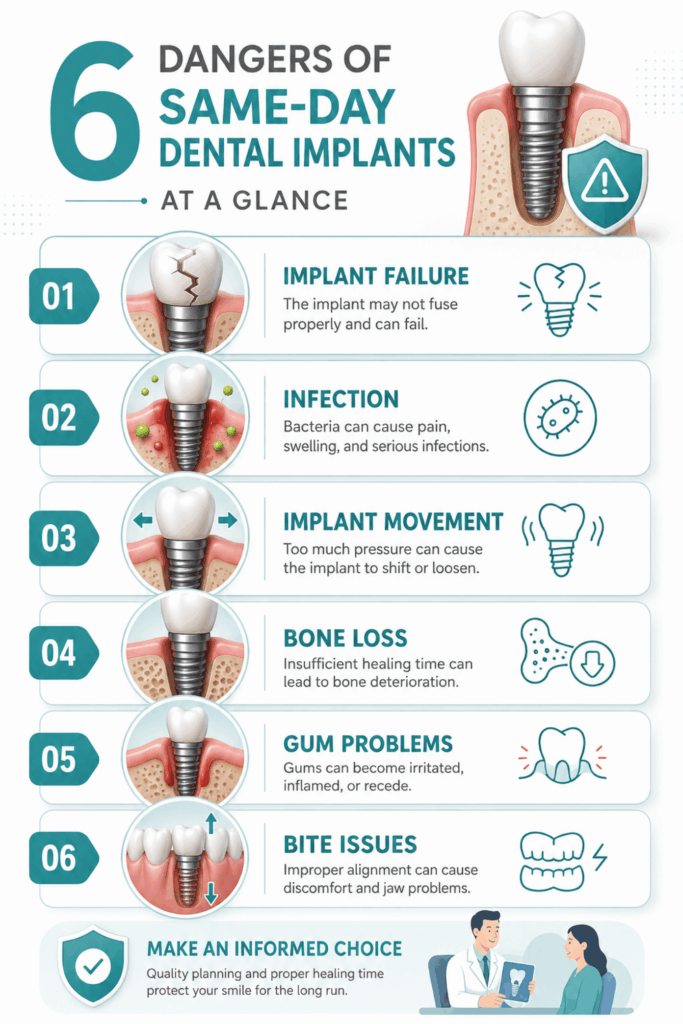
The cons of same-day dental implants usually relate to the healing process. Because implants placed during immediate load treatment face functional demands sooner than traditional implant procedures, complications may occur if healing does not progress as expected.
Common dangers of same-day dental implants include:
- Implant Failure: The implant may fail to fuse with the jawbone during healing.
- Infection Around the Implant: Bacteria around the surgical site can interfere with recovery.
- Implant Movement: Excessive pressure may disrupt the healing process before stability develops.
- Bone Loss and Poor Osseointegration: Weak bone support can reduce long-term success.
- Gum Problems: Soft tissue irritation or delayed healing may affect outcomes.
- Bite Issues: Uneven bite forces can place stress on the implant and temporary teeth.
Implant Failure
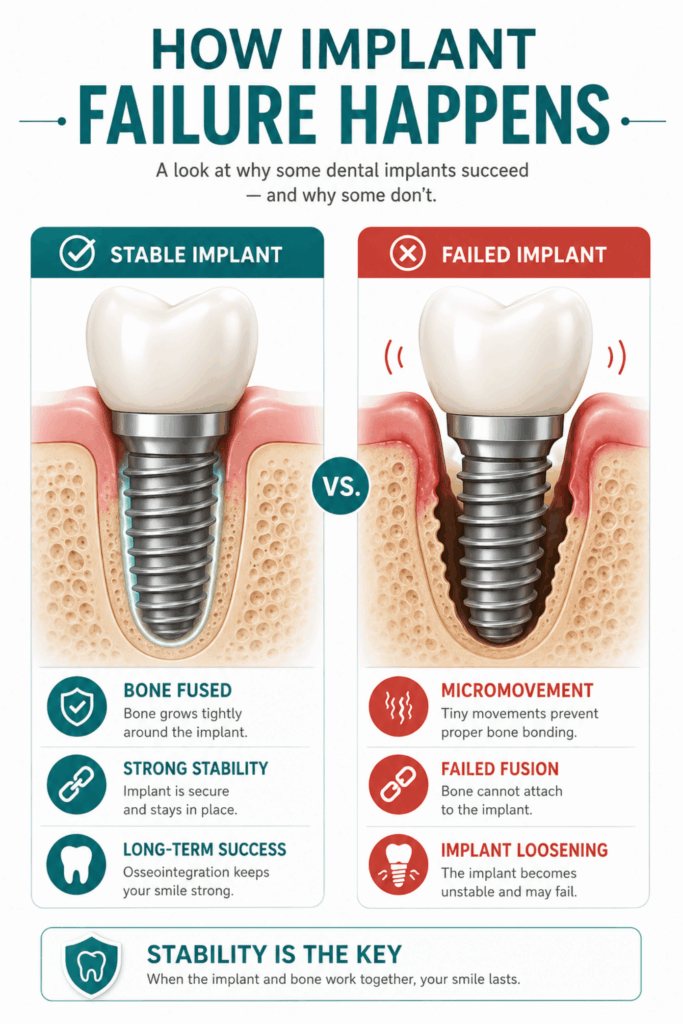
One of the most concerning risks is implant failure. During osseointegration, the implant post must fuse securely with the jawbone. If the implant lacks stability at placement or healing becomes disrupted, this process may fail. Although the chance of implant failure remains relatively low in suitable candidates, it can require implant removal, additional healing time, bone grafting, or repeat implant treatment. This is why implant failure receives so much attention when discussing the dangers of same-day dental implants.
Infection Around the Implant Site
Infection around the implant can occur when bacteria enter the surgical site during the healing period. Signs may include worsening pain, increasing swelling, redness, pus, bleeding, fever, or an unpleasant taste in the mouth. Early treatment often prevents more serious problems, making it important to contact your dental office if symptoms seem to worsen instead of improve.
Implant Movement Before Healing
Immediate load treatment allows temporary teeth on the same day, but healing implants still require protection. Chewing hard foods too early or placing excessive bite forces on temporary restorations can cause slight implant movement. Even small movements may interrupt osseointegration and reduce long-term success, sometimes leading to implant failure.
Bone Loss and Poor Osseointegration
Osseointegration is the biological process that allows the implant post to fuse with surrounding bone. Successful integration creates a stable foundation for permanent teeth and the final restoration. Without it, the implant may loosen or fail.
Bone quality plays a major role in outcomes. Patients with reduced jawbone density or bone loss often face a higher risk of complications because immediate stability becomes harder to achieve. In some cases, bone grafting may be recommended before or during implant treatment to improve support and increase the chance of implant success.
Gum Problems and Soft Tissue Complications
Healthy gums do more than frame your smile. Soft tissues protect the area around the implant from bacteria and help maintain stability. Delayed healing, gum recession, irritation, or inflammation may develop if oral hygiene is poor or healing becomes compromised. Healthy tissues support both appearance and long-term implant success.
Bite Problems and Temporary Teeth Issues
Temporary crowns and bridges allow patients to enjoy a new smile immediately, but they are not designed to withstand full chewing forces. An uneven bite can place stress on the implant, leading to discomfort, temporary crown fractures, loosening, or healing complications. Careful bite adjustment helps protect healing implants during this critical period.
Who Has a Higher Risk of Same-Day Implant Complications?
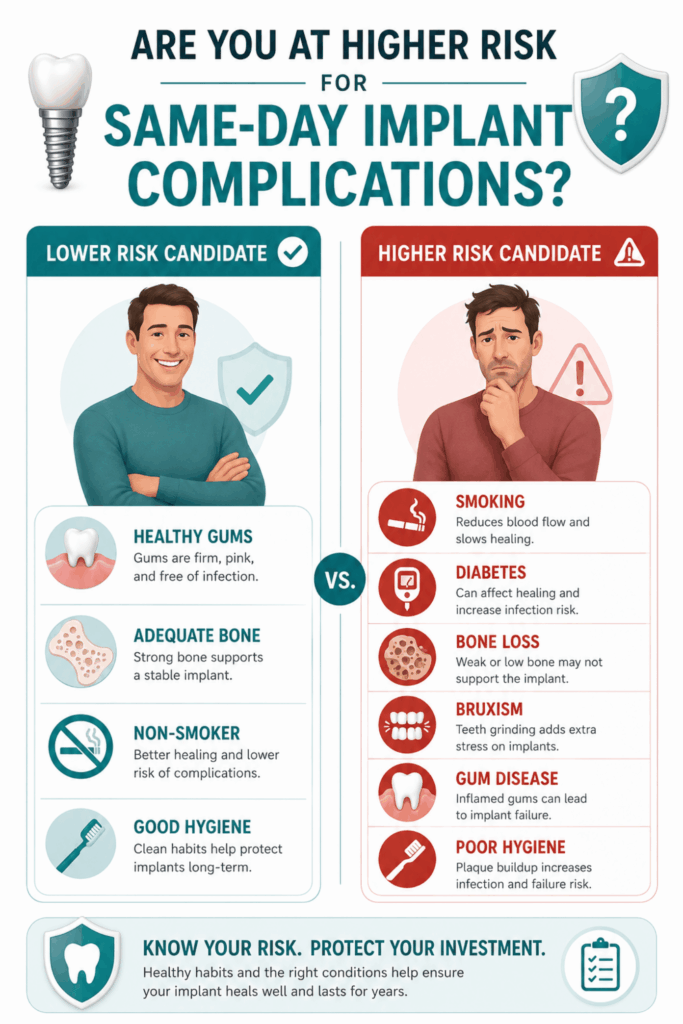
Not everyone who wants same-day dental implants is an ideal candidate. Certain health conditions and habits can increase the chance of implant complications and reduce treatment predictability.
- Smoking History: Smoking decreases blood flow and delays healing around the implant.
- Poorly Controlled Medical Conditions: Unstable health conditions may interfere with recovery.
- Insufficient Jawbone Support: Limited bone volume can reduce implant stability.
- Teeth Grinding Habits: Excessive bite forces place additional stress on implants.
- Untreated Gum Disease: Active infection around the gums increases the risk of complications.
- Poor Oral Hygiene: Plaque buildup around the implant site can affect healing.
- Heavy Alcohol Use: Excessive alcohol consumption may interfere with the healing process.
Smoking and Tobacco Use
Smoking reduces oxygen delivery and blood supply to healing tissues. This can delay recovery, increase infection risk, and decrease implant survival rates. Patients who stop smoking before and after dental implant surgery often experience better outcomes than those who continue tobacco use.
Uncontrolled Medical Conditions
Conditions such as uncontrolled diabetes can impair the body’s ability to heal after implant surgery. Elevated blood sugar levels may increase infection risk and interfere with osseointegration. Medical stability before implant treatment helps improve safety and predictability.
Insufficient Bone Volume or Density
Immediate load treatment depends on strong initial support. If the jawbone lacks adequate volume or density, implants placed on the same day may not achieve the stability needed for healing. Bone grafting or staged implant approaches may provide safer alternatives.
Teeth Grinding and Clenching
Bruxism creates powerful bite forces that can overload healing implants. Patients who grind or clench their teeth may require bite adjustments, temporary diet modifications, or a custom night guard to reduce stress during the healing period.
Who Is a Good Candidate for Same-Day Dental Implants?
Although discussions often focus on risks, many patients achieve excellent results with same-day implant procedures. Dentists evaluate several factors before recommending this approach because candidacy strongly influences outcomes.
- Healthy Gums: Healthy soft tissues reduce the risk of infection and support healing.
- Adequate Jawbone Density: Strong bone helps stabilize implants during early healing.
- Good General Health: Controlled medical conditions improve treatment predictability.
- Excellent Oral Hygiene: Consistent dental care supports long-term success.
- Non-Smokers or Those Willing to Quit: Reduced tobacco exposure improves healing potential.
- Realistic Expectations: Understanding limitations helps patients follow recommendations and protect temporary teeth.
- Commitment to Follow-Up Visits: Regular monitoring allows dentists to address concerns early.
How Dentists Reduce the Risks of Same-Day Dental Implants
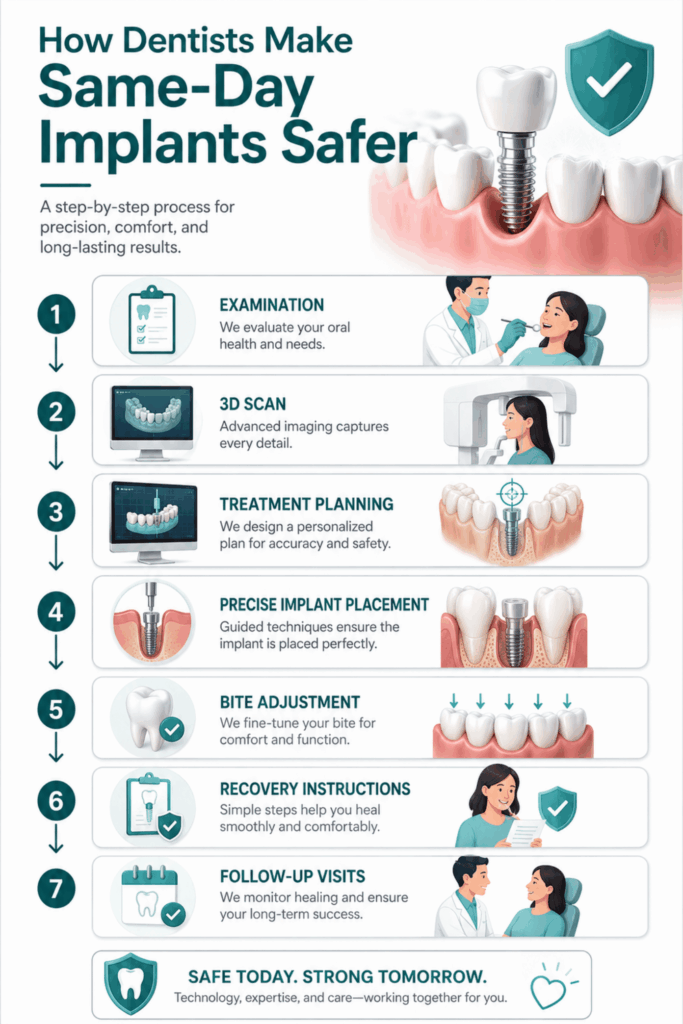
Successful implant dentistry depends on much more than surgical skill. Detailed planning, proper case selection, and patient cooperation all work together to reduce complications and improve outcomes.
- Evaluate Bone Health: Dentists assess jawbone density before treatment begins.
- Use Advanced Imaging: Three-dimensional scans improve precision during implant placement.
- Design an Individualized Treatment Plan: Every patient’s anatomy and needs differ.
- Adjust Bite Forces Carefully: Temporary restorations are designed to minimize stress.
- Provide Clear Instructions: Patients receive detailed guidance for recovery.
- Schedule Follow-Up Visits: Regular monitoring supports the healing process.
- Address Risk Factors Early: Smoking cessation and gum disease treatment improve outcomes.
Comprehensive Examination and Imaging
Clinical examinations and 3D imaging provide essential information before same-day dental implant surgery. These tools help identify bone volume, sinus anatomy, nerve locations, and hidden concerns that could affect treatment. Detecting potential problems early allows for safer decision-making.
Careful Treatment Planning
The position of each implant, the design of the temporary crown or bridge, and the distribution of bite forces all influence outcomes. Personalized treatment planning allows the implant dentist to adapt the implant process to each patient’s needs instead of relying on a one-size-fits-all approach.
Detailed Aftercare Instructions
The healing period plays a major role in implant success. Following post-operative guidance protects the surgical site and supports osseointegration.
- Choose Soft Foods: Eat foods that require minimal chewing during early healing.
- Practice Gentle Oral Hygiene: Keep the area clean without disturbing the implant site.
- Avoid Smoking: Tobacco use can delay healing and increase complications.
- Take Medications as Directed: Follow instructions for pain relief and infection prevention.
- Attend Follow-Up Visits: Monitoring allows your dentist to identify problems early.
- Avoid Excessive Chewing Forces: Protect temporary teeth until healing progresses.
Warning Signs After Same-Day Dental Implant Surgery
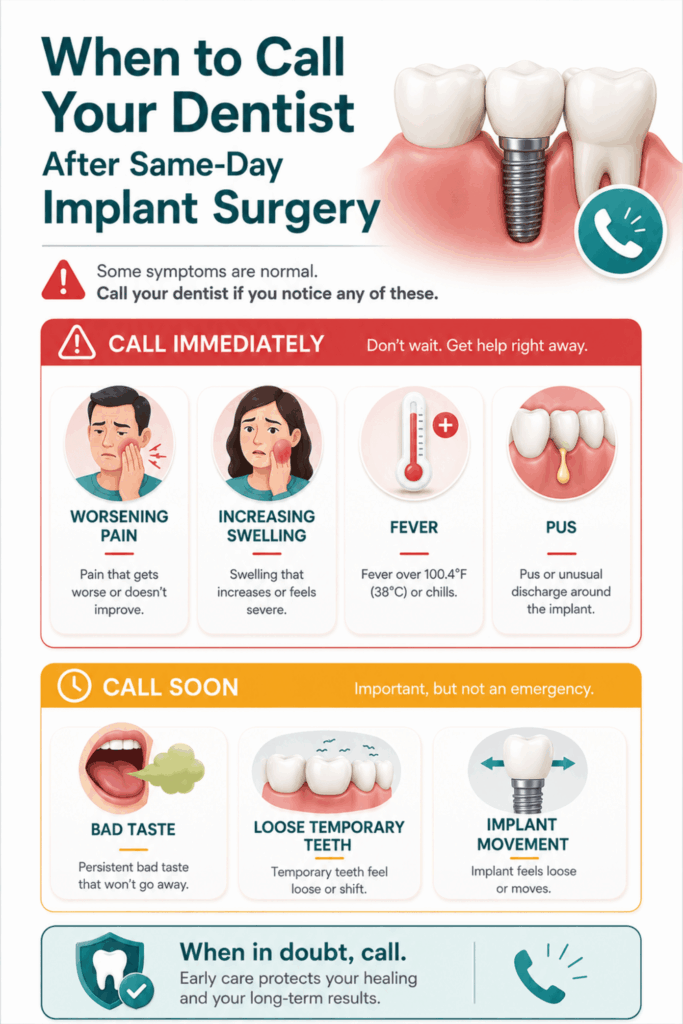
Some discomfort is expected after implant surgery, but certain symptoms deserve prompt attention. Recognizing these symptoms early is important because some of the dangers of same-day dental implants respond best when treated promptly.
- Pain That Gets Worse Instead of Better: Increasing discomfort may indicate a problem.
- Progressive Swelling: Continued swelling beyond the expected healing period requires evaluation.
- Fever or Pus: Signs of infection should never be ignored.
- Bad Taste or Odor: Persistent unpleasant taste may signal infection.
- Loose Temporary Teeth: Movement should always be reported.
- Implant Mobility: A loose implant requires immediate professional assessment.
Persistent or Worsening Pain
Mild discomfort usually improves over several days. Pain that becomes more severe, interferes with daily activities, or suddenly worsens after initial improvement may indicate infection, excessive stress on the implant, or another complication.
Swelling That Continues to Increase
Swelling often peaks within the first few days after dental implant surgery before gradually improving. Swelling that continues to expand after this period, especially when accompanied by redness or severe pain, deserves prompt evaluation.
Fever, Pus, or Unpleasant Taste
These symptoms can indicate infection around the implant site. Early treatment may prevent more extensive complications and improve the chances of preserving the implant.
Loose Implant or Temporary Teeth
A healing implant should remain stable. Movement of the implant itself or loosening of temporary teeth should never be ignored. Contact your dental office promptly so the situation can be evaluated and managed appropriately.
Same-Day Dental Implants vs Traditional Implants: Which Is Safer?
| Feature | Same-Day Dental Implants | Traditional Implant |
|---|---|---|
| Temporary Teeth | Placed during one visit | Delayed until healing |
| Treatment Time | Faster smile restoration | Longer overall process |
| Healing Approach | Immediate load | Staged implant healing |
| Implant Stability Needs | High initial stability required | Stability develops gradually |
| Risk of Early Movement | Higher | Lower |
| Convenience | Greater | Moderate |
| Suitable Candidates | More selective | Broader range of patients |
| Final Restoration Timing | After healing | After healing |
Same-day dental implants offer convenience and immediate cosmetic improvement. Many patients value leaving the dental office with teeth on the same day instead of waiting through months of treatment.
Traditional implant procedures, however, reduce functional demands during early healing. Unlike traditional immediate-load approaches, staged implant protocols may provide a safer option for patients with lower jawbone density, complex medical histories, or other risk factors. The safest approach depends on your individual circumstances rather than a universal rule.
Frequently Asked Questions About Same-Day Dental Implants
How Long Do Same-Day Dental Implants Last?
Same-day dental implants can last many years and, in some cases, even decades when they are properly maintained. Their longevity depends on factors such as good oral hygiene, overall health, bite forces, avoiding harmful habits, and attending regular dental visits. Patients who follow their dentist’s instructions often enjoy long-term success with same-day implant treatment.
Are Same-Day Dental Implants More Likely to Fail?
Same-day implants are not automatically more likely to fail than traditional implants. Success depends heavily on careful treatment planning, proper case selection, adequate bone stability, and patient compliance during healing. When performed by an experienced oral surgeon and supported by good aftercare, same-day implant outcomes can be highly predictable.
Can Smokers Get Same-Day Dental Implants?
Yes, smokers can get same-day dental implants, but they face a higher risk of complications and implant failure. Tobacco use reduces blood flow and can slow healing after surgery. Reducing or quitting smoking before and after treatment may significantly improve healing and increase the chances of long-term implant success.
Is the Procedure Painful?
Most patients experience little to no pain during same-day dental implant surgery because local anesthesia keeps the area numb. Mild swelling, soreness, and discomfort are common during recovery but are usually manageable with prescribed or over-the-counter medications. Many people describe the procedure as easier than they expected.
What Happens If a Same-Day Implant Fails?
If a same-day implant fails, your dentist or oral surgeon will usually remove the implant and allow the area to heal before considering the next step. Depending on the cause of failure and available bone support, treatment may involve placing a replacement implant, performing a bone graft, or choosing an alternative tooth replacement option that better suits your needs.
The Bottom Line on the Dangers of Same-Day Dental Implants
The dangers of same-day dental implants are real, but they should be viewed in context. Implant failure, infection, bone loss, gum complications, and temporary restoration problems can occur, yet these risks remain relatively uncommon when patients receive proper evaluation and treatment from an experienced implant dentist.
Same-day dental implants can be an excellent tooth replacement option for the right candidate. Success depends on thoughtful treatment planning, healthy healing conditions, and realistic expectations throughout the implant process. If you’re considering teeth in a day, a thorough consultation can help determine whether immediate load treatment is the safest path toward your new smile.
