Bleeding, swollen, or tender gums can make you wonder how to cure gum disease without a dentist. The answer depends on the stage. Early gum inflammation, called gingivitis, may improve and often reverse when you remove plaque well every day. Periodontitis is deeper gum disease. It cannot be cured with brushing, rinses, or natural remedies alone and needs professional care to control it.
If you cannot see a dentist right away, better home care can still protect your gums and may slow the problem. Gingivitis and periodontitis can look similar at home; however, pain is not a reliable guide, and hardened tartar cannot be brushed or flossed away.
What matters most is knowing what home care can do, what it cannot do, and when waiting could risk your teeth. A safe plan starts with gentle plaque removal and avoids harsh DIY treatments. It also includes watching for changes that need a dental exam. First, it helps to understand whether your gums may still be in the reversible stage.
Can You Cure Gum Disease Without a Dentist?
Many people search for how to cure gum disease without a dentist because their gums bleed, feel swollen, or look different. The answer depends on the type of gum disease. Plaque-induced gingivitis affects the gums but has not damaged the bone or attachment around the teeth. Careful brushing and cleaning between the teeth may reverse it, although a professional cleaning may still be necessary if tartar is present.
Periodontitis is different. It damages the gum tissue and bone supporting the teeth. Diligent home care can help manage gum disease, but it cannot cure periodontitis or remove deep tartar without treatment from a dentist. The National Institute of Dental and Craniofacial Research’s guidance on periodontal disease explains why people with periodontitis need professional treatment.
Gingivitis vs. Periodontitis: Why the Stage Changes the Answer
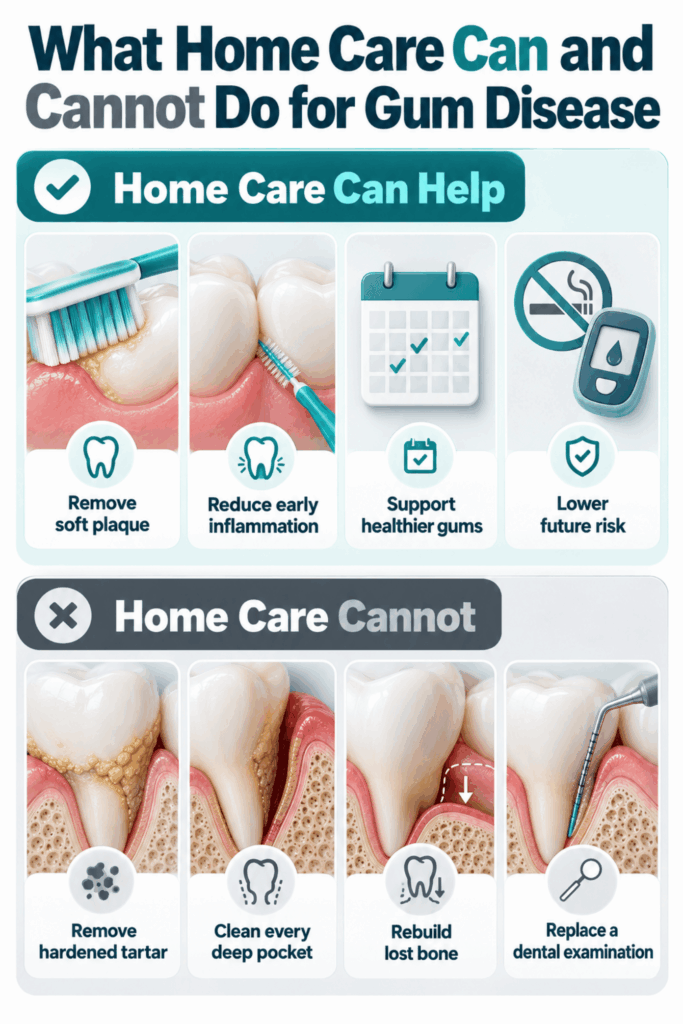
Gingivitis and periodontitis are both forms of periodontal disease, but they do not have the same outcome. The main difference is whether inflammation remains limited to the gums or has damaged the tissues supporting the teeth.
| Feature | Gingivitis | Periodontitis |
|---|---|---|
| Area affected | Gum tissue around the teeth | Gums, periodontal ligament, and supporting bone |
| Common findings | Redness, swelling, and bleeding | Gum recession, deeper pockets, bone loss, or loose teeth |
| Bone or attachment loss | No | Yes |
| Reversibility | Usually reversible when plaque is controlled | Existing attachment and bone loss are not reversed by home care |
| Role of home care | May control the cause and allow the gums to heal | Helps control plaque but cannot treat deep deposits alone |
| Professional care | Cleaning may be needed to remove tartar | Periodontal treatment and ongoing maintenance are usually required |
Less bleeding does not always mean periodontal disease has resolved. Mouthwash may reduce inflammation, and better brushing may improve the gum line, while bacterial buildup remains inside deeper pockets. A dentist must perform an examination to determine whether home care may help cure early gum disease or whether deeper tissues have been affected.
Why You Cannot Confirm the Stage at Home
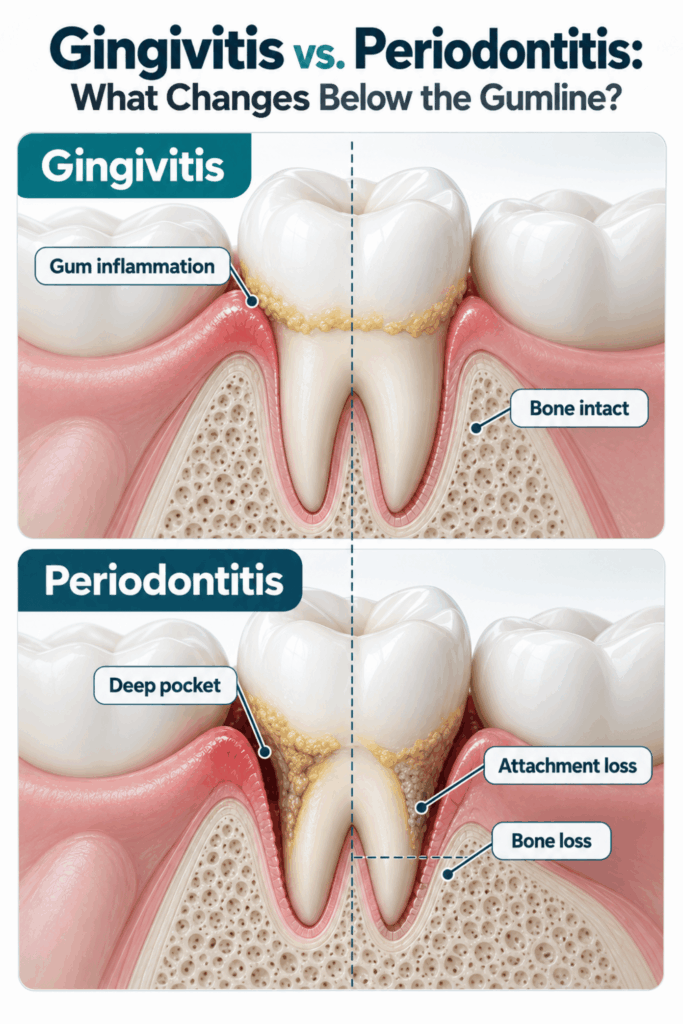
A mirror or phone photograph can show redness, swelling, gum recession, and visible buildup. It cannot show how firmly the gum is attached to each tooth or whether bone loss is developing below the gum line. Periodontitis can also progress with little pain.
A periodontal evaluation may include:
- Medical and Dental History: The dentist asks about bleeding, smoking, diabetes, medications, previous dental care, and changes in your bite or teeth.
- Visual Examination: The dentist looks for plaque and tartar buildup, inflammation, recession, pus, and changes in the teeth and gums.
- Periodontal Probing: A small measuring instrument checks the space between each tooth and the surrounding gum. The dentist also notes bleeding and other signs of inflammation.
- Attachment Measurements: Recession and probing findings help show whether the gum’s attachment to a tooth has been lost.
- Tooth Mobility Assessment: The dentist checks whether a tooth has become loose or changed position.
- Dental X-Rays: When indicated, X-rays help show the height and pattern of the bone supporting the teeth.
The American Academy of Periodontology’s current classification framework uses staging and grading to describe disease severity, treatment complexity, and risk of progression. These decisions require clinical measurements, not symptoms alone.
Could Something Else Be Causing Your Gum Symptoms?
Bleeding or swollen gums often result from plaque buildup, but other factors can cause or worsen gum problems. Do not assume every change is periodontal disease, and do not stop prescribed medication without speaking with the clinician who prescribed it.
- Forceful Brushing: Hard bristles or aggressive scrubbing may injure the gum line and contribute to gum recession.
- Hormonal Changes: Puberty, pregnancy, and other hormonal changes can make gum tissue react more strongly to bacterial plaque.
- Dry Mouth: Reduced saliva allows plaque to collect more easily. Dehydration, health conditions, and many medications can cause dry mouth.
- Medications: Some medicines affect saliva, bleeding, or gum tissue. A dentist can review possible oral effects with you.
- Tobacco and Nicotine: Smoking increases the risk of gum disease and may hide bleeding by reducing blood flow in the gums.
- Diabetes: High blood sugar may make gum infection harder to control and may slow the response to treatment.
- Other Health Problems: Less commonly, nutritional deficiencies, immune disorders, or blood conditions may contribute to unusual gum changes.
A qualified dentist can determine whether plaque is causing the gum problem, whether another condition is involved, and which treatment can cure or control the disease.
How to Treat Early Gum Disease at Home Safely
The most useful steps at home focus on removing bacterial plaque every day. These oral hygiene practices may reverse early gingivitis and help reduce the risk of gum disease returning. They do not remove tartar or replace professional dental care when symptoms persist.
Brush the Gumline Without Scrubbing
Brush twice daily for about two minutes with fluoride toothpaste and a soft-bristled toothbrush. Clean the gum line gently because brushing harder does not remove plaque more effectively and may irritate the gum tissue.
- Choose a Soft Brush: Use a manual or electric toothbrush with soft bristles. Replace a worn or spreading brush head.
- Reach the Gum Line: Angle the bristles slightly toward the point where each tooth meets the gum.
- Use Gentle Movements: Make small circular or short back-and-forth motions without pressing hard enough to bend the bristles widely.
- Clean Every Surface: Brush the outer, inner, and chewing surfaces of every tooth. Give extra attention to crowded areas and the back teeth.
- Stay Consistent: Gentle brushing twice each day is more useful than occasional aggressive cleaning.
Tender gums may bleed during the first days of improved oral hygiene. Do not stop cleaning the area, but reduce your pressure and check your technique.
Clean Between Every Tooth Once a Day
A toothbrush cannot fully reach the sides of teeth that touch each other. Daily interdental cleaning disrupts plaque before it matures and contributes to gingivitis or tartar buildup.
- Dental Floss: Floss often works well where the teeth contact tightly. Curve it around each tooth and move it gently beneath the gum edge rather than snapping it into the tissue.
- Interdental Brushes: Small brushes can clean wider spaces, areas affected by gum recession, and spaces around some bridges or implants. The brush should fit without being forced.
- Water Flossers: A water flosser may help people with braces, implants, limited hand movement, or difficulty using string floss. It can disrupt debris and reduce inflammation, but it does not remove hardened tartar.
No single tool is ideal for every mouth. A Cochrane review of home interdental-cleaning devices found that adding floss, interdental brushes, or oral irrigation to brushing may reduce gingivitis, although the strength of evidence varies by device and outcome.
Know What Mouthwash and Salt Water Can and Cannot Do
A mild saltwater rinse may temporarily soothe irritated gum tissue. An over-the-counter antiseptic mouthwash may also help reduce plaque or gingival inflammation when used with brushing and interdental cleaning. Neither option can mechanically remove established plaque or tartar from the teeth.
A dentist may recommend a medicated rinse, such as chlorhexidine, for a specific reason and limited period. It may cause staining, taste changes, or increased surface buildup with extended use. Do not treat mouthwash as a substitute for brushing and flossing or assume that fresher breath means a gum infection has resolved.
Reduce Risks That Make Gum Disease Harder to Control
- Avoid Tobacco: Smoking and other tobacco use raise the risk of periodontitis, tooth loss, and a weaker response to gum disease treatment.
- Manage Diabetes: Follow your medical care plan and tell your dentist about your blood sugar control and medications.
- Address Dry Mouth: Drink water regularly and ask a dentist or physician about persistent dryness. Do not change medication on your own.
- Choose Balanced Meals: Nutrient-rich foods support gum tissue and overall health, but no food or supplement can remove plaque or cure periodontal disease.
- Limit Frequent Sugar Intake: Frequent sugary foods and drinks support bacterial activity and create additional oral health problems.
- Keep a Daily Routine: Consistent plaque removal matters more than using many products for a few days.
How Soon Should Your Gums Improve?
Mild gingivitis may begin to look and feel better after you improve plaque removal. Bleeding, tenderness, and swelling should gradually decrease if plaque is the main cause and you can clean the affected areas effectively. There is no single healing time that applies to everyone.
Improvement may be slower when tartar remains along the gum line, brushing technique is poor, or smoking, diabetes, dry mouth, or deeper periodontal disease is involved. Arrange an examination so a dentist can determine why the gum disease has not improved and whether professional treatment is needed to cure or control it. Do not use the absence of pain as a reason to delay care.
Home Remedies That Do Not Cure Gum Disease
Home remedies may change how the mouth feels, but they cannot replace proven plaque control or professional treatment. A temporary reduction in soreness, odor, or bleeding does not show that a bacterial infection or periodontal pocket has been treated.
- Oil Pulling: Small studies have examined whether oil pulling may reduce bacteria or plaque, but the evidence is limited. It cannot remove tartar or treat bone loss.
- Turmeric and Herbal Products: Some plant-based products have anti-inflammatory or antibacterial properties in laboratory studies. Homemade pastes do not have standardized strength, safety, or proven ability to cure gum disease.
- Baking Soda: Toothpaste formulated with baking soda may be safe, but rubbing loose powder into the gums is unnecessary and may cause irritation if used aggressively.
- Hydrogen Peroxide Mixtures: Properly formulated oral products may contain safe concentrations. Strong or poorly diluted homemade mixtures can irritate or burn oral tissue.
- Essential Oils: Essential-oil mouthwash may support plaque control, but applying concentrated oils directly to the gums can irritate the tissue.
- Vitamin Supplements: A confirmed deficiency may require treatment, but taking extra vitamins does not remove the bacterial cause of plaque-induced gum disease.
- Saltwater Rinses: Saltwater may soothe tender gums for a short time. It does not remove plaque and tartar buildup or restore lost bone and tissue.
Why DIY Tartar Removal Is Unsafe
Tartar is mineralized plaque that bonds firmly to the tooth and may extend below the gum line. Scraping it with a metal tool, dental kit, or household object can cut the gums, scratch tooth or restoration surfaces, and miss deposits inside periodontal pockets. Only a dentist can remove tartar safely because home care cannot cure gum disease when deep deposits remain.
When Gum Symptoms Need Professional Care
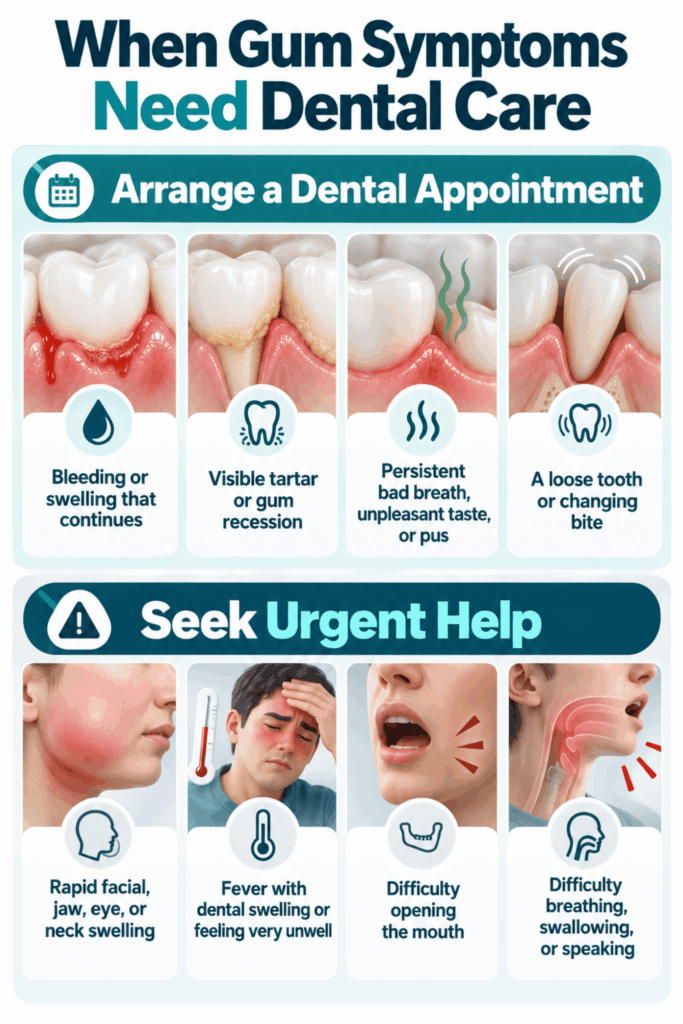
Bleeding gums do not usually require emergency treatment, but they should not be ignored. Some changes justify a routine or prompt dental appointment, while facial swelling or signs of a spreading infection may require urgent care.
When to See a Dentist for Gum Disease
Contact a dentist if you notice:
- Persistent Bleeding: Your gums keep bleeding despite gentle, consistent brushing and interdental cleaning.
- Ongoing Swelling or Tenderness: The gum tissue remains enlarged, painful, or uncomfortable when you eat.
- Persistent Bad Breath: Breath odor or an unpleasant taste continues after improving oral hygiene.
- Visible Tartar: Hard yellow, brown, or dark buildup remains near or below the gum line.
- Gum Recession: Teeth appear longer, or previously covered root surfaces become visible.
- Pus or Drainage: Fluid appears between a tooth and the surrounding gum.
- Increasing Sensitivity: Exposed roots or inflamed tissue become sensitive to temperature or pressure.
- Loose or Moving Teeth: An adult tooth becomes loose, changes position, or develops a new space beside another tooth.
- Bite Changes: Your teeth no longer meet in the same way when you close your mouth.
Seek Urgent Help for a Possible Spreading Infection
Seek urgent dental or medical help when gum or dental symptoms occur with:
- Rapidly Increasing Swelling: Swelling spreads across the face, under the jaw, toward the eye, or into the neck.
- Breathing or Swallowing Difficulty: Call emergency services if swelling interferes with breathing, swallowing, or speaking.
- Fever and Swelling: A fever, facial swelling, and feeling very unwell may indicate a spreading infection.
- Severe Worsening Pain: Pain becomes intense, spreads, or does not respond to appropriate over-the-counter pain relief.
- Restricted Mouth Opening: Increasing difficulty opening the mouth may need urgent assessment.
The NHS emergency guidance for dental abscesses identifies breathing or swallowing difficulty and extensive mouth swelling as reasons for immediate emergency care.
What a Dentist Can Do That Home Care Cannot
Professional dental care can identify the disease stage and remove bacterial deposits from areas that home devices cannot reach. Treatment options depend on the examination findings. Not every patient with bleeding gums needs deep cleaning, medication, or surgery.
Professional Cleaning for Plaque and Tartar
When inflammation is limited to the gums, a professional cleaning may remove plaque and tartar from above and around the gum line. The dentist or hygienist can also identify areas you regularly miss and recommend oral hygiene practices suited to your teeth and gums.
Better home care remains essential after cleaning. If plaque builds up again, gingivitis can return even after the gums have healed.
Scaling and Root Planing for Periodontitis
Scaling and root planing is a nonsurgical gum disease treatment for selected patients with periodontitis. It removes plaque and tartar below the gum line and disrupts bacterial buildup on affected root surfaces. The American Dental Association’s guideline on nonsurgical periodontitis treatment supports scaling and root planing as an initial treatment approach.
Treatment may involve these steps:
- Periodontal Assessment: The dentist measures the gums, reviews X-rays when needed, and determines which teeth or areas require treatment.
- Comfort Measures: Local anesthetic may be used to numb the treatment area.
- Subgingival Cleaning: Hand or powered instruments remove deposits from below the gum line and clean the affected root surfaces.
- Home-Care Instruction: The dental team helps you choose effective brushing and interdental cleaning methods.
- Reevaluation: After the tissue has had time to respond, the dentist measures the gums again and checks which pockets remain inflamed.
Scaling and root planing can reduce inflammation and pocket depth, but the outcome varies. It does not guarantee that lost bone or attachment will return.
Additional Treatment for Advanced Disease
- Periodontal Reevaluation: The dentist checks whether bleeding, deep pockets, or active disease remains after initial treatment.
- Periodontist Referral: A periodontist may manage complex disease, severe bone loss, difficult tooth anatomy, or areas that do not respond as expected.
- Selected Medications: A dentist may use a local antimicrobial or another medication in specific situations. Medication supports mechanical treatment rather than replacing it.
- Periodontal Surgery: Pocket-reduction or access surgery may help clean root surfaces that cannot be treated effectively through a closed approach.
- Regenerative Procedures: Selected defects may be treated with grafting or regenerative materials, but not every pattern of bone loss is suitable.
- Tooth Removal: A tooth with a hopeless long-term outlook may need extraction, especially when it cannot function comfortably or maintainably.
What to Do If Cost or Dental Anxiety Is the Barrier
Avoiding dental visits often allows a smaller problem to become more difficult and costly. If you cannot complete every recommended treatment immediately, ask for an examination and a prioritized plan. The dentist can separate urgent disease control from treatment that may safely wait.
Try these steps:
- Ask for Costs in Writing: Request a clear estimate and ask which services are necessary now.
- Discuss Phased Treatment: Some treatment plans can be completed in stages based on risk, symptoms, and available funds.
- Contact Dental Schools: Supervised student clinics may provide care at a reduced cost, although appointments can take longer.
- Look for Community Clinics: Federally supported health centers and local public programs may provide dental care on a sliding-fee basis.
- Review Payment Options: Ask whether the office offers installment plans, financing, or alternatives covered by your insurance.
- Mention Dental Anxiety Early: Tell the dental team what worries you. Agree on a stop signal, ask for explanations, and discuss comfort options before treatment begins.
The NIDCR directory for finding affordable dental care includes information about dental schools and other care resources in the United States.
How to Prevent Gum Disease From Returning
Gingivitis can return when bacterial plaque collects again. Treated periodontitis also requires long-term management because the previous loss of supporting tissue can make some areas harder to clean.
- Brush Twice Daily: Clean every tooth and the gum line gently with fluoride toothpaste.
- Clean Between Teeth Daily: Use floss, interdental brushes, or another device suited to your mouth.
- Check Your Technique: Ask a dentist or hygienist to show you where plaque remains and how to reach it.
- Avoid Tobacco: Tobacco increases the risk of disease progression and tooth loss.
- Manage Health Conditions: Work with your physician to control diabetes and other conditions that may affect gum health.
- Attend Recommended Maintenance Visits: The right interval depends on your disease history, risk factors, home care, and response to treatment.
- Report New Changes: Do not wait for a regular visit if a tooth becomes loose, swelling develops, or gum recession progresses.
Good oral hygiene practices help prevent and manage gum disease, but maintenance is not identical for everyone. Someone previously treated for periodontitis may need closer monitoring than a person with healthy gums and no history of attachment loss.
Frequently Asked Questions
Can You Have Gum Disease Without Bleeding Gums?
Yes. Periodontitis can develop without obvious bleeding or pain, and smoking may reduce visible bleeding even when disease is present. Other possible signs include gum recession, persistent bad breath, tooth movement, sensitivity, or spaces developing between teeth. Only periodontal measurements and, when needed, dental X-rays can confirm the diagnosis.
Can Gums Grow Back After Gum Disease?
Swollen gums may become firmer and fit more closely around the teeth after inflammation is controlled. However, gum recession, attachment loss, and bone loss do not simply grow back through brushing or home remedies. Gum grafting or regenerative treatment may help selected areas, but suitability depends on the defect and the health of the remaining tissues.
Is Bleeding Normal When You Start Flossing?
Inflamed gums may bleed when you begin cleaning between the teeth, especially if plaque has remained there for some time. Snapping floss into the gums can also cause injury. Use a gentle technique and clean daily rather than stopping. Arrange an examination if bleeding continues, worsens, or occurs with swelling, recession, pus, or loose teeth.
Can Antibiotics Cure Gum Disease Without Deep Cleaning?
No. Antibiotics cannot remove the plaque and tartar attached to tooth roots. Dentists may prescribe local or systemic antibiotics in selected cases, but they support periodontal treatment rather than replace it. Using leftover or unprescribed antibiotics may cause side effects and contribute to antibiotic resistance without controlling the source of the gum infection.
Can a Loose Tooth Become Firm Again After Gum Disease Treatment?
It depends on why the tooth is loose and how much support remains. Reducing inflammation and controlling an uneven bite may improve some mobility. A tooth with major attachment or bone loss may remain loose despite treatment. Because movement can worsen, a loose adult tooth needs prompt assessment by a dentist or periodontist.
Can Pregnancy Cause Bleeding Gums or Make Gum Disease Worse?
Pregnancy hormones can make gum tissue react more strongly to bacterial plaque, leading to swelling and bleeding. Pregnancy does not remove the need for treatment, and routine dental care is generally important during this time. Continue gentle brushing and interdental cleaning, and arrange a dental visit if bleeding, swelling, pain, or a gum growth develops.
Can Gum Disease Treatment Work If You Have Diabetes?
Yes. Gum disease treatment can work when you have diabetes, but uncontrolled blood sugar may make infection and healing harder to manage. Good diabetes care, daily plaque control, and professional periodontal treatment work together. Tell your dentist about your condition and medications so your dental and medical care can be coordinated appropriately.
Bottom Line: Can You Cure Gum Disease Without a Dentist?
You may be able to reverse early plaque-induced gingivitis with consistent brushing and flossing, especially when no tartar or more serious damage is present. Home remedies, rinses, and improved oral hygiene cannot remove hardened deposits or rebuild bone and tissue lost to periodontitis.
Start effective home care now, but do not treat symptom relief as proof that the disease is gone. If bleeding or swelling continues, tartar is visible, gums are receding, or teeth become loose, seek professional dental care to identify the cause and protect your long-term oral health.
