An early cavity can be easy to miss, especially when the first stage of tooth decay develops quietly on the surface of your teeth. At this point, bacteria-produced acids begin weakening the enamel layer of your tooth, creating early signs that may be reversible. When these areas of tooth decay are caught early, treatment is simpler, more comfortable, and helps protect your natural tooth structure.
Early-stage cavities often appear as white spots, mild discoloration, or subtle sensitivity, especially on the back teeth or chewing surfaces. These early cavity signs occur before a pit in your tooth forms, meaning you may be able to reverse early-stage cavities with fluoride treatments, changes in brushing your teeth, and regular dental visits. Early intervention prevents the decay from reaching the inner tooth or tooth root, reducing the risk of tooth loss or the need for a filling.
Understanding how cavities and tooth decay form, what early decay looks like, and how early treatment is essential can help you catch cavities early and prevent further damage. In this blog post, you’ll find clear explanations of symptoms and causes, effective treatment options, prevention steps, and how to stop and reverse early decay before it leads to a hole in a tooth.
What Is an Early Cavity and How Does It Form?
An early cavity is the first stage of tooth decay, where acids produced by bacteria in your mouth begin to weaken the outer layer of your tooth, known as the enamel. At this earliest stage, minerals are lost from the enamel surface before a cavity forms, meaning the decay is still reversible. When sugar and starch mix with bacteria, acids begin to soften and demineralize the enamel, especially on molars and premolars, where food particles can easily get trapped. Reduced saliva flow, dry mouth, and poor oral health habits make this breakdown occur even faster. Without early care, the affected tooth may progress from mild mineral loss to deeper dentin involvement.
Stages of Tooth Decay: From Early Cavity to Advanced Damage
Tooth decay develops in several stages, and understanding them helps you stop tooth decay before it leads to more serious damage:
- Stage 1: Early Demineralization (Early Cavity): Acids weaken tooth enamel, forming white spots that mean you have a cavity beginning to develop, but at this point, it may still reverse.
- Stage 2: Enamel Decay: As enamel breaks down further, a cavity begins forming, and the cavity is a hole that needs treatment.
- Stage 3: Dentin Involvement: Decay reaches the dentin beneath the enamel, causing increased tooth sensitivity and a greater risk of rapid progression.
- Stage 4: Pulp Damage: The tooth pulp, which contains nerves and blood vessels, becomes affected, often causing pain and increasing the risk of root canal treatment.
- Stage 5: Infection and Abscess: If ignored, decay spreads deeper, potentially leading to severe pain, swelling, and even tooth extraction.
Early Cavity Signs and Symptoms to Watch For
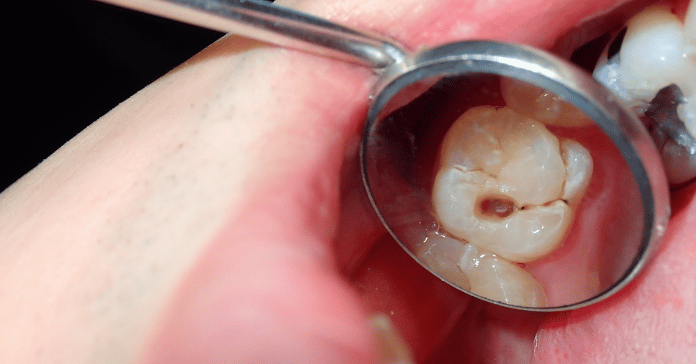
An early-stage cavity often begins with subtle signs that appear before areas of decay turn into a visible pit. You may notice white or chalky spots on the enamel, which are early signs of decay caused by mineral loss. A sensitive tooth may react to cold foods or sweet drinks as the enamel weakens. Slight tooth discoloration, mild irritation around the gum line, or a rough surface on the affected tooth can also signal early tooth decay. Because these symptoms develop slowly, regular dental checkups help catch them early.
Causes of Stage 1 Early Cavities
Common habits and conditions can increase the risk of cavities and lead to the early signs of decay:
- Plaque Buildup: Sticky plaque produced by bacteria forms on the enamel and begins the formation of cavities.
- Poor Oral Health Habits: Inconsistent brushing, using non-fluoride toothpaste, and neglecting flossing can raise the risk of tooth decay.
- Frequent Sugar and Starch Exposure: Snacks and sugary drinks feed bacteria, increasing the acids produced by bacteria that weaken enamel.
- Improper Brushing and Flossing: Not removing food particles, especially around molars, increases the risk of cavities.
- Dry Mouth: Reduced saliva flow limits your mouth’s ability to neutralize acids and protect your teeth.
- Smoking: Studies confirm that smoking causes tooth decay through dry mouth and plaque buildup.
- Irregular Dental Checkups: Skipping appointments allows early tooth decay to progress unnoticed.
How Do Dentists Catch Cavities Early During Checkups?
During regular dental checkups, your dentist examines the enamel for early changes using tools that detect weak areas before deeper tooth structure is damaged. X-rays help identify decay between teeth or beneath the surface where it cannot be seen directly. The dentist evaluates gum health, plaque levels, and the condition of molars and premolars where decay is common. Early assessment helps prevent cavities from reaching the dentin or pulp. With this early detection, preventive steps can stop tooth decay before more advanced treatment is required.

Why You May Not Feel Pain Yet?
Many people do not feel pain from an early cavity because the enamel has no nerves, so damage at this level is painless. Discomfort usually begins only after decay enters the dentin or reaches the tooth pulp. This is why relying on symptoms alone can delay treatment of early tooth decay. Even a sensitive tooth may not appear until the cavity grows deeper. Early intervention protects the affected tooth from worsening decay and prevents more invasive procedures.
Can an Early Cavity Be Reversed?
A stage 1 early cavity may reverse if caught before enamel is permanently damaged. During this stage, enamel is weakened but not yet broken, allowing remineralization to restore strength. Fluoride toothpaste, fluoride treatments, and better oral health habits help stop tooth decay and rebuild the enamel surface. With early care, many early-stage cavities do not require fillings. Consistent prevention helps protect your teeth from further risk of cavities.
How Remineralization Helps Reverse Early-Stage Cavities
Remineralization works by adding essential minerals back into weakened enamel. Fluoride strengthens the outer layer of the tooth by attracting calcium and phosphate, helping protect your teeth against further breakdown. Saliva plays a natural role by neutralizing acids and providing minerals that restore enamel. Improved oral hygiene supports this process by reducing plaque and bacteria. With proper care, weakened enamel can return to a healthier state before decay reaches the dentin. You might be able to reverse tooth decay before it becomes a cavity.
When a Filling Becomes Necessary?
A filling becomes necessary when an early cavity progresses past the enamel and creates a hole in the tooth. Once decay reaches the dentin, remineralization is no longer effective because deeper tooth structure is compromised. At this stage, the dentist removes decayed material and restores the tooth with a filling to prevent further damage. Ignoring this stage allows decay to reach the tooth pulp, increasing the risk of root canal treatment. Timely intervention ensures long-term dental health and prevents complications.
Early Cavity Treatment Options
Treatment depends on how far the early cavity has progressed and may include preventive or restorative steps:
- Fluoride Treatments: Fluoride varnish for adults strengthens weakened enamel and helps prevent cavities from progressing.
- Dental Sealants: Protect molars by sealing grooves where food particles get trapped.
- Remineralization Therapies: Use fluoride and minerals to rebuild enamel affected by early tooth decay.
- Tooth Fillings: Restore tooth structure when decay forms a cavity that cannot reverse naturally.
- Lifestyle and Oral Health Changes: Reduce sugar exposure, improve brushing technique, and manage dry mouth to lower the risk of cavities.

Risks of Ignoring Early Cavities and Delaying Treatment
Ignoring an early cavity allows decay to progress deeper into the tooth, reaching the dentin and eventually the tooth pulp, which contains nerves and blood vessels. As decay spreads, the risk of severe pain, infection, and root canal treatment increases. Untreated decay can weaken the tooth, leading to fractures or tooth extraction. The longer early tooth decay remains unaddressed, the harder it becomes to save the affected tooth. Early care prevents these complications and protects long-term dental health.
How to Stop and Reverse Early Cavities at Home?
You can support enamel repair and reduce the risk of cavities with consistent home care:
- Use Fluoride Toothpaste: Fluoride strengthens enamel and helps stop tooth decay at the earliest stage.
- Brush Properly Twice Daily: Remove plaque and food particles before bacteria cause damage.
- Floss Every Day: Clean areas between teeth where early decay often begins.
- Reduce Sugar and Starch: Limit snacks that feed bacteria and increase acid production.
- Manage Dry Mouth: Increase saliva flow by drinking water, chewing sugar-free gum, or addressing medical causes.
- Strengthen Enamel Naturally: Eat mineral-rich foods and maintain good oral health habits to help prevent cavities.
How Regular Dental Visits Help Prevent Tooth Decay and Catch Cavities Early?
Regular dental checkups allow your dentist to identify the earliest stage of tooth decay before it becomes a serious problem. Professional cleanings remove plaque and tartar that everyday brushing cannot reach. Early detection prevents cavities from progressing into the dentin or pulp, lowering the need for fillings or advanced treatments. These visits also provide personalized advice to help prevent cavities and maintain strong enamel. Consistent care leads to long-term dental health and fewer risks of tooth decay.
Conclusion
Catching tooth decay at the earliest stage makes a major difference in protecting your teeth from long-term damage. When you understand the signs of a cavity, such as white spots, mild sensitivity, or slight discoloration, you can act before the decay progresses. At this point, stage 1 cavities are still limited to the enamel, meaning the tooth has not yet developed a permanent hole. With proper care and regular dental checkups, early decay can often be reversed through remineralization, preventing it from turning into a deeper dental cavity.
When early decay is ignored, it can quickly advance into the dentin and eventually reach the pulp. This is the stage where pain begins, infection becomes possible, and the chances of needing a filling or root canal increase. Many people get cavities without realizing it because early decay is painless and subtle. But once enamel breaks down, the damage can lead to tooth sensitivity, persistent discomfort, and the risk of more complex dental treatment.
The most effective approach is prevention and early action. By using fluoride toothpaste, improving daily oral hygiene, reducing sugar intake, and maintaining consistent dental visits, you can stop early decay and support natural enamel repair. If you notice any early warning signs, schedule an exam so your dentist can guide you before the cavity progresses. Taking small steps today protects your smile, prevents future problems, and keeps your teeth strong.
